Skip to content

Archive

Every long read, newest first. Filter by topic, sort, and switch between grid and list.

979 long reads

History

The Unfinished Republic

In the late spring and summer of 1860, known in Arabic as حرب ١٨٦٠ (Ḥarb 1860, the war of 1860), civil war on جبل لبنان (Jabal Lubnān, Mount Lebanon) between Druze and Maronite communities was followed, in July, by a massacre of Christians in Damascus. The fighting on the mountain lasted only weeks. The settlement that closed it has lasted, in one form or another, for more than a century and a half. By the Règlement Organique of 9 June 1861, the European powers and the Ottoman Porte carved out the متصرفية جبل لبنان (Mutasarrifate of Mount Lebanon): an autonomous province under a Christian governor appointed from Istanbul with the assent of the powers, and a council whose seats were counted by community. The mountain was given a long peace, a special status, and a habit of thinking of itself as a collection of sects under international guarantee. It was not given its ports, or the grain of the Beqaa, or a state that Lebanese themselves would govern. That inheritance — a peace bought by confessional arithmetic, autonomy under outside eyes, a truncated geography — is where the modern history of Lebanon begins.

44 min read

History

The War of 1860 on Mount Lebanon

In the late spring and summer of 1860, known in Arabic as حرب ١٨٦٠ (Ḥarb 1860, the war of 1860), civil war on جبل لبنان (Jabal Lubnān, Mount Lebanon) between Druze and Maronite communities was followed, in July, by a massacre of Christians in Damascus (دمشق). The crisis ended in an international settlement and in the Mutasarrifate of Mount Lebanon, created by the Règlement Organique of 1861.

24 min read

History

Muhammad Ali Pasha and the Making of Modern Egypt

Muhammad Ali Pasha (1769–1849), known in Ottoman Turkish as Mehmed Ali Pasha and in Arabic as Muhammad Ali Basha (محمد علي باشا), ruled Egypt from 1805 to 1848 and founded the dynasty that governed Egypt and Sudan until 1953.

43 min read

Culture

From Sefarad to Salonica

How the Jews expelled from Spain and Portugal in the 1490s rebuilt their world in an Ottoman port, and how, in a city where Greek and Jewish scholars had read the Bible since Paul, Cyril and Methodius and Eustathios, the rabbis, commentators and printers, the upheaval of Sabbatai Zevi, the Ladino press and the great fire of 1917 made Salonica the largest Sephardic city on earth until its destruction in 1943.

1 hr 40 min read

Culture

Athens

Athens heard Paul on the Areopagus and framed the legend of the Greek Torah. Its small Jewish community still shapes Greek Bible scholarship.

44 min read

Culture

Fez

From the Idrisid foundation to the restored Ibn Danan synagogue, a long read on the Jews of Fez and their Bible: Ibn Quraysh’s epistle on the Targum, Dunash ben Labrat, David al-Fasi’s Karaite dictionary, Judah Hayyuj and the three-letter root, Isaac Alfasi and Maimonides, the first mellah, the megorashim and toshavim, the Nedivot press of 1516, the taqqanot, the Judaeo-Arabic sharḥ and the tritl of 1912.

43 min read

Culture

Istanbul

Sixteen centuries of Jewish life in Istanbul, from Romaniote and Karaite Byzantium and the first Hebrew press of the Ottoman Empire to the polyglot Pentateuchs, Me’am Lo’ez and the community of Neve Shalom today.

50 min read

Culture

Izmir

Smyrna came late to Sephardi history and then made up for lost time, with a united rabbinate, a Hebrew press, codifiers read across the Jewish world and a native son who declared himself Messiah.

47 min read

Culture

The Tongues and Letters of the Middle East Today

Arabic and its dialects, Hebrew reborn, Aramaic in retreat, Persian, Kurdish, Turkish, Armenian, Georgian and a host of smaller tongues: a long read on the languages of the Middle East today, their roots and patterns, shared words and courtesies, diglossia and the qāf, the Arabic, Hebrew, Syriac and Caucasian scripts, the 1928 switch to Latin letters, Arabizi and Unicode, and the politics of language in classrooms and nations.

3 hr 27 min read

History

Exile in the Maghreb

From a letter of consolation to the Jews of Fez around 997 to the pogrom in the same city in 1912, Fenton and Littman’s Exile in the Maghreb gathers the witnesses to Jewish life under Islam in Morocco and Algeria. This long read tells that history through their documents: the dhimma and the jizya, the Almohad storm, the first mellah, Iberian exiles, court Jews and travellers, Montefiore’s dahir and the Alliance schools, and the riots that ushered in French rule.

1 hr 14 min read

Arts

The Art Dealer as Enemy

Alfred Flechtheim brought Picasso and the cubists to Weimar Germany and became the Nazis' favourite caricature of the Jewish art dealer. Drawing on Charles Dellheim's Belonging and Betrayal, this long read follows the Jewish dealers of Berlin, Vienna and Paris through persecution, plunder and exile, the recovery of looted art after 1945, and the restitution claims, including Flechtheim's own, that are still being decided.

1 hr 7 min read

History

Bernard Lewis and the Prescience of 1976

In January 1976, three years before the Iranian revolution, Bernard Lewis told the readers of Commentary that the West had stopped seeing religion in Muslim politics. This is his argument, section by section, the Middle East it was written in, and the long quarrel it started, from Edward Said's Orientalism to the war on terror.

1 hr 8 min read

Culture

The Coffeehouse Diaspora and the Making of Modern Jewish Culture

Between the 1880s and the 1960s much of modern Jewish culture was made in cafés. Following Shachar Pinsker's A Rich Brew through Odessa, Warsaw, Vienna, Berlin, New York and Tel Aviv–Jaffa, this essay traces the café as a transnational network of migrants, a 'tavern without wine' where Hebrew, Yiddish, German, Russian and Polish writers met, quarrelled and remade themselves.

1 hr 13 min read

History

Shanghai, the Last Open Port

Between 1938 and 1941 some eighteen thousand Jews from Germany, Austria and Poland found refuge in Shanghai, a war-torn Chinese city that asked no visa to land. This long read follows them from the closing doors of Europe through the Heime and lanes of Hongkew, the designated area of 1943 and liberation in 1945, to their scattering across the world.

2 hr 5 min read

Culture

The Great Jewish Migration

Between 1881 and 1914 about two million Jews left the Russian Empire, Austria-Hungary and Romania for the United States. Why they went, how they travelled and what they built when they arrived.

6 hr 48 min read

Culture

Aleppo

Five thousand years of Aleppo, from the storm god’s temple on the citadel to a merchant city of souqs, khans and synagogues.

2 hr 8 min read

Culture

Emanuel Ringelblum and the Buried Archive

A Galician-born historian, teacher and welfare worker who organised the clandestine Oyneg Shabes archive in the Warsaw Ghetto, buried its papers in the earth, and was murdered with his wife and son in March 1944.

53 min read

Culture

Sima Babovich and the Karaites of Crimea

A first-guild merchant of Evpatoria and the first official Karaite hakham recognised by the Russian Empire, whose petitions, from the mission of 1827 to the consistory of 1837, secured a legal standing for the Karaites of Crimea increasingly distinct from that of Rabbanite Jews.

54 min read

Culture

Ktav Ashuri, the Upright Script

The square Hebrew letters of every Torah scroll, prayer book and Israeli street sign began as the chancery hand of the Persian empire. This essay follows Ktav Ashuri from Aramaic papyri and the Dead Sea Scrolls through the Masoretes, the medieval scribes and the printers of Venice, Amsterdam and Vilna to the type designers of modern Israel.

1 hr 58 min read

Culture

Hummus and the Long Table

From the wild chickpeas of the Anatolian hills to the morning hummus shops of Damascus, Jaffa and Antakya, this long read follows a humble purée through ten thousand years of farming, cookery, chemistry, migration and quarrel. It ends where it began, with a bowl set in the middle of a family table.

1 hr 56 min read

Arts

Naskh and the Proportioned Pen

Naskh began as the working hand of Baghdad’s copyists and became, through the measured pens of Ibn Muqla, Ibn al-Bawwāb, Yāqūt, Şeyh Hamdullah and Hâfız Osman, the script in which most Arabic is read today. This long read follows it from reed and soot to metal type, Linotype matrices and digital fonts.

1 hr 58 min read

Culture

The Golden Age of Sefarad

For eight centuries the Jews of al-Andalus and Christian Spain wrote poetry, philosophy, law and science that shaped Jewish life and European learning, from the courts of Córdoba and Granada to the astronomers of Toledo. This essay follows that history from the Visigothic councils to the expulsion of 1492, weighing real achievement against the insecurity that ended it.

7 hr 25 min read

Transmission

The London Codex and the Scribe Who Hid His Name

British Library Or. 4445 preserves nearly two thirds of the Torah as a scribe named Nissi ben Daniel wrote, pointed and annotated it in the age of the Ben Ashers, with a margin that seems to speak of Ben Asher as a living man. Restored on paper in 1540 and bought by the British Museum in 1891, it is still debated for its date and its Persian connections.

21 min read

Transmission

A Spaniard in the Corner of the Earth

On a December night in 1158, in England, Abraham ibn Ezra dreamed that the Sabbath sent him a letter of complaint. The wandering Spanish grammarian carried the Hebrew learning of al-Andalus to Christian Europe, praised the codices checked at Tiberias above all others, and left hints about Scripture that Spinoza later made famous.

26 min read
  1. History · 23 November 2026

    The Unfinished Republic

    In the late spring and summer of 1860, known in Arabic as حرب ١٨٦٠ (Ḥarb 1860, the war of 1860), civil war on جبل لبنان (Jabal Lubnān, Mount Lebanon) between Druze and Maronite communities was followed, in July, by a massacre of Christians in Damascus. The fighting on the mountain lasted only weeks. The settlement that closed it has lasted, in one form or another, for more than a century and a half. By the Règlement Organique of 9 June 1861, the European powers and the Ottoman Porte carved out the متصرفية جبل لبنان (Mutasarrifate of Mount Lebanon): an autonomous province under a Christian governor appointed from Istanbul with the assent of the powers, and a council whose seats were counted by community. The mountain was given a long peace, a special status, and a habit of thinking of itself as a collection of sects under international guarantee. It was not given its ports, or the grain of the Beqaa, or a state that Lebanese themselves would govern. That inheritance — a peace bought by confessional arithmetic, autonomy under outside eyes, a truncated geography — is where the modern history of Lebanon begins.

    44 min readby Nekud
  2. History · 20 November 2026

    The War of 1860 on Mount Lebanon

    In the late spring and summer of 1860, known in Arabic as حرب ١٨٦٠ (Ḥarb 1860, the war of 1860), civil war on جبل لبنان (Jabal Lubnān, Mount Lebanon) between Druze and Maronite communities was followed, in July, by a massacre of Christians in Damascus (دمشق). The crisis ended in an international settlement and in the Mutasarrifate of Mount Lebanon, created by the Règlement Organique of 1861.

    24 min readby Nekud
  3. History · 20 November 2026

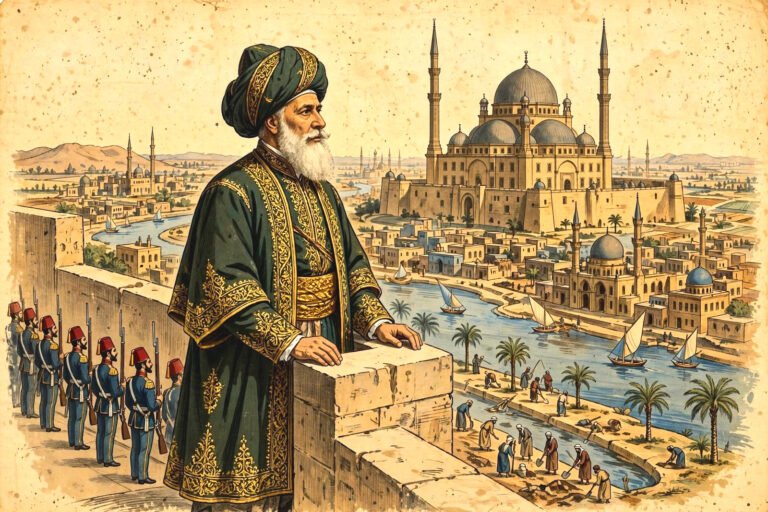
    Muhammad Ali Pasha and the Making of Modern Egypt

    Muhammad Ali Pasha (1769–1849), known in Ottoman Turkish as Mehmed Ali Pasha and in Arabic as Muhammad Ali Basha (محمد علي باشا), ruled Egypt from 1805 to 1848 and founded the dynasty that governed Egypt and Sudan until 1953.

    43 min readby Nekud
  4. Culture · 18 November 2026

    From Sefarad to Salonica

    How the Jews expelled from Spain and Portugal in the 1490s rebuilt their world in an Ottoman port, and how, in a city where Greek and Jewish scholars had read the Bible since Paul, Cyril and Methodius and Eustathios, the rabbis, commentators and printers, the upheaval of Sabbatai Zevi, the Ladino press and the great fire of 1917 made Salonica the largest Sephardic city on earth until its destruction in 1943.

    1 hr 40 min readby Nekud
  5. Culture · 17 November 2026

    Athens

    Athens heard Paul on the Areopagus and framed the legend of the Greek Torah. Its small Jewish community still shapes Greek Bible scholarship.

    44 min readby Nekud
  6. Culture · 17 November 2026

    Fez

    From the Idrisid foundation to the restored Ibn Danan synagogue, a long read on the Jews of Fez and their Bible: Ibn Quraysh’s epistle on the Targum, Dunash ben Labrat, David al-Fasi’s Karaite dictionary, Judah Hayyuj and the three-letter root, Isaac Alfasi and Maimonides, the first mellah, the megorashim and toshavim, the Nedivot press of 1516, the taqqanot, the Judaeo-Arabic sharḥ and the tritl of 1912.

    43 min readby Nekud
  7. Culture · 17 November 2026

    Istanbul

    Sixteen centuries of Jewish life in Istanbul, from Romaniote and Karaite Byzantium and the first Hebrew press of the Ottoman Empire to the polyglot Pentateuchs, Me’am Lo’ez and the community of Neve Shalom today.

    50 min readby Nekud
  8. Culture · 17 November 2026

    Izmir

    Smyrna came late to Sephardi history and then made up for lost time, with a united rabbinate, a Hebrew press, codifiers read across the Jewish world and a native son who declared himself Messiah.

    47 min readby Nekud
  9. Culture · 17 November 2026

    The Tongues and Letters of the Middle East Today

    Arabic and its dialects, Hebrew reborn, Aramaic in retreat, Persian, Kurdish, Turkish, Armenian, Georgian and a host of smaller tongues: a long read on the languages of the Middle East today, their roots and patterns, shared words and courtesies, diglossia and the qāf, the Arabic, Hebrew, Syriac and Caucasian scripts, the 1928 switch to Latin letters, Arabizi and Unicode, and the politics of language in classrooms and nations.

    3 hr 27 min readby Nekud
  10. History · 17 November 2026

    Exile in the Maghreb

    From a letter of consolation to the Jews of Fez around 997 to the pogrom in the same city in 1912, Fenton and Littman’s Exile in the Maghreb gathers the witnesses to Jewish life under Islam in Morocco and Algeria. This long read tells that history through their documents: the dhimma and the jizya, the Almohad storm, the first mellah, Iberian exiles, court Jews and travellers, Montefiore’s dahir and the Alliance schools, and the riots that ushered in French rule.

    1 hr 14 min readby Nekud
  11. Arts · 17 November 2026

    The Art Dealer as Enemy

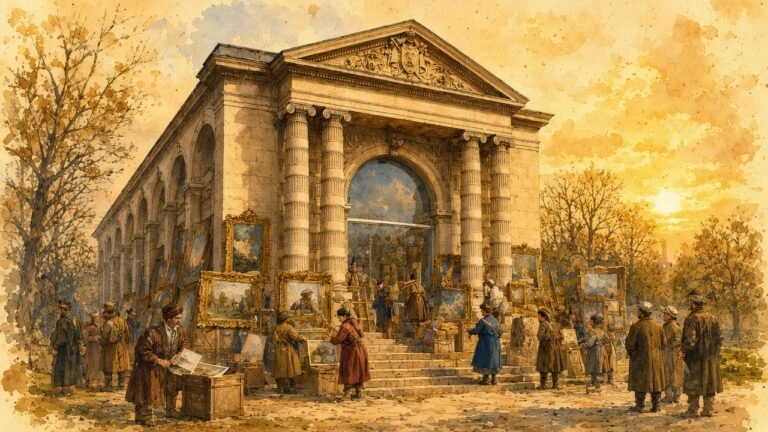
    Alfred Flechtheim brought Picasso and the cubists to Weimar Germany and became the Nazis' favourite caricature of the Jewish art dealer. Drawing on Charles Dellheim's Belonging and Betrayal, this long read follows the Jewish dealers of Berlin, Vienna and Paris through persecution, plunder and exile, the recovery of looted art after 1945, and the restitution claims, including Flechtheim's own, that are still being decided.

    1 hr 7 min readby Nekud
  12. History · 17 November 2026

    Bernard Lewis and the Prescience of 1976

    In January 1976, three years before the Iranian revolution, Bernard Lewis told the readers of Commentary that the West had stopped seeing religion in Muslim politics. This is his argument, section by section, the Middle East it was written in, and the long quarrel it started, from Edward Said's Orientalism to the war on terror.

    1 hr 8 min readby Nekud
  13. Culture · 17 November 2026

    The Coffeehouse Diaspora and the Making of Modern Jewish Culture

    Between the 1880s and the 1960s much of modern Jewish culture was made in cafés. Following Shachar Pinsker's A Rich Brew through Odessa, Warsaw, Vienna, Berlin, New York and Tel Aviv–Jaffa, this essay traces the café as a transnational network of migrants, a 'tavern without wine' where Hebrew, Yiddish, German, Russian and Polish writers met, quarrelled and remade themselves.

    1 hr 13 min readby Nekud
  14. History · 17 November 2026

    Shanghai, the Last Open Port

    Between 1938 and 1941 some eighteen thousand Jews from Germany, Austria and Poland found refuge in Shanghai, a war-torn Chinese city that asked no visa to land. This long read follows them from the closing doors of Europe through the Heime and lanes of Hongkew, the designated area of 1943 and liberation in 1945, to their scattering across the world.

    2 hr 5 min readby Nekud
  15. Culture · 16 November 2026

    The Great Jewish Migration

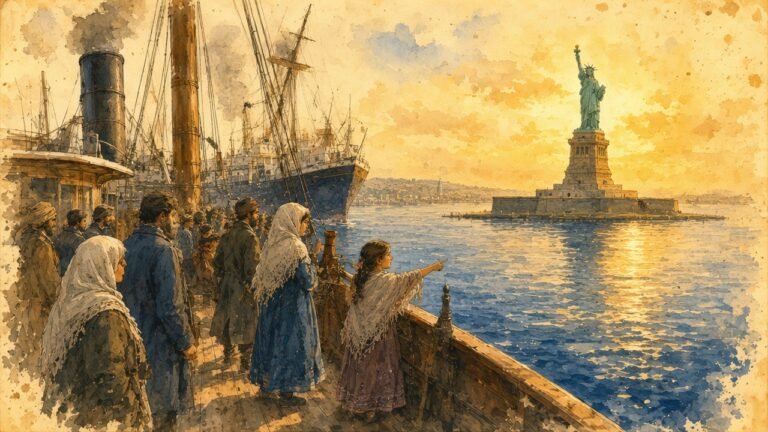
    Between 1881 and 1914 about two million Jews left the Russian Empire, Austria-Hungary and Romania for the United States. Why they went, how they travelled and what they built when they arrived.

    6 hr 48 min readby Nekud
  16. Culture · 13 November 2026

    Aleppo

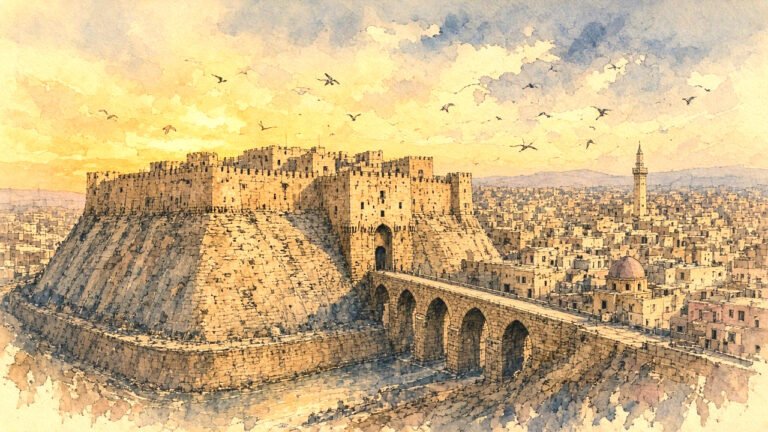
    Five thousand years of Aleppo, from the storm god’s temple on the citadel to a merchant city of souqs, khans and synagogues.

    2 hr 8 min readby Nekud
  17. Culture · 13 November 2026

    Emanuel Ringelblum and the Buried Archive

    A Galician-born historian, teacher and welfare worker who organised the clandestine Oyneg Shabes archive in the Warsaw Ghetto, buried its papers in the earth, and was murdered with his wife and son in March 1944.

    53 min readby Nekud
  18. Culture · 13 November 2026

    Sima Babovich and the Karaites of Crimea

    A first-guild merchant of Evpatoria and the first official Karaite hakham recognised by the Russian Empire, whose petitions, from the mission of 1827 to the consistory of 1837, secured a legal standing for the Karaites of Crimea increasingly distinct from that of Rabbanite Jews.

    54 min readby Nekud
  19. Culture · 13 November 2026

    Ktav Ashuri, the Upright Script

    The square Hebrew letters of every Torah scroll, prayer book and Israeli street sign began as the chancery hand of the Persian empire. This essay follows Ktav Ashuri from Aramaic papyri and the Dead Sea Scrolls through the Masoretes, the medieval scribes and the printers of Venice, Amsterdam and Vilna to the type designers of modern Israel.

    1 hr 58 min readby Nekud
  20. Culture · 13 November 2026

    Hummus and the Long Table

    From the wild chickpeas of the Anatolian hills to the morning hummus shops of Damascus, Jaffa and Antakya, this long read follows a humble purée through ten thousand years of farming, cookery, chemistry, migration and quarrel. It ends where it began, with a bowl set in the middle of a family table.

    1 hr 56 min readby Nekud
  21. Arts · 13 November 2026

    Naskh and the Proportioned Pen

    Naskh began as the working hand of Baghdad’s copyists and became, through the measured pens of Ibn Muqla, Ibn al-Bawwāb, Yāqūt, Şeyh Hamdullah and Hâfız Osman, the script in which most Arabic is read today. This long read follows it from reed and soot to metal type, Linotype matrices and digital fonts.

    1 hr 58 min readby Nekud
  22. Culture · 13 November 2026

    The Golden Age of Sefarad

    For eight centuries the Jews of al-Andalus and Christian Spain wrote poetry, philosophy, law and science that shaped Jewish life and European learning, from the courts of Córdoba and Granada to the astronomers of Toledo. This essay follows that history from the Visigothic councils to the expulsion of 1492, weighing real achievement against the insecurity that ended it.

    7 hr 25 min readby Nekud
  23. Transmission · 13 November 2026

    The London Codex and the Scribe Who Hid His Name

    British Library Or. 4445 preserves nearly two thirds of the Torah as a scribe named Nissi ben Daniel wrote, pointed and annotated it in the age of the Ben Ashers, with a margin that seems to speak of Ben Asher as a living man. Restored on paper in 1540 and bought by the British Museum in 1891, it is still debated for its date and its Persian connections.

    21 min readby Nekud
  24. Transmission · 13 November 2026

    A Spaniard in the Corner of the Earth

    On a December night in 1158, in England, Abraham ibn Ezra dreamed that the Sabbath sent him a letter of complaint. The wandering Spanish grammarian carried the Hebrew learning of al-Andalus to Christian Europe, praised the codices checked at Tiberias above all others, and left hints about Scripture that Spinoza later made famous.

    26 min readby Nekud