The Masoretes and their notes, vowel points and accents, scribal law, and the languages of the text.
69 pages
Masoretes and schools7
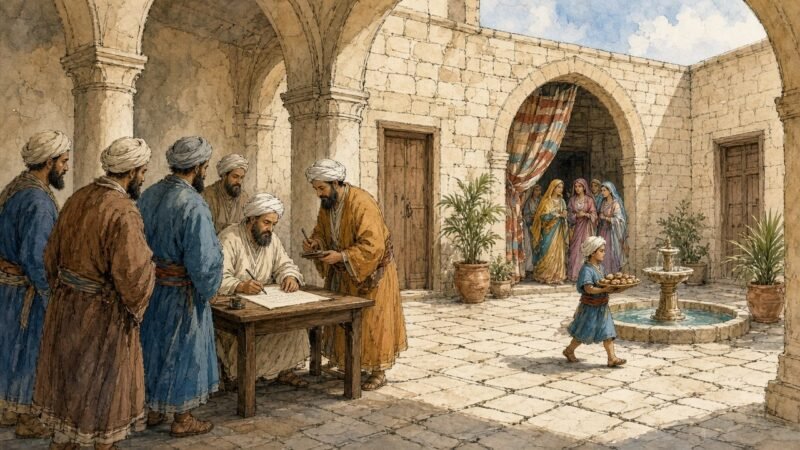 A Contract for Two CalendarsEarly in 1082, probably in Cairo, a Rabbanite leader promised his Karaite bride she need not sit by a Sabbath candle. The two communities…
 From Papyrus to Print: Preserving the BibleA 30 slide presentation on how the Bible was preserved since Jesus, Jewish and Christian copying, papyri, codices, versions and modern editions.
 Guardians of the Hebrew Biblical TextA 30-slide presentation on the Masoretes, the Masoretic Text, and the scribal traditions that preserved the Hebrew Bible.
 Rabbanites, Karaites, and the Origins of the Masoretic TraditionAn exploration of the Rabbanite-Karaite debate and its impact on the authority, copying, and interpretation of the Masoretic Text.
 The Tiberian Masorah and the Schools of Ben Asher and Ben NaphtaliAt a glance c. 750 CE: Asher the Elder, the first of the Ben Asher line, is at work in Tiberias; the earliest external…
 Vowels, Accents and SafeguardsA slide-based presentation on the Masoretes, the scribes who preserved the Hebrew Bible through vowels, accents, and statistical safeguards.
 Who Were the Masoretes?Who were the Masoretes? The scribes and grammarians of Tiberias (7th to 10th century) who fixed the vowels, accents and notes of the Hebrew Bible.
Masorah and scribal practice29
 A Masorah Without a TextOkhlah ve-Okhlah, the largest collection of Masoretic lists arranged by topic, its titles, manuscripts and editions, and what they say about its date.
 Biblical Micrography1. Introduction to the Fusion of Sacred Text, Philology, and Visual Aesthetics In the vast codicological landscape of medieval civilization, Jewish scribal culture generated…
 Dots, Suspended Letters and Other Odd SignsThe oddities in the consonantal text of the Hebrew Bible, the extraordinary dots, the signs around Numbers 10:35–36 and the suspended letters.
 Full and Defective Spelling in the MasorahFull and defective spelling in the Hebrew Bible, how often the variants occur in manuscripts, and when the Masorah records them.
 Hilleli, Muggah and Zambuki: The Lost Model CodicesThe Hilleli, the Muggah, the Zambuki and the Jerusalem codex were cited for centuries as authorities in the margins of Hebrew Bibles, yet none…
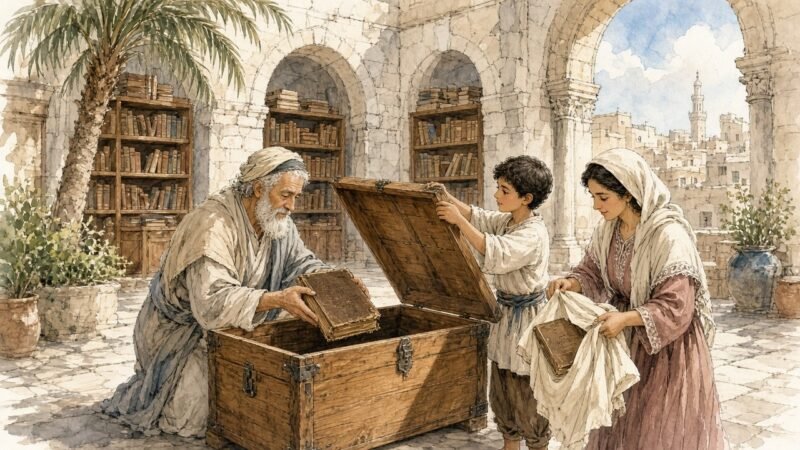
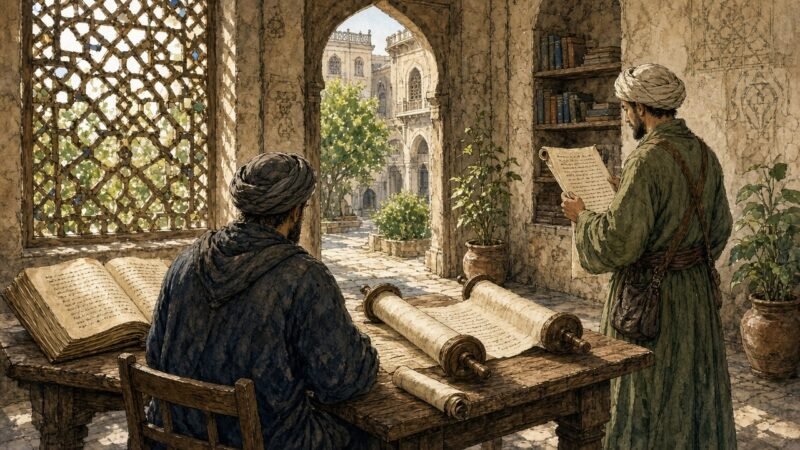 How Scribes Set Out the Songs of the TorahMaimonides found the songs written in confusion and trusted a book corrected by ben Asher. The Talmud’s brickwork, the line-lists in Soferim, the disagreements…
 Itture Soferim and the Omissions of the ScribesThe itture soferim, the omissions of the scribes in rabbinic tradition, and how they differ from the tiqqune soferim and from ketiv and qere.
 Ketiv and Qere and the Types of CorrectionKetiv and qere, the written and read forms of the Hebrew Bible, how the qere is marked in the margin and its main types, including perpetual qere.
 Open and Closed Sections in the Hebrew BibleThe spaces that divide the text of a Torah scroll into open and closed sections are among the oldest features of the written Hebrew…
 Parashiyyot: How a Break Is WrittenThe open and closed sections of the Hebrew Bible, how each break is written, the later pe and samekh, and Ginsburg’s collation against Baer.
 Reading the Margins: Masoretic Terms and MnemonicsThe two marginal layers of the Masorah, the short Masorah parva and the fuller Masorah magna, their terms and mnemonics, and why they disagree.
 Sebirin in the Masoretic NotesThe sebirin of the Masorah, notes on tempting but rejected readings in the margins of the Hebrew Bible, and the debate about their purpose.
 Soferim, the Scribes of the Hebrew BibleThe Soferim, the Jewish scribes who copied, corrected and guarded the Hebrew Bible from the Second Temple period to the Middle Ages.
 The Closing Lists at the Ends of the BooksThe Masorah finalis, the summary lists at the end of biblical books, with counts of verses, words and letters, mid-points and other lists.
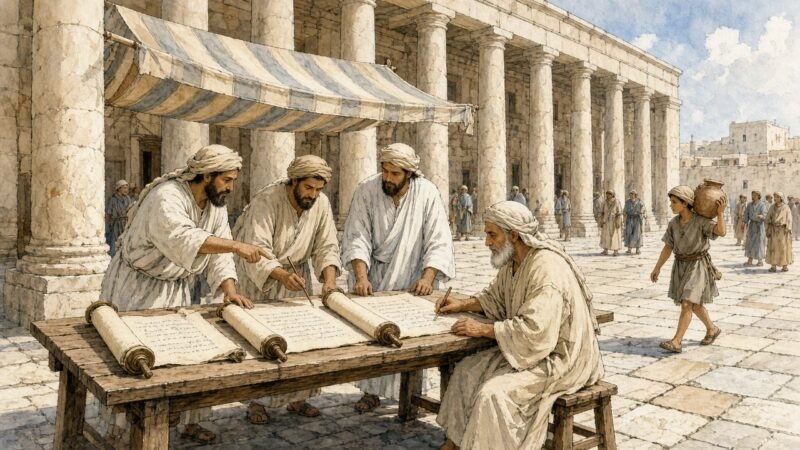 The Counters of the Torah and the Three Scrolls of the Temple CourtThe Talmud says the first sages were called soferim because they counted every letter of the Torah, and remembers a Babylonian teacher who refused…
 The Eighteen Emendations of the ScribesThe eighteen emendations of the scribes, how the Masorah marks them in the Codex of 916, the midrashic records and later lists.
 The Law of the Quill: Scribal Safeguards of the TorahAncient scribal laws governing parchment preparation, reed pens, gall-nut ink, and letter counting ensured millimeter-exact Torah transmission.
 The Lost Model Codices Named in the MasorahThe model codices named in the Masorah, above all the Mugah and the Hilleli, lost books whose readings survive only in later citations.
 The Masorah Finalis and the Closing Apparatus of the Hebrew BibleThe Hebrew Bible that Jews read in synagogue and that scholars consult as the received text of the Old Testament has been transmitted through…
 The Masorah of the Former ProphetsThe Hebrew Bible's Masoretic text carries two parallel voices. One is the consonantal text that scribes copied, letter by letter, from generation to generation.…
 The Masorah Parva and Masorah MagnaThe text of the Hebrew Bible, as it now sits between the covers of a printed Mikraot Gedolot or a single-volume Hebrew Tanakh, looks…
 The Masoretic Lists of Okhlah ve-OkhlahThe largest independent compilation of Masoretic lists, known by the first two words of its opening list, shows how the Masoretes and their successors…
 The Sedarim and the Palestinian Reading of the TorahIn twelfth-century Cairo a traveler found two synagogues reading the Law at different speeds. The shorter Palestinian lessons, the sedarim, survived in the Masorah,…
 The Sedarim of the Hebrew Bible: Lectionary Divisions of the Triennial CycleThe sedarim, Masoretic divisions of the Hebrew Bible that reflect the triennial cycle of Torah reading, their numbers, marking and lists.
 The Severus Scroll1. Introduction to the Sacred Temple Spoil that Survived in Masoretic Memory Among the countless lost codices and scrolls of classical and late antique…
 The Unusual Letters of the Hebrew BibleDotted words, inverted nuns, suspended letters and letters written large or small are among the oldest features of the written Hebrew Bible, transmitted with…
 The Written Layout of the Biblical Songs: Brickwork, Columns and GapsThe special layouts of the biblical songs, from the Song of the Sea and Haazinu to the Song of Deborah, in early codices and modern editions.
 Tiqqune Soferim1. Introduction to the Paradox of Scribal Holiness and Intentional Emendation Within the annals of textual transmission, few religious traditions have guarded the integrity…
 Written One Way, Read AnotherWhen Leah’s maid Zilpah bears Jacob a son, Leah names him Gad. The Hebrew text of Genesis 30:11 records her words in a way…
Vocalisation and accents15
 A Book at the End of a CodexThe short Tiberian treatise known as Diqduqe ha-Teʿamim does not survive in a single fixed form. Its copies differ in length and arrangement, and…
 Abū al-Faraj Hārūn’s Long and Short GuidesThe Hidāyat al-Qāriʾ does not survive as a single book. Its author wrote a long version and then a short one, later readers made…
 Diqduqe ha-Teʿamim: The Fine Details of the AccentsDiqduqe ha-Teʿamim, the Masoretic treatise under the name of Aaron ben Asher, its contents, its manuscripts and its editions from 1517 to 1967.
 Five Vowels and Six SignsThe Palestinian vocalisation of Hebrew, why it is not one fixed system, the serugin manuscripts, and its five vowels written with six signs.
 Guide for the Reader: Hidāyat al-QāriʾHidāyat al-Qāriʾ, the Guide for the Reader by Abū al-Faraj Hārūn, its versions and manuscripts, and its value for Tiberian pronunciation.
 Horayat ha-Qore, the Guidance of the ReaderHorayat ha-Qore, the Hebrew abridgment of Hidāyat al-Qāriʾ that reached Mainz, and the adaptations that carried its reading rules further.
 Nakdanim: Masters of the Vowel PointsA scholarly note on Nakdanim, the specialists who inscribed the Tiberian vowel points that preserve the precise reading tradition of the Hebrew Bible.
 Signs Above the Letters: The Eastern PointingThe Babylonian vocalisation of Hebrew, its spread, its earliest dated manuscripts such as the Prophets of 916, its signs and Yemenite reading.
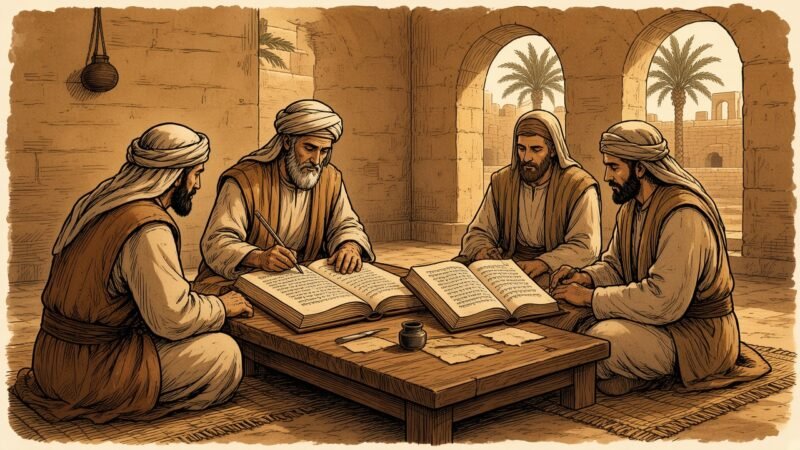 The Babylonian Vocalisation SystemEvery printed Hebrew Bible uses the Tiberian vowel points: dots and dashes set mostly beneath the letters, worked out by the Masoretes of Tiberias…
 The Ga’ya and the Meteg in Tiberian PointingThe ga'ya, later called meteg, in Tiberian pointing, its original name, its place beside the vowel and its minor, major and shewa forms.
 The Importance of CantillationCantillation, known in Hebrew as ta'amim (tastes or reasons) or in Yiddish as trop, refers to the traditional melodic chanting of the Hebrew Bible…
 The Palestinian Vocalisation SystemThe printed Hebrew Bible carries a dense system of small signs placed beneath, within and above its letters. These signs, which record the vowels…
 The Poetic Accents1. Introduction to the Acoustic Architecture of Hebrew Poetic Recitation For any reader transitioning from the extensive narrative prose of Genesis or Kings to…
 The Prose Accents of the Twenty-One BooksThe Tiberian accents of the twenty-one prose books, the disjunctives, the rules of division and the conjunctives, as set out by Aron Dotan.
 The Vowel-Point ControversyFor more than a century, Europe’s leading Hebraists argued over a question that sounds small: were the dots and dashes around the letters of…
Languages and scripts18
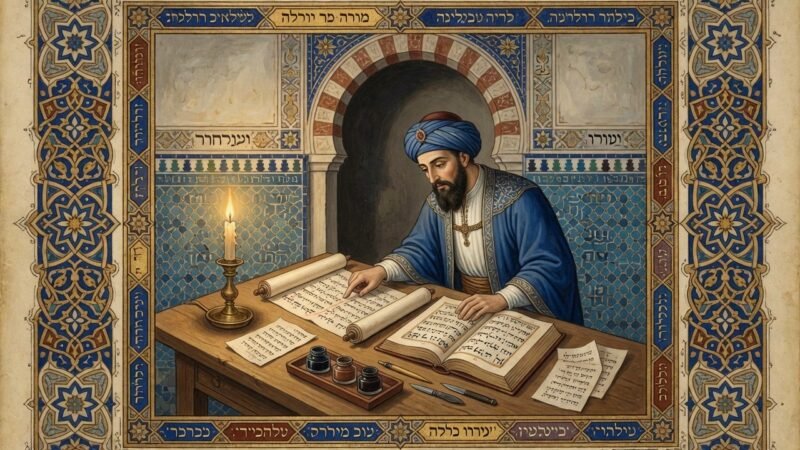 Arabic and Hebrew, Sister Languages and Sister ScriptsHow Arabic and Hebrew resemble each other as Semitic languages and scripts, and the philology that shaped Masoretic Bible study.
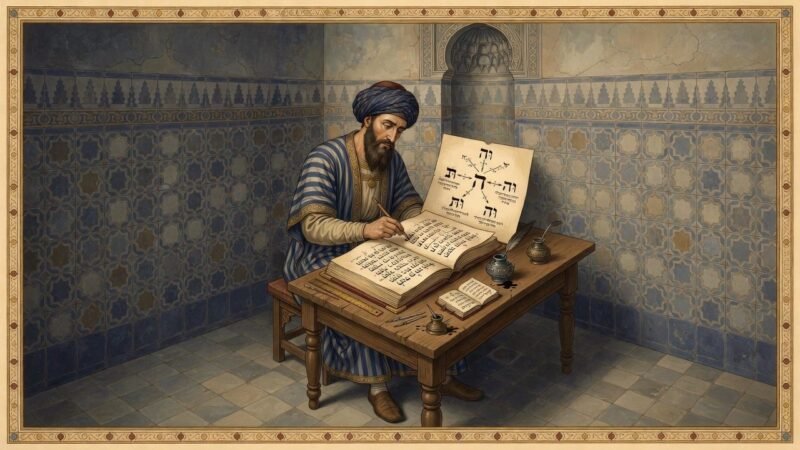 Arabic Influence on Jewish Bible LiteratureHow Arabic culture and scholarship shaped Jewish Bible study, Judeo-Arabic translation, Hebrew grammar and lexicography under Arabic rule.
 Biblical and Modern HebrewWhile a Modern Hebrew speaker can pick up a Isaiah scroll and decode a shocking amount of it, a feat an English speaker trying…
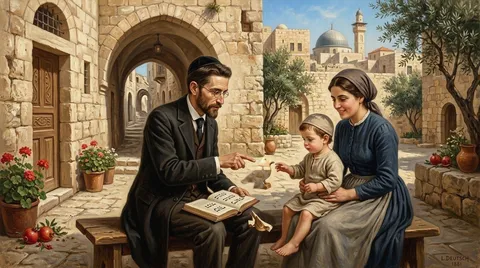 Eliezer Ben-Yehuda and the Epic Resurrection of Spoken HebrewA comprehensive scholarly biography of Eliezer Ben-Yehuda (1858–1922) and the epic struggle to resurrect Hebrew as a living, spoken modern language.
 Hebrew and Aramaic, Languages That Refused to DieA note on Hebrew and Aramaic during the Masoretic period, exploring how these languages survived and shaped the transmission of Scripture.
 Judah Hayyuj and the Three-Letter RootJudah Hayyuj, grammarian of Fez and Córdoba, whose work on weak verbs established the three letter root and drew on Masoretic observation.
 Ladino (Judezmo), Judeo-Spanish and the Sephardi BibleA history of Ladino (Judezmo), its Iberian roots, Ottoman lands, Bible translation tradition, Meʿam Loʿez, print culture, decline and revival.
 Lewis Glinert and The Story of HebrewIntroduction to the history of man's first language The study of language history often suffers from a linear bias, presenting the evolution of a…
 Medieval Hebrew GrammarAn introduction to medieval Hebrew grammar, from the first systematic analyses of biblical Hebrew to the influential works of the Spanish school.
 Medieval Hebrew LexicographyA survey of medieval Hebrew lexicography, exploring how scholars compiled dictionaries and glossaries to clarify the vocabulary of Scripture.
 Medieval Hebrew StudiesA hub for medieval Hebrew studies, linking grammar, lexicography, and the great sages who shaped the scientific study of biblical Hebrew.
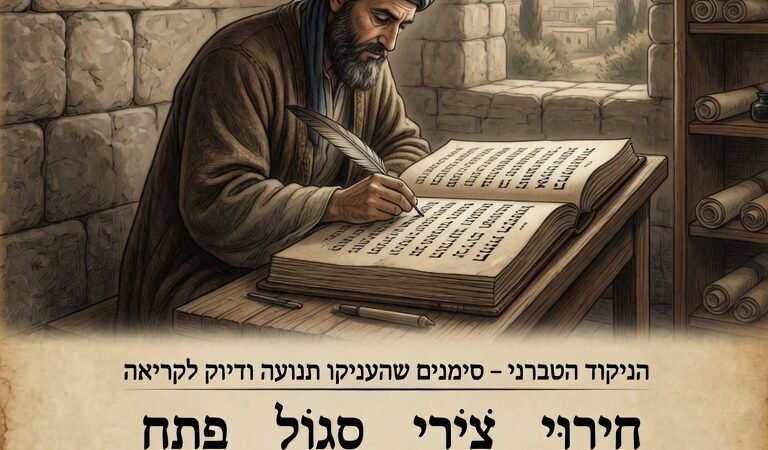 Power of the NiqqudThe Masoretes and the Creation of Niqqud: Preserving the Sacred Sounds of Scripture The Hebrew Bible, as we encounter it today in printed editions,…
 Roots in the Semitic LanguagesThe trilateral (or triconsonantal) root system is the defining morphological feature of Semitic languages (Arabic, Hebrew, Aramaic/Syriac, Geʿez/Amharic/Ethiopian Semitic, and their ancient relatives like…
 Similarities between CousinsThe Linguistic Kinship of Arabic and Hebrew: Shared Roots and the Masoretic Legacy Arabic and Hebrew, two vibrant languages of the Middle East, stand…
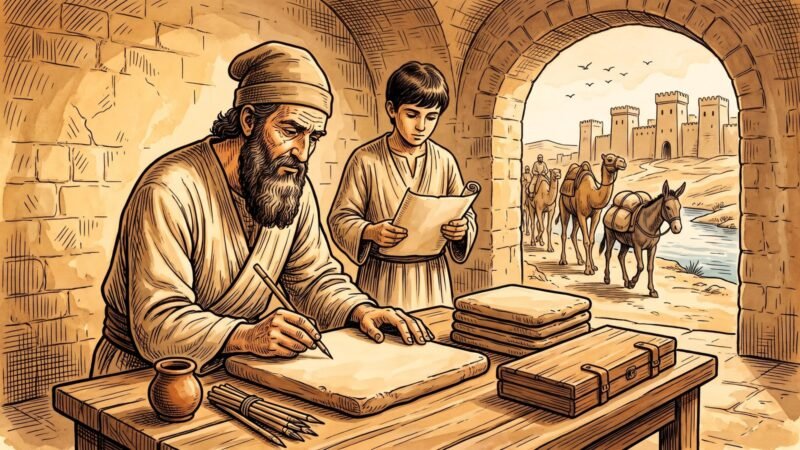 The Aramaic TongueOf the languages of the ancient Near East, one has the odd distinction of having been spoken almost everywhere and written in almost nowhere,…
- The Survival of AramaicA note on the survival of Aramaic from antiquity to the present, examining its role in the Bible, liturgy, and daily life of Jewish and Christian communities.
 The Survival of HebrewA note on the survival of Hebrew as a language of Scripture, liturgy, and learning from the biblical period through the modern revival.
 Yiddish Language, Literature, and the Ashkenazi BibleA history of Yiddish, from Ashkenaz to print, Hasidism, Haskalah, catastrophe and revival, and how it carried the Hebrew Bible into daily life.