How a coin dealer from the Frankfurt ghetto and his five sons built the most famous banking family in Europe, and how the family, and the myths about it, outlived two centuries of war, revolution and persecution.

About this history
In 1744 a boy was born in a crowded tenement at the back of a house in the Judengasse of Frankfurt, the walled lane to which the city had confined its Jews for nearly three centuries. His father changed money and dealt in cloth; his family took their surname from a red shield that had once hung over the door of an ancestor’s house. Seventy years later his five sons were lending to the great powers of Europe from Frankfurt, London, Paris, Vienna and Naples, and the name Rothschild had become a byword, in a dozen languages, for more money than anyone could imagine.[1][2]
This history follows the family from the Judengasse to the present. It tells how a coin dealer became court agent to a German prince, how his sons built a partnership that spanned a continent, and how they financed wars, railways and the purchase of a canal. It looks at what the family did with its wealth and its standing: the campaign that put the first Jew in the House of Commons, the schools, hospitals and housing of London and Paris, and the villages Edmond de Rothschild sustained in Ottoman Palestine. It looks just as closely at what others made of the name, from the Waterloo legend and the pamphlets of the 1840s to Nazi propaganda and the conspiracy theories still circulating online, and it sets those myths against the documentary record. Where historians disagree, about dates, sums or motives, the disagreement is stated rather than smoothed over.[3][4]
The History in Eighteen Chapters
The lane behind the wall

For most of its history, Jewish Frankfurt was a single street. In 1462, after years of pressure from the emperor and the city council, the Jews of the free imperial city were moved into a newly built lane outside the old medieval ramparts, along the line of the eastern city wall. It was called simply the Judengasse, the Jews’ Lane. Gates closed it at either end. It was never allowed to grow beyond its original footprint, so as the community increased, from about 110 people in 1463 to about 3,000 by 1610, the houses were divided and divided again, built backwards into courtyards and upwards into extra storeys.
The court agent and the elector
In 1785 Prince Wilhelm succeeded his father as Landgrave Wilhelm IX of Hesse-Kassel and moved his court from Hanau to Kassel. He inherited what was then reckoned the largest private fortune in Germany, built on the subsidies foreign governments paid for Hessian regiments, and he lent much of it out at interest to other princes. For a Frankfurt court factor the opportunity was obvious, and the competition was fierce. The landgrave’s business went mainly to established Christian bankers, above all the Bethmann brothers and the house of Rüppel & Harnier, and to better-connected Jewish agents.
Five sons, five cities

Mayer Amschel and Gutle had ten children who survived infancy: five daughters, Jeanette, Isabella, Babette, Julie and Henriette, and five sons, Amschel Mayer (born 1773), Salomon Mayer (1774), Nathan Mayer (1777), Kalman, later known as Carl (1788), and Jakob, later James (1792). Miriam Rothschild, drawing on the family’s records, wrote that Gutle bore nineteen children in all. It was the sons, and the decision to send them to different cities, that turned a Frankfurt firm into an international one.
Gold for Wellington

From 1808 to 1814 a British army fought the French in Portugal and Spain under Arthur Wellesley, later Duke of Wellington. It had to be paid, and paid largely in coin. Local merchants and muleteers would not take paper money from a foreign army, and the bills of exchange that the army’s paymasters drew on London could be sold in Lisbon or Cádiz only at a ruinous discount. The difficulty of getting hard money to the Peninsula was one of the chronic problems of the British war effort, and the government’s correspondence about it fills many volumes.
The legend of Waterloo

The battle of Waterloo was fought on Sunday 18 June 1815, a few miles south of Brussels. Wellington’s official dispatch announcing the victory reached London at about eleven o’clock on the night of Wednesday 21 June. In between lies one of the most durable stories in financial history: that Nathan Rothschild knew of the victory before anyone else in London and used his knowledge to make a vast fortune on the Stock Exchange.
Bankers to the Concert of Europe
The peace settlement of 1815 left Europe’s governments exhausted and in debt. Prussia, Austria, Russia, the restored Bourbons in France, Spain and Naples, and a host of smaller states all needed to borrow, and the Congress system, the “Concert of Europe” that the great powers created to keep the peace, needed money as much as it needed diplomacy. In the fifteen years after Waterloo the Rothschild brothers became the bankers of that order.
Barons without equal rights
The Rothschilds’ services to the allied powers brought honours, and the honours came from Vienna. In 1816 the Austrian emperor Francis I raised four of the brothers, Amschel, Salomon, Carl and James, to the hereditary Austrian nobility, with the right to the particle “von”. The Neue Deutsche Biographie dates the grant to 1816; the Rothschild Archive gives 1817 for the patent, and the difference probably reflects the gap between the decision and the issue of the formal document. Nathan, settled in England, was ennobled separately. In 1822 all five brothers were made barons, Freiherren, of the Austrian Empire.
Railways, revolutions and rivals

The Rothschilds made their fortune lending to governments, and they were slow to put their own capital into industry. Railways were the great exception. In the 1830s and 1840s, when the new technology spread from Britain across the Continent, the brothers in Vienna and Paris became two of its most important promoters.
The long road to Westminster

By the middle of the nineteenth century most of the legal disabilities of British Jews had quietly fallen away. Robert Woodall, writing in History Today, lists the milestones. Jews could become freemen of the City of London from 1831; Francis Goldsmid became the first Jewish barrister in 1833; Jews could take degrees at the new London University from 1837; and from 1845 a Jew elected to municipal office could make a declaration in the form most binding on his conscience. In 1855 David Salomons became Lord Mayor of London. One barrier remained, and it was the one that mattered most. To sit in either House of Parliament a member had to swear an oath that ended with the words “on the true faith of a Christian”.
Suez and the age of empire
In November 1875 the British prime minister, Benjamin Disraeli, learned that the Khedive of Egypt, Ismail Pasha, was looking for a buyer for his shares in the Suez Canal Company. The canal had opened in 1869, built by a French company under Ferdinand de Lesseps, and it had quickly become the main route between Britain and India. Ismail, who owned a large minority holding in the company, was close to bankruptcy, and French financiers were negotiating to buy them.
Schools, dwellings and defenders

By the second half of the nineteenth century the Rothschilds were not only the richest Jewish family in Europe but the leaders of organised Jewish life in London, Paris and Vienna. In Paris they sat on the Consistory of Paris and the Central Consistory of the Jews of France, the official bodies that Napoleon had created to govern French Judaism, and they ran the Jewish Charity Committee of Paris. James’s son Gustave was president of the Paris Consistory for more than forty years, and James gave the community the Rothschild Hospital, which still exists. In London, Natty held the presidency of the United Synagogue, the federation of Ashkenazi congregations created by Act of Parliament in 1870, and was, as the Encyclopaedia Judaica puts it, “the effective lay head of Anglo-Jewry”.
The well‑known benefactor

Edmond de Rothschild, born in Paris in 1845, was the youngest son of James and Betty. Unlike his two elder brothers, Alphonse and Gustave, he had little taste for banking. The Encyclopaedia Judaica describes him as devoted from his youth to “humanist and cultural matters, especially art”, and his collection of prints and drawings made him famous as a connoisseur and won him election to the Académie des Beaux-Arts of the Institut de France, which the Encyclopaedia calls the “Institut des Beaux Arts”. In 1877 he married Adelheid, the daughter of Wilhelm Carl Rothschild of Frankfurt, a man known for his strict religious observance and his reluctance to involve himself in the affairs of the Land of Israel.
A letter to Lord Rothschild

The man to whom the most famous letter in modern Jewish history was addressed had spent most of his life thinking about birds, butterflies and giant tortoises. Lionel Walter Rothschild, born in 1868, was the elder son of Natty, the first Lord Rothschild, and his wife Emma. The family moved from London to Tring Park in Hertfordshire, and there, as a small boy, Walter began collecting insects. At the age of seven he told his parents that he was going to “make a museum”, and by the time he was ten he had enough specimens to start one in a garden shed.
Myth and malice
No family in history has attracted more conspiracy theories than the Rothschilds. Earlier chapters have shown how particular legends arose, from the “Satan” pamphlet of 1846 that invented Nathan’s killing at Waterloo to the attacks that followed the railway accident at Fampoux. This chapter steps back to ask why the name became a symbol, how the symbol changed over two centuries, and why it still circulates today.
Vienna and Paris under the Nazis
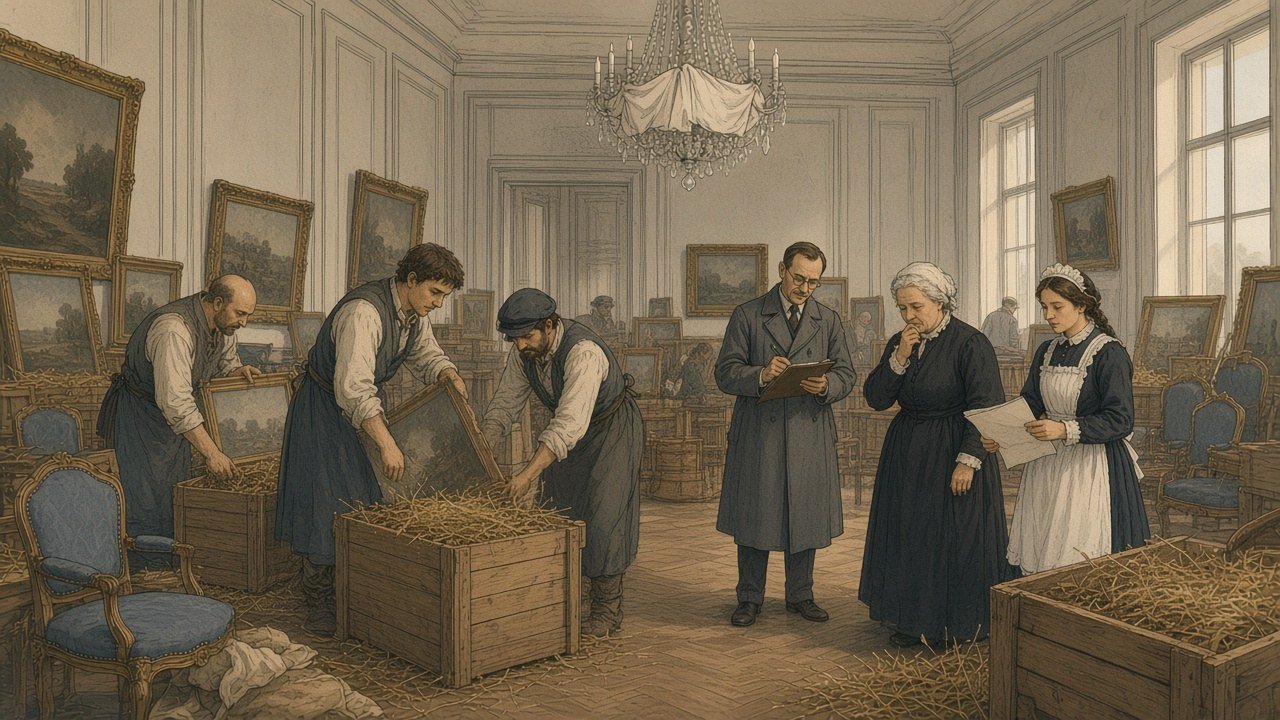
By the 1930s the Vienna house, S M von Rothschild, had been led for more than two decades by Louis Nathaniel von Rothschild, born in 1882, the third of the seven children of Albert and Bettina. After schooling at the Theresianum in Vienna and training as a bank clerk in Hamburg and New York, he joined the bank’s board in 1907 and in 1911, on his father’s death, became its sole manager. He sat on the boards of the Creditanstalt and, from 1922, on the General Council of the Austrian National Bank, and he was chairman of the great ironworks at Witkowitz, now Vítkovice, in Moravia. Contemporaries remarked on his unshakeable calm. He played polo, hunted, qualified as a balloon pilot and held a pilot’s licence, and for many years he was one of the most eligible and most confirmed bachelors in Viennese society.
From nationalisation to Rothschild & Co
After 1945 the two surviving houses, in London and Paris, had to rebuild in a world that no longer needed nineteenth-century merchant bankers in the old way. Governments now borrowed through central banks and public markets rather than through private syndicates, and the great American and later Japanese banks dwarfed the old European houses. The Rothschilds had to find a new role, and they found it in advising companies and governments, managing private wealth and investing on their own account.
Houses, gardens, wine and science

The money that the Rothschilds made in banking they spent, with great energy and taste, on houses, gardens, pictures and horses. By the 1870s the Vale of Aylesbury in Buckinghamshire was already known as “Rothschildshire”, for the number of houses the family owned there. They included Mentmore, built for Mayer Amschel’s grandson Mayer; Aston Clinton, the home of Sir Anthony and his wife Louise; Ascott, the hunting box of Leopold; Halton, built for Alfred; Tring Park, the home of Natty and Emma; and, greatest of them all, Waddesdon.
Legacy
In the early 1900s the Yiddish writer Sholem Aleichem published a short monologue called װען איך בין רױטשילד, Ven ikh bin Roytshild, “If I were Rothschild”. Its speaker is a melamed, a poor teacher of small children in Kasrilevka, the imaginary shtetl where many of Sholem Aleichem’s stories are set. It is Thursday, his wife is demanding money for the Sabbath, and he has none to give her. So he lets himself dream.
Family tree
OpenClose
A simplified tree showing the members of the family who appear most often in this history. Dates of birth and death follow the sources cited in the chapters.
- Mayer Amschel Rothschild1744–1812m. Gutle Schnapper (1753–1849)Court factor in Frankfurt, founder of the firm
- Amschel Mayer1773–1855Head of the Frankfurt house; no children
- Salomon Mayer1774–1855Founder of the Vienna house
- Anselm Salomon1803–1874Vienna; founder of the Creditanstalt
- Ferdinand1839–1898m. Evelina de Rothschild (1839–1866)Built Waddesdon Manor
- Albert Salomon1844–1911Head of the Vienna house
- Louis Nathaniel1882–1955Imprisoned by the Gestapo 1938–39
- Alice1847–1922Mistress of Waddesdon after Ferdinand
- Anselm Salomon1803–1874Vienna; founder of the Creditanstalt
- Nathan Mayer1777–1836m. Hannah Cohen (1783–1850)Founder of N M Rothschild & Sons, London
- Lionel1808–1879m. Charlotte von Rothschild (1819–1884)First Jewish MP, 1858; the Suez purchase
- Natty, 1st Lord Rothschild1840–1915m. Emma von RothschildFirst Jewish peer
- Walter, 2nd Lord Rothschild1868–1937Naturalist; recipient of the Balfour Declaration
- Charles1877–1923m. Rozsika von WertheimsteinBanker and entomologist
- Miriam1908–2005Naturalist, Fellow of the Royal Society
- Victor, 3rd Lord Rothschild1910–1990Biologist; head of the Cabinet “think tank”
- Leopold1845–1917
- Lionel1882–1942Creator of Exbury Gardens
- Natty, 1st Lord Rothschild1840–1915m. Emma von RothschildFirst Jewish peer
- Anthony1810–1876m. Louise MontefioreBaronet
- Constance, Lady Battersea1843–1931Founder of the JAPGW
- Nathaniel1812–1870Bought Mouton, 1853
- Lionel1808–1879m. Charlotte von Rothschild (1819–1884)First Jewish MP, 1858; the Suez purchase
- Carl Mayer1788–1855Founder of the Naples house
- Wilhelm Carl1828–1901Last head of the Frankfurt house
- James Mayer1792–1868m. Betty von Rothschild (1805–1886)Founder of de Rothschild Frères, Paris
- Alphonse1827–1905Head of the Paris house from 1854
- Édouard1868–1949
- Guy1909–2007Rebuilt the Paris bank after 1945
- Bethsabée1914–1999Founder of the Batsheva Dance Company
- Édouard1868–1949
- Gustave1829–1911President of the Paris Consistory
- Edmond1845–1934m. Adelheid von RothschildHa-Nadiv ha-Yadu’a, patron of the settlements
- Alphonse1827–1905Head of the Paris house from 1854
- Five daughtersJeanette, Isabella, Babette, Julie and Henriette
Timeline
OpenClose
The city of Frankfurt confines its Jews to a single walled lane on the eastern edge of the town, where the Rothschilds will live for more than three centuries.[5]
Mayer Amschel Rothschild is born in the Judengasse on 23 February; a few German reference works give 1743.[6]
The third son, Nathan, leaves for England to buy cotton goods for the family business, settling first in Manchester and later in London.
Mayer Amschel signs a partnership agreement with his sons, the founding document of the family firm.[6]
Mayer Amschel dies in Frankfurt on 19 September, leaving a will that keeps the business in the hands of his sons.[6]
Nathan dies in Frankfurt on 28 July, during the wedding of his son Lionel to his cousin Charlotte.[2]
The Paris and London houses support the campaign for the Jews of Damascus accused in a blood libel.[10]
The railway accident at Fampoux and the pamphlet signed “Satan” launch a wave of attacks on James and the Waterloo legend.[11]
Nathaniel de Rothschild buys Château Brane-Mouton at Pauillac and renames it Château Mouton Rothschild.[12]
The Vienna Rothschilds lead the founding of the Creditanstalt, their answer to the Pereires’ Crédit Mobilier.
James de Rothschild buys Château Lafite, months before his death.
Ferdinand de Rothschild buys the Waddesdon estate and begins building the manor.[15]
Walter Rothschild’s Zoological Museum opens to the public at Tring.[22]
Edmond transfers his settlements to the Jewish Colonization Association with a grant of 14 million francs.[20]
The original Frankfurt house closes after the death of Wilhelm Carl.
Sholem Aleichem publishes his monologue of a Kasrilevka melamed.[23]
On 2 November Balfour’s letter is sent to Walter, the second Lord Rothschild.[24]
The first London gold price is set at New Court on 12 September.[25]
Louis von Rothschild is arrested in Vienna and the family’s bank and collections are seized.[26]
The French Rothschilds escape abroad; Guy joins the Free French.[2]
The remains of Edmond and Adelheid de Rothschild are reinterred near Zikhron Ya’akov.[20]
James de Rothschild leaves Waddesdon to the National Trust.[15]
Bethsabée de Rothschild founds the Batsheva Dance Company in Israel.[28]
The new Paris business takes the name Rothschild & Cie Banque.[30]
N M Rothschild & Sons withdraws from the London gold market.[32]
Paris Orléans takes the name Rothschild & Co.[30]
Rothschild & Co is delisted from Euronext Paris on 11 October after a family-led offer.[33]
Places
OpenClose
The Rothschild story ran across Europe and beyond, from a single lane in Frankfurt to five cities, the country houses of Buckinghamshire, the vineyards of the Médoc and the villages of the Land of Israel. The map shows the main places in this history, and the cards below open each one in Google Maps.
The Judengasse
The site of Frankfurt’s walled Jewish lane, where Mayer Amschel was born and the family lived until the nineteenth century. Remains of the houses are shown in the Museum Judengasse.[5]
Open in Google MapsBörneplatz
The square beside the old Judengasse, near the site of the Hinterpfann, the house where Mayer Amschel was born.[6]
Open in Google MapsNew Court
The London house in St Swithin’s Lane, the family’s City address since Nathan’s day and the scene of the daily gold fixing from 1919 to 2004.[25]
Open in Google MapsRue Laffitte
The street of the Paris house, de Rothschild Frères, founded by James, until the nationalisation of 1982.[29]
Open in Google MapsRenngasse
The street in Vienna’s inner city where the bank of S M von Rothschild stood until its seizure in 1938.[26]
Open in Google MapsVilla Pignatelli
The villa on the Riviera di Chiaia bought by Carl in 1841, today the Villa Pignatelli museum.[34]
Open in Google MapsChâteau de Ferrières
James de Rothschild’s great house east of Paris, built from the 1850s.[35]
Open in Google MapsWaddesdon Manor
Ferdinand’s French Renaissance château in Buckinghamshire, built from 1874 and left to the National Trust in 1957.[15]
Open in Google MapsThe museum at Tring
Walter Rothschild’s Zoological Museum, opened in 1892 and now the Natural History Museum at Tring.[22]
Open in Google MapsChâteau Lafite
The Pauillac estate bought by James in 1868 and still owned by the French branch.[36]
Open in Google MapsChâteau Mouton
Bought by Nathaniel in 1853 and promoted to first growth in 1973.[12]
Open in Google MapsRamat ha-Nadiv
The memorial gardens near Zikhron Ya’akov where Edmond and Adelheid were reinterred in 1954.[20][19]
Open in Google MapsGlossary of terms
OpenClose
- Arbitrage
- Profiting from differences in price for the same coin, bill or bond in different markets, one of the foundations of the brothers’ business.
- Aryanisation
- The Nazi term for the forced transfer of Jewish-owned businesses and property to non-Jewish owners.[26]
- Bill of exchange
- A written order to pay a sum at a stated place and date, the basic instrument of international merchant banking before the telegraph.
- Consols
- British government bonds, “consolidated annuities”, with no fixed repayment date; the most widely traded security in nineteenth-century London.
- Court factor
- The formal title, Hoffaktor, granted by a ruler to a Jewish agent; Mayer Amschel received it from Hesse-Hanau in 1769.[6]
- Court Jew
- A Jewish agent who supplied a prince’s court and armies, raised loans and dealt in coin and jewels; in German Hoffaktor or Hofjude.[37]
- Dunam דונם
- An Ottoman measure of land, about a quarter of an acre or 1,000 square metres in its later form.[20]
- Emancipation
- The grant of equal civil and political rights to Jews, achieved in Frankfurt only in 1864 and in British Parliament in 1858.[38]
- First growth
- The highest rank, premier cru, in the 1855 classification of the wines of the Médoc; Lafite was placed in it in 1855 and Mouton in 1973.
- Freiherr פֿרײַהער
- The German title of baron, granted to the five brothers by the Austrian emperor in 1822.[6]
- Gold fixing
- The twice-daily setting of the London gold price, held at New Court from 1919 to 2004.[25][32]
- Ha-Nadiv ha-Yadu’a הנדיב הידוע
- “The well-known benefactor”, the name by which Edmond de Rothschild was known in the settlements.[20]
- Judendeutsch יודן־דײַטש
- German written in Hebrew characters, the language of much of the brothers’ private correspondence.
- Judengasse יודן־גאַס
- “Jews’ lane”, the walled ghetto street of Frankfurt am Main, to which the city’s Jews were confined from 1462 until the early nineteenth century.[5]
- Lottery loan
- A government loan in which some bonds were repaid at a premium chosen by lot; Salomon’s Austrian loans of the 1820s took this form.
- Melamed מלמד
- A teacher of young children in a traditional Jewish school, like the dreamer of Sholem Aleichem’s monologue.[39]
- Moshava מושבה
- A Jewish farming village of the First Aliyah, such as Rishon le-Zion or Zikhron Ya’akov; plural moshavot.[18]
- Oath of abjuration
- The parliamentary oath containing the words “on the true faith of a Christian”, which kept Lionel de Rothschild from his seat until 1858.[13]
- Omnium
- A package of the different securities issued for a British government loan, traded as a single unit before the separate stocks were issued.
- PICA
- The Palestine Jewish Colonization Association, founded by Edmond in 1923–24 and led by his son James.[20]
- Restitution
- The return of looted property to its owners or their heirs, as with the Austrian Rothschild collections after 1945 and again after 1998.[26]
- Shtetl שטעטל
- A small Jewish market town of Eastern Europe, such as the imaginary Kasrilevka.[40]
- Squeeze-out
- The compulsory purchase of remaining minority shares after an offer has passed a legal threshold, used to take Rothschild & Co private in 2023.[33]
- Stättigkeit שטעטיקייט
- The Frankfurt statute that regulated Jewish life in the Judengasse, including the number of families and of marriages allowed each year.
- Yishuv יישוב
- “Settlement”, the Jewish community of the Land of Israel before 1948.[20]
- Ḥibbat Zion חיבת ציון
- “Love of Zion”, the movement of the 1880s that founded the first Jewish farming villages in Ottoman Palestine.[41]
- Ḥovevei Zion חובבי ציון
- “Lovers of Zion”, the members of the Ḥibbat Zion movement.[20]
References
OpenClose
- The Rothschild Archive, “The Rothschild name and arms” *
- Henry Wasserman, Simon R. Schwarzfuchs and Vivian David Lipman, “Rothschild,” Encyclopaedia Judaica, 2nd ed., reprinted at Encyclopedia.com *
- Brian Cathcart, “Nathan Rothschild and the Battle of Waterloo,” The Rothschild Archive Review of the Year 2014–2015 *
- Niall Ferguson, The House of Rothschild. Volume 1, Money’s Prophets 1798–1848 (London: Penguin, 1999; first published 1998) *
- “Frankfurt on the Main,” Encyclopaedia Judaica, 2nd ed., reprinted at Encyclopedia.com *
- Manfred Pohl, “Rothschild, Mayer (auch: Meyer) Amschel,” Neue Deutsche Biographie 22 (2005), pp. 131–133, Deutsche Biographie online *
- Miriam Rothschild, “Rothschild Women,” Shalvi/Hyman Encyclopedia of Jewish Women, Jewish Women’s Archive *
- Melanie Aspey, “Jews, Quakers and Catholics. Rothschild links with Radicals and Reformers in the nineteenth century,” The Rothschild Archive Review of the Year (2004) *
- The Rothschild Archive, “Nathan Mayer Rothschild and the ‘Waterloo Commission’” *
- “Damascus Affair,” Encyclopaedia Judaica, 2nd ed., reprinted at Encyclopedia.com *
- Julie Kalman, “‘Rothschildian Greed’. This New Variety of Despotism,” French History and Civilization 1 (2005), pp. 215–226 *
- Château Mouton Rothschild, “Key dates. 1853” *
- Hansard, House of Commons, “Admission of Baron de Rothschild,” 26 July 1858, vol. 151 *
- Robert Woodall, “The Jewish Relief Act, 1858,” History Today 25, no. 6 (June 1975) *
- Waddesdon Manor (National Trust and the Rothschild Foundation), “History of the House” *
- The Rothschild Archive, “Lionel de Rothschild and the Suez Canal” *
- Caroline Shaw, “Egyptian finances in the nineteenth century. A Rothschild perspective,” The Rothschild Archive Review of the Year (2006) *
- “Rishon le-Zion,” Encyclopaedia Judaica, 2nd ed., reprinted at Encyclopedia.com *
- “Zikhron Ya’akov,” Encyclopaedia Judaica, 2nd ed., reprinted at Encyclopedia.com *
- Getzel Kressel, “Rothschild, Baron Edmond James de,” Encyclopaedia Judaica, 2nd ed., reprinted at Encyclopedia.com *
- “Jewish Association for the Protection of Girls and Women,” Shalvi/Hyman Encyclopedia of Jewish Women, Jewish Women’s Archive *
- Natural History Museum, “Walter Rothschild. A curious life” *
- Sholem Aleichem, “Ven ikh bin Roytshild” (1902), Yiddish text with transliteration, ed. Raphael Finkel *
- “Balfour Declaration,” Encyclopaedia Judaica, 2nd ed., reprinted at Encyclopedia.com *
- LBMA, “Centenary of the LBMA Gold Price” (2019) *
- “Rothschild, Louis Nathaniel,” Lexikon der österreichischen Provenienzforschung (Commission for Provenance Research, Vienna) *
- Jewish Telegraphic Agency, “Baron Rothschild Switzerland After Release from Vienna Prison,” 14 May 1939 *
- Ruth Eshel, “Bethsabée Rothschild,” Shalvi/Hyman Encyclopedia of Jewish Women, Jewish Women’s Archive *
- The Rothschild Archive, “Rothschilds directing the Paris house” *
- Rothschild & Co, “The Rothschild Archive. Overcoming adversity,” Wealth Management insights, July 2020 *
- Carol Vogel, “Austrian Rothschilds Decide to Sell,” The New York Times, 10 April 1999 *
- BBC News, “Rothschild to leave gold market,” 14 April 2004 *
- Rothschild & Co Concordia, “Implementation of the squeeze-out following the simplified tender offer,” press release, 3 October 2023 *
- The Rothschild Archive, Rothschild Family website, “Villa Acton-Pignatelli, Via Chiaia, Naples” *
- Niall Ferguson, The House of Rothschild. Volume 2, The World’s Banker 1849–1999 (London: Penguin, 2000; first published 1999) *
- The Rothschild Archive, Rothschild Family website, “Château Lafite, Pauillac, France” *
- “Court Jews,” Encyclopaedia Judaica, 2nd ed., reprinted at Encyclopedia.com *
- “Emancipation,” Encyclopaedia Judaica, 2nd ed., reprinted at Encyclopedia.com *
- Sholem Aleichem, “If I Were Rothschild,” English translation, Yiddishkayt *
- “Shalom Aleichem,” Encyclopaedia Judaica, 2nd ed., reprinted at Encyclopedia.com *
- “Ḥibat Tsiyon,” The YIVO Encyclopedia of Jews in Eastern Europe *
Select bibliography
OpenClose
- Niall Ferguson, The House of Rothschild. Volume 1, Money’s Prophets 1798–1848 (London: Penguin, 1999)
- Niall Ferguson, The House of Rothschild. Volume 2, The World’s Banker 1849–1999 (London: Penguin, 2000), print
- Herbert H. Kaplan, Nathan Mayer Rothschild and the Creation of a Dynasty. The Critical Years 1806–1816 (Stanford: Stanford University Press, 2006), print
- Frederic Morton, The Rothschilds. A Family Portrait (London: Secker and Warburg, 1962), print
- Brian Cathcart, The News from Waterloo. The Race to Tell Britain of Wellington’s Victory (London: Faber, 2015), print
- Miriam Rothschild, Dear Lord Rothschild. Birds, Butterflies and History (London: Hutchinson, 1983), print
- Constance Battersea, Reminiscences (London: Macmillan, 1922), print
- Guy de Rothschild, Contre bonne fortune (Paris: Belfond, 1983), print
- Isaiah Friedman, The Question of Palestine. British-Jewish-Arab Relations 1914–1918 (London: Routledge, 1973), print
- Ran Aaronsohn, Rothschild and Early Jewish Colonization in Palestine (Lanham: Rowman and Littlefield, 2000), print
- Julie Kalman, “‘Rothschildian Greed’. This New Variety of Despotism,” French History and Civilization 1 (2005)
- Susanne Hehenberger, “Rothschild, Louis Nathaniel,” Lexikon der österreichischen Provenienzforschung (2022)
- Linda Gordon Kuzmack, Woman’s Cause. The Jewish Woman’s Movement in England and the United States, 1881–1933 (Columbus: Ohio State University Press, 1990), print
- Sholem Aleichem, “If I Were Rothschild,” translated by Julius and Frances Butwin
- The Rothschild Archive, London
- Waddesdon Manor, “History of the House”
- Natural History Museum, “Walter Rothschild. A curious life”
- United States Holocaust Memorial Museum, “An Antisemitic Conspiracy. The Protocols of the Elders of Zion”