In 1880 a teenage clerk left Baghdad for the China coast. His family went on to build the Peninsula hotels and China Light and Power, survive Japanese internment, and give away fortunes in schools, farms and refugee relief.

About this history
This history of the Kadoorie family follows it from the Jewish quarter of Ottoman Baghdad, through the Bombay offices of the Sassoons and the treaty ports of China, to Hong Kong today. It runs to fifteen chapters, each of which can be read on its own. Numbers in square brackets lead to the references at the end of each chapter, and the asterisk beside each reference leads back to the text. A family tree, a timeline, a list of places, a glossary and a select bibliography follow the contents below.
Where the sources disagree about a date or a story, the disagreement is set out rather than smoothed away. The Kadoories’ Baghdadi cousins and first employers, the Sassoons, have their own history in the Sassoon pages.
The History in Fifteen Chapters
From Baghdad to Bombay
A boy from Baghdad passes through Bombay in 1880 on his way to the China coast. Who the Kadoories were before they went east, and how the Sassoon network carried them.

The Jewish quarter of Baghdad, the death of Ṣāliḥ Kadoorie in 1876, the Sassoon network in Bombay and the young men it carried east.
A Clerk in the Treaty Ports
How two Baghdadi brothers left the Sassoon offices, set up as brokers under the name Kelly, and bought their way into the Hongkong Hotel, the Peak Tram and a small power company in Kowloon.
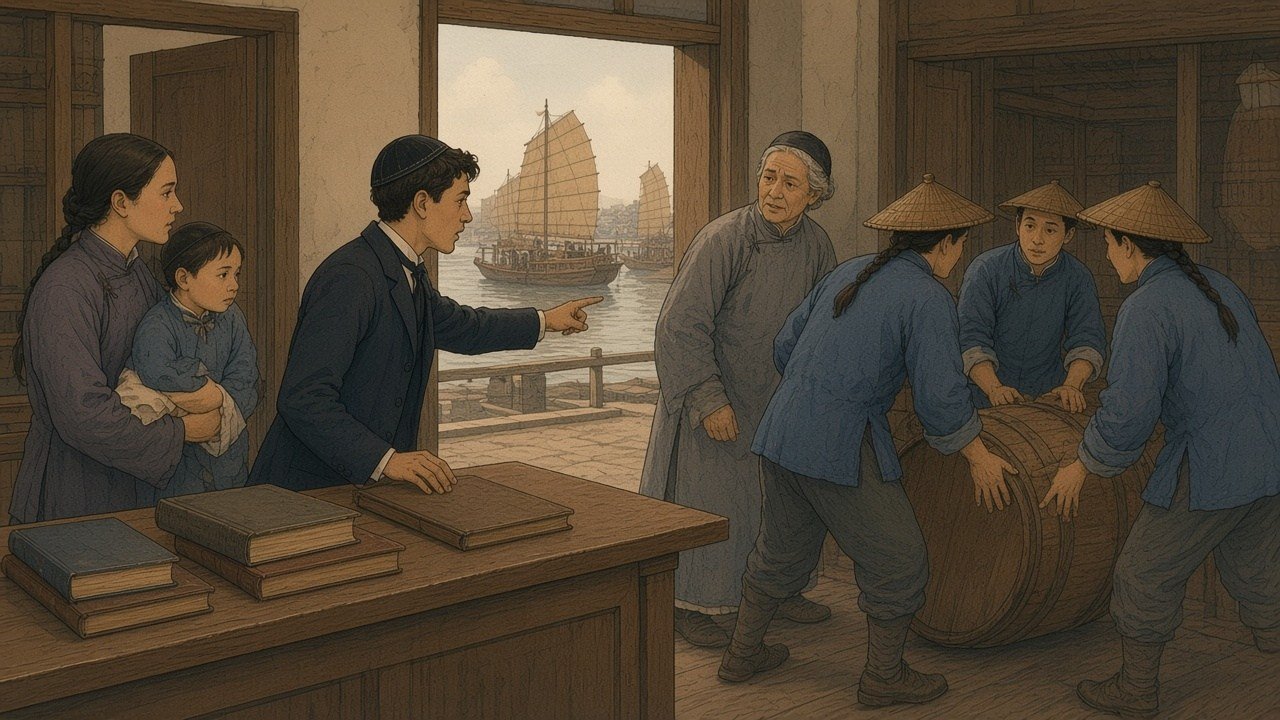
Apprentice clerkship with the Sassoons, the Kelly brokerage, the first hotel shares, the Peak Tram and the birth of China Light and Power.
Laura and the House on Bubbling Well Road
Elly Kadoorie’s marriage to Laura Mocatta joined a Baghdadi trader to an old London Sephardi family. Their household moved between Hong Kong, England and Shanghai until a fire in 1919 ended it.
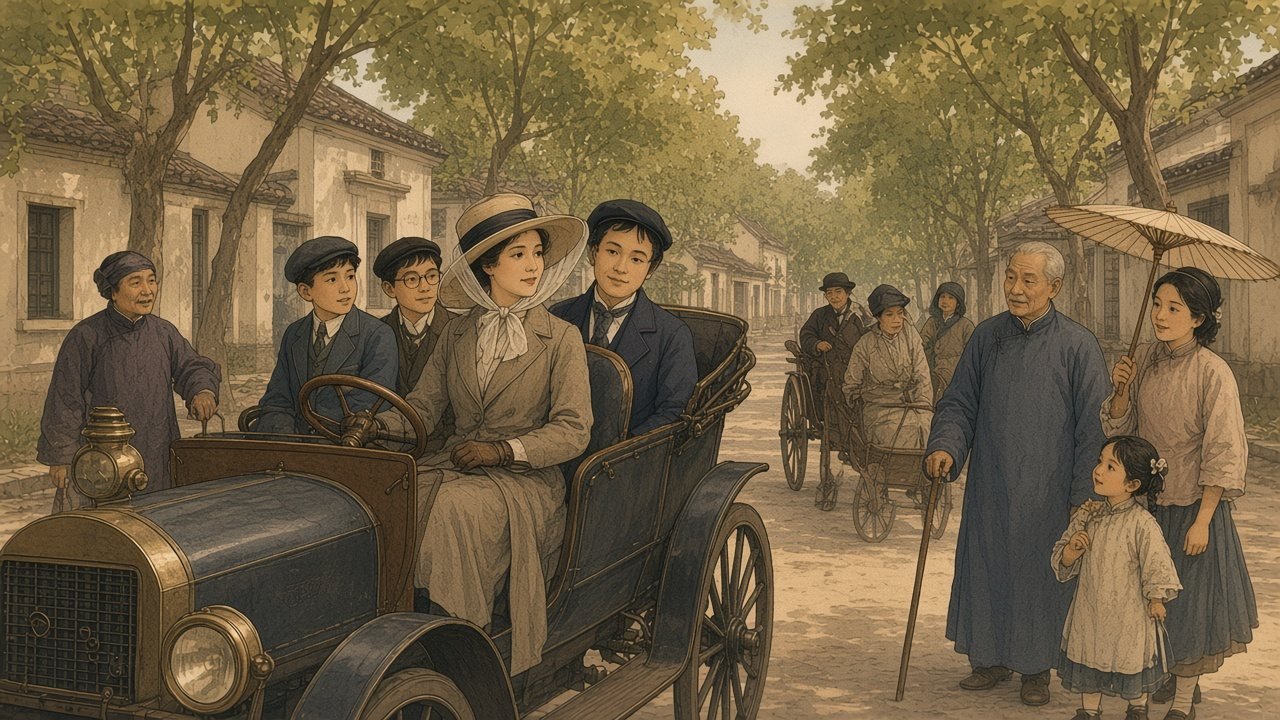
Laura Mocatta of London, three sons, schooling in England, the move to Shanghai in 1911 and the fire of February 1919.
Sir Ellis and the Schools
Ellis Kadoorie made his money early and spent much of it on schools for Chinese, Indian and European children in Hong Kong and China. His will paid for two agricultural schools in Palestine, one Jewish and one Arab, whose histories split along the lines of the conflict.

Ellis’s schools for Indian and Chinese children, the Helena May, his death in 1922 and the bequest behind the schools at Mount Tabor and Tulkarm.
The Prince of Philanthropists
Sir Elly Kadoorie gave to girls’ schools in Baghdad, hospitals in Istanbul, Chinese charities in Hong Kong and the Zionist movement in Shanghai. He saw wealth as a trust, and his giving followed the routes of the Baghdadi Jewish world.

Girls’ schools and a hospital in Baghdad, the Alliance Israélite Universelle, Chinese charities, Zionism in Shanghai and a letter from Sun Yat-sen.
Marble Hall
A Jewish country club on Bubbling Well Road burned in 1920 and was rebuilt as the grandest private house in Shanghai. How Marble Hall came to be the Kadoorie home, what it was like, and what became of it.
From burned country club to the most admired house in Shanghai, its 3,600-bulb ballroom, the Majestic Hotel across the road, and the Children’s Palace.
Hotels and Light
In the 1920s and 1930s the family’s hotel company became an Asian chain and opened the Peninsula in Kowloon, while Lawrence Kadoorie moved to Hong Kong and took charge of China Light and Power.

The 1922–23 hotel merger, the Peninsula’s opening in 1928, Lawrence at China Light and Power, the Kowloon Tong garden city and a marriage in 1938.
Refugees in Shanghai
Between 1938 and 1941 some 18,000 to 20,000 Jews fleeing Nazi Europe reached Shanghai, one of the few places that would take them without a visa. Horace Kadoorie built a youth association and a school for their children.

Horace’s youth association of 1937, the refugee influx of 1938–41, the Kadoorie School in Hongkew, a cheque for Victor Sassoon and the designated area of 1943.
War and Internment
In December 1941 Japan attacked Hong Kong and seized the International Settlement in Shanghai. The Kadoories lost their companies, were interned in Hong Kong and Shanghai, and Sir Elly died a prisoner in 1944.

The fall of Hong Kong and the surrender at the Peninsula, Stanley and Chapei camps, a room above the stables at Marble Hall and Sir Elly’s death in 1944.
Rebuilding Hong Kong
Lawrence Kadoorie returned to a dark and depopulated Hong Kong in November 1945. Over the next two decades he and Horace rebuilt China Light and Power, lost everything in Shanghai, and bet the family’s future on a British colony full of refugees.
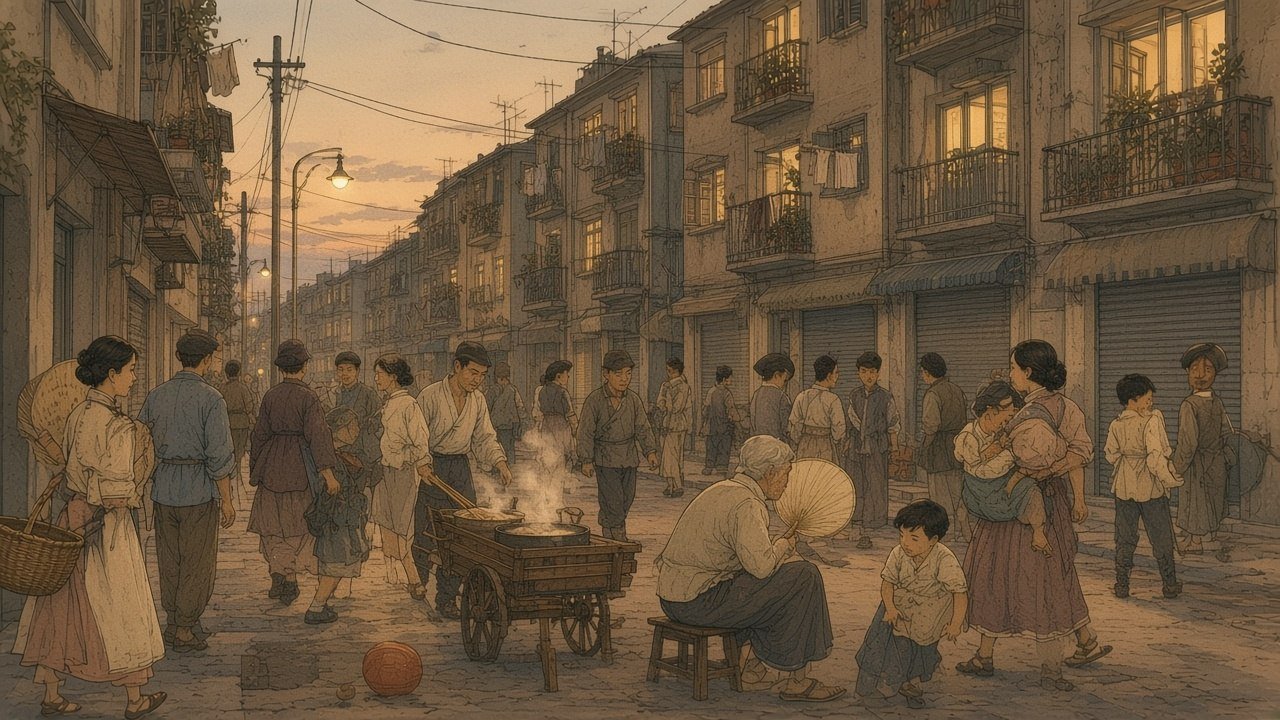
Return in 1945, reconstruction committees, the loss of Shanghai, CLP’s growth and the 1959 inquiry, the Esso partnership, carpets and cotton, and floodlights in 1967.
Helping People Help Themselves
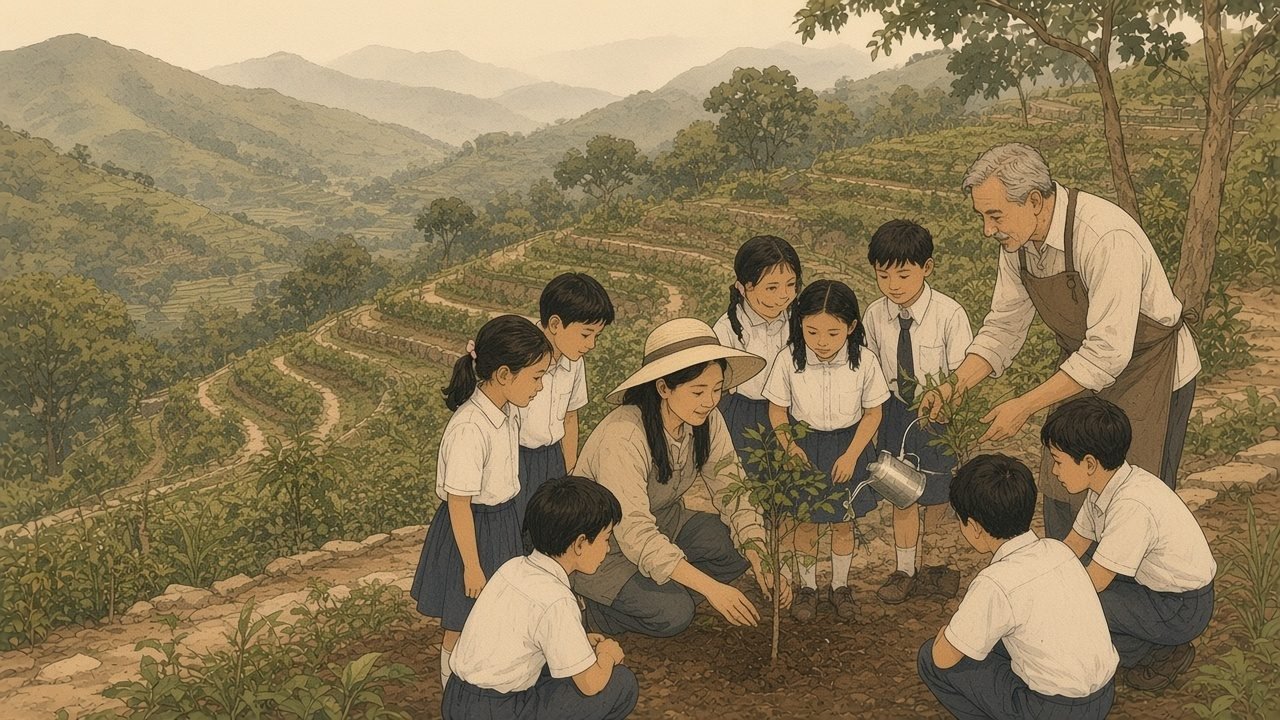
From 1951 the Kadoorie brothers gave pigs, cement, loans and training to refugee farmers in the New Territories. Their association built roads, dams and wells, founded an experimental farm on a barren hillside, and became today’s Kadoorie Farm and Botanic Garden.

The Kadoorie Agricultural Aid Association of 1951, two pigs for every pigsty, the farm at Paak Ngau Shek, the Magsaysay Award and Kadoorie Farm and Botanic Garden.
Horace and the Peninsula
For thirty-five years Horace Kadoorie, “the quiet one”, chaired the family’s hotel company, presiding over the Peninsula’s post-war revival, the Rolls-Royce fleet and the first Peak Tower, while spending his spare time with farmers and Gurkha soldiers.
Horace as hotel chairman, the Peninsula’s revival, a disco in the basement and a fleet of Rolls-Royces, the Peak Tower, Gurkha farmers, a single bank account and a foundation.
Lord of Light
In his last decades Lawrence Kadoorie became Hong Kong’s first peer, sold electricity to China after 1979 and staked his company on a nuclear power station at Daya Bay, while calling himself “still a Victorian”.
Knighthood and peerage, power for Guangdong, a meeting with Deng Xiaoping, the Daya Bay nuclear plant and its critics, retirement in 1992 and Lawrence’s death in 1993.
The Third Generation
Michael Kadoorie, interned as a baby and chairman of both family companies for decades, took the Peninsula from Hong Kong to Paris, London and Istanbul. In CLP’s 125th year his son Philip is deputy chairman of the hotels.
Michael Kadoorie at the hotels and CLP, the Peninsula’s return to Shanghai and its move to Europe, Rita and the McAulays, the foundations, Philip Kadoorie and CLP at 125.
Telling the Kadoorie Story
Most of what is known about the Kadoories comes from the family’s own archive, its companies and a handful of obituaries and reviews. This closing chapter looks at who has told the story, where the accounts disagree, and what remains unknown.
The family archive and company histories, Jonathan Kaufman’s book and its critics, a view from Shanghai, the question of colonialism, and what the sources leave unresolved.
Family tree
OpenClose
Key members only, by generation. Dates are those given in the sources cited in the chapters; where sources differ, the chapter explains.
- Ṣāliḥ (Silas) Kadooriedied 1876m. RimaMerchant of Baghdad. Elly later named an eye hospital in Baghdad after his mother.[1]
- Sir Ellis Kadoorie1865–1922Elder son. Broker and financier in Hong Kong, founder of schools; left a third of his fortune to education in Palestine or Mesopotamia.[1][2]
- Sir Elly Kadoorie1867–1944m. Laura Mocatta (died 1919)Younger son, founder of the family firm, and his London-born wife. Sources differ on the dates of both deaths.[1][3]
- Victor Kadoorieborn 1900Died in infancy, according to the Heritage Project.[3]
- Sir Horace Kadoorie1902–1995Chairman of The Hongkong and Shanghai Hotels, co-founder of the Kadoorie Agricultural Aid Association.[4][5]
- Lawrence, Lord Kadoorie1899–1993m. Muriel GubbayChairman of China Light and Power, first Hong Kong-born peer. Married Muriel in 1938.[6][7]
- Sir Michael Kadoorieborn 1941m. Betty Tamayo (died 2021)Chairman of CLP Holdings and The Hongkong and Shanghai Hotels.[8][9]
- Rita Kadoorie McAulaydaughter of LawrenceMarried, in The Independent’s phrase, “a Scots accountant”.[7][2]
- Andrew McAulaygrandson of LawrenceFirst executive director, later chairman, of the Kadoorie Farm and Botanic Garden.[11]
Timeline
OpenClose
Born in London, according to the University of Hong Kong.[4] Chapter 12
Michael Kadoorie is born.[39][6] Chapter 14
Hong Kong comes under a British military administration under Brigadier David MacDougall.[3] Chapter 10
The first civilian internee back from Shanghai, he joins the reconstruction effort.[6][2] Chapter 10
Horace joins the board of The Hongkong and Shanghai Hotels.[3] Chapter 12
Admiral Sir Cecil Harcourt invites Lawrence to join his Consultative Council; CLP’s capacity stands at 19.5 MW.[3][6] Chapter 10
Horace joins the board of the Peak Tramways Company.[3] Chapter 12
The family’s assets in mainland China are seized after the Communist victory.[43][7] Chapter 10
Horace Kadoorie becomes chairman of The Hongkong and Shanghai Hotels.[2] Chapter 10
Horace chairs the hotel company for thirty-five years.[2] Chapter 12
Lawrence serves on Hong Kong’s Executive Council.[43] Chapter 10
Horace and Lawrence Kadoorie, Norman Wright and Woo Ting Sang form the Kadoorie Agricultural Aid Association.[11] Chapter 11
The government and the brothers set up a jointly financed fund for interest-free loans, dated to August 1955 by the Magsaysay citation.[2][44] Chapter 11
The experimental and extension farm is established on Tai Mo Shan.[11][45] Chapter 11
Lawrence becomes a director of the Hongkong Bank, resigning in 1967.[6] Chapter 10
A commission recommends nationalising CLP; instead a scheme of control is agreed. Hok Un B is commissioned.[6][21] Chapter 10
A scheme at Kam Tin gives cattle and poultry to widows.[45] Chapter 11
Lawrence and Horace receive the award for public service.[44] Chapter 11
CLP and Esso form a joint generating company.[21] Chapter 10
Hong Kong’s first discotheque opens in the Peninsula’s basement.[28][2] Chapter 12
Lawrence orders night shifts on his construction projects during the disturbances.[7] Chapter 10
Michael joins the board of China Light & Power.[8] Chapter 14
The KAAA begins training Gurkha soldiers in farming.[46] Chapter 12
The 1,520 MW Tsing Yi power station is commissioned.[21] Chapter 10
Lawrence is appointed CBE; The Independent gives 1970.[6][7] Chapter 13
The Peninsula orders seven Silver Shadows, then a record.[2] Chapter 12
HSH acquires the Peak Tramways Company and opens the first Peak Tower.[3][2] Chapter 12
Lawrence is knighted.[6][7] Chapter 13
The second Peninsula hotel opens; Horace is appointed CBE.[2][4] Chapter 12
CLP begins supplying electricity to Guangdong.[39] Chapter 13
Lawrence becomes Baron Kadoorie, the first Hong Kong-born peer.[3] Chapter 13
After six years of talks, CLP and China agree to build the Daya Bay nuclear station.[6][39] Chapter 13
The joint venture agreement is signed at the Great Hall of the People; Deng Xiaoping meets Lawrence the next day.[47] Chapter 13
Michael succeeds Horace as chairman of The Hongkong and Shanghai Hotels.[3] Chapter 14
HSH acquires the Peninsula New York and the Palace Hotel, Beijing.[48] Chapter 14
Horace is knighted for his work with Gurkha soldiers.[37] Chapter 12
Lawrence retires as chairman of China Light and Power.[35][43] Chapter 13
Lawrence nominates his deputy, Sir Sidney Gordon, as chairman of China Light.[49] Chapter 13
He dies aged 94 and is buried at Happy Valley two days later.[6] Chapter 13
The nuclear station is commissioned.[39][21] Chapter 13
An ordinance establishes the Kadoorie Farm and Botanic Garden Corporation.[11] Chapter 11
He dies aged 92; much of his fortune goes to a charitable foundation.[5][2] Chapter 12
Michael becomes chairman of CLP Holdings.[8] Chapter 14
The group returns to Shanghai with a new hotel on the Bund.[48][2] Chapter 14
A statue of Horace is unveiled at the farm.[37] Chapter 11
The group’s first European hotel opens.[48] Chapter 14
Michael’s wife dies in Houston.[9] Chapter 14
The Peninsula Istanbul opens on 14 February, followed by London.[50][48] Chapter 14
Philip Kadoorie becomes deputy chairman of HSH.[10] Chapter 14
CLP marks its 125th anniversary.[51] Chapter 14
Places
OpenClose
Cities and houses that recur in the history, with the chapters where they matter most. The pins for the Majestic and the refugee school mark the city or district only, because the sources used do not give the exact sites.
Baghdad
Birthplace of Ellis and Elly. Elly founded a school named after Laura and an eye hospital named after his mother there. Chapters 1 and 3.[1]
Open in Google MapsBombay
Base of the Sassoon houses, where Baghdadi boys were trained before going east. Chapter 1.[15][16]
Open in Google MapsShanghai, Bubbling Well Road
The family home at 161 Bubbling Well Road, where Laura died in a fire in 1919. Chapter 3.[3][27]
Open in Google MapsMarble Hall, Shanghai
Elly’s mansion, completed in the mid-1920s and now a children’s palace. Its address is given as 54 Yan’an Road West or 1799 West Nanjing Road. Chapter 6.[30][25]
Open in Google MapsThe Majestic and the hotels of Shanghai
The Hongkong and Shanghai Hotels’ Shanghai properties, lost after 1949. Chapters 6 and 7.[2]
Open in Google MapsShanghai Jewish Youth Association School
The Kinchow Road school, known as the Kadoorie School, for refugee children. Chapter 8.[38]
Open in Google MapsChapei camp, Shanghai
The Japanese civilian internment camp in Shanghai where Lawrence and his family were held. Chapter 9.[6]
Open in Google MapsHong Kong
The family’s base from 1880 and again from 1945. Chapters 2, 7 and 10–14.[3]
Open in Google MapsThe Peninsula, Kowloon
The hotel company’s flagship, opened in 1928. Chapters 7, 9 and 12.[2]
Open in Google MapsStanley camp
The internment camp on Hong Kong Island where Lawrence, Muriel and their children were held until their transfer to Shanghai in 1942. Chapter 9.[6]
Open in Google MapsHok Un
CLP’s pre-war power station on the Kowloon waterfront, damaged in the war and repaired after it. Chapters 7 and 10.[52][39]
Open in Google MapsKadoorie Hill
The garden-city estate in Kowloon built by the Hongkong Engineering and Construction Company. Chapter 7.[3]
Open in Google MapsOhel Leah Synagogue
Hong Kong’s Sephardi synagogue, of which Lawrence was a trustee and chairman. Chapter 10.[6]
Open in Google MapsKadoorie Farm and Botanic Garden
The experimental farm at Paak Ngau Shek on Tai Mo Shan, founded in 1956. Chapter 11.[11]
Open in Google MapsMount Tabor and Tulkarm
Sites of the two agricultural schools in Palestine funded from Ellis’s bequest. Chapter 4.[32]
Open in Google MapsDaya Bay
Site of the nuclear power station built by a joint venture with CLP. Chapter 13.[39]
Open in Google MapsRepulse Bay
The hotel company’s resort hotel, opened in 1920, now a residential complex. Chapters 7, 9 and 14.[2][48]
Open in Google MapsThe Peak Tram
The funicular railway in which Elly invested in 1905, wholly owned by the hotel company since 1971. Chapters 2 and 12.[3]
Open in Google MapsGlossary of terms
OpenClose
- Alliance Israélite Universelle
- A Paris-based Jewish organisation founded in 1860 that ran modern schools across the Middle East and North Africa. Elly Kadoorie funded several of its schools.
- Anglo-Jewish Association
- A London-based organisation founded in the nineteenth century to support Jewish education and welfare abroad, especially in the Middle East. Sir Ellis left it a third of his estate.
- Atelier
- A workshop. In the Baghdad girls’ schools it meant a sewing and craft workshop where girls learned a trade.
- Baghdadi Jews
- Jews from Baghdad, Basra and neighbouring cities who settled in British India and the ports of East Asia from the late eighteenth century, keeping the language and customs of Baghdad.
- Bubbling Well Road
- The main east–west avenue of Shanghai’s International Settlement, now Nanjing West Road. The Kadoorie house, the Majestic Hotel and Marble Hall all stood on it.
- Children’s Palace
- The children’s centre established in the former Marble Hall in Shanghai after 1949.
- Civil assembly centre
- The Japanese term for the camps in which Allied civilians in Shanghai were interned from 1943.
- Comprador
- A Chinese agent employed by a foreign firm in the treaty ports to manage its dealings with Chinese merchants and markets.
- Crown land
- Land owned by the British Crown in Hong Kong and leased by the government. The brothers asked the government to make unused Crown land available to refugee farmers.
- Daya Bay
- The site in Shenzhen of mainland China’s first large commercial nuclear power station, a joint venture with CLP that began operating in 1994.
- Funicular
- A cable railway on a steep slope, in which ascending and descending cars counterbalance each other. The Peak Tram is the Hong Kong example.
- Gaddi’s
- The French restaurant of the Peninsula Hong Kong. The hotel company’s history pictures Leo Gaddi and his wife in 1958 and says the restaurant has served diners for over sixty years.
- Gurkhas
- Soldiers from Nepal serving in the British Army, many of them stationed in Hong Kong under British rule.
- Hongkew
- The district north of Suzhou Creek in Shanghai, now Hongkou, where most Jewish refugees lived and where the designated area of 1943 was created.
- Instrument of surrender
- The document signed by Governor Sir Mark Young at the Peninsula on 25 December 1941, ending British resistance in Hong Kong.
- International Settlement
- The jointly administered foreign concession in Shanghai, dominated by British and American interests, in which the Kadoories lived and worked.
- Judeo-Arabic ערבית יהודית
- The Arabic spoken by the Jews of Iraq and other Arab lands, often written in Hebrew letters. It was the working language of the Sassoon firm for generations.
- Kadoorie כדורי
- The family name, in its standard Hebrew spelling as used for the Kadoorie Agricultural School at Mount Tabor. In Baghdad it was pronounced with a guttural first consonant.
- Kadoorie Hill
- The residential district of Kowloon developed by the Hongkong Engineering and Construction Company from 1931 as a garden city, known as the Kadoorie Estate.
- Keren Hayesod קרן היסוד
- The Palestine Foundation Fund, the Zionist movement’s central fundraising body from 1920. Elly Kadoorie presided over its Shanghai branch.
- Life peer
- A member of the British House of Lords whose title cannot be inherited. Lawrence Kadoorie was the first from Hong Kong.
- Mandate Palestine
- Palestine under British administration from the First World War until 1948, under a League of Nations mandate.
- Military administration
- The British administration that governed Hong Kong from the Japanese surrender until civil government resumed in 1946.
- Mocatta
- An old Sephardi family of London, to which Laura Kadoorie belonged.
- Mou
- A Chinese unit of land area, roughly one-sixth of an acre. Elly bought twenty mou for the Jewish club.
- Mount Tabor הר תבור
- The mountain in Lower Galilee at whose foot the Jewish Kadoorie agricultural school was built.
- New Territories
- The mainland area north of Kowloon leased to Britain in 1898 for ninety-nine years, the rural hinterland where the KAAA worked.
- North-China Herald
- The leading British newspaper of old Shanghai, whose reports of 1918–24 are the main contemporary record of the Jewish club and Marble Hall.
- Open Door Policy
- China’s policy of economic reform and opening to foreign trade and investment, launched at the end of 1978.
- Paak Ngau Shek
- White Ox Rock, the barren hillside on Tai Mo Shan where the experimental farm was founded in 1956.
- Peak Tower
- The building at the upper terminus of the Peak Tram, first opened by The Hongkong and Shanghai Hotels in 1972.
- Po Leung Kuk
- A Hong Kong charity founded in the nineteenth century to protect women and children, to which Elly gave.
- Scheme of control
- The government-agreed framework for regulating CLP’s tariffs and returns, worked out with Esso after the 1959 inquiry.
- Sephardi ספרדי
- In the broad sense used in Asia and Britain, a Jew following the Sephardi rite, including the Jews of Baghdad and the old Spanish and Portuguese families of London.
- Shewan, Tomes & Co.
- The Hong Kong merchant house that acted as general manager of China Light and Power from 1901 until an arbitration award ended the arrangement in 1933.
- Sir Elly Kadoorie & Sons
- The family company named after the founder, once chaired by Lawrence; Michael and Philip are directors.
- Stateless refugees
- The term used by the Japanese authorities for Central European Jews deprived of German nationality; the designated area of 1943 applied to those who had arrived after 1937.
- Tael
- A Chinese unit of weight and of silver currency, about 1.3 ounces of silver.
- Taipan
- A head of a large foreign trading firm in China or Hong Kong. The word was applied to Lawrence Kadoorie in his obituaries.
- Toa Hotel
- The name under which the Peninsula operated during the Japanese occupation, meaning East Asia Hotel.
- Treaty port
- A Chinese port opened to foreign residence and trade under the unequal treaties that followed the Opium Wars, beginning with the Treaty of Nanking in 1842.
- Tzedakah צדקה
- Charity understood as a religious obligation of justice. The Kadoories’ foundations in Baghdad, Bombay and Shanghai belong to this tradition as well as to British philanthropy.
- Yishuv יישוב
- The Jewish community in Palestine before the establishment of the State of Israel in 1948.
- Zionism ציונות
- The movement for a Jewish national home in the Land of Israel. Elly supported it from 1900; his brother Ellis did not share his commitment.
References
OpenClose
- Rudolph Loewenthal, “Kadoorie”, Encyclopaedia Judaica, 2nd edn (Detroit: Macmillan Reference, 2007), reprinted at Encyclopedia.com *
- The Hongkong and Shanghai Hotels, Limited, Tradition Well Served: 150 Years (Hong Kong: HSH, 2016), anniversary magazine with a chairman’s letter by Sir Michael Kadoorie *
- Hong Kong Heritage Project, “Kadoorie Family: A Short History”, Hong Kong Heritage Project online collection (accessed 16 November 2026) *
- University of Hong Kong, “Horace KADOORIE – Citation”, Honorary Graduates *
- “Horace Kadoorie, Philanthropist, 92”, The New York Times, 26 April 1995 *
- Science Museum Group Collection, “Lawrence Kadoorie 1899–1993”, biographical record *
- Derek Davies, “Obituary: Lord Kadoorie”, The Independent, 26 August 1993 *
- CLP Group, “The Honourable Sir Michael Kadoorie”, director’s profile (read via search excerpt; direct access refused, 16 November 2026) *
- Death announcement, “Kadoorie”, The Telegraph Announcements, June 2021 *
- The Hongkong and Shanghai Hotels, Limited, “Change of Deputy Chairman”, HKEX announcement, 24 October 2024 *
- Kadoorie Farm and Botanic Garden, “The Early Days”, History and Heritage *
- Jewish Virtual Library, “Mocatta” (from the Encyclopaedia Judaica) *
- British Museum, Collections Online, “Mocatta & Goldsmid” (biographical record) *
- Encyclopaedia Judaica, “Sassoon”, via Encyclopedia.com *
- Encyclopedia of Modern Asia, “Sassoon, David”, via Encyclopedia.com *
- Sotheby’s, “The Sassoons in Baghdad & India”, article for the Sassoon collection sale *
- Sarah Abrevaya Stein, “Crazy Rich Sephardim”, Jewish Review of Books, review of Jonathan Kaufman, The Last Kings of Shanghai (2020) *
- Sotheby’s, “The Sassoons in the Far East”, article for the Sassoon collection sale *
- Qiu Xiaolong, “‘History Has Many Cunning Passages’: On Jonathan Kaufman’s The Last Kings of Shanghai”, Los Angeles Review of Books (2020) *
- Sir Ellis Kadoorie (S) Primary School, “History, Mission and Vision” *
- CLP Group, “Our History”, CLP Group website (accessed 16 November 2026) *
- Industrial History of Hong Kong Group, “CLP: The construction of Hok Un power station 1921, Part One”, transcription of China Light & Power’s souvenir brochure for the official opening of the new Hok Un station by Governor Sir Geoffrey Northcote (c. 1940) *
- Gwulo: Old Hong Kong, “Ellis Kadoorie School / Queen’s College Science Block … [1901–c.1966]” *
- Arnold Wright (ed.), Twentieth Century Impressions of Hongkong, Shanghai, and Other Treaty Ports of China (London: Lloyd’s Greater Britain Publishing, 1908), “The Ellis Kadoorie Chinese Schools Society”, online transcription *
- Archivo China España, 1800–1950 (Universitat Oberta de Catalunya), “Jewish Club of Shanghai, by Lafuente & Wootten” *
- Stroum Center for Jewish Studies, University of Washington, “From Baghdad to Hong Kong: Jewish Philanthropy and the Kadoorie Family” *
- Historic Shanghai, “Tour Report: Inside Marble Hall, The Kadoorie Mansion” *
- Hong Kong Brand Museum, “The Peninsula Hall” *
- Jewish Telegraphic Agency, “Kadoorie Bequest Causes Friction Between Jews and Government”, 10 January 1924 *
- Meet in Shanghai (Shanghai Municipal Tourism Administration), “Fairy tale house provides happy ending for Shanghai children” *
- Antiquities Advisory Board, Hong Kong, “Historic Building Appraisal: Peninsula Hotel” (no. 69) *
- Tamar Novick and Arie M. Dubnov, “The unknown history of the Palestinian school funded by an Iraqi Jew”, +972 Magazine, 25 February 2017 *
- Kadoorie Youth Village and Agricultural High School, “היסטוריה” (History), school website, in Hebrew *
- Society for Preservation of Israel Heritage Sites, “Kadoorie Agricultural Youth Village” *
- Reuters, “Lord Kadoorie; First Peer in Hong Kong”, Los Angeles Times, 26 August 1993 *
- A Borrowed Place (Hong Kong Heritage Project exhibition blog), “The Shanghai Jewish Youth Association”, 20 September 2017 *
- Kadoorie Farm and Botanic Garden, “Sir Horace Kadoorie”, History and Heritage *
- Loyola Marymount University Digital Collections, “Shanghai Jewish Youth Association / Kadoorie School on Kinchow Road, Shanghai, China” *
- CLP Group, CLP 120 Years of Shared Vision (Hong Kong: CLP Holdings, 2022), commemorative booklet with a conversation between Sir Michael and Philip Kadoorie *
- Shanghai Story Map, “The Designated Area: Jewish refugees in Hongkou and the ‘Shanghai Ghetto’, 1938–1949” *
- United States Holocaust Memorial Museum, Holocaust Encyclopedia, “Proclamation of restricted zone in Shanghai for refugees” *
- Amelia Allsop, “The Lost Records Revealed: Hong Kong Heritage Project’s Jewish collection”, Asian Jewish Life, Winter 2010–11 *
- “Lawrence Kadoorie, 94, Is Dead; A Leader in Hong Kong’s Growth”, The New York Times, 26 August 1993 *
- Ramon Magsaysay Award Foundation, “Kadoorie, Horace”, 1962 Award for Public Service *
- Kadoorie Farm and Botanic Garden, “70th Anniversary: Awakening of Memory, Loving the Land” *
- Kadoorie Farm and Botanic Garden, “KAAA” timeline panel, 60th anniversary exhibition (2016) *
- The Hong Kong Institution of Engineers, “Daya Bay Nuclear Power Station: A legacy of innovation, partnership and energy leadership”, Hong Kong Engineer, vol. 53, June 2025 *
- The Hongkong and Shanghai Hotels, Limited, Interim Report 2026, “Company at a Glance” *
- Reuters, “Leading taipan steps down at 93”, The Independent, 17 October 1992 *
- The Peninsula Hotels, “The Peninsula Hotels Debuts Dazzling New Istanbul Property on the Bosphorus Waterfront”, press release *
- CLP Holdings, “CLP Convenes 2026 Annual General Meeting”, press release with the Chairman’s opening remarks, 8 May 2026 *
- Industrial History of Hong Kong Group, “CLP – Hok Un (Yuen) Power Station 1921–1991” *
Select bibliography
OpenClose
- Kaufman, Jonathan. The Last Kings of Shanghai: The Rival Jewish Dynasties That Helped Create Modern China. New York: Viking, 2020. The only full-length popular history of the Sassoons and Kadoories together, based on family papers and interviews. Readable and vivid; historians have questioned its picture of Ottoman and Chinese history.
- Sergeant, Harriet. Shanghai: Collision Point of Cultures, 1918–1939. London: Jonathan Cape, 1991. Social history of inter-war Shanghai that includes interviews with Lawrence Kadoorie, the source of his recollections of Marble Hall.
- Goldstein-Sabbah, S. R. Baghdadi Jewish Networks in the Age of Nationalism. Leiden: Brill, 2021. Scholarly study of Baghdadi Jewish institutions and their overseas patrons, including Kadoorie schools in Iraq.
- Hong Kong Heritage Project. Kadoorie Family: A Short History. Online collection, Hong Kong. The family archive’s own illustrated outline, with images from its collections.
- The Hongkong and Shanghai Hotels, Limited. Tradition Well Served: 150 Years. Hong Kong, 2016. Anniversary history of the hotel company, including the family’s philanthropy and the Peninsula’s story.
- CLP Group. CLP 120 Years of Shared Vision. Hong Kong, 2022. Commemorative history of the power company, with Sir Michael Kadoorie’s recollections.
- Hong Kong Heritage Project, Kadoorie Family short history. The family archive’s own bilingual outline, with photographs.
- The Hongkong and Shanghai Hotels, Tradition Well Served. The hotel company’s 150th-anniversary magazine (2016).
- Kadoorie Farm and Botanic Garden, The Early Days. The farm’s history of the Kadoorie Agricultural Aid Association.
- Ramon Magsaysay Award citation, Lawrence and Horace Kadoorie. The 1962 citation for public service.
- Historic Shanghai, Marble Hall. A tour report from inside Marble Hall, with its history.
- Jewish Review of Books, Crazy Rich Sephardim. Sarah Abrevaya Stein’s critical review of Kaufman’s history.