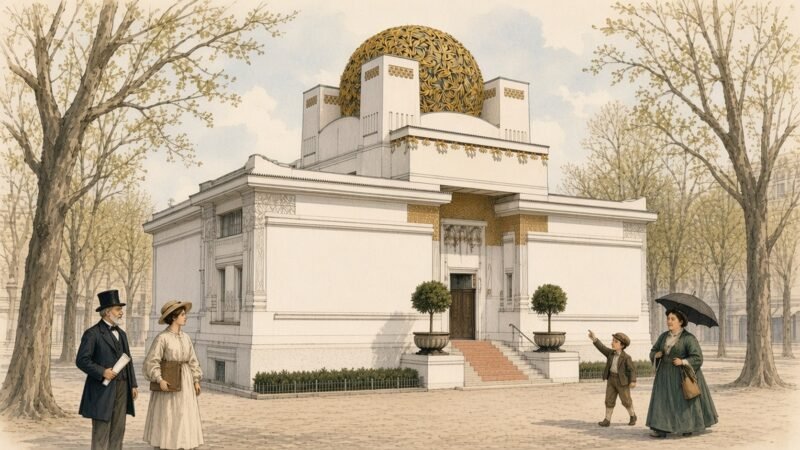
Art Nouveau and the Secession Movements from Mucha to Klimt
In the last decade of the nineteenth century a new decorative language spread across Europe with a speed that surprised even its practitioners. Known…
46 min read
Reader settings
Colour theme
Colour themes are for light mode. Choosing one switches dark mode off.
Custom colours colour wheel; text is kept readable
Preview: clear, readable long-form writing.
Text size
Saved in this browser only.
Category
Essays on past societies, institutions and turning points, from the House of Wisdom in Baghdad to the founding of the Royal Society. Many essays in the science sections also carry History as a second section.
In the last decade of the nineteenth century a new decorative language spread across Europe with a speed that surprised even its practitioners. Known…
46 min read
In the summer of 762 the second Abbasid ruler, Abu Jafar al-Mansur, chose a site on the west bank of the Tigris, close to…
48 min read
Geometry in the medieval Middle East was neither a simple copy of Greek learning nor an invention out of nothing. Between the eighth and…
27 min read
Imperial Chemical Industries was registered in London on 7 December 1926 from the merger of four companies, Brunner, Mond and Company, Nobel Industries, the…
47 min read
On 2 December 1925 the Badische Anilin- und Soda-Fabrik in Ludwigshafen changed its name to I.G. Farbenindustrie Aktiengesellschaft and absorbed five of the largest…
47 min read
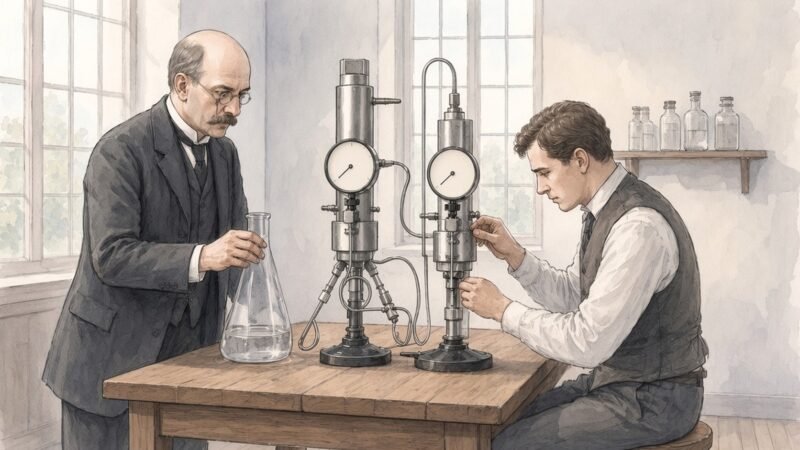
In the summer of 1909 a small steel apparatus on a laboratory bench in Karlsruhe produced a steady trickle of liquid ammonia from the…
46 min read
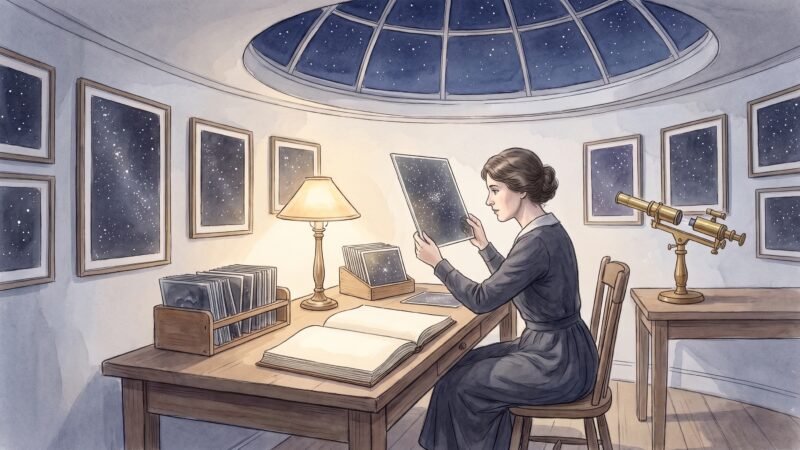
In 1925 a graduate student at Harvard calculated the composition of the stars and found them made almost entirely of hydrogen, with helium second…
24 min read
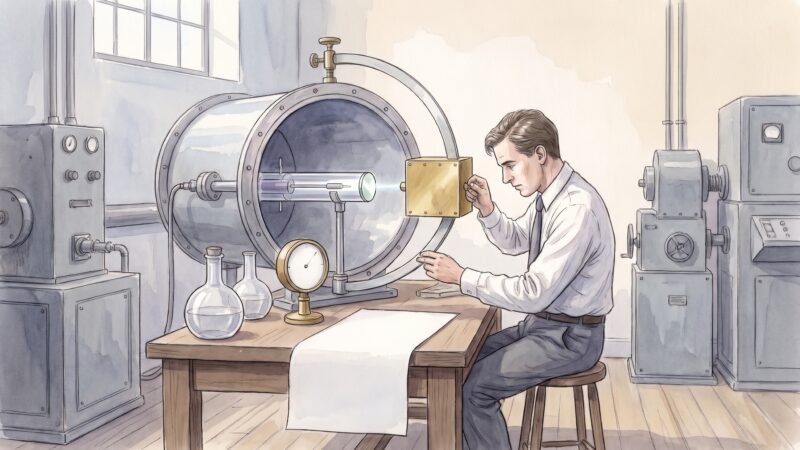
In 1927, at Bell Telephone Laboratories in New York, a beam of electrons was fired at a plate of nickel and the scattered electrons…
24 min read
In 1892 Lord Rayleigh was weighing gases in glass globes at the Cavendish Laboratory, and he found that the nitrogen he made in his…
24 min read
In 1920 Ernest Rutherford told the Royal Society that the nucleus of the atom must contain a particle nobody had ever seen: a neutral…
24 min read
The Royal Society was founded in a lecture room in the City of London on 28 November 1660, by twelve men who had been…
51 min read
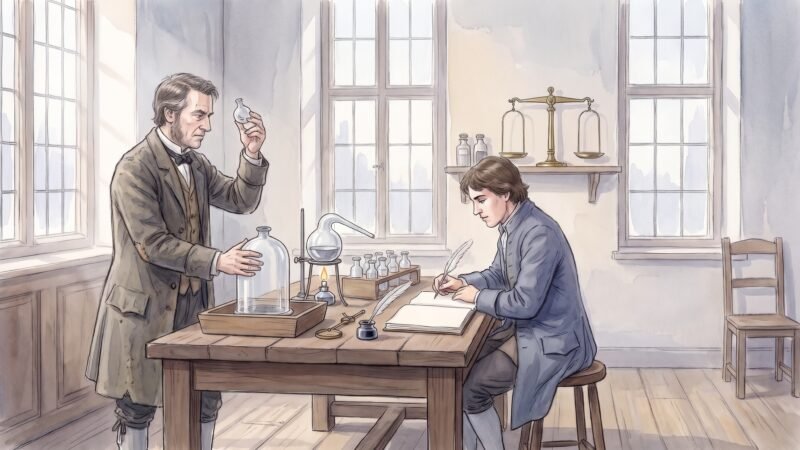
The Arsenal Laboratory of Paris and the Reconstitution of Matter (1772–1789) In the late spring of 1775, Antoine-Laurent de Lavoisier moved his household, his…
38 min read
The 1887 Cleveland experiment by Albert A. Michelson and Edward W. Morley used optical interferometry to search for luminiferous ether drift, yielding the most…
52 min read
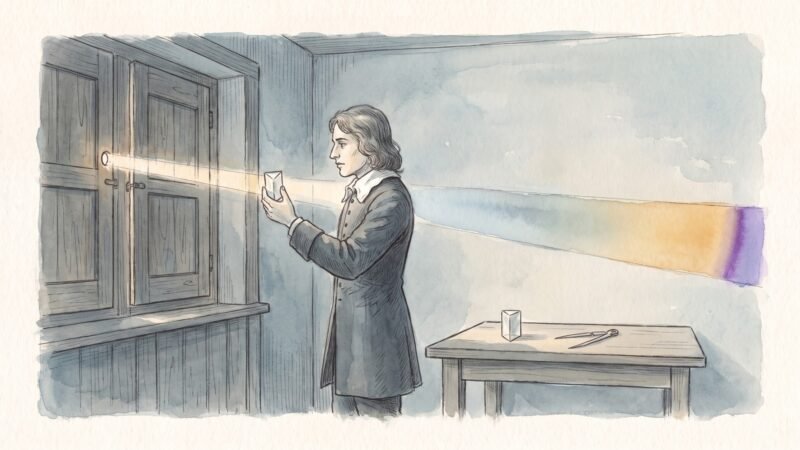
In 1672, Isaac Newton communicated his experimentum crucis to the Royal Society, demonstrating that white light is a heterogeneous mixture of rays with distinct…
24 min read
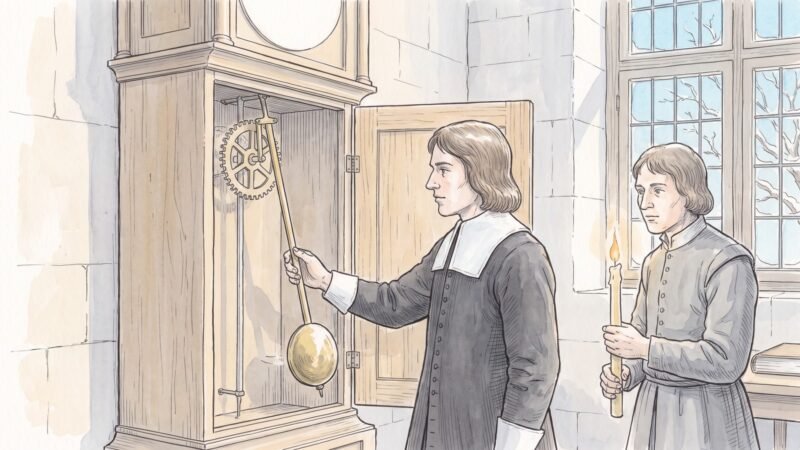
In the quiet, frost-bound winter of 1656, inside the country manor of Hofwijck near Voorburg, a young Dutch natural philosopher named Christiaan Huygens altered…
30 min read
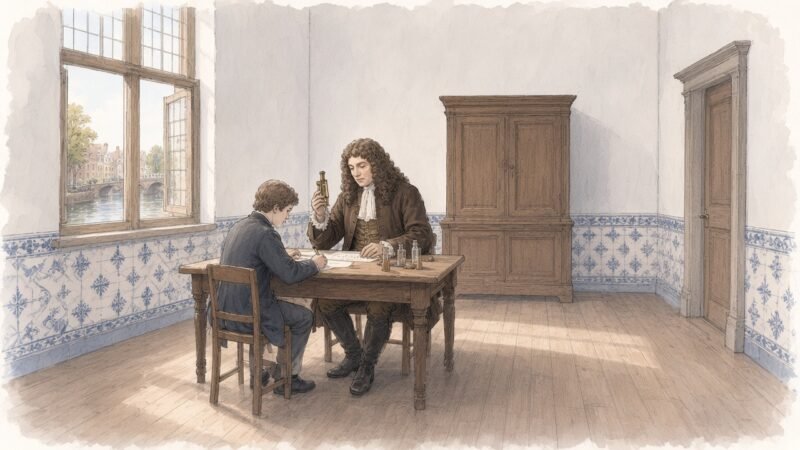
In the autumn of 1676 a draper and minor civic official of Delft in the Dutch Republic sent a long letter to the Royal…
23 min read
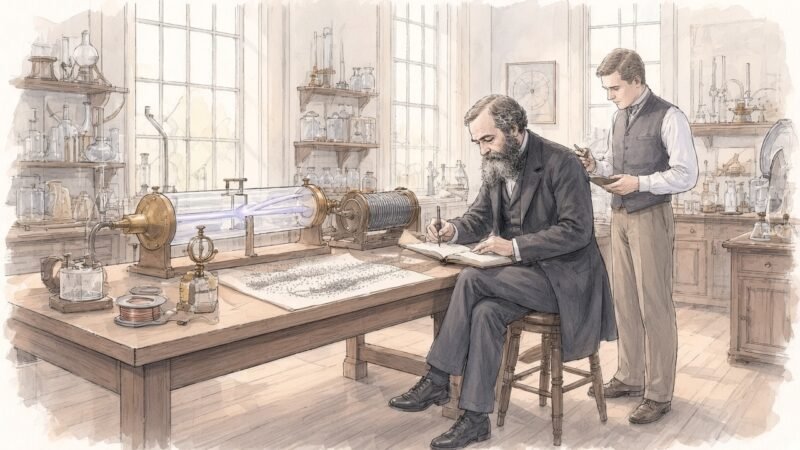
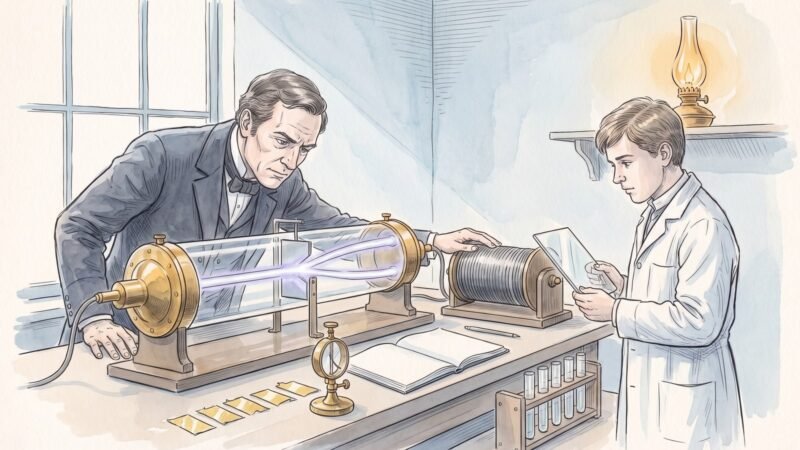
Between 1855 and 1873 the Scottish physicist James Clerk Maxwell brought the separate sciences of electricity and magnetism together into a single mathematical theory.…
23 min read
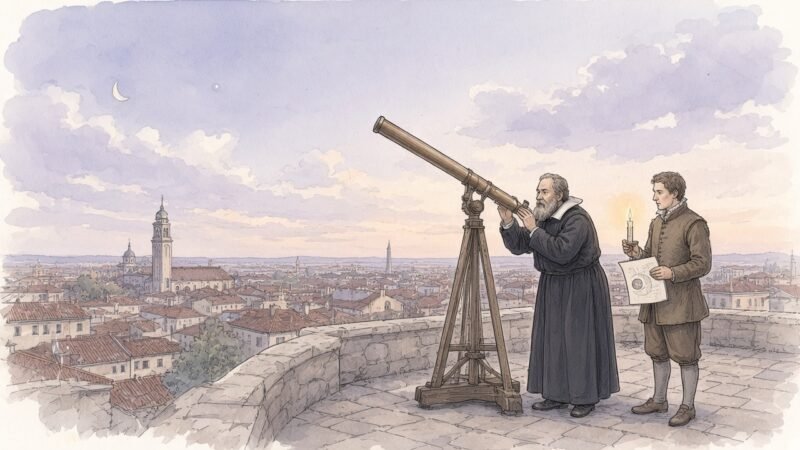
In the summer of 1609 Galileo Galilei, professor of mathematics at the University of Padua, heard that a device had been made in the…
23 min read
In the spring of 1909 a New Zealand student named Ernest Marsden was sent to Manchester University to find out why alpha particles, fired…
23 min read
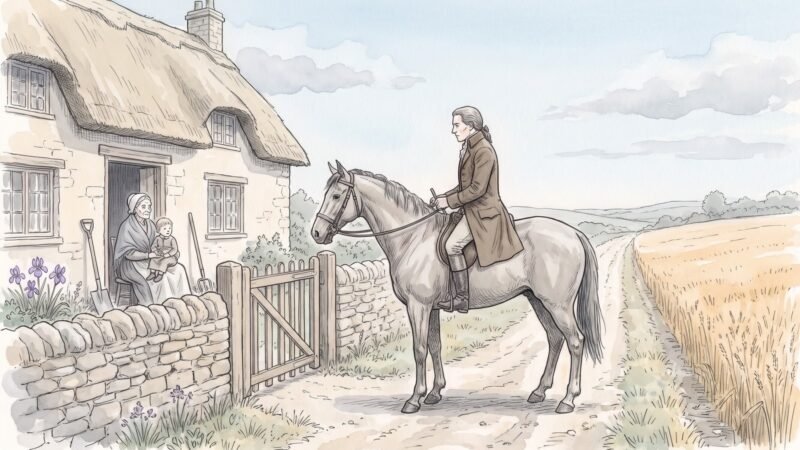
On 14 May 1796, in the Gloucestershire market town of Berkeley, the country doctor Edward Jenner took matter from a fresh sore on the…
22 min read
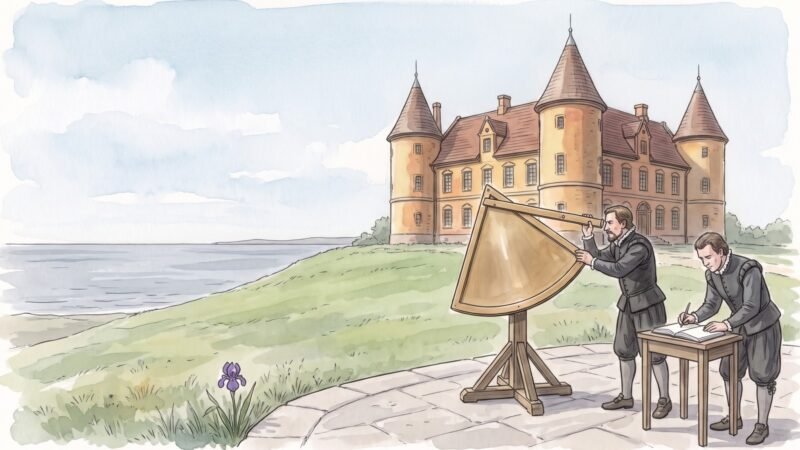
On the evening of 11 November 1572, walking back from his alchemical laboratory at Herrevad Abbey in Scania, then part of the kingdom of…
23 min read
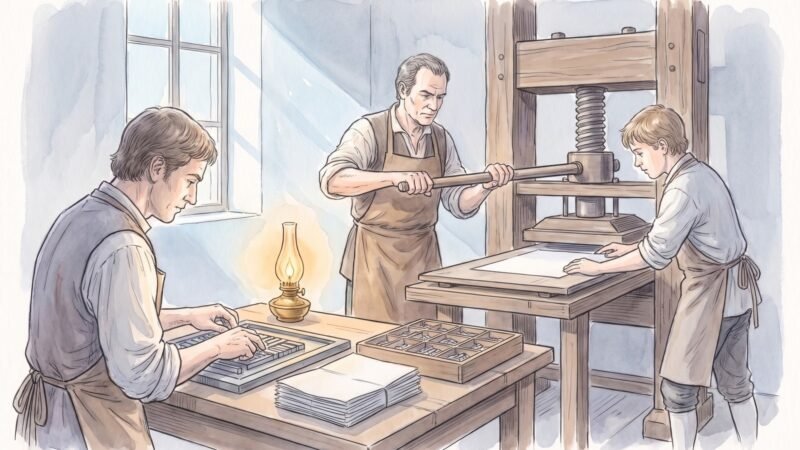
Some time around 1454 or 1455, in a workshop in the Rhineland city of Mainz, a team of craftsmen working under the direction of…
23 min read
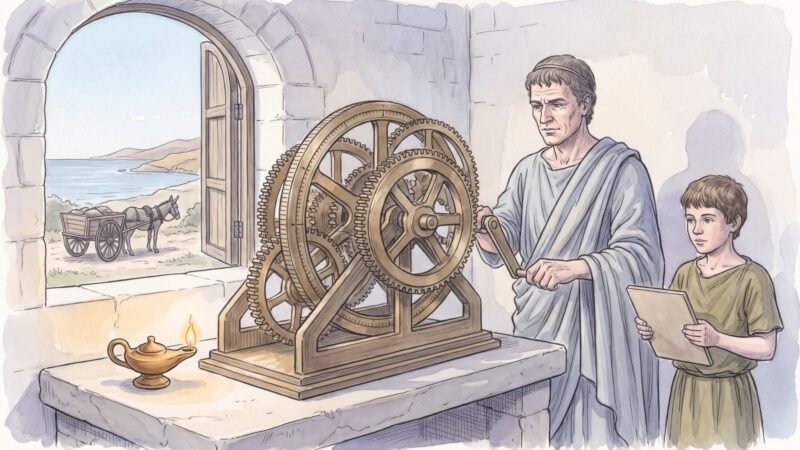
In the National Archaeological Museum in Athens, in a dimly lit case, lie the corroded remains of a bronze instrument that was lifted from…
23 min read
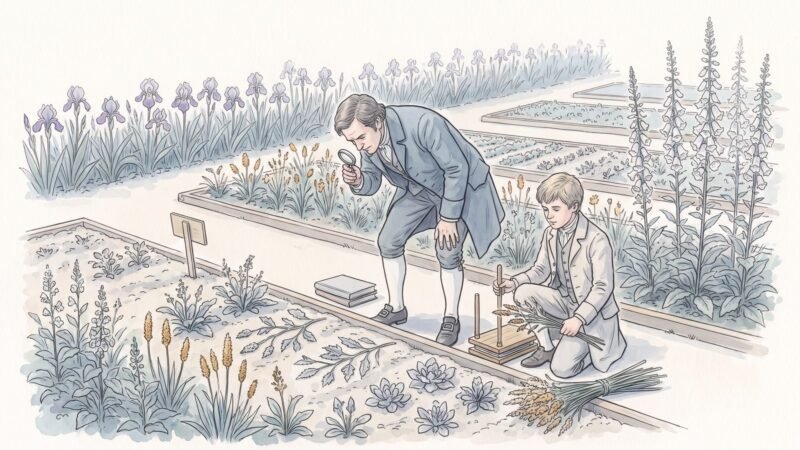
Every described organism carries a scientific name made of two words: a genus followed by a species epithet, such as Quercus robur or Mycobacterium…
28 min read