How a grain dealer from Berdychiv founded a family that ruled the wheat trade of Odessa, built banks and palaces in Vienna and Paris, collected Impressionists and Japanese netsuke, and lost almost everything in 1938.
About this history
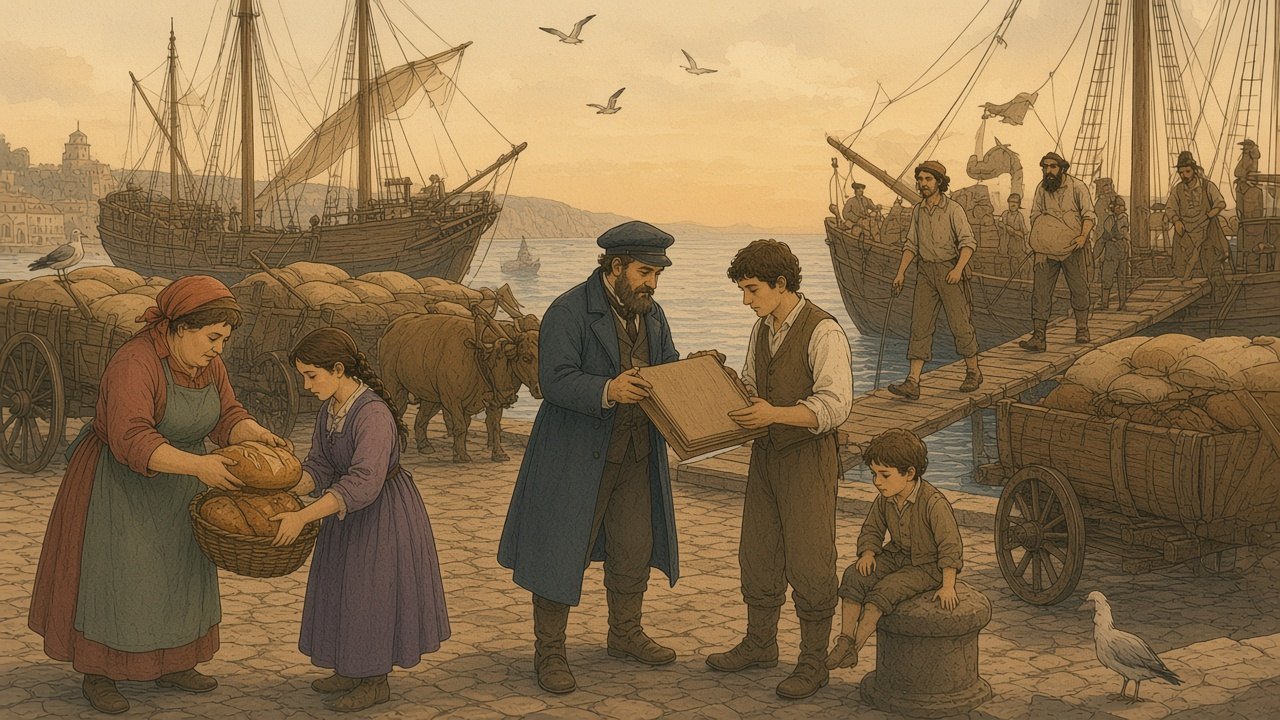
In the early nineteenth century a Jewish grain dealer from Berdychiv, a market town in the Pale of Settlement, moved his business south to the new Black Sea port of Odessa. Within two generations his family had become, by the 1860s, the “Kings of Grain”, and his sons and grandsons had carried the firm’s capital to Vienna and Paris, where they built banks, palaces and collections and married into the Rothschilds.[1][2][3]
This history follows the Ephrussi from Berdychiv and Odessa to the Ringstrasse and the Plaine Monceau, from Charles Ephrussi’s Impressionist pictures and Japanese netsuke to his part in Proust’s Swann, and from the Palais Ephrussi in 1938, when the Nazis seized everything in it, to the long and incomplete work of restitution that followed. It ends with the 264 netsuke that became the subject of Edmund de Waal’s The Hare with Amber Eyes, and with a family that has since given much of its inheritance away.[4][5][6]
The family’s own memory and the documentary record do not always agree, and the sources disagree with one another about dates, numbers and even parentage. Where they do, the disagreement is set out in the text rather than smoothed over, and the reader is told which version is followed and why. Nothing here is invented; every statement of fact is tied to a source listed in the references.[4][7]
The History in Sixteen Chapters
Berdychiv and the road to Odessa
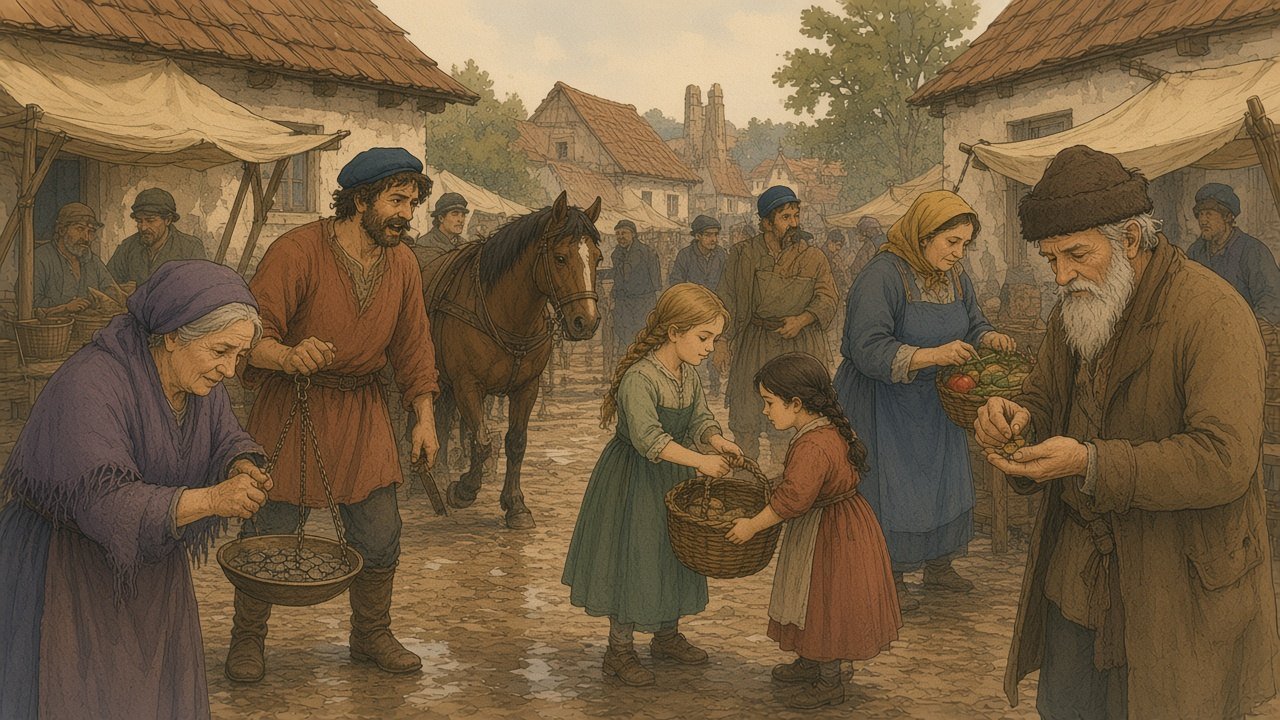
The Ephrussi story begins in Berdychiv, a town in the forested country south-west of Kyiv that Russian officials knew as Berdichev. Before the partitions of Poland it belonged to the Radziwiłł princes, and it grew as a fair town from 1765, when its census counted 1,220 Jews in a population of 1,541; the agricultural produce of the neighbouring noble estates was sold at its fairs, and Jews served as the estates’ agents. In the nineteenth century it became one of the great Jewish towns of the Russian Empire. It had 23,160 Jewish inhabitants in 1847 and 46,683 in 1861, when it was the second largest Jewish community in Russia, and the census of 1897 counted 41,617 Jews, 80 per cent of the population. Jewish trading companies and banking houses there had agencies in the Russian interior and even abroad, and in Russian and Jewish literature and folklore, the Encyclopaedia Judaica notes, Berdichev came to epitomise the Jewish town.
The kings of grain
The making of the Ephrussi fortune belongs to the middle decades of the nineteenth century, when Odessa became Russia’s leading commercial port and grain was, as a Moscow business writer puts it, roughly what oil and gas are to the Russian economy today. By the eve of the Crimean War, the same writer reckons, the firm’s grain dealings were approaching a million roubles. The war of 1853 to 1856, disastrous for Russia, was a stroke of fortune for the house: prolonged fighting shook up and redrew the grain market, and when it ended Ephrussi had pushed aside a mass of competitors. By the time of the founder’s death in 1864 his turnover was approaching 3.5 million roubles, and he was regarded as the largest grain exporter in the Russian Empire.
Ignace and the Ringstrasse
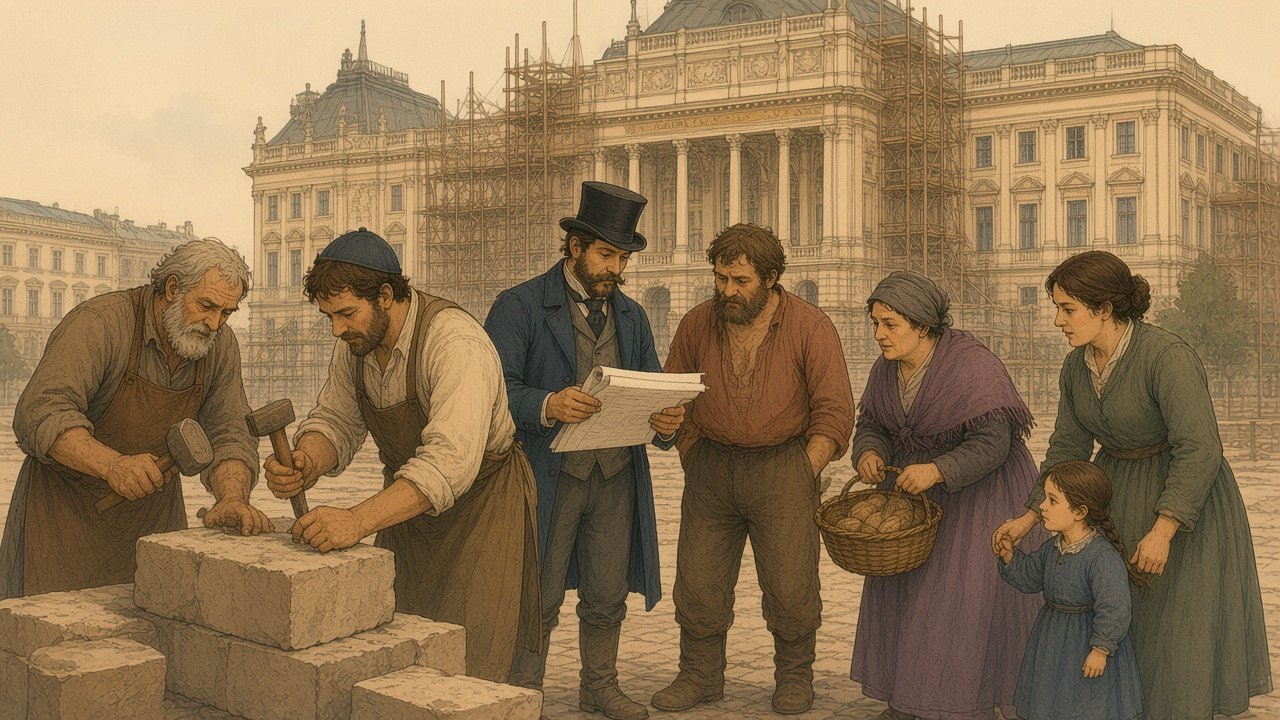
Ignace Ephrussi, known in Vienna as Ignaz, arrived in a city that was tearing down its walls. The old fortifications around the Inner City were demolished from the late 1850s, and on the broad glacis outside them rose the Ringstrasse, a boulevard of public buildings and private palaces that was the great building project of Franz Joseph’s reign. The quarter-century between the revolution of 1848 and the stock-market crash of 1873, the period of rapid company formation and building that went with it, is known in German as the Gründerzeit, the founders’ era. Ignace was one of its founders. According to the City of Vienna’s lexicon, he moved his fortune to Vienna in 1856 and established the bank of Ephrussi & Co., whose branches in Paris and London linked the family’s Russian grain business to the capital markets of the West.
The Paris house

The Paris branch of the family was the work of Léon Ephrussi and his children. Léon, born in Berdichev in 1826, had married Mina Lindau, born in Brody in 1824; their four children reached adulthood in the 1860s and 1870s. The Dictionary of Art Historians names them as Jules, Ignace, Charles and Betty, and calls Charles the youngest son. The New York family tree gives their dates: Jules (1846 to 1915), who married Fanny Pfeiffer; Ignace (1848 to 1908); Charles (1849 to 1905); and Betty (1851 to 1871), who married Max Hirsch Kann and died the year after her daughter Fanny was born in 1870. Fanny Kann, Léon’s granddaughter, later married the scholar and politician Théodore Reinach, and through her the Paris branch’s art and its share of the Gazette des Beaux-Arts would pass to the Reinach family. Some Russian sources spell Mina’s maiden name Landau rather than Lindau.
Charles Ephrussi, scholar
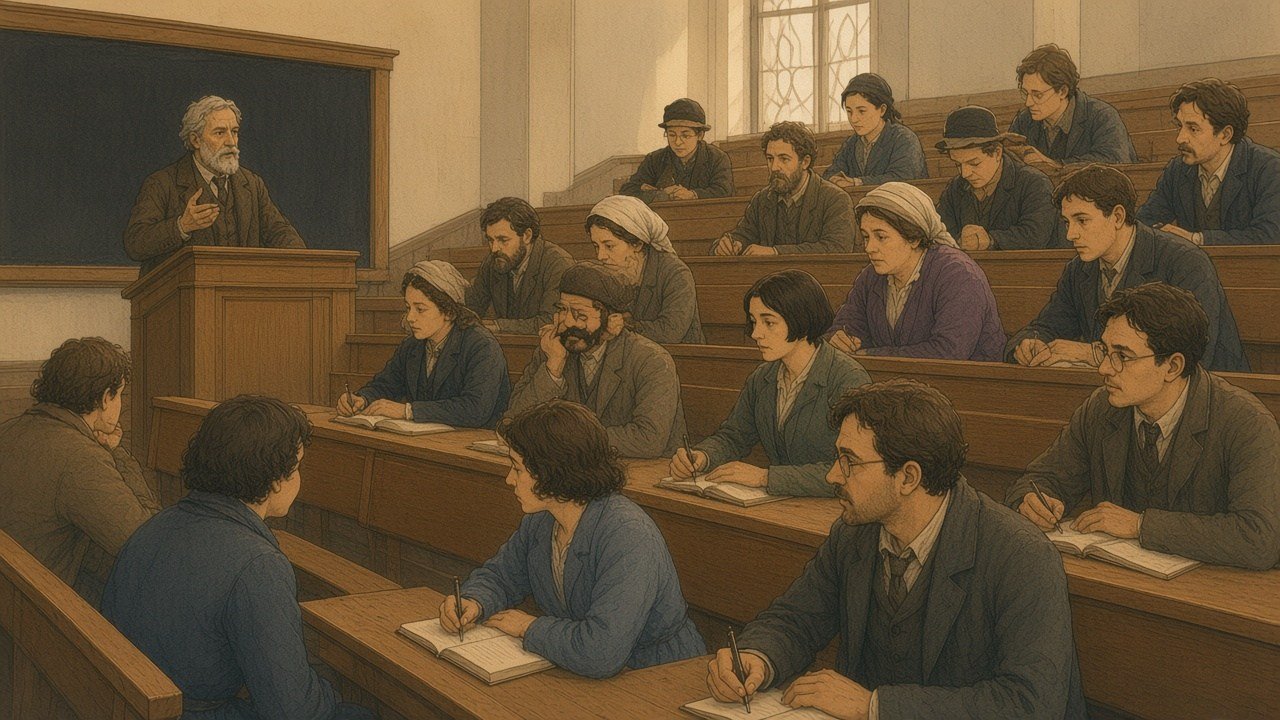
Charles Ephrussi was born in Odessa in 1849, the youngest son of Léon Ephrussi and Mina Lindau. The Dictionary of Art Historians says that he grew up in Odessa until the age of ten and then moved to Vienna, where his father and his uncle Ignace were expanding the family business. He was taught at home with his brothers, sister and cousins. He learned Latin, Greek, English and German, and he already spoke French and Russian. In Vienna he developed a special interest in the drawings of Albrecht Dürer, which he could see at the Albertina, the great Habsburg collection of prints and drawings. That interest, formed in boyhood, would give him his first scholarly reputation and his first public quarrel.
Charles and the Impressionists

In the late 1870s Charles Ephrussi began to buy the paintings that the official art world of Paris still treated as unfinished sketches. He reviewed the Impressionist exhibitions and, according to the Dictionary of Art Historians, eventually acquired more than forty works by Berthe Morisot, Mary Cassatt, Edgar Degas, Édouard Manet, Claude Monet, Alfred Sisley, Camille Pissarro and Pierre-Auguste Renoir. Ivan Jablonka, summarising de Waal’s research, puts the number at more than sixty. The discrepancy probably reflects different ways of counting drawings, pastels and works bought and sold again, and no published inventory has been found that would settle it. The New York exhibition called him the friend and supporter of Manet, Degas, Renoir and Monet, reviewing their shows and buying their paintings.
Japonisme and the 264 netsuke
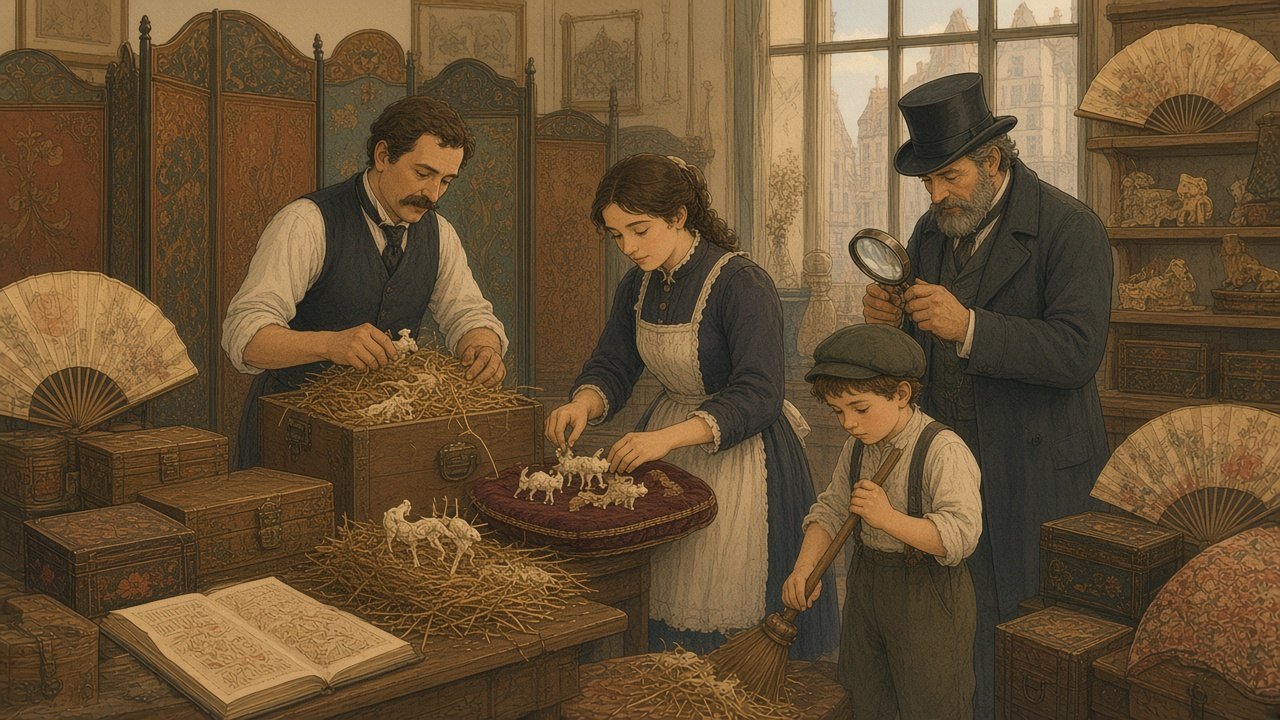
Japan arrived in Paris as a vogue. By the late 1870s, as the next section shows, the Paris press could describe the fashion for Japanese art as a kind of religion among rich amateurs. The taste for Japanese things, which critics called Japonisme, ran through painting, decoration and literature, and it was nowhere stronger than in the new rich quarters of Paris.
The Gazette, Proust and the Dreyfus years

In 1885 Charles Ephrussi bought five-twelfths of the capital of the Gazette des Beaux-Arts, the journal in which he had published his first articles nine years earlier. The Dictionary of Art Historians describes him from that year as co-owner of the Gazette. From 1894 he devoted himself to it fully as editor-in-chief, during the years in which the journal was becoming more scholarly. The New York curators described the Gazette as the pioneering journal of art and art history, whose influence was unparalleled for more than a century, and Charles as its editor and part-owner.
Béatrice and the villa on Cap Ferrat

The grandest marriage the Ephrussi ever made was also the unhappiest. Charlotte Béatrice de Rothschild was born in Paris in 1864, the daughter of Baron Alphonse de Rothschild, head of the Paris bank and a renowned collector, and of his wife Leonora, who came from the English branch of the family. She grew up, the official history of her villa says, in two of the most opulent houses of the age: an eighteenth-century palace in the rue Saint-Florentin at the corner of the Place de la Concorde, and the vast château of Ferrières east of Paris, built by her grandfather James.
Viktor and Emmy

Viktor Ephrussi was born in Odessa in 1860, the youngest of Ignace and Emilie’s three children. He grew up in the Palais on the Ring, and by the account of his granddaughter’s reviewer he was a man who was happiest in his library and had wanted to be an academic rather than a banker. Ignace’s elder son, Stefan, born in 1856, would have been the obvious heir to the Vienna bank; the New York family tree records that he married a woman named only as “Estiha” and died in 1911. The sources consulted here do not document why the bank passed to Viktor rather than to Stefan. Peter Melichar, summarising de Waal, says only that a family quarrel meant that Viktor, who had little interest in making money, had to take over the business, and that like many heirs he ran it as little more than the management of a fortune. The story told in de Waal’s book is not repeated here. What is documented is the result. When Ignace died in the Palais in 1899, it was Viktor who took over the bank of Ephrussi & Co., and it was Viktor’s family that lived in the great apartment on the Ring for the next thirty-nine years.
War, inflation and four children
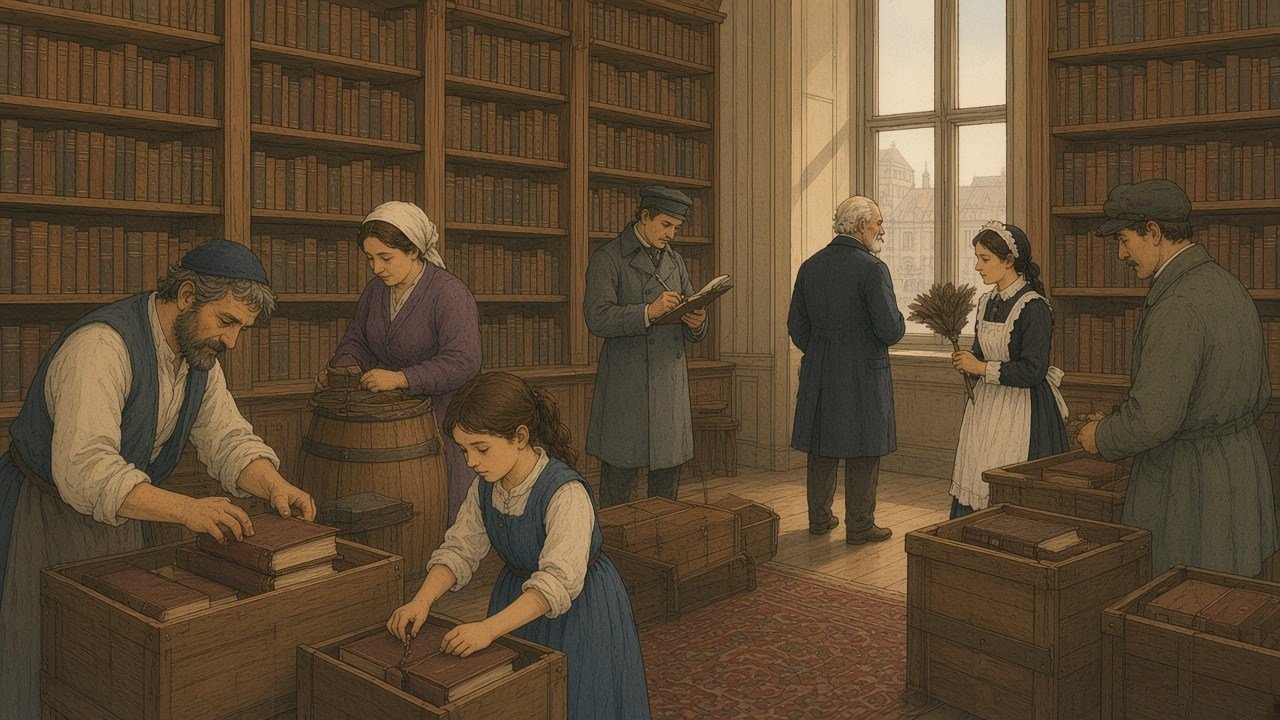
The First World War broke the family along national lines. When Austria went to war in 1914, Jablonka writes, the Ephrussi’s French servants had to pack and leave the Ringstrasse for France. The family’s business, which had always depended on moving money freely across Europe, was now divided by front lines. Jablonka notes that by then Viktor and the Vienna bank were on hostile terms with the other branches of the family: Ephrussi et Cie in the rue de l’Arcade in Paris, Ephrussi and Co. in King Street in London, and the Efrussi branch in Petrograd, all now in enemy countries. Michel Ephrussi died in Paris in 1914 and Jules in 1915; Maurice followed in 1916. With their deaths the generation that had grown up in Odessa came to an end.
The spring of 1938
On 12 March 1938, after a prolonged period of economic stagnation, political dictatorship and intense Nazi propaganda inside Austria, German troops entered the country, with the enthusiastic support of most of the population; Austria was incorporated into Germany the next day. In April the annexation was retroactively approved in a plebiscite, from which Jews and Roma were excluded, manipulated to show that about 99 per cent of Austrians wanted the union.
Kövecses, Tunbridge Wells and the scattering

Kövecses had been the family’s summer world, the house of dawn shoots and goldfinches in Iggie’s memories. In 1938 it became a refuge, and not a safe one. It lay in Czechoslovakia, a country that would itself be broken up within a year. The New York wall texts say simply that Viktor and Emmy managed to escape to their country house at Kövecses, now in Slovakia, and that Emmy died there in November 1938.
Read chapter 13, Kövecses, Tunbridge Wells and the scattering →
Dispersal and the long restitution
The Ephrussi collections in Vienna did not disappear; they were redistributed. The Advisory Board’s decision of 2019 says that all the works of art and the library in the Palais were afterwards distributed among state collections or auctioned. The fate of one painting shows how. Franz Adam’s Camp Scene from 1848 in Italy, painted in 1870, was seized by the Gestapo and delivered to the Kunsthistorisches Museum, which passed it with five other paintings to the Österreichische Galerie; on 16 October 1939 the Army Museum in Vienna entered it in its inventory as a permanent loan from the gallery. The Board’s decision of 2000 identified fourteen further objects, by then in the Federal Furniture Depot, that had been confiscated from the Palais in 1938: a neo-Rococo cabinet, a serving trolley, several tables, among them a small salon table with a gilt-bronze fluted column and three angel figures designed by Theophil Hansen, two onyx lamps, three oil paintings, an empty frame and a carpet.
Anna, Iggie and the netsuke in Tokyo

Of everything taken from the Palais in 1938, the netsuke are the only part of the collection that the family story says was never taken at all. In Edmund de Waal’s account, the vitrine stood in Emmy’s dressing room, a room in the charge of her maid, Anna. As the Gestapo and its valuers worked through the house, Anna took the netsuke a few at a time and hid them. De Waal’s newspaper essay of 2010 speaks of “Anna’s smuggling of the collection to safety, one piece at a time, in her pockets”; an American review of the exhibition says she carried them one by one in her apron and hid them under her mattress. After the war, the story continues, Elisabeth came back to the Palais, and Anna gave them to her. Jablonka quotes Anna’s words as de Waal reports them: “And they didn’t notice. They were so busy. They were busy with all the grand things […] And I put them in my mattress and I slept on them.”
The hare goes out into the world
The Hare with Amber Eyes: A Hidden Inheritance was published in London by Chatto & Windus in 2010. Edmund de Waal, a potter who works in a studio in south London, organised it around three rooms: Charles Ephrussi’s study in Paris in the 1870s, hung with Renoirs and Degas; Emmy’s dressing room in the Palais on the Ring; and Iggie’s apartment looking over central Tokyo in the 1970s. The netsuke are the thread that runs through them. “It is not just things that carry stories with them,” de Waal wrote. “Stories are a kind of thing, too. Stories and objects share something, a patina.”
Family tree
OpenClose
Key members only. Dates follow the family tree of the New York exhibition (2021); where other sources differ, the text explains.[2]
- Charles Joachim Ephrussi1793–1864Grain merchant, Berdychiv and Odessa; also given as born 1789m. 1 Belle Levensohn (d. 1841); m. 2 Henriette Halperson (1822–1888)
- Léon1826–1871Paris branchm. Mina Lindau (1824–1888)
- Jules1846–1915m. Fanny Pfeiffer
- Ignace1848–1908
- Charles1849–1905Art historian, collector, buyer of the netsuke
- Betty1851–1871m. Max Hirsch Kann; daughter Fanny (1870–1917) m. Théodore Reinach
- Ignace (Ignaz)1829–1899Vienna bank and Palais Ephrussim. Emilie Porgès (1836–1900)
- Stefan1856–1911
- Anna1859–1938m. Paul Herz von Hertenried
- Viktor1860–1945Head of the Vienna bank from 1899m. Emmy Schey von Koromla (1879–1938; also given as 1869)
- Elisabeth1899–1991Lawyer and novelistm. Hendrik de Waal; sons Victor (b. 1929) and Constant, later Henry (b. 1931)
- Victor de Waalb. 1929Dean of Canterbury; sons John, Alexander, Edmund (b. 1964, author of The Hare with Amber Eyes) and Thomas
- Gisela1904–1985m. Alfredo Bauer
- Ignace (Iggie)1906–1994Fashion designer, soldier, Tokyo; partner Jiro Sugiyama
- Rudolf1918–1971m. Virginia Raley
- Elisabeth1899–1991Lawyer and novelistm. Hendrik de Waal; sons Victor (b. 1929) and Constant, later Henry (b. 1931)
- Michel1845–1914m. Liliane Beer
- Maurice1849–1916m. Béatrice de Rothschild (1864–1934), divorced 1904
- Thérèse1851–1911m. Léon Fould
- Marie1853–1924m. Guy de Percin
- Léon1826–1871Paris branchm. Mina Lindau (1824–1888)
Timeline
OpenClose
Free-port status helps make Odessa the outlet for the wheat of the southern steppe.[11]
Charles Joachim’s first wife dies; he later marries Henriette Halperson of Lemberg.[2]
The war redraws the grain market, and the firm emerges ahead of its rivals.[9]
Viktor, youngest son of Ignace and Emilie, is born in Odessa.[2]
Charles pays more than the asking price for Manet’s Bunch of Asparagus and receives a single stalk as thanks.[17]
Renoir paints Charles, in top hat, in the background of his great picture.[18]
Maurice Ephrussi marries Béatrice de Rothschild in the rue de la Victoire synagogue on 6 June.[19]
Charles buys five-twelfths of the capital of the art journal in which he had first published.[20]
Ignace dies; Viktor marries Emmy Schey von Koromla and receives the netsuke as a wedding present.[2]
Béatrice and Maurice divorce.[19]
Charles Ephrussi dies in Paris on 30 September.[20]
Béatrice builds the Villa Ephrussi at Saint-Jean-Cap-Ferrat.[19]
Proust publishes the first volume of his novel, whose Swann owes something to Charles.[14]
Elisabeth Ephrussi receives her doctorate in law in Vienna.[21]
Austria’s new law allows the return of objects acquired by the state in export proceedings.[27]
The Art Restitution Advisory Board recommends the return of furniture and pictures from the Federal Furniture Depot.[28]
A memorial plaque on the Palais records the family’s expulsion in 1938.[30]
The Hare with Amber Eyes exhibition at the Jewish Museum in New York.[3]
Places
OpenClose
The Ephrussi story runs across five countries. The cards below mark the principal cities and houses; Kövecses, the family’s country house in what is now Slovakia, is described in the text but its exact site has not been pinned here.[2][12]
Berdychiv
Market town of the Pale of Settlement and birthplace of Charles Joachim Ephrussi and of his elder sons Léon and Ignace.[2][35]
Open in Google MapsOdessa
The Black Sea port from which the family exported grain, and birthplace of Charles, Viktor and most of the next generation.[2][11]
Open in Google MapsPalais Ephrussi, Vienna
Theophil Hansen’s palace of 1872 to 1873 at Universitätsring 14, home and bank of the Vienna branch until 1938.[15][30]
Open in Google MapsStadttempel, Vienna
The city synagogue in the Seitenstettengasse, where Gisela Ephrussi married in 1925, which escaped destruction in the November pogrom of 1938 because it was hidden from the street, though its interior was wrecked.[2][36]
Open in Google MapsJewish Museum Vienna
Dorotheergasse 11, which received the family archive in 2019 and holds the netsuke on loan.[31][4]
Open in Google MapsHôtel Ephrussi, Paris
The family house in the rue de Monceau, where Charles had his rooms and his collections.[12][1]
Open in Google MapsRue de l’Arcade, Paris
Street of the Paris bank, Ephrussi et Cie.[12]
Open in Google MapsMusée d’Orsay, Paris
Home of Manet’s single stalk of asparagus, painted for Charles in 1880.[17]
Open in Google MapsVilla Ephrussi de Rothschild
Béatrice’s villa at Saint-Jean-Cap-Ferrat, built 1907 to 1912 and bequeathed to the Académie des Beaux-Arts.[19]
Open in Google MapsBelvedere, Vienna
The Austrian gallery, where, Edmund de Waal said, three family portraits still hang.[26]
Open in Google MapsBad Ischl
The imperial spa town, one of the settings of Iggie’s childhood stories.[37]
Open in Google MapsTunbridge Wells
Where Elisabeth de Waal settled in 1939 and where Viktor died in 1945.[25][2]
Open in Google MapsGlossary of terms
OpenClose
- Anschluss
- The annexation of Austria by Nazi Germany in March 1938; German troops crossed the border on 12 March.[23]
- Art Restitution Act
- Austria’s Kunstrückgabegesetz of 1998, which allows federal museums and collections to return objects that passed to the state through Nazi persecution or through post-war export proceedings.[27][5]
- Art Restitution Advisory Board
- The Austrian expert body that examines provenance dossiers and recommends to the responsible minister whether an object should be returned.[5][28]
- Aryanisation
- The forced transfer of Jewish-owned businesses and property to non-Jewish owners under Nazi rule, as happened to the Ephrussi bank in 1938.[38][5]
- Federal Monuments Office
- The Austrian heritage authority (Bundesdenkmalamt), whose export permits after 1945 were used to bargain restituted works out of families’ hands.[5][4]
- Free port
- A port where goods could be landed without customs duties; Odessa held the status from 1819 to 1859.[11]
- Gazette des Beaux-Arts
- The Paris art journal in which Charles Ephrussi published fifty-seven articles from 1876; he bought five-twelfths of its capital in 1885 and became its editor-in-chief in 1894.[20]
- Gründerzeit
- “The founders’ era”, the boom of company formation and building in Vienna that ended in the crash of 1873.[16]
- Japonisme
- The European fashion for Japanese art and design in the later nineteenth century, of which Charles Ephrussi’s netsuke and lacquer were part.[12][7]
- Kaddish קדיש
- The Jewish mourner’s prayer, which Edmund de Waal said for Iggie at his Buddhist funeral in Tokyo.[1]
- Kings of Grain
- The title by which, according to Edmund de Waal, the family was known by the 1860s.[1][12]
- Netsuke
- Small carved Japanese toggles of wood or ivory, worn to secure a pouch or box hung from the sash of a kimono.[39][2]
- November pogrom
- The violence of 9 to 10 November 1938 across Germany and annexed Austria, also known as Kristallnacht.[40][36]
- Nullity Act
- Austria’s law of 1946 declaring legal transactions made under Nazi duress null and void.[5]
- Pale of Settlement תחום המושב
- The western provinces of the Russian Empire to which Jewish residence was largely restricted; Berdychiv lay within it.[11]
- Pogrom פּאָגראָם
- An outbreak of mob violence against Jews; Odessa saw outbreaks in 1821, 1859, 1871, 1881 and 1905.[41]
- Ringstrasse
- The boulevard laid out in Vienna from the 1850s on the line of the old city walls, lined with public buildings and private palaces such as the Palais Ephrussi.[15][16]
- Ritter
- “Knight”, the lowest hereditary title of the Austrian nobility, granted to Ignace Ephrussi in 1871.[8]
- Second society
- Carl Schorske’s phrase, used by Hélène de Givry, for Vienna’s newly ennobled financiers, below the old court aristocracy.[20]
- Shtetl שטעטל
- A small market town of the Pale with a large Jewish population; Berdychiv came to epitomise the Jewish town.[7][35]
- State Treaty
- The Austrian State Treaty of 1955, under which, the Advisory Board found in 2000, the state had acquired lawful title to Ephrussi objects not claimed after the war.[28]
- Takenoko
- “Bamboo shoot”, post-war Tokyo slang for living by selling one’s possessions layer by layer.[1]
- Vitrine
- A glass-fronted display cabinet; Charles Ephrussi’s netsuke travelled in a black lacquer vitrine with velvet shelves and a mirrored back.[1]
References
OpenClose
- Edmund de Waal, “God of small things,” The Guardian, 29 May 2010 *
- The Jewish Museum, New York, “The Hare with Amber Eyes,” exhibition wall texts and Ephrussi family tree (2021) *
- The Jewish Museum, New York, “The Hare with Amber Eyes,” press release, 16 November 2021 *
- Jewish Museum Vienna, “The Hare with Amber Eyes” *
- Kunstrückgabebeirat (Austrian Art Restitution Advisory Board), decision “Ephrussi Viktor,” 12 April 2019 *
- Kate Connolly, “Edmund de Waal: ‘The Nazis banished my family from Vienna. Now we are returning’,” The Guardian, 28 September 2019 *
- Evgeny Steiner, “The Ephrussi Netsuke: Roots and Remnants,” Impressions 43, part 2 (2022), 109–116 *
- Wien Geschichte Wiki (City of Vienna), “Ignaz Ephrussi” *
- Alexei Volynets, “Bankirskii dom Efrussi: ot torgovli zernom do poloten Renuara” (The Ephrussi banking house, from the grain trade to Renoir’s canvases), Profil *
- Thomas de Waal, “The hidden history of a Jewish family in Odessa,” openDemocracy, 4 November 2019 *
- Steven J. Zipperstein, “Odessa,” YIVO Encyclopedia of Jews in Eastern Europe *
- Ivan Jablonka, “The Ephrussi Treasure,” Books & Ideas (La Vie des idées) *
- “Saga ob Efrussi” (The Ephrussi saga), Kontinent, 19 November 2023 *
- Monique Daniels, “Ephrussi, Charles,” Dictionary of Art Historians *
- Wien Geschichte Wiki (City of Vienna), “Ephrussipalais” *
- Wien Geschichte Wiki (City of Vienna), “Gründerzeit” *
- Musée d’Orsay, “L’Asperge,” Édouard Manet, 1880, RF 1959 18 *
- The Phillips Collection, “Luncheon of the Boating Party,” Pierre-Auguste Renoir, 1880–81 *
- Villa Ephrussi de Rothschild (Académie des beaux-arts), “An historic area” *
- Hélène de Givry, “Ephrussi, Charles,” Dictionnaire critique des historiens de l’art, Institut national d’histoire de l’art *
- Master’s thesis on the Ephrussi family, University of Vienna, Phaidra repository o:1912906 (excerpt consulted) *
- Villa et Jardins Ephrussi de Rothschild, “The Villa from yesterday to today” *
- United States Holocaust Memorial Museum, Holocaust Encyclopedia, “Austria” *
- Leo Carey, “Coming Back,” The New York Review of Books, 24 April 2014 *
- Persephone Books, “Elisabeth de Waal” *
- Chris Harvey, “Edmund de Waal interview: ‘I feel bereft after selling my family treasures’,” The Daily Telegraph, 2020, reprinted by the Commission for Looted Art in Europe *
- Commission for Provenance Research, “Art Restitution Act” *
- Kunstrückgabebeirat (Austrian Art Restitution Advisory Board), decision “Ephrussi Viktor,” 27 March 2000 *
- Edmund de Waal, The Hare with Amber Eyes. A Hidden Inheritance (London: Chatto & Windus, 2010), print *
- Wien Geschichte Wiki (City of Vienna), “Ephrussi-Gedenktafel” *
- Edmund de Waal, “Ephrussi family archive,” news, edmunddewaal.com *
- Embassy of Austria, Washington, “Austria Extends Citizenship to Descendants of Victims of Nazi Persecution,” 7 October 2019 *
- Vindobona.org, “Jewish Museum Vienna: Restitution to Ephrussi Family after Decades,” 14 September 2021 *
- Jewish Museum Vienna, “The Jewish Museum Vienna and the Austrian Ministry of Defense make restitution to the Ephrussi family possible” *
- Encyclopaedia Judaica, “Berdichev,” via Jewish Virtual Library *
- Wien Geschichte Wiki (City of Vienna), “Stadttempel” *
- Edmund de Waal, “The Hare with Amber Eyes: about,” edmunddewaal.com *
- Jewish Museum Berlin, “Expropriation (‘Aryanization’)” *
- Encyclopaedia Britannica, “Netsuke” *
- United States Holocaust Memorial Museum, Holocaust Encyclopedia, “Kristallnacht” *
- Encyclopaedia Judaica, “Odesa,” via Jewish Virtual Library *
Select bibliography
OpenClose
- Edmund de Waal, The Hare with Amber Eyes. A Hidden Inheritance (London: Chatto & Windus, 2010), print
- Elisabeth de Waal, The Exiles Return, with a preface by Edmund de Waal (London: Persephone Books)
- Gabriele Kohlbauer-Fritz and Tom Juncker (eds), The Ephrussis. Travel in Time, exhibition catalogue (Vienna: Jewish Museum Vienna, 2019), print
- Steven J. Zipperstein, The Jews of Odessa. A Cultural History, 1794–1881 (Stanford: Stanford University Press, 1985), print
- Patricia Herlihy, Odessa. A History, 1794–1914 (Cambridge, Mass.: Harvard Ukrainian Research Institute, 1986), print
- Carl E. Schorske, Fin-de-siècle Vienna. Politics and Culture (New York: Knopf, 1980), print
- Tina Walzer and Stephan Templ, Unser Wien. „Arisierung“ auf österreichisch (Berlin: Aufbau, 2001), print
- Hélène de Givry, “Ephrussi, Charles,” Dictionnaire critique des historiens de l’art, Institut national d’histoire de l’art
- Kunstrückgabebeirat (Art Restitution Advisory Board), decisions on Viktor Ephrussi, 27 March 2000 and 12 April 2019
Further reading on nekud
- The Jews of Odessa, on nekud: the city, its grain trade and its Jewish communities
- The Rothschilds, on nekud: the banking family into which Maurice Ephrussi married
- The Warburgs, on nekud: another Jewish banking dynasty of Central Europe
- Jewish Museum Vienna, The Hare with Amber Eyes: the netsuke and the Ephrussi archive
- The Jewish Museum, New York, The Hare with Amber Eyes (2021–2022)
- Villa Ephrussi de Rothschild, Saint-Jean-Cap-Ferrat
- Edmund de Waal, The Hare with Amber Eyes, the author’s own page