From the money-changers of Ottoman Aleppo to private banks in Geneva, New York, São Paulo and Basel: a Sephardi banking family across five generations, told in sixteen chapters.

About this history
In the money-changers’ quarter of Ottoman Aleppo, a merchant arriving with a purse of Venetian gold, a Persian trader carrying silver and a local weaver paid in Ottoman paras all needed the same thing: someone who could tell them, at once and without error, what their coins were worth against one another. The Safra family’s own history begins there, with men who financed the caravans and kept the rates of a dozen currencies in their heads. The family’s name, it says, recalls the colour of gold, and the bankers who carried it from Aleppo to Beirut, São Paulo, Geneva and New York never quite lost the habits of the souq: lend only to people you know, look the borrower in the eye, and never put a depositor’s money at risk.[1][2][3]
This history follows the family from the counting rooms of Aleppo to the sale of Saxo Bank in 2026. Its central figure is Edmond J. Safra, who founded the Trade Development Bank in Geneva and the Republic National Bank of New York, but it also tells the stories of his father Jacob, his brothers Joseph and Moise, his wife Lily and the generation that inherited the Brazilian bank. The Safras spoke rarely to the press, and much of what is known about Edmond comes from a biography commissioned by his own foundation; where this page relies on it, the text says so. Where sources disagree on dates or figures, both are given. The contested episodes, the smear campaign of the 1980s and the fire in Monaco in 1999, are told strictly as courts, admissions and named sources record them, with allegations and denials kept apart.[4][5][6][7]
The History in Sixteen Chapters
The yellow metal of Aleppo
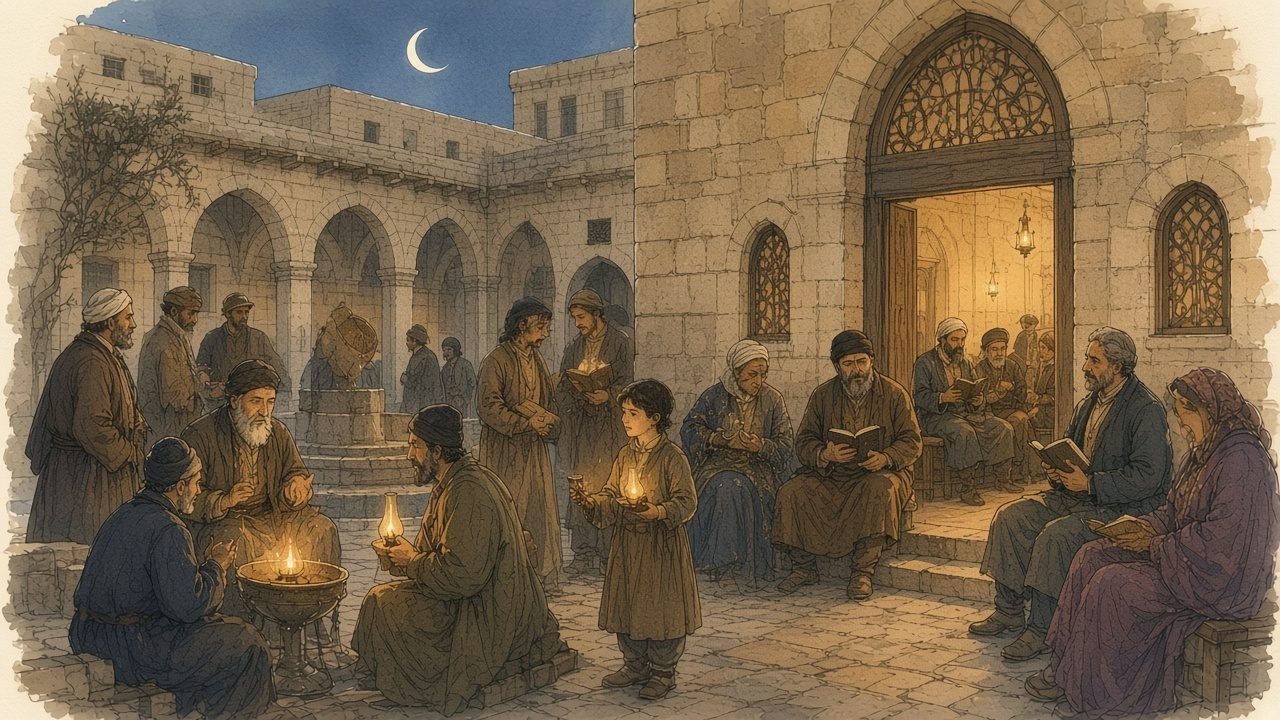
Aleppo sits on the low hills above the Quwayq river, about a hundred kilometres inland from the Mediterranean, at the point where the roads from Anatolia, Mesopotamia and the Syrian coast meet. For most of its long history its wealth came from that position. Silk from Persia, spices and indigo from India, cotton and soap from the Syrian countryside and woollen cloth from Europe all passed through its markets, and the great covered souqs that run west from the citadel were among the largest in the Ottoman world. When the Ottomans took the city in 1516 it became the commercial capital of their Syrian provinces, and in the sixteenth and seventeenth centuries the Venetians, the French, the English and the Dutch all kept consuls and merchants there, living and trading in the stone khans around the customs house.
Safra Frères and the caravan trade

The trade that Safra Frères served was a trade in goods, but it ran on money of bewildering variety. The Ottoman empire minted its own coins, the small silver para and the larger kuruş or piastre, whose silver content fell repeatedly in the eighteenth and early nineteenth centuries as the treasury struggled with the cost of war. Merchants who wanted something steadier used foreign coin. The gold zecchino of Venice, the sequin of English travellers, had been a standard of value in the Levant since the Middle Ages. The silver thaler struck in the name of the empress Maria Theresa, with its fixed weight and its date frozen at 1780 after her death, became so trusted in the Middle East and East Africa that it was minted for export for well over a century. Spanish dollars, Dutch lion dollars and later British sovereigns and French napoleons all circulated alongside them.
Jacob Safra goes to Beirut

Every account of the Safra family gives Jacob Safra the same gift. The family’s New York history describes him converting between the coins of three empires in his head, instantly and accurately, as his forebears had done in Aleppo, and it presents that skill as the heart of the business he inherited. Later accounts of his sons, Edmond in particular, describe the same trait in the next generation: a capacity for rapid mental arithmetic that impressed colleagues and rivals for half a century. Whether the story was polished in retelling or not, it says something about how the family saw itself. The Safras were not industrialists or speculators. They were changers of money and keepers of accounts, and their reputation rested on getting the numbers right.
A boyhood in Wadi Abu Jamil

Jacob and Esther Safra had nine children, born over about sixteen years. The Farhi genealogy, which gives the fullest list, records them in order of birth: Elie in 1922; Paulette in 1924, who died as a child in 1937; Evelyne in 1925; Edmond, on 6 August 1932; Arlette; Moise, on 4 May 1934; Huguette, on 27 April 1935; Gaby, on 17 February 1937; and Joseph, on 1 September 1938. The Telegraph’s obituary of Joseph, which describes him as the youngest son and one of nine children, gives the same date for his birth. Other sources occasionally differ on the order and spelling of the daughters’ names, which appear variously as Evelyne or Evelyn, Gaby or Gabi, Huguette or Hugette.
Milan and the gold sovereigns
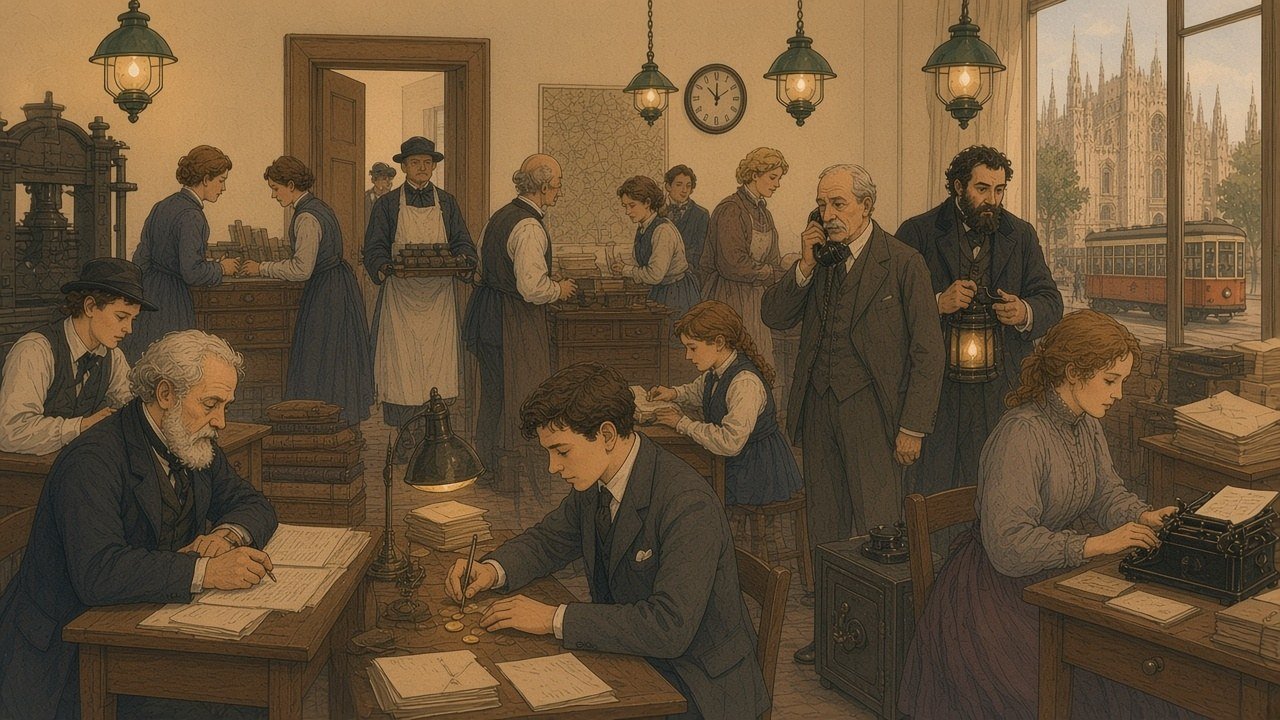
Edmond Safra went to Milan as a boy. The reviews of his authorised biography agree that his father sent him there at fifteen, in the late 1940s, to develop new business for the family; the Edmond J. Safra Foundation’s own short biography says he went at sixteen. Either way, he was a teenager alone in a foreign city that was still recovering from the war, sent to do business on behalf of a family firm whose clients were scattered across the Middle East. The Washington Independent Review of Books, reviewing the biography, described the posting as the first step on a journey that would take him to Paris, São Paulo, Geneva, London, New York, the Riviera and Monte Carlo over a career of fifty-two years.
São Paulo

Brazil had been receiving Jewish immigrants since the late nineteenth century, but the community the Safras joined was mostly Ashkenazi, made up of families from Eastern and Central Europe who had arrived in the 1920s and 1930s. The historian Jeffrey Lesser, cited by Morashá, the São Paulo Jewish magazine, estimates that about 57,000 Jews entered Brazil in those two decades, despite the restrictions on Jewish immigration imposed under the government of Getúlio Vargas. Alongside them there was a smaller community of Sephardi Jews from Syria, Lebanon, Egypt and the old Ottoman lands, with its own synagogues and its own traditions.
Geneva and the Trade Development Bank

In 1956, at the age of twenty-four, Edmond Safra founded the Trade Development Bank in Geneva. The International Directory of Company Histories, whose entry on the Republic New York Corporation is the most detailed independent account of his banking career, describes its purpose plainly: it offered private banking services to wealthy people fleeing the Middle East. The Encyclopaedia Judaica says that Edmond founded the bank together with his father. The capital came, according to Jewish Renaissance’s review of his biography, from the profits of his trading in gold coins and foreign currencies.
A bank on Fifth Avenue

In the early 1960s Edmond Safra decided to open a bank in the United States. The International Directory of Company Histories dates the start of the project to 1964, when he began organising a New York bank using the assets of his Geneva bank. The United States offered what Switzerland could not: the largest economy in the world, a deep market for deposits and a stable legal system. It also offered a new home for clients who wanted their money in dollars and in a country far from the Middle East.
The sale to American Express
In January 1983 American Express announced that it would buy the Trade Development Bank. The Washington Post reported on 19 January that American Express would pay about $550 million in cash and securities for the five banks outside the United States owned by Trade Development Bank Holding, of Geneva. Time magazine and the International Directory of Company Histories give the price as $520 million in cash and stock. Later accounts inflated the figure: The Guardian’s obituary of Edmond in 1999 said “some $650m”, and the BBC’s profile gave the same figure and dated the sale to 1986. The contemporary reports, $520 million to $550 million in January 1983, are the ones this page follows.
The vendetta
This chapter deals with events that were the subject of a public apology, a confidential settlement, a long investigative newspaper article, a book and a libel action. They are still described differently by the people involved. What follows separates four kinds of statement: what American Express admitted in its apology of July 1989; what was reported by the press at the time; what the journalist Bryan Burrough alleged, first in The Wall Street Journal in September 1990 and then in a book published in 1992, as described by independent reviewers; and what the people he named said in reply. The book itself was not available for this history, and nothing is attributed to it here that is not reported in a contemporary account of it.
Joseph, Moise and the Brazilian bank
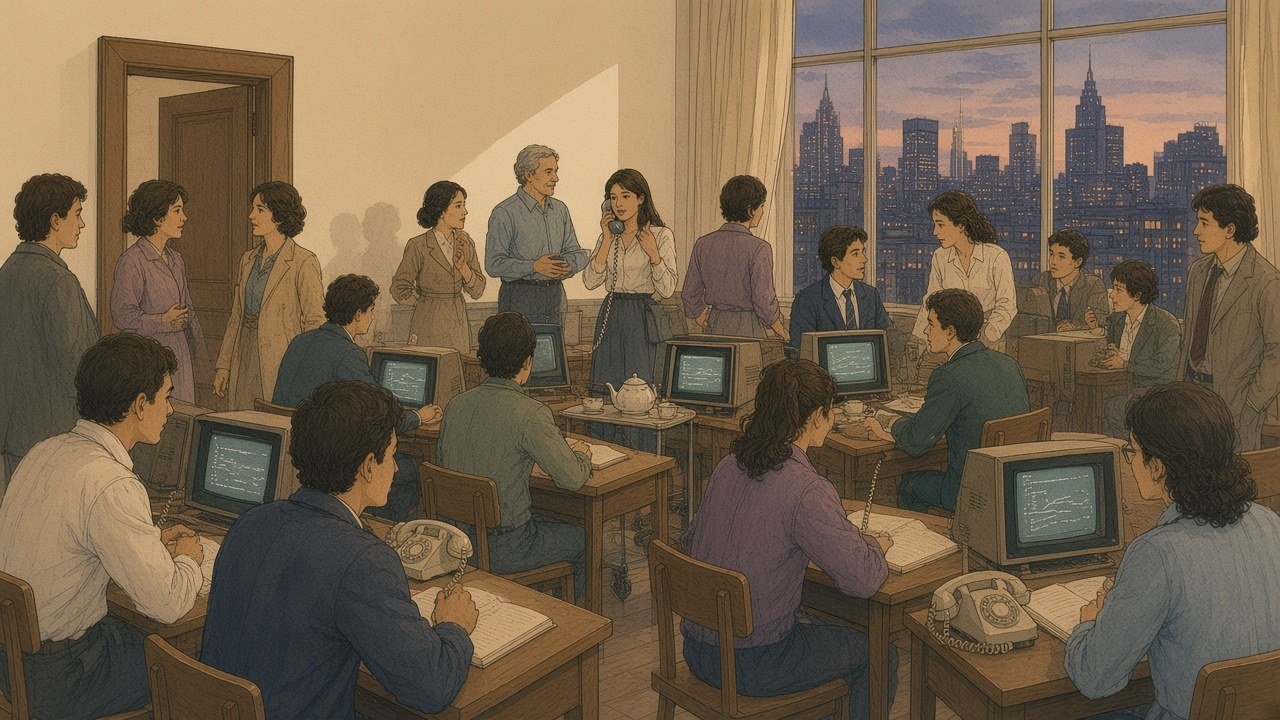
Moise and Joseph Safra were young men when the family’s Brazilian business passed into their hands. Moise was born in Beirut on 4 May 1934, according to the Farhi genealogy and Valor Econômico, which describes him as born in Lebanon; Forbes, in its notice of his death, said he was born in Aleppo, which appears to be a mistake. Joseph was born in Beirut on 1 September 1938. They grew up in São Paulo, took over the bank as Edmond turned to Geneva and New York, and ran it together for nearly fifty years.
Lily

Lily Safra was born Lily Watkins in Porto Alegre, in the far south of Brazil. The Edmond J. Safra Foundation, which she chaired for more than twenty years, gives her date of birth as 20 December 1934; some other accounts give 30 December and place her birth in Canoas, near Porto Alegre. Her father, Wolf Watkins, was an engineer of Czech and British origins who built railway carriages and had a factory at Mesquita, near Rio de Janeiro; a street there, the Foundation notes, was named Rua Mister Watkins after him. Her mother, Annita Noudelman, came from a family that had fled the pogroms in Odessa.
Parkinson’s and the sale to HSBC

In the early 1990s Republic was larger than it had ever been, and it was looking for new kinds of business. Low interest rates were squeezing the spread between what it paid its depositors and what it earned on their money, and competitors were courting its wealthiest customers. According to the International Directory of Company Histories, Republic responded by developing fee-earning investment products for retail customers and wealthy individuals, aimed both at keeping existing clients and at attracting the heirs of old money who wanted higher returns.
Fire on the Avenue d’Ostende
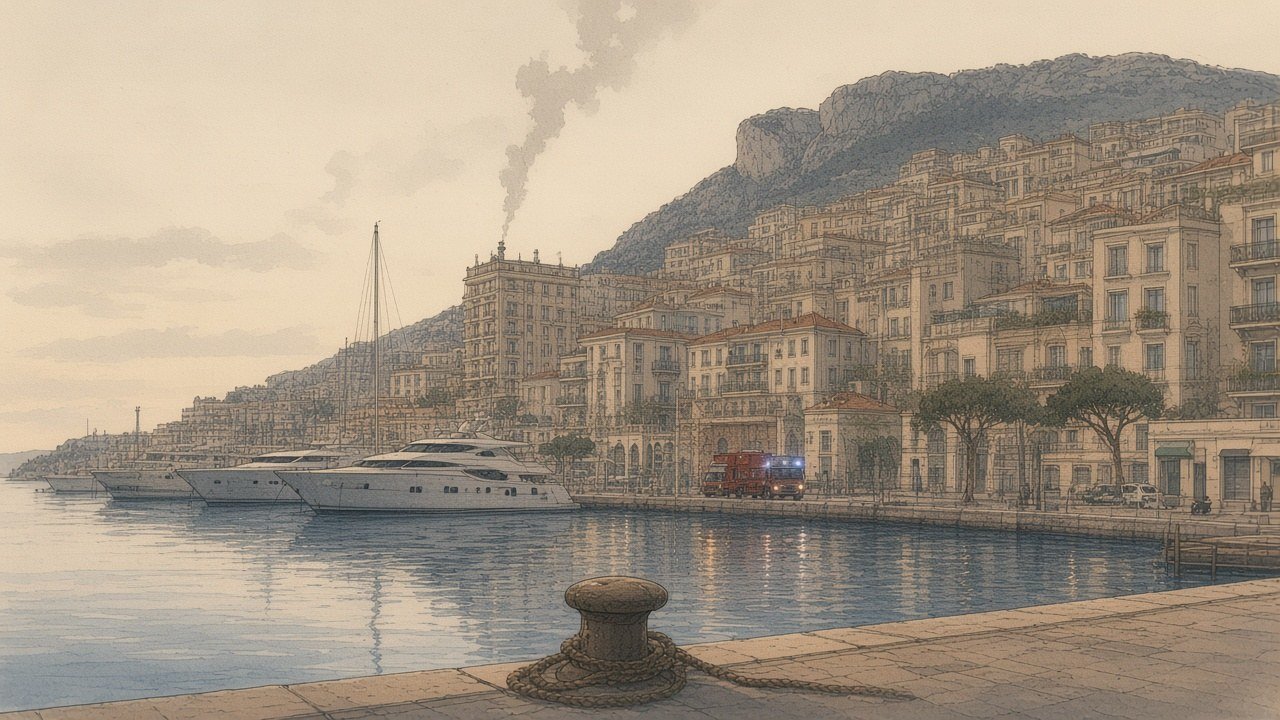
Edmond Safra’s death has been the subject of a criminal investigation, a trial, a conviction, an escape, later retractions by the man convicted, magazine investigations, television documentaries and a great deal of rumour. This chapter gives first the facts established by the court in Monaco and reported by the newspapers that covered the trial; then the claims made later by the convicted man; and finally the speculation, labelled as such. No court or official inquiry has found that anyone other than the convicted nurse was responsible for the fire.
Giving in his father’s name

Edmond Safra gave on a scale that few private individuals have matched, and he gave in a particular way. Eric Lankin, reviewing his biography for eJewishPhilanthropy, noted that his gifts were often in multiples of $101, the numerical value in Hebrew letters of the name of the archangel Michael, מיכאל. It was the same habit of mind that led him to ask HSBC for $72 a share, four times eighteen, the value of chai, “life”. In both cases a banker who was famous for his precision with numbers chose them for their meaning as well as their value.
Sarasin, the Gherkin and the heirs
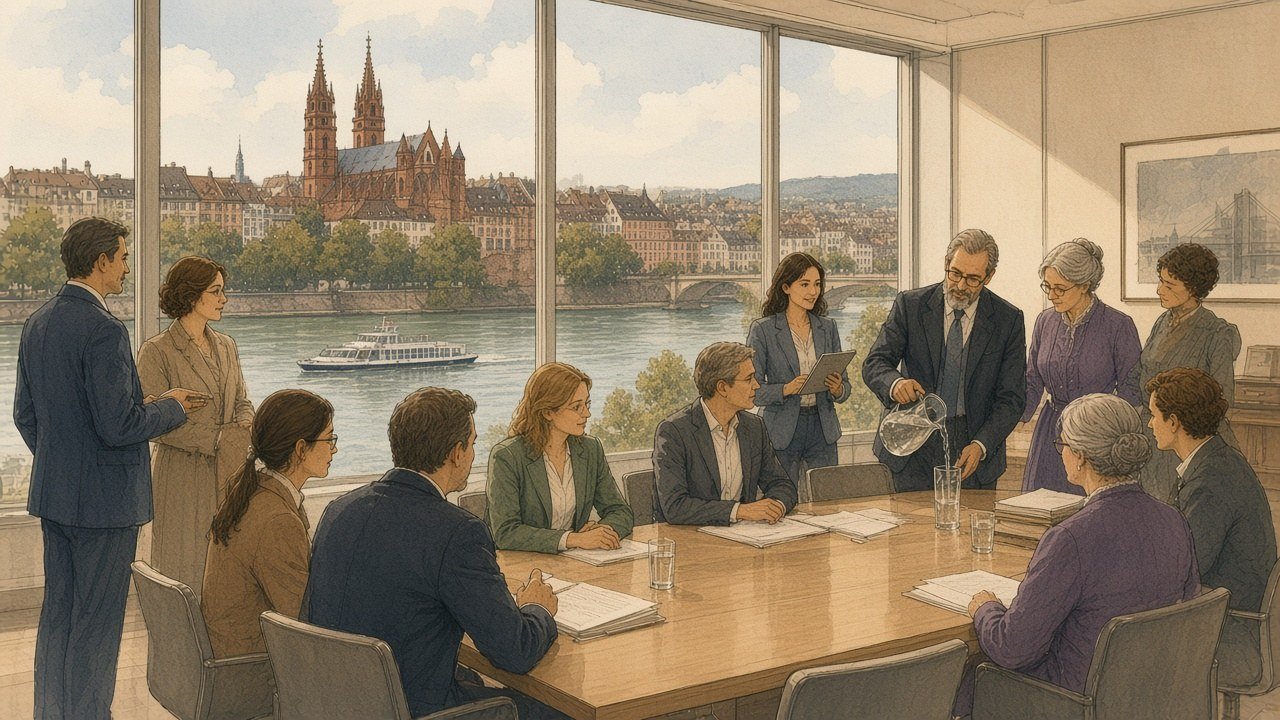
After Edmond’s death and Moise’s departure from the bank in 2006, Joseph Safra was the head of the family’s banking business. He used the next fifteen years to build it into a global group. Its largest acquisition was Swiss. On 25 November 2011 the Safra Group announced that it had agreed to acquire a majority interest in Bank Sarasin, the Basel private bank, from the Dutch cooperative bank Rabobank. The announcement, issued jointly from Basel, Geneva and Utrecht, described Sarasin, in its headline, as highly regarded.
Family tree
OpenClose
Key members only, by generation. Dates follow the sources cited; where they differ, the chapters explain. The earlier generations of Safra Frères in Aleppo are not named in the sources used.
- Elie (Eliahu) Safradied about 1900m. Sabouth HusniOf Aleppo. Named as Jacob’s parents in the Farhi family genealogy.[8]
- Jacob Elie Safra1889 or 1891–1963m. 1918 or 1920 Esther Safra, his cousin (1904–1943); later remarriedBanker of Aleppo and Beirut, founder of Banque Jacob E. Safra, later Banque de Crédit National. Died in São Paulo.[2][8][9][10]
- Elie Safra1922–1993Eldest son.[8]
- Paulette Safra1924–1937Died as a child.[8]
- Evelyne Safra1925–1997[8]
- Edmond J. Safra1932–1999m. 1976 Lily Watkins (1934–2022)Founder of the Trade Development Bank, Geneva (1956), and the Republic National Bank of New York (1966). Died in a fire in Monaco. No children.[8][11][12]
- Arlette Safra[8][13]
- Moise Safra1934–2014m. Chella CohenCo-owner of Banco Safra until 2006; founder of M. Safra & Co. Children Jacob, Azuri, Edmundo, Esther and Olga.[14][15]
- Huguette Safra1935–2023[8]
- Gaby Safra1937–2022[8]
- Joseph Safra1938–2020m. Vicky SafraHead of Banco Safra and J. Safra Sarasin.[9][16]
- Jacob Elie Safra1889 or 1891–1963m. 1918 or 1920 Esther Safra, his cousin (1904–1943); later remarriedBanker of Aleppo and Beirut, founder of Banque Jacob E. Safra, later Banque de Crédit National. Died in São Paulo.[2][8][9][10]
Timeline
OpenClose
Banco de Santos and other banks merge under the Safra name.[20] Chapter 11
Edmond Safra and Lily Watkins marry in Geneva on 14 June.[12] Chapter 12
Edmond and Lily found the Israel Scholarship Education Foundation.[12] Chapter 12
On 28 July the chairman of American Express apologises for a “shameful” effort to link Edmond falsely to crime and pays $8 million.[30] Chapter 10
Bryan Burrough’s article of 24 September alleges that the campaign was orchestrated within American Express.[6] Chapter 10
Republic announces Edmond’s Parkinson’s disease and a role for Joseph that does not materialise.[3] Chapter 13
Edmond Safra and the nurse Vivian Torrente die in a fire at his home on 3 December.[7] Chapter 14
HSBC completes its purchase of Republic and Safra Republic on 31 December.[31] Chapter 13
A Monaco court convicts the nurse Ted Maher of arson causing death and sentences him to ten years.[7][32] Chapter 14
Joseph and Moise sell control of the First International Bank of Israel.[33] Chapter 11
Moise sells his share of the Safra group to Joseph.[15] Chapter 11
The Safra Group completes its purchase of a majority of Bank Sarasin.[34] Chapter 16
Moise dies on 15 June; in November Joseph buys 30 St Mary Axe.[15][35] Chapter 16
A Brazilian federal court ends the criminal case against Joseph Safra.[36] Chapter 16
Joseph dies in São Paulo on 10 December.[37] Chapter 16
Lily dies in Geneva on 9 July; her husband’s commissioned biography is published later that year.[38][4] Chapter 12
Joseph Safra’s family resolves its inheritance disputes on 19 July.[39] Chapter 16
J. Safra Sarasin completes the purchase of a majority stake in Saxo Bank on 2 March.[40] Chapter 16
Places
OpenClose
Cities and buildings that recur in the history, with the chapters where they matter most. Where the sources do not give an exact address, the pin marks the district or city.
Aleppo, Bahsita
The old Jewish quarter and its Great Synagogue, al-Safra’, burned in December 1947. Chapters 1, 2 and 5.[21]
Open in Google MapsBeirut, Wadi Abu Jamil
The Jewish quarter of Beirut and its Magen Abraham synagogue, completed in the late 1920s. Chapters 3 and 4.[41]
Open in Google MapsMilan
Where the teenage Edmond traded gold and currencies in the late 1940s. Chapter 5.[5][24]
Open in Google MapsSão Paulo, Beit Yaacov
The synagogue on Rua Veiga Filho, opened in 1995, successor to the first Beit Yaacov on Rua Bela Cintra. Chapter 6.[26]
Open in Google MapsSão Paulo, Avenida Paulista
Home of Banco Safra, run by Moise and Joseph and later by Joseph’s sons. Chapters 11 and 16.[20]
Open in Google MapsGeneva
Where Edmond founded the Trade Development Bank in 1956, where he married Lily in 1976 and where he is buried. Chapters 7, 12 and 14.[11][42]
Open in Google MapsNew York, 452 Fifth Avenue
The Knox Building, headquarters of the Republic National Bank of New York from 1966. Chapter 8.[43][11]
Open in Google MapsMonaco, Avenue d’Ostende
The Belle Epoque building, where Edmond and the nurse Vivian Torrente died in December 1999. Chapter 14.[7]
Open in Google MapsVillefranche-sur-Mer, La Léopolda
The Riviera villa, once a property of the king of Belgium, that was Lily’s best-known home. Chapter 12.[12]
Open in Google MapsNew York, Edmond J. Safra Synagogue
The synagogue on the Upper East Side named after Edmond. Chapters 8 and 15.[12][44]
Open in Google MapsJerusalem, Safra Square
The plaza in front of the city hall, named in memory of Jacob and Esther Safra. Chapter 15.[45][42]
Open in Google MapsLondon, Somerset House
The Edmond J. Safra Fountain Court, with its verse from the first psalm. Chapter 15.[24]
Open in Google MapsLondon, 30 St Mary Axe
The Gherkin, bought by Joseph Safra in 2014. Chapter 16.[35]
Open in Google MapsBasel, J. Safra Sarasin
Head office of the Swiss private bank acquired by the Safra Group in 2011 and 2012. Chapter 16.[46][34]
Open in Google MapsSt Petersburg, Grand Choral Synagogue
Restored with the support of the Edmond J. Safra Foundation and now bearing his name. Chapter 15.[12]
Open in Google MapsGlossary of terms
OpenClose
- Aram Tsova ארם צובה
- The Hebrew name by which the Jews of Aleppo called their city, identifying it with the biblical Aram-Zobah.[21]
- Arbitrage
- Buying an asset in one market and selling it at the same moment in another where the price is higher. Edmond’s first trades in gold sovereigns are described as arbitrage.[47]
- Bakkashot בקשות
- Hymns of supplication sung through the small hours of winter Sabbath nights, a custom closely associated with Aleppo.[48]
- Beit Yaacov בית יעקב
- “House of Jacob”, the Sephardi synagogue in São Paulo named after Jacob Safra.[26]
- Bill of exchange
- A written order to pay a sum at a stated time and place, the instrument by which merchants moved money between cities without carrying coin.[49]
- Carteira de trabalho
- The Brazilian work card. Edmond’s identified him as a merchant.[3]
- Chai חי
- “Life”. Its letters have the numerical value eighteen, so gifts are often given in multiples of eighteen; Edmond asked HSBC for $72 a share.[3]
- Francos
- Jewish merchants from Livorno and other European ports who settled in Aleppo from about 1700 under consular protection.[21]
- Gematria גימטריה
- The reckoning of Hebrew words by the numerical values of their letters.[45]
- Judaeo-Arabic ערבית יהודית
- Arabic written in Hebrew letters, the language of family and business letters among the Jews of Aleppo and Beirut.[24]
- Keter כתר
- “Crown”. The Keter Aram Tsova, or Aleppo Codex, the tenth-century codex of the Hebrew Bible kept in the Great Synagogue of Aleppo.[19]
- Know your customer
- The rule that a banker must know the people whose money he holds and to whom he lends; a Safra principle long before it became a regulatory term.[5]
- Maria Theresa thaler
- A silver coin struck in the name of the Habsburg empress and long trusted across the Middle East and East Africa.[1]
- Musta’arabim מוסתערבים
- The Arabic-speaking Jews who lived in Syria before the Sephardi exiles arrived.[21]
- Non-competition agreement
- A contract by which a seller undertakes not to compete with the buyer for a period; Edmond signed one with American Express in 1984.[29][11]
- Para
- The smallest Ottoman silver coin.[1]
- Private banking
- Banking for wealthy individuals and families, combining deposits, investment and personal service.[11]
- Sephardim ספרדים
- Jews descended from the communities of Spain and Portugal expelled at the end of the fifteenth century.[21]
- Tefillin תפילין
- Small leather boxes containing verses of the Torah, bound on the arm and head for weekday morning prayer.[45][24]
- Tikkun Leil Shavuot תיקון ליל שבועות
- The custom of staying awake to study through the first night of the festival of Shavuot.[45]
- Tzedakah צדקה
- Charity, understood in Jewish tradition as a duty of justice.[44]
- Wadi Abu Jamil
- The Jewish quarter of Beirut, home of the Magen Abraham synagogue.[41]
- Yahrzeit יאָרצײַט
- The anniversary of a death, marked by prayer and often by charity.[45]
- Zecchino
- The Venetian gold coin, the sequin of English travellers, long a standard of value in the Levant.[1]
References
OpenClose
- Safra New York Corporation, “History,” safragroup.us *
- Rachel Mizrahi, “Safra,” Encyclopaedia Judaica, 2nd ed., reprinted at Encyclopedia.com *
- “How Edmond Safra built his banking empire,” Valor Econômico, review of Daniel Gross, A Banker’s Journey (English translation, 2022) *
- Daniel Gross, A Banker’s Journey. How Edmond J. Safra Built a Global Financial Empire (New York: Radius Book Group, 2022), commissioned by the Edmond J. Safra Foundation *
- Stephen Maitland-Lewis, review of Daniel Gross, A Banker’s Journey, Washington Independent Review of Books, 7 October 2022 *
- Bryan Burrough, “The Vendetta. How American Express Orchestrated a Smear of Rival Edmond Safra,” The Wall Street Journal, 24 September 1990 (copy hosted by economicsvoodoo.com) *
- Jon Henley, “Nurse jailed for killing billionaire banker,” The Guardian, 3 December 2002 *
- Farhi family genealogy, “Jacob Safra and Esther Teira Safra,” farhi.org *
- “Joseph Safra, the ‘world’s richest banker’,” obituary, The Telegraph, 11 December 2020 *
- Banque de Crédit National S.A.L., “History,” bcnlb.com *
- Roger W. Rouland, “Republic New York Corporation,” International Directory of Company Histories, reprinted at Encyclopedia.com *
- Edmond J. Safra Foundation, “Lily Safra,” edmondjsafra.org *
- John Lichfield, “Billionaire who blew whistle on Russian cash scandal is killed in Monte Carlo,” The Independent, 4 December 1999 *
- World Jewish Congress, “Brazilian Jewish philanthropist Moise Safra passes away,” 17 June 2014 *
- “Morre em SP o bilionário Moise Safra,” G1, 15 June 2014 *
- “Vicky Safra and family,” Forbes billionaires profile *
- “Safra siblings,” Forbes billionaires profile, April 2022 *
- Bloomberg, “Billionaire’s son resolves feud over inheritance,” Fortune, 19 July 2024 *
- Yad Izhak Ben-Zvi, “The Aleppo Codex,” ybz.org.il *
- Banco Safra, “Quem somos. Conheça a história do Banco Safra,” safra.com.br, consulted 16 November 2026 *
- Eliyahu Ashtor, Leah Bornstein-Makovetsky, Hayyim J. Cohen and Amnon Shiloah, “Aleppo,” Encyclopaedia Judaica, 2nd ed., reprinted at Encyclopedia.com *
- ANU Museum of the Jewish People, “Jewish community of Aleppo,” Databases *
- J. Safra Sarasin Holding, Annual Report 2020, tribute to Joseph Safra (archived copy) *
- Alex Brummer, “New money from old Lebanon,” Jewish Renaissance, Spring 2023, pp. 52–53 *
- Associated Press, “Anti-Jewish Riots in Syria,” The New York Times, 3 December 1947, transcribed by the Center for Online Judaic Studies *
- “50 years of the Beit Yaacov synagogue,” Morashá (São Paulo) *
- “Bank Purchases,” The Washington Post, 19 January 1983 *
- “Management. A Clash of Corporate Styles,” Time *
- Seinfeld ex rel. American Express Co. v. Robinson, New York Supreme Court, 1997, opinion at CourtListener *
- Steven Mufson, “American Express Offers $4 Million and Apology,” The Washington Post, 29 July 1989 *
- HSBC Private Bank, “Company history,” privatebanking.hsbc.com *
- “Nurse jailed for billionaire’s death,” BBC News, 2 December 2002 *
- Kobi Yeshayahu, “Zadik Bino, Liberman family buying FIBI from Safras,” Globes, 27 April 2003 *
- Safra Group, “Safra Group completes the acquisition of Rabobank’s stake in Sarasin,” PR Newswire, 31 July 2012 *
- Rupert Neate, “The Gherkin sold to Brazilian billionaire Joseph Safra,” The Guardian, 10 November 2014 *
- Gabriela Valente, “Justiça retira ação penal contra banqueiro Joseph Safra na Zelotes,” O Globo, 13 December 2016 *
- Reuters, “Financier Joseph Safra, Brazil’s richest man, dies at 82,” 10 December 2020 *
- Kerry A. Dolan, “Billionaire Lily Safra Dies Of Cancer At Age 87,” Forbes, 10 July 2022 *
- The Safra Group, “The Joseph Safra Family Amicably Resolves Disputes,” PR Newswire, 19 July 2024 *
- J. Safra Sarasin Group, “J. Safra Sarasin Group completes the acquisition of majority stake in Saxo Bank,” media release, 2 March 2026 *
- “The Jews of Beirut From the Viewpoint of an Israeli Historian,” Raseef22 *
- Edmond J. Safra Foundation, “Edmond J. Safra,” edmondjsafra.org *
- “Knox Building on 5th Ave. Sold To Group Planning a New Bank,” The New York Times, 4 September 1964 *
- Edmond J. Safra Synagogue, New York, “Edmond J. Safra,” ejsny.org *
- Eric Lankin, “Review. A Banker’s Journey,” eJewishPhilanthropy, 12 October 2022 *
- Bank Sarasin and Safra Group, “Safra Group to acquire majority interest in highly regarded Bank Sarasin,” media release, Basel, Geneva and Utrecht, 25 November 2011 *
- Alex Brummer, “Edmond Safra. Banker who kept his money in the family,” obituary, The Guardian, 4 December 1999 *
- Jewish Music Research Centre, Hebrew University of Jerusalem, “Aleppo. Musical Tradition” *
- Philip Mansel, Aleppo. The Rise and Fall of Syria’s Great Merchant City (London: I.B. Tauris, 2016) *
- Walter P. Zenner, A Global Community. The Jews from Aleppo, Syria (Detroit: Wayne State University Press, 2000), print *
Select bibliography
OpenClose
- Daniel Gross, A Banker’s Journey. How Edmond J. Safra Built a Global Financial Empire (New York: Radius Book Group, 2022). The authorised biography, commissioned by the Edmond J. Safra Foundation, which holds its copyright; not consulted directly for this history, which draws on its published reviews.
- Bryan Burrough, Vendetta. American Express and the Smearing of Edmond Safra (New York: HarperCollins, 1992). Not consulted directly; cited here only through contemporary reviews.
- Bryan Burrough, “The Vendetta. How American Express Orchestrated a Smear of Rival Edmond Safra,” The Wall Street Journal, 24 September 1990.
- Roger W. Rouland, “Republic New York Corporation,” International Directory of Company Histories.
- Rachel Mizrahi, “Safra,” Encyclopaedia Judaica, 2nd ed. (Detroit: Macmillan Reference, 2007).
- Gary Weiss, “The Mystery Man of Finance,” Business Week, March 1994. Print.
- John Taylor, “Bank Shot. Edmond Safra Turns the Tables on American Express,” New York, 18 September 1989, pp. 42–47. Print.
- Walter P. Zenner, A Global Community. The Jews from Aleppo, Syria (Detroit: Wayne State University Press, 2000).
- Tomer Levi, The Jews of Beirut. The Rise of a Levantine Community, 1860s–1930s (New York: Peter Lang, 2012).
- Kirsten E. Schulze, The Jews of Lebanon. Between Coexistence and Conflict (Brighton: Sussex Academic Press, 2001).
- Philip Mansel, Aleppo. The Rise and Fall of Syria’s Great Merchant City (London: I.B. Tauris, 2016).
- Joseph A. D. Sutton, Magic Carpet. Aleppo-in-Flatbush (New York: Thayer-Jacoby, 1979).
- Matti Friedman, The Aleppo Codex (Chapel Hill: Algonquin Books, 2012).
- Jeffrey Lesser, Welcoming the Undesirables. Brazil and the Jewish Question (Berkeley: University of California Press, 1995).
- Isabel Vincent, Gilded Lily. Lily Safra, the Making of One of the World’s Wealthiest Widows (New York: Harper, 2010). Unauthorised; not relied on here.
Further reading on nekud
- Aleppo, Five Thousand Years Beneath the Citadel
- The Crown in the Flames. Rescuing the Aleppo Codex
- The Aleppo Codex
- The Missing Leaves. The Global Hunt for the Aleppo Codex
- Sephardim in the Ottoman Empire
- Damascus
- Hummus and the Long Table
- By the Waters of Baghdad
- The Sassoons, in Merchants
- The Kadoories, in Merchants
- The Rothschilds, in Merchants