Lawrence Kadoorie returned to a dark and depopulated Hong Kong in November 1945. Over the next two decades he and Horace rebuilt China Light and Power, lost everything in Shanghai, and bet the family’s future on a British colony full of refugees.
When the Japanese surrendered in August 1945, Hong Kong had lost more than half its people and most of its power. Sir William Purves, chairman of the Hongkong and Shanghai Banking Corporation, recalled after Lawrence Kadoorie’s death that “There was no power here at all at the end of the war”[1]. Within two decades the colony was one of the fastest-growing industrial economies in Asia, and the factories that drove that growth, in Kowloon and the New Territories, ran on electricity supplied by the Kadoories’ company. This chapter follows the family’s part in that transformation, from Lawrence’s return to the riots of 1967.
The First Civilian Back
Lawrence was the first civilian internee to return from Shanghai to Hong Kong, as his son wrote in 2016[2]. The Science Museum Group’s record dates his return to November 1945[3]. He arrived in a colony governed for eight months by a British military administration under Brigadier David MacDougall, who, according to the Heritage Project, enlisted him to help speed the work of reconstruction[4].
The posts he took on show the range of what needed doing. He chaired the Building Reconstruction Committee and sat on the Labour Advisory Board[4]. With Horace he helped procure surplus supplies from the American military for Hong Kong; the Heritage Project’s collection includes a photograph of Horace signing a contract in 1945 on behalf of the Hong Kong government to buy food from the American Field Liquidation Commission[4]. In 1946 the commander-in-chief, Admiral Sir Cecil Harcourt, invited Lawrence to join his Consultative Council[4]. At the same time Lawrence worked to recover the family businesses from Japanese hands, and in 1945 he became chairman of the Hongkong Engineering and Construction Company[4].
The Peninsula as Headquarters
The Peninsula was requisitioned after the war as the headquarters of the military administration in Kowloon[2]. Sir Michael Kadoorie wrote that “From his base at The Peninsula he served as chairman of The Hongkong and Shanghai Hotels and on various government committees to help the territory get back on its feet”[2]. In 1950 Horace succeeded him as chairman of the hotel company, a post he held for thirty-five years[2].
Rebuilding the Power Company
The task that mattered most was China Light and Power. The Independent’s obituary of Lawrence says that the brothers found the generating plant “in ruins”, and that “the brothers’ decision to rebuild the plant, which generated electricity for the whole of Kowloon and the New Territories, is regarded by historians as one of the two chief factors in Hong Kong’s post-war economic recovery”, the other being the Hongkong Bank’s decision to honour the occupation currency[5]. The comparison is the obituarist’s, and it reflects the view of a journalist who knew Hong Kong well rather than a formal economic history. But the outline of the story is not in dispute. CLP’s own history records vital repairs to the electricity infrastructure after the war and the gradual restoration of supply[6].
The growth that followed was extraordinary. The Science Museum record gives the figures: China Light and Power’s generating capacity rose from 19.5 megawatts in 1946 to 2,656 megawatts in 1981; its consumers from 24,000 to 949,000; and its issued capital from HK$13.2 million to HK$2,400 million[3]. CLP’s history lists the stations that made it possible: Hok Un “B” commissioned in 1959; Hok Un “C” inaugurated in 1966; the 1,520-megawatt Tsing Yi station commissioned in 1969[6]. In 1961 the company began a rural electrification scheme to extend supply to remote villages in the New Territories and the outlying islands[6].
The Refugee City
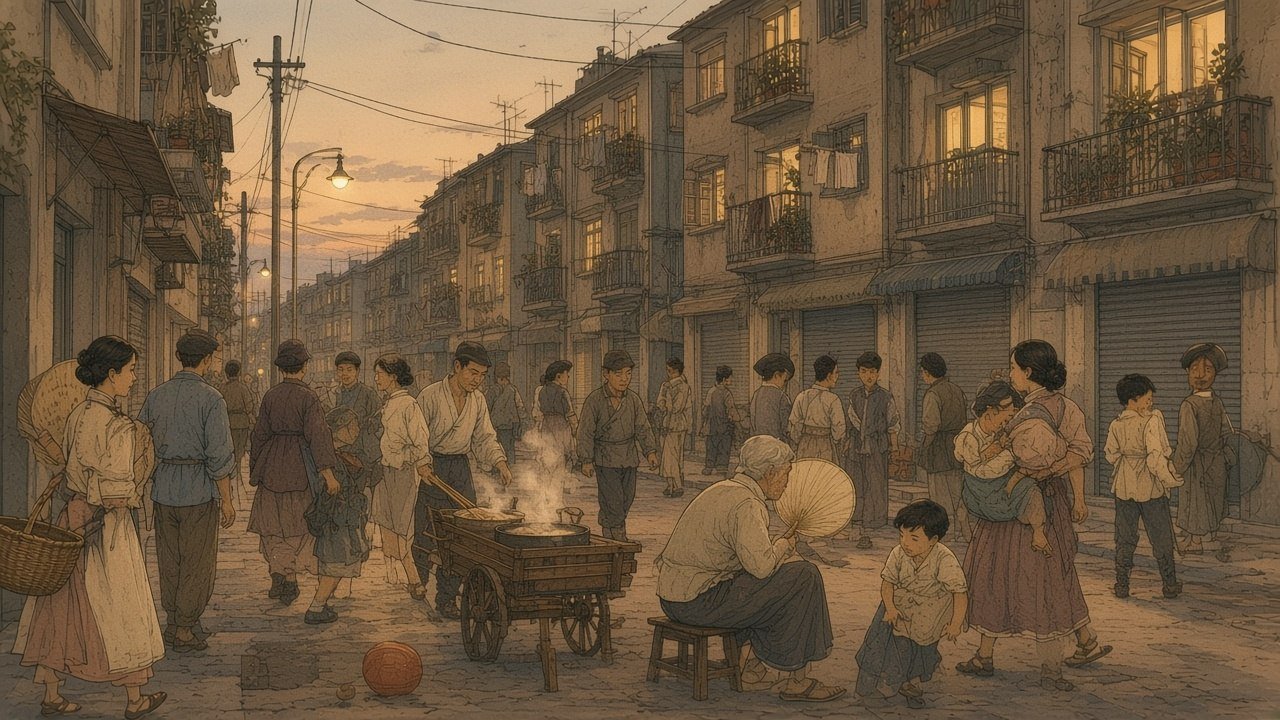
The demand came from people. The Hongkong and Shanghai Hotels’ history, in its account of the family’s philanthropy, describes the arithmetic. Hong Kong’s population had fallen from 1.25 million in 1941 to about 600,000 in 1945; by the end of 1946, with refugees fleeing the civil war on the mainland, it had swollen again to 1.5 million, and by 1949 it was 2.3 million[2]. The newcomers settled in overcrowded tenements and squatter villages, and as industry developed many found work in factories[2]. Lawrence, his obituarist wrote, “was able to boast that his plants were always able to meet the ever-rising demand for electricity from the proliferation [of] factories in Kowloon and the New Territories and the burgeoning, refugee-fed population”[5].
The Loss of Shanghai
While Hong Kong recovered, Shanghai slipped away. In 1949 the Communist armies took the city, and the family’s assets in China were lost. “Four years after the war,” the New York Times wrote, “Mao Zedong’s Chinese Communists seized the family’s Shanghai holdings”[7]. The Independent said that all the family’s assets in China were seized, including the mansion on Bubbling Well Road[5]. The more detailed accounts describe a gradual process: Horace’s departure in 1948, never to return; messages from former managers and servants that things had changed; and in 1953 the handover of Marble Hall to Soong Ching-ling[8][4].
Betting on Hong Kong
The Kadoories stayed in Hong Kong. The Independent’s obituarist, Derek Davies, wrote that despite internment and the loss of Shanghai, Lawrence “maintained throughout an almost child-like faith in the future of Hong Kong” and of the role it was destined to play in the development of China[5]. He added that in the 1950s and 1960s, long before Hong Kong looked like achieving an economic miracle, Lawrence “nursed his apparently impossible dream of Hong Kong’s seeding the establishment of a South China megapolis embracing Hong Kong and Guangzhou”[5]. By the time of his death, Davies thought, the vision was well on the way to being realised.
Public Life
Lawrence served on the colony’s Executive Council from 1951 to 1954[7][5]. The Heritage Project lists the other bodies on which he sat during his career: the Executive and Legislative Councils, the Council of the University of Hong Kong, the Board of Education, and advisory bodies on labour, taxation, town planning and public transport[4]. The Science Museum record credits him with some fourteen chairmanships, twenty directorships and twenty memberships of important committees and companies, including the general committee of the Hong Kong General Chamber of Commerce[3]. He had been a justice of the peace since 1936, and he was a trustee and chairman of the Ohel Leah Synagogue, the centre of Hong Kong’s small Jewish community[3].
Carpets and Cotton
The family’s businesses diversified. The Heritage Project names Tai Ping Carpets among the new enterprises of the post-war years[4]. The Science Museum record mentions Lawrence’s leadership of the Nanyang Cotton Mill, the Hong Kong Carpet Manufacturing Company and Schroders Asia[3]. The Independent says simply that he expanded his Hong Kong interests “into carpet-making and cotton mills”, but that “power generation was always the main preoccupation”[5].
In 1957 Lawrence was invited to become a director of the Hongkong Bank. The Science Museum record says that he was pressured to resign in 1967, when the British Bank of the Middle East, owned by the Hongkong Bank, became a target of riots[3]. The record does not explain the connection, and the sources consulted do not elaborate.
The 1959 Inquiry and Esso
Success brought scrutiny. The Science Museum record says that, following objections to CLP’s tariffs, a British-led commission of inquiry reported in 1959 and recommended nationalisation[3]. Nationalisation was not what the Hong Kong government wanted. Instead, the record continues, tariffs and dividends were frozen, Lawrence “came to timely financial arrangements with Esso (then Standard Oil, NJ), and together they worked out a government-agreed scheme of control”[3].
The partnership with Esso took corporate form in 1964, when the Castle Peak Power Company was formed, jointly owned by CLP and Esso, now ExxonMobil[6]. The Science Museum record presents the outcome as proof of “the ability of a private sector, family-led utility both to provide the essential leadership and to keep vital supplies just ahead of the growing demands of Hong Kong’s economic revolution”[3].
Floodlights in 1967
In 1967 the upheavals of the Cultural Revolution spilled into Hong Kong, with riots in the streets. Lawrence was, in Davies’s words, “affronted by the extremism”[5]. “Deliberately, he instituted night-shifts for the construction crews working on his projects, their flood-lights demonstrating Hong Kong’s defiance of the mainland’s threats and his own faith in the future”[5].
Paternalists
Davies also gave the brothers a literary comparison. Lawrence, he wrote, was “no Gradgrind: he and his brother Horace played the parts of Hong Kong’s brothers Cherryble, running their businesses on paternalistic lines, with genuine regard for their workers’ welfare”[5]. The Cheeryble brothers are the kindly merchants of Dickens’s Nicholas Nickleby, and the comparison suited men whose charity, Davies said, was often done “by stealth”[5]. Davies was not uncritical. He noted Lawrence’s conservatism and his opposition to the democratic reforms pressed by Hong Kong’s liberals before 1997, and the New York Times quoted Lawrence’s remark that he saw “quite a lot of good in colonialism”[5][7]. Both views belong in his portrait. The most celebrated of the brothers’ public works, however, was not in Kowloon’s factories but on the hillsides of the New Territories.
References
OpenClose
- SCMP Reporter, “Vision in darkest years”, South China Morning Post, 26 August 1993 *
- The Hongkong and Shanghai Hotels, Limited, Tradition Well Served: 150 Years (Hong Kong: HSH, 2016), anniversary magazine with a chairman’s letter by Sir Michael Kadoorie *
- Science Museum Group Collection, “Lawrence Kadoorie 1899–1993”, biographical record *
- Hong Kong Heritage Project, “Kadoorie Family: A Short History”, Hong Kong Heritage Project online collection (accessed 16 November 2026) *
- Derek Davies, “Obituary: Lord Kadoorie”, The Independent, 26 August 1993 *
- CLP Group, “Our History”, CLP Group website (accessed 16 November 2026) *
- “Lawrence Kadoorie, 94, Is Dead; A Leader in Hong Kong’s Growth”, The New York Times, 26 August 1993 *
- Historic Shanghai, “Tour Report: Inside Marble Hall, The Kadoorie Mansion” *
The family tree, timeline, places, glossary and select bibliography for the whole history are on the Kadoorie index page.