CITY STUDY · BIBLE SCHOLARSHIP
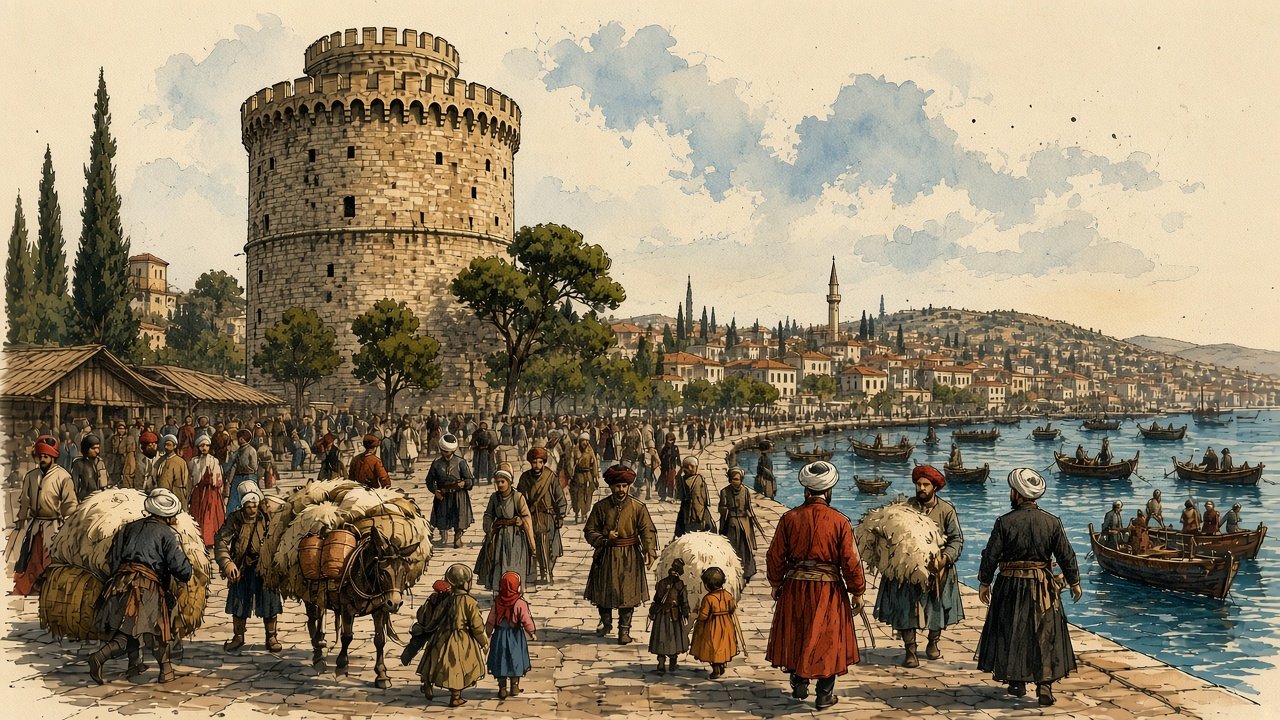
Salonica was a city of the Bible for Greeks and Jews alike, from Paul’s letters and the Byzantine scholars of Thessalonica to the Sephardi commentators, the Gedaliah and Soncino presses and the Ladino Bibles of the Jabez brothers.
 Explore Salonica on the interactive scholarship map.
Eustathios & Triklinios
Taitazak, Arama, Almosnino
Gedaliah, Soncino, Jabez
Translation & Me’am Lo’ez
I. Why Salonica Matters for Bible Scholarship
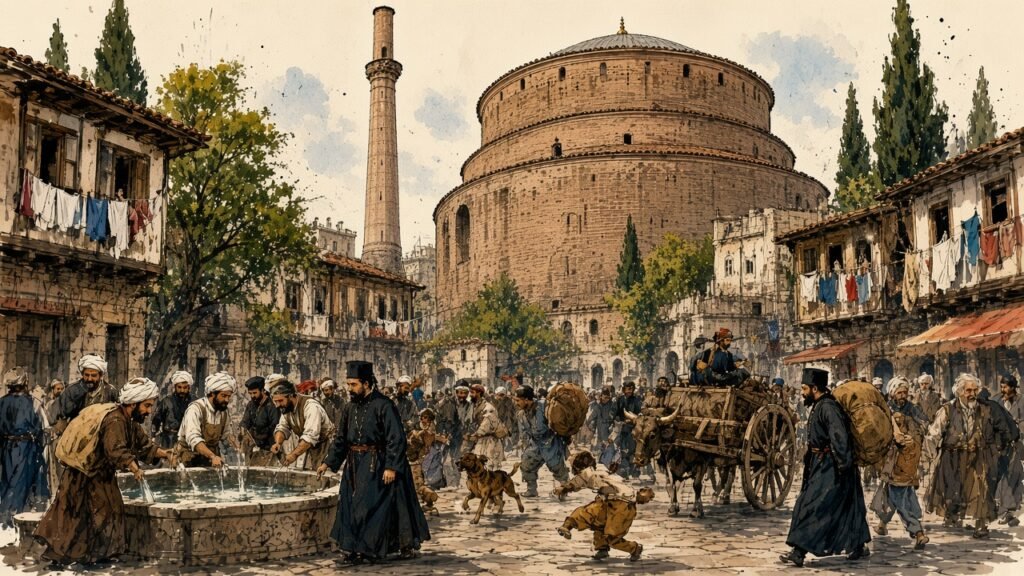
Thessaloniki, the Salonica of the Ottoman centuries and סלוניקי to its Jews, is unusual among the cities of the Mediterranean in having been a major centre of biblical learning for both Greek Christians and Jews, often at the same time and within a few streets of one another. Paul’s letters to the Thessalonians are among the oldest writings in the New Testament; the brothers Cyril and Methodius, natives of the city, carried the Gospels into Slavonic; Byzantine archbishops and philologists edited and explained texts there; and after 1492 the Sephardi exiles made it the largest Jewish city of the Ottoman world, with academies, commentators and presses whose books were read from Amsterdam to Safed.
The full history, from the expulsion from Spain to the destruction of the community in 1943, is told in this site’s long read From Sefarad to Salonica. This page gathers the city’s place in the story of Bible transmission and points to the related notes across the hub.
II. Romaniotes and Byzantine Scholars
Before the Spanish exiles arrived, the Jews of Thessaloniki were Romaniotes, Greek-speaking Jews with their own rite, the minhag Romania. Benjamin of Tudela found some five hundred Jews in the city around 1170. The most important biblical work by a Byzantine Jewish scholar of the Balkans, the Lekah Tov (לקח טוב) of Tobiah ben Eliezer, a midrashic commentary on the Pentateuch and the Five Scrolls, came from this Greek-speaking world, though its author was not himself a Salonican.
The Greek Church of the city produced a line of scholars. Eustathios, archbishop from the later 1170s, wrote his vast commentaries on Homer and an account of the Norman capture of 1185. In the early fourteenth century Thomas Magistros and his pupil Demetrios Triklinios established, annotated and metrically corrected the texts of the Greek poets, while Gregory Palamas and Nicholas Kabasilas wove biblical exegesis into homily and liturgical commentary. For the wider Greek tradition see Greek Bible Transmission and Cyril, Methodius and the Slavonic Bible.
III. The Sephardi Commentators
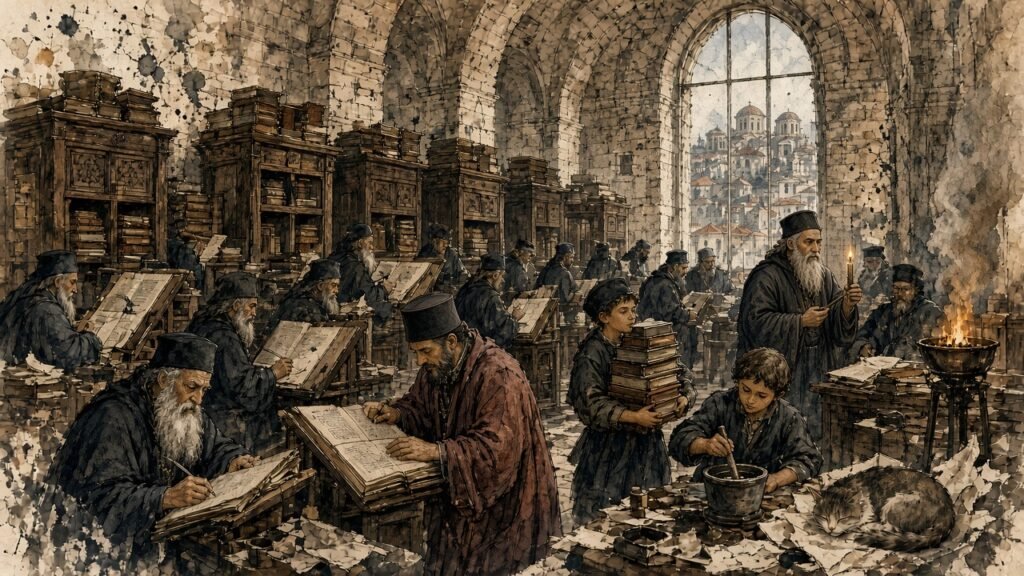
The first generations of Sephardi rabbis in Salonica produced a remarkable body of biblical commentary in the Spanish tradition of plain sense, philosophy and homily. Joseph Taitazak wrote on Ecclesiastes, Daniel and the Five Scrolls; his pupil Solomon Alkabetz, author of Lekha Dodi, commented on Esther, the Song of Songs and Ruth before settling in Safed. Meir Arama, son of the philosopher Isaac Arama, whose own Akedat Yitzhak (עקדת יצחק) was printed in the city in 1522, wrote on Job, the Psalms, Isaiah and Jeremiah. Moses Almosnino, born in Salonica, wrote on the Five Scrolls and the Pentateuch and a moral treatise in Spanish printed in Hebrew characters.
Their model was the exegesis of Isaac Abarbanel, and their world is surveyed in Sephardim in the Ottoman Empire and Bible Scholarship in Spain.
IV. Presses and the Printed Bible
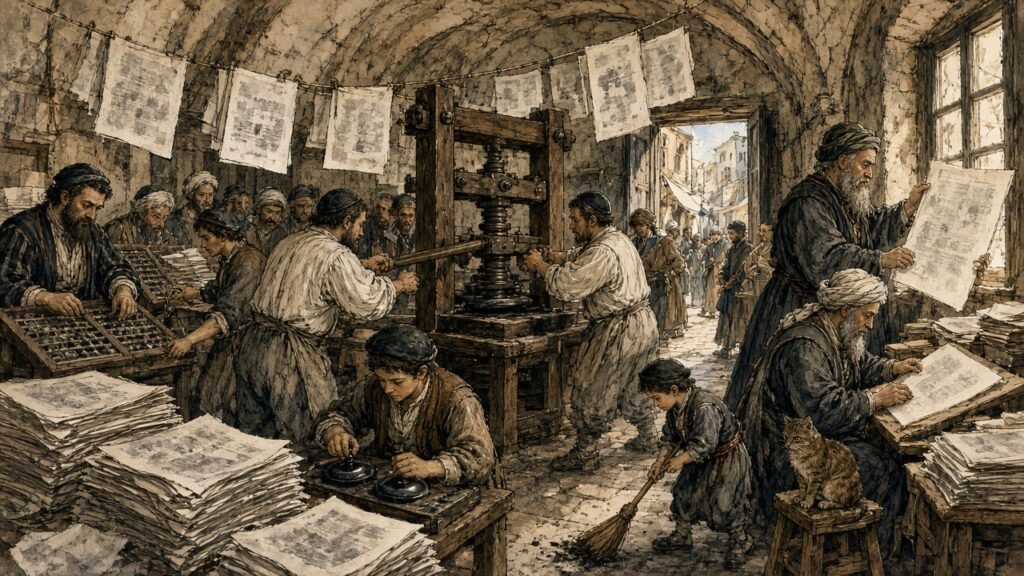
Don Judah Gedaliah, formerly of Eliezer Toledano’s press in Lisbon, set up the city’s first Hebrew press in about 1515; among its first books was Meir Arama’s commentary on Job, printed with the biblical text in 1517, and the Jewish Encyclopedia describes the press’s output as “mainly Bibles”. Moses and Gershom Soncino printed in the city in the later 1520s and early 1530s. From 1568 Joseph ben Isaac Jabez issued the Prophets and Writings with a Ladino translation in Hebrew characters, the city’s great contribution to the Judaeo-Spanish Bible.
For the printers see The Soncino Dynasty, Soncino and the First Complete Printed Hebrew Bible of 1488 and Five Centuries of Jewish Printing and Publishing; for the Ladino Bible see Ladino (Judezmo), Judeo-Spanish and the Sephardi Bible.
In Salonica the Hebrew verse and its Ladino rendering stood side by side on the page, so that a reader with little Hebrew could still follow the original.
V. Me’am Lo’ez and the Ladino Press
In the eighteenth century Jacob Culi, a judge and teacher in Constantinople, began Me’am Lo’ez (מעם לועז), an encyclopaedic Bible commentary in Ladino for readers who could not follow rabbinic Hebrew; it became the most popular book in the history of Ladino literature, a book to be read aloud as much as studied, and its first part was reprinted at Salonica in 1798. The city’s own Ladino press, from the Nehama and Sa’adi a-Levi printing houses to the newspapers of the nineteenth and twentieth centuries, carried the Bible and its commentary into everyday Judaeo-Spanish.
VI. Fire, Destruction and What Survives
The fire of August 1917 destroyed most of the old centre, with its synagogues, libraries and schools. During the German occupation the community’s libraries and archives were looted, the vast Jewish cemetery outside the eastern walls was destroyed from December 1942, and in 1943 the great majority of the city’s Jews were deported to Auschwitz. Some of the looted archives were returned from Moscow in 2021.
The Greek tradition continues at the theology faculty of the Aristotle University, which opened in the academic year 1941 to 1942, and at the Patriarchal Institute for Patristic Studies, founded in 1965 and housed at the Vlatadon Monastery. The Jewish community, about a thousand people today, keeps the Monastirioton synagogue and the Jewish Museum of Thessaloniki. Compare the neighbouring communities in Kushta on the Golden Horn, The Presses and Prophets of Smyrna and From the Areopagus to Melidoni Street.
VII. Place on the Transmission Map
Salonica is where Greek and Hebrew Bible scholarship lived side by side for centuries: the Byzantine philology of Eustathios and Triklinios, the Sephardi commentaries and presses of the sixteenth century, and the Ladino Bible that brought Scripture to ordinary readers. Continue to From Sefarad to Salonica for the full history, and to Lisbon and Salamanca for the Iberian world the exiles left behind.
Sources & Further Reading
| Work | Author / Source | Relevance |
|---|---|---|
| History of the Jews in Thessaloniki | Reference | “History of the Jews in Thessaloniki” |
| Salonica | Jewish Encyclopedia | “Salonica” |
| Salonika | Jewish Virtual Library | “Salonika” |
| Community history | Central Board of Jewish Communities of Greece | “History of the Jewish Community of Thessaloniki” |
| Romaniote Jews | Reference | “Romaniote Jews” |
| Eustathios’ Homer commentaries | Cullhed and Olson, Brill | “Preface” |
| Byzantine Thessalonike | Pontani (ed.), De Gruyter | “Education and Learning in Byzantine Thessalonike” |
| Taitazak | Jewish Encyclopedia | “Taitazak” |
| Meir Arama | Jewish Encyclopedia | “Arama, Meïr ben Isaac” |
| Judah Gedaliah | Jewish Encyclopedia | “Gedaliah, Judah (Don)” |
| Hebrew typography | Jewish Encyclopedia | “Typography” |
| Jacob Culi | Jewish Encyclopedia | “Culi, Jacob” |
| Patriarchal Institute | Ecumenical Patriarchate | “Patriarchal Institute for Patristic Studies in Thessaloniki” |
| Archives returned, 2021 | JTA | “Greek-Jewish archives return home nearly 80 years after they were looted by the Nazis” |
| From Sefarad to Salonica | Nekud long read | From Sefarad to Salonica |