Sima Babovich and the Karaites of Crimea
Simhah ben Solomon ben Nahamu Babovich, known in Russian as Sima Solomonovich Babovich or Bobovich, was a first-guild merchant of Evpatoria, on the western shore of the Crimean peninsula, and the first official Karaite hakham recognised by the Russian Empire. The standard dates for his life are 1790 to 1855. The exact day of his birth is not recorded in the sources used here, and the Jewish Encyclopedia of 1906, writing before later Crimean archival work, guessed that he had been born about 1785. He did not make his name as a scholar or as the author of a book. His importance lies in a sequence of petitions, journeys and institutional designs by which a small, comparatively wealthy community of scripturalist Jews, the Karaites of Crimea, obtained from the imperial government a legal standing increasingly distinct from that of the Rabbanite Jews of the empire.[1][3][4]
This essay follows that life in order, from the merchant household at Gözleve through the mayoral years at Evpatoria, the mission to St Petersburg in 1827, the pilgrimage of 1830, the statute of 1837 and the hakhamate confirmed in 1839, to the estates inventoried at his death and the succession that followed. A timeline gathers the principal dates. A glossary explains terms that recur. Where the sources disagree, or where a colourful episode is attested only in later community writing, the disagreement or the uncertainty is stated rather than resolved. Two cautions should be kept in view from the start. First, Abraham Firkovich, whom Babovich employed as a tutor, secretary and historical investigator, fabricated colophons and altered tombstone dates in order to give the Crimean Karaites an antiquity that would serve them before Russian officials; those claims are not treated here as fact. Second, some popular lives of Babovich transfer to him honours that belong to his younger brother, or report meetings and wartime gifts that have not been found in the archival studies and encyclopaedia entries on which this account rests.[1][4][9][13][18]
1. A merchant’s son in Gözleve
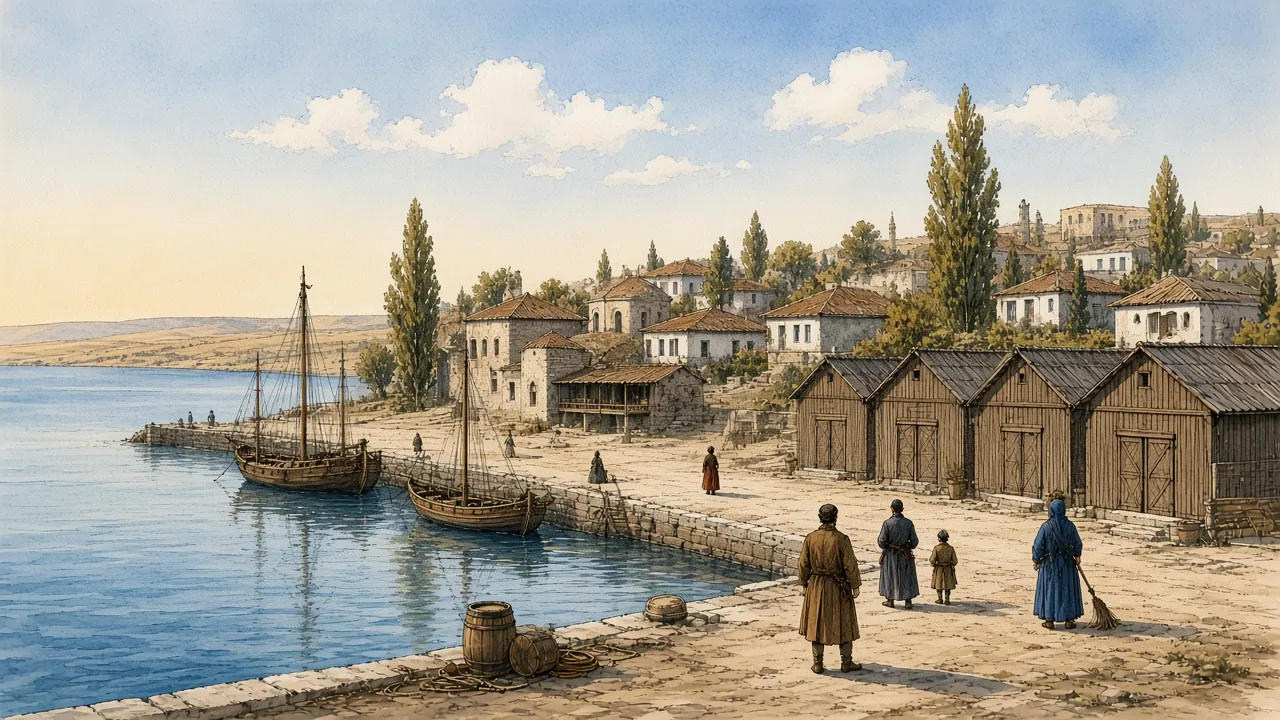
The town in which he grew up had more than one name, as Crimean towns often did. To the Tatars and in older Jewish sources it was Gözleve, also written Göslöw or Koslov; to the Russian administration after the annexation of 1783 it was Evpatoria or Yevpatoriya, a classical renaming that recalled Mithridates Eupator. It stood on the western shore of the peninsula, a port on the Kalamita Bay, looking out over the Black Sea. Under the Crimean Khanate a Karaite community had lived there for centuries alongside the older fortress settlements of Chufut-Kale and Mangup and the trading town of Kefe, later Theodosia. By the time of the Russian annexation the community at Evpatoria was modest. The Encyclopaedia Judaica records that some one hundred Karaite families remained, with only a few Rabbanite Krimchaks, after a period of hardship in which many Jews had fled to Turkey. In the course of the nineteenth century that small port community became the largest Karaite settlement in Russia and the seat of the chief hakham.[6][12]
The community was far older than the Russian town. The YIVO Encyclopedia’s article on the Karaites records a first documentary notice of Karaites in the Crimea in 1278, centuries before the annexation, when the principal settlements still lay in the fortress towns of the interior as well as in the ports. Jonathan Dekel-Chen’s essay on Crimea in the same encyclopaedia supplies the wider Jewish demography of the peninsula, Krimchaks and Karaites together, without a detailed life of Babovich, and it is used here only for that setting. What changed after 1783 was not the fact of Karaite life in Gözleve, but the legal world in which a merchant family of that town would have to act.[12][28]
The family into which he was born was already prominent in that town. His father, Solomon, or Shelomo, Babovich, appears in the heading of the son’s Encyclopaedia Judaica entry as Solomon ben Nahamu. In Crimean archival writing he is often Solomon ben Babakai, called Chabak, Bobovich, a first-guild merchant. A community etymology, set out by the Evpatoria historian Vyacheslav Elyashevich, derives the Russian surname from the patronymic Babakaevich and from a grandfather, Babakai Yufudovich Chabak, a wealthy merchant with four sons, Solomon, Ilya, Samuel and Yufuda. The etymology is consistent with the forms used by Dmitrii Prokhorov in his archival study of 2022, but it is community scholarship rather than a finding of the imperial files themselves.[1][4][19]
What the files and the encyclopaedias do establish is the father’s public standing. In 1795 Solomon was one of three Karaite delegates who travelled to St Petersburg to petition Catherine II, a journey treated more fully in the next chapter. He later served as city head of Evpatoria for at least one three-year term. Elyashevich, working from a later official testimonial, suggests that the term may have run from about 1809 until Solomon’s death in 1812. That date of death, 1812, is the one adopted by both Prokhorov and Elyashevich. An older popular listing that gave 1760 to 1817 is not followed here.[4][19]
Sima was the elder of two sons who can be named with confidence. The younger, Babakai, also called Nahamu, was born in 1801 and lived until 1882; he would become city head of Evpatoria in the 1830s and, after his brother’s death, the second Taurida and Odessa Karaite hakham. Elyashevich names their mother as Ester Mordechaevna Kogen Aivaz. That identification has not been independently confirmed in the Encyclopaedia Judaica or in Prokhorov’s 2022 article, and it is offered here as a community account. The same is true of later local lists of Sima’s wife and children. What the standard encyclopaedia entries do record is that in 1830 Abraham Firkovich was tutor to Babovich’s children and served as his secretary on a pilgrimage, so the household of the 1820s included school-age sons or daughters, even if their names are not securely established in the sources used for this essay.[1][4][13][19]
The household was a mercantile one, not a scholarly one. The Jewish Encyclopedia, in a short early article, already drew the distinction that has remained in force. Babovich “did not distinguish himself as a scholar, nor did he write any book,” but he was “a man of wealth” and was famous for the work he did for the political and social rights of the Karaites in Russia. The Second Edition of the Encyclopaedia Judaica, in an entry by Golda Akhiezer, is just as plain. He “mainly devoted himself to obtaining more rights for the Karaites in Russia,” and when he became head of the Spiritual Council he remained so until his death, “although he was not distinguished as a scholar.” The life that follows is therefore a political biography, in the older sense of a life lived in petitions, offices, property and patronage, rather than a history of books.[1][2][3]
2. Crimea after 1783 and the mission of 1795
The Russian annexation of the Crimean Khanate in 1783 changed the legal world in which the Karaites lived. Under the khans they had been a protected minority, paying the jizya and holding charters, or yarliqs, that secured rights in particular towns, above all at Chufut-Kale. They had shared that legal condition with the Rabbanite Jews of the peninsula. The Encyclopaedia Judaica’s long article on the Karaites is explicit on the point. Under the Tatar khans and the Ottoman Turks, Rabbanite Jews and Karaites in the Crimea had the same legal status. It was only at the end of the eighteenth century, when Russia conquered the Crimea, that a difference in status was made between them under the law.[10][12]
The first years of Russian rule did not announce that difference. Local officials, Prokhorov writes, were not concerned with the fine distinctions between confessional groups of Jews and Karaites, their religious rules and dogmas, and they classed the Karaites with the Rabbanite Jewish population of the peninsula. In 1794 a package of measures that included a double tax on Jews made that classification expensive as well as insulting. Karaites found the double tax, in a phrase preserved in the legal literature, both burdensome and shameful. They already possessed, in their own eyes, an argument for exemption. They did not accept the Talmud. They were, as they would say in later petitions, a small community of landowners and merchants, not to be confused with the mass of poor and, as they increasingly put it, unassimilable Rabbanite Jews now entering the empire through the partitions of Poland.[4][7][8]
In 1795 a delegation authorised to represent Karaite interests travelled to St Petersburg in order to deliver a petition in person. Its members were Solomon Babovich, the father of the future hakham; Benjamin ben Samuel Aga, a former manager of the khan’s mint and the leading political figure of the older generation; and Isaac ben Solomon, hakham of Chufut-Kale. They spent three months in the capital. On 8 June 1795 Catherine II issued a rescript. As quoted in Prokhorov’s legal study, the empress commanded that the double taxes laid on Jews in general were not to be taken from the Karaites, who were instead to pay as before, on a level with the other merchants and townspeople living in the Taurida oblast. The rescript also freed them from so-called recruit money and from the billeting of soldiers, and it left room, under a caution about improper extension of the favour, for further relief. The encyclopaedia tradition adds that they received the right to acquire immovable property.[4][7][10][12]
The rescript of 8 June 1795 is printed, as Prokhorov cites it, in the Complete Collection of the Laws of the Russian Empire, first collection, volume 23, issued in 1830, at pages 705 to 706. The later statutes that matter in this life are cited from the same corpus: the conscription statute of 26 August 1827 in the second collection, volume 2, pages 727 to 741; the Senate ukase of 4 April 1839 confirming Babovich as hakham in volume 14, pages 348 to 349; and the equalisation law of 8 April 1863 in volume 38, pages 302 to 306. Those volumes have been followed here from Prokhorov’s references, not re-collated line by line against a library set of the Complete Collection. A community-sponsored compilation published at St Petersburg in 1890 by Z. A. Firkovich, a Sbornik of old charters and enactments concerning Russian Karaites, gathers many of the same texts. It is a convenient dossier, and a partisan one, and it is not treated as a critical edition.[7][24][27]
The 1795 rescript is the first formal legal wall between Karaites and Rabbanites in the Russian Empire. It is not yet an ethnic theory, and it did not even change the official vocabulary overnight. Legislative decrees continued for decades to refer to Karaites as Jews. Philip Miller, whose 1993 monograph remains the essential study of the later schism, and the Italian synthesis that draws on Miller and on Mikhail Kizilov, both stress that the early petitions sought relief, not a declaration that Karaites were a people apart. In the Karaite accounts of the 1795 and 1827 missions, Rabbanites can still be called “our Rabbanite brothers.” The wall of 1795 was fiscal and civic. The language of nation and of complete dissociation would come later, and Sima Babovich would be among those who spoke it.[9][10][20]
3. The family and the kenesas of Evpatoria
The prayer houses of Evpatoria
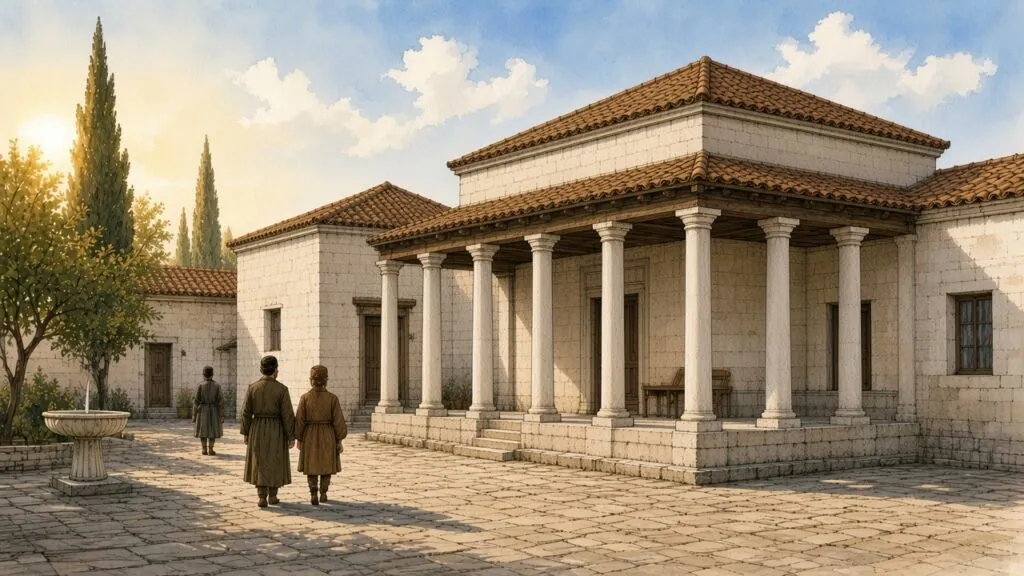
The public monument of the family’s early wealth was not a palace but a pair of prayer houses. In 1807, under Solomon Babovich’s patronage and largely at his expense, a new Karaite prayer house, the Great or Cathedral Kenesa, was built at Evpatoria beside an older building. In 1815, already after Solomon’s death, his brothers Samuel and Ilya rebuilt the older house, which has since been known as the Small Kenesa. Elyashevich records a Hebrew inscription stating that the six marble columns of the covered gallery of that complex were installed in 1819 at the expense of Solomon’s young sons, Sima and Babakai. The two halls survive and are among the few restored kenesas still in use in Crimea. The inscription has not been re-edited for this essay; the report of it is Elyashevich’s, and it is treated here as a local epigraphic claim consistent with the family’s known patronage.[4][19]
Evpatoria
Open in Google MapsSevastopol
Open in Google MapsBakhchisarai
Open in Google MapsChufut-Kale
Open in Google MapsSimferopol
Open in Google MapsKarasubazar
Open in Google MapsGan Yafe
Placed near Karasubazar, where the 1855 inventory locates the estate.
Open in Google MapsTheodosia
Open in Google MapsA kenesa is not a synagogue in the Rabbanite sense, though travellers often used that word for it, and it is not a mosque. It is the Karaite house of prayer, a hall oriented toward Jerusalem, without the bimah arrangements of a Talmudic congregation, and in Crimea often built with a courtyard, a gallery and a separate hall for women. The Evpatoria complex, with its two halls and its colonnade, became in the nineteenth century the ceremonial centre of Russian Karaism, the place where a hakham would be elected and where, if later tradition is believed, an emperor might be received. The family’s name was literally built into its stone.[6][19]
Solomon’s death in 1812 left the elder son, then about twenty-two, as the most obvious successor in the Evpatoria community, though not yet as a territorial leader. The older political centre of Crimean Karaism was still Chufut-Kale, the cliff town above Bakhchisarai, and its leading lay figure was still Benjamin Aga. Isaac ben Solomon, the hakham of Chufut-Kale, remained the commanding religious scholar of the generation; his work on the calendar and on Karaite dogma would be printed only later. The shift of gravity from the old fortress town to the port of Evpatoria, and from the Aga family to the Baboviches, was a process of two decades, not a single inheritance.[4][10][12]
The older centre at Chufut-Kale
Isaac ben Solomon of Chufut-Kale, who lived from 1755 to 1826, was the outstanding Karaite scholar of that older generation. The encyclopaedia tradition credits him with work on the calendar, including Or ha-Levanah, and with Iggeret Pinnat Yikrat, a statement of Karaite dogma that was printed, after his death, in 1834, with letters from Isaac Markus Jost and a Tatar translation. He had stood beside Solomon Babovich and Benjamin Aga in the delegation of 1795. His death in 1826, two years after Benjamin Aga’s, closed the scholarly and political leadership of the khanate generation at almost the same moment. What followed in Evpatoria was a different kind of leadership, mercantile and legal, for which Sima Babovich was already prepared, and for which he would later hire other scholars.[1][10][12]
Mikhail Kizilov has gathered, in a monograph and in a chapter of a Brill handbook, the testimony of European and Russian travellers who visited the Crimean Karaites in the later khanate and the early Russian period. Those accounts, which often linger on Chufut-Kale, on costume and on the supposed antiquity of the community, later became a quarry both for modern historians and for Karaite self-presentation. They are used here as a reminder that Evpatoria’s rise was watched from outside, and that a usable past was already being offered to visitors before Firkovich began to manufacture one. No traveller’s anecdote is repeated as fact unless it is independently secured.[15][20]
4. City head of a mixed town
The firmest document for Sima Babovich’s early public career is a contemporary official testimonial, quoted by Elyashevich from a file in the State Archive of the Republic of Crimea, and accepted by Prokhorov. “By the choice of the Christian, Karaite and Tatar societies, the merchant Bobovich served as City Head of Evpatoria three triennia, beginning in 1818, continuously and blamelessly, and was left free of a fourth solely at his own request.” The span is therefore 1818 to 1827, three successive three-year terms, ended at his own asking. The electors were not a Karaite caucus. They were the recognised societies of a mixed port town, and the choice of a Karaite merchant to head the municipality says as much about Evpatoria in the 1820s as it does about the candidate.[4][19]
The same testimonial, which was later used in official petitions and is therefore a document of self-description as well as of record, attributes to the young merchant a series of civic acts that should be read with that double character in mind. During the plague that closed Crimean towns in 1812, it says, the twenty-two-year-old Sima took charge of relief for the poor in an Evpatoria isolated by quarantine. In 1814 he and Aaron Pampulov were chosen as Karaite deputies for a ceremonial greeting of Alexander I in St Petersburg, on the emperor’s return from the foreign campaign; the ceremony was cancelled. As city head he had drainage ditches cut in the lower town to carry off rainwater that damaged houses. In the dearth year of 1825 he imported, at his own expense, six thousand chetverts of grain from Odessa and sold it at near cost. He built, again at his own expense, four large warehouses on the Evpatoria waterfront, in order, the testimonial says, to encourage commerce by example.[19]
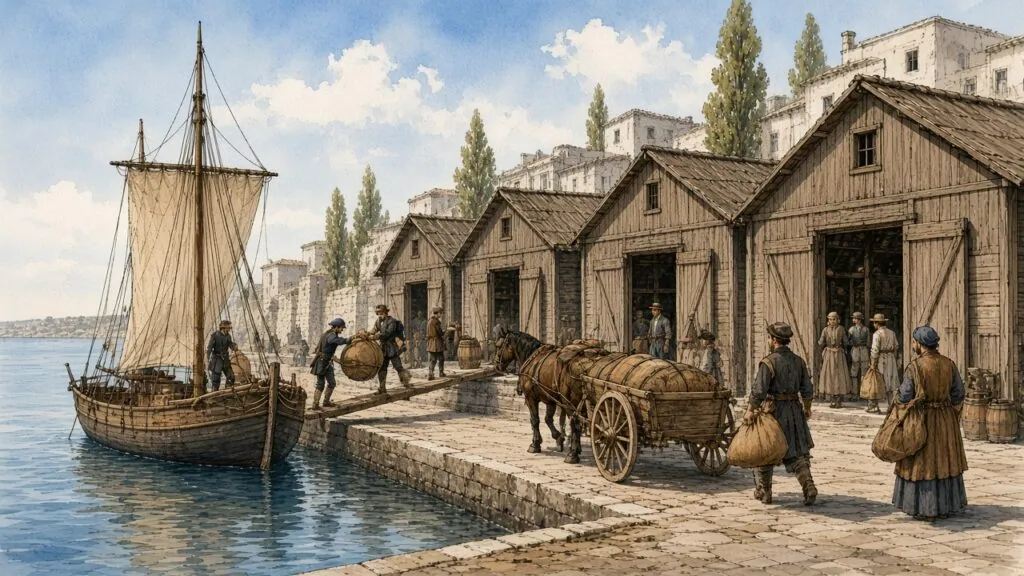
None of those acts is independently narrated in Miller or in the encyclopaedia entries. They come from a character reference of the sort that a merchant seeking imperial favour would have been glad to possess. They are not therefore false, but they are not disinterested chronicle either, and they are marked here as probable rather than as archival fact of the same weight as the election itself or as the later Senate files. What can be said without that caution is the social fact the testimonial takes for granted. Evpatoria was a town of Christians, Karaites and Tatars, of warehouses and quarantine, of dearth and of grain from Odessa, in which a Karaite merchant could be chosen, three times running, to keep the peace among “inhabitants of different stock and different faith,” in the testimonial’s own language, and to push a port’s trade.[19]
The family’s municipal run was longer than one man’s three terms. After Sima left office, his uncle Ilya, one of the rebuilders of the Small Kenesa, was city head in 1830. The younger brother, Babakai, held the office from 1834 to 1837. Elyashevich notes that, with two short gaps, members of the family stood at the head of Evpatoria from the first decade of the century until 1837. A later grandson, S. E. Duvan, would be a noted mayor in a different Evpatoria, the spa town of the early twentieth century. The continuity is real. It should not be turned into a romance of a “Karaite sultanate” in the town, a folk epithet that Elyashevich records but that has no place as a title.[19]
The imperial files later compiled for a bid at honorary citizenship give a dry complement to the civic testimonial. Babovich stood in the first guild, the “foremost guild standing,” in 1825 to 1827 and again in 1830 to 1838, and in the second guild in 1828 and 1829. The dip in the late 1820s may reflect the costs of the St Petersburg mission, or ordinary fluctuations of a merchant’s declared capital. It is in any case a reminder that guild status, on which so many Russian rights depended, was a renewable fact, not a birthright, and that it would later be used against him.[4]
5. A petition that was never delivered
In 1824 Benjamin Aga died. He had been the last major Karaite political leader of the khanate generation, and he had continued to hold his post, the Encyclopaedia Judaica says, unofficially, under Russian rule. Miller dates from that year Sima Babovich’s consolidation of his effort to become the community’s leader. The port merchant who had already headed Evpatoria for two terms was now, in default of the older figure, the obvious candidate to speak for the Karaites of the peninsula as a whole.[8][10]
The following year brought the emperor himself to the south. Alexander I was in the Crimea in the autumn of 1825 and died at Taganrog on 19 November, or 1 December in the Gregorian calendar. The Evpatoria testimonial says that Babovich, “as an eminent citizen,” was honoured to greet the emperor during a visit to the town. Miller records a more consequential detail. Babovich had prepared a formal petition on the legal status of the Karaites to present to the tsar during that visit, but the tsar fell ill and died before the petition could be presented. The undelivered paper is a small fact with a long shadow. It shows that the legal campaign of the 1830s had already been framed, in some form, in the mid-1820s, and that the death of an emperor could interrupt a Karaite petition as easily as a plague or a dearth.[8][19]
Later community writing has added to the 1825 visit a ceremonial afterlife that has not been verified for this essay. Some popular biographies say that Alexander visited the Evpatoria kenesa on 1 November 1825, and that a marble Empire monument, crowned with a bronze double-headed eagle, was set up in the kenesa courtyard on Sima’s initiative, no earlier than April 1853, to commemorate the visit. Those claims have not been found in Miller, in the Encyclopaedia Judaica, or in Prokhorov’s 2022 archival article. They may yet be confirmed from the 2016 conference paper by Elyashevich on the Gan Yafe estate, or from a file in the Crimean archive, but until they are they remain later tradition.[4][8]
A similar caution applies to a meeting that is sometimes asserted and never, in the sources used here, shown. Adam Mickiewicz was in the Crimea in 1825 and wrote the Crimean Sonnets. It is not impossible that the Polish poet and the Karaite city head crossed paths in a small peninsula in a single season. Possibility is not evidence. No such meeting appears in Miller, in Akhiezer, in Prokhorov, or in Elyashevich’s documented newspaper essay on the family in municipal office, and it is not reported here as a fact.
6. The journey of 1827
On 26 August 1827 Nicholas I signed the Statute on Conscription Duty, the Ustav rekrutskoi povinnosti, which made the Jews of the Russian Empire liable to personal army service and cancelled the older privilege of paying a ransom instead of furnishing recruits. The measure belonged to a wider policy, already tried on other groups, of breaking what officials saw as the insularity of Jewish communities and of turning Jews into useful subjects. Recruits were to serve twenty-five years. The children of soldiers could be taken as cantonists. The first levy, as the YIVO Encyclopedia notes in its article on military service in Russia, involved some 1,800 Jewish conscripts, half of them, by decision of the kahals, children. The statute was at first applied to Karaites as well as to Rabbanites. For a community that had already bought, in 1795, an exemption from recruit money, the new personal levy was a return of the danger in a harsher form.[4][7][28]
In 1827 Babovich headed a delegation of the Crimean Karaite communities to St Petersburg, to petition the emperor for exemption. He was accompanied by Joseph Solomon ben Moses Luzki, called Yashar, the leading religious scholar of Evpatoria. Luzki had been born at Kukizow near Lwów in 1770, had lived at Lutsk, and in 1802 had moved to Evpatoria at the invitation of the community’s heads, to serve as teacher and as shofet, a judge. He remained in those offices for some forty years. He knew Russian and Polish well, a practical advantage in the capital. The pairing was characteristic of the community’s method. The merchant supplied wealth, standing and the habit of dealing with officials; the scholar supplied learning, Hebrew composition and a religious authority that Babovich himself did not claim.[1][9][21]
Luzki wrote a Hebrew chronicle of the journey, the Iggeret teshuat Yisrael, or Epistle of Israel’s Deliverance, which was printed at Evpatoria in 1840 with a Tatar translation by his brother-in-law, Abraham Firkovich. Philip Miller’s 1993 monograph reprints the Hebrew text with an annotated English translation, and remains the essential account of what happened. The Iggeret, in Miller’s description, records the delegation’s travel, their activities as guests and tourists in the imperial capital, the relatively swift granting of Babovich’s request, and the euphoric reception when the successful petitioners arrived back in Evpatoria. Elyashevich, drawing on community and archival tradition, adds that Babovich obtained an audience with Count Viktor Kochubei, chairman of the State Council, and through him with Nicholas I. The mechanics of the grant should be cited from Miller’s edition of the Iggeret when a page-level quotation is needed; the present essay follows his published description of the mission and does not invent scenes that only the full text could authorise.[9][19][21][26]

The result is not in doubt. Crimean Karaites were exempted from the draft. Prokhorov quotes a file phrasing that presents them “as a small tribe remaining on the face of the earth.” In 1828 the exemption was extended to the Karaites of Lithuania and Volhynia. Rabbanite Jews remained subject to Nicholas I’s conscription, including the cantonist system, until the reforms that followed the emperor’s death. The inequality before the law, opened in 1795, was now widened in the most sensitive of imperial obligations, military service. The Karaites of Evpatoria thereafter commemorated the event in an annual prayer. The Encyclopaedia Judaica’s entry on Luzki attributes a thanksgiving prayer, later recited each year on the anniversary, to Luzki himself. The older Jewish Encyclopedia, in a shorter and less careful notice, mentions a Sefer ha-Zikkaron by “Solomon” and a hymn by Abraham ben Joseph Solomon ha-Hazan; the chronicle and the prayer that can be securely named are Luzki’s.[1][3][4][10][21]
The 1827 mission was not only a Crimean errand. Dmitrii Prokhorov’s 2017 article on contacts between the Crimean Karaites and the Karaite communities of the western guberniyas, in the late eighteenth century and the first half of the nineteenth, treats the delegation in that wider geography. The article is cited by his later biographical study and has not been re-read in full for every page here, so no scene is taken from it beyond that frame. The extension of the exemption, in 1828, to the Karaites of Lithuania and Volhynia is the legal counterpart of those contacts. What had been won in St Petersburg for Evpatoria was, within a year, a privilege of the western communities as well.[4][17]
Miller notes a further, unsuccessful, request. Already in 1827 Babovich tried to obtain recognition of the Karaites as a distinct “nation,” and did not get it. The official victory of that year was an exemption, not a redefinition of a people. In the Karaite accounts of the mission, as in those of 1795, Rabbanites could still be called brothers. Kizilov, as cited in a later synthesis, has also pointed out that the exemption was useful to the Russian state as a standing example, held up before Rabbanites, of what abandonment of the Talmud might be rewarded with. The Karaites had asked for relief. They had been given a privilege that could also be used as a lesson.[9][20]
7. Luzki’s chronicle and an annual prayer
The Iggeret teshuat Yisrael is more than a receipt for a successful petition. It is one of the few narrative sources in which a Crimean Karaite of the early nineteenth century describes, at length and in Hebrew, a journey through the imperial state. Miller’s edition, which places a facing-page English translation beside the Hebrew and surrounds both with annotation, is the reason the text can be used with confidence by historians who do not work in the original. The book also contains Miller’s introduction to the wider history of Russian Karaite separatism, from the origins of the community to the consistory of 1837 and beyond. Daniel Frank, in a remark printed on the publisher’s page, called the introduction, the edition, the translation, the annotation and the appendices a pioneering work of its kind. The present essay is indebted to that book even where it cites only the publisher’s description of its contents, and it does not pretend to replace a reading of Luzki in Miller’s pages.[9][26]
The physical book can at least be described with some precision from library catalogues and from the publisher’s page. Issued at Cincinnati in 1993 as number 16 in the Monographs of the Hebrew Union College, it runs to some 252 pages of text and notes, with nineteen pages of front matter, and it includes a map. A bibliography occupies pages 245 to 252. The Iggeret is printed in Hebrew with a facing English translation, under the uniform title Igeret teshuat Yisrael, and is surrounded by Miller’s annotation. The publisher’s description, already used in the previous chapter, is also the authority for saying that Luzki recorded the journey, the time spent in the capital as guests and tourists, the relatively swift grant of the petition, and the reception at Evpatoria. Claims that would require a page number from the edition itself are not made here.[9][26]
What can be said, without lifting scenes from a text not open beside the writer, is the public afterlife of the mission. The Karaites of Evpatoria made the exemption into a liturgy. A thanksgiving prayer, composed by Luzki, was recited every year on the anniversary. An annual prayer is a political fact as well as a religious one. It fixed in the memory of a small community a particular reading of 1827, as a deliverance granted to Karaites as Karaites, and it did so in the language and the calendar of the kenesa, not in a Russian chancery. The prayer is also a reminder that Luzki, who is easily overshadowed in later writing by the wealth of Babovich and the collections of Firkovich, was the man who knew how to turn an imperial favour into Hebrew prose.[1][21]
Luzki’s later work continued in that scholarly register. In 1831 he visited the Land of Israel with his wife, a year after Babovich’s own pilgrimage. He wrote a didactic manual, Sefer ha-Hinnukh le-Petah Tikvah, printed at Constantinople in 1831, and a comprehensive supercommentary, Tirat Kesef, on Aaron ben Joseph’s Sefer ha-Mivhar, printed with that work at Gözleve in 1835. A calendar for the years 1859 to 1901 was printed posthumously at Evpatoria in 1858. Some of his poems and prayers entered the Karaite prayer book. He died in 1844, eleven years before Babovich, having seen the consistory created and the first hakham installed, but not the later equalization of 1863. The partnership of 1827 was a partnership of types, merchant and scholar, that the official hakhamate would later try to combine in a single office, not always with ease.[21]
8. The pilgrimage of 1830 and the Gözleve press
In 1829 and 1830 the German-Jewish historian Isaac Markus Jost asked Babovich to send him Karaite books and to supply information about them. The Encyclopaedia Judaica and the older Jewish Encyclopedia both record the correspondence, and Isaac ben Solomon’s Pinnat Yikrat, printed in 1834, includes letters from Jost with a Tatar translation. The request is a small sign of a larger change. Karaism, which Protestant Hebraists had already treated in the seventeenth and eighteenth centuries as a supposedly purer, non-Talmudic Judaism, was becoming an object of modern Jewish historiography. Jost wanted books and facts. Babovich, who was not a scholar, was already in a position to commission the men who could supply them.[1][3][12]
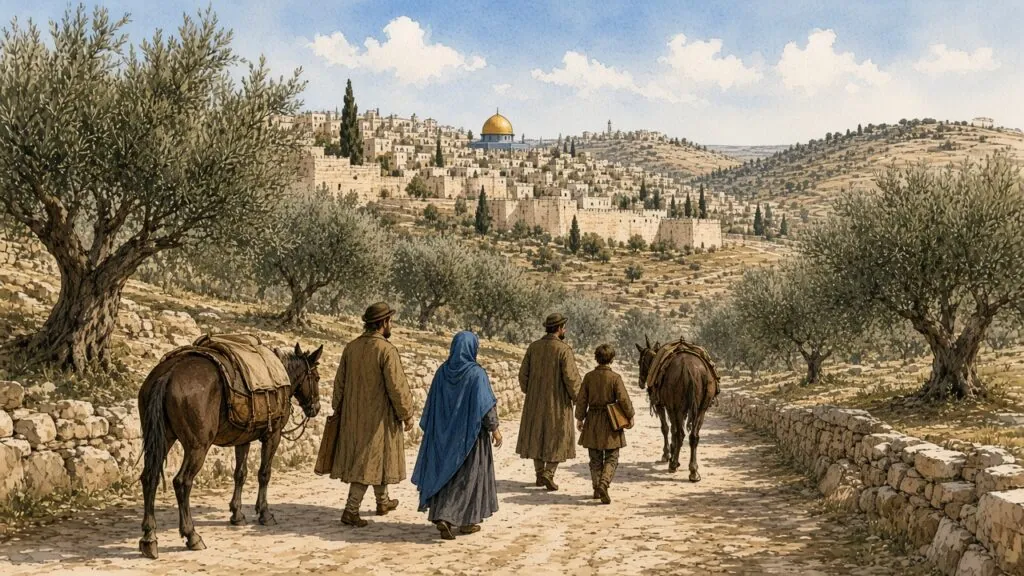
In 1830 he made a pilgrimage to the Land of Israel and took with him Abraham Firkovich, then tutor to his children and his secretary. The encyclopaedia entries are in agreement on the itinerary. They visited Jerusalem, Hebron, Cairo and Constantinople. Firkovich bought and copied ancient books. By 1831 or 1832 he had settled in Istanbul, where he served as hazzan, ritual slaughterer and teacher. After a conflict with the local community he returned to Evpatoria. Dan Shapira’s monograph on Firkovich in Istanbul in 1830 to 1832 is the detailed study of those years, and of the ways in which the journey fed later ideas about Karaite and Turkic identity. One anachronism in the secondary literature should be avoided. The YIVO Encyclopedia’s entry on Firkovich calls Babovich “the Karaite hakham” already in 1830. The official consistory office did not yet exist. Babovich was already the political head of the Crimean community; he was not yet, in law, its hakham.[1][13][14][18]
Firkovich, born at Lutsk in 1787, was a different kind of man from either Babovich or Luzki. He had worked as a miller after his marriage in 1808, had studied with the Karaite scholar Mordecai Sultansky, with whom he later quarrelled, and had moved to Evpatoria in 1822. In 1825, according to the Encyclopaedia Judaica and to YIVO, he submitted a memorandum to the Russian government suggesting that Rabbanite Jews be resettled from border areas, forced into agriculture, and so kept from smuggling. The recommendation is an early specimen of a habit that would mark his career, the use of memoranda and of a scholarly apparatus to separate Karaites from Rabbanites to the disadvantage of the latter. Babovich’s decision to take this man as a tutor and secretary, and later as an investigator of origins, is therefore not a neutral act of patronage. It aligned the wealth of Evpatoria with a programme already hostile to Rabbanite Jews.[13][18]
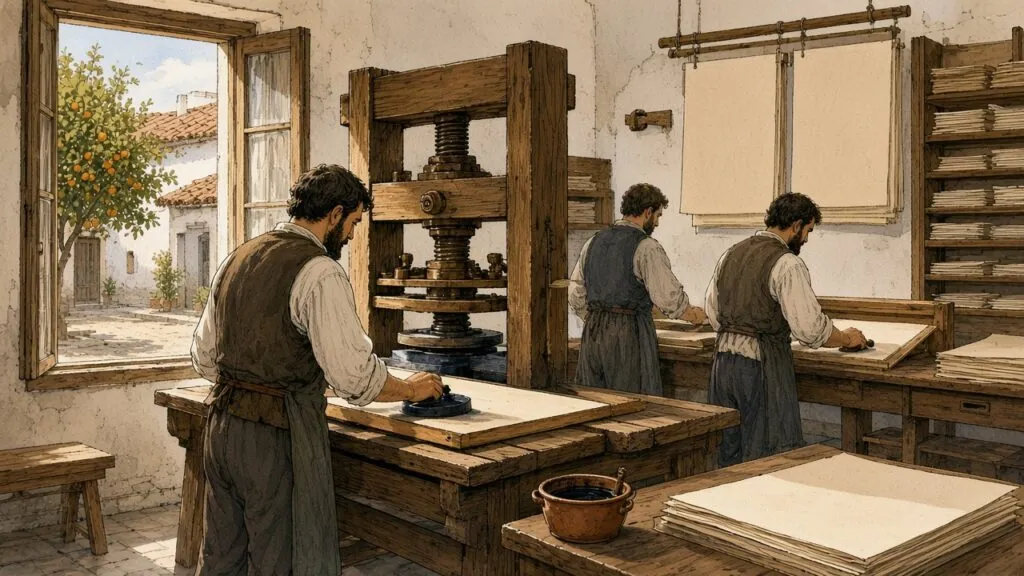
On his return from Istanbul, Firkovich organised a society for the publication of Karaite books. In 1834 he was appointed head of the Karaite publishing house at Gözleve, the first sustained Hebrew press of its kind in the Crimean peninsula in the nineteenth century, though not the first Karaite press in the region’s longer history. Miller has argued that the revival of Karaite printing was among Babovich’s own priorities, and that the 1830s, for that reason as well as for the consistory, were a decisive decade. The Gözleve press, which the Encyclopaedia Judaica’s article on Evpatoria says functioned into the 1860s, issued works of earlier Karaite authors and, in 1834, Firkovich’s own Hotam tokhnit, a bitterly anti-Rabbanite book that accused Rabbanites of crucifying Jesus and of killing Anan ben David, the eighth-century figure associated with the beginnings of the movement. The press is part of Babovich’s biography because he enabled it. The book’s arguments are Firkovich’s.[6][8][13][18]
9. From Jews-Karaites to Karaites
On 13 April 1835 the community obtained an official change of name. Instead of “Jews-Karaites,” evrei-karaimy, the term they themselves had used in documents at the end of the eighteenth and the beginning of the nineteenth century, they were to be called “Russian Karaites of the Old Testament faith,” russkie karaimy vetkhozavetnogo veroispovedaniia. The phrase was later shortened to “Karaites.” A change of official designation is easy to understate. In a state that wrote rights and disabilities into the names of estates and confessions, the dropping of the word “Jew” from a community’s legal title was a substantial prize. It did not, as the honorary-citizenship file would later show, prevent a clerk from writing “Jew-Karaite” beside a merchant’s name. But it gave patrons a text to quote, and it announced, in the language of the empire, a separation that petitions had been approaching for forty years.[4][7][10]
The Encyclopaedia Judaica’s general article on the Karaites places that renaming in a harder context. From about 1835, in appeals and memoranda to the Russian government, Karaite leaders began to stress not only a legal difference but a fundamental difference from other Jews, namely their refusal to accept the Talmud, and to claim qualities that distinguished them, industry, honesty and loyalty to the throne. In the same year they succeeded in having the Rabbanite Jews of Troki expelled from the town, on the basis of ancient Lithuanian privileges that, they argued, granted Karaites the sole right of settlement there. The Crimean campaign for a consistory and the Lithuanian campaign for a town were parts of one legal strategy, even if Babovich’s own files, as published, are Crimean.[10]
Miller’s study of Karaite printing in the Crimea underlines the social background to the new tone. The Karaites of the peninsula were, by and large, wealthy landowners. They did not wish to be confused with the masses of largely poor Rabbanite Jews brought into the empire by the partitions of Poland. The architects of the effort, Miller writes, were Solomon ben Nahamu Babovich and later his son Simhah. The son had, by the mid-1830s, the municipal experience, the capital, the memory of 1827, and a client in Firkovich who was prepared to put the separation into history as well as into law.[8][9]
The new official title, “Russian Karaites of the Old Testament faith,” was carefully chosen for a Christian empire. It presented the community as a scriptural people, bound to the Hebrew Bible and not to the Talmud, and it borrowed the language of confession that Russian law already used for recognised churches. Golda Akhiezer’s later monograph, Historical Consciousness, Haskalah, and Nationalism among the Karaites of Eastern Europe, published by Brill in 2018, places this renaming inside a longer history of Karaite self-understanding, in which legal petitions, historical writing and the Jewish Enlightenment all played a part. The book was not re-read page by page for this essay, and no claim is taken from it beyond that frame. What can be said from the legal record already in hand is simpler. By 1835 the campaign was no longer only a request for relief from a tax or a levy. It was a request to be named, in the language of the state, as something other than Jews.[7][10][11]
10. The statute of 1837 and the hakhamate
The institutional break came in March 1837, when Nicholas I confirmed the Regulation on the establishment of the Taurida Karaite Spiritual Board, the Polozhenie ob uchrezhdenii Tavricheskogo Karaimskogo dukhovnogo pravleniia. Prokhorov’s legal article cites the measure as ukase number 9991, dated 3 March 1837. The petition that preceded it asked for an arrangement of the Karaite clergy and for some of the rights already enjoyed by the Muslim clergy of Taurida. The text of the regulation, as quoted by Prokhorov, records the request in those terms. “The Karaites living within the limits of Taurida guberniya petition for the organisation of the condition of their clergy and for the granting to them of some of those rights which the local Mohammedan clergy enjoys.” The government found the request worthy of respect and approved the project of a spiritual board in the State Council. The body was at first styled “the Crimean and Odessa Karaite society of the Taurida governor.” It sat at Evpatoria and was subordinated to the Department of Spiritual Affairs of Foreign Confessions in the Ministry of Internal Affairs.[4][7][22]
Babovich’s own draft, Prokhorov shows, had in fact repeated the main provisions of the Taurida Muslim Spiritual Board, with adjustments for confession and for a number of details. He also submitted a petition for a new marriage statute, sent for the sovereign’s consideration, and a series of memoranda asking that Karaites be placed on a level with the “native inhabitants of the Russian Empire.” The consistory was therefore not a scholar’s invention and not, in the first instance, Firkovich’s. It was a merchant’s design, modelled on an existing imperial pattern for a recognised non-Orthodox clergy, and sold to the state as a way of ordering a small, loyal population.[4]
Miller has called the creation of a Karaite religious consistory a schism within Judaism unprecedented since the rise of Christianity. The claim is large, and it is about law rather than about belief. Karaites and Rabbanites had been in theological disagreement for a thousand years. What 1837 did was to give one side a state-recognised church structure, separate from Rabbanite communal institutions, with a hakham at its head, hazzanim in the congregations, and a board that would regulate prayer houses, appointments and, especially, marriage and family law. A. S. Tkachev, working through fund 241 of the Crimean archive, the archive of the Taurida and Odessa Karaite Spiritual Board, notes a prehistory. Before its official confirmation the body had been known as a “Court House,” or “Court House of the Karaites,” from 1804 to 1836. The 1837 statute did not invent self-government from nothing. It raised a communal court to the dignity of an imperial consistory.[9][22]
The election of 1839
The first hakham was not appointed in 1837. He was elected in the spring of 1839, at Evpatoria, by representatives of the Karaite communities, from a slate of first-guild and other merchants. The candidates were Simhah Babovich, Avraham Beim, Moshe Pampulov and Moshe Yefet. Babovich won a majority of “electoral balls.” On 4 April 1839 the Governing Senate promulgated the ukase confirming “the merchant Simhah ben Shelomo Bobovich” as Taurida and Odessa Karaite hakham, printed in the Complete Collection of the Laws of the Russian Empire, second collection, volume 14, pages 348 to 349. He remained in the office until his death in 1855.[4][24]
The double title, Taurida and Odessa, is easy to read as a piece of official grandeur. It had a practical meaning. Odessa, the great New Russian port, already had a Karaite merchant community whose affairs could not be left to a board confined to the peninsula, and the first style of the consistory, “the Crimean and Odessa Karaite society of the Taurida governor,” had already acknowledged that geography. A. S. Tkachev, working through fund 241 of the Crimean archive, the two inventories of the Taurida and Odessa Karaite Spiritual Board, emphasises how wide the board’s later work became. Until it was closed in the 1920s it was the principal instance for Karaite marriage and family law, and it also dealt with the education and upbringing of Karaite youth, and with organisational and public business, as well as with prayer houses and appointments. Not all of that programme was fully formed in 1839. The statute of 1837 and the first hakham’s marriage drafts, however, already pointed in that direction.[4][22]
The Encyclopaedia Judaica’s biographical entry compresses the two steps, writing that “in 1839 the Karaite Spiritual Council was founded through his support and he was appointed its head.” The foundation is the statute of 1837; the appointment is the election and confirmation of 1839. The same encyclopaedia’s general article on the Karaites adds that in 1840 they were “put on an equal footing with the Muslims” and granted “an independent church statute,” with two dioceses headed by hakhamim at Feodosiya and at Troki. The Troki, or Lithuanian, hakhamate is a later and separate development. The southern seat was not Feodosiya. The official title was Taurida and Odessa, and the seat was Evpatoria. The Feodosiya of that sentence is treated here as a slip. The 1840 “independent church” or parity with Muslims is reported from the encyclopaedia and from later syntheses; the exact instrument in the Complete Collection has not been re-read for this essay, and it is not given a decree title it has not been shown to bear.[1][6][10][20]
11. Vorontsov’s questions and a usable past
In 1839, the same year as the election, Mikhail Semyonovich Vorontsov, governor-general of New Russia and of the Crimea, sent the new consistory a set of questions on the origins of the Karaites, their character, their occupations, their notable figures, the sources for their history, the time of their separation from the Rabbanites, and the differences between the two. The Encyclopaedia Judaica’s entry on Firkovich speaks of six questions. Miller’s article on Karaite printing dates to 1838 a request from Vorontsov, on behalf of the newly founded Historical Society in Odessa, for evidence of Karaite antiquity. The two dates most likely belong to one official enquiry in two bureaucratic forms, a learned society’s questionnaire and a governor-general’s list of points, and they are not collapsed here into a single day.[8][18]
Babovich commissioned Firkovich to investigate, to collect manuscripts and tomb inscriptions in the Crimea and the Caucasus, and to write an account. The work was funded by Babovich himself, by Crimean Karaite communities, and by the Odessa Society of History and Antiquities. It stretched over many years and later included journeys to Lithuania, the Caucasus, Egypt and Palestine. Firkovich was, in that sense, Babovich’s instrument. He was also, very quickly, his own master. The thesis he offered officials was designed to do political work. Karaites, he argued, had settled in the Crimea in the first century before the Common Era, or, in one formulation recorded by the encyclopaedia, in 6 B.C.E., and therefore could not be charged with the crucifixion of Jesus. They were a separate people, historically and, he claimed, anthropologically different from Rabbanites. He inflated, or invented, the figure of Isaac Sangari as the sage who had converted the Khazars to a Karaite form of Judaism and who had been buried at Chufut-Kale.[8][13][18][20]
Forgeries and the collections
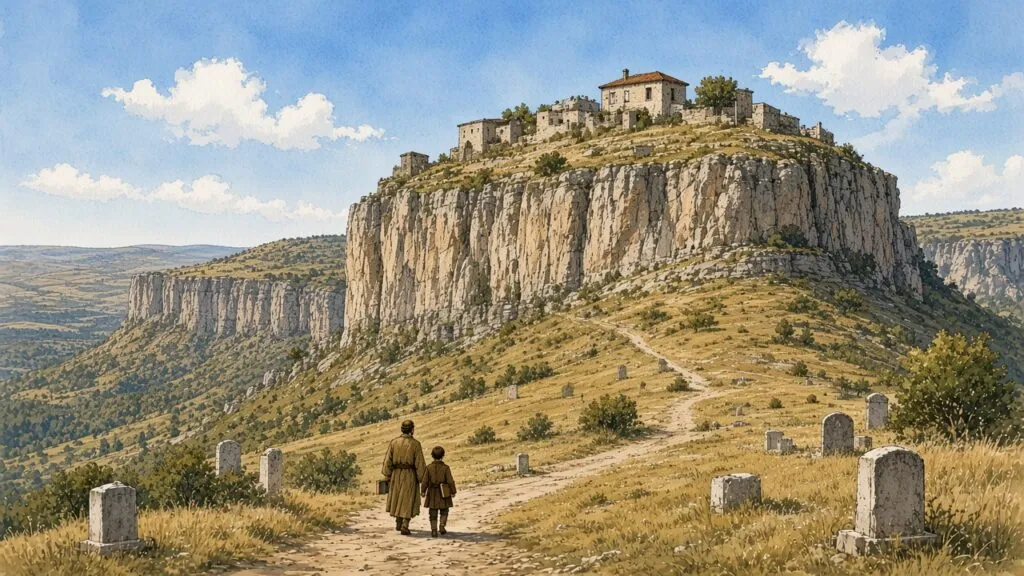
To support these claims he fabricated colophons and altered dates on tombstones, changing real dates to earlier ones. Avnei Zikkaron, printed at Vilna in 1872, is the corpus of inscriptions, with an account of his travels. After his death in 1874, at Chufut-Kale, a controversy that had already been gathering became open and technical. Albert Harkavy, in Altjüdische Denkmäler aus der Krim, 1876, Hermann Strack, in Abraham Firkowitsch und seine Entdeckungen, 1876, P. F. Frankl and A. Kunik all argued that the collections abounded in forgeries. Even Daniel Chwolson, the most sympathetic of the major critics, had to admit the general unreliability of the material. That consensus has been restated by Golda Akhiezer, Haggai Ben-Shammai, Dan Shapira and Mikhail Kizilov. It is the position of this essay.[13][14][18][25]
The manuscripts themselves are another matter. Firkovich sold a first collection of more than a thousand Rabbanite, Karaite and Samaritan manuscripts and Torah scrolls to the Imperial Library in St Petersburg in 1862 and 1870. A second collection, of more than 15,000 items, much of it from the genizah of the Karaite synagogue in Cairo, which he visited in 1864, was sold after his death, in 1876. Those collections, and his private archive, are in the Russian National Library and have been fundamental to modern Jewish studies, including the study of Karaism. Pinsker’s Likkutei Kadmoniyot, 1860, was based on Firkovich’s materials, and Fürst and Graetz used them, sometimes uncritically. The fact that a collector forged some of his labels does not make every leaf in his chests a forgery. It does mean that no date, no colophon and no tombstone from that corpus can be used as evidence until it has been tested.[13][18]
Babovich’s responsibility is shared, and it is not the same as Firkovich’s. He asked for a history that would serve his community before the state. He paid for the search and authorised the searcher. He did not, so far as the sources used here show, invent Sangari or recarve a date. The 1842 memorandum that he sent, or had sent, from Karasubazar to Prince P. M. Volkonsky, minister of the imperial court, shows how far his own language had travelled since the “Rabbanite brothers” of 1827. “Although they call us Karaite Jews,” he wrote, “we are properly Karaites and not Jews at all, nor Judaizing Jews, nor a sect of the Jews, Talmudists or Rabbinists.” The sentence is Babovich’s, not Firkovich’s. By 1842 the separatist case, in the hakham’s own prose, was complete.[4]
12. Land, the mill, and the treasury’s claims
The hakhamate was not only a matter of memoranda and of origins. The Taurida and Odessa Karaite Spiritual Board regulated the opening of prayer houses, the appointment and promotion of hazzanim and other officials, and, above all, marriage and family law. In 1848 Babovich submitted a draft marriage statute for imperial approval. Shetars, the marriage contracts, were to be written on stamped paper, so that the treasury would draw a revenue from them; otherwise they would be invalid. The act was to contain a charge to the couple, religious instruction, the bridegroom’s gift and the dowry. It was to be signed by the couple, by parents or guardians, by witnesses, the shoshbinim, and by the hazzan who performed the ceremony. Babovich even suggested an emblem, two fish, “as a sign of increase and of affection.” An earlier marriage-statute petition, also mentioned by Prokhorov, had already been sent to the sovereign. The 1848 text is the one described in detail from the Crimean file.[4][22]
At the same time he was one of the largest private landowners in the peninsula. The inventory taken in 1855, preserved in the Crimean archive and analysed by Prokhorov, is the surest guide to that fortune, and it should be preferred to later phrases about wealth “counted in millions.” The estate of Gan Yafe, “Beautiful Garden,” measured more than 5,000 desiatinas and was valued in 1855 at 174,580 silver rubles. It included a water mill and a garden, which later, as a communal waqf, yielded a net income of 707 rubles in 1869, 1,620 in 1873, and more than 10,000 in 1918, figures Prokhorov takes from Elyashevich’s 2016 conference paper on the estate. This is the archival basis for the Encyclopaedia Judaica’s statement that Babovich donated the income from his mill to the community and, after his death, bequeathed to it the village he had received from the government. The two descriptions, the encyclopaedia’s bequest and the archive’s waqf, are the same property seen from two sides.[1][4]
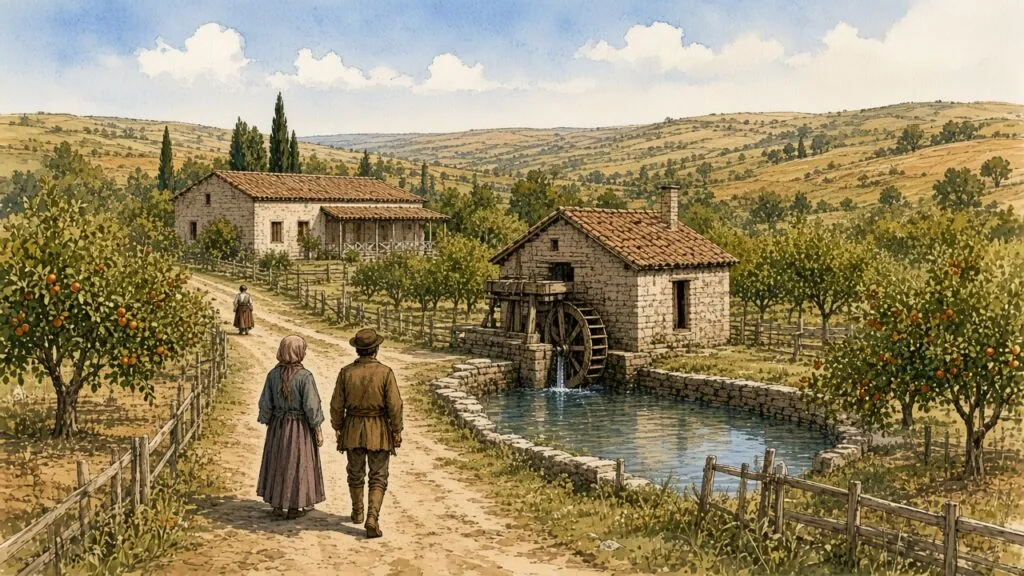
The same inventory lists other holdings. There was a large estate at Donuzlav-Kipchak, with 500 desiatinas, and a waqf garden at Karagach. Lands in the Tobe-Chokrak dacha were the object of a lawsuit with State Councillor A. A. Umanets that ran from 1841 to 1859, outliving Babovich himself. In Evpatoria he owned a large house, an inn with shops, barns and several stalls, a large coffee-house, a buzna, and outbuildings “near the fortress gates.” In the Evpatoria and Simferopol districts the inventory names a string of villages, Kurulu, Otar, Aktachi, Donuzlav Kipchak, Dort Sakal, Sheykh-Eli, Toi-Tobe, Karalar, Kaya-Dermene, Kelechi, Chegelek, Karlav, Lez, Tobe-Chokrak and Tarkhanlar. The list is a map of a mercantile landed interest, not of a single pastoral retreat.[4]
It is also a map of debt. At his death in 1855, “prohibitions for state recoveries” against fifteen of his estates totalled 646,000 rubles, and those estates were placed under the guardianship of the Evpatoria orphans’ court. Some of the land was already under administrative trusteeship for uncollected treasury debts, or had been pledged against the building of public works, including a three-storey barracks. The generous bequest and the sequestration belong to the same moment. A hakham who could endow a community with a mill and a village could also die owing the treasury a sum that dwarfed the appraised value of Gan Yafe. Any portrait that remembers only the endowment is incomplete.[4]
The relationship with Vorontsov had a business side as well as a political one. In the autumn of 1833 and the winter of 1834, Taurida governor A. I. Kaznacheev’s private letters, since published, show the bargaining over a land sale to the governor-general. It was Ilya, not Sima, who asked 25,000 rubles for his share; Kaznacheev refused, then closed the purchase in February 1834 at 20,000 rubles, with the merchant Berakha Pampulov acting as the family’s attorney. The letters are casually contemptuous in a way that official petitions never are. Kaznacheev, congratulating Vorontsov, remarked that “our half-Asiatics do not yet know the price of the treasures” they held. Patronage and disdain could occupy the same sentence.[4]
A refused honour
In 1838 Vorontsov tried to repay, or to crown, the relationship by raising Babovich to hereditary honorary citizenship. On 26 July he wrote to the Senate a letter that has given Prokhorov’s 2022 article its title. “Knowing from an excellent side the praiseworthy qualities of the merchant Babovich, who in many cases carefully carried out the instructions of the authorities and always showed good intention, I have the honour to request a favourable decision of the Governing Senate on raising Babovich to the rank of hereditary honorary citizen.” The Senate refused. First, in an ukase of 19 April 1838 and in an order of the minister of justice dated 31 August 1839, the applicant was still “named as a Jew-Karaite.” Vorontsov replied that under the law of 1837 Karaites were not to be “confused with Jews,” and that Karaite merchants enjoyed the same rights as Russians. The Heraldry Department then refused again, on a different ground. Having become hakham, Babovich had dropped to the third guild, and so had lost the ten years of first- or second-guild standing that the law required. He might apply again after another ten years in a higher guild. The Senate would not reopen the case. Imperial favour was real. The category “Jew,” and then the technicalities of guild law, still trapped him.[4]
13. Death in 1855 and what followed
Babovich died in 1855. All the standard sources agree on the year. The exact day and the exact place are not given in the Encyclopaedia Judaica, in the Jewish Encyclopedia, in Miller’s published description of his work, or in Prokhorov’s 2022 article, which uses 1855 as the date of the estate valuation and of “at the time of his death.” Community websites often state that he died at Karasubazar, or at Gan Yafe, and that he was buried the same day, beside a son named Nethanel, on the boundary of the estate. Those details have not been confirmed in the academic texts used here. They may be filled in from two sources that Prokhorov cites and that were not obtained in full for this essay, a circular on the hakham’s death issued by Solomon Beim and later printed in the Izvestiia of the Taurida and Odessa Karaite Spiritual Board at Evpatoria in February 1919, and Elyashevich’s 2016 paper on the history of the Gan Yafe estate. Until those texts are in hand, the year is certain and the day and the grave are not.[1][3][4]
The Crimean War had begun in 1853. Allied forces landed at Evpatoria in 1854, and the west of the peninsula became a theatre of siege and supply. Popular biographies say that Babovich gave his house in Karasubazar for wounded Russian soldiers and made donations to troops passing his Kurulu estate. Those stories have not been found in Prokhorov, Miller, or the encyclopaedia entries, and they are not reported here as fact. What the files do show is that a man with houses in Evpatoria and at Karasubazar, and with villages on the roads of the Evpatoria district, lived the last two years of his life in a war that ran through the landscape of his property. The war’s effect on his death, if any, is not documented in the sources used here.[4]
The title by which the 1919 circular remembered him, Hadji-Aga Sima Bobovich, preserves two marks of his career. “Hadji,” or hajji, records the pilgrimage of 1830. “Aga” is a Crimean title of standing, already familiar from Benjamin Aga’s name. Solomon Beim, a disciple of Sultansky, a sometime companion of Firkovich on the 1839 journeys, a maskil-leaning hazzan who had founded an enlightened school at Chufut-Kale, acted after Babovich’s death and issued that circular. The Encyclopaedia Judaica’s entry on Beim says that in 1855, after Babovich’s death, he was appointed hazzan of the Crimea and Odessa. The next full hakham was the younger brother, Babakai, or Nahamu, elected in 1857 and in office until 1879, or 1878 in some lists. Prokhorov’s date of 1879 is preferred here, with the one-year variant noted.[4][5][23]
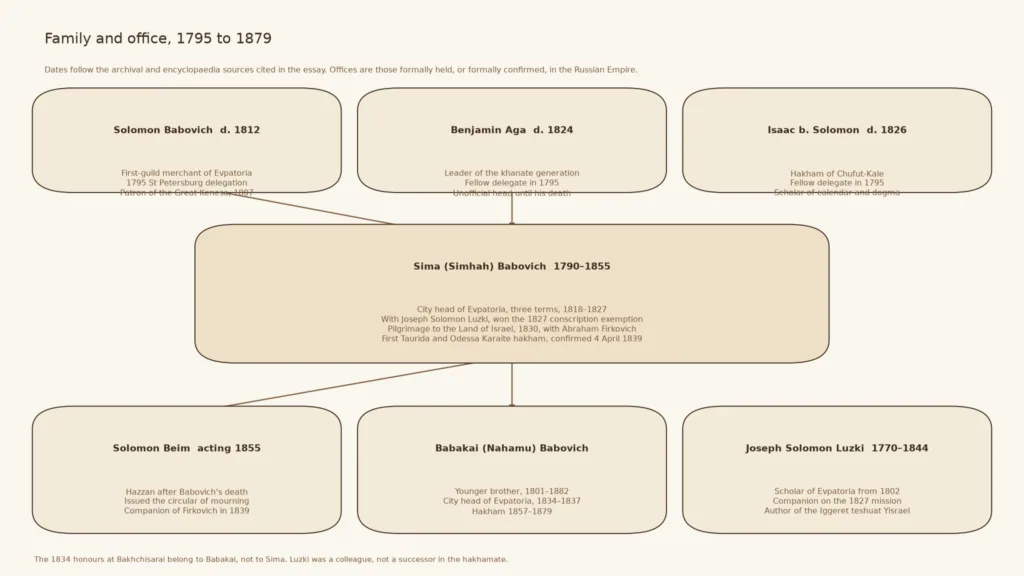
Babakai’s career should be kept distinct from Sima’s, because popular writing has a habit of merging them. The younger brother was city head of Evpatoria from 1834 to 1837. In 1834, during Nicholas I’s visit to Crimea, Babakai greeted the emperor at Bakhchisarai and received a diamond ring and a gold watch with diamonds; in 1839 he received a gold medal “for diligent service.” Those honours are his, not Sima’s. Claims that Sima supervised repairs of the Bakhchisarai palace for a visit of Nicholas I in 1837, or decorated it again in 1845 for Grand Duke Konstantin Nikolaevich, have not been found in the archival study or in the encyclopaedias used here, and they are not attributed to Sima in this account. In 1872 Babakai succeeded, where Sima had failed, in obtaining hereditary honorary citizenship, under article 18 of the law of 8 April 1863, after twelve years in office.[4][19]
That law, dated 8 April 1863 and published on 2 May, was the delayed fruit of the campaign Babovich had led. “Karaites, being under the protection of the general laws of the Russian Empire, enjoy all the rights granted to Russian subjects, according to the estate to which each of them belongs.” From that date they had, officially, the rights of other subjects of their estate, including service in the army on ordinary terms, study at universities and the rest of the civic catalogue. Miller dates to 1865 a further recognition of the Karaites as a separate nationality. Babovich had prepared the ground. He did not live to stand on it.[7][8][10]
What happened after 1863 lies beyond a life that ended in 1855, but it is the measure of that life, and it should be stated without triumphalism. The legal separation that Solomon had begun in 1795, that Sima had widened in 1827 and organised in 1837, and that Firkovich had dressed in a fabricated antiquity, later became, in other hands, a theory of Khazar and Turkic origins that stripped the East European Karaites of their Jewish past. Seraya Szapszal, hakham in the twentieth century, is the name most often attached to that later ideology. It helped some communities to survive the German occupation, because they were not classed as Jews; it also helped to empty Karaism, in those regions, of the scriptural Judaism that had been its reason for existing. Miller’s bleak conclusion, that separatism shielded Karaites from some of the fates of Rabbanite Jews and then led toward assimilation and disappearance as a people, is a judgement on a long process, not a verdict on a single merchant. It is, however, the horizon against which the petitions of Sima Babovich now have to be read.[9][11][12][16]
One further source should be placed honestly, because a standard encyclopaedia entry appears to rest on it. The Encyclopaedia Judaica’s life of Babovich cites an article by O. B. Beliy in Materials on the Archaeology, History and Ethnography of Tauria, volume 10, issued in 2003, at pages 664 to 666. That pagination falls at the end of Beliy’s study of Solomon Beim, which occupies pages 639 to 666 of the same volume; it is not a stand-alone biography of Babovich. The volume itself was not obtained for this essay, the host having returned server errors, and no new fact is taken from those pages. Elyashevich’s 2016 conference paper on the history of the Gan Yafe estate, which Prokhorov cites for the later waqf income, is in the same position. Both remain items for a later revision, not hidden foundations of the present text.[1][4][5][23]
The man himself remains, in the surest sources, a first-guild merchant of Evpatoria, three times city head of a mixed town, a successful petitioner in 1827, a pilgrim in 1830, the designer and first occupant of a Karaite consistory, a landowner of great property and great debt, and a patron who hired a scholar-adventurer to find him a past. He was not a sage. He did not need to be. The office he helped to invent, and the legal wall he helped to raise, outlived him, for better and for worse, by a century.[1][4][9]
14. Timeline
The YIVO Encyclopedia records a first documentary notice of Karaites in the Crimea in this year, long before the Russian annexation and the rise of the Evpatoria merchant families.[12]
Solomon Babovich, Benjamin Aga and Isaac ben Solomon spend three months in St Petersburg. Catherine II exempts the Karaites from the Jewish double tax, from recruit money and from billeting, and leaves room for further relief. The rescript is printed in the Complete Collection, first collection, volume 23, pages 705 to 706.[4][7][24]
Solomon dies in 1812, the date adopted by Prokhorov and Elyashevich. An older popular listing that gave 1817 is not followed here. The official testimonial later attributed plague relief in the quarantined town to the young Sima, then about twenty-two; that civic claim is probable rather than independently narrated.[4][19]
Samuel and Ilya Babovich rebuild the older prayer house, later called the Small Kenesa. A Hebrew inscription reported by Elyashevich states that the six marble columns of the covered gallery were installed in 1819 at the expense of the young brothers Sima and Babakai.[19]
Alexander I visits the Crimea. The Evpatoria testimonial says that Babovich greeted him as an eminent citizen. Miller records that a formal petition on Karaite legal status had been prepared but was never delivered, because the tsar died at Taganrog before it could be presented. Later stories of a kenesa visit on 1 November, of a monument of 1853, and of a meeting with Mickiewicz remain unverified in the sources used here.[8][19]
Nicholas I’s conscription statute is applied at first to Karaites as well as to Rabbanites. Babovich and Joseph Solomon Luzki travel to the capital and obtain an exemption for the Crimean Karaites, “a small tribe remaining on the face of the earth.” Luzki later writes the Iggeret teshuat Yisrael, printed at Evpatoria in 1840. A request for recognition as a distinct nation fails.[4][7][9][26]
Instead of “Jews-Karaites,” the community is to be called “Russian Karaites of the Old Testament faith,” later shortened to “Karaites.” In the same year, according to the Encyclopaedia Judaica, Karaites obtain the expulsion of Rabbanite Jews from Troki on the basis of old Lithuanian privileges.[4][7][10]
Vorontsov asks the Senate to raise Babovich to hereditary honorary citizenship. The request is refused, first because the applicant is still named as a “Jew-Karaite,” and then because, as hakham, he has dropped to the third guild. In the same period Vorontsov, for the new Historical Society in Odessa, asks for evidence of Karaite antiquity.[4][8]
In the spring, representatives elect Babovich hakham from a slate of Simhah Babovich, Avraham Beim, Moshe Pampulov and Moshe Yefet. The Governing Senate confirms “the merchant Simhah ben Shelomo Bobovich” as Taurida and Odessa Karaite hakham. The ukase is printed in the Complete Collection, second collection, volume 14, pages 348 to 349.[4][24]
The governor-general sends the new consistory a set of questions on Karaite origins and character. Babovich commissions Firkovich to investigate. Firkovich’s later fabrications of colophons and tombstone dates, and the genuine manuscript collections now in St Petersburg, both begin from this official demand for a past.[8][13][18]
A memorandum to Prince Volkonsky, in Babovich’s name, states that “although they call us Karaite Jews, we are properly Karaites and not Jews at all.” The separatist case, in the hakham’s own prose, is complete.[4]
Babovich submits a draft marriage statute for imperial approval. Shetars are to be written on stamped paper, signed by the couple, parents or guardians, witnesses and the officiating hazzan, and marked with an emblem of two fish.[4]
Babovich dies in 1855. The exact day and place are not established in the sources used here; burial at Gan Yafe, beside a son named Nethanel, is community tradition. The estate inventory values Gan Yafe at 174,580 silver rubles; state claims against fifteen estates total 646,000 rubles. Solomon Beim acts as hazzan; the next full hakham is the brother Babakai, elected in 1857.[1][4][23]
A law printed in the Complete Collection, volume 38, pages 302 to 306, places Karaites under the general laws of the empire and grants them the rights of other subjects of their estate. Miller dates to 1865 a further recognition as a separate nationality. Babovich had prepared the ground and did not live to stand on it.[7][8][10][24]
Glossary of terms
The following terms recur in the chapters above. Each definition gives the sense in which the word is used in this essay.
- kenesa
- The Karaite house of prayer, a hall oriented toward Jerusalem, in Crimea often built with a courtyard, a gallery and a separate hall for women. Travellers sometimes called it a synagogue. The Evpatoria complex comprises the Great Kenesa of 1807 and the Small Kenesa rebuilt in 1815.[6][19]
- hakham
- The official head of the Taurida and Odessa Karaite clergy after 1837, confirmed by the Senate. The word is older, a title of a learned leader, but in this essay it usually means the consistory office first occupied by Babovich in 1839. The YIVO entry on Firkovich anachronistically uses it for Babovich already in 1830.[4][13]
- hazzan
- A congregational official of a kenesa, responsible for the service and, under the consistory, for ceremonies such as marriage. Solomon Beim was appointed hazzan of the Crimea and Odessa after Babovich’s death in 1855, before the next full hakham was elected.[23]
- shofet
- A judge. Joseph Solomon Luzki served at Evpatoria as teacher and shofet from 1802, remaining in those offices for some forty years.[21]
- Iggeret teshuat Yisrael
- Epistle of Israel’s Deliverance, Joseph Solomon Luzki’s Hebrew chronicle of the 1827 mission to St Petersburg, printed at Evpatoria in 1840 with a Tatar translation by Abraham Firkovich, and edited with a facing English translation by Philip E. Miller in 1993.[9][26]
- Taurida Karaite Spiritual Board
- The official Karaite consistory established by the regulation of March 1837, seated at Evpatoria, at first styled the Crimean and Odessa Karaite society of the Taurida governor, and subordinated to the Department of Spiritual Affairs of Foreign Confessions in the Ministry of Internal Affairs. It had a predecessor in a communal Court House from 1804 to 1836.[4][7][22]
- shetar
- A Karaite marriage contract. In Babovich’s 1848 draft statute, shetars were to be written on stamped paper, and to be invalid otherwise, so that the treasury would draw a revenue from them.[4]
- first guild
- The highest declared class of merchants in the Russian guild system, on which many civic rights depended. Babovich stood in the first guild in 1825 to 1827 and 1830 to 1838, in the second in 1828 and 1829, and dropped to the third when he became hakham, a change later used against his bid for honorary citizenship.[4]
- desiatina
- A Russian unit of land, a little more than a hectare. The 1855 inventory gives Gan Yafe as more than 5,000 desiatinas and Donuzlav-Kipchak as 500.[4]
- waqf
- A pious or communal endowment, also written vakuf in the Crimean files. After Babovich’s death the mill and garden of Gan Yafe became a communal waqf, with recorded net incomes in 1869, 1873 and 1918.[4]
- Gan Yafe
- “Beautiful Garden,” Babovich’s principal estate, later associated with the neighbourhood of Karasubazar. Valued in 1855 at 174,580 silver rubles. Community tradition places his burial there; the year of death is certain, the grave is not, pending sources not obtained in full for this essay.[1][4]
- Chufut-Kale
- The cliff-top fortress town above Bakhchisarai, the older political and scholarly centre of Crimean Karaism, associated with Benjamin Aga, Isaac ben Solomon, and later with Firkovich’s inscription-hunting and his death in 1874.[10][13][18]
- Gözleve
- The Tatar and older Jewish name of Evpatoria, also written Göslöw or Koslov, a port on the western shore of the Crimea and, in the nineteenth century, the largest Karaite settlement in Russia and the seat of the chief hakham.[6]
- Karaite
- A Jew who accepts the Hebrew Bible as the source of law and rejects the Talmudic tradition of the Rabbanites. In the Russian legal campaign described here, the name was increasingly used to claim not only a religious difference but a separate civic, and later national, identity.[10][12]
- Rabbanite
- A Jew who accepts the Talmud and rabbinic tradition. In early Karaite accounts of the missions of 1795 and 1827, Rabbanites can still be called brothers; by 1842 Babovich would write that Karaites were “not Jews at all.”[4][20]
- Complete Collection
- The Complete Collection of the Laws of the Russian Empire, Polnoe sobranie zakonov Rossiiskoi imperii, cited here from Prokhorov’s references for the rescript of 1795, the conscription statute of 1827, the confirmation of 1839 and the law of 1863.[7][24]
- Hadji-Aga
- A later honorific for Babovich, used in a 1919 circular of the Spiritual Board. “Hadji,” or hajji, marks the pilgrimage of 1830; “Aga” is a Crimean title of standing, already familiar from Benjamin Aga’s name.[4][5]
References
- Golda Akhiezer, “Babovich, Simhah ben Solomon ben Nahamu,” Encyclopaedia Judaica, 2nd ed., reprinted at Encyclopedia.com *
- Golda Akhiezer, the same Encyclopaedia Judaica entry, reprinted at the Jewish Virtual Library *
- Kaufmann Kohler and A. Fleischmann, “Babovich, Simha,” The Jewish Encyclopedia (1906) *
- D. A. Prokhorov, “‘He carefully followed the instructions of the authorities and always showed good intention…’: Towards the biography of the first Taurida and Odessa Karaite hakham Simhah Babovich (1790 - 1855),” Nauchnyi vestnik Kryma, no. 1 (36), 2022 *
- Archival and printed sources for the death, the Gan Yafe estate and the family, as cited by Prokhorov (2022): the circular on the death of Hakham Hadji-Aga Sima Bobovich, issued by Solomon Beim, Izvestiia of the Taurida and Odessa Karaite Spiritual Board, Evpatoria, 1919, no. 1, pp. 10 - 16; V. A. Elyashevich, “Iz istorii usad′by karaimskogo gakhama Simkhi Solomonovicha Babovicha,” in Trudy po evreiskoi istorii i kul′ture, XXII International Conference on Jewish Studies, ed. V. V. Mochalova (Moscow, 2016), pp. 265 - 285; B. S. Elyashevich, Karaimskii biograficheskii slovar′ (Moscow, 1993); and the files GARK f. 241, op. 1, d. 1; GARK f. 727, op. 2, d. 2; RGIA f. 821, op. 8, dd. 565 and 577; RGIA f. 1343, op. 39, d. 485; RGADA f. 1239, op. 3, ch. 111, d. 55069. These items were not obtained in full for the present essay *
- Yehuda Slutsky, “Yevpatoriya,” Encyclopaedia Judaica, 2nd ed. *
- D. A. Prokhorov, “The legal basis for denominational self-governance of Karaites in the late 18th - first half of the 19th centuries,” Uchenye zapiski Krymskogo federal′nogo universiteta im. V. I. Vernadskogo. Iuridicheskie nauki, 2015, no. 1, pp. 76 - 88 *
- Philip E. Miller, “Agenda in Karaite Printing in the Crimea During the Middle Third of the Nineteenth Century,” Studies in Bibliography and Booklore *
- Philip E. Miller, Karaite Separatism in Nineteenth-Century Russia: Joseph Solomon Lutski’s Epistle of Israel’s Deliverance, Monographs of the Hebrew Union College 16 (Cincinnati: Hebrew Union College Press, 1993) *
- “Karaites,” Encyclopaedia Judaica, 2nd ed. *
- Golda Akhiezer, Historical Consciousness, Haskalah, and Nationalism among the Karaites of Eastern Europe, Karaite Texts and Studies 10 / Études sur le judaïsme médiéval 73 (Leiden: Brill, 2018) *
- Golda Akhiezer, “Karaites,” YIVO Encyclopedia of Jews in Eastern Europe *
- Golda Akhiezer, “Firkovich, Avraam Samuilovich,” YIVO Encyclopedia of Jews in Eastern Europe *
- Dan Shapira, Avraham Firkowicz in Istanbul (1830 - 1832): Paving the Way for Turkic Nationalism (Ankara, 2003) *
- Mikhail Kizilov, Karaites through the Travelers’ Eyes (Troy, NY, 2003), and “The Karaites of the Crimea through Travelers’ Eyes,” in Meira Polliack, ed., Karaite Judaism: A Guide to Its History and Literary Sources (Leiden: Brill, 2003), pp. 789 - 818 *
- “Jews, Russians, Karaites: The Development of Karaite Nationalism in the Russian Empire at the Beginning of the Twentieth Century,” Quest. Issues in Contemporary Jewish History *
- D. A. Prokhorov, “On the history of contacts of the Crimean Karaites and the Karaite communities of the Western guberniyas … (late 18th century - 1850s),” Vestnik Permskogo universiteta. Istoriia, 2017, no. 1 (36), pp. 136 - 145 *
- Haggai Ben-Shammai, “Firkovich, Abraham,” Encyclopaedia Judaica, 2nd ed. *
- Vyacheslav Elyashevich, “Sem′ia Bobovichei v gorodskom upravlenii Evpatorii,” Evpatoriiskaia zdravnitsa, no. 59 (19182), 10 August 2016. The online host later returned a server error and is not linked here *
- Dario Miccoli, “I caraiti nella Crimea imperiale russa,” in the open-access Cafoscari volume on Crimea between Russia, Italy and the Ottoman Empire, pp. 69 - 90 *
- Isaak Dov Ber Markon, “Luzki (Lutzki, Lucki), Joseph Solomon ben Moses (Yashar),” Encyclopaedia Judaica, 2nd ed. *
- A. S. Tkachev, “History of the creation and activities of the Taurida and Odessa Karaite Spiritual Government (materials of the State Archive of the Republic of Crimea)” *
- Golda Akhiezer, “Beim, Solomon ben Abraham,” Encyclopaedia Judaica, 2nd ed. *
- Polnoe sobranie zakonov Rossiiskoi imperii (Complete Collection of the Laws of the Russian Empire), as cited by Prokhorov: 1st collection, vol. 23 (1830), pp. 705 - 706 (rescript of 8 June 1795); 2nd collection, vol. 2 (1830), pp. 727 - 741 (conscription statute of 26 August 1827); 2nd collection, vol. 14, pt. 1 (1840), pp. 348 - 349 (confirmation of 4 April 1839); 2nd collection, vol. 38, pt. 1 (1866), pp. 302 - 306 (law of 8 April 1863) *
- Abraham Firkovich, Avnei Zikkaron (Vilna, 1872), to be used only with the modern critique of the forgeries *
- Joseph Solomon Luzki, Iggeret teshuat Yisrael (Evpatoria, 1840); edition and translation in Miller 1993, no. 9 above *
- Z. A. Firkovich, ed., Sbornik starinnykh gramot i uzakonenii Rossiiskoi imperii kasatel′no russko-poddannykh karaimov (St Petersburg, 1890) *
- Jonathan Dekel-Chen, “Crimea,” YIVO Encyclopedia of Jews in Eastern Europe *
Select bibliography
The works below are the first places to turn for a fuller study. Every source cited in the notes, including encyclopaedia entries, archival articles and print statutes, is given in the numbered reference list above.
- Golda Akhiezer, Historical Consciousness, Haskalah, and Nationalism among the Karaites of Eastern Europe, Karaite Texts and Studies 10 (Leiden: Brill, 2018)
- Philip E. Miller, Karaite Separatism in Nineteenth-Century Russia. Joseph Solomon Lutski’s Epistle of Israel’s Deliverance, Monographs of the Hebrew Union College 16 (Cincinnati: Hebrew Union College Press, 1993)
- D. A. Prokhorov, “‘He carefully followed the instructions of the authorities and always showed good intention…’. Towards the biography of the first Taurida and Odessa Karaite hakham Simhah Babovich (1790–1855),” Nauchnyi vestnik Kryma, no. 1 (36), 2022
- Dan Shapira, Avraham Firkowicz in Istanbul (1830–1832). Paving the Way for Turkic Nationalism (Ankara, 2003)
- Mikhail Kizilov, Karaites through the Travelers’ Eyes (Troy, NY, 2003), and “The Karaites of the Crimea through Travelers’ Eyes,” in Meira Polliack, ed., Karaite Judaism. A Guide to Its History and Literary Sources (Leiden: Brill, 2003), pp. 789–818
- Golda Akhiezer, “Babovich, Simhah ben Solomon ben Nahamu,” and related articles, Encyclopaedia Judaica, 2nd ed., Fred Skolnik and Michael Berenbaum, eds.