How the Royal Society Was Born
The Royal Society was founded in a lecture room in the City of London on 28 November 1660, by twelve men who had been meeting irregularly for years. It is the oldest…
Reader settings
Colour theme
Colour themes are for light mode. Choosing one switches dark mode off.
Custom colourscolour wheel; text is kept readable
Preview: clear, readable long-form writing.
Saved in this browser only.
Essays on discoveries, experiments and the people behind them across the natural sciences. The section also gathers the subtopics Physics, Chemistry, Biology and Energy.
The Royal Society was founded in a lecture room in the City of London on 28 November 1660, by twelve men who had been meeting irregularly for years. It is the oldest…
At some point on a night in April 1983, on a mountain road in northern California, a young biochemist working for a small biotechnology company in Berkeley stopped his car, did a…
In the late spring of 1775, Antoine-Laurent de Lavoisier moved his household, his extensive scientific library, and his burgeoning collection of custom-built instruments into the Petit Arsenal on the right bank of…
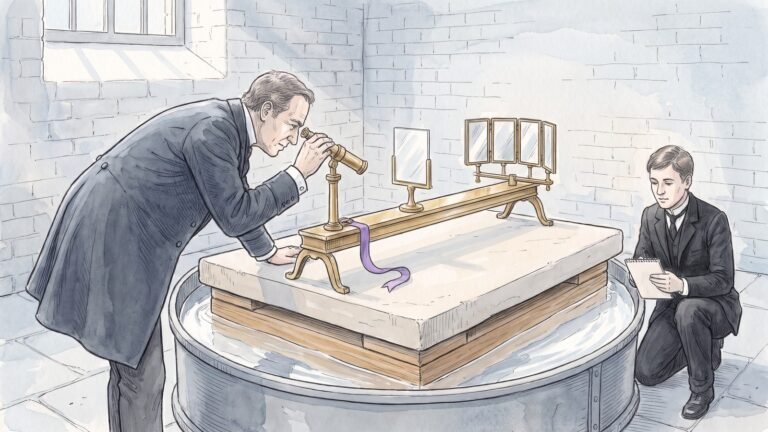
The 1887 Cleveland experiment by Albert A. Michelson and Edward W. Morley used optical interferometry to search for luminiferous ether drift, yielding the most celebrated null result in modern physics.
In 1672, Isaac Newton communicated his experimentum crucis to the Royal Society, demonstrating that white light is a heterogeneous mixture of rays with distinct refrangibilities.
In June 1824 a young French military engineer named Sadi Carnot published at his own expense a short book entitled Réflexions sur la puissance motrice du feu, Reflections on the Motive Power…
In the autumn of 1676 a draper and minor civic official of Delft in the Dutch Republic sent a long letter to the Royal Society in London describing what he had seen…
In 1918 the German mathematician Emmy Noether proved a theorem that connects two of the most basic ideas in physics. Wherever the laws governing a physical system remain unchanged under a continuous…
Between 1855 and 1873 the Scottish physicist James Clerk Maxwell brought the separate sciences of electricity and magnetism together into a single mathematical theory. From that theory he deduced that disturbances in…
In the summer of 1609 Galileo Galilei, professor of mathematics at the University of Padua, heard that a device had been made in the Netherlands which caused distant objects to appear near.…
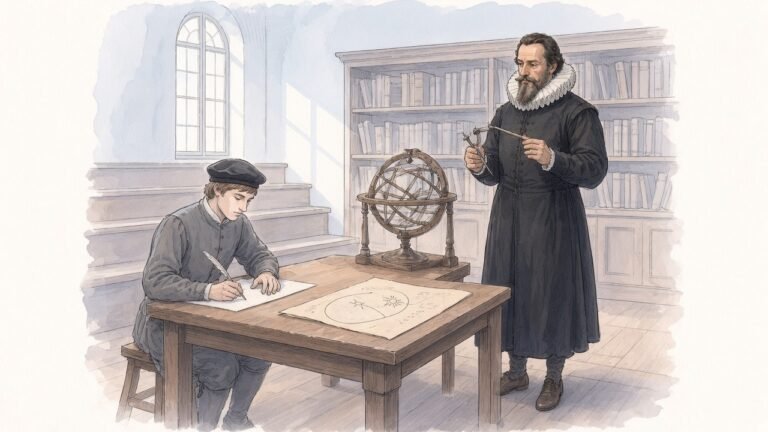
In the first two decades of the seventeenth century the German mathematician Johannes Kepler set out three statements about the motion of the planets that have remained, in substance, unchanged ever since.…
On 10 June 1859 a physicist stood in front of the Royal Institution in London and demonstrated that the air we breathe is warm enough to live in only because of a…
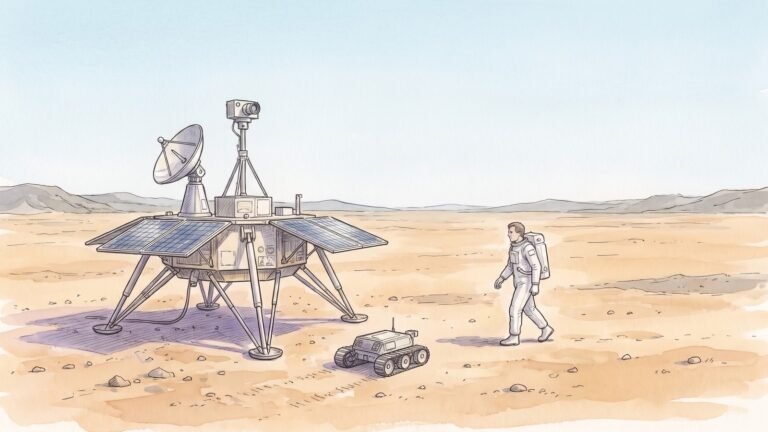
For two and a half centuries after the invention of the telescope, nobody knew how to get to Mars and stay alive there. The Soviet Union got there first and was destroyed…
In the spring of 1909 a New Zealand student named Ernest Marsden was sent to Manchester University to find out why alpha particles, fired at a sheet of gold foil, sometimes came…
At nine o'clock in the morning, Beijing time, on 15 October 2003, a Long March 2F rocket lifted off from the Jiuquan Satellite Launch Center in the desert of western Inner Mongolia,…
On 14 May 1796, in the Gloucestershire market town of Berkeley, the country doctor Edward Jenner took matter from a fresh sore on the hand of a young dairymaid, Sarah Nelmes, who…
On the evening of 11 November 1572, walking back from his alchemical laboratory at Herrevad Abbey in Scania, then part of the kingdom of Denmark, the young Danish nobleman Tycho Brahe looked…
In the summer of 1543 the Basel printer Johannes Oporinus issued a folio volume of more than six hundred pages under the title De humani corporis fabrica libri septem, "Seven Books on…
Every described organism carries a scientific name made of two words: a genus followed by a species epithet, such as Quercus robur or Mycobacterium tuberculosis. The system is so familiar that it…
In February and March 1865 Gregor Mendel, an Augustinian friar at the monastery of St Thomas in Brno, read a paper in two parts to the Natural Science Society of the town.…
For most of recorded history the great epidemic diseases were explained by bad air, by an imbalance of the body's humours, or by the will of God. In the space of about…
On 29 August 1831, in the basement laboratory of the Royal Institution in Albemarle Street, London, Michael Faraday wound two separate coils of insulated copper wire on opposite sides of a soft…
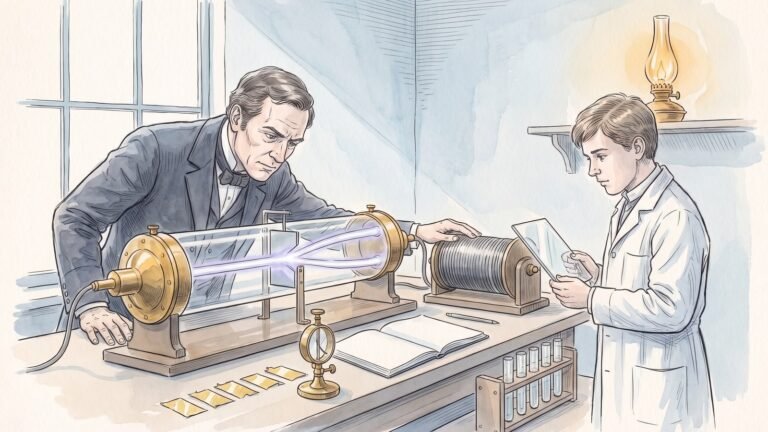
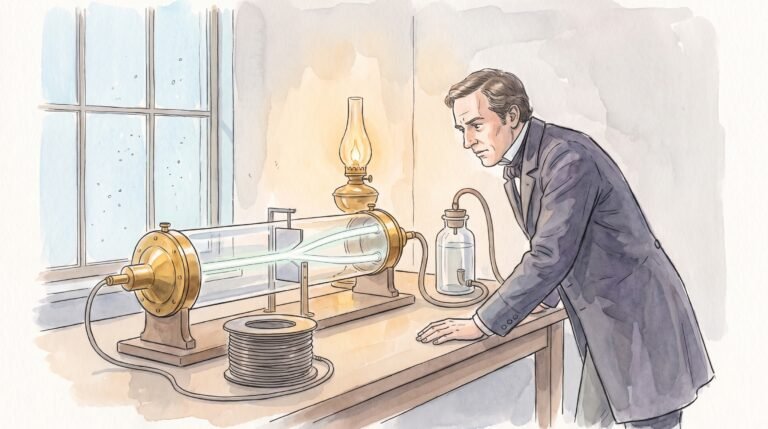
On the evening of 30 September 1897, in a lecture theatre at the Royal Institution in London, a thin beam of light inside a glass tube was bent sideways by a small…
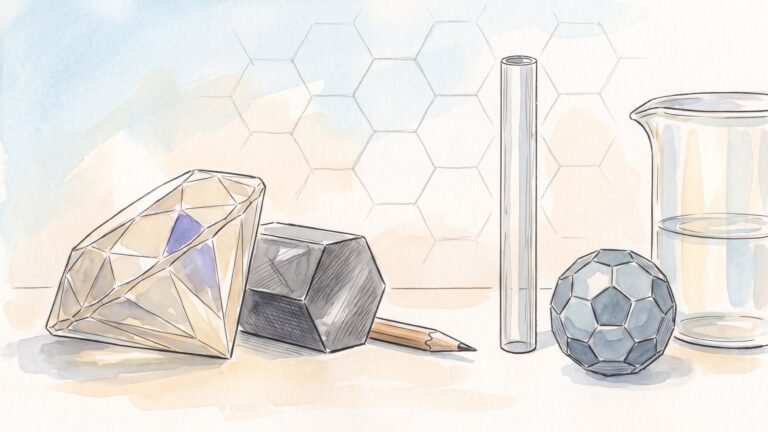
There is no other element like carbon. Iron is abundant, silicon is the foundation of the sand under our feet, oxygen fills the atmosphere, and nitrogen makes up most of the air.…