Skip to content

Science

Essays on discoveries, experiments and the people behind them across the natural sciences. The section also gathers the subtopics Physics, Chemistry, Biology and Energy.

151 long reads

Biology

Search and Replace: Precision Base Editing

Search and Replace - Precision Base Editing When the CRISPR-Cas9 revolution swept across the life sciences in 2012, it was hailed as the ultimate molecular scalpel, granting humanity the unprecedented ability to…
26 min read

Science

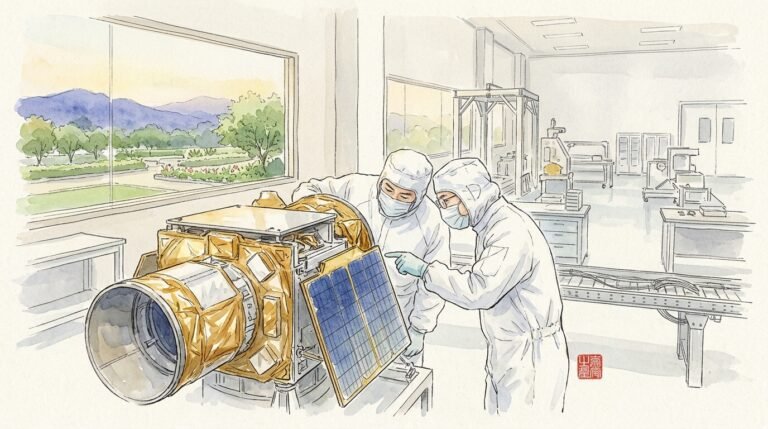
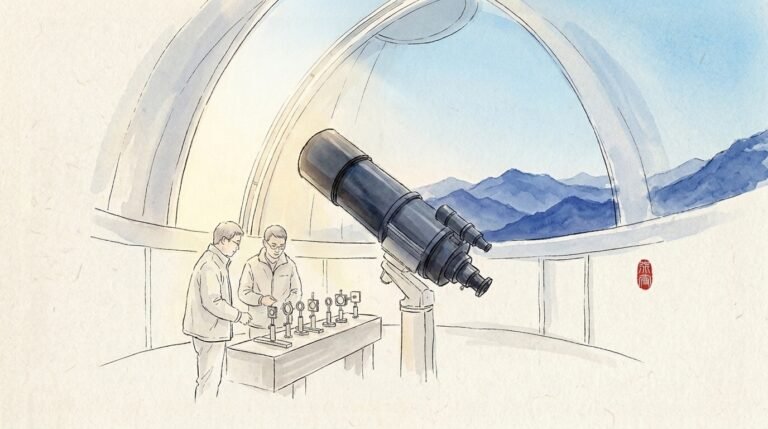
The Einstein Probe, Kuafu-1, and Time-Domain Space Astrophysics

Unravelling the explosive events of the high-energy cosmos—from tidal disruption flares of black holes devouring stars to the magnetic reconnections powering coronal mass ejections—demands novel spaceborne optics. With the deployment of the…

6 min read

Science

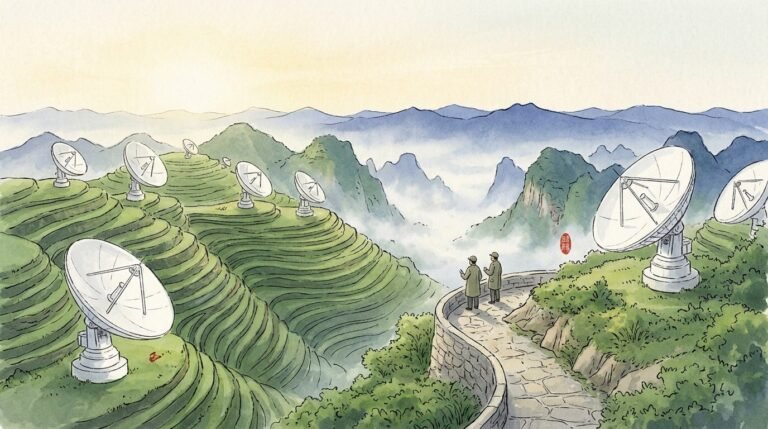
Project Fuyan and Planetary Radar for Asteroid Defence

On 15 February 2013, an undetected near-Earth asteroid approximately twenty metres in diameter entered the atmosphere over the southern Ural Mountains of Russia at a velocity of nineteen kilometres per second. When…

9 min read

Science

LHAASO and PeVatron Astrophysics on Mount Haizi

In 1912, Austrian-American physicist Victor Franz Hess ascended to an altitude of over five thousand metres in an open hydrogen balloon, carrying temperature-compensated electroscopes to measure atmospheric ionisation. Expecting radiation levels to…

11 min read

Science

Daya Bay, JUNO, and the Measurement of Neutrino Oscillations

Every second, approximately sixty billion solar neutrinos pass unhindered through every square centimetre of the human body. Electrically neutral, virtually massless, and interacting with ordinary atomic matter solely via gravity and the…

14 min read

Science

Yuan Longping and the Development of Hybrid Rice

In the early 1960s, China stood gripped by an existential agricultural catastrophe. The combined upheavals of the Great Leap Forward, collectivised farming dislocations, and severe climatic droughts had precipitated the Great Famine,…

17 min read

Chemistry

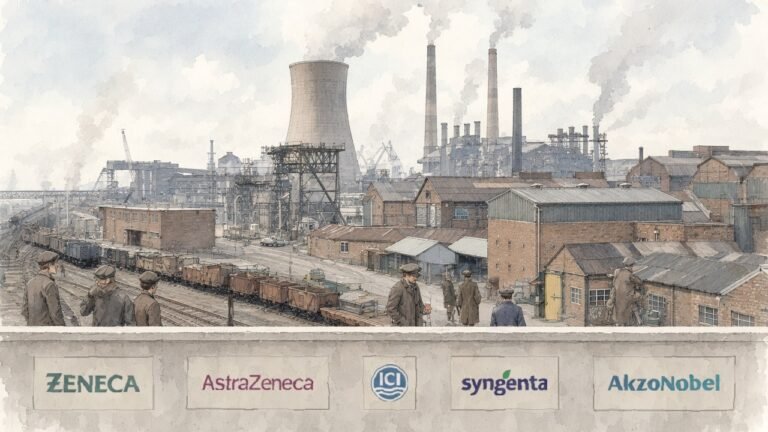
Imperial Chemical Industries, from Brunner Mond to AkzoNobel

Imperial Chemical Industries was registered in London on 7 December 1926 from the merger of four companies, Brunner, Mond and Company, Nobel Industries, the United Alkali Company and the British Dyestuffs Corporation.…

46 min read

Chemistry

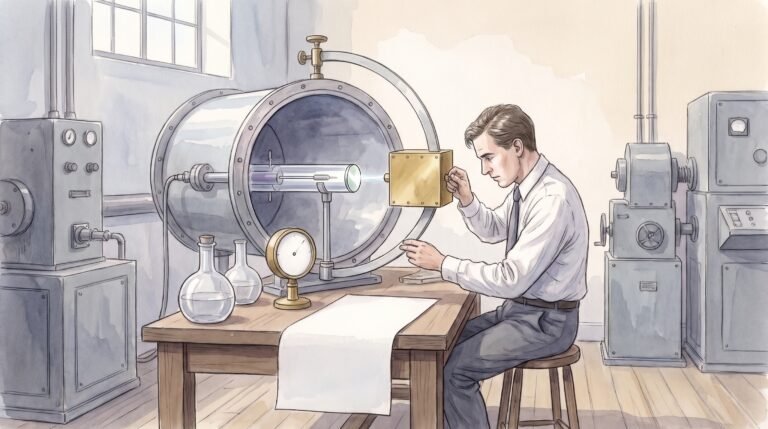
Haber, Bosch and the Feeding of the World

In the summer of 1909 a small steel apparatus on a laboratory bench in Karlsruhe produced a steady trickle of liquid ammonia from the nitrogen of the air and a stream of…

46 min read

History

Cecilia Payne and the Composition of the Stars

In 1925 a graduate student at Harvard calculated the composition of the stars and found them made almost entirely of hydrogen, with helium second and everything else a trace. The numbers were…

24 min read

History

The Davisson Germer Experiment

In 1927, at Bell Telephone Laboratories in New York, a beam of electrons was fired at a plate of nickel and the scattered electrons were counted at different angles. The experiment was…

24 min read

History

Lord Rayleigh and the Discovery of Argon

In 1892 Lord Rayleigh was weighing gases in glass globes at the Cavendish Laboratory, and he found that the nitrogen he made in his own laboratory was lighter than the nitrogen he…

23 min read

History

The Discovery of the Neutron

In 1920 Ernest Rutherford told the Royal Society that the nucleus of the atom must contain a particle nobody had ever seen: a neutral body with roughly the mass of a hydrogen…

23 min read

Physics

Why Uranium Is So Fissile

A block of uranium metal the size of a fist can kill everyone in a city; a block a hundred times larger will sit inert on a table. The difference is one…

45 min read
  1. Biology · 3 November 2026

    Search and Replace: Precision Base Editing

    Search and Replace - Precision Base Editing When the CRISPR-Cas9 revolution swept across the life sciences in 2012, it was hailed as the ultimate molecular scalpel, granting humanity the unprecedented ability to…
    26 min readby
  2. Science · 2 November 2026

    The Einstein Probe, Kuafu-1, and Time-Domain Space Astrophysics

    Unravelling the explosive events of the high-energy cosmos—from tidal disruption flares of black holes devouring stars to the magnetic reconnections powering coronal mass ejections—demands novel spaceborne optics. With the deployment of the…

    6 min readby Nekud
  3. Science · 2 November 2026

    The Micius Satellite and Space-to-Ground Quantum Key Distribution

    By harnessing the quantum mechanics of single photons and entangled pairs, physicist Pan Jianwei and the Quantum Experiments at Space Scale (QUESS) project bridged the vast gulf between laboratory quantum optics and…

    5 min readby Nekud
  4. Science · 2 November 2026

    Yu Min, Deng Jiaxian, and the Physics of the Chinese Thermonuclear Bomb

    While the United States and the Soviet Union required many years of multi-megaton atmospheric testing and vast supercomputing infrastructure to master staged thermonuclear fusion, China transitioned from its first fission explosion to…

    6 min readby Nekud
  5. Science · 2 November 2026

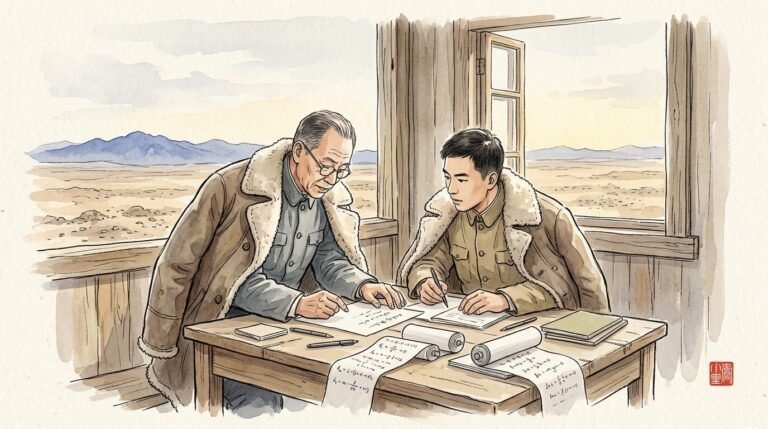
    Qian Xuesen and Systems Engineering in the Two Bombs, One Satellite Program

    From the aerodynamic wind tunnels of Caltech and the pioneering rocket testing of the Jet Propulsion Laboratory to the barren sands of the Gobi desert, Qian Xuesen forged the foundational systems engineering…

    6 min readby Nekud
  6. Science · 2 November 2026

    The He Jiankui Affair and the Institutional Restructuring of Chinese Bioethics

    On 25 November 2018, on the eve of the Second International Summit on Human Genome Editing in Hong Kong, an Associated Press exclusive and an unheralded YouTube video announcement triggered the most…

    5 min readby Nekud
  7. Science · 2 November 2026

    Somatic Cell Nuclear Transfer and the Cloning of Zhong Zhong and Hua Hua

    In July 1996, Ian Wilmut and Keith Campbell at the Roslin Institute in Scotland achieved an epochal milestone in reproductive biology with the birth of Dolly the sheep—the first mammal cloned from…

    5 min readby Nekud
  8. Science · 2 November 2026

    Project Fuyan and Planetary Radar for Asteroid Defence

    On 15 February 2013, an undetected near-Earth asteroid approximately twenty metres in diameter entered the atmosphere over the southern Ural Mountains of Russia at a velocity of nineteen kilometres per second. When…

    9 min readby Nekud
  9. Science · 2 November 2026

    De Novo Starch Synthesis from Carbon Dioxide at the Tianjin Institute

    For more than three billion years, the primary energetic foundation of terrestrial life has been oxygenic photosynthesis. From single-celled cyanobacteria in ancient Archean oceans to the sprawling maize and rice belts of…

    10 min readby Nekud
  10. Science · 2 November 2026

    The 1965 Total Synthesis of Crystalline Bovine Insulin in Shanghai

    In 1828, German chemist Friedrich Wöhler synthesised urea from ammonium cyanate, demolishing the ancient vitalist doctrine that organic chemical compounds could only be generated through the mysterious "vital force" (vis vitalis) of…

    10 min readby Nekud
  11. Science · 2 November 2026

    The Circular Electron Positron Collider and China’s Big-Science Debate

    On 4 July 2012, physicists at the European Organization for Nuclear Research (CERN) in Geneva announced the momentous discovery of the Higgs boson, the subatomic particle responsible for conferring mass upon fundamental…

    12 min readby Nekud
  12. Science · 2 November 2026

    LHAASO and PeVatron Astrophysics on Mount Haizi

    In 1912, Austrian-American physicist Victor Franz Hess ascended to an altitude of over five thousand metres in an open hydrogen balloon, carrying temperature-compensated electroscopes to measure atmospheric ionisation. Expecting radiation levels to…

    11 min readby Nekud
  13. Science · 2 November 2026

    Daya Bay, JUNO, and the Measurement of Neutrino Oscillations

    Every second, approximately sixty billion solar neutrinos pass unhindered through every square centimetre of the human body. Electrically neutral, virtually massless, and interacting with ordinary atomic matter solely via gravity and the…

    14 min readby Nekud
  14. Science · 2 November 2026

    Yuan Longping and the Development of Hybrid Rice

    In the early 1960s, China stood gripped by an existential agricultural catastrophe. The combined upheavals of the Great Leap Forward, collectivised farming dislocations, and severe climatic droughts had precipitated the Great Famine,…

    17 min readby Nekud
  15. Science · 2 November 2026

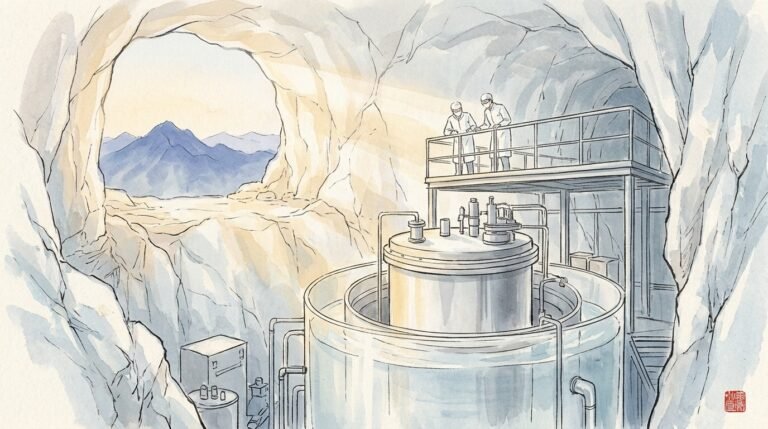
    CJPL and the Deep-Underground Search for Dark Matter in Sichuan

    On the surface of the Earth, every square metre of ground is relentlessly bombarded by an invisible shower of energetic subatomic particles. Produced when high-energy cosmic rays strike atmospheric nuclei in the…

    22 min readby Nekud
  16. Science · 2 November 2026

    Tianwen-1, the Zhurong Rover and China’s Triple-Objective Mars Mission

    On 8 November 2011, a Russian Zenit-2SB rocket lifted off from the Baikonur Cosmodrome in Kazakhstan carrying the ambitious Phobos-Grunt spacecraft, designed to collect surface samples from the Martian moon Phobos and…

    21 min readby Nekud
  17. Chemistry · 2 November 2026

    Imperial Chemical Industries, from Brunner Mond to AkzoNobel

    Imperial Chemical Industries was registered in London on 7 December 1926 from the merger of four companies, Brunner, Mond and Company, Nobel Industries, the United Alkali Company and the British Dyestuffs Corporation.…

    46 min readby Nekud
  18. Chemistry · 2 November 2026

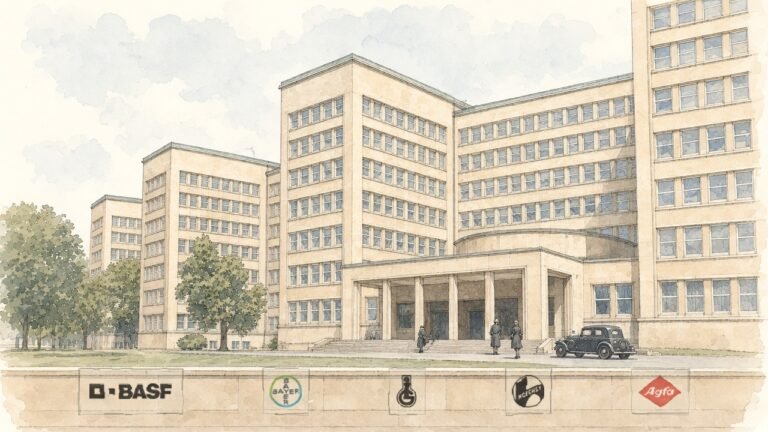
    IG Farben, the Rise and Dissolution of the German Chemical Combine

    On 2 December 1925 the Badische Anilin- und Soda-Fabrik in Ludwigshafen changed its name to I.G. Farbenindustrie Aktiengesellschaft and absorbed five of the largest chemical manufacturers in Germany, with a sixth group…

    47 min readby Nekud
  19. Chemistry · 2 November 2026

    Haber, Bosch and the Feeding of the World

    In the summer of 1909 a small steel apparatus on a laboratory bench in Karlsruhe produced a steady trickle of liquid ammonia from the nitrogen of the air and a stream of…

    46 min readby Nekud
  20. History · 2 November 2026

    Cecilia Payne and the Composition of the Stars

    In 1925 a graduate student at Harvard calculated the composition of the stars and found them made almost entirely of hydrogen, with helium second and everything else a trace. The numbers were…

    24 min readby Nekud
  21. History · 2 November 2026

    The Davisson Germer Experiment

    In 1927, at Bell Telephone Laboratories in New York, a beam of electrons was fired at a plate of nickel and the scattered electrons were counted at different angles. The experiment was…

    24 min readby Nekud
  22. History · 2 November 2026

    Lord Rayleigh and the Discovery of Argon

    In 1892 Lord Rayleigh was weighing gases in glass globes at the Cavendish Laboratory, and he found that the nitrogen he made in his own laboratory was lighter than the nitrogen he…

    23 min readby Nekud
  23. History · 2 November 2026

    The Discovery of the Neutron

    In 1920 Ernest Rutherford told the Royal Society that the nucleus of the atom must contain a particle nobody had ever seen: a neutral body with roughly the mass of a hydrogen…

    23 min readby Nekud
  24. Physics · 2 November 2026

    Why Uranium Is So Fissile

    A block of uranium metal the size of a fist can kill everyone in a city; a block a hundred times larger will sit inert on a table. The difference is one…

    45 min readby Nekud