Mendel and the Laws of Inheritance
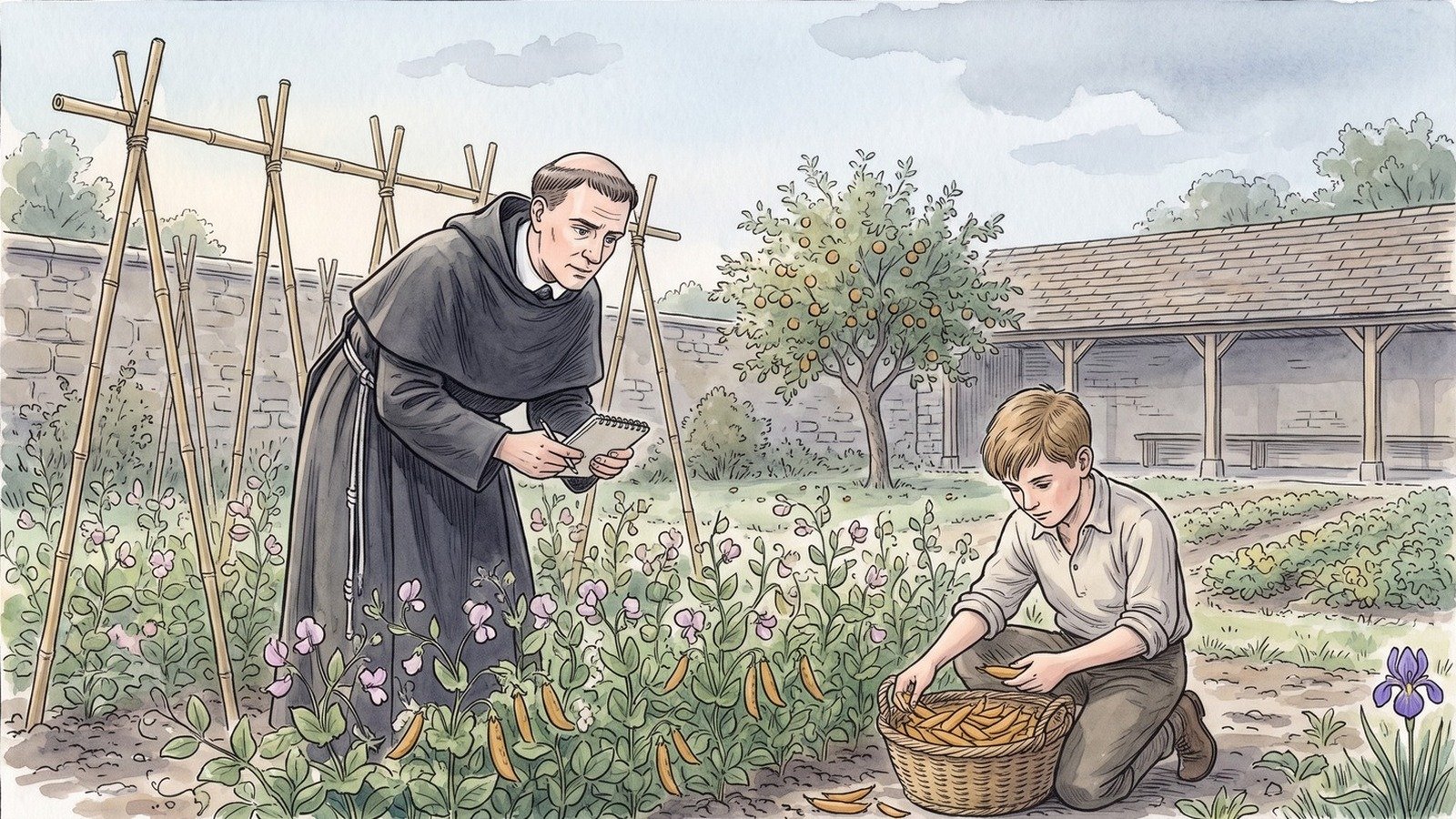
In February and March 1865 Gregor Mendel, an Augustinian friar at the monastery of St Thomas in Brno, read a paper in two parts to the Natural Science Society of the town. It reported the results of eight years of experiments on the garden pea, in which he had crossed plants differing in clearly defined characters and counted the forms that appeared among their offspring over several generations. From the numbers he inferred that the characters were transmitted by separate factors, received one from each parent, which did not blend or mix in the hybrid but separated again cleanly when the hybrid formed its reproductive cells. The paper was published in the society’s proceedings in 1866 and sent to libraries across Europe. It was cited a handful of times and then largely forgotten for thirty-four years, until in 1900 three botanists working independently reached similar conclusions and found that Mendel had anticipated them. This article describes the problem of heredity as it stood in the mid-nineteenth century, Mendel’s life and experiments, the reasons for the long neglect of his work, its rediscovery, and the way his laws became the foundation of modern genetics.
The Problem of Heredity
That offspring resemble their parents was obvious to anyone who kept animals or grew crops, and plant and animal breeders had for centuries improved their stocks by selecting the best individuals for breeding. But how the resemblance was transmitted was entirely obscure. The most widely held view in the mid-nineteenth century was that heredity worked by blending: the characters of the two parents were mixed in the offspring like two liquids, so that a cross between a tall and a short plant would be expected to produce plants of intermediate height. Blending appeared to fit much ordinary experience of characters such as stature and skin colour. It also posed a difficulty for Charles Darwin‘s theory of evolution by natural selection, published in 1859. The Scottish engineer Fleeming Jenkin pointed out in 1867 that if a favourable new variation arose in a single individual and was halved in each generation by blending with ordinary mates, it would soon be diluted to nothing before selection could act on it.
Darwin himself proposed a theory of heredity in 1868, in The Variation of Animals and Plants under Domestication, which he called pangenesis. He suggested that every part of the body threw off minute particles, which he called gemmules, that circulated through the body and collected in the reproductive organs, so that the offspring received a sample of particles from every part of each parent. Pangenesis allowed for the inheritance of characters acquired during an individual’s life, a view widely held at the time, and it was particulate rather than strictly blending, but it was speculative, and experiments by Darwin’s cousin Francis Galton, who transfused blood between rabbits of different colours, found no evidence for circulating gemmules.
There was also a long tradition of experimental plant hybridisation. In the eighteenth century Joseph Gottlieb Kölreuter in Germany had made thousands of crosses between species of tobacco and other plants, showing that hybrids were often intermediate between their parents and that the reciprocal crosses, with either species as the mother, gave similar results, which demonstrated that both parents contributed to the offspring. In the first half of the nineteenth century Carl Friedrich von Gärtner, also in Germany, conducted nearly ten thousand crossing experiments on some seven hundred species, and in Britain Thomas Andrew Knight and John Goss crossed varieties of peas and noticed that some characters disappeared in the first generation of hybrids and reappeared in the next. Charles Naudin in France observed in the 1860s that hybrids of the second generation showed great variability and that they tended to revert to the parental forms. But none of these workers counted the different kinds of offspring systematically, followed individual characters separately, or looked for numerical regularities. Their main interest was in whether species were fixed and whether hybrids could form new species, not in the mechanism of inheritance itself.
A Friar in Brno
Johann Mendel was born on 20 July 1822 at Heinzendorf, now Hynčice, in Austrian Silesia, in what is today the Czech Republic. His parents were peasant farmers, and his father tended an orchard and grafted fruit trees. A bright pupil, he was sent to the grammar school at Troppau, now Opava, and then to the philosophical institute at Olmütz, now Olomouc, a two-year course preparing students for university. His family’s poverty made the studies a constant struggle, and he suffered periods of illness that seem to have been brought on by anxiety. In 1843, on the recommendation of his physics teacher, Friedrich Franz, he entered the Augustinian monastery of St Thomas in Brno, then Brünn, the capital of Moravia, taking the religious name Gregor. The monastery was a centre of learning, and its abbot, Cyrill Napp, was interested in plant and animal breeding and in the practical improvement of agriculture. Moravian breeders of sheep and fruit had formed societies to study the principles of heredity, and Napp himself had remarked in 1837 that the question of what is inherited and how was the essential problem for breeders.
Mendel was ordained priest in 1847 but proved unsuited to parish work, and he was sent to teach at a secondary school in Znaim. In 1850 he failed the examination to qualify as a teacher of natural science, partly because his answers in biology and geology revealed gaps in his formal education. Napp then sent him to the University of Vienna from 1851 to 1853. There he studied physics under Christian Doppler and Andreas von Ettingshausen, who taught him experimental method and the use of combinatorial mathematics; chemistry; and botany under Franz Unger, a plant physiologist who held that new plant forms arose by variation and that the elements of the cell were the key to understanding heredity. Returning to Brno, Mendel taught physics and natural history at the newly founded Oberrealschule, a technical secondary school, for fourteen years, and was well regarded by his pupils, though he failed the teaching examination a second time in 1856.
The Pea Experiments
Mendel began his experiments in the monastery garden around 1856. He chose the garden pea, Pisum sativum, for practical reasons that he set out in his paper. Peas are easy to grow, produce many offspring, and come in many varieties that differ in clear-cut characters. Their flowers are normally self-fertilising, because the pollen-producing anthers and the stigma are enclosed within the keel of the flower, so that a plant is not accidentally pollinated by its neighbours; but they can be cross-fertilised by opening the bud, removing the anthers before they ripen and dusting the stigma with pollen from another plant. The hybrids are fully fertile.
He obtained thirty-four varieties of pea from seed merchants and spent two years testing whether they bred true, that is, whether each produced offspring identical to itself when self-fertilised. From them he chose twenty-two for his experiments, and he selected seven pairs of contrasting characters: the shape of the ripe seed, round or wrinkled; the colour of the seed contents, yellow or green; the colour of the seed coat, grey or white, associated with violet or white flowers; the shape of the ripe pod, inflated or constricted between the seeds; the colour of the unripe pod, green or yellow; the position of the flowers, along the stem or bunched at the top; and the length of the stem, tall, about two metres, or dwarf, about half a metre. Each character showed two distinct alternatives with no intermediates, which made it possible to classify every plant without ambiguity.
When he crossed plants differing in one of these characters, the hybrids of the first generation all resembled one parent. Crosses between round-seeded and wrinkled-seeded plants gave only round seeds, whichever parent supplied the pollen; crosses between tall and dwarf plants gave only tall plants, often slightly taller than the tall parent. Mendel called the character that appeared in the hybrid dominant and the one that disappeared recessive, terms still in use. He then allowed the hybrids to fertilise themselves. In the second generation the recessive character reappeared, unchanged, in a minority of the offspring. From 253 hybrid plants he obtained 7,324 seeds, of which 5,474 were round and 1,850 wrinkled, a ratio of 2.96 to 1. For seed colour, 258 plants gave 6,022 yellow and 2,001 green seeds, a ratio of 3.01 to 1. The other characters gave ratios between 2.82 and 3.15 to 1. In every case, the dominant and recessive forms appeared in a proportion close to three to one.
The decisive step was to grow the next generation. Mendel allowed the second-generation plants to fertilise themselves in turn. Those showing the recessive character always bred true: wrinkled seeds gave only wrinkled seeds. But the plants showing the dominant character were of two kinds. About one-third bred true, giving only the dominant form, and about two-thirds behaved like the original hybrids, again producing dominant and recessive forms in a ratio of three to one. Of 565 plants raised from round seeds, 193 gave only round seeds and 372 gave both round and wrinkled, a ratio of almost exactly one to two. The apparent ratio of three to one was therefore really a ratio of one to two to one: one part pure dominant, two parts hybrid, one part pure recessive. Mendel followed some lines through as many as six generations and found that the pattern continued, with the proportion of hybrids decreasing in each generation as the pure forms accumulated.
Mendel’s Explanation
Mendel explained these results with a simple hypothesis, which he expressed in a notation borrowed from algebra. He supposed that each plant contained, for each character, a pair of what he called elements or factors, one inherited from each parent. He represented the dominant factor by a capital letter, A, and the recessive by a small letter, a. A true-breeding dominant plant carried AA, a true-breeding recessive plant aa, and the hybrid Aa. The hybrid showed the dominant character because the presence of a single A was enough to produce it. The key assumption was that when the hybrid formed its pollen grains and egg cells, the two factors separated, so that half of the reproductive cells carried A and half carried a. If these combined at random in fertilisation, the offspring of a self-fertilised hybrid would be AA, Aa, aA and aa in equal numbers, which gives exactly the ratio of one pure dominant to two hybrids to one pure recessive, or three plants showing the dominant character to one showing the recessive. Mendel wrote the series as A + 2Aa + a.
He tested the hypothesis by predicting the results of crosses he had not yet made. If the hybrid produced two kinds of reproductive cells in equal numbers, then crossing it with a pure recessive plant, which produced only a cells, should give hybrid and recessive offspring in equal proportions, and crossing it with a pure dominant plant should give offspring all of which showed the dominant character, half pure and half hybrid. Both predictions were confirmed. The procedure of crossing an individual of unknown constitution with a pure recessive to reveal what factors it carries, now called a test cross, remains a standard method of genetics. The principle that the two factors for a character separate cleanly from one another when reproductive cells are formed is now known as the law of segregation, often called Mendel’s first law.
Mendel then studied plants that differed in two or three characters at once. He crossed a variety with round, yellow seeds with one having wrinkled, green seeds. The first generation seeds were all round and yellow. In the second generation he obtained 556 seeds: 315 round and yellow, 101 wrinkled and yellow, 108 round and green, and 32 wrinkled and green. These numbers are close to the proportions 9:3:3:1 that would be expected if the two characters were inherited independently, each in a ratio of three to one, so that the combinations appear in the proportions given by multiplying the two separate ratios. Plants with both new combinations, round and green or wrinkled and yellow, appeared and bred true in later generations. He confirmed the result by a cross involving three characters, which gave twenty-seven classes of offspring in the proportions predicted. From these experiments he concluded that the factors for different characters are distributed to the reproductive cells independently of one another, a principle now called the law of independent assortment, or Mendel’s second law. It holds, as was discovered later, only for genes located on different chromosomes or far apart on the same chromosome. All seven of the characters Mendel studied in detail behave independently, a fact that has sometimes been treated as suspicious, though modern analysis of the pea genome indicates that most of the relevant genes lie on different chromosomes or far enough apart that linkage would not have been noticeable in his crosses.
Mendel’s paper, “Versuche über Pflanzen-Hybriden”, or “Experiments on Plant Hybridization”, was read to the Natural Science Society of Brno on 8 February and 8 March 1865 and published in the society’s Verhandlungen for 1865, which appeared in 1866. It is a model of clarity. Mendel set out his choice of material, his methods, his numerical results and his interpretation, and showed how the theory could be tested. Its most original feature was its use of large numbers and of the mathematics of probability to reveal regularities that would have been invisible in a handful of crosses. In all, he and his assistants raised and examined some twenty-eight thousand pea plants.
Neglect
The Brno society distributed its proceedings to more than a hundred learned societies and libraries, including the Royal Society and the Linnean Society in London, and Mendel ordered forty offprints of his paper, some of which he sent to prominent botanists. One went to Carl Nägeli, professor of botany in Munich and a leading authority on heredity and hybridisation, with whom Mendel corresponded from 1866 to 1873. Nägeli’s replies were courteous but sceptical. He suggested that Mendel test his conclusions on hawkweeds, Hieracium, a genus on which Nägeli was working. Mendel did so for several years, but the results were confusing, since hawkweeds, as was discovered only after 1900, often produce seed without fertilisation, by a process called apomixis, so that the offspring are copies of the mother. The hawkweed experiments, published in 1869, seemed to show that Mendel’s laws did not hold generally, and may have discouraged him.
The paper was cited about a dozen times before 1900, most notably in Wilhelm Olbers Focke’s survey of plant hybrids of 1881, but none of the citations recognised its significance. Several reasons have been suggested. Mendel was an obscure provincial schoolteacher, and his paper appeared in a minor journal. His use of statistics and probability was unfamiliar to most biologists, who were not used to thinking about heredity in terms of ratios. The prevailing interest in hybridisation was in the origin and stability of species, and Mendel’s paper seemed to many readers to be a study of hybrids of one particular plant rather than a general theory of inheritance. Above all, the biological knowledge that would have given his abstract factors a physical meaning did not yet exist. The behaviour of chromosomes in cell division and in the formation of reproductive cells was worked out only in the late 1870s and 1880s by Walther Flemming, Eduard Strasburger, Oscar Hertwig and Theodor Boveri, and August Weismann’s theory that a separate germ plasm passes from generation to generation unchanged by the body, which demolished the idea of the inheritance of acquired characters, appeared only in the 1880s.
In 1868 Mendel was elected abbot of the monastery on the death of Napp. His administrative duties left little time for research, though he continued to keep bees, to make meteorological observations and to grow fruit trees. From 1874 he was involved in a long dispute with the government over a new law taxing monastic property, which he regarded as unjust and refused to pay. He died of kidney disease on 6 January 1884, at the age of sixty-one. His successor as abbot burned many of his papers. The composer Leoš Janáček, who had been a choirboy at the monastery, played the organ at his funeral.
Rediscovery
By the 1890s the question of heredity had become central to biology. The study of variation, the behaviour of chromosomes and Weismann’s theories had prepared the ground, and several botanists began crossing plants in order to understand the inheritance of particular characters. In 1900, within a few months, three of them independently published results confirming Mendel’s ratios and acknowledged that he had reached the same conclusions thirty-four years earlier.
Hugo de Vries, professor of botany at Amsterdam, had studied the inheritance of many characters in more than a dozen species, and in a paper published in March 1900 he reported ratios of three to one in the second generation. His first short paper in French did not mention Mendel, but a longer German paper published soon afterwards did. Carl Correns, a former student of Nägeli working at Tübingen, had obtained similar results with peas and maize, and on reading de Vries’s paper he hurriedly wrote up his work, titled “G. Mendel’s law concerning the behaviour of progeny of varietal hybrids”, which he submitted in April 1900. He gave Mendel full credit and introduced the terms Mendel’s laws. Erich von Tschermak, a young Austrian plant breeder, also published results on peas in 1900 that referred to Mendel, though later historians have questioned how fully he understood their meaning. Whether de Vries had read Mendel before carrying out his experiments, and how far each of the three arrived at the laws independently, has been debated by historians ever since. What is clear is that their papers brought Mendel’s work to the attention of the scientific world.
The most energetic champion of the new ideas was the English biologist William Bateson of Cambridge, who read Mendel’s paper in May 1900 and became convinced that it was the key to the problem of heredity. He arranged for an English translation, published by the Royal Horticultural Society in 1901, and in 1902 published Mendel’s Principles of Heredity: A Defence. With Edith Saunders, Reginald Punnett and others, he showed that Mendel’s laws applied to animals as well as plants, beginning with the inheritance of comb shape in poultry. In 1902 Archibald Garrod, a London physician, working with Bateson, showed that the rare human condition alkaptonuria, in which the urine turns black on exposure to air, was inherited as a Mendelian recessive and was more common among the children of marriages between cousins. It was the first human trait shown to follow Mendel’s laws, and Garrod’s description of it as an inborn error of metabolism, a defect in a single chemical step, foreshadowed the later understanding of what genes do. Bateson coined the word genetics in 1905, along with terms such as allelomorph, later shortened to allele, homozygote and heterozygote, and Punnett devised the square diagram for working out the results of crosses that bears his name. In 1909 the Danish botanist Wilhelm Johannsen introduced the word gene for Mendel’s factor, and the distinction between genotype, the genetic constitution of an organism, and phenotype, its observable characteristics.
Controversy and Synthesis
Mendelism was not universally welcomed. In Britain a bitter dispute broke out between Bateson’s Mendelians and the biometricians, led by Karl Pearson and Walter Frank Raphael Weldon, who followed Galton in studying continuous variation in characters such as height by statistical methods. The biometricians argued that the clear-cut characters studied by Mendel were exceptional and that most variation, and most evolution, involved small continuous differences that Mendel’s laws could not explain. Bateson, for his part, held that evolution proceeded by discontinuous jumps. The dispute became personal and lasted until Weldon’s death in 1906, and it obscured for some years the fact that the two approaches were compatible.
The reconciliation came in stages. In 1908 the English mathematician G. H. Hardy and the German physician Wilhelm Weinberg showed independently that in a large population mating at random, Mendelian inheritance by itself does not change the frequencies of the different forms of a gene from one generation to the next, so that variation is preserved rather than lost, answering Jenkin’s objection to Darwin. In 1909 the Swedish geneticist Herman Nilsson-Ehle showed that the continuous variation in grain colour in wheat could be explained by several Mendelian genes each having a small additive effect. In 1918 Ronald Fisher published a paper showing mathematically that the correlations between relatives measured by the biometricians were exactly what would be expected if continuous characters were controlled by many Mendelian genes. In the 1920s and 1930s Fisher, J. B. S. Haldane and Sewall Wright developed the mathematical theory of population genetics, which showed how natural selection acting on Mendelian variation could produce evolutionary change. Their work, combined with field studies by Theodosius Dobzhansky, Ernst Mayr and others, became the modern evolutionary synthesis.
Fisher also examined Mendel’s own data. In a paper of 1936 he concluded that Mendel’s results agreed with the expected ratios more closely than chance would allow, and suggested that some of the data might have been adjusted, perhaps by an assistant who knew what Mendel expected. The question has been argued over ever since. Some later studies have proposed explanations that do not involve any deliberate falsification, such as the way plants were selected for classification or stopping counts when the figures looked clear, while others consider Fisher’s statistical point to remain valid. No one doubts that Mendel’s conclusions were correct.
Genes on Chromosomes
The physical basis of Mendel’s factors was soon found. In 1902 and 1903 Walter Sutton, a graduate student at Columbia University, and Theodor Boveri in Würzburg pointed out independently that chromosomes behave exactly as Mendel’s factors should. They come in pairs, one from each parent; the members of each pair separate when reproductive cells form, so that each cell receives one of them; and different pairs separate independently. The Sutton-Boveri chromosome theory of heredity proposed that the factors were carried on the chromosomes.
Proof came from the laboratory of Thomas Hunt Morgan at Columbia University, which used the small fruit fly Drosophila melanogaster, which breeds rapidly and can be kept in large numbers in milk bottles. In 1910 Morgan found a male fly with white eyes instead of the normal red, and showed that the trait was inherited together with sex, in a way that could be explained if the gene for eye colour lay on the X chromosome. Morgan and his students, among them Alfred Sturtevant, Calvin Bridges and Hermann Joseph Muller, found many more mutations and showed that genes on the same chromosome tend to be inherited together, an exception to Mendel’s second law called linkage, but that linked genes can be separated by an exchange of material between paired chromosomes, called crossing over. In 1913 Sturtevant, then an undergraduate, used the frequency of crossing over between genes to construct the first genetic map, placing six genes in a line along the X chromosome. In 1915 Morgan and his colleagues published The Mechanism of Mendelian Heredity. Morgan received the Nobel Prize in Physiology or Medicine in 1933 for his discoveries concerning the role played by the chromosome in heredity.
From Factors to Molecules
What genes are made of, and how they act, remained unknown for several more decades. In 1941 George Beadle and Edward Tatum, working with the bread mould Neurospora, showed that individual genes control individual enzymes, the idea Garrod had suggested in 1902. In 1944 Oswald Avery, Colin MacLeod and Maclyn McCarty showed that the substance that could transform one strain of pneumococcus bacteria into another was deoxyribonucleic acid, DNA, and in 1952 Alfred Hershey and Martha Chase confirmed that the genetic material of a bacterial virus was DNA. In 1953 James Watson and Francis Crick proposed a double-helix model, built on X-ray diffraction images of DNA obtained by Rosalind Franklin and Raymond Gosling and on data from Maurice Wilkins; the history of the discovery of the structure of DNA describes how it was found. The structure explained at once how genetic information could be stored in the sequence of four chemical bases and copied exactly, by separation of the two strands, each serving as a template for a new partner. Mendel’s dominant and recessive factors could now be understood as different versions of a sequence of DNA, one of which often produces a working protein while the other does not, so that one working copy is enough. The round and wrinkled seeds of the pea, for example, were shown in 1990 to differ in a gene for an enzyme that makes branched starch; in wrinkled seeds the gene is disrupted by an inserted piece of DNA, the seeds accumulate sugar, take up water during development and then shrink and wrinkle as they dry.
The completion of the Human Genome Project in 2003 gave the full sequence of the roughly three billion base pairs of human DNA and the approximate locations of some twenty thousand protein-coding genes. Many of the thousands of human disorders caused by a single gene, such as cystic fibrosis, sickle cell disease and Huntington’s disease, follow Mendel’s laws exactly, and the patterns of inheritance he described are used every day in genetic counselling. Most human characteristics and common diseases, however, depend on many genes and on the environment, as the biometricians had argued, and the way genes interact with each other and with the conditions of life is far more complex than Mendel’s peas suggested.
Mendelism and Its Opponents in the Twentieth Century
The acceptance of Mendelian genetics was not only a scientific matter. In the Soviet Union in the 1930s the agronomist Trofim Lysenko rejected the gene as an idealist abstraction and promoted a doctrine, derived from the horticulturist Ivan Michurin, according to which the heredity of plants could be reshaped directly by changes in their environment. With the support of Stalin, Lysenko gained control of Soviet agricultural science. Geneticists who opposed him lost their posts, and some were arrested; Nikolai Vavilov, the leading Soviet plant geneticist, who had built up one of the world’s largest collections of crop seeds, died in prison in 1943. At a session of the Lenin All-Union Academy of Agricultural Sciences in August 1948, Mendelian genetics was officially condemned as reactionary and bourgeois, and its teaching was banned in the Soviet Union and much of eastern Europe. In Czechoslovakia the Mendel memorial in Brno was neglected and the monastery’s connection with genetics was played down.
The consequences for Soviet biology and agriculture were severe. Plant breeding based on Lysenko’s methods failed to deliver the promised increases in yield, and Soviet genetics fell a generation behind that of the West. Lysenko’s influence declined after the death of Stalin and ended after the fall of Khrushchev in 1964. In 1965 an international symposium held in Brno to mark the centenary of Mendel’s paper was attended by geneticists from both sides of the Iron Curtain, and it was a public sign of the rehabilitation of genetics in the Eastern bloc. The Mendelianum, a department of the Moravian Museum devoted to Mendel, was founded in the same period.
Elsewhere, the new science of genetics was put to uses that would have been foreign to Mendel. In the early twentieth century Mendel’s laws were invoked, often crudely and on the basis of very poor evidence, by advocates of eugenics, who claimed that conditions such as feeblemindedness, criminality and poverty were simple Mendelian traits that could be eliminated by preventing those who carried them from having children. Compulsory sterilisation laws were passed in many American states, in Scandinavia and, most notoriously, in Nazi Germany. Geneticists such as Morgan, Punnett and later Haldane and Lionel Penrose pointed out that the claims rested on a misunderstanding of how inheritance worked; Punnett showed, for instance, that a rare recessive condition could not be removed from a population in any reasonable time by preventing affected individuals from breeding, since most of the genes concerned are carried by healthy heterozygotes. The episode stands as a warning about the misuse of scientific results, not as a consequence of Mendel’s own work.
Mendel’s Place in Science
Mendel’s laws have proved to be neither universal nor complete. Linkage breaks the law of independent assortment; some genes show incomplete dominance, so that hybrids are intermediate; some characters are controlled by genes in the mitochondria and chloroplasts, which are inherited from only one parent; and some genes are expressed differently depending on whether they came from the mother or the father. Yet each of these discoveries was made by using Mendel’s method, crossing organisms differing in defined characters and counting the results, and each was recognised as a departure from his laws. The idea at the centre of his work, that inheritance is carried by discrete units that are passed on intact from one generation to the next, has stood without serious challenge since 1900.
The monastery garden in Brno where the experiments were done, now part of Masaryk University’s Mendel Museum, can still be visited, along with the foundations of the greenhouse in which Mendel worked. His paper remains one of the most widely read scientific papers ever written. It is an unusual case in the history of science of a fundamental discovery made by a single investigator, working essentially alone, with an inexpensive experimental organism, and set out so completely in its first publication that the scientists who rediscovered it a generation later found very little to add.
References
- Experiments in Plant Hybridisation - Gregor Mendel, English translation by the Royal Horticultural Society, Internet Archive
- Gregor Mendel - Grokipedia, life, the pea experiments and the hawkweed studies
- Mendelian inheritance - Grokipedia, segregation, independent assortment and dominance
- Gregor Mendel and the Principles of Inheritance - Nature Education, Scitable
- Mendel Museum - Masaryk University, Brno
- Pangenesis - Grokipedia, Darwin’s provisional hypothesis of heredity
- Carl Nägeli - Grokipedia, botanist and correspondent of Mendel
- Hugo de Vries - Grokipedia, the rediscovery of 1900 and the mutation theory
- Carl Correns - Grokipedia, the rediscovery of 1900
- William Bateson - Grokipedia, the defence of Mendelism and the naming of genetics
- Ronald Fisher - Grokipedia, population genetics and the analysis of Mendel’s data
- Thomas Hunt Morgan - Grokipedia, the fruit fly and the chromosome theory
- Thomas Hunt Morgan: Facts - NobelPrize.org, the Nobel Prize in Physiology or Medicine 1933
- Molecular Structure of Nucleic Acids - J. D. Watson and F. H. C. Crick, Nature 171, 737-738, 1953