Scholars, scribes, collectors and translators, and the schools of scholarship they worked in.
99 pages
Scholars, scribes and collectors88
 A Pastor in Cairo: Kahle and Hebrew PointingA German pastor in Cairo, later a professor in Bonn and an exile in Oxford, taught modern scholarship to treat the vowels of the…
 A Spaniard in the Corner of the EarthOn a December night in 1158, in England, Abraham ibn Ezra dreamed that the Sabbath sent him a letter of complaint. The wandering Spanish…
 A Twelfth-Century Map of Jewish LearningBenjamin of Tudela, the twelfth century Jewish traveller whose itinerary shows biblical culture across Europe, Africa and Asia.
 Aaron ben Joseph: Masoretic Scribe at the CodexAaron ben Joseph, a Masoretic scribe (nakdan), with a short film of pointing a Hebrew Bible codex with vowels, accents and Masorah.
 Aaron ben Moses ben Asher & the Ben Asher FamilyAaron ben Moses ben Asher and the Ben Asher family of Tiberias, the Aleppo Codex, Maimonides’ endorsement and the standard Tiberian tradition.
 Abraham Firkovich: Karaite Collector of the Russian EmpireAbraham Firkovich (1786–1874), Crimean Karaite scholar and collector whose St Petersburg collections include the Leningrad Codex.
 Abraham Harkavy: Librarian of the Hebrew OrientAbraham Harkavy (1835–1919), head of the Oriental Division of the Imperial Public Library, cataloguer of Hebrew Bible manuscripts and critic of Firkovich.
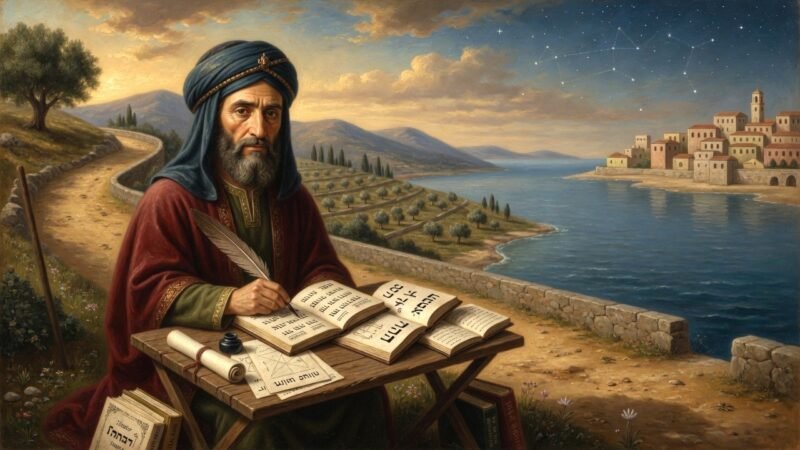 Abraham ibn Ezra on Grammar, Travel, and the Hebrew BibleAbraham ibn Ezra (c. 1089–1167), wandering commentator and grammarian who carried Andalusian philology into Italy, France and England.
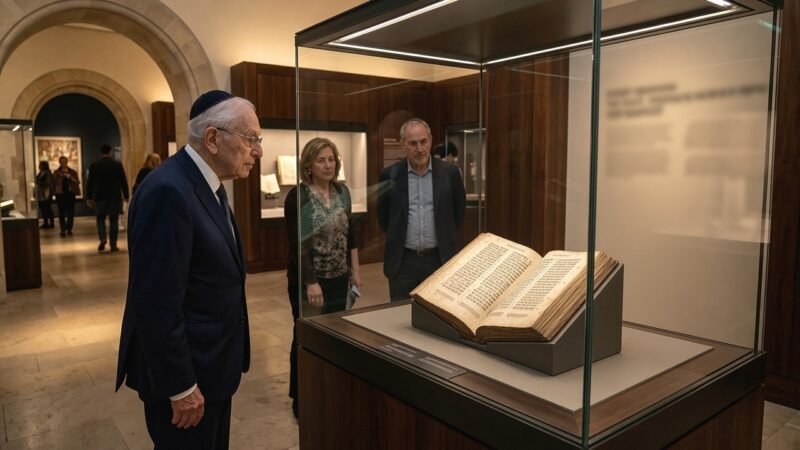 Alfred H. Moses: Steward of Codex SassoonAmbassador Alfred H. Moses, who in 2023 bought Codex Sassoon for over $30 million and gave it to ANU, Museum of the Jewish People in Tel Aviv.
 Alfred Moses: Lawyer, Diplomat and Communal LeaderAlfred Henry Moses (born July 24, 1929, in Baltimore, Maryland) is an American attorney, diplomat, and Jewish communal leader whose career encompasses corporate law,…
 Ben Asher against Ben Naphtali: The Book of DifferencesWritten in Arabic by a Karaite scholar in Jerusalem around the turn of the tenth and eleventh centuries, the Book of Differences is the…
 Benjamin Wilson and The Emphatic DiaglottBenjamin Wilson of Geneva, Illinois, his Emphatic Diaglott of 1864 with Greek text, interlinear and new version, its reception and its use of the divine name.
 Bezalel Narkiss, Hebrew Illuminated Manuscripts and Jewish Art HistoryBezalel Narkiss (1926–2008), Hebrew University art historian who founded modern Hebrew illuminated manuscript studies and the Center for Jewish Art.
 Biblical Scholars Who Championed ConscienceThe Protestant Reformation is often narrated as a dramatic rupture driven by towering figures—Luther in Wittenberg, Zwingli in Zurich, Calvin in Geneva—whose doctrinal clarifications…
 Christian David GinsburgOn a December day in 1897, in a reading room on Queen Victoria Street in London, a Christian scholar in his late sixties was…
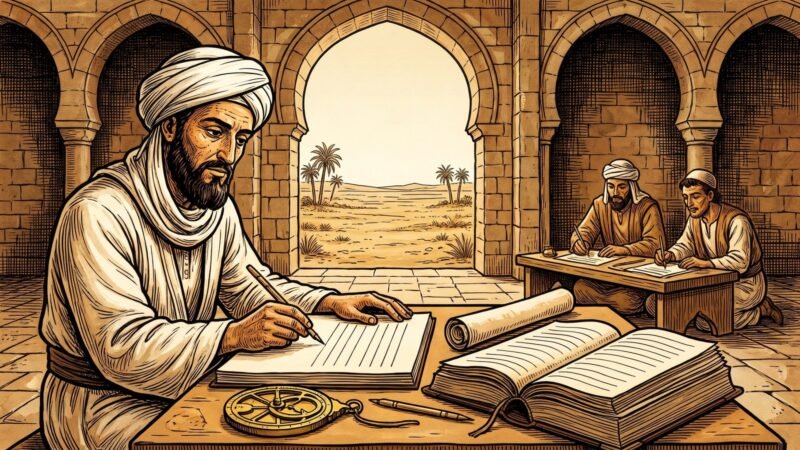 Codifier, Physician and Philosopher: Moses ben MaimonMoses ben Maimon was born in Cordoba in 1138, the son of a judge who was still a refugee from the Almohad conquest of…
 Constantin von Tischendorf: Sinaiticus, Ephraemi and the Critical TextConstantin von Tischendorf (1815–1874), who deciphered Codex Ephraemi, found Codex Sinaiticus and edited the Editio Octava Critica Maior.
 Courtier and Commentator: Abarbanel’s BibleIsaac Abarbanel (Abravanel, 1437–1508), Portuguese Jewish statesman and major late medieval Bible commentator on the Torah and Prophets.
 David Kimhi (Radak) on Grammar, Lexicon, and the ProphetsDavid Kimhi (Radak, c. 1160–1235): Provençal Hebrew grammarian and biblical commentator—Sefer Mikhlol, Sefer ha-Shorashim, and classic peshat on the Prophets.
 David Solomon Sassoon: Bibliophile of the Hebrew BookDavid Solomon Sassoon (1880–1942), the collector whose library and catalogue Ohel Dawid preserved Codex Sassoon and hundreds of Hebrew manuscripts.
 Elias Levita and the Age of the Vowel PointsElias Levita’s Masoret ha-Masoret (Venice 1538), a guide to Masoretic terms that argued the vowel points came after the Talmud.
 Elijah ha-Naqdan and the Nakdanim of Medieval EuropeIn 1239 Elijah ben Berechiah, son of the author of the Fox Fables, shaped the Masorah of a northern French Bible into letters and…
 Felix Pratensis and the First Rabbinic BibleThe First Rabbinic Bible, printed by Daniel Bomberg in Venice in 1516–17 and edited by Felix Pratensis, the first to print the qere in the margin.
 Geoffrey Khan and the Tiberian PronunciationGeoffrey Khan’s reconstruction of the Tiberian pronunciation of Biblical Hebrew, the oral reading of Tiberias and its medieval sources.
 George Barker Stevens and The Epistles of Paul in Modern EnglishGeorge Barker Stevens of Yale, his paraphrase The Epistles of Paul in Modern English of 1898, its method, reception and use of the divine name.
 George StorrsGeorge Storrs (1796–1879) was a prominent American Christian preacher, writer, abolitionist, and theologian best known for championing conditional immortality (also called conditionalism) and influencing…
 Gérard Weil and the Massorah GedolahGérard Weil’s Massorah Gedolah of 1971, the edited Masorah magna of the Leningrad Codex printed apart from BHS, and how to use it with BHS.
 Guyart des Moulins and the Bible HistorialeThe Bible historiale is a French version of the Bible composed at the end of the thirteenth century by Guyart des Moulins, a canon…
 Henry GrewHenry Grew (December 25, 1781 – August 8, 1862) was a British-born American Baptist minister, theologian, writer, and abolitionist whose independent biblical studies led…
 Herman Heinfetter and the Literal Translation of 1863Frederick Parker, who wrote as Herman Heinfetter, and his literal 1863 translation from the Vatican manuscript, its method and the divine name.
 Ilana Tahan, Curating Hebrew Manuscripts at the British LibraryIlana Tahan, OBE (1946–2024), British Library Lead Curator of Hebrew collections who led major digitisation and public access to Hebrew manuscripts.
 Isaac of ChernigovIn the royal Exchequer accounts compiled at Westminster for the Michaelmas audit of 1181—the twenty-seventh regnal year of King Henry II of England—the clerk…
 Israel YeivinIsrael Yeivin (1923–2008), scholar of the Tiberian Masorah, the accents and Babylonian vocalisation, author of the Introduction to the Tiberian Masorah.
 Jacob ben Hayyim and the Second Rabbinic BibleJacob ben Hayyim and the Second Rabbinic Bible (Venice 1524–25), the first edition to arrange the Masorah and list much of it at the end.
 Jacob of EdessaJacob of Edessa was a Syriac scholar, monk and bishop of the second half of the seventh century, and the most learned figure of…
 Jan Hus, Prague, Scripture, and ReformJan Hus (c. 1370–1415), Prague preacher and reformer influenced by Wycliffe. Scripture, Czech preaching, and the path to Constance.
 Jedidiah Norzi and the Minhat ShaiJedidiah Norzi’s commentary on the form of the Hebrew Bible, finished in 1626 and printed at Mantua in 1742–44 as Minhat Shai.
 John Wycliffe, English Scripture and ReformJohn Wycliffe (c. 1328–1384), Oxford master, and the first complete English Bible, how his circle put Scripture into English and shaped reform.
 Joshua ibn Gaon, Castilian Scribe-Illuminator of Hebrew BiblesJoshua ibn Gaon, Castilian Sephardi scribe-illuminator of Hebrew Bibles, micrography, and ornamental Scripture around 1300.
 Julie Harris on Iberian Hebrew Manuscripts and Jewish Visual CultureJulie Harris, art historian of medieval Iberian Hebrew manuscripts and Jewish visual culture in Christian and Muslim Spain.
 Karl LachmannKarl Lachmann was a German philologist of the first half of the nineteenth century who worked with equal authority on Latin poetry, medieval German…
 Katrin Kogman-Appel on Sephardi and Ashkenazi Hebrew Book ArtKatrin Kogman-Appel on medieval Hebrew book art, Sephardi Bible decoration, Spanish haggadot, the Worms Mahzor and Jewish visual culture.
 Maimonides and the Masoretic TraditionA study of Maimonides and his relationship to the Masoretic tradition, including his rulings on Torah scrolls and the authority of the Ben Asher text.
 Marc Michael Epstein on Iconography and Meaning in Jewish ManuscriptsMarc Michael Epstein on medieval Jewish illuminated manuscripts, iconography, Dreams of Subversion, and Skies of Parchment.
 May 1881: The Eclipse of the Received TextThe 1881 critical Greek text of Brooke Foss Westcott and Fenton John Anthony Hort shattered the dominance of the Textus Receptus and laid the…
 Meiri’s Kiryat Sefer and the Laws of Writing a Torah ScrollAmong the many works of Menahem ben Solomon ha-Meiri, the Talmudist of Perpignan whose commentary on the Talmud has become one of the standard…
 Michael ServetusIn the turbulent religious landscape of the 16th century, few figures embody the collision of intellectual courage, scientific inquiry, and theological rigidity as starkly…
 Mishael ben Uzziel and the Kitāb al-KhilāfMishael ben Uzziel’s Kitāb al-Khilāf, the book of differences between Ben Asher and Ben Naphtali, our only source for Ben Naphtali’s readings.
 Moritz SteinschneiderMoritz Steinschneider (1816, 1907) was the kind of scholar who spent decades quietly building the scaffolding that later generations would stand on. A Moravian…
 Moses MontefioreSir Moses Montefiore (1784–1885), financier, sheriff of London and advocate for Jewish communities from Damascus to Jerusalem.
 Moshe Goshen-Gottstein, the Aleppo Codex and the Hebrew University Bible ProjectMoshe Goshen-Gottstein (1925–1991), founder of the Hebrew University Bible Project, whose work on the Aleppo Codex reshaped Masoretic criticism.
 Norzi of Mantua and the Problem of the Printed TextAmong the many printed aids to the reading of the Hebrew Bible, few have had so lasting an effect on the text itself as…
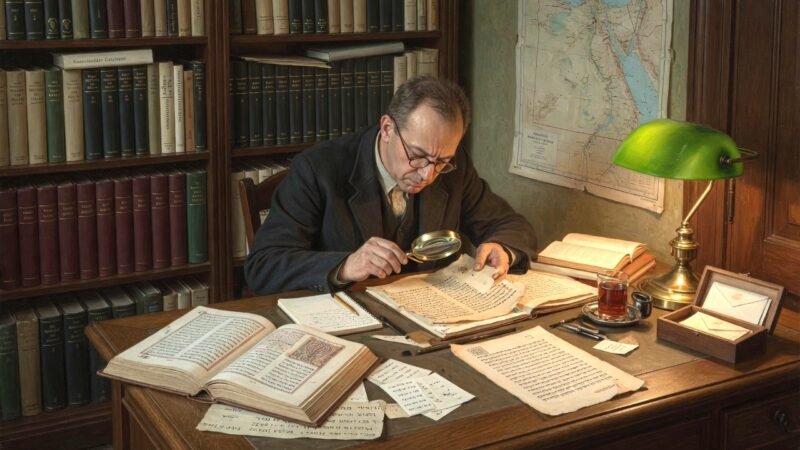 Paul Kahle: Genizah, Vocalisation Systems and the Leningrad Base TextPaul Kahle (1875–1964), scholar of the Cairo Genizah and Hebrew vowel systems, who chose the Leningrad Codex for Biblia Hebraica.
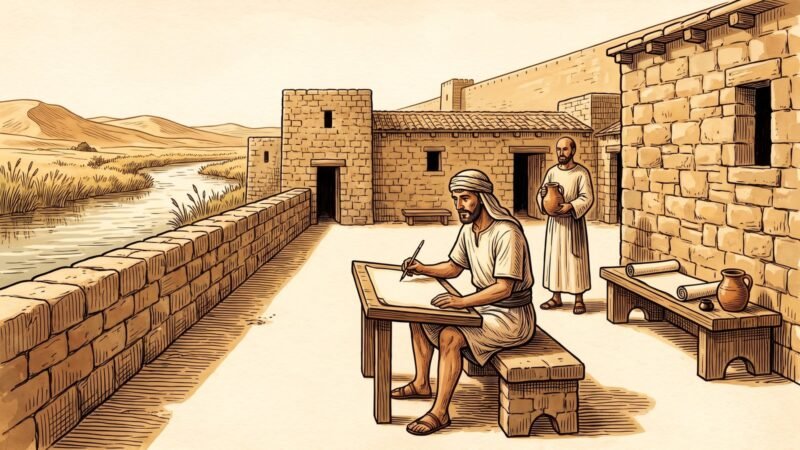 Paul of Tella and the Syro-HexaplaThe Syro-Hexapla is a translation of the Greek Old Testament into Syriac, made in Egypt in the second decade of the seventh century by…
 Rashi (Shlomo Yitzchaki), the Teacher of Israel’s BibleRashi (Shlomo Yitzchaki, 1040–1105), the Troyes teacher whose commentaries made the Hebrew Bible the lifelong study of Ashkenazi Jewry.
 Richard Bentley’s Proposals for a New TestamentIn the autumn of 1720 Richard Bentley, Master of Trinity College, Cambridge, and the most celebrated classical scholar in Europe, issued a short printed…
 Robert Lowth and the Discovery of Biblical Hebrew PoetryRobert Lowth was an English scholar and churchman of the eighteenth century whose lectures on the poetry of the Hebrew Bible, delivered at Oxford…
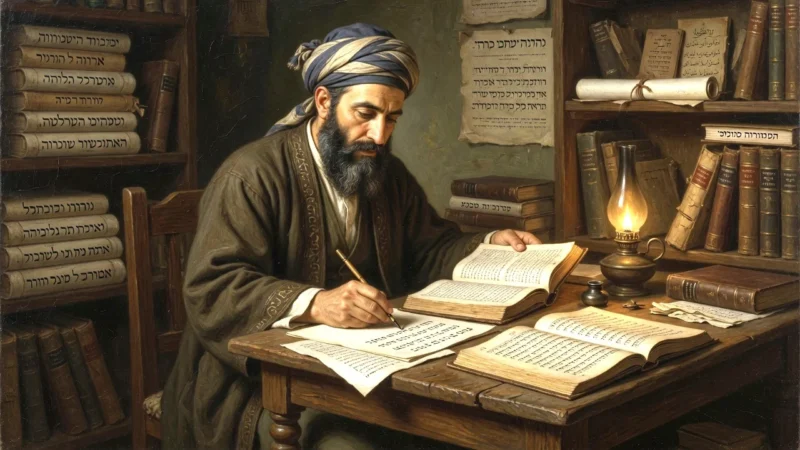 Saadia Gaon and the Study of HebrewA profile of Saadia Gaon, the Geonic sage who created the first Judeo-Arabic Bible translation and laid the foundations of medieval Hebrew philology.
 Saadya Gaon and the Birth of Masoretic ScholarshipIn October 942, in a town called Suf on the left bank of the Tigris, perhaps a few days ride north of Baghdad, a…
 Samuel ben JacobSamuel ben Jacob, the Fustat scribe who wrote, pointed and annotated the Leningrad Codex around 1008–1010, and other codices linked to him.
 Seligmann Baer and the Masoretic TextSeligmann Baer of Biebrich spent his life on the Masorah and the liturgy, producing with Franz Delitzsch the Leipzig editions of the Hebrew Bible,…
 Shelomo Morag and the Living Reading TraditionsShelomo Morag, who recorded the reading traditions of Jewish communities, above all the Yemenite, to study the older Hebrew vowel systems.
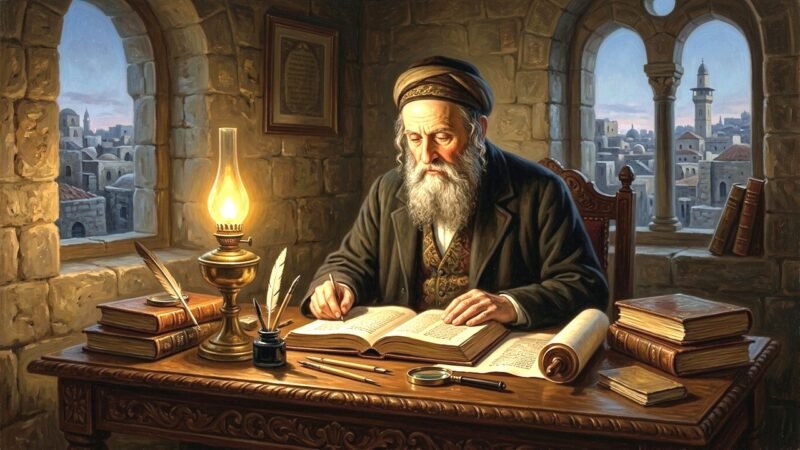 Shemuel Shelomo Boyarski: Scribe of the Aleppo CodexRabbi Shemuel Shelomo Boyarski, Lithuanian scribe in Jerusalem, author of Ammudei Shesh and a key witness to the Aleppo Codex.
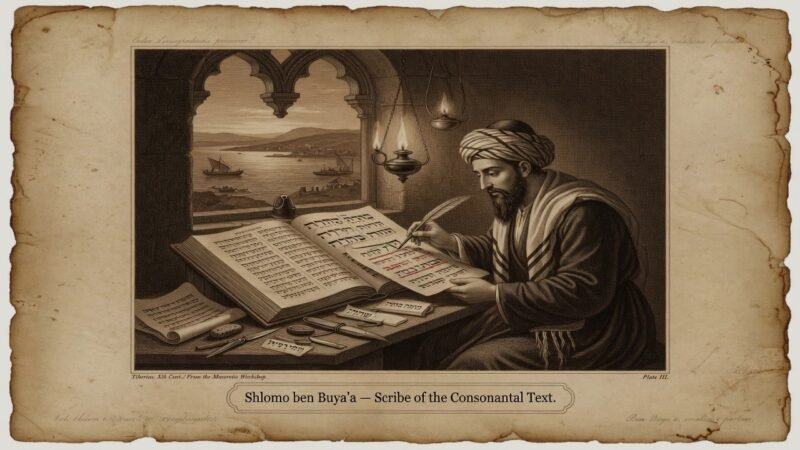 Shlomo ben BuyaʾaShlomo ben Buyaʾa, scribe of the Aleppo Codex, who wrote the consonants that Aaron ben Asher pointed and annotated in Tiberias around 920–930.
 Simhah Pinsker, Karaite Texts and Hebrew ScholarshipSimhah Pinsker (1801–1864), Odessa scholar of Karaite literature and palaeography and author of Likkute Kadmoniyot.
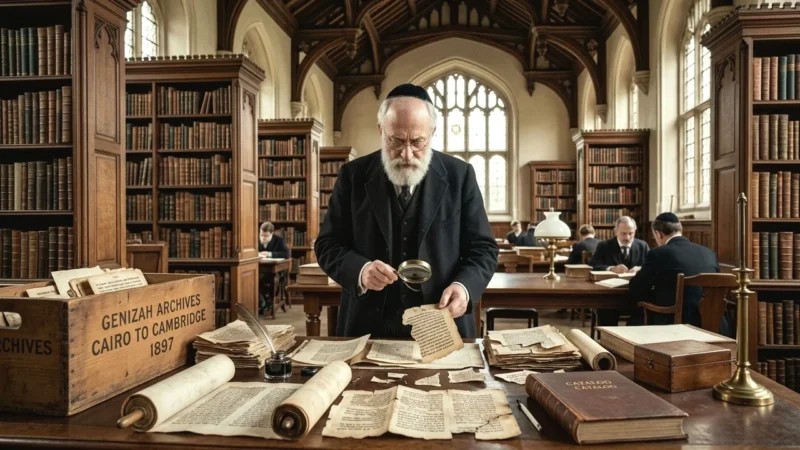 Solomon Schechter: Genizah, Cambridge and JTSSolomon Schechter (1847–1915), rabbi and scholar, explorer of the Cairo Genizah, Cambridge lecturer and president of the Jewish Theological Seminary.
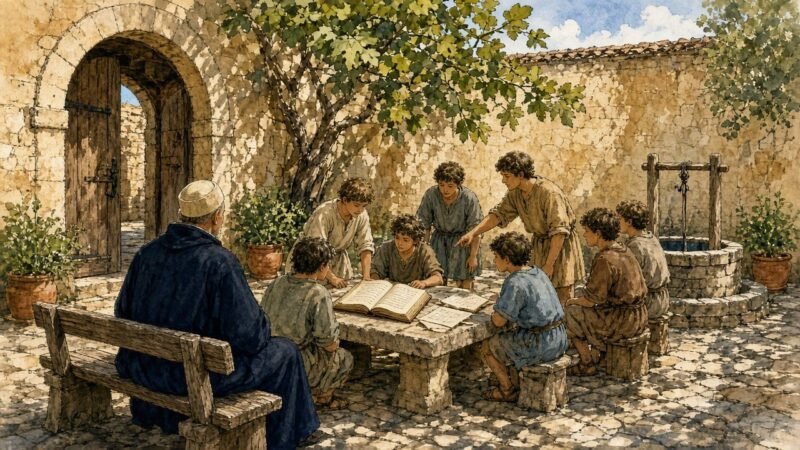 The Accurate Books of Toledo and SaragossaIn his seventies David Kimhi set out from Narbonne to defend Maimonides and fell ill at Avila. Earlier journeys had taken him to the…
 The Baer and Delitzsch Bibles of LeipzigSeligmann Baer’s Leipzig editions of the Hebrew Bible, prepared with Franz Delitzsch, and Christian Ginsburg’s criticisms of them.
 The Ben Naphtali FamilyThe Ben Naphtali Masoretic family and tradition, the Tiberian rival to Ben Asher, with hundreds of fine differences in vowels and accents.
 The Massorah Compiled from ManuscriptsChristian D. Ginsburg’s printed Massorah, compiled from manuscripts, and his Introduction of 1897 on the Masoretic text and early printed Bibles.
 The Oxford Accent Treatises of 1881 and 1887William Wickes’s two Oxford treatises on the Hebrew accents, on the three poetical books (1881) and the twenty-one prose books (1887).
 The Pearwood Blocks of Canton: Morrison’s Chinese BibleWorking in secret cellars in Canton, Robert Morrison and local artisans carved thousands of pearwood blocks to print the first complete Chinese Bible.
 The Pillow of Ava: Adoniram Judson and the Burmese BibleImprisoned in death shackles at Ava during the Anglo-Burmese War, Judson hid his Burmese translation manuscript sewn inside an unpadded cotton pillow.
 The Scholar Who Described the Pointed BibleLater work on the vowels, accents and Masoretic notes of the early Hebrew Bible manuscripts still begins from the books Israel Yeivin wrote in…
 The Scribe of Chufut-Kale: Abraham Firkovich and Hebrew CodicesKaraite antiquarian Abraham Firkovich gathered thousands of ancient Hebrew manuscripts across the Crimea and Near East, including the Leningrad Codex.
 The Scribe Who Signed the Leningrad CodexThe scribe of the Leningrad Codex left his name in the book itself, and his work can now be followed in other manuscripts as…
 The Tradition of the Tradition, Venice 1538In 1538 a small book in Hebrew was printed at Venice under the title Masoret ha-Masoret, “The Tradition of the Tradition”. Its author was…
 The Wastebasket at Sinai: Tischendorf and Codex SinaiticusAcross three desert expeditions between 1844 and 1859, Tischendorf recovered the fourth-century Codex Sinaiticus from Saint Catherine's Monastery.
 Ulfilas, the Gothic Bible and the Codex ArgenteusIn the exhibition hall of Carolina Rediviva, the main building of Uppsala University Library, a double opening of a sixth-century book lies under glass…
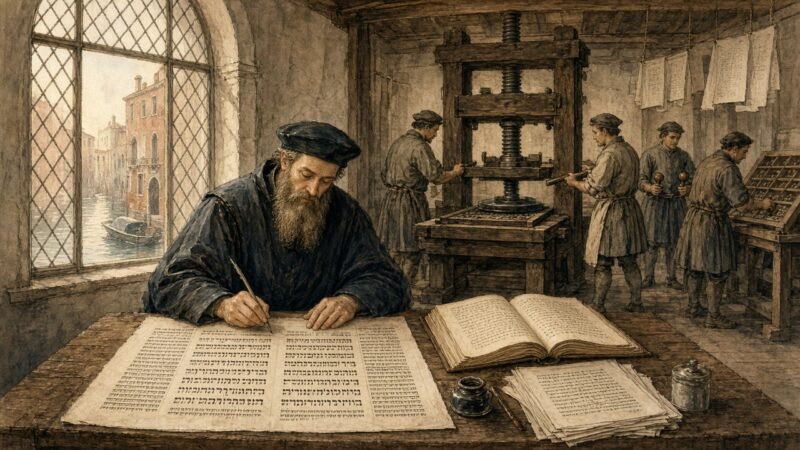 Venice, 1525: The Rabbinic Bible That Fixed the MasorahBetween 1524 and 1525 a Venetian printing house finished a Hebrew Bible in four folio volumes that would shape most Hebrew Bibles printed over…
 Westcott and Hort’s Greek New Testament of 1881Westcott and Hort's Greek New Testament of 1881, the Alexandrian text, Vaticanus and Sinaiticus, the Revised Version and the critical tradition.
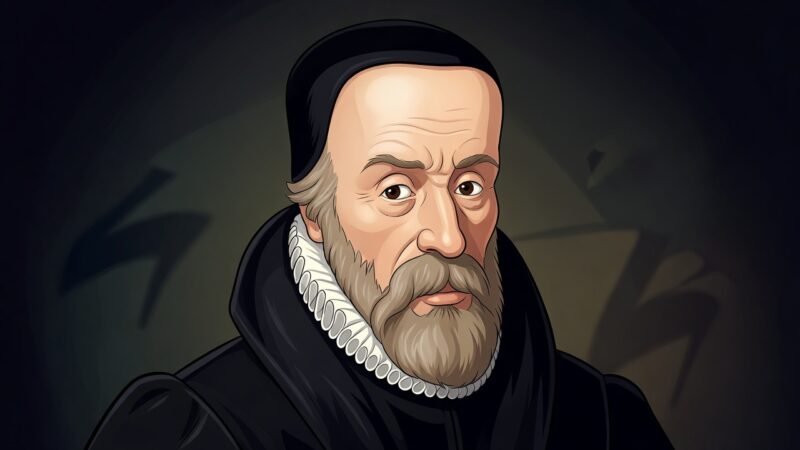 Where did Tyndale learn Hebrew?According to David Daniell and the broader consensus of Tyndale biographers, William Tyndale almost certainly learned Hebrew on the Continent (in Germany), after leaving…
 Whispers in the ShiresEngland in the late 14th century was a powder keg. Decimated by the Black Death and financially drained by the Hundred Years' War, the…
 William Gunion Rutherford and the Translation of RomansW. G. Rutherford, headmaster of Westminster School, his translation of Romans of 1900, its method and its use of the divine name in quotations.
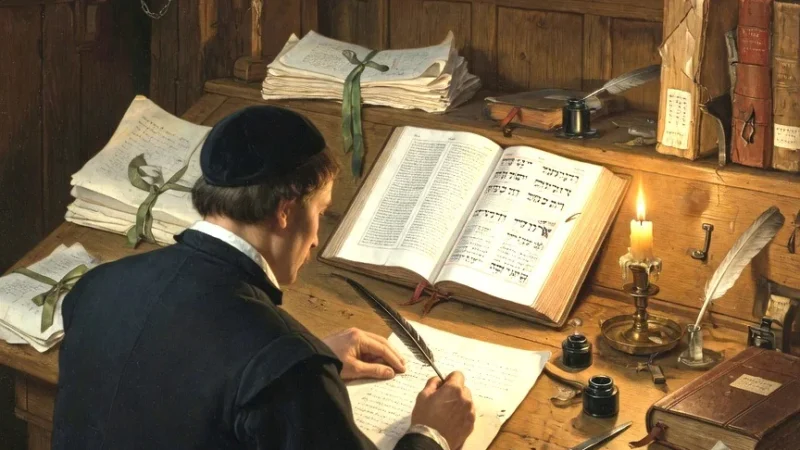 William Tyndale: Greek, Hebrew, and the English BibleWilliam Tyndale’s Greek and Hebrew, where he learned them, and how David Daniell’s biography shows the translator who gave England its Bible.
 William Wand and The New Testament LettersJ. W. C. Wand, Archbishop of Brisbane and Bishop of London, his paraphrase of the letters first published in 1944, and its use of the divine name.
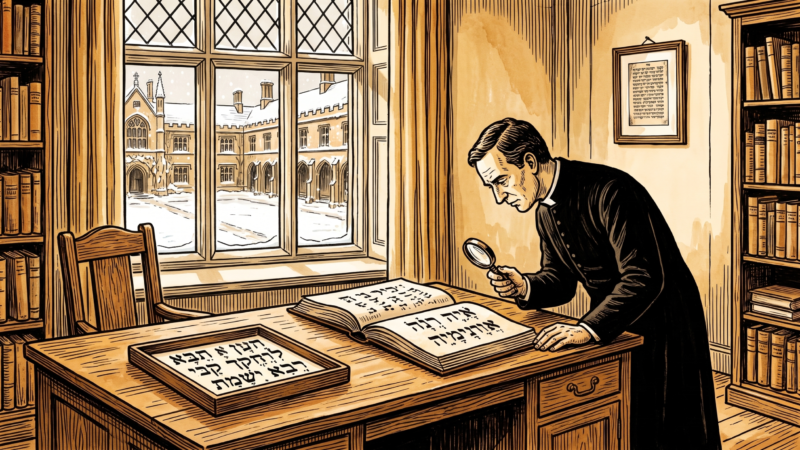 William Wickes and the Hebrew AccentsIn the spring of 1881, at the Clarendon Press in Oxford, a small octavo volume appeared under the title A Treatise on the Accentuation…
 Yosef Ofer and the Methods of the MasoraYosef Ofer of Bar-Ilan University, whose book The Masora on Scripture and Its Methods explains how Masoretic notes work.
Schools of scholarship by region11
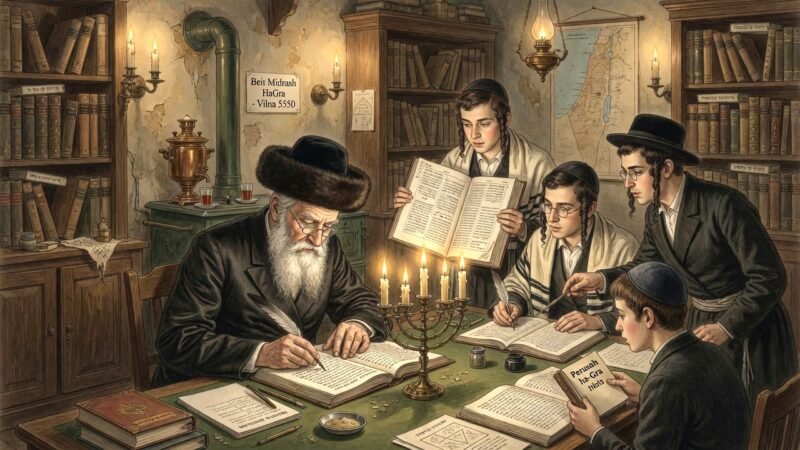 Eastern European Hebraica & Scriptural Transmission in the PaleA survey of Jewish and Christian biblical scholarship in Eastern Europe, from yeshivot and Hasidic learning to modern critical approaches.
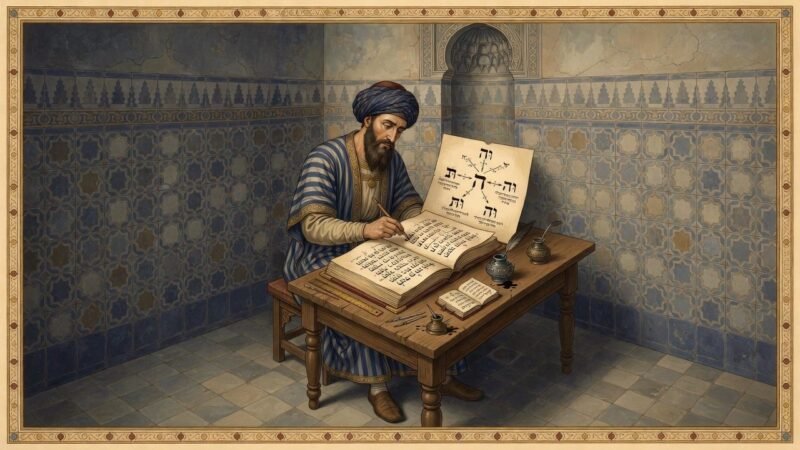 Grammarians, Exegetes and Illuminators of SefaradA survey of Jewish biblical scholarship in medieval Spain, from the academies of Córdoba to the translators and grammarians of Christian and Arabic Iberia.
 Hebrew Printing & Biblical Humanism in Renaissance ItalyA survey of Jewish biblical scholarship in medieval and Renaissance Italy, from manuscript production to the dawn of Hebrew printing.
 Hebrew Studies and Exegesis in the MENA RegionA survey of Hebrew biblical scholarship in the Middle East and North Africa, from Yemenite and Iraqi traditions to modern Mizrahi scholarship.
- Hebrew Studies and Exegesis in the Pale of SettlementA study of Hebrew biblical scholarship in the Russian Pale of Settlement, from the Vilna Gaon and Lithuanian yeshivot to the Haskalah and modern Hebrew revival.
 Jewish Biblical Scholarship Across the WorldAn overview of Jewish biblical scholarship across the diaspora, tracing regional schools from Babylonia and North Africa to Europe and the Americas.
 Maghrebi Sages and Scriptural Study in Kairouan and FezA survey of Jewish biblical scholarship in North Africa, from Kairouan and Fustat to the modern communities of Morocco, Algeria, and Tunisia.
 Near Eastern Scribes & the Birth of the MasorahA study of Jewish biblical scholarship in the Middle East, from the Geonic academies of Babylonia to the manuscript centers of Cairo and Aleppo.
 Northern French Tosafists & Rashi’s School of ExegesisA study of medieval French Jewish biblical scholarship, from Rashi and the peshat revolution to the schools of Troyes and northern France.
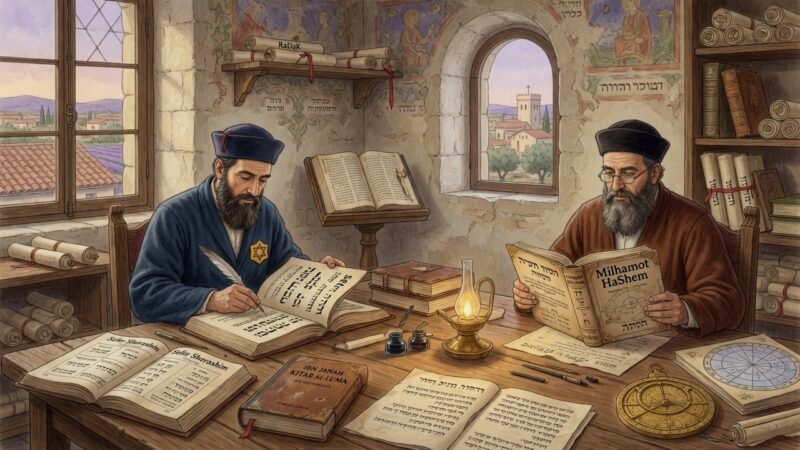 Provençal Translators, the Tibbonid Dynasty & Sacred PhilosophyA study of Provençal Jewish biblical scholarship, where Radak, Gersonides, and others synthesized grammar, philosophy, and exegesis.
- Rabbinic Commentators & Scribes of Poland and AshkenazA survey of Jewish biblical scholarship in Poland and Ashkenaz, from medieval glossators to the vibrant yeshiva culture of early modern Eastern Europe.