Robert Lowth and the Discovery of Biblical Hebrew Poetry
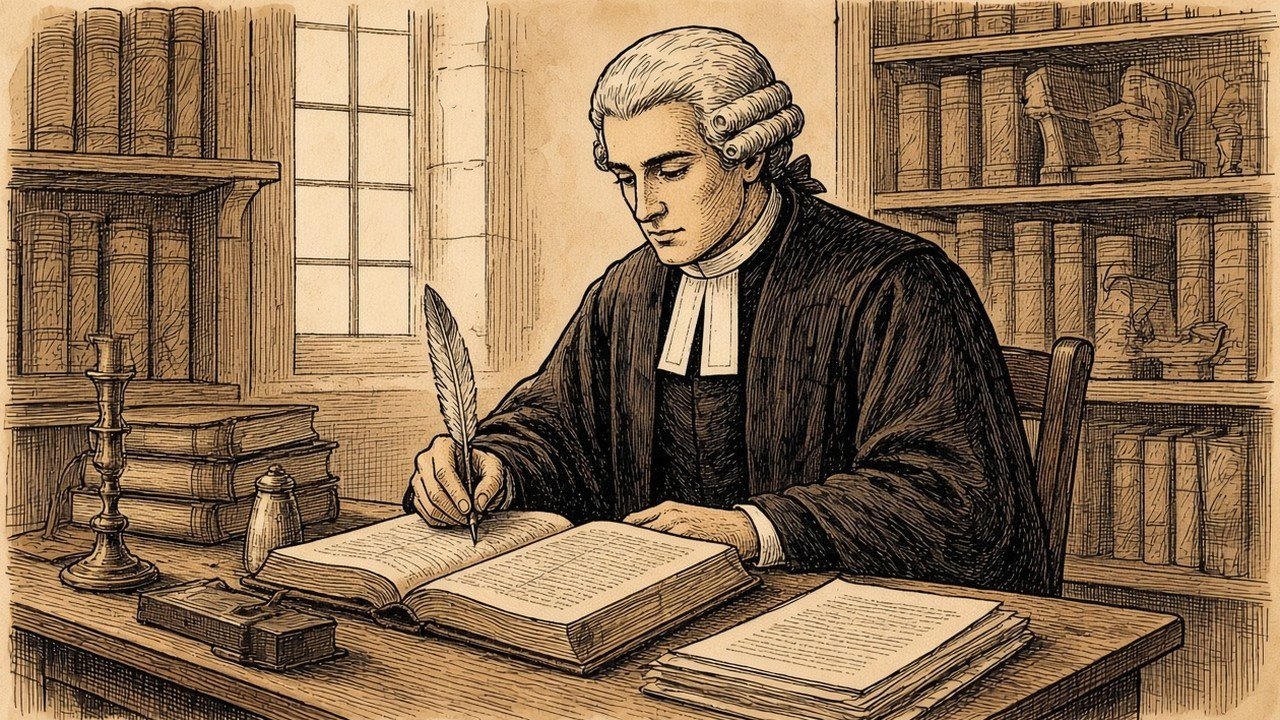
Robert Lowth was an English scholar and churchman of the eighteenth century whose lectures on the poetry of the Hebrew Bible, delivered at Oxford in the 1740s and published in Latin in 1753, changed the way in which readers in Europe understood the literary form of the Old Testament. Before Lowth, it was widely recognised that parts of the Bible were poetry, but there was no agreed account of what made them so, and many scholars sought in vain for a system of metre like that of Greek and Latin verse. Lowth argued that the essential feature of Hebrew poetry was not metre but the correspondence of lines, in which one line answers another by repeating, contrasting or extending its thought. He called this feature parallelism, and his description of it has remained the starting point for the study of biblical poetry ever since. His work also helped to establish the idea of the Bible as a literary work to be appreciated for its beauty and power, an idea that had a profound influence on the poets and critics of the later eighteenth century and on the Romantic movement. Lowth was also a prominent bishop of the Church of England and the author of a widely used English grammar, but it is as the interpreter of Hebrew poetry that he is chiefly remembered by students of the Bible, and his lectures remain one of the principal landmarks in the history of the study of the biblical text.123
At a glance
- Born: 27 November 1710, at Winchester.
- Education: Winchester College and New College, Oxford.
- Professor of Poetry: Oxford, 1741–1751, where he delivered his lectures on Hebrew poetry in Latin.
- Principal work: De sacra poesi Hebraeorum, published in 1753; English translation 1787.
- Key idea: Parallelism of members, the correspondence of lines in sense and structure, as the governing principle of Hebrew verse.
- Other works: A Short Introduction to English Grammar (1762) and a new translation of Isaiah (1778).
- Church offices: Bishop of St David’s and of Oxford (1766), and of London (1777).
- Died: 3 November 1787, at Fulham Palace.
Life and Career
Winchester and Oxford
Lowth was born at Winchester on 27 November 1710. His father, William Lowth, was a clergyman and biblical commentator, a prebendary of Winchester Cathedral and the author of commentaries on the prophets, and the son grew up in a household in which the study of scripture was a daily occupation. He was educated at Winchester College, the school founded in the fourteenth century by William of Wykeham, and in 1729 he went to New College, Oxford, the sister foundation of the school, where he studied classics and theology. At Winchester he had already shown a gift for Latin and English verse, and some of his early poems were published. He took his degrees at Oxford in the 1730s and was ordained in the Church of England.45
The education that Lowth received at Winchester and Oxford was founded on the classical languages and literatures. Boys at the school learned to read, translate and compose in Latin and Greek, and at the university the study of the ancient poets, orators and philosophers remained central. Hebrew was also taught at Oxford, where a Regius Professorship of Hebrew had existed since the sixteenth century, and Lowth acquired a good command of the language. His knowledge of the classical poets and critics, combined with his reading of the Hebrew Bible, gave him the perspective from which he would later compare the poetry of the Hebrews with that of the Greeks and Romans.67
The Professorship of Poetry
In 1741 Lowth was elected Professor of Poetry at Oxford. The professorship had been founded in 1708 under the will of Henry Birkhead, and its holder was required to deliver lectures on poetry in Latin. The post was held for a term of years, and it was customary for the professor to lecture on the poetry of the classical authors. Lowth chose instead to take as his subject the sacred poetry of the Hebrews. He delivered his lectures over the following decade, and he held the professorship until 1751. The choice of subject was unusual but not unprecedented, for the poetry of the Bible had long been discussed by Christian scholars, and Lowth’s lectures fitted into a tradition of learned commentary. What distinguished them was the combination of a critical approach drawn from classical rhetoric with a close reading of the Hebrew text.8910
While he held the professorship, Lowth also travelled and pursued his career in the Church. He visited the Continent, and in 1748 he accompanied a diplomatic mission. He received ecclesiastical preferment through the patronage of Benjamin Hoadly, Bishop of Winchester, and later through his connection with the family of the Duke of Devonshire, whose sons he had accompanied on their travels. In 1753, the year in which his lectures were published, he became Archdeacon of Winchester, and shortly afterwards the university conferred on him the degree of Doctor of Divinity.11
Bishop and Grammarian
Lowth’s later career was spent largely in the service of the Church. In 1766 he was appointed Bishop of St David’s and, in the same year, translated to the see of Oxford. In 1777 he became Bishop of London, one of the most senior positions in the Church of England, and he held the see until his death. In 1783 he was offered the archbishopric of Canterbury but declined it, on grounds of health and family circumstances. His family life was marked by grief: several of his children died young, and he wrote a Latin epitaph for his daughter Maria that was widely admired. He died at Fulham Palace, the residence of the bishops of London, on 3 November 1787.1213
Alongside his work on Hebrew poetry, Lowth was the author of a book that had a lasting influence on the teaching of English. His Short Introduction to English Grammar, published in 1762, set out the rules of English grammar in a clear and accessible form and was reprinted many times in the following decades. It was one of the most widely used grammars of the period and has been seen as a founding text of the prescriptive tradition in English grammar, which sought to establish rules of correct usage. Its success made Lowth’s name familiar to generations of schoolchildren who knew nothing of his work on the Bible. The two works, so different in subject, share an interest in the structure of language and in the principles that govern its effective use.1415
The Problem of Hebrew Poetry
Poetry in the Bible
That some parts of the Hebrew Bible were poetry had been recognised since antiquity. The Psalms, the Book of Job, Proverbs, the Song of Songs and Lamentations were all regarded as poetic, and passages such as the Song of the Sea in Exodus and the Song of Deborah in Judges were set apart from the surrounding prose. In the Hebrew manuscripts of the Middle Ages, some of these songs were written in a special layout, with the text arranged in short units separated by spaces, and the books of Psalms, Proverbs and Job were marked with a distinct system of accents. These features showed that the Masoretes and their predecessors recognised a difference between poetry and prose, though they did not state a theory of what that difference consisted in.161718
Ancient writers who wrote in Greek and Latin were inclined to describe the poetry of the Bible in the terms of their own literature. The Jewish historian Josephus, writing in the first century, said that the Song of Moses was composed in hexameters and that David composed songs in trimeters and pentameters. Jerome, the translator of the Vulgate, compared the poetry of the Psalms and of Job to the metres of Pindar, Horace and the Greek lyric poets, and he described some books as written in hexameter and pentameter verse. These statements reflected an assumption that true poetry must have metre, and that the Hebrew poems must therefore have possessed a metre analogous to those of classical verse, even if it could no longer be clearly perceived.1920
The Search for Metre
In the Renaissance and the seventeenth century, scholars made repeated attempts to discover the metre of Hebrew poetry. Some argued that the verse was quantitative, like that of Greek and Latin, based on the length of syllables; others sought patterns of stress or counted syllables. The Dutch scholar Franciscus Gomarus, in the early seventeenth century, attempted to identify classical metres in the Hebrew text, and others proposed systems based on rhyme or on the number of words in each line. None of these proposals commanded general assent. The difficulty was partly that the pronunciation of ancient Hebrew was uncertain, and that the vowel points of the Masoretic text, which recorded a later tradition of reading, might not reflect the language as it was spoken when the poems were composed. Every proposed system required emendations or exceptions, and the multiplicity of systems suggested that none was correct.2122
In the same period, Jewish scholars had approached the question differently. Medieval commentators such as Abraham ibn Ezra and David Kimhi had observed that biblical verses often repeat the same idea in different words, and Kimhi described this as a characteristic of the language of scripture. In the sixteenth century the Italian Jewish scholar Azariah de’ Rossi, in his work Me’or Einayim, discussed the question of biblical poetry and argued that its rhythm lay not in the counting of syllables but in the arrangement of ideas and the correspondence of parts. Lowth knew of de’ Rossi’s work and cited it in his lectures. The observations of these scholars anticipated aspects of Lowth’s theory, though none of them developed a systematic account of the forms of correspondence or made it the central principle of Hebrew verse.2324
The Lectures on Sacred Poetry
Plan of the Work
Lowth’s lectures, published in 1753 as De sacra poesi Hebraeorum praelectiones academicae, comprise thirty-four lectures arranged in three parts. The first part treats the nature of Hebrew verse, the second the poetic style of the Hebrews, including their use of figurative language, allegory and the sublime, and the third the different kinds of Hebrew poetry, among them prophetic poetry, elegy, didactic poetry, lyric poetry, the idyll and dramatic poetry. Throughout the lectures Lowth applied to the Hebrew Bible the categories of classical rhetoric and criticism, and he compared the Hebrew poets with Homer, Pindar, Virgil and Horace. At the same time, he insisted that the poetry of the Hebrews must be understood on its own terms, as the product of a particular people, language and culture, and he warned against judging it by standards derived from another literature.252627
The method that Lowth adopted was, in part, historical. He urged his hearers to read the Hebrew poets as the ancient Hebrews themselves would have read them, and to imagine themselves in the setting of the ancient Near East, among the customs, landscapes and institutions that the poems presuppose. The images of the Hebrew poets, he argued, were drawn from the natural world of Palestine, from the pastoral and agricultural life of its people, from their sacred rites and from their history, and they could only be fully appreciated when that world was understood. This emphasis on the historical setting of the poetry was one of the most influential aspects of the lectures, and it anticipated the historical criticism of the Bible that developed in the following century.282930
Metre Abandoned
On the question of metre, Lowth took a cautious position. He did not deny that Hebrew poetry may once have possessed a metre, and he believed that the poems had originally been sung to music and composed with attention to rhythm. But he argued that the pronunciation of ancient Hebrew had been lost, that the vowel points of the Masoretic text were a later addition, and that it was therefore impossible to recover the metre with any confidence. The attempts of earlier scholars to discover a system of quantitative or accentual metre were, in his view, misguided. Instead of seeking a metre that could not be found, he proposed to examine a feature of the poetry that was clearly visible in the text and that survived translation: the relationship between its lines.3132
The Nineteenth Lecture
Lowth’s account of parallelism is set out most fully in the nineteenth lecture, which deals with the prophetic poetry, and in the preliminary dissertation to his later translation of Isaiah. He defined the correspondence of one verse or line with another as parallelism, and he described it in the following terms: when a proposition is delivered and a second is subjoined to it, or drawn under it, equivalent or contrasted with it in sense, or similar to it in the form of grammatical construction, the lines so corresponding are called parallel lines, and the words or phrases answering one to another in the corresponding lines are called parallel terms. The Latin term that became associated with his theory, parallelismus membrorum, the parallelism of members, expressed the idea that a verse of Hebrew poetry consists of two or more members which correspond to each other.333435
Lowth distinguished three kinds of parallelism. The first, which he called synonymous parallelism, is that in which the same sense is expressed in different but equivalent terms, as in the line from the Psalms in which the heavens declare the glory of God and the firmament shows his handiwork. The second, antithetic parallelism, is that in which a thing is illustrated by its contrary, as frequently in the Book of Proverbs, where the wise son makes a glad father but the foolish son is the heaviness of his mother. The third, which he called synthetic or constructive parallelism, is that in which the lines correspond not in sense but in the form of their construction, the second line adding to or completing the first without simply repeating or contrasting it. The third category was the least precise, and it became the subject of much later discussion, but the threefold scheme provided a clear framework within which the forms of Hebrew poetry could be analysed.36373839
The great advantage of Lowth’s theory was that it could be applied to the text as it stood, without emendation and without reliance on a reconstructed pronunciation. It also explained why the poetry of the Bible retained much of its power in translation, for the correspondence of ideas, unlike the patterns of sound, could be carried over into another language. Readers of the English Bible could recognise parallelism in the King James Version as readily as readers of the Hebrew, and Lowth’s theory thus made the poetic form of the Old Testament accessible to a much wider audience. It also had implications for the interpretation of the text, for the recognition that two lines express the same idea in different words could clarify the meaning of an obscure word by reference to its parallel.404142
The Prophets as Poets
One of the most far-reaching consequences of Lowth’s theory was his argument that the prophetic books of the Bible were largely written in verse. Earlier readers had regarded the prophets as writing in prose, though in an elevated and figurative style. Lowth argued that the same parallelism found in the Psalms and in Job was present throughout the prophets, and especially in Isaiah, and that the prophets should therefore be regarded as poets. He held that prophecy and poetry had been closely connected among the Hebrews, that the prophets had often been trained in music and song, and that the elevated language of prophecy was naturally poetic. This view transformed the reading of the prophetic books, which began to be printed in later translations with their verse structure indicated by the arrangement of the lines.434445
The Sublime
Lowth’s lectures also contributed to the eighteenth-century discussion of the sublime. The treatise On the Sublime attributed to Longinus, which had been widely read since its translation into French by Boileau in 1674, had cited the opening of Genesis, with its words “Let there be light,” as an example of sublime expression. Lowth developed this suggestion at length, arguing that the Hebrew poets achieved a sublimity unequalled in classical literature, through the grandeur of their conceptions, the boldness of their imagery and the force of their language. He devoted several lectures to the sublime of sentiment and the sublime of expression in the Hebrew poets, and he presented the Book of Job and the prophecies of Isaiah as supreme examples. His discussion helped to shape the taste of a generation of readers who looked to the Bible for an experience of grandeur and passion that they found lacking in the polished poetry of their own age.464748
The Kinds of Hebrew Poetry
In the third part of the lectures Lowth surveyed the different kinds of Hebrew poetry, adapting the genres of classical criticism to the biblical material. He treated the prophetic poetry as a distinct kind, distinguished by its subject and by its peculiar mixture of vision, exhortation and lament. He discussed the elegies of the Bible, including the Lamentations of Jeremiah and David’s lament for Saul and Jonathan, and the didactic poetry of Proverbs and Ecclesiastes. He examined the lyric poetry of the Psalms, comparing them with the odes of Pindar and Horace, and he discussed the Song of Songs as a kind of pastoral or nuptial poem, which he regarded as having a dramatic character, though he did not consider it a drama in the full classical sense.4950
Lowth’s treatment of the Book of Job was especially influential and controversial. He regarded Job as one of the most ancient and sublime of the Hebrew poems, and he discussed whether it should be classed as a drama. He concluded that, although it contained dialogue and had some features of dramatic composition, it lacked the action and plot of a true drama in the Greek sense, and he preferred to describe it as a poem of a peculiar kind. He also considered the date and authorship of the book, and he argued against the view that it was a late composition of the period of the Babylonian exile. His position on these questions brought him into conflict with William Warburton, Bishop of Gloucester, who had argued in his Divine Legation of Moses that Job was an allegory of the exile. The ensuing controversy, conducted in pamphlets in the 1760s, was conducted with considerable acrimony on both sides.515253
Reception and Influence
The Göttingen Edition
The lectures were received with interest in England, but their most important early reception was in Germany. In 1758 the Göttingen orientalist Johann David Michaelis published an edition of the lectures with extensive notes of his own, completed in a second volume in 1761. Michaelis was one of the leading biblical scholars of the age, and his notes expanded, corrected and sometimes challenged Lowth’s arguments, drawing on his knowledge of Arabic and other Semitic languages and of the geography and customs of the Near East. The Göttingen edition circulated widely on the Continent and was reprinted, and it established Lowth’s reputation among the scholars of the German universities, where the critical study of the Bible was developing most rapidly. Lowth himself incorporated some of Michaelis’s notes in later editions of the lectures.5455
Moses Mendelssohn, the Jewish philosopher of Berlin, reviewed Lowth’s lectures in 1757 in a German literary journal, and he praised the work for its insight into the beauty of the Hebrew poets. Mendelssohn’s interest in Lowth reflected his own concern with aesthetics and with the place of the Hebrew Bible in the culture of the Enlightenment. When, some two decades later, he and his collaborators prepared the German translation of the Pentateuch with a Hebrew commentary known as the Biur, they drew on contemporary aesthetic ideas, including those associated with Lowth, in discussing the poetic passages of the Torah. Mendelssohn’s translation of the Psalms, published in 1783, also reflected his engagement with the question of Hebrew poetry. Lowth’s work thus entered Jewish as well as Christian scholarship in the eighteenth century.5657
The English Translation
An English translation of the lectures by George Gregory, a clergyman and writer, was published in 1787, the year of Lowth’s death, under the title Lectures on the Sacred Poetry of the Hebrews. Gregory’s translation, which included many of Michaelis’s notes and some additions of his own, made the work available to readers without Latin and greatly extended its influence in the English-speaking world. It was reprinted several times in Britain and America during the nineteenth century, and it was through this translation that most English readers came to know Lowth’s theory. The rendering of Lowth’s Latin terms into English, including the phrases “synonymous,” “antithetic” and “synthetic” parallelism, established the vocabulary that would be used in English discussions of biblical poetry for generations.5859
The Translation of Isaiah
In 1778 Lowth published his own translation of the Book of Isaiah, with a preliminary dissertation and extensive notes. The translation applied his theory of parallelism to the whole of the book, printing the poetic passages in lines that displayed their parallel structure. In the preliminary dissertation he restated and refined his account of parallelism, and in the notes he discussed the text and its interpretation in detail. The work was widely admired and was reprinted many times, and it served as a model for later translations that sought to represent the poetic form of the prophets in English.6061
Lowth’s Isaiah was also a work of textual criticism. He was persuaded that the Masoretic text of the Hebrew Bible contained many errors, and he believed that these could be corrected by comparison with the ancient versions and with the readings of Hebrew manuscripts. He was a supporter of Benjamin Kennicott, the Oxford scholar who was then engaged in collating the readings of hundreds of Hebrew manuscripts of the Bible, and he made use of Kennicott’s results in his notes. He also used the principle of parallelism as a tool of criticism, arguing that a line which did not correspond to its parallel might be corrupt and might be restored by reference to the parallel line. Many of his proposed emendations were later rejected, as the reliability of the Masoretic text came to be more highly valued, but his work illustrates the close connection between literary and textual study in the scholarship of the eighteenth century.6263
Herder and the Romantic Bible
Lowth’s emphasis on the historical setting and the poetic power of the Hebrew Bible had a profound influence on Johann Gottfried Herder, the German philosopher and critic, whose work Vom Geist der Ebräischen Poesie, The Spirit of Hebrew Poetry, was published in two volumes in 1782 and 1783. Herder took up Lowth’s insight that the poetry of the Hebrews must be understood as the expression of a particular people in a particular time and place, and he developed it into a broader vision of the Bible as the national poetry of ancient Israel, comparable to the folk poetry of other peoples. He wrote in the form of dialogues and essays, with a warmth and enthusiasm that went beyond Lowth’s more measured style, and his work helped to establish the idea of the Bible as a primary source of poetic inspiration.6465
In England, Lowth’s lectures contributed to a changing taste in poetry. The interest in the sublime, in primitive and ancient poetry, and in the poetry of feeling and imagination, which characterised the later eighteenth century, found in the Hebrew Bible as described by Lowth a powerful model. Poets such as Christopher Smart, whose Jubilate Agno was written in lines modelled on the parallelism of the Psalms, and William Blake, whose prophetic books owe much to the style of the Hebrew prophets, drew on this tradition. Murray Roston, in his study Prophet and Poet of 1965, traced the influence of the Hebrew Bible and of Lowth’s interpretation of it on the growth of Romanticism in England, and he argued that the Bible, as understood through Lowth, provided an alternative to the classical models of Augustan poetry.6667
Later Development of the Theory
Jebb and the Nineteenth Century
In the nineteenth century Lowth’s theory was extended and refined by numerous scholars. John Jebb, an Irish clergyman who later became Bishop of Limerick, published in 1820 a work entitled Sacred Literature, in which he applied the principle of parallelism to the New Testament and argued that many passages in the Gospels and the Epistles were composed according to the patterns of Hebrew verse. Jebb also proposed a further category of parallelism, which he called introverted parallelism, in which the first line corresponds to the last, the second to the next to last, and so on, a form later known as chiasm. Other scholars examined the internal structure of the lines, the patterns of stress within them, and the grouping of lines into larger units such as strophes. Throughout this period Lowth’s threefold division remained the standard framework, even as its limitations became more apparent.6869
The question of metre, which Lowth had set aside, was revived in the later nineteenth century by German scholars who proposed that Hebrew verse was based on a fixed number of stressed syllables in each line. The system associated with Julius Ley and Eduard Sievers, which counted stresses rather than syllables, was widely adopted, and it led to the identification of particular metrical patterns, such as the lament metre of three stresses followed by two, which was thought to characterise the Book of Lamentations and other dirges. Metrical theories of this kind were often used to justify extensive emendation of the text, and they were later criticised for imposing a regularity that the text does not support. The debate between metrical and non-metrical accounts of Hebrew poetry continues, and Lowth’s caution on the question has been regarded by many later scholars as justified.7071
Modern Criticism
In the twentieth century, the discovery of the Ugaritic texts at Ras Shamra in Syria, beginning in 1929, provided a body of poetry in a Semitic language closely related to Hebrew, composed in the second millennium BCE. The Ugaritic poems were found to use parallelism in much the same way as the Hebrew Bible, and they also shared many pairs of parallel words with biblical poetry. These discoveries confirmed that parallelism was an ancient and widespread feature of the poetry of the Levant, and not merely a peculiarity of the biblical writers. They also stimulated new studies of the formulaic character of Semitic verse and of the use of fixed word pairs by poets working in an oral tradition.7273
From the 1980s, a series of studies offered a fundamental reassessment of Lowth’s theory. James Kugel, in The Idea of Biblical Poetry, published in 1981, argued that the distinction between poetry and prose in the Hebrew Bible was less clear than Lowth had supposed, and that parallelism was found to varying degrees in texts of many kinds. He also criticised the notion of synonymous parallelism, arguing that the second line of a parallel pair rarely simply repeats the first, but typically extends, intensifies or specifies it, in a relationship he summarised as “A, and what’s more, B.” Kugel traced the history of the idea of biblical poetry from antiquity to the eighteenth century, and he showed that Lowth’s theory, far from being a simple discovery, was the product of a particular intellectual tradition.74
Robert Alter, in The Art of Biblical Poetry of 1985, developed a similar view, emphasising the dynamic relationship between parallel lines and the ways in which the second line focuses, heightens or narrates beyond the first. Adele Berlin, in The Dynamics of Biblical Parallelism, published in the same year, applied the methods of modern linguistics to the analysis of parallelism, examining its grammatical, lexical, semantic and phonological aspects. Michael O’Connor, in Hebrew Verse Structure of 1980, proposed a description of Hebrew verse based on the syntactic constraints that govern the line. These studies moved beyond Lowth’s categories while acknowledging his achievement in identifying the central phenomenon. As Kugel observed, Lowth’s theory was so successful that it shaped the way in which every subsequent reader approached the poetry of the Bible.75767778
Lowth in His Context
The Church of England and Learning
Lowth’s work belongs to a tradition of learned scholarship within the Church of England that combined classical erudition, biblical study and pastoral responsibility. The universities of Oxford and Cambridge were in this period institutions of the Church, and most of their fellows were clergy. The study of Hebrew and of the ancient versions of the Bible was pursued as part of the defence of the Christian faith against its critics, and the Deist controversies of the early eighteenth century had raised questions about the authority and reliability of scripture. Lowth’s lectures, while primarily literary in their aims, also served an apologetic purpose: by demonstrating the excellence of the Hebrew poets, they presented the Bible as a work worthy of the admiration of educated readers, and they implicitly answered those who dismissed it as crude or barbarous.7980
At the same time, Lowth’s approach had implications that went beyond the apologetic. By treating the Bible as poetry and by insisting on the historical setting of its authors, he opened the way to a reading of scripture as a human as well as a divine work, shaped by the language, culture and imagination of its writers. Stephen Prickett, in his study Words and the Word of 1986, examined the ways in which this approach, developed by Lowth and his successors, contributed to the transformation of biblical interpretation and of literary theory in the late eighteenth and nineteenth centuries. The idea of the Bible as literature, which became widespread in the nineteenth century, owed much to the lectures delivered in Oxford in the 1740s.8182
The Text and the Masoretic Tradition
Lowth’s relationship to the Masoretic tradition was complex. He regarded the vowel points and accents of the Hebrew text as the work of later Jewish scholars, and he did not believe that they preserved the original pronunciation of the poems. In this he followed a view that had been widely held among Christian scholars since the sixteenth century, when the Jewish scholar Elijah Levita had argued that the vowel points were not as ancient as the consonantal text. Lowth therefore based his analysis of the poetry on the structure of the lines rather than on the patterns of sound recorded by the points. The Masoretic accents, which divide the verses of the Bible into units and mark a distinct system for the poetic books, have since been studied as evidence of an ancient understanding of the structure of the verse, and later scholars have explored the relationship between the accentual divisions and the parallelism that Lowth described.8384
Language, Grammar and Style
The two sides of Lowth’s work, his study of Hebrew poetry and his English grammar, have sometimes been treated as unrelated, but they reflect a common interest in the principles of language. In the lectures he analysed the structure of Hebrew verse in terms of the correspondence of clauses and the arrangement of words, and in the grammar he set out the rules governing the construction of English sentences. In both he was concerned with clarity, order and propriety of expression, and in both he drew on the tradition of classical rhetoric in which he had been educated. His grammar often cited the English Bible, alongside the works of Shakespeare, Milton, Swift and Pope, sometimes as an example of good usage and sometimes to point out what he regarded as errors. The King James Version, in his view, was a model of English style, though not free of faults, and his admiration for it was part of the broader esteem in which the eighteenth century held its language.8586
The Bible as Literature
The reputation of the King James Version as a literary masterpiece, which became firmly established in the later eighteenth and nineteenth centuries, was connected with the new appreciation of biblical poetry that Lowth’s lectures fostered. Readers who had learned from Lowth to recognise the parallelism of the Psalms and the prophets found it preserved in the English translation, and they came to regard the English Bible as a great work of poetry in its own right. David Norton, in his history of the Bible as literature, traced this change of attitude and showed how Lowth’s lectures, together with the writings of critics such as Hugh Blair, contributed to the elevation of the English Bible from a familiar text of devotion to a canonical work of English literature. Later translations, such as the Revised Version of the late nineteenth century, printed the poetic books in lines, following the principle that Lowth had established.8788
Reading with Lowth
Parallelism in Practice
The practical value of Lowth’s theory can be seen in the way it guides the reading of a single passage. In the opening of Isaiah, the prophet calls upon the heavens to hear and the earth to give ear, and the two lines correspond exactly: the heavens answer to the earth, and hearing answers to giving ear. A reader who recognises this pattern understands that the two lines form one statement, and that the poet’s meaning lies not in either line alone but in their combination. In the following verses the prophet contrasts the ox that knows its owner and the ass that knows its master’s crib with Israel, which does not know and does not consider. Here the parallelism moves from the image to its application, and the force of the passage depends on the turn from the familiar animals to the people who have failed to understand. Lowth’s analysis taught readers to attend to such movements, and to see in the arrangement of lines a principle of meaning as well as of form.8990
The same principle could be used to clarify the sense of difficult words. When a rare or obscure Hebrew term stands in parallel with a familiar one, the parallel often suggests its meaning, and interpreters before and after Lowth have used this method to elucidate the vocabulary of the poetic books. Lowth’s own notes on Isaiah frequently appeal to the parallel line in this way, and the method became a standard tool of Hebrew lexicography. It also has limits, for the second line is not always a simple equivalent of the first, and the modern recognition that parallel lines often heighten or specify rather than repeat has made interpreters more cautious in assuming that parallel terms are synonymous.9192
Lowth as a Poet
Lowth was himself a poet in English and Latin, and his sensitivity to the poetry of the Bible was informed by his own practice. His early English poems, including a piece on the genealogy of Christ as represented in a window at Winchester College, and his Latin verses, were admired by his contemporaries, and some were included in anthologies of the period. His Latin epitaph for his daughter, beginning with the words Cara, vale, was translated into English by several writers and was frequently reprinted. Although his poetic output was small, it shows a writer who understood from experience the craft of verse and the effect of the arrangement of words, and this practical understanding gave his lectures a quality that distinguished them from the work of scholars who approached poetry only as an object of analysis.93
Assessment
Robert Lowth’s lectures on the sacred poetry of the Hebrews are among the most influential works of biblical scholarship ever written. They set aside the long and fruitless search for a classical metre in Hebrew verse and directed attention instead to the correspondence of lines, which Lowth called parallelism and divided into synonymous, antithetic and synthetic forms. His theory could be applied to the text without emendation and survived translation, and it made the poetic form of the Old Testament visible to readers of every language. His argument that the prophets were poets transformed the reading of the prophetic books, and his historical approach to the poetry anticipated the methods of later biblical criticism. Through the Göttingen edition of Michaelis and the English translation of Gregory, his work reached scholars and readers across Europe and America, and it influenced Herder, the poets of the Romantic movement and the development of the idea of the Bible as literature. Modern scholars have revised and refined his categories, emphasising the dynamic relationship between parallel lines and the linguistic structures that underlie them, but they continue to begin from the phenomenon that he identified. Lowth’s name remains inseparable from the study of biblical poetry, and his lectures stand at the beginning of its modern history.94959697
Notes
- Robert Lowth, De sacra poesi Hebraeorum praelectiones academicae Oxonii habitae (Oxford: Clarendon Press, 1753). *
- Robert Lowth, Lectures on the Sacred Poetry of the Hebrews, translated by G. Gregory, 2 vols. (London: J. Johnson, 1787). *
- James L. Kugel, The Idea of Biblical Poetry: Parallelism and Its History (New Haven: Yale University Press, 1981). *
- Brian Hepworth, Robert Lowth (Boston: Twayne, 1978). *
- ““University of Oxford”” *
- Brian Hepworth, Robert Lowth (Boston: Twayne, 1978). *
- ““Hebrew”” *
- Robert Lowth, De sacra poesi Hebraeorum praelectiones academicae Oxonii habitae (Oxford: Clarendon Press, 1753). *
- Brian Hepworth, Robert Lowth (Boston: Twayne, 1978). *
- ““University of Oxford”” *
- Brian Hepworth, Robert Lowth (Boston: Twayne, 1978). *
- Brian Hepworth, Robert Lowth (Boston: Twayne, 1978). *
- ““Bishop of London”” *
- Robert Lowth, A Short Introduction to English Grammar (London: A. Millar and R. and J. Dodsley, 1762). *
- Brian Hepworth, Robert Lowth (Boston: Twayne, 1978). *
- ““Biblical poetry”” *
- ““Book of Job”” *
- See also “The Poetic Accents” on this site. *
- James L. Kugel, The Idea of Biblical Poetry: Parallelism and Its History (New Haven: Yale University Press, 1981). *
- ““Biblical poetry”” *
- James L. Kugel, The Idea of Biblical Poetry: Parallelism and Its History (New Haven: Yale University Press, 1981). *
- Stephen Prickett, Words and the Word: Language, Poetics and Biblical Interpretation (Cambridge: Cambridge University Press, 1986). *
- James L. Kugel, The Idea of Biblical Poetry: Parallelism and Its History (New Haven: Yale University Press, 1981). *
- Robert Lowth, Lectures on the Sacred Poetry of the Hebrews, translated by G. Gregory, 2 vols. (London: J. Johnson, 1787). *
- Robert Lowth, De sacra poesi Hebraeorum praelectiones academicae Oxonii habitae (Oxford: Clarendon Press, 1753). *
- Robert Lowth, Lectures on the Sacred Poetry of the Hebrews, translated by G. Gregory, 2 vols. (London: J. Johnson, 1787). *
- Brian Hepworth, Robert Lowth (Boston: Twayne, 1978). *
- Robert Lowth, De sacra poesi Hebraeorum praelectiones academicae Oxonii habitae (Oxford: Clarendon Press, 1753). *
- Stephen Prickett, Words and the Word: Language, Poetics and Biblical Interpretation (Cambridge: Cambridge University Press, 1986). *
- David Norton, A History of the Bible as Literature, vol. 2, From 1700 to the Present Day (Cambridge: Cambridge University Press, 1993). *
- Robert Lowth, De sacra poesi Hebraeorum praelectiones academicae Oxonii habitae (Oxford: Clarendon Press, 1753). *
- James L. Kugel, The Idea of Biblical Poetry: Parallelism and Its History (New Haven: Yale University Press, 1981). *
- Robert Lowth, De sacra poesi Hebraeorum praelectiones academicae Oxonii habitae (Oxford: Clarendon Press, 1753). *
- Robert Lowth, Isaiah: A New Translation; with a Preliminary Dissertation, and Notes (London: J. Dodsley and T. Cadell, 1778). *
- ““Parallelism (rhetoric)”” *
- Robert Lowth, De sacra poesi Hebraeorum praelectiones academicae Oxonii habitae (Oxford: Clarendon Press, 1753). *
- Robert Lowth, Isaiah: A New Translation; with a Preliminary Dissertation, and Notes (London: J. Dodsley and T. Cadell, 1778). *
- James L. Kugel, The Idea of Biblical Poetry: Parallelism and Its History (New Haven: Yale University Press, 1981). *
- Adele Berlin, The Dynamics of Biblical Parallelism (Bloomington: Indiana University Press, 1985). *
- Robert Lowth, Lectures on the Sacred Poetry of the Hebrews, translated by G. Gregory, 2 vols. (London: J. Johnson, 1787). *
- David Norton, A History of the Bible as Literature, vol. 2, From 1700 to the Present Day (Cambridge: Cambridge University Press, 1993). *
- ““Biblical poetry”” *
- Robert Lowth, De sacra poesi Hebraeorum praelectiones academicae Oxonii habitae (Oxford: Clarendon Press, 1753). *
- Robert Lowth, Isaiah: A New Translation; with a Preliminary Dissertation, and Notes (London: J. Dodsley and T. Cadell, 1778). *
- ““Isaiah”” *
- Robert Lowth, De sacra poesi Hebraeorum praelectiones academicae Oxonii habitae (Oxford: Clarendon Press, 1753). *
- Murray Roston, Prophet and Poet: The Bible and the Growth of Romanticism (London: Faber and Faber, 1965). *
- ““Book of Job”” *
- Robert Lowth, De sacra poesi Hebraeorum praelectiones academicae Oxonii habitae (Oxford: Clarendon Press, 1753). *
- ““Song of Songs”” *
- Robert Lowth, De sacra poesi Hebraeorum praelectiones academicae Oxonii habitae (Oxford: Clarendon Press, 1753). *
- Brian Hepworth, Robert Lowth (Boston: Twayne, 1978). *
- ““Book of Job”” *
- Johann David Michaelis, ed., Roberti Lowth de sacra poesi Hebraeorum praelectiones, with notes, 2 vols. (Göttingen, 1758–1761). *
- John Jarick, ed., Sacred Conjectures: The Context and Legacy of Robert Lowth and Jean Astruc (New York: T&T Clark, 2007). *
- ““Moses Mendelssohn”” *
- See also “Moses Mendelssohn’s Biur and the German Pentateuch” on this site. *
- Robert Lowth, Lectures on the Sacred Poetry of the Hebrews, translated by G. Gregory, 2 vols. (London: J. Johnson, 1787). *
- David Norton, A History of the Bible as Literature, vol. 2, From 1700 to the Present Day (Cambridge: Cambridge University Press, 1993). *
- Robert Lowth, Isaiah: A New Translation; with a Preliminary Dissertation, and Notes (London: J. Dodsley and T. Cadell, 1778). *
- ““Isaiah”” *
- Robert Lowth, Isaiah: A New Translation; with a Preliminary Dissertation, and Notes (London: J. Dodsley and T. Cadell, 1778). *
- See also “Kennicott, De Rossi and the Eighteenth-Century Collations of Hebrew Manuscripts” on this site. *
- Johann Gottfried Herder, Vom Geist der Ebräischen Poesie, 2 vols. (Dessau, 1782–1783). *
- ““Johann Gottfried Herder”” *
- Murray Roston, Prophet and Poet: The Bible and the Growth of Romanticism (London: Faber and Faber, 1965). *
- ““Romanticism”” *
- John Jebb, Sacred Literature (London: T. Cadell and W. Davies, 1820). *
- David Norton, A History of the Bible as Literature, vol. 2, From 1700 to the Present Day (Cambridge: Cambridge University Press, 1993). *
- James L. Kugel, The Idea of Biblical Poetry: Parallelism and Its History (New Haven: Yale University Press, 1981). *
- M. O’Connor, Hebrew Verse Structure (Winona Lake: Eisenbrauns, 1980). *
- M. O’Connor, Hebrew Verse Structure (Winona Lake: Eisenbrauns, 1980). *
- ““Biblical poetry”” *
- James L. Kugel, The Idea of Biblical Poetry: Parallelism and Its History (New Haven: Yale University Press, 1981). *
- James L. Kugel, The Idea of Biblical Poetry: Parallelism and Its History (New Haven: Yale University Press, 1981). *
- Robert Alter, The Art of Biblical Poetry (New York: Basic Books, 1985). *
- Adele Berlin, The Dynamics of Biblical Parallelism (Bloomington: Indiana University Press, 1985). *
- M. O’Connor, Hebrew Verse Structure (Winona Lake: Eisenbrauns, 1980). *
- Stephen Prickett, Words and the Word: Language, Poetics and Biblical Interpretation (Cambridge: Cambridge University Press, 1986). *
- John Jarick, ed., Sacred Conjectures: The Context and Legacy of Robert Lowth and Jean Astruc (New York: T&T Clark, 2007). *
- Stephen Prickett, Words and the Word: Language, Poetics and Biblical Interpretation (Cambridge: Cambridge University Press, 1986). *
- David Norton, A History of the Bible as Literature, vol. 2, From 1700 to the Present Day (Cambridge: Cambridge University Press, 1993). *
- Robert Lowth, De sacra poesi Hebraeorum praelectiones academicae Oxonii habitae (Oxford: Clarendon Press, 1753). *
- See also “The Poetic Accents” on this site. *
- Robert Lowth, A Short Introduction to English Grammar (London: A. Millar and R. and J. Dodsley, 1762). *
- David Norton, A History of the Bible as Literature, vol. 2, From 1700 to the Present Day (Cambridge: Cambridge University Press, 1993). *
- David Norton, A History of the Bible as Literature, vol. 2, From 1700 to the Present Day (Cambridge: Cambridge University Press, 1993). *
- Robert Lowth, Lectures on the Sacred Poetry of the Hebrews, translated by G. Gregory, 2 vols. (London: J. Johnson, 1787). *
- Robert Lowth, Isaiah: A New Translation; with a Preliminary Dissertation, and Notes (London: J. Dodsley and T. Cadell, 1778). *
- ““Isaiah”” *
- Robert Lowth, Isaiah: A New Translation; with a Preliminary Dissertation, and Notes (London: J. Dodsley and T. Cadell, 1778). *
- Adele Berlin, The Dynamics of Biblical Parallelism (Bloomington: Indiana University Press, 1985). *
- Brian Hepworth, Robert Lowth (Boston: Twayne, 1978). *
- Robert Lowth, De sacra poesi Hebraeorum praelectiones academicae Oxonii habitae (Oxford: Clarendon Press, 1753). *
- James L. Kugel, The Idea of Biblical Poetry: Parallelism and Its History (New Haven: Yale University Press, 1981). *
- Robert Alter, The Art of Biblical Poetry (New York: Basic Books, 1985). *
- Murray Roston, Prophet and Poet: The Bible and the Growth of Romanticism (London: Faber and Faber, 1965). *


