The Hubble Telescope
The Hubble Space Telescope was deployed into low Earth orbit on 24 April 1990 by the crew of Space Shuttle mission STS-31 on board the Space Shuttle Discovery. The astronomical community and…
Reader settings
Colour theme
Colour themes are for light mode. Choosing one switches dark mode off.
Custom colourscolour wheel; text is kept readable
Preview: clear, readable long-form writing.
Saved in this browser only.
Essays on discoveries, experiments and the people behind them across the natural sciences. The section also gathers the subtopics Physics, Chemistry, Biology and Energy.
The Hubble Space Telescope was deployed into low Earth orbit on 24 April 1990 by the crew of Space Shuttle mission STS-31 on board the Space Shuttle Discovery. The astronomical community and…
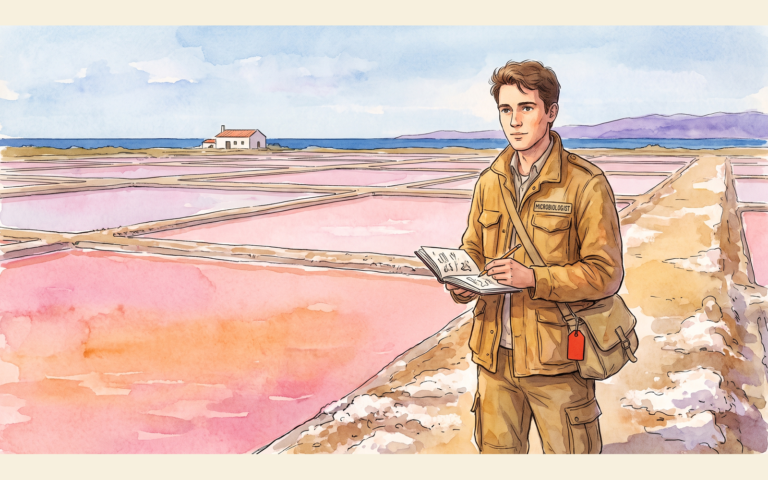
In the early morning of a summer day in 1993, a young Spanish microbiologist named Francisco Mojica drove south from his laboratory at the University of Alicante, on the eastern coast of…
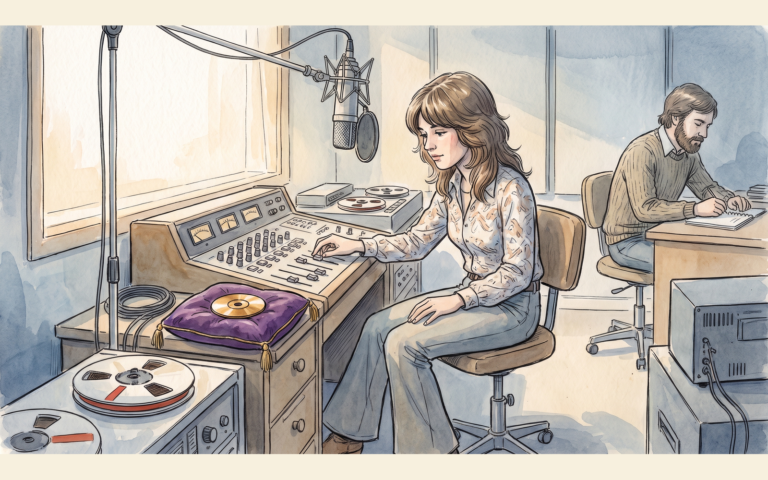
On the afternoon of 3 June 1977, in a small recording studio on the Upper West Side of Manhattan, a 28-year-old writer named Ann Druyan sat down in a chair with a…
At 7:30 in the evening of 15 April 1970, in a back room of the Grumman Aerospace plant in Bethpage, Long Island, a 41-year-old engineer named Ed Smylie sat down with a…
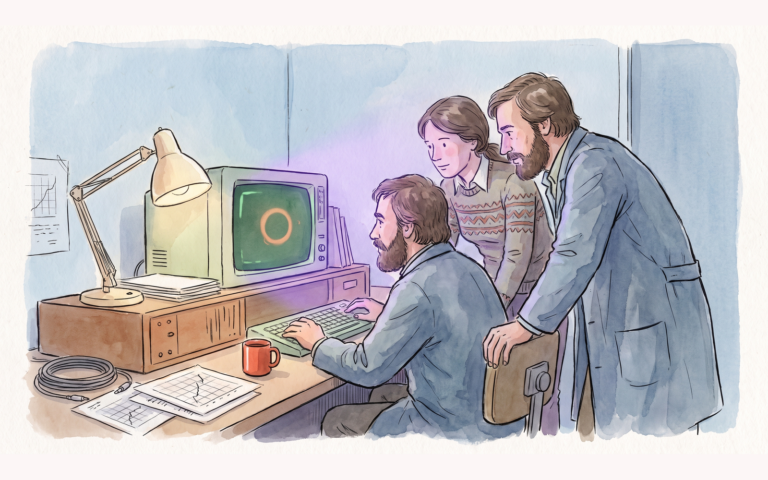
On the morning of 10 April 2019, in a basement corridor at the Harvard-Smithsonian Center for Astrophysics in Cambridge, Massachusetts, a 29-year-old computer scientist named Katherine (Katie) Bouman sat down at a…
China now produces more than five million graduates in science, technology, engineering and mathematics (STEM) subjects each year, more than the next four countries combined. The bulk of those are undergraduates and…
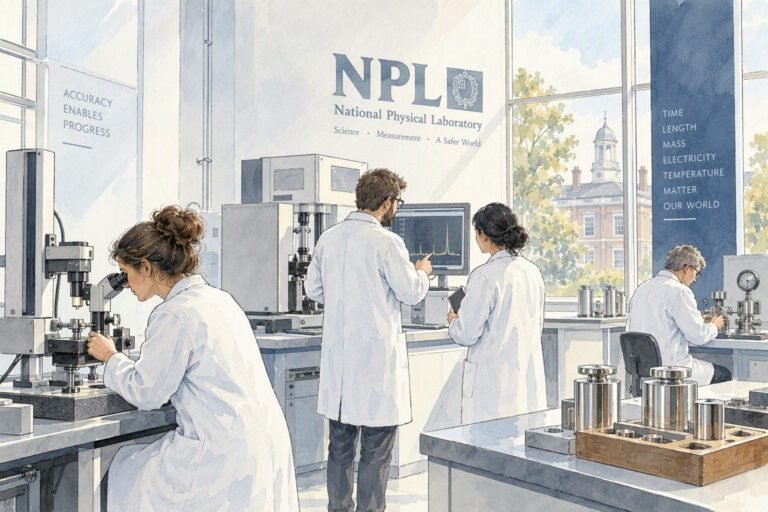
On a bend of the Thames between Teddington and Hampton Court, a quiet stretch of Bushy Park has held the United Kingdom’s primary standards of measurement since 1900. The National Physical Laboratory…
In 1629 a Shanghai scholar named Xu Guangqi walked up the steps of the Beijing Ancient Observatory, climbed onto the fifteen-metre brick platform on top of the city's southeast wall, and began…
BGI — the Beijing Genomics Institute — was the world's largest genome sequencing centre for most of the 2010s, with annual capacity of more than 100,000 whole human genomes and a project…
The Five-hundred-meter Aperture Spherical Telescope — FAST, nicknamed Tianyan — sits in a natural karst basin in Guizhou, its 4,450-panel dish covering an area the size of thirty football fields. Since opening…
The cochlear implant is the first device to replace a human sense. More than a million people worldwide can now hear because of it. The story of how a small array of…
Every year, more than four billion medical imaging examinations are performed worldwide. The technologies — X-ray, CT, MRI, ultrasound, PET — have, in less than 130 years, transformed medicine from a discipline…
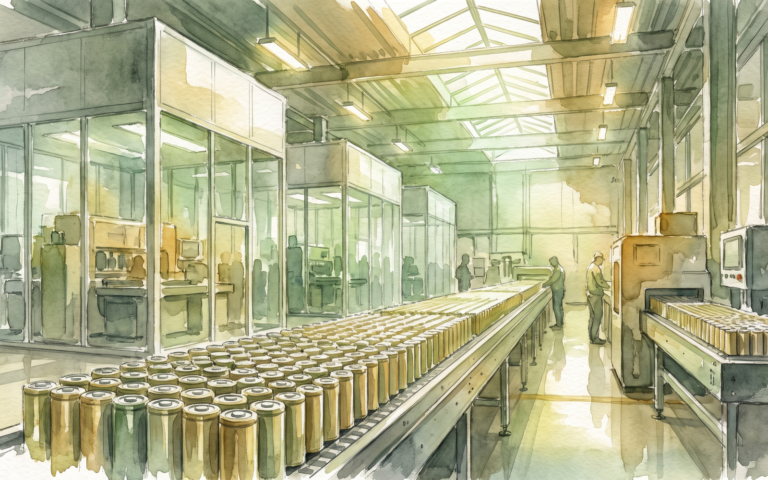
The lithium-ion battery is the most important energy-storage technology of the twenty-first century. It powers the phones in our pockets, the laptops on our desks, and the electric vehicles that are transforming…
It was a Polish canon who first moved the Earth. When Nicolaus Copernicus published De revolutionibus orbium coelestium in 1543, the kingdom he served was not yet a major European power. Yet…
Across the past two centuries, Jews have been over-represented in science, mathematics, and applied technology at rates that have resisted the standard sociological explanations. The historical narrative — that Jewish scientific achievement…
Jews make up roughly 0.2 percent of the world's population, but they have won about 22 percent of all Nobel Prizes, 24 percent of Fields Medals, and 30 percent of Turing Awards.…
Twelve years after Jennifer Doudna and Emmanuelle Charpentier published the paper that made CRISPR gene editing possible, the first generation of approved cures is reaching patients. Casgevy, the first CRISPR therapy approved…
In October 2024, the four largest cloud providers — Microsoft, Amazon, Google and Meta — began signing the largest wave of nuclear power contracts in history, committing more than 9.8 gigawatts of…
For seventy years fusion power has been the energy source that is always a few decades away. In the past four years that has started to change. A laser laboratory in Livermore…
Open almost any research journal in physics, chemistry, biology or engineering today and it will be in English, whether the authors work in Tokyo, São Paulo or Stuttgart. It was not always…
In the first week of October 2026 the Nobel committees in Stockholm rewarded three discoveries that began with curious, unfashionable questions. Karl Deisseroth, Peter Hegemann and Georg Nagel share the prize in…
A quantum computer is only as good as its qubits, and nobody yet agrees on the best way to make one. In laboratories from Santa Barbara to Oxford, Pasadena, Hefei and Sydney,…
In February 2024 a new Chinese building rose on Inexpressible Island, a wind-scoured rock in Terra Nova Bay on Antarctica’s Ross Sea coast. Qinling Station, China’s fifth Antarctic outpost, opened with a…
On the outskirts of Hefei, the capital of Anhui province, a large circular pit has been filling up with machinery. In October 2025 engineers lowered a 400-tonne steel base into it. In…