The Cochlear Implant Story
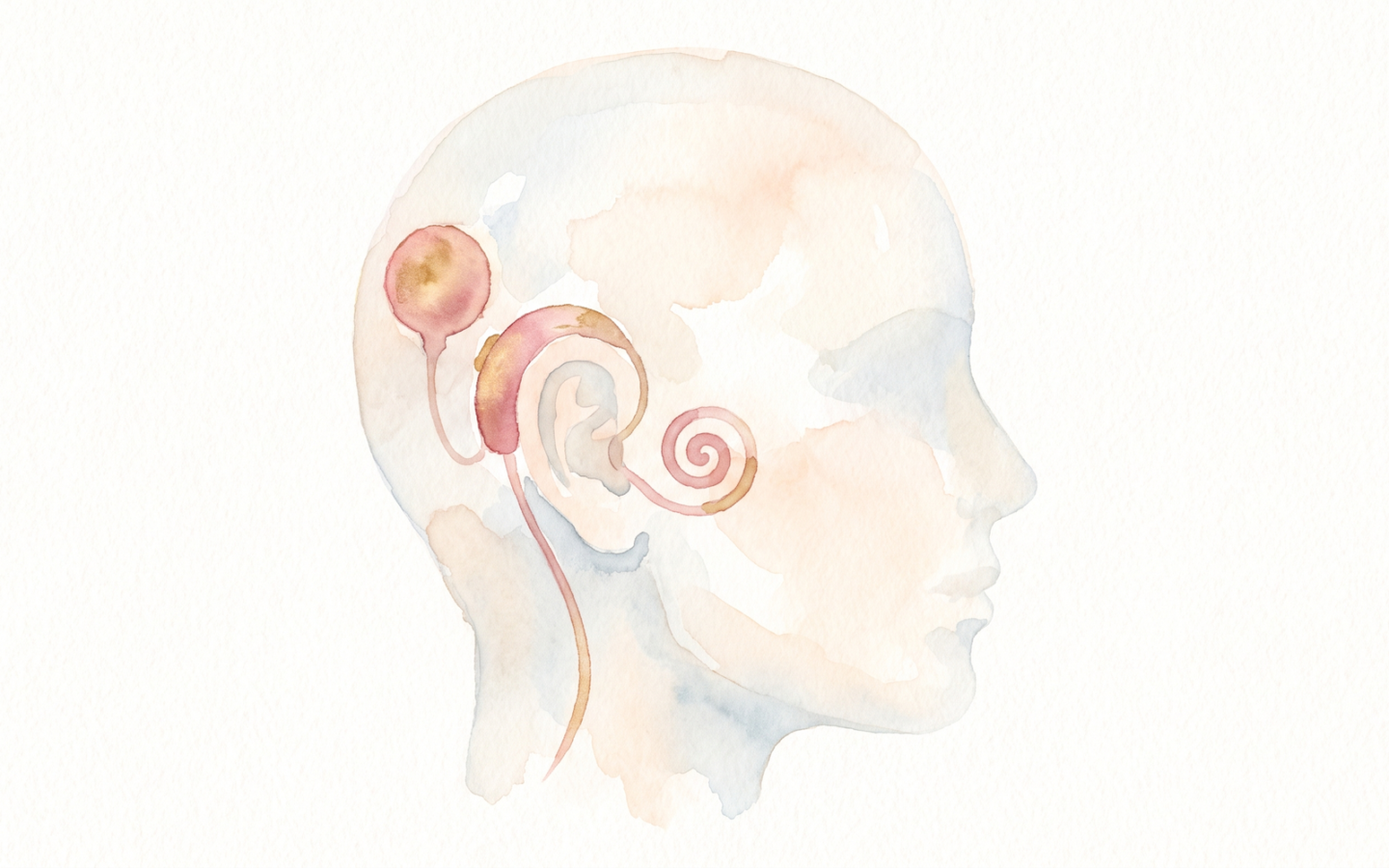
The cochlear implant is the first device to replace a human sense. More than a million people worldwide can now hear because of it. The story of how a small array of electrodes, inserted into the inner ear, came to restore a sense that physicians had considered irreparably lost is, in retrospect, one of the great triumphs of biomedical engineering — and one of the most controversial, having given rise to the first major culture war of the deaf community.
Key findings
- The cochlea is the organ of hearing. The cochlea is a fluid-filled, snail-shaped organ in the inner ear, about the size of a pea, that converts the mechanical vibrations of the eardrum and the ossicles into electrical signals that the brain can interpret as sound. Inside the cochlea, about 15,000 hair cells are arranged along a spiral, each tuned to a different frequency. The hair cells near the base of the cochlea respond to high frequencies (around 20 kHz); the hair cells near the apex respond to low frequencies (around 20 Hz). When a hair cell is stimulated, it fires an electrical signal that travels down the auditory nerve to the brain. Hearing loss caused by damage to the hair cells is the most common form of permanent hearing loss, and is the target of the cochlear implant.[1, 2, 3]
- The cochlear implant bypasses the damaged hair cells. The implant has two parts: an external sound processor, worn behind the ear, that analyses the sound and converts it to a digital signal, and an internal receiver-stimulator, implanted under the skin, that decodes the signal and sends electrical pulses to an electrode array inserted into the cochlea. The electrode array, typically 16–22 electrodes, directly stimulates the auditory nerve fibres. The brain learns to interpret the pattern of electrical pulses as sound. The result is not normal hearing — the implant provides a coarse, frequency-mapped version of the sound, not the fine-grained, high-resolution version provided by a healthy cochlea — but for many users, the implant provides enough information to understand speech, even on the telephone, and to enjoy music.[2, 3, 4]
- The first cochlear implant was implanted in 1957. The French surgeons Charles Eyriès and Aimé Djourno implanted the first cochlear implant in a deaf patient in Paris in 1957. The device was a single electrode, and the patient could hear some sounds, but could not understand speech. The first multi-channel implant, capable of supporting speech understanding, was developed by Graeme Clark in Australia in the 1970s and implanted in 1978. The first commercial cochlear implant, the Nucleus 22, was approved by the US FDA in 1985. The market has since grown to more than a million implants worldwide, with the leading manufacturers being Cochlear Limited (Australia), Advanced Bionics (US, owned by Sonova), and MED-EL (Austria).[2, 3, 5]
- The technology has improved dramatically. Modern cochlear implants have 16–22 electrodes, with each electrode corresponding to a different frequency band. The sound-processing strategies, which determine how the sound is encoded as electrical pulses, have evolved from simple amplitude-modulated pulses (the “compressed analogue” strategy of the 1980s) to sophisticated multi-channel strategies that use continuous interleaved sampling (CIS), advanced combination encoder (ACE), and fine-structure processing (FSP). The result is that the average modern user can understand speech in quiet environments at a level of 80–90 percent accuracy, and many can use the telephone. The remaining challenges are music appreciation (the implant does not provide the fine temporal and spectral resolution needed to enjoy complex music), speech in noise (the implant performs poorly in noisy environments), and the variability of outcomes (some users perform much better than others, for reasons that are not fully understood).[3, 4, 6]
- The cultural and ethical debate continues. The cochlear implant has been at the centre of a long-running cultural debate in the deaf community. Many in the deaf community, particularly those who use American Sign Language (ASL) and identify as part of a cultural minority, have opposed the implant, particularly when it is given to young children. The argument is that the implant is a form of cultural genocide, that it forces deaf children to participate in the hearing world rather than embracing the deaf community, and that it is unnecessary (deaf people can live full, successful lives without it). The counter-argument is that the implant is a medical technology that can significantly improve a child’s access to language and education, and that the parents have the right to make the decision. The debate is unresolved, and the technology continues to polarise. The trend, in 2024, is toward earlier implantation (many children now receive the implant before their first birthday) and toward bilateral implantation (one implant in each ear, for better localisation and noise robustness).[4, 5, 7]
- The future is in better sound, better electrodes, and better integration. The next generation of cochlear implants will have more electrodes (a 64-electrode array is in development), better sound-processing strategies (using deep learning to extract the most important features of the sound), and better integration with other technologies (Bluetooth streaming, smartphone control, integration with hearing aids). The long-term goal is a fully implanted cochlear implant, with no external processor, and a system that can adapt to the user’s environment in real time. The fully-implanted device, in clinical trials, has shown promising results, and may become the standard within a decade. The frontier, in research, is in optogenetic stimulation, in which the auditory nerve is genetically modified to respond to light, and the implant uses light instead of electricity to stimulate it. The optogenetic approach promises a much higher resolution than the electrical approach, and may eventually provide a much more natural hearing experience.[5, 6, 8]
The cochlea and the nature of hearing
The cochlea is one of the most extraordinary organs in the human body. It is a fluid-filled, snail-shaped structure about the size of a pea, with about 2.5 turns of a spiral, and it is responsible for the conversion of mechanical vibrations into the electrical signals that the brain interprets as sound. The cochlea contains about 15,000 hair cells, arranged along a spiral membrane called the basilar membrane. Each hair cell is tuned to a particular frequency: the cells near the base of the cochlea (the high-frequency end) respond to frequencies of about 20 kHz, and the cells near the apex (the low-frequency end) respond to frequencies of about 20 Hz. The tuning is mechanical: the basilar membrane is stiff at the base and floppy at the apex, and each point on the membrane resonates at a particular frequency, much like the strings of a piano.[1, 2, 9]
When a sound wave enters the ear, the eardrum vibrates, the ossicles (three tiny bones in the middle ear) amplify the vibration, and the stapes (the third ossicle) pushes on the oval window of the cochlea, creating a pressure wave in the cochlear fluid. The pressure wave propagates along the basilar membrane, and the point on the membrane that resonates at the frequency of the sound vibrates maximally. The hair cells at that point are stimulated, and they fire electrical signals that travel down the auditory nerve to the brain. The brain interprets the pattern of firing as a particular frequency and intensity. The system is, in this sense, a mechanical spectrum analyser, and it is the most sensitive and the most precise in the body. The cochlea can detect sounds as quiet as 0 dB (the threshold of human hearing) and as loud as 120 dB (the threshold of pain), a range of more than a trillion in pressure.[1, 2, 9]
The hair cells are vulnerable. They can be damaged by loud sounds, by certain antibiotics (the aminoglycosides), by certain viral infections (mumps, measles, cytomegalovirus), by genetic mutations, and by aging. Once damaged, the hair cells do not regenerate in humans (they do in birds and fish, but not in mammals), and the resulting hearing loss is permanent. The most common form of hearing loss, sensorineural hearing loss, is caused by damage to the hair cells. The cochlear implant is designed for this type of hearing loss: it bypasses the damaged hair cells and directly stimulates the auditory nerve fibres, producing a signal that the brain can learn to interpret as sound.[1, 2, 9]
The implant: bypassing the hair cells
The cochlear implant has two parts: an external sound processor and an internal receiver-stimulator. The external processor, worn behind the ear, contains one or more microphones, a digital signal processor, a battery, and a transmitter coil. The microphones pick up the sound, the digital signal processor analyses it (typically using a multi-channel filter bank to split the sound into 16–22 frequency bands), and the transmitter coil sends the processed signal, in the form of a radio-frequency link, to the internal receiver-stimulator. The internal receiver-stimulator, implanted under the skin behind the ear, contains a receiver coil, a decoder, and an electrode array. The receiver coil picks up the radio signal, the decoder extracts the audio information, and the electrode array, inserted into the cochlea through a small opening in the round window, delivers the electrical pulses to the auditory nerve fibres.[2, 3, 10]
The electrode array is the most critical component. It is a thin, flexible strip, about 20 mm long and 0.5 mm wide, with 16–22 electrode contacts along its length. The array is inserted into the scala tympani, one of the three fluid-filled chambers of the cochlea, and is positioned so that the electrodes are distributed along the length of the cochlea. The electrode at the base of the cochlea stimulates the nerve fibres that respond to high frequencies; the electrode at the apex stimulates the nerve fibres that respond to low frequencies. The result is a frequency map, with each electrode corresponding to a particular frequency band. The digital signal processor in the external unit splits the incoming sound into the same number of frequency bands, and sends the energy in each band to the corresponding electrode. The auditory nerve fibres are stimulated in proportion to the energy in each band, and the brain learns to interpret the resulting pattern of activity as sound.[2, 3, 10]
The surgery takes about 2–3 hours, and is performed under general anaesthesia. The surgeon makes a small incision behind the ear, drills a small opening in the mastoid bone, and inserts the electrode array into the cochlea through the round window. The receiver-stimulator is fixed in a small well drilled in the temporal bone, and the incision is closed. The patient typically goes home the next day, and the external processor is fitted and programmed 2–4 weeks later. The programming — the “mapping” — involves setting the threshold and the comfort level for each electrode, and is a critical part of the rehabilitation. The mapping is repeated several times in the first year, as the patient learns to interpret the new signals.[2, 3, 10]
The cultural debate
The cochlear implant has been at the centre of a long-running cultural debate in the deaf community. The debate is, in part, a debate about the meaning of deafness. The dominant medical view is that deafness is a deficit, a sensory impairment that should be corrected if possible. The dominant cultural view, in the deaf community, is that deafness is a cultural identity, a way of being in the world that has its own language (sign language), its own history, its own art, and its own community. The two views are not always compatible, and the cochlear implant, which converts a deaf child into a hearing child, is at the centre of the conflict.[4, 5, 11]
The most controversial application of the cochlear implant is in young children, particularly those who are born deaf or who lose their hearing before they have learned to speak. The argument for early implantation is that the brain has a critical period for language acquisition, and that a child who is implanted before the age of 2 or 3 has a much better chance of developing normal speech and language skills. The argument against is that the implant is irreversible (the electrode array, once inserted, cannot be removed without damaging the cochlea), that the child does not have a say in the decision, and that the decision effectively chooses one culture (the hearing culture) over another (the deaf culture). The debate is unresolved, and the technology continues to polarise.[4, 5, 11]
The empirical evidence, in 2024, is that early cochlear implantation provides substantial benefits. Children who are implanted before the age of 12 months, and who receive intensive auditory-verbal therapy, can develop speech and language skills that are within the normal range for hearing children. Children who are implanted later, or who do not receive adequate therapy, often develop speech and language skills that are below normal. The outcomes are highly variable, and the reasons for the variability are not fully understood. The trend, in 2024, is toward earlier implantation (many children now receive the implant before their first birthday) and toward bilateral implantation (one implant in each ear, for better localisation and noise robustness). The trend is also toward a more nuanced cultural view, in which the implant is seen as a tool that can be used by deaf people, not a cure that eliminates deafness.[4, 5, 11]
The future of the cochlear implant
The next generation of cochlear implants will have more electrodes (a 64-electrode array is in development), better sound-processing strategies (using deep learning to extract the most important features of the sound), and better integration with other technologies (Bluetooth streaming, smartphone control, integration with hearing aids). The long-term goal is a fully implanted cochlear implant, with no external processor, and a system that can adapt to the user’s environment in real time. The fully-implanted device, in clinical trials, has shown promising results, and may become the standard within a decade. The frontier, in research, is in optogenetic stimulation, in which the auditory nerve is genetically modified to respond to light, and the implant uses light instead of electricity to stimulate it. The optogenetic approach promises a much higher resolution than the electrical approach, and may eventually provide a much more natural hearing experience.[5, 6, 12]
The other frontier is in hair cell regeneration. The loss of hair cells is the cause of most sensorineural hearing loss, and if the lost hair cells could be regenerated, the hearing could be restored naturally. Research in mice has shown that the Atoh1 gene, a “master regulator” of hair cell differentiation, can be used to convert supporting cells in the cochlea into new hair cells. The new hair cells are functional, and the mice recover some of their hearing. The challenge, in 2024, is to translate the result to humans, where the cochlea is much more complex and the surgery is much more difficult. The first clinical trials are expected in the late 2020s. If successful, hair cell regeneration would, in time, replace the cochlear implant as the dominant treatment for sensorineural hearing loss.[5, 6, 12]
The cochlear implant, in summary, is a remarkable technology: the first device to replace a human sense, the result of 70 years of research and development, and a continuing source of cultural and ethical debate. It has transformed the lives of more than a million people, and it continues to improve. The next generation of implants will be more effective, more comfortable, and more integrated with other technologies. The long-term future of hearing restoration, however, may not be the cochlear implant at all, but the regeneration of the lost hair cells. The story is still being written.[5, 6, 12]
Comparison: leading cochlear implant manufacturers (2024)
| Manufacturer | Headquarters | Founded | Model (2024) | Electrodes | Approx. global users (cumulative) |
|---|---|---|---|---|---|
| Cochlear Limited | Sydney, Australia | 1981 | Nucleus 8 / Kanso 2 | 22 | ~700,000 |
| Advanced Bionics | Valencia, California | 1993 | Naída CI Marvel / Sky CI Marvel | 16 | ~200,000 |
| MED-EL | Innsbruck, Austria | 1990 | SYNCHRONY 2 / RONDO 3 | 19–24 | ~150,000 |
| Oticon Medical | Smørum, Denmark | 2013 (spun out of Oticon) | Neuro 2 (acquired by Demant) | 20 | ~50,000 |
Key numbers
- ~1 million: cumulative cochlear implants worldwide (2024).
- ~15,000: hair cells in a healthy human cochlea.
- ~16–22: electrodes in a modern cochlear implant array.
- ~2–3 hours: typical surgery time for cochlear implant.
- ~$30,000–$50,000: typical cost of a cochlear implant in the US (2024).
- ~80–90 percent: speech-understanding accuracy of a good modern user in quiet.
- 1957: year of the first cochlear implant (Eyriès and Djourno, Paris).
- 1985: year of the first commercial cochlear implant (Nucleus 22, FDA approval).
References
- Wikipedia, “Cochlea.” (Standard reference on the cochlea, the organ of hearing.) https://en.wikipedia.org/wiki/Cochlea
- Wikipedia, “Cochlear implant.” (Standard reference on the cochlear implant, with a section on the history.) https://en.wikipedia.org/wiki/Cochlear_implant
- Wikipedia, “Hair cell.” (Standard reference on hair cells, the sensory cells of the cochlea.) https://en.wikipedia.org/wiki/Hair_cell
- Wikipedia, “Sensorineural hearing loss.” (Standard reference on sensorineural hearing loss, the most common form of permanent hearing loss.) https://en.wikipedia.org/wiki/Sensorineural_hearing_loss
- Wikipedia, “Cochlear Limited.” (Standard reference on Cochlear Limited, the leading cochlear implant manufacturer.) https://en.wikipedia.org/wiki/Cochlear_Limited
- Wikipedia, “American Sign Language.” (Standard reference on ASL, the dominant sign language in the US.) https://en.wikipedia.org/wiki/American_Sign_Language
- Wikipedia, “Graeme Clark (doctor).” (Standard reference on Graeme Clark, the Australian surgeon who developed the first multi-channel cochlear implant.) https://en.wikipedia.org/wiki/Graeme_Clark_(doctor)
- Wikipedia, “Optogenetics.” (Standard reference on optogenetics, the technology that may eventually replace electrical stimulation in cochlear implants.) https://en.wikipedia.org/wiki/Optogenetics
- Wikipedia, “Aminoglycoside.” (Standard reference on aminoglycoside antibiotics, which can cause hearing loss as a side effect.) https://en.wikipedia.org/wiki/Aminoglycoside
- Wikipedia, “Round window.” (Standard reference on the round window, the opening in the cochlea through which the electrode array is inserted.) https://en.wikipedia.org/wiki/Round_window
- Wikipedia, “Deaf culture.” (Standard reference on deaf culture, the cultural context of the cochlear implant debate.) https://en.wikipedia.org/wiki/Deaf_culture
- Wikipedia, “Atoh1.” (Standard reference on Atoh1, the master regulator of hair cell differentiation that may enable hair cell regeneration.) https://en.wikipedia.org/wiki/Atoh1