In the 1890s a cabinet-maker from Russian Poland settled in the Gorbals. His son built Great Universal Stores into Britain’s largest mail-order business and gave much of the fortune away; his grandsons and great-grandson ran GUS and Next, and his family still chairs one of Britain’s great foundations.
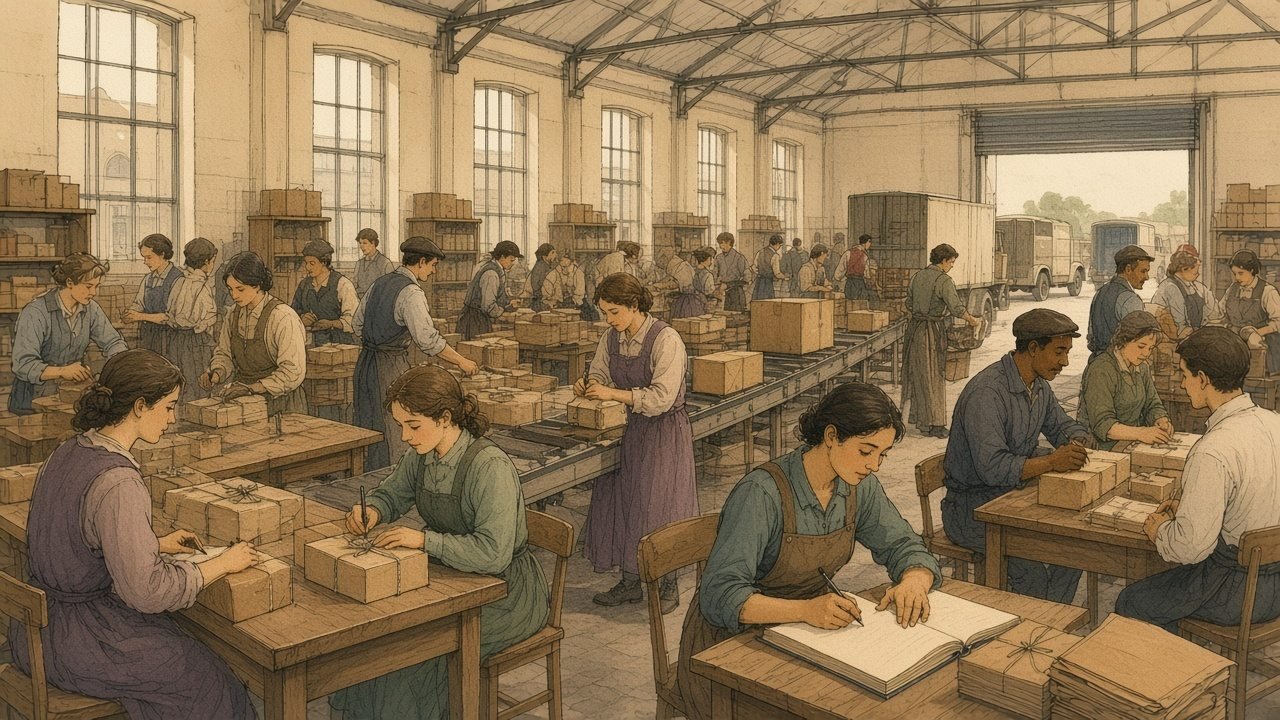
About this history
This history of the Wolfson family follows it from the Jewish Gorbals of Glasgow, through the mail-order houses of Manchester and Worcester and the takeover battles of post-war London, to the colleges of Oxford and Cambridge, the institutions of Israel and the boardroom of Next. It runs to sixteen chapters, each of which can be read on its own. Numbers in square brackets lead to the references at the end of each chapter, and the asterisk beside each reference leads back to the text. A family tree, a timeline, a list of places, a glossary and a select bibliography for the whole history follow the contents below.
Where the sources disagree about a date or a story, the disagreement is set out rather than smoothed away. They differ, among other things, on the year Isaac Wolfson joined Great Universal Stores, on when Kays of Worcester was bought, on the size of the Foundation’s first endowment and on when the family finally gave votes to all its shareholders. Other Merchants families who made their name in Britain, among them the Rothschilds and the Sassoons, have their own histories in these pages.
The History in Sixteen Chapters
A cabinet-maker from Russian Poland
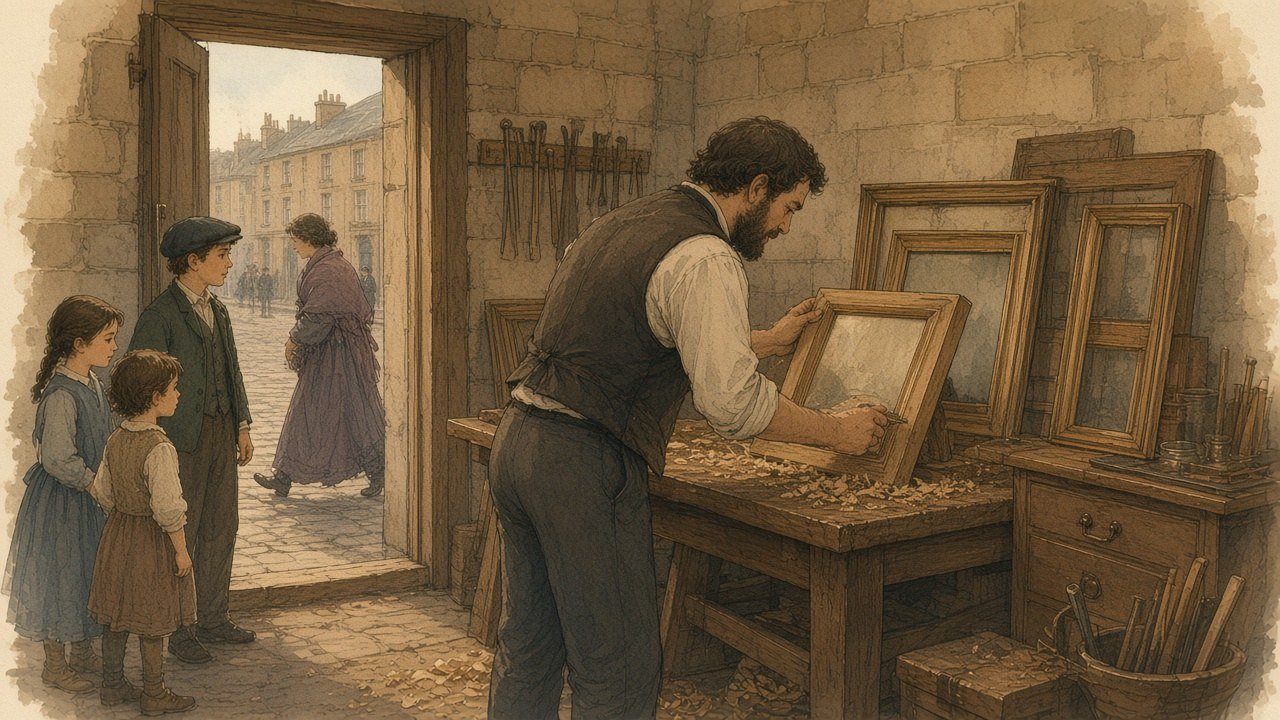
The Wolfson story begins with a man about whom surprisingly little is known for certain. The Oxford Dictionary of National Biography, as quoted by the historian Sir David Cannadine in a lecture given in Glasgow in 2015, describes Solomon Wolfson as “a poor Orthodox Jewish immigrant from Russian Poland”, and gives his year of birth as 1868. Cannadine adds that Solomon and his wife arrived in Glasgow “sometime in the 1890s”, fleeing, like many others, the pogroms and persecutions of Russian Poland, and that part of the city’s attraction was that Solomon’s brother and his family were already settled there. An obituary of Solomon’s grandson David gives the same span for Solomon’s life, 1868 to 1941, and calls him “a cabinet maker from Poland who settled in Glasgow at the end of the 19th century”.
The boy from Hospital Street
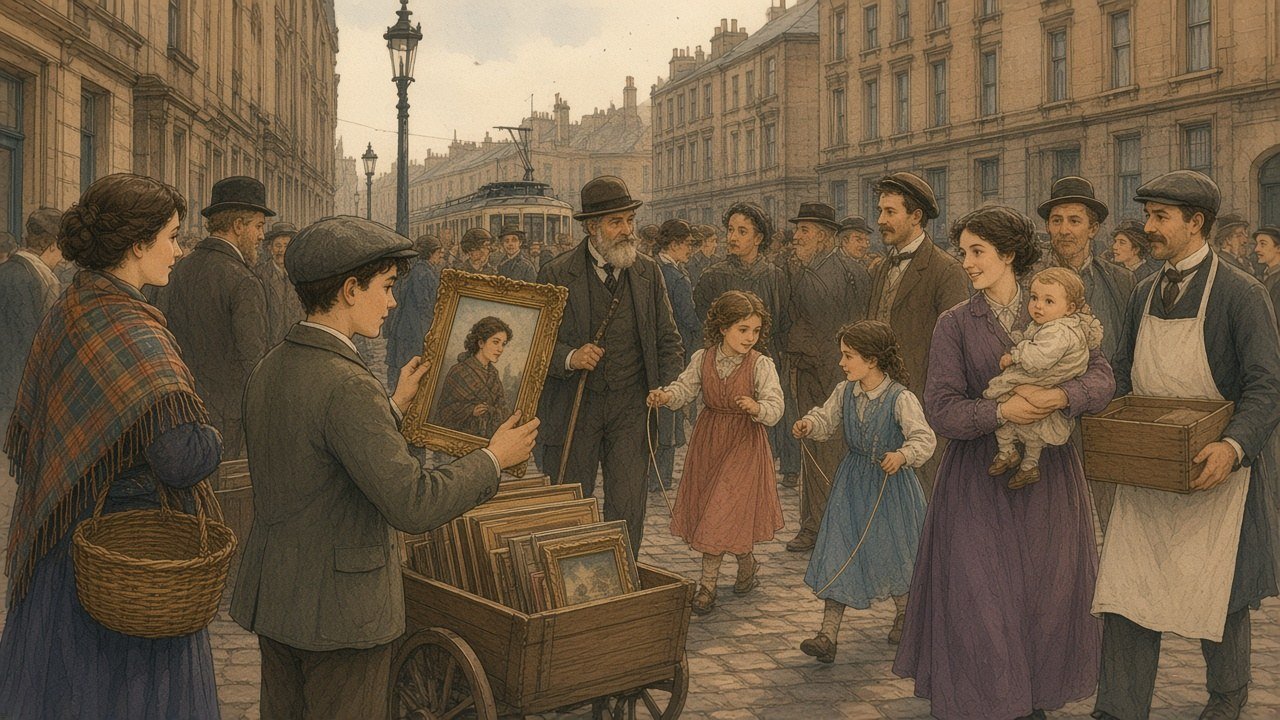
Isaac Wolfson was born in Glasgow on 17 September 1897. The Gazetteer for Scotland places his birth in Hospital Street, in the heart of the Gorbals, and describes his parents simply as Polish immigrants. He was, in David Cannadine’s summary of the Oxford Dictionary of National Biography, the second of three sons, and one of the eleven surviving children of Solomon Wolfson and his wife. The Jewish Telegraphic Agency also gives eleven children. Raymond Hoffenberg’s memoir of Isaac for the Royal College of Physicians, on the other hand, calls him “one of 13 children of a Russian immigrant, a cabinet maker”. The two figures need not conflict. In a poor immigrant household of the 1890s it would have been ordinary for two of thirteen children to die young, and the phrase “eleven surviving children” suggests that this is exactly what happened. The sources do not name the children who died.
Clocks, mirrors and a Manchester mail-order house

At some point in the early 1920s Isaac Wolfson left Glasgow for London. The sources give three different dates. The company history of Great Universal Stores in the International Directory of Company Histories says 1920. The Encyclopaedia Judaica says 1922. The Gazetteer for Scotland says the mid-1920s. It is possible that he moved in stages, travelling south on business for some years before settling, and that each source has fixed on a different moment. What all of them agree is that by the middle of the decade he was established in the capital and trading on his own account.
Read chapter 3, Clocks, mirrors and a Manchester mail-order house →
Rescuing the Great Universal Stores
The flotation of 1931 had made the Rose brothers rich. Within a year their company was in trouble. A combination of falling demand, brought on by the Depression, and poor stock control, the company history says, cut profits by half in 1932 and produced a small loss in 1933. For a firm that had just sold its shares to the public on the strength of rising profits, this was a disaster. The Roses, who in the company history’s words had “benefited considerably from the public issue”, felt obliged to pay nearly £100,000 out of their own pockets to keep the dividend at the level they had led investors to expect.
Kays of Worcester and the war years

Kays, the mail-order house that became the best-known name in the Great Universal Stores group, could trace its history to the eighteenth century. Its own heritage project, drawing on the company’s archives, begins with John Skarratt, an apprenticed clock and watchmaker from London, who set up in business in or about 1794 in Goose Lane, Worcester, a street later renamed St Swithin’s Street. The shop still stands. By 1814 Skarratt had moved to Broad Street, where his family’s business continued under his son and grandson.
The Gorgeous Gussies

After the war Isaac Wolfson ceased to be an obscure Manchester businessman. As chairman of GUS, the company history says, he “quickly gained a higher public profile”, and his growing reputation “rested on the rapid growth of the firm and especially on his success as a practitioner of the takeover bid”. In the City and in the financial columns, the company became known by an affectionate nickname. The shares were “Gussies”, and in later decades the whole group would be called the “Gorgeous Gussies” for its apparently endless run of rising profits.
Burberry and the house of brands

When Great Universal Stores bought Burberry’s in 1955 it acquired a business already a century old. Its founder, Thomas Burberry, set up in Basingstoke in 1856 at the age of twenty-one, on the principle that clothing should protect people from the British weather. In 1879 he invented gabardine, a light, breathable, weatherproof and tearproof cloth. The cloth made the firm’s reputation in the age of polar exploration. The company’s own history records that Fridtjof Nansen took Burberry gabardine to the Arctic in 1893, that Roald Amundsen’s party reached the South Pole in 1911 with a Burberry gabardine tent and clothing, and that Captain Scott’s expedition, which reached the pole the following year and perished on the return, was equipped with Burberry clothing and a Burberry tent. Sir Ernest Shackleton wore Burberry gabardine on three expeditions, including the voyage of the Endurance.
Giving it away

Isaac Wolfson was fond of a maxim about money. “No man should keep more than £100,000,” he is quoted as saying; “the rest should go to charity.” Raymond Hoffenberg, who records the remark in his memoir for the Royal College of Physicians, calls it a philosophy of “giving and receiving”, and says that it “inspired him and his family to establish the Wolfson Foundation in 1955 for the advancement of health, education and youth activities”. The Gazetteer for Scotland gives a slightly different wording, “No man should have more than £100,000. The rest should go to charity”. Neither source dates the remark, and Wolfson certainly kept a great deal more than £100,000 for himself and his family. But the maxim expressed something real. Lord Young of Graffham, who worked for him in the 1950s, put it more simply: “He loved making money, and he loved giving it away.”
Professorships, paintings and prizes
The archive of the Wolfson Foundation’s historic grant files has been held by the Library of the Royal Society since 2008, and the Society has published a selection of stories from it. They are the best evidence of how the Foundation worked in its first two decades, and the first of them concerns the Society itself.
A college on the Cherwell
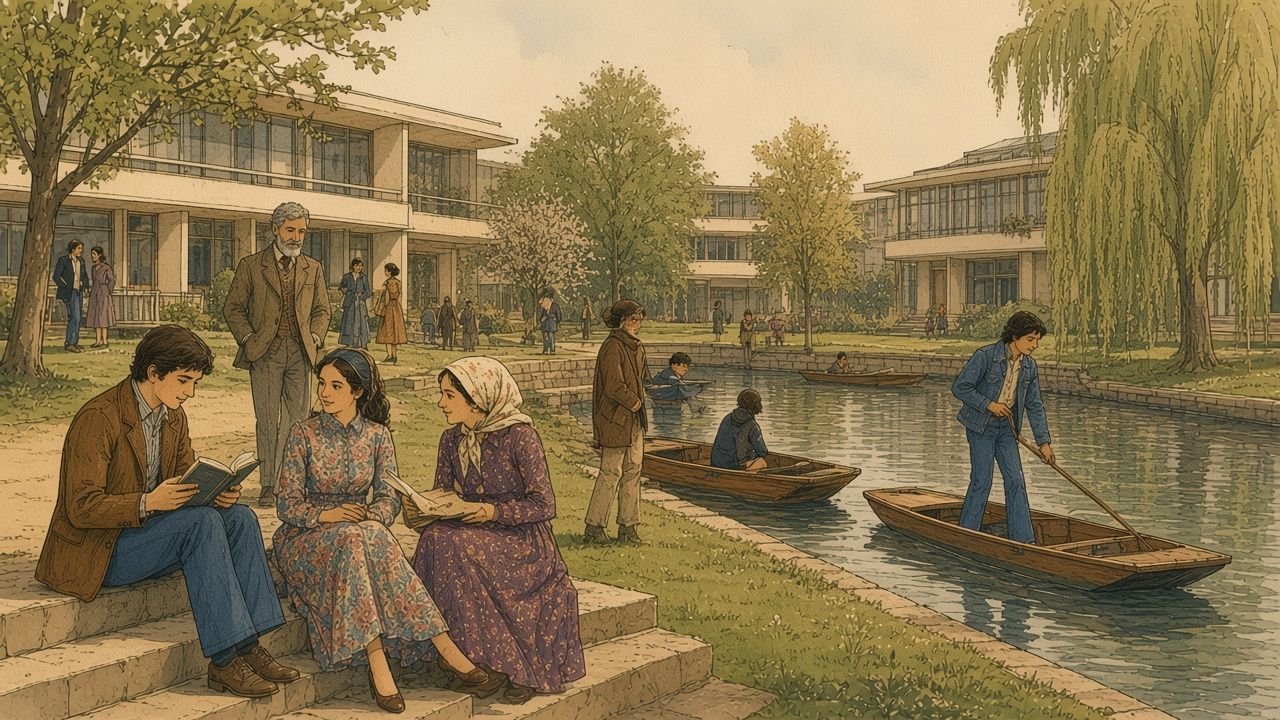
By the middle of the twentieth century the University of Oxford had been teaching undergraduates for about nine hundred years, but it was poorly equipped to train researchers. Wolfson College’s own history describes the problem. In the years after the Second World War universities were expected to become centres of research, and the Robbins Report of 1963 argued that highly trained postgraduates were needed to meet “the enormous extensions of knowledge in all fields of study” and “the scientific and technological revolution that we are living through”. Yet in 1963 Oxford had almost no housing, courses or staff for graduate students.
University College becomes Wolfson

Wolfson College, Cambridge, began as an experiment. In 1965 the University of Cambridge founded University College as a graduate college that would admit women and men alike, as students and as fellows. John Morrison, a classicist, was appointed its president, and the names of twenty-eight founding fellows were published in the university’s Reporter on 13 October. The college’s own history describes it as “an experiment of ideals put into action”, set up in a decade of student activism. It was the first mixed college in the history of the university, and it set out to link Cambridge with the world beyond it, with European universities and with business and industry.
Builders of the Jewish state

Isaac Wolfson came to Zionism late. The Jewish Telegraphic Agency, in its obituary, says that he “joined Zionist endeavors in 1949” at a dinner of the Joint Palestine Appeal, the main fundraising body for Israel in Britain and the forerunner of the Joint Israel Appeal. Admitting that he had not played an active part before, he told the guests, “I must now throw myself wholeheartedly into the ranks of the builders of the Jewish state.” He was then fifty-one, and the state was a year old.
Sir Isaac in old age

In the New Year honours of 1962 Isaac Wolfson was created a baronet, Sir Isaac Wolfson of St Marylebone. The Encyclopaedia Judaica says the honour was given in recognition of his public services, and the company history that it was for his charitable activities. A baronetcy, unlike a knighthood, is hereditary. Some later summaries, including Scottish Places and the Royal Society’s own blog, describe the 1962 honour as a knighthood, but the Foundation’s sixty-year history, the Weizmann Institute and the company history all call it a baronetcy, and when Sir Isaac died his son succeeded to the title as the second baronet.
Leonard and the long run of profits

Leonard Gordon Wolfson was born in London on 11 November 1927, the only son of Isaac and Edith. He was educated at the King’s School in Worcester, and, as the Independent puts it, “skipped university”. David Cannadine, a trustee of the Foundation, observed that neither Isaac nor Leonard had first-hand experience of the higher education they did so much to support, “which perhaps explains why they came to value them so highly”. David Cannadine, in his history of the Wolfson History Prize, observes that, given his own family’s trajectory, Leonard “was well aware of the deeper and darker tides of human history”.
The Sunningdale branch and the end of GUS
Isaac Wolfson was not the only one of Solomon’s sons to work in the family business. His younger brother Charles, born in 1899, became a director of the family business, and in 1937 it was Isaac and Charles together who bought Kays of Worcester. Charles died in 1970 on board the liner Queen Elizabeth 2. In 1960 he had set up a charitable trust of his own, the Charles Wolfson Charitable Trust, whose trust deed, dated 14 July 1960, names among its purposes “the encouragement of medical and surgical studies and research”, education and child welfare, the advancement of religion and the relief of poverty. The trust, still registered with the Charity Commission, belongs to what might be called the Sunningdale branch of the family, after the title later taken by Charles’s son.
Read chapter 15, The Sunningdale branch and the end of GUS →
Simon Wolfson, Next and the family today

The company that the Wolfsons came to lead in the 1990s was older than their own. Next began as J. Hepworth and Son, a firm of gentlemen’s tailors established in Leeds in 1864. In 1981 Hepworth bought the Kendalls chain of rainwear shops from the retail group Combined English Stores, and recruited the designer and retailer George Davies to turn them into a new womenswear chain called Next. The first Next shop opened on 12 February 1982. A retrospective published for the company’s fortieth anniversary gives Hepworth’s foundation as 1964 in its introduction but 1864 in its own timeline; the company’s history confirms 1864.
Family tree
OpenClose
Key members only, by generation. Dates are those given in the sources cited in the chapters; where sources differ, the chapter explains.
- Solomon Wolfson1868–1941m. Necha or Nealia (the sources differ)Cabinet-maker and picture-frame maker from Russian Poland who settled in the Gorbals in the 1890s; his wife is named Necha in one source and Nealia in another.[1][2][3]
- Sir Isaac Wolfson, 1st Baronet1897–1991m. Edith Specterman (died 1981)Chairman of Great Universal Stores and founder of the Wolfson Foundation.[4][5]
- Leonard, Lord Wolfson of Marylebone1927–2010Chairman of GUS and of the Wolfson Foundation. Married Ruth Sterling and, in 1991, Estelle.[6][7]
- Dame Janet Wolfson de Botton and her sistersdaughters of LeonardJanet, chairman of the Wolfson Foundation from 2010, with Laura Wolfson Townsley, Deborah Wolfson Davis and Elizabeth Wolfson Peltz.[4]
- Leonard, Lord Wolfson of Marylebone1927–2010Chairman of GUS and of the Wolfson Foundation. Married Ruth Sterling and, in 1991, Estelle.[6][7]
- Charles Wolfson1899–1970m. Hylda JarvisIsaac’s younger brother, a director of the family business, founder of the Charles Wolfson Charitable Trust.[3][8][9]
- Sir Isaac Wolfson, 1st Baronet1897–1991m. Edith Specterman (died 1981)Chairman of Great Universal Stores and founder of the Wolfson Foundation.[4][5]
Timeline
OpenClose
The Leeds tailoring firm that will become Next is established.[14] Chapter 16
David Wolfson, son of Charles Wolfson, is born in London on 9 November.[8] Chapter 15
At a Joint Palestine Appeal dinner, Isaac Wolfson promises to throw himself “wholeheartedly into the ranks of the builders of the Jewish state”.[1] Chapter 12
Isaac gives £100,000 to the Weizmann Institute and joins its board.[22][23] Chapter 12
Leonard Wolfson becomes a director of Great Universal Stores.[6] Chapter 14
Heichal Shlomo, seat of the Chief Rabbinate, is dedicated in Jerusalem on 8 May in memory of Solomon Wolfson.[28] Chapter 12
Isaac Wolfson is created a baronet, Sir Isaac Wolfson of St Marylebone.[4] Chapter 13
Leonard becomes managing director of GUS; the company history gives joint managing director in 1963.[6][15] Chapter 14
The family pledges more than £700,000 for 520 dwellings and community buildings in Acre.[33] Chapter 12
The Franks Commission leads Oxford to create two graduate colleges, St Cross and Iffley.[34] Chapter 10
Iffley College opens in September at Court Place, south of the city.[34] Chapter 10
Cambridge founds University College, its first mixed graduate college, under John Morrison, with twenty-eight founding fellows.[35] Chapter 11
Isaac Wolfson agrees in June to give £1.5 million, matched by the Ford Foundation; the college is created by decree on 26 July and renamed Wolfson.[36][37] Chapter 10
Wolfson College admits its first graduate students in Banbury Road; the Queen lays the foundation stone of the new buildings.[37][34] Chapter 10
The Vice-Chancellor, Owen Chadwick, applies to the Wolfson Foundation for £1.7 million.[39] Chapter 11
After an impromptu visit by Leonard Wolfson, the Foundation grants £2 million, waiving its usual requirement for matched funding.[43] Chapter 11
Sir Isaac passes the chairmanship of the Wolfson Foundation to his son Leonard.[4] Chapter 13
University College becomes Wolfson College on 1 January and takes the motto Ring True.[35] Chapter 11
Powell and Moya’s buildings on the Cherwell are completed and opened.[37][40] Chapter 10
The Queen and the Chancellor, Harold Macmillan, open the new buildings of Wolfson College, Oxford, in November.[4] Chapter 13
The Queen opens Wolfson College, Cambridge, on 9 November.[35] Chapter 11
Leonard Wolfson is knighted.[44] Chapter 14
David Wolfson becomes chief of staff of Margaret Thatcher’s political office, serving until 1985.[8] Chapter 15
The government hospital named after Edith Wolfson opens at Holon in March.[45] Chapter 12
Edith Wolfson dies; Leonard becomes joint chairman of GUS as his father’s health fails.[5][6] Chapter 13
The Jerusalem Great Synagogue, built with Isaac Wolfson’s sponsorship, opens on Tu B’Av.[46] Chapter 12
George Davies opens the first Next womenswear shop on 12 February.[14] Chapter 16
Sir Leonard Wolfson becomes Lord Wolfson of Marylebone.[47] Chapter 14
Sir Isaac steps down as co-chairman of GUS; the company history also gives 1987.[15] Chapter 13
After a profits warning in December, George and Liz Davies are ousted and David Jones and David Wolfson take charge.[48] Chapter 16
David Wolfson becomes chairman of Next, which he and David Jones rescue from collapse.[49] Chapter 15
Sir Isaac Wolfson dies at his home on the Weizmann Institute campus on 20 June, aged ninety-three.[1] Chapter 13
GUS extends voting rights to all shareholders and appoints non-executive directors; the *Guardian* dates the enfranchisement to 1993.[15][6] Chapter 14
Leonard hands the chairmanship of GUS to his cousin David, and GUS buys Experian for £1 billion.[15] Chapter 15
GUS wins its first hostile takeover, buying Argos for £1.9 billion.[15] Chapter 15
Simon Wolfson, aged thirty-three, succeeds David Jones as chief executive of Next.[10] Chapter 16
GUS sells its catalogue and home shopping business to the Barclay brothers.[52] Chapter 15
Great Universal Stores is split into Home Retail Group and Experian.[3] Chapter 15
Lord Wolfson of Marylebone dies on 20 May, aged eighty-two.[7] Chapter 14
Simon Wolfson is made a life peer; Dame Janet Wolfson de Botton succeeds her father as chairman of the Wolfson Foundation.[11][4] Chapter 16
Roger Bootle wins the first Wolfson Economics Prize, for a plan for leaving the euro.[54] Chapter 16
Places
OpenClose
Streets, cities and institutions that recur in the history, with the chapters where they matter most. The pins for Acre, Ardwick and Enderby mark the town or district only, because the sources used do not give the exact sites.
Hospital Street, the Gorbals
Isaac Wolfson’s birthplace in the Jewish quarter of Glasgow south of the Clyde, where his father had his workshop. Chapters 1 and 2.[19][17]
Open in Google MapsQueen’s Park School, Glasgow
The school Isaac attended before leaving at fourteen. Chapter 2.[19]
Open in Google MapsArdwick, Manchester
Where Abraham and George Rose began the mail-order business that became Great Universal Stores. Chapters 3 and 4.[15][52]
Open in Google MapsThe Tything, Worcester
The street of Kays’ offices and warehouses, bought by GUS in 1937 or 1943 (the sources differ). Chapter 5.[12]
Open in Google MapsPortland Place, London
The family home where the trust deed of the Wolfson Foundation was signed in 1955. Chapter 8.[4]
Open in Google MapsWolfson College, Oxford
Graduate college on the Cherwell, founded in 1966 and opened in its new buildings in 1974. Chapter 10.[34]
Open in Google MapsWolfson College, Cambridge
Founded as University College in 1965 and renamed Wolfson College in 1973. Chapter 11.[35]
Open in Google MapsUniversity of Glasgow
Home of a student hall and the Wolfson Medical School Building, both among the family’s gifts. Chapter 9.[19][51]
Open in Google MapsHeichal Shlomo and the Great Synagogue, Jerusalem
Seat of the Chief Rabbinate from 1958, named after Solomon Wolfson, and the synagogue opened beside it in 1982. Chapter 12.[28][46]
Open in Google MapsWolfson Towers, Jerusalem
The towers built by Wolfson, Clore and Mayer opposite the Knesset. Chapter 12.[55]
Open in Google MapsKiryat Wolfson, Acre
Housing for new immigrants pledged in 1963, and the harbour surveyed by divers with a Wolfson grant in 1966. Chapter 12.[33][56]
Open in Google MapsWeizmann Institute of Science, Rehovot
Isaac’s “special love”, and the place where he spent his last years and died in 1991. Chapters 12 and 13.[1][23]
Open in Google MapsEdith Wolfson Medical Center, Holon
The government hospital named after Edith Wolfson, opened in 1980. Chapter 12.[45]
Open in Google MapsEnderby, Leicestershire
Headquarters of Next, which David Wolfson chaired and Simon Wolfson leads. Chapters 15 and 16.[3][57]
Open in Google MapsGlossary of terms
OpenClose
- Agent
- In British mail order, a customer who showed the catalogue to others, took their orders and collected their weekly payments in return for commission or discounts.[15]
- Baronet
- The holder of a hereditary title, ranking below a baron and above a knight, which passes to the holder’s heir; Leonard Wolfson succeeded his father as second baronet in 1991.[47]
- Chief of staff
- The senior political aide who runs a leader’s private political office; David Wolfson was the first to hold the title at Downing Street.[58]
- Congregation
- The sovereign body of the University of Oxford, made up of its teaching and administrative staff, which passed the decree creating Wolfson College in 1966.[59]
- Credit club
- A group of customers who each paid a weekly sum and drew lots to decide the order in which they received their goods.[15]
- Debenture
- A long-term loan to a company, usually at a fixed rate of interest and secured on its assets.[15]
- Demerger
- The separation of part of a company into an independent company, whose shares are given to the parent’s shareholders.[53]
- Dissolution honours
- Honours, including peerages, awarded on the advice of the Prime Minister when Parliament is dissolved for a general election.[60]
- Enfranchisement
- Giving voting rights to shares that previously had none, as GUS did for its “A” shares in the 1990s.[15]
- Founder Fellow
- A title given by a college to a benefactor associated with its foundation; Wolfson College, Oxford, elected Sir Isaac Wolfson its Founder Fellow.[5]
- Gabardine
- A tightly woven, weatherproof but breathable cloth invented by Thomas Burberry in 1879.[13]
- Gorbals
- The district on the south bank of the Clyde in Glasgow where most of the city’s Jewish immigrants settled from the 1880s.[17]
- Graduate college
- An Oxford or Cambridge college that admits only postgraduate students and senior members, rather than undergraduates.[34]
- Gussies
- City nickname for the shares of Great Universal Stores, later extended to the “Gorgeous Gussies” for the group’s long run of rising profits.[24][6]
- Heichal Shlomo היכל שלמה
- “Solomon’s Hall”, the building in Jerusalem dedicated in 1958 as the seat of the Chief Rabbinate of Israel and named after Solomon Wolfson.[28]
- Hire purchase
- A form of credit in which the buyer hires goods by instalments and becomes the owner on the final payment.[25]
- Hostile takeover
- A bid for a company made over the opposition of its board, as GUS’s bid for Argos in 1998.[15]
- Instalment purchase
- Buying goods and paying for them by regular instalments; in Britain often called hire purchase, though the two differed in law.
- Joint Palestine Appeal
- The main fundraising body in Britain for the Jewish community of Palestine and then of Israel, later the Joint Israel Appeal.[1]
- Justice of the Peace
- A lay magistrate. In Scotland, Justices of the Peace sat in the district courts and were appointed from among respected local citizens.
- Kiryat Wolfson קריית וולפסון
- “Wolfson town”, the name given to housing projects built with Wolfson money in Jerusalem and Acre.[18]
- Lag BaOmer ל״ג בעומר
- The thirty-third day of the counting of the Omer between Passover and Shavuot, a day of celebration, on which Heichal Shlomo was dedicated in 1958.[61]
- Life peer
- A member of the House of Lords whose title is not inherited and dies with the holder.[47]
- Mail order
- Selling goods from a printed catalogue, with orders and payments sent by post or gathered by agents, and the goods delivered to the customer’s home.[15]
- May Bumps
- The annual rowing races on the river Cam in which college crews try to catch and bump the boat in front.[35]
- Non-executive director
- A board member who is not part of the company’s management and is expected to bring independent judgement; GUS had none until 1993.[6]
- Pale of Settlement
- The western provinces of the Russian Empire, including Russian Poland and Lithuania, to which most Jewish residence was restricted from the late eighteenth century until 1917.
- Resignation honours
- Honours awarded on the recommendation of a departing Prime Minister.[62]
- Sale and leaseback
- Selling or mortgaging a property and renting it back, so that a company keeps using the building while releasing the money tied up in it.[15]
- Scrip issue
- A free issue of new shares to existing shareholders in proportion to their holdings, also called a bonus or capitalisation issue.[63]
- Tallyman
- A salesman-collector who sold goods door to door on credit and called each week to collect the instalments.[15]
- The Tything
- The street in Worcester where Kays had its head office at number 23 from 1907 until the early 2000s.[12]
- Total Platform
- Next’s service, launched in 2020, which runs online selling, warehousing and delivery for other brands.[57]
- Trebbler
- Scots-Yiddish for a travelling salesman, from the English word traveller, as used in the Glasgow Yiddish press of 1903.[17]
- Trust deed
- The legal document that establishes a charitable trust, defines its purposes and appoints its trustees.[4]
- Tu B’Av ט״ו באב
- The fifteenth day of the month of Av, a minor festival in the Jewish calendar, on which the Jerusalem Great Synagogue opened in 1982.[46]
- Tzedakah צדקה
- Charity understood in Jewish tradition as an obligation of justice rather than an act of generosity.
- Visitor
- The person with formal authority over a college under its statutes; at Wolfson College, Cambridge, in 1977 the Duke of Edinburgh as Chancellor of the university.[35]
- Working peer
- A member of the House of Lords appointed with the expectation of taking an active part in its work, often on behalf of a party.[60]
References
OpenClose
- Jewish Telegraphic Agency, “Sir Isaac Wolfson, Dead at 93, Remembered for His Magnanimity,” 25 June 1991 *
- David Cannadine, “The Future of Higher Education,” lecture at the University of Glasgow, 1 October 2015, on the sixtieth anniversary of the Wolfson Foundation (transcript, Wolfson Foundation) *
- Eric Musgrave, “Obituary. Veteran retailer and politician Lord David Wolfson,” TheIndustry.fashion, 12 March 2021 *
- The Wolfson Foundation, The Wolfson Foundation 1955–2015. Sixty Years of Philanthropy (London, 2015) *
- Raymond Hoffenberg, “Sir Isaac Wolfson,” Lives of the Fellows (Munk’s Roll), vol. IX (London: Royal College of Physicians, 1994), p. 601 *
- Martin Adeney, “Lord Wolfson obituary,” The Guardian, 17 June 2010 *
- “Leonard Wolfson. Businessman and philanthropist,” The Independent, obituary, 2010 *
- “The Baron Wolfson of Sunningdale 1935–2021,” Peerage News, 13 March 2021 (summarising The Times obituary) *
- Charity Commission for England and Wales, “The Charles Wolfson Charitable Trust, 238043, governing document” *
- “Son of ex-Next chairman named as new chief executive,” The Guardian, 17 May 2001 *
- History of Parliament, Peerages, “Wolfson of Aspley Guise (Barony)”, letters patent 18 June 2010 *
- Kays of Worcester Heritage, “A History of Kays of Worcester” *
- Burberry Group plc, “History” *
- NEXT plc, “Our History” *
- “GUS plc,” International Directory of Company Histories, vol. 47 (Detroit: St James Press, 2002), reprinted at FundingUniverse *
- Kays of Worcester Heritage, “Kays Catalogue” *
- Phil Alexander, “‘The Most Saving Slum in Glasgow, and the Most Abandoned’. Twentieth-Century Materiality and Twenty-First Century Virtuality in the Jewish Gorbals, Scotland,” Contemporary Jewry 44 (2024) *
- “Wolfson, Sir Isaac,” Encyclopaedia Judaica, 2nd ed. (2007), reprinted at Encyclopedia.com *
- The Gazetteer for Scotland, “Sir Isaac Wolfson, 1897–1991” *
- Grace’s Guide to British Industrial History, “Great Universal Stores” *
- “The Great Universal Stores plc,” International Directory of Company Histories, reprinted at Encyclopedia.com *
- Jewish Telegraphic Agency, “Isaac Wolfson, of England, Donates $280,000 to Weizmann Institute of Science,” 2 June 1950 *
- Weizmann Institute of Science, “1951–1960. History of Philanthropy” *
- The Spectator, “Finance and Investment,” 28 August 1953 *
- The Spectator, “Company Notes,” 6 August 1954 *
- The Wolfson Foundation, “History” *
- The Wolfson Family Charitable Trust, “About” *
- Alan Rosenbaum, “Herzog College. Leading the renaissance at Hechal Shlomo,” The Jerusalem Post, 7 January 2021 *
- Royal Society, “Wolfson Research Professorship of the Royal Society. Professor Hodgkin” *
- Royal Society, “Institute of Criminology. The ‘Sherlock Holmes Chair’” (Wolfson Foundation archive) *
- Royal Society, “The National Gallery. The missing masterpiece” (Wolfson Foundation archive) *
- Royal Society, “The Wolfson Foundation and the Royal Society,” blog, April 2026 *
- Jewish Telegraphic Agency, “Sir Isaac Wolfson Announces $1,960,000 Gift for Projects in Israel,” 15 March 1963 *
- Wolfson College, Oxford, “Our Origins” *
- Wolfson College, Cambridge, “College Timeline” *
- Wolfson College, Oxford, “Sir Isaiah Berlin” *
- Oxford College Archives, “Wolfson College” *
- Royal Society, “Stoke Mandeville” (Wolfson Foundation archive) *
- Royal Society, “Wolfson College Cambridge. The 50 year college” *
- The Wolfson Foundation, “Highlights from history” *
- The Wolfson History Prize, “First Wolfson Literary Awards for History presented” *
- Janet Wolfson de Botton, foreword to Fifty Years of the Wolfson History Prize (Wolfson Foundation, 2022) *
- Wolfson College, Cambridge, “Ideals in Action” (online exhibition) *
- Jessica Elgot, “Philanthropist Lord Wolfson dies at 82,” The Jewish Chronicle, 24 May 2010 *
- State Comptroller of Israel, Annual Report 33b (1983), “Edith Wolfson Hospital, Holon” (Hebrew) *
- “The Jerusalem Great Synagogue. Dedicated to Those Who Can’t Come,” Haaretz, 10 July 2014 *
- “Obituary. Lord Wolfson,” University of Cape Town News, 26 July 2010 *
- Heather Connon, “A revival made to measure,” The Independent, 19 August 1993 *
- Sandra Halliday, “Former Next chair David Wolfson dies,” FashionNetwork, 15 March 2021 *
- “Burberry makes dull debut,” The Guardian, 13 July 2002 *
- University of Glasgow, “Royal Opening for Medical School,” 3 April 2003 *
- “Last ties with founders severed,” The Guardian, 28 May 2003 *
- “GUS shareholders to receive Burberry cheque,” The Guardian, 18 November 2005 *
- “Wolfson prize for euro exit plan won by Roger Bootle,” BBC News, 5 July 2012 *
- “מגדלי וולפסון ירושלים” (Wolfson Towers, Jerusalem), Globes (Hebrew) *
- Royal Society, “Anglo-Israeli Archaeological Expedition 1966. Wreck detection at Acre” (Wolfson Foundation archive) *
- “In History. A timeline of Next, marking 40 years of a British fashion icon,” TheIndustry.beauty, 2022 *
- “Lord Wolfson of Sunningdale obituary,” The Times, March 2021 *
- Royal Society, “Wolfson College Oxford. The Riviera College” *
- George MacDonald, “Peerage for Next chief executive Simon Wolfson,” Drapers, 28 May 2010 *
- “היכל שלמה” (Heichal Shlomo), HaMichlol encyclopaedia (Hebrew) *
- History of Parliament, Peerages, “Wolfson of Sunningdale (Barony)”, letters patent 26 March 1991 *
- The Spectator, “Company Notes,” 21 June 1957 *
Select bibliography
OpenClose
- Aris, Stephen. The Jews in Business. London: Jonathan Cape, 1970. Listed as further reading in the standard company history of Great Universal Stores.
- Berlin, Isaiah. Building. Letters 1960–1975. Edited by Henry Hardy and Mark Pottle. London: Chatto and Windus, 2013. Berlin’s letters from the years in which he founded Wolfson College, Oxford; the college archive notes that it contains sections on the college’s history.
- Cannadine, David. Fifty Years of the Wolfson History Prize. London: The Wolfson Foundation, 2022. A golden-jubilee history of the prize Leonard Wolfson founded in 1972, with a foreword by Dame Janet Wolfson de Botton.
- Kaplan, Harvey. The Gorbals Jewish Community in 1901. 2006. A study of the 1901 census by a co-founder of the Scottish Jewish Archives Centre, describing the community into which Isaac Wolfson was born.
- Penney, John, and Roger Tomlin. Wolfson College Oxford. The First Fifty Years. Oxford: Wolfson College, 2016. The college’s own history of its first half-century.
- Ramsbottom, Paul. “Lord Wolfson of Marylebone, 11 November 1927–20 May 2010.” Biographical Memoirs of Fellows of the Royal Society, 9 February 2022. The Royal Society’s memoir of Leonard Wolfson, cited in Cannadine’s history of the History Prize.
- The Wolfson Foundation. The Wolfson Foundation 1955–2015. Sixty Years of Philanthropy. London, 2015. The Foundation’s anniversary history, with lists of major grants and quotations from its archive.
- The Wolfson Foundation, History. The Foundation’s own account of its first decades and its founders.
- The Wolfson Foundation, Sixty Years of Philanthropy. The anniversary history of 2015, with photographs and lists of grants.
- Royal Society, The Wolfson Foundation archive. Case studies from the Foundation’s historic grant files, now held by the Royal Society.
- Wolfson College, Oxford, Our Origins. The college’s history of its foundation under Isaiah Berlin.
- Wolfson College, Cambridge, Ideals in Action. An online exhibition on the college’s first decade.
- Kays of Worcester Heritage. A community history of the Worcester mail-order house bought by GUS.