The Wycliffite Bible and the First Complete English Translation
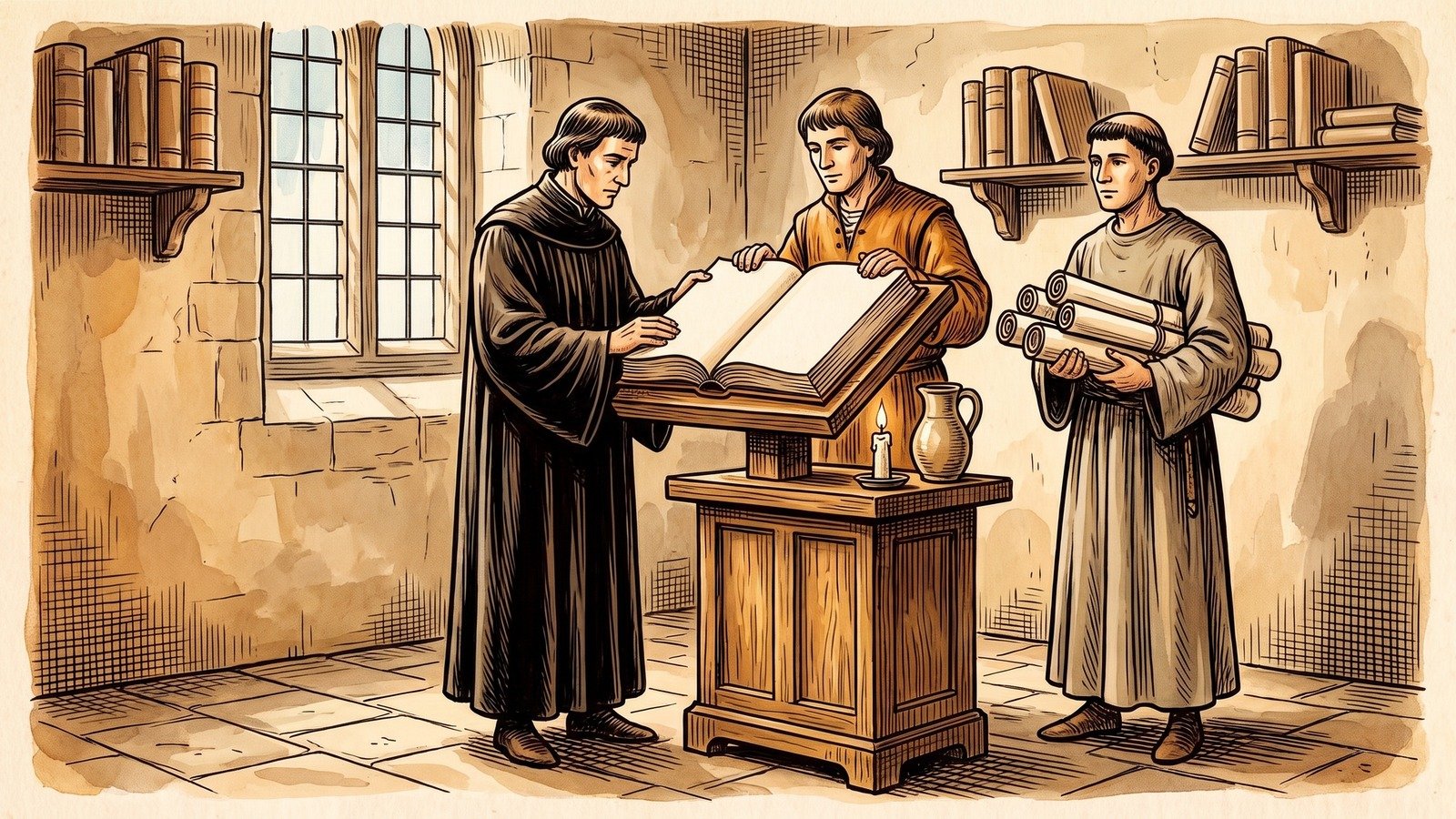
The Wycliffite Bible is the name given to the translations of the whole of the Latin Bible into English that were made in the last two decades of the fourteenth century by scholars associated with the Oxford theologian John Wyclif. It was the first complete Bible in the English language. Before it, parts of Scripture had been rendered into Old and Middle English, chiefly the Psalter, the Gospels and passages used in preaching and devotion, but no one had attempted to put every book of the Old and New Testaments, together with the Apocrypha, into the vernacular. The work survives in two principal forms, known since the nineteenth century as the Earlier Version and the Later Version, and in some two hundred and fifty manuscripts, a larger number than for any other medieval English text. Its history is bound up with the movement that contemporaries called Lollardy and with the efforts of the English church to suppress it, but it is also the history of a scholarly project with its own methods and problems. This article describes the background of the translation, the people who are thought to have taken part in it, the two versions and the principles set out by their makers, the manuscripts in which they were copied, the legislation that restricted their use, and the place of the translation in the later history of the English Bible.123
At a glance
- c. 1328: John Wyclif is born in Yorkshire.
- 1370s: Wyclif, a master at Oxford, develops his teaching on the authority of Scripture.
- 1382: The Blackfriars Council in London condemns propositions drawn from Wyclif’s works; Nicholas Hereford is suspended and leaves for Rome.
- c. 1380–1390: The Earlier Version of the Wycliffite Bible is completed.
- 31 December 1384: Wyclif dies at Lutterworth.
- c. 1390–1400: The Later Version is produced, with the General Prologue.
- 1407–1409: Archbishop Thomas Arundel’s Constitutions forbid unlicensed translation of Scripture into English.
- 1428: Wyclif’s remains are exhumed and burned by order of the Council of Constance.
- 1850: Josiah Forshall and Frederic Madden publish the first complete edition of both versions.
The Background
The Bible in England before Wyclif
The Bible of the medieval English church was the Latin Vulgate, the translation associated with Jerome that had become the standard text of the Western church in the early Middle Ages. It was read in the liturgy, expounded in the schools and quoted in sermons, and its wording was the foundation of the theology taught at Oxford and Cambridge. The vernacular had a place in religious instruction, but it was the place of paraphrase, summary and exposition rather than of continuous translation. The history of the Vulgate itself, and the textual problems it brought with it, are treated in a separate article on this site and need not be repeated here.45
There was nevertheless a long tradition of English versions of parts of the Bible. In the Anglo-Saxon period the Psalter had been glossed word by word in English, the Gospels had been translated in the West Saxon version, and Ælfric of Eynsham had rendered parts of the Old Testament. After the Norman Conquest French became the language of the court and of much of the clergy, and Anglo-Norman versions of biblical books circulated among the aristocracy. In the fourteenth century English re-emerged as a language of devotional literature. The hermit Richard Rolle of Hampole wrote an English Psalter with commentary in the 1340s, and there were metrical paraphrases of biblical history and prose versions of the Apocalypse and of the Pauline Epistles. None of these, however, covered the whole Bible, and most were accompanied by commentary that guided the reader’s understanding of the text.67
It is sometimes said that the medieval church forbade the translation of Scripture into the vernacular. This is not accurate for England before the end of the fourteenth century. There was no general prohibition, and the existence of the versions just mentioned shows that translation was practised. What the church insisted upon was that the interpretation of Scripture belonged to those who had been trained in it, and that lay readers should approach the sacred text under the guidance of the clergy. The question whether an unglossed vernacular Bible could safely be placed in the hands of the laity was not settled before Wyclif’s time, and it was his followers who made it a matter of controversy.89
John Wyclif at Oxford
John Wyclif was born in the North Riding of Yorkshire, probably in the late 1320s, and spent most of his career at Oxford, where he was associated with Merton, Balliol and Queen’s colleges. He was a philosopher of realist convictions and later a theologian, and by the 1370s he was one of the most prominent masters in the university. He also served the crown. In 1374 he was presented to the rectory of Lutterworth in Leicestershire and was sent on an embassy to Bruges to negotiate with papal representatives, and in the later 1370s he enjoyed the protection of John of Gaunt, duke of Lancaster, at a time when the government was in dispute with the papacy over taxation and appointments.101112
Wyclif’s theological writings of the 1370s and early 1380s developed a series of positions that brought him into conflict with the church authorities. He argued that dominion, the right to hold property and exercise authority, depended upon grace, so that a clergy in mortal sin had no just claim to its endowments. He attacked the wealth of the religious orders and the authority of the papacy, and from about 1379 he rejected the doctrine of transubstantiation. Underlying these views was a conception of Scripture as the supreme authority in the church. In his treatise On the Truth of Holy Scripture, written in 1377 or 1378, he argued that the Bible was the eternal law of God, true in every part, and that all doctrine and practice must be measured against it. From this it followed, in the view of his followers if not explicitly in his own early writings, that every Christian should have access to Scripture in a language that he could understand.131415
The reaction against Wyclif gathered strength after the Peasants’ Revolt of 1381, which many contemporaries, rightly or wrongly, associated with the spread of radical religious ideas. In May 1382 a council of bishops and theologians summoned by Archbishop William Courtenay met at the Blackfriars in London and condemned twenty-four propositions drawn from Wyclif’s teaching, ten as heretical and fourteen as erroneous. The council was interrupted by an earthquake, which each side interpreted as a sign in its own favour. In the following months the archbishop moved against Wyclif’s supporters in Oxford. Wyclif himself was not personally condemned and withdrew to Lutterworth, where he continued to write until his death on the last day of 1384, after a stroke suffered while hearing mass in his parish church.161718
The Makers of the Translation
The Question of Wyclif’s Own Part
The tradition that Wyclif translated the Bible himself goes back to the early fifteenth century. The Bohemian reformer Jan Hus wrote that the English said Wyclif had translated the whole Bible from Latin into English, and Archbishop Thomas Arundel, in a letter of 1411 to the pope, described Wyclif as the man who had devised the expedient of translating the Scriptures into the mother tongue. Both statements reflect the conviction, shared by friends and enemies alike, that the translation was Wyclif’s project. They do not necessarily mean that he did the work of translation with his own hand.192021
Modern scholarship is generally cautious on this point. Wyclif wrote almost entirely in Latin, and the English works once attributed to him are now thought to be mostly the work of his followers. The scale of the translation, the evidence of several hands and changes of method in the Earlier Version, and the time required for the revision all suggest a team working over a number of years. It is reasonable to think that the project was conceived in Wyclif’s circle at Oxford, and perhaps under his direct encouragement, in the years around 1380. But the evidence does not allow any particular section of the translation to be assigned to him, and most scholars now speak of the Wycliffite Bible rather than of Wyclif’s Bible.222324
Nicholas Hereford and the Earlier Version
The one name that the manuscripts themselves associate with the Earlier Version is that of Nicholas Hereford, a fellow of Queen’s College and a doctor of theology who was one of Wyclif’s most prominent supporters at Oxford. In a manuscript of the Old Testament now in the Bodleian Library, the translation is interrupted in the middle of the book of Baruch, at chapter 3, verse 20, and a note in the margin records that the translation of Nicholas ended there. The rest of the Old Testament in that manuscript is written in a different hand and a somewhat different style. Since Hereford was summoned before the Blackfriars Council in 1382, excommunicated, and left England to appeal to the pope, it has often been supposed that the note marks the point at which his work was interrupted by his flight.252627
This interpretation is attractive, but it has been questioned. The note may refer to the scribe rather than the translator, and the change of hand need not coincide with a change of translator. Hereford’s later career was unusual. He was imprisoned in Rome, escaped and returned to England, was imprisoned again, and in about 1391 recanted his Wycliffite views. He spent the rest of his life as a respectable cleric, holding the chancellorship of Hereford cathedral, and he ended his days as a Carthusian monk. Whatever his role in the translation, it was over well before the Later Version was completed.2829
John Purvey and the Later Version
The Later Version was attributed in the nineteenth century to John Purvey, who had been Wyclif’s secretary at Lutterworth and who was later recognised by the church authorities as one of the leaders of the Lollard movement. The attribution was made by Forshall and Madden, the first editors of both versions, and it was based largely on similarities between the General Prologue that accompanies some copies of the Later Version and other writings thought to be by Purvey. For much of the twentieth century it was accepted as a fact, and Purvey’s name appeared in textbooks as the reviser of the Wycliffite Bible.3031
Later scholars have shown that the evidence for Purvey’s authorship is weak. The works on which the comparison was based cannot themselves be securely attributed to him, and nothing in the record of his examinations by the church authorities refers to the translation. Anne Hudson and Mary Dove, among others, have argued that the Later Version, like the Earlier, was the work of a group of scholars, probably based at Oxford, and that no single reviser can be identified. The anonymity of the work is consistent with the circumstances in which it was made, for those who took part had every reason not to put their names to it once the translation of Scripture into English had come under suspicion.3233
A Collaborative Project
What emerges from the study of the manuscripts is a picture of a large and sustained scholarly undertaking. The translators did not simply put the Vulgate into English. They collected Latin manuscripts and compared them in order to establish a sound text, they consulted the standard commentaries, especially the Postills of the Franciscan Nicholas of Lyra, and they added glosses in the margins and between the lines where they thought the sense required explanation. Copies were corrected against one another, and revisions were introduced gradually rather than all at once. Such work required access to libraries, time and money, and it is difficult to imagine it being carried out anywhere but in a university setting during the years when Wyclif’s followers still held positions at Oxford, that is, in the 1380s and the early 1390s.3435
The Two Versions
The Earlier Version
The Earlier Version is an extremely literal translation of the Latin. It follows the order of words in the Vulgate closely, reproduces Latin constructions such as the ablative absolute and the present participle, and often renders Latin words by English words of similar form even when the result is awkward or obscure. A familiar example is the opening of the Lord’s Prayer in Matthew, which in the Earlier Version reads: “Oure fadir that art in heuenes, halewid be thi name; thi kyngdom come to; be thi wille don as in heuen and in erthe.” The phrase “come to,” a rendering of the Latin adveniat, shows how the translators followed the structure of the original word by word.3637
This literalism was not the result of incompetence. It reflected a widespread view of how Scripture should be translated, according to which the words of the sacred text were themselves the bearers of meaning and should be preserved as far as possible. An English text that matched the Latin word for word could serve as a guide to the Latin for readers who knew a little of that language, and it could be checked against the Vulgate by those who knew it well. The translators of the Earlier Version may have intended their work to be used alongside the Latin rather than in place of it. The result, however, was a text that was often hard to read on its own, and it is not surprising that it was soon revised.3839
The Later Version
The Later Version is a thorough revision of the Earlier, made in the 1390s. It keeps much of the vocabulary of the Earlier Version but rearranges the words into a natural English order, resolves Latin participles and absolute constructions into English clauses, and adds words where they are needed to make the sense clear. The Lord’s Prayer in the Later Version reads: “Oure fadir that art in heuenes, halewid be thi name; thi kyngdoom come; be thi wille don in erthe as in heuene.” The difference is small in this passage, but over the whole Bible the effect is considerable. The Later Version reads as English prose, and it was in this form that the Wycliffite Bible circulated most widely.4041
The General Prologue
The principles of the revision are described in the General Prologue, a long English treatise that is found in a small number of manuscripts of the Later Version. Most of the Prologue is a guide to the books of the Old Testament, with comments on their contents and on how they should be read, and it contains passages of sharp criticism of the clergy and of the university authorities. In its fifteenth chapter, however, the author describes the process by which the translation was made. He speaks of himself as a “simple creature” who, with the help of others, first gathered many old Latin Bibles and compared them to establish a true text, then studied the gloss and the commentaries, especially Lyra on the Old Testament, then consulted old grammarians and divines about hard words and sentences, and finally translated as clearly as he could to the sense, and had many good fellows and skilled men at the correcting of the translation.424344
The author then explains his method of translating. He says that the best way to translate from Latin into English is to translate according to the sentence, that is, the meaning, and not only according to the words, so that the sentence is as open in English as it is in Latin. He gives examples of how Latin constructions should be resolved into English: an ablative absolute may be rendered by a clause beginning with “while,” “for,” “if” or “after,” a participle may be rendered by a verb with a conjunction, and a relative pronoun may be turned into a conjunction with a personal pronoun. These remarks are among the earliest discussions of the theory of translation in English, and they show a clear awareness of the differences between the two languages.454647
The Text Translated
Both versions translate the whole of the Vulgate Bible as it was known in late medieval England, including the books that later Protestant Bibles placed in the Apocrypha. The translators were aware of the distinction made by Jerome between the books of the Hebrew canon and the others, and some manuscripts include Jerome’s prologues, which explain it. Where the Vulgate of their day contained additions that were not in older manuscripts, the translators sometimes marked them or noted that they were lacking in the Hebrew. They had no direct access to the Hebrew or Greek, and their knowledge of the original languages was confined to what they could learn from Jerome and from Lyra, who often reported Jewish interpretations of the Hebrew text.4849
The Manuscripts
Number and Distribution
About two hundred and fifty manuscripts of the Wycliffite Bible survive, containing either the whole Bible or parts of it. The great majority contain the Later Version, and most of them are copies of the New Testament or of parts of it, such as the Gospels or the Epistles. Complete Bibles are relatively few, perhaps twenty or so, and these are large and expensive books written on parchment by professional scribes. Smaller copies of the New Testament, often of pocket size, are the most common type. The manuscripts are now scattered among libraries in Britain, North America and elsewhere, with important collections in the Bodleian Library at Oxford, the British Library and the libraries of Cambridge.5051
The number of surviving copies is remarkable when it is compared with other English texts of the period. More manuscripts of the Wycliffite Bible survive than of the Canterbury Tales of Geoffrey Chaucer or of the Prick of Conscience, the most widely copied English poem of the Middle Ages. Since many copies were certainly destroyed, the original number must have been considerably greater. This is evidence of a large and sustained demand for the English Scriptures in the decades following the translation, in spite of the restrictions placed on them.5253
The Character of the Books
Many of the manuscripts are handsome books. They are written in the formal book hands of the period, with decorated initials and borders, rubrics and running titles. Some have tables of lessons that show which passages were to be read at mass on each day of the church year, so that the reader could follow the liturgy in English. These tables, known as lectionaries, were based on the use of Sarum, the liturgy followed in most English dioceses. Their presence shows that the English Bible was used in close connection with the worship of the church, and that its readers were not necessarily opposed to the established religious practice of their day.5455
Owners and Readers
The surviving evidence about the owners of Wycliffite Bibles is surprising to those who think of the translation only as a heretical text. Among the identified owners were members of the royal family and the higher nobility. Thomas of Woodstock, duke of Gloucester and youngest son of Edward III, owned a copy of the Earlier Version, and later copies belonged to Henry VI, who gave one to the Charterhouse of London, and to Henry VII. Religious houses, including houses of nuns, owned copies, and so did parish priests and pious lay men and women. Some manuscripts contain inscriptions recording that they had been examined and approved by church authorities.5657
Lollards also owned and read the English Bible, and the records of heresy trials in the fifteenth century show that the possession of English books was taken as evidence of heresy. Groups of Lollards met in private houses to read the Scriptures together, and some learned passages by heart. The contrast between these two kinds of ownership is one of the central problems in the history of the Wycliffite Bible. The same text could be the treasured possession of a king and the evidence that sent a craftsman to the stake. The explanation lies partly in the terms of the legislation against it, and partly in the social status of the owners, for the authorities were more concerned with what ordinary readers might do with the text than with the books in the hands of the powerful.585960
Controversy and Restriction
The Oxford Translation Debate
The question whether it was lawful to translate the Bible into English was debated at Oxford in the first years of the fifteenth century. Several academic treatises survive from this debate, in Latin and in English. The opponents of translation argued that English was too poor a language to convey the meaning of Scripture, that translation would lead to error and heresy among the unlearned, and that the authority of the church to interpret Scripture would be undermined. Its defenders replied that the apostles had preached in the languages of the peoples they addressed, that the Bible had been translated into Latin and other languages in the past, and that the English already possessed versions of parts of Scripture. They also pointed out that other nations had the Bible in their own languages.616263
One of the most frequently cited examples in this debate was that of Anne of Bohemia, the first queen of Richard II, who died in 1394. A Wycliffite tract states that Archbishop Arundel, in his sermon at her funeral, praised her for having possessed the Gospels in Latin, Czech and German, and for having studied them with commentaries. Whether or not the archbishop said exactly this, the claim was used by the defenders of translation to show that even a queen of the highest orthodoxy had read the Scriptures in her own language. The marriage of Richard and Anne also brought Bohemian students to Oxford, and through them the writings of Wyclif reached Prague, where they influenced Jan Hus and the Bohemian reform movement.64656667
Arundel’s Constitutions
The debate was brought to an end by the legislation of Thomas Arundel, archbishop of Canterbury, who had returned from exile with Henry IV in 1399 and was one of the chief supporters of the new Lancastrian regime. Arundel’s Constitutions were drafted at a council held at Oxford in 1407 and published in 1409. They regulated preaching, the teaching of theology and the discussion of doctrine in the schools, and required a monthly inquiry into the opinions of students at Oxford. The seventh of the Constitutions dealt with translation. It decreed that no one should henceforth translate any text of Scripture into English on his own authority, by way of a book, booklet or treatise, and that no one should read any such book composed in the time of Wyclif or since, in whole or in part, publicly or privately, until it had been approved by the bishop of the diocese or, if need be, by a provincial council.686970
The Constitution did not forbid the English Bible absolutely. It forbade unlicensed translation and the reading of unapproved translations, and it left open the possibility of approval. In practice, however, no translation was approved, and the effect of the legislation was to make the possession of any English Bible potentially dangerous for those without the protection of rank. Nicholas Watson has argued that the Constitutions had a wider effect on English religious writing in the fifteenth century, discouraging the composition of new works of vernacular theology and encouraging a more cautious and conventional devotional literature. The extent of this effect is debated, but there is no doubt that the legislation changed the conditions under which the English Bible was read.7172
The Lollards and the Courts
The Lollard movement survived the persecution of the early fifteenth century, though in a diminished form. The rising led by Sir John Oldcastle in 1414 was quickly suppressed, and it confirmed the association between Lollardy and sedition in the minds of the authorities. Oldcastle was executed in 1417. Thereafter Lollardy became a movement of artisans and small traders in particular regions, including the Chilterns, parts of Kent, the Midlands and London. Its members met in small groups, read the Wycliffite Bible and other English texts, and passed their beliefs from one generation to the next. The account of the preaching that spread these beliefs through the English countryside is given in a separate article on this site.73747576
The records of the church courts show that the possession and reading of English Scriptures was one of the main charges brought against suspected Lollards. Defendants were asked whether they owned English books, who had taught them to read, and with whom they had read. Some confessed to having learned the Gospels, the Epistle of James or the Apocalypse by heart. Books were confiscated and burned, and some of their owners were executed. Yet the authorities never succeeded in suppressing the English Bible entirely, and the continued copying of the Later Version into the early sixteenth century shows that demand for it persisted.7778
The Condemnation of Wyclif
Wyclif himself was condemned posthumously. The Council of Constance, which met from 1414 to 1418 to end the Great Schism and reform the church, condemned forty-five articles drawn from his works in 1415 and ordered that his remains should be removed from consecrated ground. The same council condemned and burned Jan Hus, whose teaching owed much to Wyclif. The order concerning Wyclif’s body was carried out only in 1428, when Richard Fleming, bishop of Lincoln, had the remains exhumed at Lutterworth, burned, and the ashes thrown into the river Swift, which flows nearby. The incident was later recounted by Protestant writers as a symbol of the spread of Wyclif’s teaching, carried by the Swift into the Avon, the Severn and the sea.79808182
The Language of the Translation
Middle English Prose
The Wycliffite Bible was written in the Middle English of the late fourteenth century, in a form of the language associated with the central Midlands. This was not the dialect of London, which formed the basis of later standard English, but it was widely understood, and the scribes who copied the translation in London and elsewhere often adapted its spelling to their own habits. The language of the translation is therefore an important source for historians of English, who have used it to study the development of vocabulary, syntax and spelling in the period of Chaucer and his contemporaries.8384
Glosses and Explanations
A feature of the Wycliffite Bible that distinguishes it from later English Bibles is the presence of glosses within the text or in the margins. The translators often added a word or phrase of explanation after a difficult term, introduced by “that is,” and in some manuscripts these explanations are underlined or written in red to distinguish them from the text. The marginal glosses, especially in the Later Version, are drawn from the commentaries of Lyra and of earlier authorities, and they explain the literal sense of the text, give the meanings of Hebrew names and offer alternative renderings.8586
Later History
The Wycliffite Bible and the Reformation
By the time William Tyndale began his translation of the New Testament from the Greek in the 1520s, the Wycliffite Bible had been in circulation for more than a century. Its language was old-fashioned, and its dependence on the Latin made it unacceptable to humanist scholars who wished to translate from the originals. Tyndale does not appear to have used it directly, and the resemblances between his version and the Wycliffite text are best explained by the common inheritance of English biblical vocabulary. Nevertheless the existence of the older version was an important element in the debates of the sixteenth century. Lollard communities were among the first to receive Tyndale’s New Testament, and the authorities who pursued its readers often treated them as successors of the Lollards.878889
In his Dialogue Concerning Heresies of 1529, Thomas More argued that the church had never forbidden English Bibles as such, and that he had himself seen old English Bibles that had been approved by the bishops and were in the hands of good Catholic people. More was replying to Tyndale’s charge that the clergy kept Scripture from the people. Historians have since established that the Bibles More described were almost certainly copies of the Wycliffite Later Version, which their owners did not recognise as the product of Wyclif’s circle. More’s argument thus bears unintended witness to the wide circulation of the Wycliffite Bible among orthodox readers.9091
The history of the English Bible after Tyndale, through the Coverdale, Great, Geneva and Bishops’ Bibles to the Authorised Version of 1611, is treated in a separate article on this site. The Wycliffite Bible stands at the beginning of that history as a precedent rather than a source. It showed that the whole Bible could be put into English and that there was a large public ready to read it, and it gave rise to the controversy over vernacular Scripture that the reformers of the sixteenth century inherited.9293
Printing and Editing
The Wycliffite Bible was not printed in the sixteenth century, when it would have been both outdated and politically compromising. It was rediscovered by antiquaries and Protestant historians in the following centuries. John Lewis, a clergyman of Kent, published the New Testament of the Later Version in 1731, with a history of the English translations of the Bible. A further edition of the New Testament appeared in 1810, and in 1848 the Earlier Version of the New Testament was printed for the first time.9495
The first complete edition of both versions was published in 1850 by Josiah Forshall and Frederic Madden, after more than twenty years of work. It printed the Earlier and Later Versions in parallel columns, with variant readings from the manuscripts and a long introduction describing the surviving copies and setting out the editors’ views on the authorship and history of the translation. The edition remains indispensable, although many of its conclusions have been revised. In particular, its attribution of the Later Version to Purvey and its account of the relationship between the manuscripts have been questioned by later scholars, and the manuscripts discovered since 1850 have added to the picture.9697
Modern Scholarship
The modern study of the Wycliffite Bible was transformed in the second half of the twentieth century by the work of Anne Hudson, whose studies of Lollard texts and Lollard history placed the translation in the context of a sophisticated academic movement with its own programme of reform. Hudson’s book The Premature Reformation, published in 1988, argued that Lollardy was a coherent movement with a distinctive body of writings and that it survived to the eve of the Reformation. Her work showed that the translation of the Bible was only one part of a larger Lollard literary enterprise that included sermon cycles, commentaries and polemical treatises in English.9899
Mary Dove’s study The First English Bible, published in 2007, was the first comprehensive examination of the text and context of the Wycliffite versions since Forshall and Madden. Dove described the process of translation and revision in detail, discussed the Latin text on which the translators worked and the glosses they added, and surveyed the manuscripts and their owners. Her work emphasised the scholarly character of the project and the extent to which the Wycliffite Bible was read by orthodox Christians as well as by Lollards. A collection of essays edited by Elizabeth Solopova in 2017 extended this research, with studies of the manuscripts, the language and the reception of the translation.100101
Assessment
The Wycliffite Bible occupies a distinctive place in the history of the English Bible and of English literature. It was a scholarly translation made with great care by men trained in the methods of the medieval university, who compared manuscripts, consulted commentaries and reflected on the principles of translation. It was also a book that circulated widely among readers of very different kinds, from the royal family to the artisans of the Chiltern villages. Its makers worked within the Latin tradition and translated from the Vulgate, and their work was soon superseded by translations from the original languages, but the questions they raised about the right of the laity to read Scripture in their own tongue remained at the centre of religious controversy for another century and a half.102103104
Notes
- Josiah Forshall and Frederic Madden, eds., The Holy Bible, Containing the Old and New Testaments, with the Apocryphal Books, in the Earliest English Versions Made from the Latin Vulgate by John Wycliffe and His Followers, 4 vols. (Oxford: Oxford University Press, 1850). *
- Mary Dove, The First English Bible: The Text and Context of the Wycliffite Versions (Cambridge: Cambridge University Press, 2007). *
- ““Wycliffe’s Bible””. *
- ““Vulgate””. *
- See also “From Jerome to the Stuttgart Vulgate” on this site. *
- Margaret Deanesly, The Lollard Bible and Other Medieval Biblical Versions (Cambridge: Cambridge University Press, 1920). *
- ““Richard Rolle””. *
- Margaret Deanesly, The Lollard Bible and Other Medieval Biblical Versions (Cambridge: Cambridge University Press, 1920). *
- Nicholas Watson, “Censorship and Cultural Change in Late-Medieval England: Vernacular Theology, the Oxford Translation Debate, and Arundel’s Constitutions of 1409,” Speculum 70 (1995): 822–864. *
- ““John Wycliffe””. *
- ““University of Oxford””. *
- ““Lutterworth””. *
- ““John Wycliffe””. *
- Kantik Ghosh, The Wycliffite Heresy: Authority and the Interpretation of Texts (Cambridge: Cambridge University Press, 2002). *
- Anne Hudson, The Premature Reformation: Wycliffite Texts and Lollard History (Oxford: Clarendon Press, 1988). *
- ““John Wycliffe””. *
- ““Peasants’ Revolt””. *
- Andrew E. Larsen, The School of Heretics: Academic Condemnation at the University of Oxford, 1277–1409 (Leiden: Brill, 2011). *
- ““Jan Hus””. *
- ““Thomas Arundel””. *
- Margaret Deanesly, The Lollard Bible and Other Medieval Biblical Versions (Cambridge: Cambridge University Press, 1920). *
- Mary Dove, The First English Bible: The Text and Context of the Wycliffite Versions (Cambridge: Cambridge University Press, 2007). *
- Anne Hudson, The Premature Reformation: Wycliffite Texts and Lollard History (Oxford: Clarendon Press, 1988). *
- Henry Hargreaves, “The Wycliffite Versions,” in G. W. H. Lampe, ed., The Cambridge History of the Bible, vol. 2 (Cambridge: Cambridge University Press, 1969), 387–415. *
- Josiah Forshall and Frederic Madden, eds., The Holy Bible, Containing the Old and New Testaments, with the Apocryphal Books, in the Earliest English Versions Made from the Latin Vulgate by John Wycliffe and His Followers, 4 vols. (Oxford: Oxford University Press, 1850). *
- ““Bodleian Library””. *
- Henry Hargreaves, “The Wycliffite Versions,” in G. W. H. Lampe, ed., The Cambridge History of the Bible, vol. 2 (Cambridge: Cambridge University Press, 1969), 387–415. *
- Mary Dove, The First English Bible: The Text and Context of the Wycliffite Versions (Cambridge: Cambridge University Press, 2007). *
- Anne Hudson, The Premature Reformation: Wycliffite Texts and Lollard History (Oxford: Clarendon Press, 1988). *
- Josiah Forshall and Frederic Madden, eds., The Holy Bible, Containing the Old and New Testaments, with the Apocryphal Books, in the Earliest English Versions Made from the Latin Vulgate by John Wycliffe and His Followers, 4 vols. (Oxford: Oxford University Press, 1850). *
- Henry Hargreaves, “The Wycliffite Versions,” in G. W. H. Lampe, ed., The Cambridge History of the Bible, vol. 2 (Cambridge: Cambridge University Press, 1969), 387–415. *
- Anne Hudson, The Premature Reformation: Wycliffite Texts and Lollard History (Oxford: Clarendon Press, 1988). *
- Mary Dove, The First English Bible: The Text and Context of the Wycliffite Versions (Cambridge: Cambridge University Press, 2007). *
- Mary Dove, The First English Bible: The Text and Context of the Wycliffite Versions (Cambridge: Cambridge University Press, 2007). *
- Elizabeth Solopova, ed., The Wycliffite Bible: Origin, History and Interpretation (Leiden: Brill, 2017). *
- Josiah Forshall and Frederic Madden, eds., The Holy Bible, Containing the Old and New Testaments, with the Apocryphal Books, in the Earliest English Versions Made from the Latin Vulgate by John Wycliffe and His Followers, 4 vols. (Oxford: Oxford University Press, 1850). *
- ““Middle English””. *
- Mary Dove, The First English Bible: The Text and Context of the Wycliffite Versions (Cambridge: Cambridge University Press, 2007). *
- Henry Hargreaves, “The Wycliffite Versions,” in G. W. H. Lampe, ed., The Cambridge History of the Bible, vol. 2 (Cambridge: Cambridge University Press, 1969), 387–415. *
- Josiah Forshall and Frederic Madden, eds., The Holy Bible, Containing the Old and New Testaments, with the Apocryphal Books, in the Earliest English Versions Made from the Latin Vulgate by John Wycliffe and His Followers, 4 vols. (Oxford: Oxford University Press, 1850). *
- ““Middle English””. *
- Josiah Forshall and Frederic Madden, eds., The Holy Bible, Containing the Old and New Testaments, with the Apocryphal Books, in the Earliest English Versions Made from the Latin Vulgate by John Wycliffe and His Followers, 4 vols. (Oxford: Oxford University Press, 1850). *
- Anne Hudson, ed., Selections from English Wycliffite Writings (Cambridge: Cambridge University Press, 1978). *
- Mary Dove, The First English Bible: The Text and Context of the Wycliffite Versions (Cambridge: Cambridge University Press, 2007). *
- Anne Hudson, ed., Selections from English Wycliffite Writings (Cambridge: Cambridge University Press, 1978). *
- Mary Dove, The First English Bible: The Text and Context of the Wycliffite Versions (Cambridge: Cambridge University Press, 2007). *
- ““Middle English””. *
- Mary Dove, The First English Bible: The Text and Context of the Wycliffite Versions (Cambridge: Cambridge University Press, 2007). *
- ““Vulgate””. *
- Mary Dove, The First English Bible: The Text and Context of the Wycliffite Versions (Cambridge: Cambridge University Press, 2007). *
- ““Bodleian Library””. *
- Mary Dove, The First English Bible: The Text and Context of the Wycliffite Versions (Cambridge: Cambridge University Press, 2007). *
- ““Geoffrey Chaucer””. *
- Mary Dove, The First English Bible: The Text and Context of the Wycliffite Versions (Cambridge: Cambridge University Press, 2007). *
- Elizabeth Solopova, ed., The Wycliffite Bible: Origin, History and Interpretation (Leiden: Brill, 2017). *
- Mary Dove, The First English Bible: The Text and Context of the Wycliffite Versions (Cambridge: Cambridge University Press, 2007). *
- Margaret Deanesly, The Lollard Bible and Other Medieval Biblical Versions (Cambridge: Cambridge University Press, 1920). *
- ““Lollardy””. *
- Anne Hudson, The Premature Reformation: Wycliffite Texts and Lollard History (Oxford: Clarendon Press, 1988). *
- See also “Whispers in the Shires: The Lollard Preaching Campaign That Shook Medieval England” on this site. *
- Nicholas Watson, “Censorship and Cultural Change in Late-Medieval England: Vernacular Theology, the Oxford Translation Debate, and Arundel’s Constitutions of 1409,” Speculum 70 (1995): 822–864. *
- Margaret Deanesly, The Lollard Bible and Other Medieval Biblical Versions (Cambridge: Cambridge University Press, 1920). *
- ““University of Oxford””. *
- ““Anne of Bohemia””. *
- ““Richard II of England””. *
- ““Jan Hus””. *
- See also “Jan Hus and Bohemian History” on this site. *
- ““Thomas Arundel””. *
- Nicholas Watson, “Censorship and Cultural Change in Late-Medieval England: Vernacular Theology, the Oxford Translation Debate, and Arundel’s Constitutions of 1409,” Speculum 70 (1995): 822–864. *
- ““Henry IV of England””. *
- Nicholas Watson, “Censorship and Cultural Change in Late-Medieval England: Vernacular Theology, the Oxford Translation Debate, and Arundel’s Constitutions of 1409,” Speculum 70 (1995): 822–864. *
- Kantik Ghosh, The Wycliffite Heresy: Authority and the Interpretation of Texts (Cambridge: Cambridge University Press, 2002). *
- ““John Oldcastle””. *
- ““Oldcastle Revolt””. *
- ““Lollardy””. *
- See also “Whispers in the Shires: The Lollard Preaching Campaign That Shook Medieval England” on this site. *
- Anne Hudson, The Premature Reformation: Wycliffite Texts and Lollard History (Oxford: Clarendon Press, 1988). *
- ““Lollardy””. *
- ““Council of Constance””. *
- ““Jan Hus””. *
- ““Lutterworth””. *
- See also “Jan Hus and Bohemian History” on this site. *
- ““Middle English””. *
- ““Geoffrey Chaucer””. *
- Mary Dove, The First English Bible: The Text and Context of the Wycliffite Versions (Cambridge: Cambridge University Press, 2007). *
- Elizabeth Solopova, ed., The Wycliffite Bible: Origin, History and Interpretation (Leiden: Brill, 2017). *
- ““William Tyndale””. *
- ““Tyndale Bible””. *
- See also “William Tyndale” on the main site. *
- ““Thomas More””. *
- Margaret Deanesly, The Lollard Bible and Other Medieval Biblical Versions (Cambridge: Cambridge University Press, 1920). *
- See also “The English Bibles Between Tyndale and 1611” on this site. *
- ““Bible translations into English””. *
- Josiah Forshall and Frederic Madden, eds., The Holy Bible, Containing the Old and New Testaments, with the Apocryphal Books, in the Earliest English Versions Made from the Latin Vulgate by John Wycliffe and His Followers, 4 vols. (Oxford: Oxford University Press, 1850). *
- Mary Dove, The First English Bible: The Text and Context of the Wycliffite Versions (Cambridge: Cambridge University Press, 2007). *
- Josiah Forshall and Frederic Madden, eds., The Holy Bible, Containing the Old and New Testaments, with the Apocryphal Books, in the Earliest English Versions Made from the Latin Vulgate by John Wycliffe and His Followers, 4 vols. (Oxford: Oxford University Press, 1850). *
- Henry Hargreaves, “The Wycliffite Versions,” in G. W. H. Lampe, ed., The Cambridge History of the Bible, vol. 2 (Cambridge: Cambridge University Press, 1969), 387–415. *
- Anne Hudson, The Premature Reformation: Wycliffite Texts and Lollard History (Oxford: Clarendon Press, 1988). *
- Anne Hudson, ed., Selections from English Wycliffite Writings (Cambridge: Cambridge University Press, 1978). *
- Mary Dove, The First English Bible: The Text and Context of the Wycliffite Versions (Cambridge: Cambridge University Press, 2007). *
- Elizabeth Solopova, ed., The Wycliffite Bible: Origin, History and Interpretation (Leiden: Brill, 2017). *
- Mary Dove, The First English Bible: The Text and Context of the Wycliffite Versions (Cambridge: Cambridge University Press, 2007). *
- Anne Hudson, The Premature Reformation: Wycliffite Texts and Lollard History (Oxford: Clarendon Press, 1988). *
- ““Wycliffe’s Bible””. *


