The eldest and the leader
Meyer Guggenheim’s seven surviving sons were often treated by the press as a single entity, “the Guggenheims”, and the family encouraged the impression of unity. The histories show seven very different men.[1][2] Isaac, the eldest, born in 1854, was the most conservative of them, careful with money, at home with accounts, and the least interested in risk. He served for many years as the firm’s treasurer and its senior partner in name, but by the early twentieth century he had withdrawn from the day-to-day direction of the business and lived as a country gentleman on Long Island. He died in 1922.[1][2]
Daniel, born on 9 July 1856, was the leader. He was small, energetic and decisive, and his brothers accepted his authority in business for more than twenty years.[1][3] He was also the most reflective of them about the social consequences of industry. In 1915, giving evidence to the federal Commission on Industrial Relations, which had been set up after a series of violent strikes, including the massacre of miners’ families at Ludlow in Colorado the year before, Daniel acknowledged that there was too great a disparity between the rich and the poor, and spoke in favour of a greater share for labour in the profits of industry, while defending the right of employers to manage.[1][4] The testimony was widely reported and showed a man who understood, more than many of his peers, that the age of the unregulated trust was ending.
Murry, Solomon and the partnership
Murry, the third son, born in 1858, was quiet, precise and able. He managed the sales of the firm’s metal, a task that required a close knowledge of markets and a cool head, and he was, with Solomon, one of the two brothers who remained active in Guggenheim Brothers into the 1930s.[1][5] With his wife Leonie he founded, in 1929, the Murry and Leonie Guggenheim Foundation, which ran a free dental clinic for the children of New York.[1] Solomon, born in 1861, was the most sociable of the brothers, fond of country life, of hunting and of travel. He was a capable executive who spent much of his career managing the family’s interests in Mexico and in smelting.[1][6] He married Irene Rothschild, the daughter of a prosperous New York business family, no relation of the European bankers, and the couple had three daughters. From the mid-1890s they collected Old Master paintings and American landscapes, and later the Barbizon school.[6] His encounter, in his late sixties, with a German painter named Hilla Rebay would change the history of modern art.
Benjamin, born in 1865, and William, born in 1868, were the two who had learned the business at Leadville and Pueblo and who left the partnership in 1900 and 1901. Benjamin’s life, and the way it ended, are the subject of a later chapter. William, the youngest, studied at the University of Pennsylvania, married against his family’s wishes, divorced, and spent much of his later life in a long and public quarrel with his brothers over money.[1][2] In 1934, under the pseudonym Gatenby Williams, he published a biography of himself, William Guggenheim, that presented him as the neglected genius of the family.[1]
Simon, born in 1867, was the brother who went into politics. His career as senator for Colorado and the foundation that he and his wife established in memory of their son are told in the next chapter.[7][8]
Houses by the sea
The brothers’ houses tell their own story of the family’s rise. In the 1890s several of them took summer houses at Elberon and West End on the New Jersey shore, then a favourite resort of rich New Yorkers; Murry’s house at West End later became the library of Monmouth University.[1] In the twentieth century the family moved to the north shore of Long Island. Daniel bought Hempstead House at Sands Point, a vast stone mansion built by Howard Gould, the son of the railway speculator whose shares Meyer had once sold so profitably, and Harry built his own house nearby, Falaise, in the style of a Norman manor.[1][2] Both estates now belong to Nassau County as the Sands Point Preserve.[1]
These houses were not only places of leisure. They were where the family entertained its business associates, politicians and, in Harry’s case, the aviators whose work he supported; Charles Lindbergh, the most famous of them, wrote his account of his flight to Paris as a guest at Falaise.[1][9] They were also a declaration of arrival, built in the years when the Guggenheims were still excluded from many of the clubs and resorts of the Protestant elite, and when a Jewish family that had made its fortune in mining could still be represented in the press as a band of upstarts.[1][10]
The sisters
The histories have far less to say about Meyer’s daughters than about his sons, because the daughters did not enter the business. Jeannette, the eldest, died young in childbirth. Rose and Cora married into the German-Jewish business families of New York.[1][2] Their exclusion from the firm was a matter of course for the time, but it also meant that their branches of the family did not share directly in the copper fortune, and the inheritance of the daughters became a source of tension when their father’s estate was divided.[1] The pattern was repeated in the next generation. Among Meyer’s grandchildren the women who became famous, Peggy Guggenheim above all, did so outside the family business and often against the wishes of their elders.
The sons and daughters of the seven brothers grew up in a world very different from the one their fathers had known. Daniel’s eldest son, M. Robert Guggenheim, served in the army in the First World War and was later appointed United States ambassador to Portugal; Daniel’s daughter Gladys married Roger W. Straus, and their son, Roger W. Straus Jr., founded the publishing house that became Farrar, Straus and Giroux.[1][2] One of Solomon’s daughters, Eleanor, married into the Irish peerage as the wife of the Earl Castle Stewart.[1][2] Few of the third generation went into mining. The family historians see in this a familiar pattern of American wealth, in which the first generation makes a fortune, the second multiplies it, and the third, raised among the comforts it pays for, turns to public service, the arts, sport or society.[1][2][10] The family’s philanthropy, which began with the brothers, was carried forward by several of their children, and it is through the foundations rather than the firm that the name has lasted.[1][8]
Wealth, temples and Society
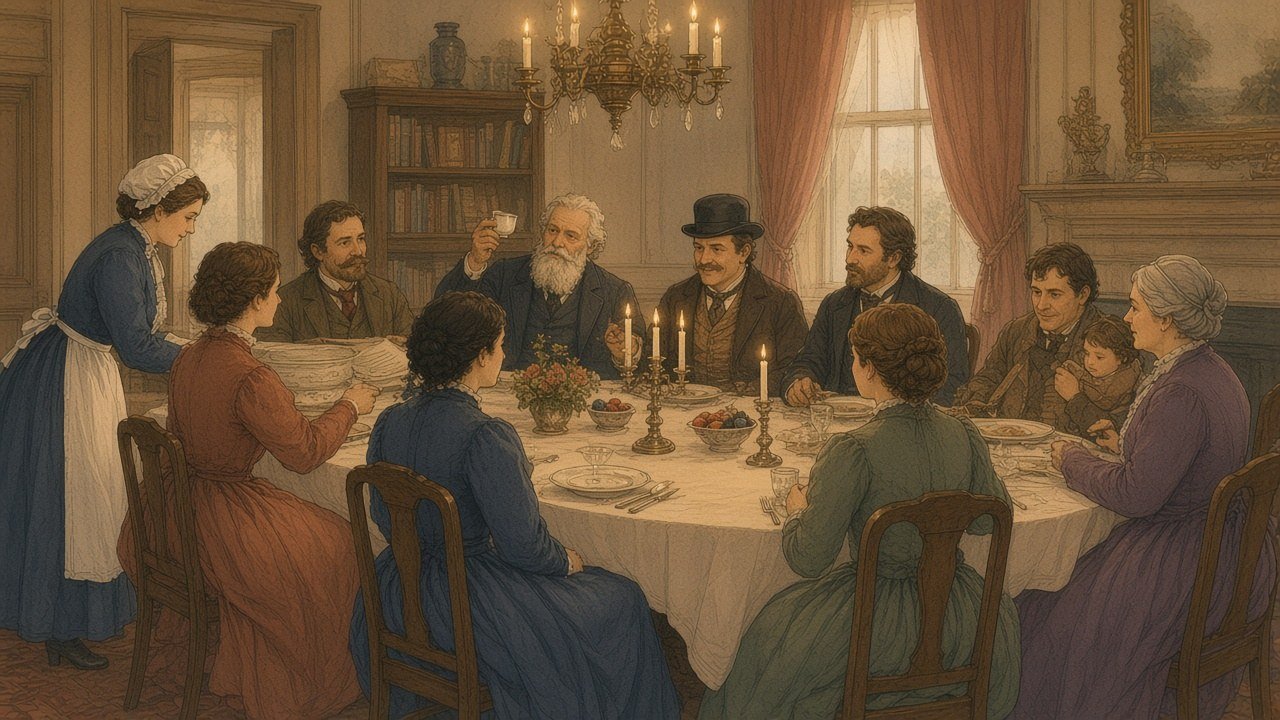
By the early twentieth century the brothers were among the richest men in America. They lived in great houses in New York and on the New Jersey coast at Elberon, near Long Branch, and later on the north shore of Long Island, where Daniel bought a great mansion at Sands Point, Hempstead House, and Isaac and others had estates nearby.[1][2] They married into the established German-Jewish families of New York. Daniel’s wife was a Schloss; Benjamin married Florette Seligman, the daughter of James Seligman of the banking house J. and W. Seligman; Simon married Olga Hirsh.[1][11][8]
These families formed a society of their own, centred on the great Reform synagogue Temple Emanu-El on Fifth Avenue, on Mount Sinai Hospital and on the charitable institutions of the Jewish community. They were not admitted to many of the clubs, resorts and schools of Protestant New York, and the Guggenheims’ relationship to that exclusion was ambivalent: they built institutions of their own, and they also sought, through philanthropy, a place in the wider life of the city and the nation.[1][10] The Landmarks Preservation Commission, summing up the family in its report on the Guggenheim Museum, lists the causes the brothers and their wives supported: the American Women’s Association, the Jewish Theological Seminary, the New York Botanical Garden, research in aeronautics and the fellowships for scholars.[6]
The brothers’ Judaism followed the pattern of their class. Meyer had kept, in the words of one biographer, nominal ties with his Orthodox faith; his sons belonged to Reform congregations, supported Jewish charities and married Jewish women, but several of their children married outside the faith, and by the third generation many members of the family had no Jewish practice at all.[12][1] Daniel and Florence Guggenheim were among the most generous supporters of Jewish causes, and they also founded, in 1924, the Daniel and Florence Guggenheim Foundation, whose gifts included the free summer concerts of the Goldman Band in Central Park and, most famously, the support of aviation and rocketry.[1][13]
The partnership survived the death of Meyer and the departure of Benjamin and William, but its strength diminished with age. Isaac died in 1922; Daniel retired from active business in the early 1920s and died at Hempstead House on 28 September 1930.[1][14] Murry died in 1939, Simon and William in 1941, and Solomon in 1949. None of their sons took over the firm in the way they had taken it over from their father. The grandsons who might have done so, Harry and Edmond, resigned over the sale of Chuquicamata, and Guggenheim Brothers became, after the nitrate disaster, a far smaller concern.[5][1] The family’s energies passed from business to the foundations, and the first of the great family foundations was Simon’s.
References
OpenClose
- Irwin Unger and Debi Unger, The Guggenheims. A Family History (New York: HarperCollins, 2005), print *
- John H. Davis, The Guggenheims. An American Epic (New York: William Morrow, 1978), print *
- “Daniel Guggenheim,” biographical entries reprinted at Encyclopedia.com *
- Harvey O’Connor, The Guggenheims. The Making of an American Dynasty (New York: Covici, Friede, 1937), print *
- Elisabeth Glaser-Schmidt, “The Guggenheims and the Coming of the Great Depression in Chile, 1923-1934,” Business and Economic History 24, no. 1 (1995), 176 to 185 *
- New York City Landmarks Preservation Commission, “Solomon R. Guggenheim Museum,” designation report LP-1774, 14 August 1990 *
- “Guggenheim, Simon (1867 to 1941),” Biographical Directory of the United States Congress *
- John Simon Guggenheim Memorial Foundation, “Our legacy of excellence” *
- Richard P. Hallion, Legacy of Flight. The Guggenheim Contribution to American Aviation (Seattle: University of Washington Press, 1977), print *
- Edwin P. Hoyt, The Guggenheims and the American Dream (New York: Funk and Wagnalls, 1967), print *
- Peggy Guggenheim Collection, “About Peggy” *
- “Meyer Guggenheim,” Encyclopedia of World Biography, reprinted at Encyclopedia.com *
- NASA, “Dr. Robert H. Goddard, American rocketry pioneer” *
- Esther C. Goddard and G. Edward Pendray (eds), The Papers of Robert H. Goddard, vol. 2, 1925 to 1937 (New York: McGraw-Hill, 1970), Clark University Digital Commons *
The family tree, timeline, places, glossary and select bibliography for the whole history are on the Guggenheim index page.