In 1902 a young diamond sorter from Hesse was sent to Kimberley. His family built Anglo American, ran De Beers and the world diamond trade for most of a century, and argued with apartheid while profiting from the mines.

About this history
The Oppenheimers who built the modern diamond trade came from Friedberg, a small walled town on a basalt ridge above the Wetterau, north of Frankfurt. There, in 1880, a Jewish cigar merchant named Eduard Oppenheimer and his wife Nanette had a son they called Ernst. Several of his elder brothers had already gone to London to work in the diamond houses of Hatton Garden, and at sixteen he followed them. In 1902 his firm sent him to Kimberley, the mining town in the northern Cape where the world’s richest diamond pipes had been found thirty years before. Fifteen years later he founded the Anglo American Corporation of South Africa, and in 1929 he became chairman of De Beers. For most of the twentieth century his family, through those two companies and the London selling organisation that marketed nine in every ten rough diamonds, sat at the centre of the mining economy of southern Africa and of the world trade in gems.[1][2][3]
This history follows four generations of the family, from the Judengasse of Friedberg to the sale of the family’s last stake in De Beers in 2012 and the family office that succeeded it. It gives space to the London cousins as well as to the South African line: Bernard, who turned a Brighton factory into a school for war amputees; Louis and Otto, who ran the syndicate in London; and Sir Philip, who sold the world’s diamonds from Charterhouse Street for forty-five years. It draws on the memoir Harry Oppenheimer wrote of his father in 1967, on contemporary obituaries in the London, New York, Paris and Johannesburg press, on Edward Jay Epstein’s critical history of the cartel, on the companies’ own announcements and on the records of the Truth and Reconciliation Commission. The Oppenheimers have been praised as reformers and condemned as the paymasters of a system built on cheap black labour, and both judgements are set out here as the sources give them. Where the sources disagree, the disagreement is stated rather than hidden. The story ends, for now, in the autumn of 2026.[1][4][5][6][7]
The history runs to sixteen chapters, each of which can be read on its own. Numbers in square brackets lead to the references at the end of each chapter, and the asterisk beside each reference leads back to the text. A family tree, a timeline, a list of places, a glossary and a select bibliography follow the contents below. Other merchant families in this series include the Kadoories and the Sassoons, and the Rothschild bank, which joined the Oppenheimers on the Copperbelt in 1931 and where Jonathan Oppenheimer began his career, has its own history.
The History in Sixteen Chapters
A cigar merchant’s sons
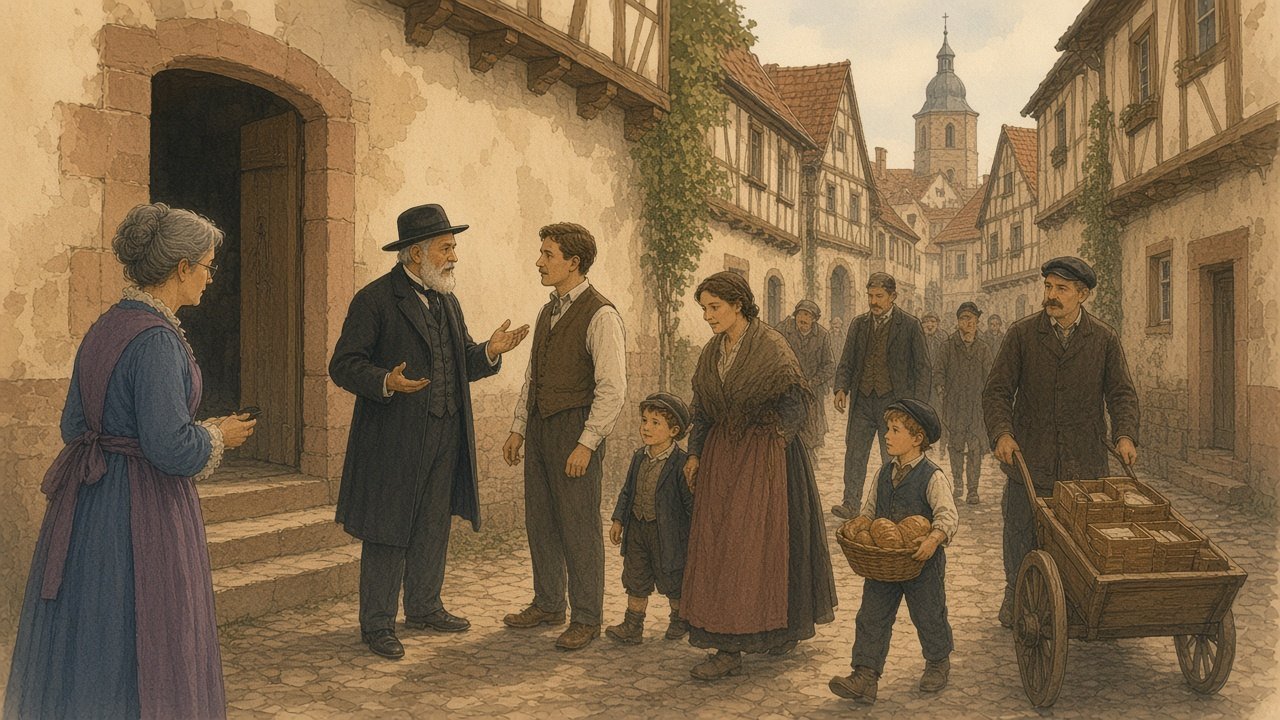
Friedberg stands on a ridge of high ground above the fertile plain of the Wetterau, some thirty kilometres north of Frankfurt am Main. Its main street, the Kaiserstrasse, runs north from the walled castle that gave the town its importance in the Middle Ages, when the Burggraf of Friedberg governed one of the free imperial towns of the region. Jews had lived there since at least the middle of the thirteenth century. They appear in an imperial tax list of 1241 and 1242, in which the Jews of the town and of the whole Wetterau were assessed together at the considerable sum of 150 marks. In 1275, on the instruction of Rudolf of Habsburg, the Burggraf received the right to admit Jews to the town, and four years later the Friedberg Jews alone paid 130 marks in imperial tax. Most of them lived by lending money. They owned several houses and courtyards, and they had a synagogue, a cemetery and a ritual bath.
Hatton Garden and the syndicate
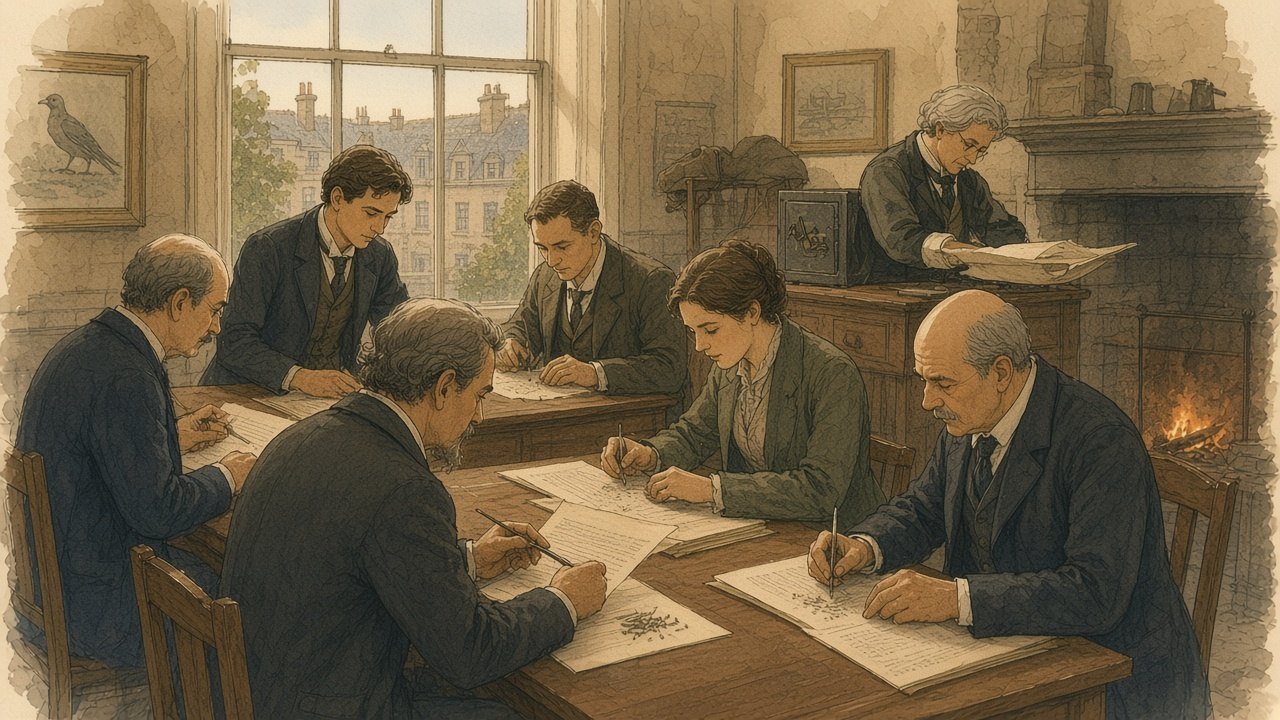
Until the second half of the nineteenth century diamonds were rare in a literal sense. They came from a few riverbeds in India and from the jungles of Brazil, and the whole world’s production of gem diamonds amounted, in Edward Jay Epstein’s phrase, to a few pounds a year. Then, around 1870, diamonds were found near the Orange and Vaal rivers in southern Africa, first in alluvial gravels and then in the volcanic pipes of blue ground on the farms of the high veld, among them a farm called Vooruitzigt that belonged to two brothers named De Beer. Within a few years diggers were taking stones out of the ground by the ton. The town that grew up around the richest of the pipes was named Kimberley, after the British colonial secretary, and the hole that the diggers sank into the hill there became the deepest open excavation in the world.
A young buyer in Kimberley

Kimberley in 1902 was no longer the town of tents and tin shanties that had grown up around the diggings in the 1870s. Rhodes’s amalgamation had swept away the thousands of individual claims, and De Beers worked the great pipes as a single industrial enterprise, with shafts, compounds and a railway to the coast. The town had survived a four-month siege by Boer forces at the beginning of the South African War and was now, in Harry Oppenheimer’s words, a cheerful, lively place, with the wild pioneering days over and hope and growth everywhere as the economy recovered from the war. The young representative of A. Dunkelsbuhler and Company arrived to take over an office whose previous head, a Mr Sutro, seemed to him old, in the way that middle-aged people do when one is twenty-two.
The riots of May 1915

On the afternoon of 7 May 1915 the Cunard liner Lusitania, bound from New York to Liverpool, was torpedoed by a German submarine off the Old Head of Kinsale and sank in eighteen minutes, with the loss of nearly twelve hundred lives. The news reached South Africa within a day. In loyalist towns across the Union it set off a wave of anti-German violence. Crowds attacked shops and houses belonging to people with German names, looted their contents and set buildings on fire, and Kimberley was among the towns where the police struggled for days to restore order. A country that had gone to war only after a bitter internal rebellion, and whose government had invaded German South West Africa that spring, turned on its own residents of German birth.
Anglo American

When Ernest Oppenheimer moved his base to Johannesburg in 1916, the city was thirty years old and already the largest in southern Africa. It had grown on the outcrop of the Main Reef, the long gold-bearing conglomerate that runs east and west through the Witwatersrand, and its economy was organised by a handful of mining finance houses, each of which grouped a cluster of mines under its technical and financial control. Several of them had grown out of the Kimberley diamond trade. Harry Oppenheimer listed them in his memoir: the Johannesburg Consolidated Investment Company, formed by Barnato Brothers; the Central Mining and Rand Mines group, established by Wernher, Beit and Company; and his father’s own firm’s company, Consolidated Mines Selection, founded by A. Dunkelsbuhler and Company. A new house formed by a diamond man would be, as Harry put it, a continuation of the line of development followed long before by the leading diamond firms.
Diamonds in the desert

In 1908 a railway worker near Lüderitz, in the German colony of South West Africa, picked a diamond out of the sand beside the line. Within months the whole coastal strip from Lüderitz southward towards the Orange River had been pegged by prospectors and companies, and conditions on the new diamond fields became chaotic. In September 1908 the German authorities closed a broad belt of desert along the coast to all but licensed operators. It became known as the Sperrgebiet, the forbidden zone. The diamonds there lay not in pipes, as at Kimberley, but scattered through the gravels and sands of the desert and the old beaches, where they had been carried by the Orange River and the sea over millions of years. They were small on average but of very high quality, and they could be gathered at low cost.
Master of De Beers
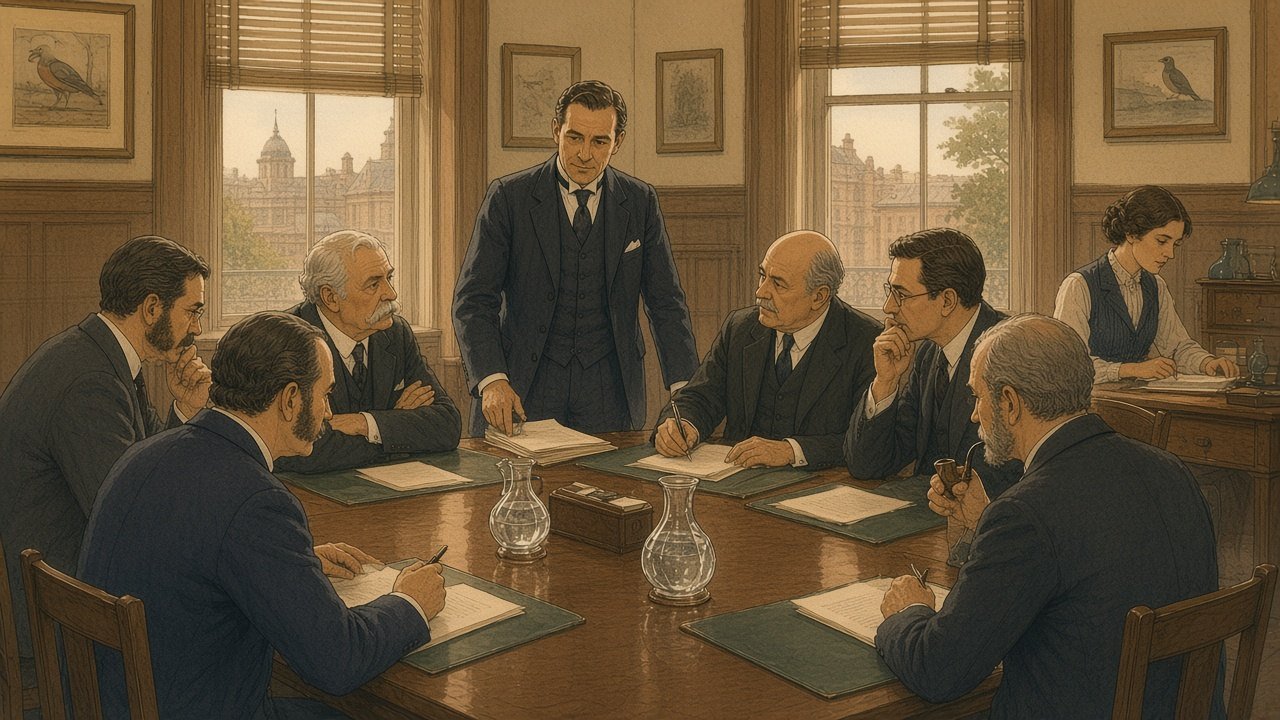
The struggle for De Beers took most of the 1920s and was fought on two fronts at once. In Johannesburg and Kimberley, Anglo American bought De Beers shares in the market, steadily and quietly, until it had become the largest single shareholder in the company Rhodes had founded. In London, the diamond syndicate was reconstituted, in a series of changes that Harry Oppenheimer said involved bitter quarrels between old business associates, so that his father’s group, together with Barnato Brothers, ended up in the lead. The older houses that had run the trade since the 1890s were pushed aside. One South African account describes the decisive move as the formation by Ernest of a syndicate of his own, which put much of its capital into buying the output of the Kimberley and Premier mines and so broke the monopoly of the London buyers.
Copper and grief

Cecil Rhodes had hoped that the lands north of the Limpopo would prove to be a second Witwatersrand. For thirty years they disappointed him and his successors. In Northern Rhodesia, the territory that is now Zambia, copper had been found early in the century at Bwana Mkubwa, Roan Antelope and elsewhere, but the deposits looked poor beside the rich, easily treated ores of neighbouring Katanga, which the Belgian company Union Minière was already working on a large scale. Only in the 1920s, when the world price of copper rose and geologists discovered that the oxide ores near the surface overlay much richer sulphide deposits at depth, did the Copperbelt begin to attract serious capital.
War and the Free State

The second half of the 1930s was a time of recovery and expansion. The diamond stocks were being sold, the price of gold had risen sharply after South Africa left the gold standard at the end of 1932, and the mining houses had money to invest again. Harry Oppenheimer listed what those years brought: the consolidation of the East Rand gold developments; the opening of the West Witwatersrand line, in which Anglo American took part under the leadership of New Consolidated Gold Fields; the flotation of the Western Reefs mine; and the start of the prospecting that would eventually lead to the goldfields of the Orange Free State. The outbreak of war in 1939, he wrote, naturally brought most of these activities temporarily to a stop.
A diamond is forever

In September 1938 Harry Oppenheimer, then twenty-nine, travelled from Johannesburg to New York to meet Gerold M. Lauck, the president of N. W. Ayer, one of the leading advertising agencies in the United States. The agency had been recommended to him by the Morgan bank, which had helped his father in 1917 and remained close to the family. The bankers were worried about the price of diamonds, which had declined around the world. This account of the meeting, and of the long campaign that followed, comes from the American writer Edward Jay Epstein, who in 1982 published a long investigation of the diamond trade in the Atlantic Monthly drawing on Ayer’s own strategy papers. Epstein was a critic of the cartel, and his interpretations are his own; the quotations below are from the agency papers as he reported them.
Harry and the Progressives

In the general election of May 1948, the election that brought the National Party to power and opened the era of apartheid, Harry Oppenheimer stood for Parliament in his father’s old seat of Kimberley as a candidate of General Smuts’s United Party. He won it. The Guardian’s obituarist called him the second “Member for De Beers”, and he quickly became the opposition’s leading spokesman on economic affairs. He sat in the House for nine years, through the passage of the Group Areas Act, the Population Registration Act, the removal of coloured voters from the common roll and the other foundations of the apartheid state, as a member of a party that opposed the Nationalists but was itself deeply divided over race.
Chairman of two empires

In September 1957 Sir Ernest Oppenheimer suffered a stroke. He died at his home in Johannesburg on 25 November, at the age of seventy-seven. The New York Times reported his death the next day under the headline “Oppenheimer, 77, Mining King, Dead”, noting in its subtitle that the South African pioneer in diamonds and gold had been made a knight in 1921. Flags were flown at half-staff, and Anglo American’s offices closed for the day. Time magazine, in its own obituary a fortnight later, called him the diamond king and credited his group with the great bulk of the world’s diamond production. South African History Online records that his fortune passed to Harry.
Gold, compounds and the colour bar
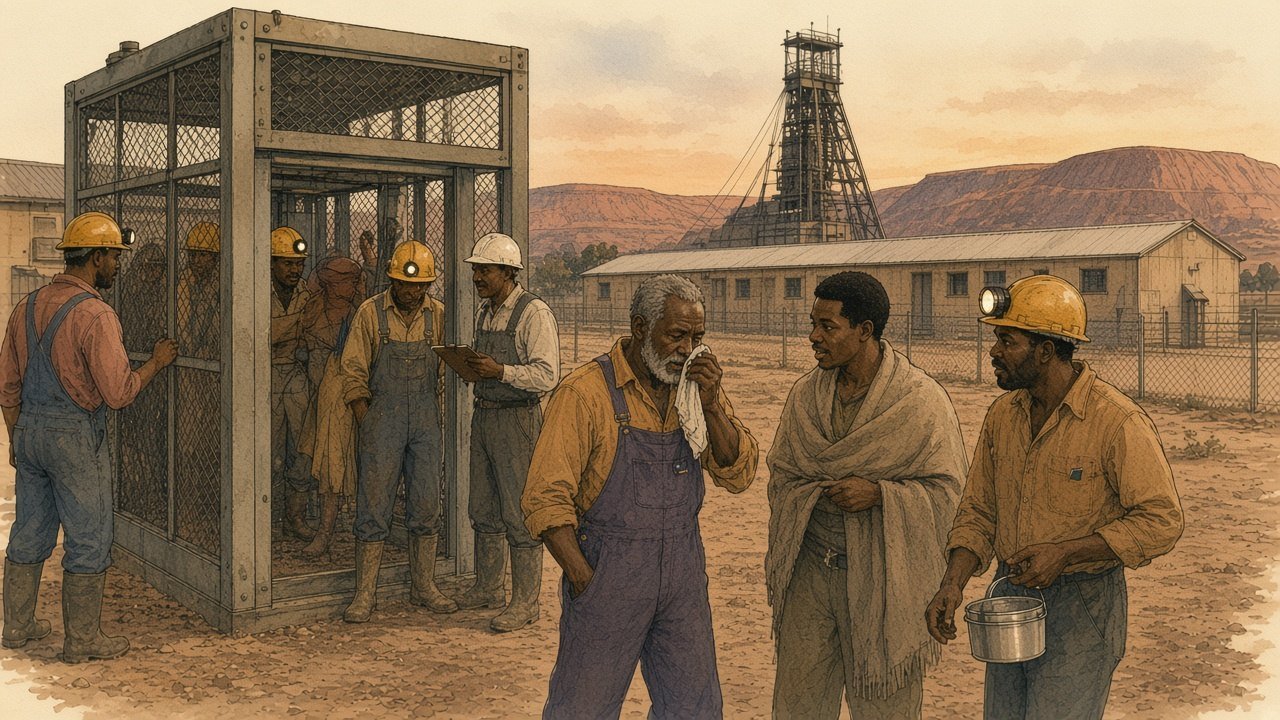
Every chapter of the Oppenheimers’ story so far has rested on a foundation that their own memoirs mention only in passing: the labour of hundreds of thousands of black miners. The gold mines of the Witwatersrand and the Free State, the diamond mines of Kimberley and the desert, and the copper mines of Northern Rhodesia were worked by men recruited, for the most part, as migrant labourers on fixed contracts, housed in single-sex compounds, paid a fraction of the wages of white miners, and barred by law and custom from skilled work. Any history of the family that leaves this out is not a history but a eulogy. Any history that pretends the Oppenheimers created the system, or that they alone defended it, is not accurate either.
Brenthurst and the books

Ernest Oppenheimer began collecting books in Kimberley. He had arrived in 1902 as the young representative of a London diamond firm, and he soon became, as the Brenthurst Library’s own history puts it, steeped in the diamond industry, municipal business and the affairs of the country, and decided to make South Africa his home. Interested in its history, he began collecting Africana, the books, pamphlets, prints and manuscripts relating to southern Africa that were then avidly sought by a small circle of enthusiasts. He became friends with Major William Jardine, a noted Kimberley collector, and he took advice from Paul Ribbink, the librarian of the Library of Parliament in Cape Town.
Nicky and the end of the cartel
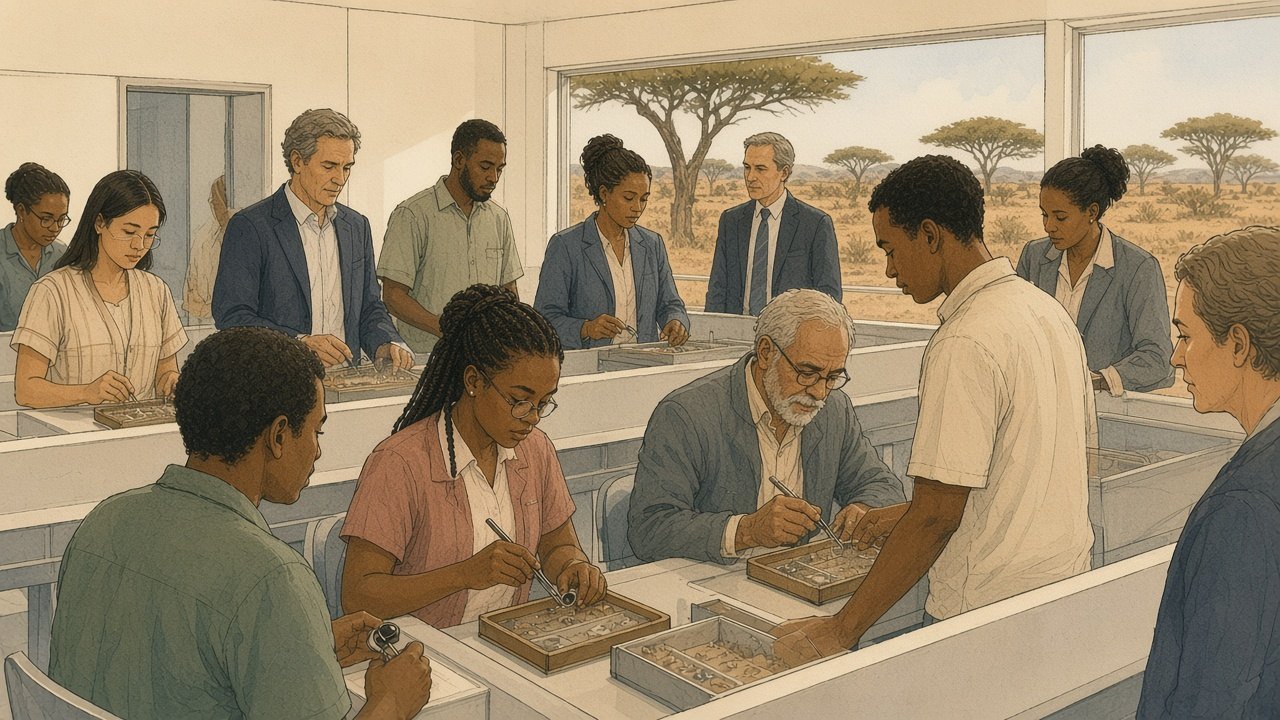
Nicholas Oppenheimer, always known as Nicky, grew up inside the business. “My father never said to me as a snotty-nosed kid, ‘Buzz off because we want to talk business’,” he told the Financial Mail in 2011. “I heard about it all the time and, as I grew older and became more aware of what was going on in the world, I became more interested. I was never a revolutionary; I assumed I would go into the business and now, in my venerable old age, I’m glad I did.” Like his father and his cousins, he was educated at Harrow and then at Oxford, where he read Politics, Philosophy and Economics, the degree Harry had taken at Christ Church.
Selling the stake
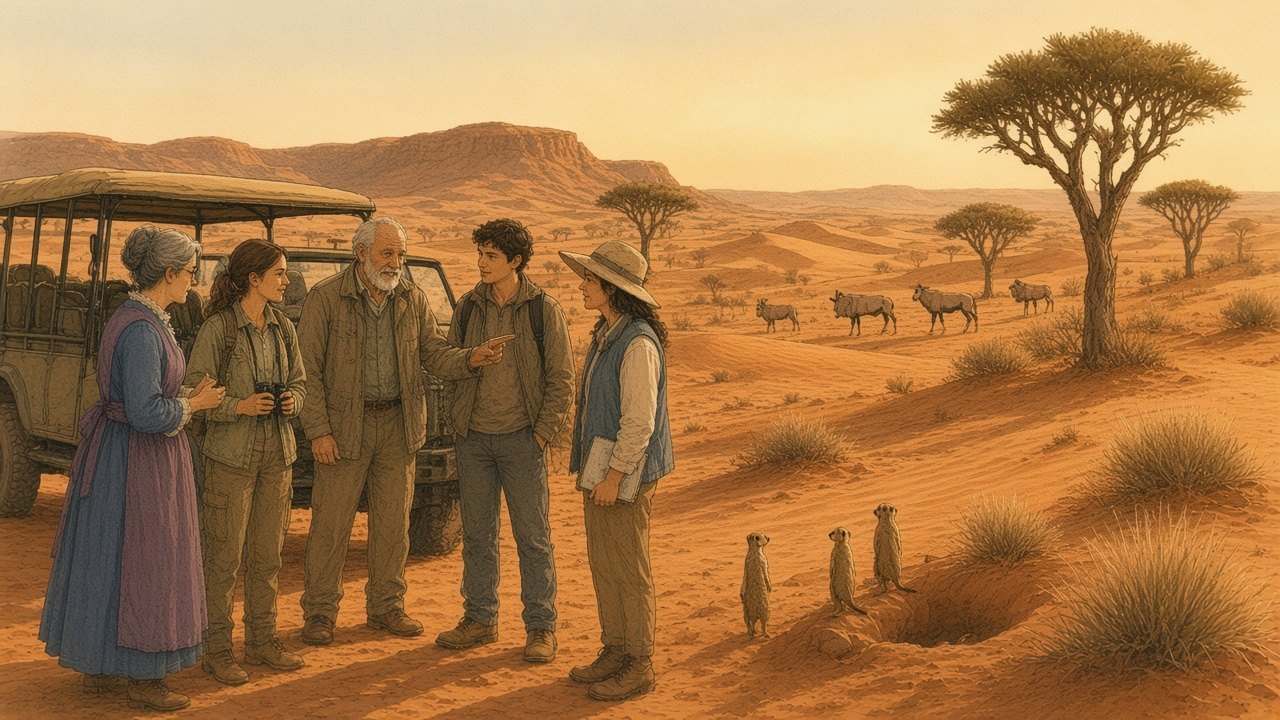
On 4 November 2011 Anglo American and the Oppenheimer family announced that Anglo would buy the family’s forty per cent interest in De Beers for 5.1 billion dollars in cash. Anglo already owned forty-five per cent, and the deal would raise its holding to as much as eighty-five. The family’s interests were held through two companies, CHL Holdings and Centhold International, which were ultimately controlled through trusts of which Nicky Oppenheimer was a potential beneficiary; because he had been a director of Anglo American within the previous year, the sale counted as a related-party transaction under the London listing rules and needed the approval of Anglo’s other shareholders.
Family tree
OpenClose
Key members only, by generation. Dates are those given in the sources cited in the chapters; where sources differ, the chapter explains.
- Eduard Oppenheimerof Friedbergm. Nanette HirschhornCigar merchant in Friedberg in Hesse. Several of their sons went into the diamond trade in London.[1][8]
- Sir Bernard Oppenheimer, Bt1866–1921Diamond man in South Africa and London, partner in Lewis and Marks, founder of the Brighton diamond works for disabled servicemen.[9][10]
- Sir Michael Oppenheimer, Btdied 1933m. Caroline Magdalen (Ina)Killed in an aircraft accident. His widow married Sir Ernest in 1935.[8]
- Louis Oppenheimerten years older than ErnestPartner in A. Dunkelsbuhler and Company in London, who brought Ernest into the firm.[1]
- Otto Oppenheimerbrother of ErnestDiamond merchant of the London syndicate.[3][11]
- Sir Ernest Oppenheimer1880–1957m. (1) May Pollak (died 1934); (2) Ina Oppenheimer (1935)Mayor of Kimberley, founder of Anglo American, chairman of De Beers from 1929.[1][2]
- Harry Frederick Oppenheimer1908–2000m. Bridget McCall (1943)Chairman of Anglo American and De Beers, member of Parliament, backer of the Progressive Party.[5][14]
- Frank Oppenheimerdied 1935Younger son of Ernest and May, drowned in Madeira.[1]
- Sir Bernard Oppenheimer, Bt1866–1921Diamond man in South Africa and London, partner in Lewis and Marks, founder of the Brighton diamond works for disabled servicemen.[9][10]
Timeline
OpenClose
Harry Oppenheimer meets Gerold Lauck of N. W. Ayer in New York.[4] Chapter 10
Some seventy-six thousand black miners strike; the strike is crushed within days.[28] Chapter 13
Frances Gerety writes the slogan at N. W. Ayer. It first appears in an advertisement in 1948.[29][30] Chapter 10
Harry is elected United Party member for Kimberley.[5] Chapter 11
Ernest dies at his home in Johannesburg.[23][32] Chapter 12
Harry founds the Ernest Oppenheimer Memorial Trust with one million pounds.[33] Chapter 12
Twelve members leave the United Party to form the Progressive Party, which Harry finances.[34][5] Chapter 11
The De Beers campaign in Japan begins.[4] Chapter 10
Zambia takes fifty-one per cent of the copper mines; De Beers and Botswana form Debswana.[35][36] Chapter 12
Harry Oppenheimer and Anton Rupert set up the Urban Foundation.[37] Chapter 11
Alan Paton opens the new library building by Hans Hallen.[38] Chapter 14
Business leaders, mostly from Anglo American, meet ANC leaders in Zambia.[39][40] Chapter 13
Anglo American dismisses nearly forty thousand strikers.[41] Chapter 13
Minorco bids for Consolidated Gold Fields.[14] Chapter 12
Anglo American gives evidence to the Truth and Reconciliation Commission.[31] Chapter 13
Nicky becomes chairman of De Beers; De Beers separates from Anglo American.[16][29] Chapter 15
Harry Oppenheimer dies in Johannesburg at ninety-one.[42] Chapter 15
De Beers abandons supply management.[43] Chapter 15
De Beers is taken private by the Oppenheimers, Anglo American and Botswana.[29] Chapter 15
De Beers Centenary pleads guilty in Ohio and pays a ten-million-dollar fine.[44] Chapter 15
The Oppenheimers agree to sell their forty per cent of De Beers to Anglo American.[7] Chapter 16
Anglo American completes the purchase, paying 5.2 billion dollars.[45] Chapter 16
The family gives the Oppenheimer Memorial Trust a further one billion rand.[33] Chapter 16
The Brenthurst Collection of Southern African Art moves to the library.[46][47] Chapter 14
Places
OpenClose
Towns and sites that recur in the history, with the chapters where they matter most. Where the sources do not give an exact site, the pin marks the town, road or district.
Friedberg, the Judengasse
Ernest’s birthplace in Hesse. The medieval ritual bath still stands in the Jewish lane. Chapter 1.[18]
Open in Google MapsHatton Garden and Charterhouse Street, London
The London diamond district where the brothers learned the trade, and the street of the selling organisation. Chapters 2 and 12.[1][3]
Open in Google MapsKimberley
The diamond town where Ernest arrived in 1902, became mayor and later sat in Parliament. The pin marks the Big Hole. Chapters 3, 4 and 8.[1][20]
Open in Google MapsCoombe Road, Brighton
Site of Bernard Oppenheimer’s diamond works for disabled servicemen, 1918 to 1924. The pin marks the road. Chapter 6.[9]
Open in Google MapsLüderitz and the Sperrgebiet
The diamond coast of former German South West Africa, source of Consolidated Diamond Mines. The pin marks the town. Chapter 6.[19]
Open in Google MapsJohannesburg
Anglo American’s home from 1917 and the family’s city ever since. The pin marks Marshalltown, the old financial district, not a particular building. Chapters 5, 9 and 12.[1]
Open in Google MapsParktown, Brenthurst
The family estate and the Brenthurst Library, opened in 1984. The pin marks the suburb. Chapter 14.[38]
Open in Google MapsWelkom
The town built for Anglo American’s Free State gold mines. Chapter 9.[1]
Open in Google MapsMfuwe
Where business leaders, mostly from Anglo American, met the ANC in exile in September 1985. Chapter 13.[39]
Open in Google MapsTswalu
The family’s Kalahari reserve, taken on after Stephen Boler’s death in 1998. Chapter 16.[48]
Open in Google MapsGlossary of terms
OpenClose
- Africana
- Books, manuscripts, maps and pictures relating to Africa, especially southern Africa, as a field of collecting.
- Alluvial diamonds
- Diamonds washed out of their original pipes and found in river gravels, beaches and sands.
- Beth din בית דין
- A rabbinical court. Friedberg was the seat of one for the Jews of the Wetterau.
- Big Hole
- The open pit of the old Kimberley mine, dug by hand from 1871.
- Carat
- The unit of weight for diamonds, one-fifth of a gram.
- Central Selling Organisation
- The De Beers marketing arm in London through which most of the world’s rough diamonds were sold for much of the twentieth century.
- Chamber of Mines
- The employers’ body of the South African mining houses, which recruited black labour for all of them.
- Colour bar
- The legal and customary exclusion of black workers from skilled and supervisory jobs, especially on the mines.
- Compound
- Single-sex barracks in which migrant mineworkers were housed on the South African mines.
- Conflict diamonds
- Diamonds that finance armed movements against recognised governments, as defined by the United Nations in 2000.
- Copperbelt
- The copper-mining region of northern Zambia and the neighbouring Katanga province of the Congo.
- Debswana
- The diamond partnership of De Beers and the government of Botswana, formed in 1969.
- Eternity ring
- A ring set with a continuous band of small stones, promoted from the 1960s for long-married couples.
- Hatton Garden
- The street and district of London that has been the centre of the British diamond and jewellery trade since the nineteenth century.
- Hoggenheimer
- A cartoon caricature of a Jewish mining capitalist in early twentieth-century South Africa, later used against the Oppenheimers.
- Job reservation
- Laws reserving categories of work for white workers.
- Judengasse
- German for ‘Jews’ lane’, the street of a town’s Jewish quarter. Friedberg’s still holds the medieval mikveh.
- Kimberley Process
- The international certification scheme for rough diamonds, launched in 2003 to keep conflict diamonds out of the trade.
- Kimberlite
- The volcanic rock of the diamond pipes, named after Kimberley.
- Migrant labour
- The system under which black mineworkers were recruited on fixed contracts from rural areas and neighbouring countries, leaving their families behind.
- Mikveh מקווה
- A Jewish ritual bath. Friedberg’s, a stone shaft descending to the groundwater, is one of the great monuments of medieval Jewish Germany.
- Mining finance house
- A company that grouped a number of mines under common technical and financial control, typical of the Witwatersrand.
- Minorco
- The Mineral and Resources Corporation, successor of Rhodesian Anglo American, used to invest outside South Africa.
- Oppenheimer אופנהיימר
- The family name, taken from the Rhineland town of Oppenheim and borne by many Jewish families in Germany who were not related to one another.
- Progressive Party
- Liberal party formed in 1959 by members who left the United Party; Helen Suzman was for years its only member of Parliament.
- Randlord
- Name given to the magnates who controlled the Witwatersrand gold mines from the 1880s.
- Rough
- Uncut diamonds as they come from the mine, sorted by size, colour and quality before sale.
- Sightholder
- A dealer or cutter invited to the regular London sales, or sights, of rough diamonds.
- Sperrgebiet
- German for ‘forbidden zone’: the diamond coast of Namibia, closed to the public from 1908.
- Syndicate
- The group of London merchant houses that contracted to buy the output of De Beers and sell it to the trade.
- Urban Foundation
- Business-funded body set up in 1976 to press for housing and urban reform for black South Africans.
References
OpenClose
- Harry F. Oppenheimer, “Sir Ernest Oppenheimer, 1880–1957. A Portrait by his Son,” Optima 17, no. 3 (September 1967), reprinted by The Brenthurst Library *
- South African History Online, “Sir Ernest Oppenheimer,” biography record B-0008856, updated 20 July 2026 *
- “Sir Philip Oppenheimer,” obituary, The Herald (Glasgow), October 1995 *
- Edward Jay Epstein, “Have You Ever Tried to Sell a Diamond?,” The Atlantic, February 1982 *
- David Pallister, “Harry Oppenheimer,” obituary, The Guardian, 21 August 2000 *
- Truth and Reconciliation Commission of South Africa, Final Report, vol. 4, ch. 2, “Institutional Hearing. Business and Labour” (1998) *
- Anglo American plc, “Anglo American agrees acquisition of Oppenheimer family’s 40% interest in De Beers for US$5.1 billion,” press release, 4 November 2011 *
- “Oppenheimer, Ernest,” biographical reference entry, Encyclopedia.com *
- My Brighton and Hove, “The Old Diamond Works (now the Big Yellow Self Storage Company), Lewes Road” *
- House of Commons, “National Diamond Factory (Guarantee Agreement),” Hansard, 24 July 1923 *
- Edward Jay Epstein, The Diamond Invention, chapter 10, “The Arrangement” (author’s online edition of The Rise and Fall of Diamonds, 1982) *
- “Philip Oppenheimer, Chairman of Diamond Cartel, Dies at 83,” The New York Times, 20 October 1995 *
- “Obituary. Sir Philip Oppenheimer,” The Independent, October 1995 *
- “Obituary. Harry Frederick Oppenheimer,” News24, 20 August 2000 *
- “How to Spread It. Mary Slack,” City Press, reprinted by News24, 30 April 2015 *
- Oppenheimer Generations, “Our leadership” *
- The Brenthurst Foundation, “Jonathan Oppenheimer” *
- Alemannia Judaica, “Friedberg (Wetteraukreis, Hessen). Jüdische Geschichte, Synagoge, Mikwe” *
- Ministry of Mines and Energy, Republic of Namibia, “The Diamond Coast” (PDF) *
- Kimberley City Info, “Today in Kimberley’s History, 15 May. Ernest Oppenheimer Departs Kimberley” *
- Kimberley City Info, “Today in Kimberley’s History, 12 May” *
- “The National Diamond Factory. The rehabilitation of Great War amputees in Brighton (1917–1924),” Archaeology Data Service *
- “Oppenheimer, 77, Mining King, Dead. South African Pioneer in Diamonds and Gold Was Made a Knight in 1921,” The New York Times, 26 November 1957, p. 33 *
- Jane L. Parpart, Labor and Capital on the African Copperbelt (Philadelphia: Temple University Press, 1983), chapter 1, “The Copper Industry in the Colonial Period” *
- Heritage of Zimbabwe, no. 11 (Harare: History Society of Zimbabwe, 1992), article on the Copperbelt companies and the British South Africa Company (PDF) *
- “Oppenheimer, Ernest,” Encyclopaedia Africana *
- “De Beers Consolidated Mines Limited/De Beers Centenary AG,” company history, Reference for Business *
- South African History Online, “African Mine Workers’ Strike, 1946” *
- “De Beers 2008,” News24, 3 November 2008 *
- The Marketing Society, “A tagline is forever,” 19 May 2014 *
- South African Press Association, “Anglo was torch-bearer in corporate fight against apartheid,” 13 November 1997, Truth and Reconciliation Commission media archive *
- South African History Online, “Mining magnate Oppenheimer dies,” 25 November 1957 *
- Oppenheimer Memorial Trust, “History” *
- South African History Online, “Helen Suzman” *
- “Nationalization and mining. Lessons from Zambia,” Journal of the Southern African Institute of Mining and Metallurgy 111, no. 10 (2011) *
- De Beers Group, “Our history” *
- Dan Smit, “The Urban Foundation: transformation possibilities,” Transformation, nos. 18–19 (Durban) *
- The Brenthurst Library, “About BL” *
- University of Cape Town Libraries, “Meeting between ANC leaders in exile and SA business delegates, 1985” (notes kept by Tony Bloom), archival description *
- “South Africans and Top Rebels Meet in Zambia,” The New York Times, 14 September 1985 *
- “Company Under Fire. Anglo American’s Progressive Image Put to the Test,” Los Angeles Times, 13 September 1987 *
- “Harry Oppenheimer, 91, South African Industrialist, Dies,” New York Times, 21 August 2000 *
- Ingrid J. Tamm, Diamonds in Peace and War. Severing the Conflict-Diamond Connection, World Peace Foundation Report 30 (Cambridge, Massachusetts: World Peace Foundation, 2002) *
- United States Department of Justice, “De Beers Centenary AG Pleads Guilty to Price-Fixing Indictment,” press release, 13 July 2004 *
- Anglo American plc, “Anglo American completes acquisition of De Beers shareholding,” press release, 16 August 2012 *
- The Brenthurst Library, “Brenthurst Collection of Southern African Art” *
- “Oppenheimers save African art from crumbling Johannesburg Art Gallery,” Financial Mail, 22 June 2023 *
- Tswalu Kalahari, “Celebrating Tswalu’s living heritage” *
Select bibliography
OpenClose
- Gregory, Theodore. Ernest Oppenheimer and the Economic Development of Southern Africa. Cape Town: Oxford University Press, 1962. Print book, not consulted for this history; listed for further reading.
- Jessup, Edward. Ernest Oppenheimer: A Study in Power. London: Rex Collings, 1979. Print book, not consulted for this history; listed for further reading.
- Hocking, Anthony. Oppenheimer and Son. Johannesburg: McGraw-Hill, 1973. Print book, not consulted for this history; listed for further reading.
- Epstein, Edward Jay. The Rise and Fall of Diamonds: The Shattering of a Brilliant Illusion. New York: Simon and Schuster, 1982. The book from which the Atlantic article cited in chapters 10 and 15 was drawn. Print book, not consulted for this history; listed for further reading.
- Innes, Duncan. Anglo American and the Rise of Modern South Africa. Johannesburg: Ravan Press, 1984. Print book, not consulted for this history; listed for further reading.
- Newbury, Colin. The Diamond Ring: Business, Politics, and Precious Stones in South Africa, 1867–1947. Oxford: Clarendon Press, 1989. Print book, not consulted for this history; listed for further reading.
- Kanfer, Stefan. The Last Empire: De Beers, Diamonds, and the World. New York: Farrar, Straus and Giroux, 1993. Print book, not consulted for this history; listed for further reading.
- Meredith, Martin. Diamonds, Gold and War: The Making of South Africa. London: Simon and Schuster, 2007. Print book, not consulted for this history; listed for further reading.
- Harry Oppenheimer, Sir Ernest Oppenheimer, a portrait by his son. Harry’s 1967 memoir of his father, the main source for chapters 1 to 9.
- Nicky Oppenheimer, A tribute to my father. Nicky’s tribute to Harry, published in Optima in 2001.
- Edward Jay Epstein, Have you ever tried to sell a diamond?. The Atlantic, February 1982. The classic critical account of the cartel and its advertising.
- Truth and Reconciliation Commission, Business and labour hearings. Volume 4, chapter 2 of the commission’s final report.
- The Brenthurst Library. The family’s library of Africana in Johannesburg.
- Oppenheimer Memorial Trust. The family trust founded in 1958.