Women Copyists of Medieval Hebrew Manuscripts

Medieval Hebrew manuscripts were copied overwhelmingly by men, and the few women who are known to have copied them are known almost entirely from their own words. A woman copyist is visible to the historian when she wrote her name in a colophon, the note at the end of a manuscript recording who copied it, for whom and when, or when a later writer recorded such a note before the manuscript was lost.12 This article gathers what reliable sources say about the women who copied Hebrew books in the Middle Ages, chiefly Paula bat Avraham of Rome at the end of the thirteenth century and Miriam bat Benayah of Sanaa at the end of the fifteenth, and places them in the wider context of women’s literacy, the legal limits on women’s scribal work, the books made for women, and the evidence from later centuries. It names only women whose existence is attested in the sources consulted, and it notes where those sources disagree.
At a glance
- Earliest known: Paula bat Avraham, active in Rome between 1288 and 1306, regarded by Malachi Beit-Arié as the earliest known Hebrew woman scribe.
- Surviving work: Paula’s manuscripts in Oxford, Wrocław and Moscow, and a prayer book of 1306 known from its colophon.
- Yemen: Miriam bat Benayah, of a family of scribes in Sanaa, known from a colophon reported in 1859 in a manuscript that has not been found.
- Numbers: the Israel Museum counts some twenty women who signed Hebrew manuscripts up to the nineteenth century.
- Law: the Talmud excludes women from writing Torah scrolls, tefillin and mezuzot, but no such explicit exclusion applies to other books.
- Comparison: in Latin colophons catalogued by the Benedictines of Le Bouveret, about 1.1 per cent were written by women.
The Evidence of Colophons
The history of Hebrew scribes depends to an unusual degree on colophons. Beit-Arié, in his comparative study of medieval Hebrew codices, observed that the name of the scribe is given in almost eighty per cent of the colophons of dated manuscripts.3 The same study shows that colophons might be brief, giving only a date, or long and informative, naming the copyist, the person for whom the book was made, the place and the circumstances of the work.4 It is in the long colophons that women copyists appear, and Beit-Arié chose as his example of a magnificent long colophon the one written in 1293 by a woman, Paula bat Avraham.5
The dependence on colophons has consequences for what can be known. A woman who copied a book without signing it, or whose colophon was lost with the last leaves of the manuscript, cannot be identified unless other evidence survives. Anna Nizza-Caplan, in a publication of the Israel Museum of 2026, stated that in total some twenty women are known to have signed Hebrew manuscripts between the twelfth century and the end of the nineteenth, and later in the same publication that there is evidence of about twenty female scribes beginning in the thirteenth century.67 The two formulations differ on the starting century, but both make clear how small the number is. She added that scholarly work on the subject is relatively scant, and named as the main sources the studies of Abraham Meir Habermann in 1936, Colette Sirat in 1990, and Michael Riegler and Judith R. Baskin in 2008.8
The small number of named women should not be read simply as a measure of women’s participation in book production. A comparison with the Latin West helps to show why. A study published in 2025 by Åslaug Ommundsen and colleagues examined the catalogue of 23,774 colophons compiled between 1965 and 1982 by the Benedictines of the monastery of Le Bouveret in Switzerland, and identified 254 colophons as written by female scribes, about 1.1 per cent.910 The authors regarded this as a lower bound, since it assumes that men and women were equally inclined to write colophons and that their manuscripts were equally likely to survive, and they estimated on this basis that women copied more than 110,000 manuscripts in the Middle Ages, of which at least 8,000 should still exist.11 No comparable quantitative study of Hebrew colophons was found among the sources consulted here, and the Latin figures cannot be transferred to Hebrew manuscripts, whose conditions of production were very different.
The Absence of Convents
The most important difference lies in institutions. In the Latin West many women scribes worked in convents, and the study of 2025 notes the existence of several studies of monastic scriptoria for women, beginning with Bernhard Bischoff’s study of Chelles in France.1213 Medieval Jewish communities had no such institutions. An article on Medievalists.net about Paula bat Avraham observes that medieval Jewish communities had no equivalent of convents or of schools open to girls, and that parents who wanted an educated daughter had, according to Elisheva Baumgarten, to engage a private tutor.14
Beit-Arié’s study explains the wider pattern of Hebrew book production in which this absence must be understood. He concluded that the production and dissemination of books in Jewish society was never institutionalised and did not stem from copying centres, but was the outcome of the individual initiative of literate scholars and learned men, and in the late Middle Ages of women too, who copied for themselves or hired scribes to copy for their private use.15 Elsewhere he noted that anybody who could read and who wished to obtain a copy of a text had three options, to acquire an existing copy, to hire a scribe, or to copy it himself or herself, and he observed in passing that in certain areas, such as Italy from the late thirteenth century onwards, such a reader could also be a literate woman.16 A Jewish woman who copied books thus did so within a family or private setting, not within an institution that would preserve a record of her work.
The family setting is visible in every case discussed below. Paula bat Avraham was the daughter and granddaughter of scribes, and Miriam bat Benayah worked with her father and brothers.1718 The Medievalists.net article suggests that Paula’s parents, as part of a family of scholars and scribes, did well to introduce their daughter to the family craft, and that the marriage of a scribe’s daughter to another scholar may have been one of the ways in which a woman with a trade could continue to practise it.19 This last point is offered there as a possibility, and the sources do not allow it to be tested.
The Limits of the Law
Jewish law placed specific limits on what a woman might write. Nizza-Caplan summarised them as follows. The Babylonian Talmud, in tractate Gittin 45b, excludes women from writing tefillin, mezuzot and Torah scrolls.20212223 Maimonides, in the laws of tefillin, mezuzah and the Torah scroll in his Mishneh Torah, excludes women from writing a Torah scroll on the basis of that passage, but in his rules for the reading of the scroll of Esther he omits women from the list of those disqualified from writing an Esther scroll for ritual use.242526 The career of Maimonides is described in the article on Codifier, Physician and Philosopher: Moses ben Maimon on this site, and the rules governing Torah scrolls in the article on scribal safeguards of the Torah.2728
The Medievalists.net article states the matter more broadly, saying that Maimonides ruled in favour of the Talmudic exclusion of women from copying Torah scrolls but that medieval Jews from France to Yemen recognised that this ban need go no further.29 This means that a woman might lawfully copy a biblical commentary, a legal compendium, a prayer book or a codex of the Bible for study, and the surviving evidence shows women doing exactly this. The case of Miriam bat Benayah, which is reported as involving a Torah scroll or a Pentateuch, is discussed below, and the sources describe the object differently.
The question of the scroll of Esther arose later. Nizza-Caplan wrote that a range of rabbinic opinions on reading from an Esther scroll written by a woman was formulated in the early modern period, around the time of the codification of the Shulchan Aruch in the sixteenth century, without a single definitive position emerging.3031 One argument for permitting it held that women are obliged equally with men to hear the reading on Purim, so that a scroll written by a woman should be acceptable. Another drew on the Book of Esther itself, which states in 9:29 that Queen Esther, with Mordecai, wrote with full authority to confirm the second letter about Purim.323334 Rabbi David Oppenheim of Prague (1664–1736), according to Nizza-Caplan, permitted the ritual use of an Esther scroll copied by his daughter Sarah, basing his ruling on the Aramaic rendering of that verse, which translates “second letter” as “second scroll”. Sarah’s scroll has not survived, but it is documented in a dissenting opinion by Oppenheim’s contemporary Rabbi Moses Meir Perles.3536
Paula bat Avraham of Rome
The earliest woman copyist of Hebrew manuscripts for whom there is firm evidence is Paula bat Avraham, who worked in Rome at the end of the thirteenth and the beginning of the fourteenth century.3738 Beit-Arié called her a remarkably skilled scribe and, in a later note, “this skilled and learned scribe, the first of the female scribes known to us”.3940 Her name appears in different forms in the sources. Beit-Arié gives it in Hebrew as Paula bat Avraham ha-Sofer ben Yoav, Paula daughter of Avraham the Scribe, son of Yoav.41 Nizza-Caplan calls her Paola, daughter of Avraham Anav of Rome, active between 1288 and 1306, and states that her family produced generations of Jewish scholars and scribes in Rome.42 Cheryl Tallan, in the Shalvi/Hyman Encyclopedia of Jewish Women, calls her Paula dei Mansi, daughter of Abraham Anau.43 The Medievalists.net article uses the form Pola.44
Paula’s colophons show her ancestry. In the manuscript she copied in 1288 she described herself, according to Beit-Arié, as a scion of the holy Rabbi Yeḥiel, the father of Rabbi Natan, author of the Arukh, from which it follows that she was descended from one of the brothers of the author of the first talmudic dictionary.45 Tallan likewise stated that her family traced its roots to Nathan ben Jehiel of Rome, the author of the Arukh.46 Paula’s learning was therefore inherited within one of the most distinguished scholarly families of Jewish Rome.
Paula’s Manuscripts
Beit-Arié lists four manuscripts in Paula’s hand, three of them signed. The earliest is a two-volume manuscript of commentaries on the Prophets, copied in Rome in 1288 for her own use. Before the Second World War it was kept in Breslau as a manuscript of the Jewish Theological Seminary there.47 Beit-Arié recorded its later history in some detail. Like the rest of the seminary’s collection, it was confiscated by the Nazis and disappeared, and it was rediscovered much later in northern Moravia, apparently in Miemes castle, together with thirty-three other manuscripts from the same library. The manuscripts were kept in the National Library in Prague, and in 2004 they were transferred to the Jewish community of Wrocław and deposited in the university library there.48495051 In this manuscript Paula added the name of her husband, Yeḥiel ben Shelomo, to her own.52
The second is the two-volume halakhic manuscript completed in 1293, now in the Bodleian Library at Oxford as Canonici Oriental 88–89. It contains the Pisqei ha-RID, the legal rulings of Rabbi Isaiah di Trani on several talmudic tractates, and Paula copied it at the request of a relative.5354 Beit-Arié identified this relative as Menaḥem ben Binyamin, himself a copyist active in Italy in the 1280s.55 The colophon of this manuscript, which Beit-Arié printed in full as an example of a long and informative colophon, begins with words drawn from Isaiah 63:7, “I will mention the lovingkindnesses of the Lord”, and states that her relative came to her, persuaded her and pressed her to write this holy book for him.56
The third manuscript is a prayer book copied in 1306, whose whereabouts are now unknown. Beit-Arié recorded that it was known to have been in the library of the Jewish community of Verona and that the text of its colophon was published by Abraham Berliner in a book review in 1884.5758 It was copied for Shelomo ben Shelomo, son of Moshe ben Yekutiel, whom Beit-Arié regarded as undoubtedly Paula’s son by her second husband, named after his father, who had probably died before his son was born.59 The fourth manuscript, in the Guenzburg collection of the Russian State Library in Moscow, contains no colophon, but Beit-Arié identified it as hers on the evidence of its script and of the codicological features of the codex. It contains further sections of the Pisqei ha-RID and is therefore an additional part of the same copying as the Oxford volumes.6061
The other accounts of Paula’s work differ in details from Beit-Arié’s. Nizza-Caplan wrote that Paola copied a biblical commentary for her first husband, who died before their son was born, and later a prayer book for her son Solomon and, for her relative Menachem Anav, a collection of texts on Jewish law by Isaiah of Trani.62 The Medievalists.net article describes the three signed manuscripts as a commentary on the Prophets of 1288, a compilation of halakhic rulings of 1293 and a prayer book of 1306 for her son Solomon, and notes that in 1306 she called her son “the son of my esteemed teacher, the pious R. Solomon of blessed memory, the son of Moses b. Jekuthiel”.63 Tallan gives a different account again, stating that her father wrote the original collection of Bible commentaries of 1288 and that she added her own explanations and translated the whole work from Hebrew into Italian.64 Beit-Arié, who examined the manuscripts as a codicologist, describes the 1288 manuscript only as a copy of commentaries on the Prophets made for her own use, and the claim of a translation into Italian is not supported by the other sources consulted here.65 The account given in this article follows Beit-Arié where the sources differ.

Paula’s Craft
Paula’s manuscripts show the conventions of an accomplished professional scribe. Beit-Arié noted that the copyist Menaḥem ben Binyamin used blessing formulas in acronym form that are found in no other colophons, and that one of these, the formula he attached to his deceased father’s name, was adopted by Paula.66 He also observed that Paula used in conjunction with her grandfather’s name a unique formula, probably an abbreviation of the words “and the righteous is the foundation of the world”, and suggested that she may have coined it or that it was customary in her family.67 He concluded that, at least in Italy, certain blessing formulas were used exclusively by certain copyists, male and female, before being adopted by others.68
Another scribal custom is visible in the Oxford manuscript. Medieval scribes sometimes highlighted the letters of their own names where they occurred at the beginnings of lines in the text, marking them with a simple ornament, and Beit-Arié illustrated this custom with an example from Paula’s Oxford manuscript, Canonici Oriental 89, folio 100v, where three or more dots are placed above the letters.69 He also used the highlighting of the letters of Paula’s name, as in an acrostic, in the Moscow manuscript as part of the evidence for attributing it to her.70 The custom was criticised by the author of Sefer Ḥasidim, who, according to Beit-Arié, denounced it out of concern that the text might be corrupted and in order to condemn individualistic tendencies.71
The Medievalists.net article draws attention to the learning displayed in the colophons. It notes that Paula wrote her colophons in Hebrew rather than in a vernacular written in Hebrew letters, and that each colophon weaves in different biblical quotations, to describe her copying, to justify her production of the text, and to express her hopes for its use.72 The quality of the writing and the ease with which she used scribal language show, in the article’s judgment, that she was a trained, experienced and working scribe.73 Beit-Arié’s characterisation of her as skilled and learned, and his description of her three signed manuscripts as written in a calligraphic script, point in the same direction.7475
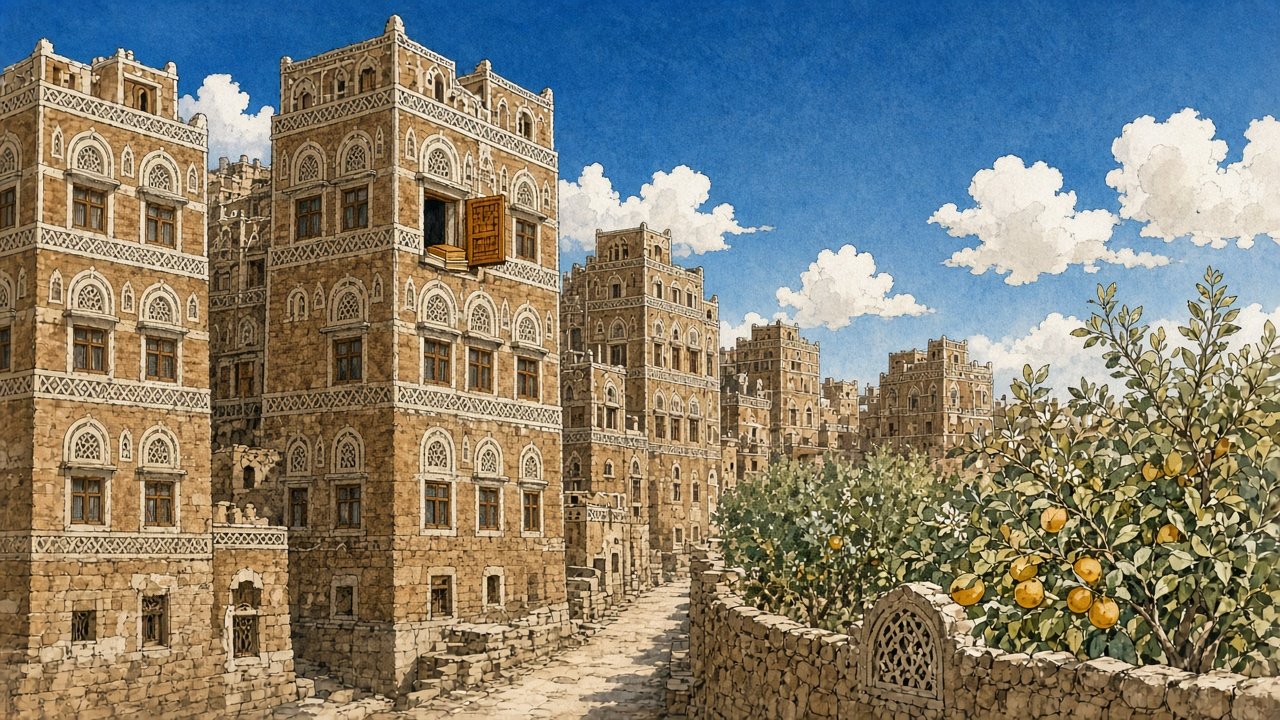
Miriam bat Benayah of Sanaa
The second woman copyist of the medieval period for whom there is good evidence worked in Yemen two centuries after Paula. The Encyclopaedia Judaica describes Miriam bat Benayah as a scribe who lived in Sanaa in the late fifteenth and early sixteenth century and followed her family’s profession.7677 Her education, which included at least reading and writing Hebrew and the special prayers and procedures required of a Torah scribe, was, according to the encyclopaedia, highly unusual for a woman of her time and place.78 She worked with her father, the scribe Benayah ben Saʿadiah ben Zekhariah, and her two brothers David and Joseph, and the family is credited with copying four hundred books, including prayer books, collections of haftarot and copies of the Torah.79
The encyclopaedia’s entry on the Benayah family gives more detail about her father. Between 1450 and 1483 Benayah ben Saʿadiah, known as Ben Merjaz, copied dozens of books, most of them copies of the Bible, with the Masorah in the margins and at the beginning a treatise containing the rules of reading. His copies are considered accurate and concise, which, the entry states, makes him the most important of Yemen’s scribes.8081 His children were also scribes. The entry names David, active from 1484 to 1510, Joseph, active from 1486 to 1508, Saadia, born in 1489, and the daughter Miriam, together with two grandsons. The sons also copied haftarot, prayer books preserving the ancient Yemenite rite, and other works, among them a work of al-Ghazali copied by Saadia.8283 Miriam thus belonged to a family workshop of the kind the Medievalists.net article associates with the fifteenth century, and the entry on her suggests that most of the family’s surviving work may represent joint efforts, since not all of it is signed by a single member.8485
Miriam is known chiefly from a single colophon. According to the entry on the Benayah family, Yaakov Sappir, who visited Yemen in 1859, told of the beautiful and accurate copying done by Miriam, and reported that at the end of the manuscript she wrote: “Do not bring punishment upon me if you discover mistakes since I am a nursing mother, Miriam the daughter of Benayah the scribe.”86 The entry on Miriam renders the colophon as “Do not condemn me for any errors that you may find, as I am a nursing woman”, and takes it as an indication that she continued her work after marriage and the birth of children, though nothing is known of her husband or children.87 Tallan quotes the same words in the same form.88
The sources differ on what kind of manuscript this was and whether it survives. The entry on Miriam describes it as a Torah scroll whose existence was first reported to the wider world in 1859, and Tallan likewise speaks of one Torah scroll that is unquestionably the work of her hands.8990 The entry on the Benayah family speaks only of a manuscript and adds that it was never found.91 Erica Baricci, following Colette Sirat, describes the colophon as belonging to a now lost manuscript, a Pentateuch of Yemenite origin dated to the end of the fifteenth century, and quotes Sirat’s remark that Miriam “avait une belle main”, had a fine hand.92 If the object was a Torah scroll for liturgical use, it would stand in tension with the legal exclusion discussed above, and that tension may explain why the entry on Miriam emphasises that she knew the prayers and procedures of a Torah scribe. If it was a Pentateuch in codex form, no such question arises. Since the manuscript has not been found, the question cannot be decided.
Learned Women in the Islamic East
The evidence for women’s calligraphic skill in the East is older than Miriam, though it does not name copyists. Tallan recorded that S. D. Goitein found evidence of educated Jewish women in the twelfth century in the writings of a convert to Islam, Samuel ha-Maghrebi, who described his mother and sisters, natives of Basra, as “proficient in the Scriptures and in Hebrew calligraphy”, though he did not mention their knowledge of Jewish law.9394 The writer is the physician and mathematician al-Samawʾal al-Maghribi, and Baricci also cites his mother and sisters as women who knew Hebrew and Arabic.9596 Their skill in Hebrew calligraphy is the nearest the sources come to women copyists in the Islamic East before Miriam, but no manuscript copied by them is known.
Tallan’s survey also records the learned daughter of Samuel ben Ali, Gaon of Baghdad, who died in 1194. Known only as Bat ha-Levi, the daughter of the Levite, she was described by a medieval traveller as teaching her father’s students from behind a window while they listened from the courtyard below.9798 Documents from the Cairo Geniza, according to Tallan, show that many women in Fatimid Egypt worked as teachers of children and were called muʿallima, teacher, and that one school, called “The Synagogue of the Women Teachers”, taught reading and writing to children between the ages of four and thirteen.99100 Baricci cites a letter addressed to “Victor, son of the schoolmistress”, from the same body of evidence.101 The setting of these documents is treated in the site’s article on the Cairo Genizah on this site.102 These women taught literacy, but the sources consulted do not show any of them copying books.
Learned Women in Europe
In Europe the evidence for learned women is also more abundant than the evidence for women copyists. Tallan’s survey records that Rashi had three daughters, Yokheved, Miriam and Rachel, and that although it is reasonable to assume that they were learned, there is no definitive evidence for this.103104 She noted that the belief that Rachel wrote a legal ruling for her father when he was ill rested on a single source, the Shibbolei ha-Leket, and that in 2001 the reference was discovered to be a misprint for “grandson”, which removed the only evidence for her learning.105 This correction is a useful caution. Claims about medieval women’s writing have sometimes rested on very slender evidence, and a single misread word can create or remove a woman scholar.
Tallan also recorded Miriam Spira-Luria, daughter of the scholar Solomon Spira, who is said in a single document attributed to her descendant Johanan Luria to have taught the law to young men from behind a curtain, though her dates are not confirmed.106 Baricci noted the case of Sara, daughter of Ḥaver Shemarya, who lived in the Rhineland in the thirteenth century and who wrote her name in her Bible and added corrections and additions to the text that reveal a deep knowledge of Hebrew language and grammar.107108 Sara was a reader and corrector rather than a copyist, but her annotations show a woman working on the text of a Hebrew Bible with the skills of a scholar. Baricci also mentions the wife of the tenth-century poet and grammarian Dunash ben Labrat, regarded by some scholars as the first identifiable woman poet in Hebrew since biblical times.109110
Books Made for Women
Women appear more often in Hebrew manuscripts as owners and as the persons for whom books were made than as copyists. Beit-Arié noted that at the end of the fifteenth century, as more manuscripts were being copied for women, two special blessing formulas came into use in colophons, both drawn from the verse in the Book of Judges, 5:24, “blessed above women in the tent”.111112 The appearance of formulas designed for women patrons is itself evidence of a growing number of women commissioning or receiving books, and it agrees with Beit-Arié’s remark that in the late Middle Ages women too initiated the copying of books.113
Baricci’s study of women, books and literature in Jewish Provence gives further examples. She discussed a manuscript of 1279 in Parma, a Judeo-French glossary of the Bible, at the end of which the copyist, Vivant of Belley, dedicated a short poem in Judeo-French to his bride, the daughter of Salomon, and she suggested that the book may have been intended as a gift to the future wife, for her instruction and that of their children.114115116 She also discussed a fifteenth-century Judeo-Provençal prayer book in Leeds, Brotherton Library Roth 32, which was probably commissioned as a wedding gift for a bride by her brother and whose title page bears a paraphrase of the blessing given to Rebekah by her brothers in Genesis 24:60.117118
Prayer books in particular were made for women. Baricci quoted the colophon of one of the first printed editions of the Judeo-Italian rite, published at Bologna in 1538, in which the translator wrote that he had been urged and begged by many gentle and good women who wished to say their prayers in Italian, and so had resolved to translate a siddur for the whole year.119120 Beit-Arié’s study also mentions a Judeo-Italian prayer book in the British Library, Or. 10337, presumably written for women at the turn of the fifteenth and sixteenth centuries, whose leaves are numbered in Italian words written in Hebrew characters.121 Such books show that women formed a significant readership for Hebrew manuscripts and early printed books, even though very few women are known to have copied them.
Women Scribes after the Middle Ages
The evidence for women copyists becomes somewhat fuller in early modern Italy, and it is summarised in Nizza-Caplan’s publication. In 1564 Stellina bat Menachem of Venice wrote and signed a scroll of Esther, which Nizza-Caplan described as the earliest dated and decorated Esther scroll to survive anywhere. Stellina placed the Purim blessings at the opening of the scroll and ended it with a scribal note giving her name and the date and place of completion.122123 The scroll is decorated with an arcade of caryatids, satyrs and garlands, but Stellina, like the later scribes discussed by Nizza-Caplan, states only that she wrote the text and does not claim the decoration, which suggests that unnamed artists were engaged for it.124
Nizza-Caplan wrote that, after Paola and Stellina, the next evidence of women scribes in Italy appears in the mid-eighteenth century. In 1748–1749 Simha, daughter of Isaac Gallico of Senigallia, copied a compendium of synagogal poems for Simhat Torah.125126 On 9 February 1767, her fourteenth birthday, Luna, daughter of Leone Ambron of Rome, completed an Esther scroll and a decorated sheet of the Purim blessings, now in the Israel Museum and the subject of the exhibition.127 Nizza-Caplan described Luna’s work as one of only three known examples, all from Italy, of Hebrew liturgical texts signed by women, the others being Stellina’s scroll and a blessings sheet signed in 1770 by Camilla, daughter of Moshe Efraim De Rossi of Rome.128 She also recorded Stella, daughter of S. Ascarelli, who copied a book of Sabbath prayers in 1768 now of unknown whereabouts; Fortunata, or Mazal Tov, daughter of Yehuda Fiano, who signed a small codex of penitential prayers in 1793–1794; Olimpia, daughter of Vitale of Tivoli, who in 1792 transcribed the travelogue of Sabato Ambron and Amadio Abbina; Rivka bat Rafael Luzzato, who in 1806–1807 copied a compendium of liturgical poems for the night of Hoshana Rabbah; and Anna, daughter of David Joseph Piperno, who in 1840 wrote an Esther scroll intercalated with an Italian translation of the Targum Sheni.129130 An unnamed young woman signed a scroll for the counting of the Omer in 1804.131132
These later women lie outside the Middle Ages, but they illuminate the medieval evidence in two ways. They show the continuity of a pattern already visible in Paula’s case, in which women copyists came from learned families and wrote chiefly liturgical and study texts, often for their own use or for relatives.133134 They also show the role of the Roman Jewish community, whose cultural life Nizza-Caplan examined through the Ambron family, as a setting in which such work was possible over several centuries.135136 The ketubbah of Perla bat Yehuda Fiano of 1794, perhaps Fortunata’s sister, with a micrographic text of the whole book of Esther in its frame, is a further example of the Hebrew writing culture of these families, though it is not attributed to a woman’s hand.137138
The Significance of the Evidence
The evidence for women copyists of medieval Hebrew manuscripts is slight in quantity but clear in what it shows. It establishes that at least one woman, Paula bat Avraham, worked as a skilled professional scribe in Rome between 1288 and 1306, copying commentaries, legal works and prayers in calligraphic script, using the scribal formulas of her profession and adopting those of a colleague who was also her relative.139140 It establishes that in fifteenth-century Yemen a woman of a scribal family, Miriam bat Benayah, copied at least one manuscript of the Torah, whether scroll or codex, and signed it with a colophon asking the reader’s indulgence because she was a nursing mother.141142 And it shows women in the Islamic East and in Europe who possessed the learning and the calligraphic skill that copying required, even when no book in their hand survives.143144
The evidence also has clear limits. It depends on colophons, which women may have been less inclined than men to write and which are often lost. It is filtered through later reports, such as Sappir’s account of Miriam’s manuscript and Berliner’s publication of the colophon of Paula’s prayer book, both of which concern manuscripts that are now lost.145146 The modern accounts differ on names, on the content of Paula’s first manuscript and on the nature of Miriam’s, and at least one long-standing claim about a learned medieval woman has been withdrawn after the discovery of a misprint.147148 A careful history of women copyists must therefore distinguish between women who are attested as copyists by their own colophons, women who are reported as learned or skilled in writing, and women who appear as patrons and readers. Only the first group can properly be called copyists, and in the Middle Ages that group, on present evidence, is very small.
Further Study
The fullest codicological treatment of Paula bat Avraham is found in the notes to the second chapter of Malachi Beit-Arié’s Hebrew Codicology, which also discusses the colophons, blessing formulas and copying practices on which the identification of women scribes depends.149150 Nizza-Caplan’s publication for the Israel Museum surveys women scribes in Italy from Paula to the nineteenth century and gives references to the principal studies by Habermann, Sirat, and Riegler and Baskin.151 The Encyclopaedia Judaica entries on Miriam bat Benayah and the Benayah family give the evidence for the scribes of Sanaa, Tallan’s survey in the Shalvi/Hyman Encyclopedia of Jewish Women places women copyists among learned women more generally, and Baricci’s study treats books made for women in Jewish Provence.152153154155 For a quantitative comparison with Latin manuscripts, the study by Ommundsen and colleagues is the most recent starting point.156
Notes
- Malachi Beit-Arié, Hebrew Codicology. Historical and Comparative Typology of Medieval Hebrew Codices based on the Documentation of the Extant Dated Manuscripts until 1540 using a Quantitative Approach, English version by Ilana Goldberg, ed. Nurit Pasternak (Jerusalem and Hamburg: Israel Academy of Sciences and Humanities, 2021), chap. 2, “Colophon Components and Scribal Formulas”, n. 11, open-access edition. *
- ““Colophon (publishing)””. *
- Malachi Beit-Arié, Hebrew Codicology. Historical and Comparative Typology of Medieval Hebrew Codices based on the Documentation of the Extant Dated Manuscripts until 1540 using a Quantitative Approach, English version by Ilana Goldberg, ed. Nurit Pasternak (Jerusalem and Hamburg: Israel Academy of Sciences and Humanities, 2021), chap. 2, “Colophon Components and Scribal Formulas”, n. 11, open-access edition. *
- Malachi Beit-Arié, Hebrew Codicology. Historical and Comparative Typology of Medieval Hebrew Codices based on the Documentation of the Extant Dated Manuscripts until 1540 using a Quantitative Approach, English version by Ilana Goldberg, ed. Nurit Pasternak (Jerusalem and Hamburg: Israel Academy of Sciences and Humanities, 2021), chap. 2, “Colophon Components and Scribal Formulas”, n. 11, open-access edition. *
- Malachi Beit-Arié, Hebrew Codicology. Historical and Comparative Typology of Medieval Hebrew Codices based on the Documentation of the Extant Dated Manuscripts until 1540 using a Quantitative Approach, English version by Ilana Goldberg, ed. Nurit Pasternak (Jerusalem and Hamburg: Israel Academy of Sciences and Humanities, 2021), chap. 2, “Colophon Components and Scribal Formulas”, n. 11, open-access edition. *
- Anna Nizza-Caplan, The Girl Who Wrote. Luna Ambron’s Esther Scroll (Jerusalem: The Israel Museum, 2026), exhibition publication. *
- ““Israel Museum””. *
- Anna Nizza-Caplan, The Girl Who Wrote. Luna Ambron’s Esther Scroll (Jerusalem: The Israel Museum, 2026), exhibition publication. *
- Åslaug Ommundsen, Aidan Keally Conti, Øystein Ariansen Haaland and Bodil Holst, “How many medieval and early modern manuscripts were copied by female scribes? A bibliometric analysis based on colophons”, Humanities and Social Sciences Communications 12, article 346 (2025). *
- ““Benedictines””. *
- Åslaug Ommundsen, Aidan Keally Conti, Øystein Ariansen Haaland and Bodil Holst, “How many medieval and early modern manuscripts were copied by female scribes? A bibliometric analysis based on colophons”, Humanities and Social Sciences Communications 12, article 346 (2025). *
- Åslaug Ommundsen, Aidan Keally Conti, Øystein Ariansen Haaland and Bodil Holst, “How many medieval and early modern manuscripts were copied by female scribes? A bibliometric analysis based on colophons”, Humanities and Social Sciences Communications 12, article 346 (2025). *
- ““Monastery””. *
- Medievalists.net, “Pola of Rome: The Story of a Woman Jewish Scribe”, November 2018. *
- Beit-Arié, Hebrew Codicology, Afterword, open-access edition. *
- Beit-Arié, Hebrew Codicology, chap. 1, sect. 5, “The unique character of Hebrew book production”, open-access edition. *
- Malachi Beit-Arié, Hebrew Codicology. Historical and Comparative Typology of Medieval Hebrew Codices based on the Documentation of the Extant Dated Manuscripts until 1540 using a Quantitative Approach, English version by Ilana Goldberg, ed. Nurit Pasternak (Jerusalem and Hamburg: Israel Academy of Sciences and Humanities, 2021), chap. 2, “Colophon Components and Scribal Formulas”, n. 11, open-access edition. *
- “Miriam bat Benayah”, Encyclopaedia Judaica, 2nd ed., via Encyclopedia.com. *
- Medievalists.net, “Pola of Rome: The Story of a Woman Jewish Scribe”, November 2018. *
- Anna Nizza-Caplan, The Girl Who Wrote. Luna Ambron’s Esther Scroll (Jerusalem: The Israel Museum, 2026), exhibition publication. *
- ““Gittin””. *
- ““Tefillin””. *
- ““Mezuzah””. *
- Anna Nizza-Caplan, The Girl Who Wrote. Luna Ambron’s Esther Scroll (Jerusalem: The Israel Museum, 2026), exhibition publication. *
- ““Maimonides””. *
- ““Mishneh Torah””. *
- “Codifier, Physician and Philosopher: Moses ben Maimon”, Masoretes Online. *
- “The Law of the Quill – Scribal Safeguards of the Torah”, Masoretes Online. *
- Medievalists.net, “Pola of Rome: The Story of a Woman Jewish Scribe”, November 2018. *
- Anna Nizza-Caplan, The Girl Who Wrote. Luna Ambron’s Esther Scroll (Jerusalem: The Israel Museum, 2026), exhibition publication. *
- ““Shulchan Aruch””. *
- Anna Nizza-Caplan, The Girl Who Wrote. Luna Ambron’s Esther Scroll (Jerusalem: The Israel Museum, 2026), exhibition publication. *
- ““Purim””. *
- ““Book of Esther””. *
- Anna Nizza-Caplan, The Girl Who Wrote. Luna Ambron’s Esther Scroll (Jerusalem: The Israel Museum, 2026), exhibition publication. *
- ““David Oppenheim””. *
- Malachi Beit-Arié, Hebrew Codicology. Historical and Comparative Typology of Medieval Hebrew Codices based on the Documentation of the Extant Dated Manuscripts until 1540 using a Quantitative Approach, English version by Ilana Goldberg, ed. Nurit Pasternak (Jerusalem and Hamburg: Israel Academy of Sciences and Humanities, 2021), chap. 2, “Colophon Components and Scribal Formulas”, n. 11, open-access edition. *
- ““Rome””. *
- Malachi Beit-Arié, Hebrew Codicology. Historical and Comparative Typology of Medieval Hebrew Codices based on the Documentation of the Extant Dated Manuscripts until 1540 using a Quantitative Approach, English version by Ilana Goldberg, ed. Nurit Pasternak (Jerusalem and Hamburg: Israel Academy of Sciences and Humanities, 2021), chap. 2, “Colophon Components and Scribal Formulas”, n. 11, open-access edition. *
- Beit-Arié, Hebrew Codicology, chap. 2, section on blessing formulas, with n. 64, open-access edition. *
- Beit-Arié, Hebrew Codicology, chap. 2, section on blessing formulas, with n. 64, open-access edition. *
- Anna Nizza-Caplan, The Girl Who Wrote. Luna Ambron’s Esther Scroll (Jerusalem: The Israel Museum, 2026), exhibition publication. *
- Cheryl Tallan, “Learned Women in Traditional Jewish Society”, Shalvi/Hyman Encyclopedia of Jewish Women, Jewish Women’s Archive. *
- Medievalists.net, “Pola of Rome: The Story of a Woman Jewish Scribe”, November 2018. *
- Malachi Beit-Arié, Hebrew Codicology. Historical and Comparative Typology of Medieval Hebrew Codices based on the Documentation of the Extant Dated Manuscripts until 1540 using a Quantitative Approach, English version by Ilana Goldberg, ed. Nurit Pasternak (Jerusalem and Hamburg: Israel Academy of Sciences and Humanities, 2021), chap. 2, “Colophon Components and Scribal Formulas”, n. 11, open-access edition. *
- Cheryl Tallan, “Learned Women in Traditional Jewish Society”, Shalvi/Hyman Encyclopedia of Jewish Women, Jewish Women’s Archive. *
- Malachi Beit-Arié, Hebrew Codicology. Historical and Comparative Typology of Medieval Hebrew Codices based on the Documentation of the Extant Dated Manuscripts until 1540 using a Quantitative Approach, English version by Ilana Goldberg, ed. Nurit Pasternak (Jerusalem and Hamburg: Israel Academy of Sciences and Humanities, 2021), chap. 2, “Colophon Components and Scribal Formulas”, n. 11, open-access edition. *
- Malachi Beit-Arié, Hebrew Codicology. Historical and Comparative Typology of Medieval Hebrew Codices based on the Documentation of the Extant Dated Manuscripts until 1540 using a Quantitative Approach, English version by Ilana Goldberg, ed. Nurit Pasternak (Jerusalem and Hamburg: Israel Academy of Sciences and Humanities, 2021), chap. 2, “Colophon Components and Scribal Formulas”, n. 11, open-access edition. *
- ““Moravia””. *
- ““Prague””. *
- ““Wrocław””. *
- Malachi Beit-Arié, Hebrew Codicology. Historical and Comparative Typology of Medieval Hebrew Codices based on the Documentation of the Extant Dated Manuscripts until 1540 using a Quantitative Approach, English version by Ilana Goldberg, ed. Nurit Pasternak (Jerusalem and Hamburg: Israel Academy of Sciences and Humanities, 2021), chap. 2, “Colophon Components and Scribal Formulas”, n. 11, open-access edition. *
- Malachi Beit-Arié, Hebrew Codicology. Historical and Comparative Typology of Medieval Hebrew Codices based on the Documentation of the Extant Dated Manuscripts until 1540 using a Quantitative Approach, English version by Ilana Goldberg, ed. Nurit Pasternak (Jerusalem and Hamburg: Israel Academy of Sciences and Humanities, 2021), chap. 2, “Colophon Components and Scribal Formulas”, n. 11, open-access edition. *
- ““Bodleian Library””. *
- Beit-Arié, Hebrew Codicology, chap. 2, section on blessing formulas, with n. 64, open-access edition. *
- Malachi Beit-Arié, Hebrew Codicology. Historical and Comparative Typology of Medieval Hebrew Codices based on the Documentation of the Extant Dated Manuscripts until 1540 using a Quantitative Approach, English version by Ilana Goldberg, ed. Nurit Pasternak (Jerusalem and Hamburg: Israel Academy of Sciences and Humanities, 2021), chap. 2, “Colophon Components and Scribal Formulas”, n. 11, open-access edition. *
- Malachi Beit-Arié, Hebrew Codicology. Historical and Comparative Typology of Medieval Hebrew Codices based on the Documentation of the Extant Dated Manuscripts until 1540 using a Quantitative Approach, English version by Ilana Goldberg, ed. Nurit Pasternak (Jerusalem and Hamburg: Israel Academy of Sciences and Humanities, 2021), chap. 2, “Colophon Components and Scribal Formulas”, n. 11, open-access edition. *
- ““Verona””. *
- Malachi Beit-Arié, Hebrew Codicology. Historical and Comparative Typology of Medieval Hebrew Codices based on the Documentation of the Extant Dated Manuscripts until 1540 using a Quantitative Approach, English version by Ilana Goldberg, ed. Nurit Pasternak (Jerusalem and Hamburg: Israel Academy of Sciences and Humanities, 2021), chap. 2, “Colophon Components and Scribal Formulas”, n. 11, open-access edition. *
- Malachi Beit-Arié, Hebrew Codicology. Historical and Comparative Typology of Medieval Hebrew Codices based on the Documentation of the Extant Dated Manuscripts until 1540 using a Quantitative Approach, English version by Ilana Goldberg, ed. Nurit Pasternak (Jerusalem and Hamburg: Israel Academy of Sciences and Humanities, 2021), chap. 2, “Colophon Components and Scribal Formulas”, n. 11, open-access edition. *
- ““Russian State Library””. *
- Anna Nizza-Caplan, The Girl Who Wrote. Luna Ambron’s Esther Scroll (Jerusalem: The Israel Museum, 2026), exhibition publication. *
- Medievalists.net, “Pola of Rome: The Story of a Woman Jewish Scribe”, November 2018. *
- Cheryl Tallan, “Learned Women in Traditional Jewish Society”, Shalvi/Hyman Encyclopedia of Jewish Women, Jewish Women’s Archive. *
- Malachi Beit-Arié, Hebrew Codicology. Historical and Comparative Typology of Medieval Hebrew Codices based on the Documentation of the Extant Dated Manuscripts until 1540 using a Quantitative Approach, English version by Ilana Goldberg, ed. Nurit Pasternak (Jerusalem and Hamburg: Israel Academy of Sciences and Humanities, 2021), chap. 2, “Colophon Components and Scribal Formulas”, n. 11, open-access edition. *
- Beit-Arié, Hebrew Codicology, chap. 2, section on blessing formulas, with n. 64, open-access edition. *
- Beit-Arié, Hebrew Codicology, chap. 2, section on blessing formulas, with n. 64, open-access edition. *
- Beit-Arié, Hebrew Codicology, chap. 2, section on blessing formulas, with n. 64, open-access edition. *
- Beit-Arié, Hebrew Codicology, chap. 2, appendix to section 1, on names highlighted in the text, open-access edition. *
- Malachi Beit-Arié, Hebrew Codicology. Historical and Comparative Typology of Medieval Hebrew Codices based on the Documentation of the Extant Dated Manuscripts until 1540 using a Quantitative Approach, English version by Ilana Goldberg, ed. Nurit Pasternak (Jerusalem and Hamburg: Israel Academy of Sciences and Humanities, 2021), chap. 2, “Colophon Components and Scribal Formulas”, n. 11, open-access edition. *
- Beit-Arié, Hebrew Codicology, chap. 2, appendix to section 1, on names highlighted in the text, open-access edition. *
- Medievalists.net, “Pola of Rome: The Story of a Woman Jewish Scribe”, November 2018. *
- Medievalists.net, “Pola of Rome: The Story of a Woman Jewish Scribe”, November 2018. *
- Malachi Beit-Arié, Hebrew Codicology. Historical and Comparative Typology of Medieval Hebrew Codices based on the Documentation of the Extant Dated Manuscripts until 1540 using a Quantitative Approach, English version by Ilana Goldberg, ed. Nurit Pasternak (Jerusalem and Hamburg: Israel Academy of Sciences and Humanities, 2021), chap. 2, “Colophon Components and Scribal Formulas”, n. 11, open-access edition. *
- Beit-Arié, Hebrew Codicology, chap. 2, section on blessing formulas, with n. 64, open-access edition. *
- “Miriam bat Benayah”, Encyclopaedia Judaica, 2nd ed., via Encyclopedia.com. *
- ““Sanaa””. *
- “Miriam bat Benayah”, Encyclopaedia Judaica, 2nd ed., via Encyclopedia.com. *
- “Miriam bat Benayah”, Encyclopaedia Judaica, 2nd ed., via Encyclopedia.com. *
- “Benayah”, Encyclopaedia Judaica, 2nd ed., via Encyclopedia.com. *
- ““Yemenite Jews””. *
- “Benayah”, Encyclopaedia Judaica, 2nd ed., via Encyclopedia.com. *
- ““Al-Ghazali””. *
- “Miriam bat Benayah”, Encyclopaedia Judaica, 2nd ed., via Encyclopedia.com. *
- Medievalists.net, “Pola of Rome: The Story of a Woman Jewish Scribe”, November 2018. *
- “Benayah”, Encyclopaedia Judaica, 2nd ed., via Encyclopedia.com. *
- “Miriam bat Benayah”, Encyclopaedia Judaica, 2nd ed., via Encyclopedia.com. *
- Cheryl Tallan, “Learned Women in Traditional Jewish Society”, Shalvi/Hyman Encyclopedia of Jewish Women, Jewish Women’s Archive. *
- “Miriam bat Benayah”, Encyclopaedia Judaica, 2nd ed., via Encyclopedia.com. *
- Cheryl Tallan, “Learned Women in Traditional Jewish Society”, Shalvi/Hyman Encyclopedia of Jewish Women, Jewish Women’s Archive. *
- “Benayah”, Encyclopaedia Judaica, 2nd ed., via Encyclopedia.com. *
- Erica Baricci, “‘Bendig tu…qui fis me fenna’: donne, libri e letteratura nel Medioevo giudeo-provenzale”, Altre Modernità, special issue Letteratura ebraica ‘al femminile’ (2014). *
- Cheryl Tallan, “Learned Women in Traditional Jewish Society”, Shalvi/Hyman Encyclopedia of Jewish Women, Jewish Women’s Archive. *
- ““Basra””. *
- Erica Baricci, “‘Bendig tu…qui fis me fenna’: donne, libri e letteratura nel Medioevo giudeo-provenzale”, Altre Modernità, special issue Letteratura ebraica ‘al femminile’ (2014). *
- ““Al-Samawal al-Maghribi””. *
- Cheryl Tallan, “Learned Women in Traditional Jewish Society”, Shalvi/Hyman Encyclopedia of Jewish Women, Jewish Women’s Archive. *
- ““Baghdad””. *
- Cheryl Tallan, “Learned Women in Traditional Jewish Society”, Shalvi/Hyman Encyclopedia of Jewish Women, Jewish Women’s Archive. *
- ““Cairo Geniza””. *
- Erica Baricci, “‘Bendig tu…qui fis me fenna’: donne, libri e letteratura nel Medioevo giudeo-provenzale”, Altre Modernità, special issue Letteratura ebraica ‘al femminile’ (2014). *
- “The Cairo Genizah – The Sacred Chamber of Ben Ezra”, Masoretes Online. *
- Cheryl Tallan, “Learned Women in Traditional Jewish Society”, Shalvi/Hyman Encyclopedia of Jewish Women, Jewish Women’s Archive. *
- ““Rashi””. *
- Cheryl Tallan, “Learned Women in Traditional Jewish Society”, Shalvi/Hyman Encyclopedia of Jewish Women, Jewish Women’s Archive. *
- Cheryl Tallan, “Learned Women in Traditional Jewish Society”, Shalvi/Hyman Encyclopedia of Jewish Women, Jewish Women’s Archive. *
- Erica Baricci, “‘Bendig tu…qui fis me fenna’: donne, libri e letteratura nel Medioevo giudeo-provenzale”, Altre Modernità, special issue Letteratura ebraica ‘al femminile’ (2014). *
- ““Rhineland””. *
- Erica Baricci, “‘Bendig tu…qui fis me fenna’: donne, libri e letteratura nel Medioevo giudeo-provenzale”, Altre Modernità, special issue Letteratura ebraica ‘al femminile’ (2014). *
- ““Dunash ben Labrat””. *
- Beit-Arié, Hebrew Codicology, chap. 2, section on blessing formulas, with n. 64, open-access edition. *
- ““Book of Judges””. *
- Beit-Arié, Hebrew Codicology, Afterword, open-access edition. *
- Erica Baricci, “‘Bendig tu…qui fis me fenna’: donne, libri e letteratura nel Medioevo giudeo-provenzale”, Altre Modernità, special issue Letteratura ebraica ‘al femminile’ (2014). *
- ““Provence””. *
- ““Parma””. *
- Erica Baricci, “‘Bendig tu…qui fis me fenna’: donne, libri e letteratura nel Medioevo giudeo-provenzale”, Altre Modernità, special issue Letteratura ebraica ‘al femminile’ (2014). *
- ““Leeds””. *
- Erica Baricci, “‘Bendig tu…qui fis me fenna’: donne, libri e letteratura nel Medioevo giudeo-provenzale”, Altre Modernità, special issue Letteratura ebraica ‘al femminile’ (2014). *
- ““Siddur””. *
- Beit-Arié, Hebrew Codicology, chap. 5, “Marking the sequence of quires, bifolia, or folios in the codex”, notes on foliation, open-access edition. *
- Anna Nizza-Caplan, The Girl Who Wrote. Luna Ambron’s Esther Scroll (Jerusalem: The Israel Museum, 2026), exhibition publication. *
- ““Venice””. *
- Anna Nizza-Caplan, The Girl Who Wrote. Luna Ambron’s Esther Scroll (Jerusalem: The Israel Museum, 2026), exhibition publication. *
- Anna Nizza-Caplan, The Girl Who Wrote. Luna Ambron’s Esther Scroll (Jerusalem: The Israel Museum, 2026), exhibition publication. *
- ““Senigallia””. *
- Anna Nizza-Caplan, The Girl Who Wrote. Luna Ambron’s Esther Scroll (Jerusalem: The Israel Museum, 2026), exhibition publication. *
- Anna Nizza-Caplan, The Girl Who Wrote. Luna Ambron’s Esther Scroll (Jerusalem: The Israel Museum, 2026), exhibition publication. *
- Anna Nizza-Caplan, The Girl Who Wrote. Luna Ambron’s Esther Scroll (Jerusalem: The Israel Museum, 2026), exhibition publication. *
- ““Hoshana Rabbah””. *
- Anna Nizza-Caplan, The Girl Who Wrote. Luna Ambron’s Esther Scroll (Jerusalem: The Israel Museum, 2026), exhibition publication. *
- ““Counting of the Omer””. *
- Anna Nizza-Caplan, The Girl Who Wrote. Luna Ambron’s Esther Scroll (Jerusalem: The Israel Museum, 2026), exhibition publication. *
- Malachi Beit-Arié, Hebrew Codicology. Historical and Comparative Typology of Medieval Hebrew Codices based on the Documentation of the Extant Dated Manuscripts until 1540 using a Quantitative Approach, English version by Ilana Goldberg, ed. Nurit Pasternak (Jerusalem and Hamburg: Israel Academy of Sciences and Humanities, 2021), chap. 2, “Colophon Components and Scribal Formulas”, n. 11, open-access edition. *
- Anna Nizza-Caplan, The Girl Who Wrote. Luna Ambron’s Esther Scroll (Jerusalem: The Israel Museum, 2026), exhibition publication. *
- ““Roman Ghetto””. *
- Anna Nizza-Caplan, The Girl Who Wrote. Luna Ambron’s Esther Scroll (Jerusalem: The Israel Museum, 2026), exhibition publication. *
- ““Ketubah””. *
- Malachi Beit-Arié, Hebrew Codicology. Historical and Comparative Typology of Medieval Hebrew Codices based on the Documentation of the Extant Dated Manuscripts until 1540 using a Quantitative Approach, English version by Ilana Goldberg, ed. Nurit Pasternak (Jerusalem and Hamburg: Israel Academy of Sciences and Humanities, 2021), chap. 2, “Colophon Components and Scribal Formulas”, n. 11, open-access edition. *
- Beit-Arié, Hebrew Codicology, chap. 2, section on blessing formulas, with n. 64, open-access edition. *
- “Miriam bat Benayah”, Encyclopaedia Judaica, 2nd ed., via Encyclopedia.com. *
- “Benayah”, Encyclopaedia Judaica, 2nd ed., via Encyclopedia.com. *
- Cheryl Tallan, “Learned Women in Traditional Jewish Society”, Shalvi/Hyman Encyclopedia of Jewish Women, Jewish Women’s Archive. *
- Erica Baricci, “‘Bendig tu…qui fis me fenna’: donne, libri e letteratura nel Medioevo giudeo-provenzale”, Altre Modernità, special issue Letteratura ebraica ‘al femminile’ (2014). *
- “Benayah”, Encyclopaedia Judaica, 2nd ed., via Encyclopedia.com. *
- Malachi Beit-Arié, Hebrew Codicology. Historical and Comparative Typology of Medieval Hebrew Codices based on the Documentation of the Extant Dated Manuscripts until 1540 using a Quantitative Approach, English version by Ilana Goldberg, ed. Nurit Pasternak (Jerusalem and Hamburg: Israel Academy of Sciences and Humanities, 2021), chap. 2, “Colophon Components and Scribal Formulas”, n. 11, open-access edition. *
- Anna Nizza-Caplan, The Girl Who Wrote. Luna Ambron’s Esther Scroll (Jerusalem: The Israel Museum, 2026), exhibition publication. *
- Cheryl Tallan, “Learned Women in Traditional Jewish Society”, Shalvi/Hyman Encyclopedia of Jewish Women, Jewish Women’s Archive. *
- Malachi Beit-Arié, Hebrew Codicology. Historical and Comparative Typology of Medieval Hebrew Codices based on the Documentation of the Extant Dated Manuscripts until 1540 using a Quantitative Approach, English version by Ilana Goldberg, ed. Nurit Pasternak (Jerusalem and Hamburg: Israel Academy of Sciences and Humanities, 2021), chap. 2, “Colophon Components and Scribal Formulas”, n. 11, open-access edition. *
- Beit-Arié, Hebrew Codicology, chap. 2, section on blessing formulas, with n. 64, open-access edition. *
- Anna Nizza-Caplan, The Girl Who Wrote. Luna Ambron’s Esther Scroll (Jerusalem: The Israel Museum, 2026), exhibition publication. *
- “Miriam bat Benayah”, Encyclopaedia Judaica, 2nd ed., via Encyclopedia.com. *
- “Benayah”, Encyclopaedia Judaica, 2nd ed., via Encyclopedia.com. *
- Cheryl Tallan, “Learned Women in Traditional Jewish Society”, Shalvi/Hyman Encyclopedia of Jewish Women, Jewish Women’s Archive. *
- Erica Baricci, “‘Bendig tu…qui fis me fenna’: donne, libri e letteratura nel Medioevo giudeo-provenzale”, Altre Modernità, special issue Letteratura ebraica ‘al femminile’ (2014). *
- Åslaug Ommundsen, Aidan Keally Conti, Øystein Ariansen Haaland and Bodil Holst, “How many medieval and early modern manuscripts were copied by female scribes? A bibliometric analysis based on colophons”, Humanities and Social Sciences Communications 12, article 346 (2025). *


