The Lachish Letters and the Last Days of the Kingdom of Judah
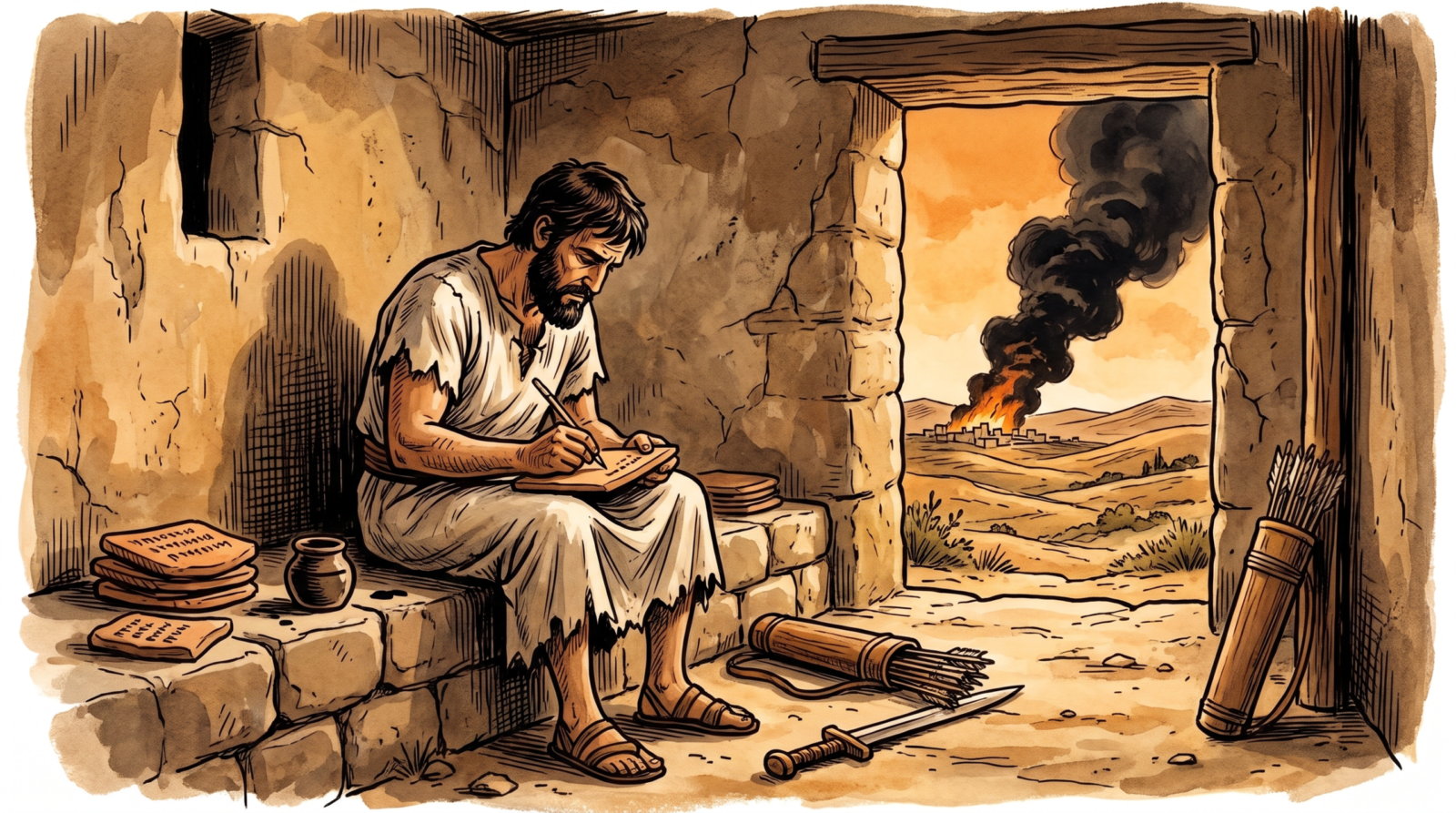
Among the small corpus of Hebrew inscriptions from the period of the divided monarchy, the eighteen ostraca known as the Lachish Letters occupy a place of unique importance. Found in the ruins of the guardroom at the gate of the lower city of Tel Lachish, in the Judean Shephelah, in the seasons of 1935 and 1938 by the British archaeologist James Leslie Starkey, the letters are a small archive of military correspondence from the closing years of the Kingdom of Judah, the last decade before the Babylonian destruction of Jerusalem and the kingdom in 587 BCE. The letters are written in a fluent, idiomatic Hebrew prose of the late monarchic period, on fragments of broken pottery sherds, and they are, with the possible exception of the Siloam Inscription, the most extensive body of continuous pre-exilic Hebrew prose that has survived from the biblical period. The letters are not, strictly speaking, biblical texts: they are not, with one possible exception, direct quotations of biblical passages, and they are not, with one important partial exception, directly related to any specific biblical narrative. The letters are, however, contemporary with the final decades of the Hebrew Bible’s formation, and they are, in their language, in their content, and in their historical context, a major source for the study of the late monarchic period of the Hebrew Bible, the period of the book of Jeremiah, the period of the book of Kings, and the period of the Babylonian conquest. The letters are, in addition, a major source for the history of the Hebrew language of the biblical period, and the language of the letters is, in the modern scholarly view, the most direct evidence available for the spoken and written Hebrew of the late First Temple period. The Lachish Letters are, in sum, a small but extraordinarily rich body of evidence for the historical and linguistic world of the late Hebrew Bible, and a body of evidence that has, in the more than eighty years since Starkey’s discovery, transformed the modern scholarly understanding of the late monarchic period of the Hebrew Bible and the period of the Babylonian conquest.
The discovery of the letters at Tel Lachish
Tel Lachish, the site of the ancient Judean city of Lachish, is a prominent tell, an artificial mound formed by the accumulated ruins of successive settlements, located in the Shephelah, the low hill country between the Judean highlands and the coastal plain, about forty kilometres southwest of Jerusalem. The site had been identified, on the basis of the surviving biblical and post-biblical sources, with the Canaanite and Israelite city of Lachish, and the identification has been confirmed by the archaeological work of the twentieth century. The site had been excavated, in the years 1932 to 1938, by a British expedition directed by James Leslie Starkey, the well-known archaeologist of the Wellcome-Marston expedition to Lachish, and the work of the expedition was, in the years between 1932 and 1938, one of the most important British archaeological projects in Mandate Palestine. Starkey had been trained in the Egyptian Exploration Society’s excavations in Egypt, and he had been working in Mandate Palestine since the late 1920s. The work at Lachish was, in the years 1932 to 1938, a major and well-funded operation, with a substantial staff and a sophisticated programme of stratigraphic excavation. The work was interrupted, in 1938, by the political disturbances of the Arab Revolt, and Starkey himself was murdered, in January 1938, by a band of Arab irregulars on the road from Jerusalem to Hebron. The work was continued, in a series of short campaigns, in 1940, but the work was then suspended for the duration of the Second World War and was not resumed in the pre-1948 period. The work at Tel Lachish was, in the years 1966 to 1995, resumed by a series of Israeli expeditions, including the major Tel Lachish expedition of the Tel Aviv University Institute of Archaeology under David Ussishkin, and the modern Tel Lachish excavations have, in the years since 1966, transformed the modern scholarly understanding of the site.
The Lachish Letters were found, in the first instance, by Starkey’s expedition in the 1935 season. The letters were found in the ruins of a small guardroom at the gate of the lower city of Tel Lachish, a small chamber built into the inner side of the city gate. The guardroom had been destroyed, along with the rest of the city, in the Babylonian destruction of Lachish in 587 BCE, and the guardroom had been preserved, along with the rest of the gate, in the stratified debris of the destruction. The letters were found in a small room in the guardroom, in a deposit of broken pottery and other debris, and the deposit included, in addition to the ostraca themselves, a number of other inscribed sherds, a number of uninscribed sherds, a number of arrowheads, and a number of other artefacts. The deposit was, in the modern scholarly view, the remains of the last days of the Lachish guardroom, the contents of a small office in the last months of the city’s existence. The eighteen ostraca that have come to be called the Lachish Letters were found in this deposit, along with a number of other inscribed sherds that have come to be known as the Lachish Ostraca. The letters were, in the years that followed, prepared for publication by a number of scholars, including Harry Torczyner (later Harry Torczyner-Tur-Sinai), the great Hebrew philologist of the Hebrew University of Jerusalem, and the letters were published, in a series of preliminary reports, in the Bulletin of the Wellcome-Marston Archaeological Research Expedition to the Near East, and in a final publication, The Lachish Letters, in 1938.
The discovery of the letters was, in the immediate aftermath, a major event in the modern study of the Hebrew Bible. The letters were, in the first instance, a major addition to the small corpus of pre-exilic Hebrew epigraphy: the letters added, in the late 1930s, eighteen new texts to a corpus that had, before the discovery, included the Siloam Inscription, the Mesha Stele, the Tel Dan Stele (which was not yet discovered in 1935), the Eshbaal Inscription, the Yavneh-Yam Ostracon, the Arad Ostraca, and a number of other small inscriptions. The letters were, in addition, a major addition to the corpus of late monarchic Hebrew prose, a body of texts that had, before the discovery, been limited to the books of Kings, the books of Chronicles, the book of Jeremiah, and a small number of other biblical passages. The letters were, in the third instance, a major addition to the corpus of contemporary Hebrew documents of the late First Temple period, a body of texts that had, before the discovery, been limited to the Arad Ostraca, the Yavneh-Yam Ostracon, and a small number of other administrative inscriptions. The letters were, in sum, a major addition to the documentary evidence for the late monarchic period of the Hebrew Bible, and a major addition that has, in the more than eighty years since the discovery, continued to be a central source for the modern scholarly study of the period.
The content of the letters
The Lachish Letters are, in content, a small archive of military correspondence from the last decade of the Kingdom of Judah, the period from approximately 597 to 587 BCE, the years of the final Babylonian campaigns against the Kingdom of Judah. The letters are written in a fluent, idiomatic Hebrew prose of the period, and they are, in content, a series of letters from a military officer named Hoshaiah, who was based at a forward outpost in the Judean Shephelah, to Yaosh, the commander of the Lachish garrison, who was based at Lachish. The letters are, in the modern scholarly view, a small sample of the routine military correspondence of the last years of the kingdom, and they are, in content, of three principal types. The first type is the routine military report: a report of a routine military matter, the movement of a unit, the receipt of supplies, the observation of an enemy patrol, the sending of a dispatch. The second type is the report of a significant military matter: the sighting of a major enemy force, the report of a defeat of a friendly unit, the request for reinforcements, the report of a deserter, the warning of an imminent attack. The third type is the request for a response: a request for the commander to send a reply, a request for the commander to send a copy of a particular dispatch, a request for the commander to provide a particular piece of information.
Among the more famous individual letters, Letter IV is the most striking. The letter, which is one of the better-preserved of the eighteen, reads, in the standard translation, as follows: ‘Let my lord Yaosh hear the word of his servant. May Yahweh cause my lord to hear tidings of peace, even now, even now. All of my friends who have been deported to Babylon have returned. The fire signal of Lachish we have been watching, according to all the signs my lord gave, for we cannot see Azekah.’ The letter is a request from Hoshaiah to Yaosh for information about the city of Azekah, a city in the Judean Shephelah that had, in the period of the Babylonian invasion, been a second Judean fortress after Lachish. The letter is, in the modern scholarly view, of major historical importance, for two principal reasons. The first is that the letter mentions, in passing, the deportation of Judean citizens to Babylon, an event that is otherwise known from the book of Jeremiah, the book of Kings, and the book of Chronicles, but that is not, in the biblical sources, mentioned in the same immediate and contemporary way. The second is that the letter mentions the last sighting of the fire signal of Lachish, a signal that the Lachish garrison had been watching, according to the system of fire signals that the Judean kingdom had established in the Shephelah, and that the absence of the Azekah fire signal is, in the letter, the sign of the imminent fall of Azekah. The letter is, in the modern scholarly view, one of the most direct contemporary documents of the Babylonian conquest of the Hebrew Bible’s Kingdom of Judah, and a major source for the modern scholarly understanding of the final years of the kingdom.
Letter VI is also of major historical importance. The letter, which is also well-preserved, reads, in part: ‘The letter of Tobiah, the servant of the king, which came to Shallum the son of Yada from the prophet, saying: “Look out! The king of Babylon has sent to get the house of Tobiah.” The letter is, in the modern scholarly view, of major importance for the modern scholarly study of the prophet Jeremiah, for the letter is one of the very few contemporary references to a prophet of the period outside the book of Jeremiah, and the letter has been identified, in the modern scholarly view, with the prophet Jeremiah himself. The identification is based, in part, on the similarity of the language of the letter to the language of Jeremiah, and in part on the circumstance that the letter was found in the same area in which the book of Jeremiah reports the prophet’s activity. The letter is, in this sense, a major source for the modern scholarly understanding of the role of the prophet in the late monarchic period, and a major source for the modern scholarly understanding of the relationship between the prophetic tradition and the royal administration of the late Kingdom of Judah. The letter is, in addition, a major source for the modern scholarly understanding of the political circumstances of the period, for the letter is a warning to Shallum to look out for a Babylonian intelligence operation against the house of Tobiah, an operation that is not otherwise documented in the surviving Hebrew sources. The letter is, in sum, a major document of the late monarchic period of the Hebrew Bible, and a major source for the modern scholarly study of the political and religious life of the period.
Letter III is a routine military report of particular historical interest. The letter, which is one of the better-preserved of the eighteen, reads, in part: ‘In the twenty-ninth year, in the ninth month, the prophet Jeremiah commanded us to beware, saying: “The king of Babylon will come against the land, and against the cities of Judah, and against Jerusalem, and against the cities of the Shephelah.” The letter is, in the modern scholarly view, of major historical importance for the modern scholarly study of the prophet Jeremiah and the role of the prophet in the late Kingdom of Judah. The letter is, in particular, a major source for the modern scholarly understanding of the role of the prophet in the late monarchic administration, for the letter is one of the very few contemporary documents in which a prophet is mentioned in an administrative or military context outside the book of Jeremiah, and the letter is, in this sense, a major source for the modern scholarly understanding of the relationship between the prophetic tradition and the royal administration of the period. The letter is, in addition, a major source for the modern scholarly understanding of the political circumstances of the period, for the letter is a routine military report of the warning of the prophet Jeremiah about the imminent Babylonian invasion, a warning that is consistent with the picture of the prophet Jeremiah in the book of Jeremiah and that confirms, in this sense, the general historical picture of the late Kingdom of Judah in the book of Jeremiah. The letter is, in sum, a major document of the late monarchic period of the Hebrew Bible, and a major source for the modern scholarly study of the period.
The historical context of the letters
The historical context of the Lachish Letters is, in the modern scholarly view, the last decade of the Kingdom of Judah, the period from approximately 597 to 587 BCE, the years of the final Babylonian campaigns against the kingdom. The Kingdom of Judah, in the late seventh and early sixth centuries BCE, was a small vassal kingdom of the Neo-Babylonian Empire, and the kingdom was, in the period, caught between the great powers of the ancient Near East: the Neo-Babylonian Empire under Nebuchadnezzar II, the Egyptian New Kingdom under Psamtik II and Apries, and the smaller kingdoms of the coastal plain and the Trans-Jordanian plateau. The Kingdom of Judah, in the period, was, in the modern scholarly view, an object of contention between the great powers, and the kingdom was, in the period, subject to a series of Babylonian campaigns of increasing severity. The first major Babylonian campaign, in 597 BCE, resulted in the deportation of King Jehoiachin and a substantial portion of the Judean elite to Babylon, and the installation of a pro-Babylonian king, Zedekiah, on the throne of Jerusalem. The second major Babylonian campaign, in 587 BCE, resulted in the destruction of Jerusalem, the destruction of the First Temple, and the further deportation of a substantial portion of the remaining Judean population to Babylon. The Lachish Letters, in this sense, are a small but extraordinarily rich body of contemporary evidence for the final decade of the Kingdom of Judah, the period of the Babylonian campaigns of 597 and 587 BCE.
The Lachish Letters, in the modern scholarly view, are to be placed in the period between the first and the second major Babylonian campaigns, the period from 597 to 587 BCE, with the letters dated, in the modern scholarly view, to the years immediately before the final Babylonian campaign of 587 BCE. The dating is based, in the first instance, on the language of the letters, which is consistent with the late First Temple period, and in the second instance on the historical references in the letters, which refer to the Babylonian deportations of 597 BCE and to the Babylonian campaign in the Shephelah that culminated in the destruction of Lachish in 587 BCE. The letters are, in the modern scholarly view, the most direct contemporary evidence for the political, military, and linguistic circumstances of the final decade of the Kingdom of Judah, and a major source for the modern scholarly understanding of the period. The letters are, in addition, a major source for the modern scholarly understanding of the final Babylonian campaign against the Kingdom of Judah, for the letters are a small archive of the military correspondence of the last days of the kingdom, and the letters are, in this sense, a major source for the modern scholarly understanding of the final destruction of the kingdom.
The destruction of Lachish, the city in which the letters were found, was, on the basis of the archaeological evidence, a major event in the final Babylonian campaign. The city was, in the years before the destruction, a major Judean fortress in the Shephelah, the second most important Judean fortress after Jerusalem, and the city was, in the final Babylonian campaign, the site of a major battle. The Assyrian reliefs of Sennacherib, the Lachish reliefs, from the Assyrian palace at Nineveh, now in the British Museum, depict the Assyrian siege and capture of Lachish in 701 BCE, more than a century before the Babylonian destruction, and the reliefs are, in the modern scholarly view, a major source for the modern scholarly understanding of the military and political circumstances of the late First Temple period. The Babylonian destruction of 587 BCE was, however, a more thorough destruction than the Assyrian destruction of 701 BCE, and the Babylonian destruction was, in the modern scholarly view, the final destruction of the city of Lachish in the First Temple period. The Lachish Letters, in this sense, are a small but extraordinarily rich body of contemporary evidence for the final days of the Kingdom of Judah, the final days of the city of Lachish, and the final days of the First Temple period of the Hebrew Bible.
The language and the writing of the letters
The language of the Lachish Letters is, in the modern scholarly view, the most direct evidence available for the spoken and written Hebrew of the late First Temple period. The language is, in the first instance, a fluent, idiomatic Hebrew prose, with a vocabulary, a syntax, and a morphology that is, in many respects, the same as the Hebrew of the books of Kings, the books of Chronicles, and the book of Jeremiah, but that is, in a number of specific details, distinct from the biblical Hebrew. The language is, in particular, a vernacular prose, with a number of features that are not, in the biblical sources, well represented: a number of specific words and phrases that are, in the modern scholarly view, characteristic of the spoken Hebrew of the period, and a number of grammatical forms that are, in the modern scholarly view, characteristic of the spoken Hebrew of the period. The language of the letters is, in this sense, a major source for the modern scholarly understanding of the Hebrew language of the late First Temple period, and a major source for the modern scholarly understanding of the relationship between the Hebrew of the late First Temple period and the Hebrew of the Hebrew Bible.
The writing of the letters is, in the modern scholarly view, a major source for the modern scholarly understanding of the Hebrew script of the late First Temple period. The letters are written in the Hebrew script of the late First Temple period, a script that is, in the modern scholarly view, the direct ancestor of the square Hebrew script of the post-exilic period and of the modern Hebrew script. The script of the letters is, in particular, a monumental, formal script, with a number of specific features that are, in the modern scholarly view, characteristic of the late First Temple period. The script is, in addition, a small body of evidence for the palaeography of the period, a body of evidence that has, in the more than eighty years since the discovery, been a major source for the modern scholarly understanding of the development of the Hebrew script. The script of the letters is, in this sense, a major source for the modern scholarly understanding of the Hebrew script of the late First Temple period, and a major source for the modern scholarly understanding of the development of the Hebrew script from the late First Temple period to the modern period.
The letters were, in the modern scholarly view, written by a small number of professional scribes, scribes who were, in the late First Temple period, members of a small scribal class that was based in the royal administration of the Kingdom of Judah. The scribes were, in the modern scholarly view, well trained in the use of the Hebrew script, the Hebrew language, and the conventions of the military and administrative correspondence of the period. The scribes were, in addition, in the modern scholarly view, members of a small scribal class that was, in the period, responsible for the production of the biblical texts of the period, and the scribes were, in this sense, a major source for the modern scholarly understanding of the production of the Hebrew Bible in the late First Temple period. The scribes of the letters, in this sense, were, in the modern scholarly view, members of a small scribal class that was, in the period, responsible for the production of both the military and administrative correspondence of the Kingdom of Judah and the biblical texts of the period, and the scribal class was, in this sense, a major source for the modern scholarly understanding of the production of the Hebrew Bible in the late First Temple period.
The significance of the letters for biblical studies
The Lachish Letters are, in the modern scholarly view, a small but extraordinarily rich body of evidence for the modern scholarly study of the late First Temple period of the Hebrew Bible. The letters are, in the first instance, a major source for the modern scholarly understanding of the political and military circumstances of the final decade of the Kingdom of Judah, the period of the final Babylonian campaigns of 597 and 587 BCE. The letters are, in particular, a major source for the modern scholarly understanding of the final Babylonian campaign of 587 BCE, the campaign that resulted in the destruction of Jerusalem, the destruction of the First Temple, and the Babylonian exile. The letters are, in addition, a major source for the modern scholarly understanding of the role of the prophet in the late Kingdom of Judah, the period of the prophet Jeremiah, the prophet who, in the biblical sources, is the principal figure of the period. The letters are, in the third instance, a major source for the modern scholarly understanding of the Hebrew language of the late First Temple period, and a major source for the modern scholarly understanding of the relationship between the Hebrew of the late First Temple period and the Hebrew of the Hebrew Bible. The letters are, in the fourth instance, a major source for the modern scholarly understanding of the Hebrew script of the late First Temple period, and a major source for the modern scholarly understanding of the development of the Hebrew script from the late First Temple period to the modern period. The letters are, in sum, a small but extraordinarily rich body of evidence for the modern scholarly study of the late First Temple period of the Hebrew Bible, and a body of evidence that has, in the more than eighty years since the discovery, transformed the modern scholarly understanding of the period.
The letters are, in addition, a major source for the modern scholarly understanding of the destruction of Jerusalem and the First Temple in 587 BCE. The destruction of Jerusalem and the First Temple was, in the Hebrew Bible, the central event of the late First Temple period, the event that shaped the theology, the history, and the literature of the post-exilic period. The destruction of Jerusalem and the First Temple was, in the modern scholarly view, a major historical event, a major religious event, and a major cultural event, and the destruction has, in the more than two thousand years since the event, been a central subject of Jewish, Christian, and Islamic religious thought. The Lachish Letters are, in this sense, a major source for the modern scholarly understanding of the destruction of Jerusalem and the First Temple, and a major source for the modern scholarly understanding of the period of the destruction. The letters are, in particular, a major source for the modern scholarly understanding of the immediate political and military circumstances of the destruction, the circumstances that are described, in the Hebrew Bible, in the books of Kings, the books of Chronicles, and the book of Jeremiah, but that are, in the Hebrew Bible, described from a later, exilic or post-exilic, perspective. The letters are, in this sense, a major source for the modern scholarly understanding of the immediate political and military circumstances of the destruction, and a major source for the modern scholarly understanding of the destruction of Jerusalem and the First Temple in 587 BCE.
The letters are, in addition, a major source for the modern scholarly understanding of the relationship between the Hebrew Bible and the historical reality of the late First Temple period. The Hebrew Bible, in the modern scholarly view, is not a direct historical source for the late First Temple period, and the historical picture of the late First Temple period in the Hebrew Bible is, in the modern scholarly view, a theologically shaped picture of the period, a picture that is, in the modern scholarly view, a major source for the modern scholarly understanding of the religious and theological thought of the post-exilic period but that is, in many details, not a direct historical source for the late First Temple period itself. The Lachish Letters, in this sense, are a major source for the modern scholarly understanding of the relationship between the Hebrew Bible and the historical reality of the late First Temple period, and a major source for the modern scholarly understanding of the historical context of the Hebrew Bible’s late First Temple period literature. The letters are, in the modern scholarly view, a major source for the modern scholarly understanding of the late First Temple period, and a major source that has, in the more than eighty years since the discovery, transformed the modern scholarly understanding of the period and the relationship between the Hebrew Bible and the historical reality of the late First Temple period.
References
- “Lachish letters” - with citations to the standard scholarly literature.
- “Tel Lachish” - with citations to the standard scholarly literature.
- “James Leslie Starkey” - with citations to the standard scholarly literature.
- The Lachish Letters - Harry Torczyner, Wellcome-Marston Archaeological Research Expedition to the Near East, 1938.
- The Lachish Letters: A New Translation and Commentary - Hans Peter Hugo, Pontifical Biblical Institute, 1967.
- The Lachish Letters and the Babylonian Conquest of Judah - David Ussishkin, in Tel Aviv, 1977.
- The Arad Ostraca and the Lachish Letters - Yohanan Aharoni, Arad Inscriptions, Israel Exploration Society, 1981.
- Lachish III: The Iron Age Pottery and Epigraphic Finds - David Ussishkin, Tel Aviv University Sonia and Marco Nadler Institute of Archaeology, 2004.
- The Lachish Letters and the Late First Temple Period - William M. Schniedewind, in Bulletin of the American Schools of Oriental Research, 1996.
- The Language of the Lachish Letters - W. F. Albright, in Journal of the American Oriental Society, 1943.
- The Palaeography of the Lachish Letters - Frank M. Cross, in Bulletin of the American Schools of Oriental Research, 1954.
- The Lachish Letters and the Book of Jeremiah - William McKane, in Supplements to Vetus Testamentum, 1980.
- The Kingdom of Judah in the Late First Temple Period - Israel Finkelstein, in Journal of the Institute of Archaeology of Tel Aviv University, 1994.
- The Babylonian Conquest of Judah and the Destruction of Lachish - David Ussishkin, in The Archaeology of Israel, ed. J. A. Hackett, Sheffield Academic Press, 1995.
- The Lachish Reliefs and the Assyrian Conquest of Judah - David Ussishkin, The Conquest of Lachish by Sennacherib, Tel Aviv University, 1982.
- The Siloam Inscription and Late First Temple Period Hebrew Epigraphy - Frank M. Cross, in Hebrew Union College Annual, 1967.
- The Ostraca from Tel Arad and the Late First Temple Period - Yohanan Aharoni and Joseph Naveh, in Israel Exploration Journal, 1982.
- Hebrew Ostraca from the Late First Temple Period - Joseph Naveh, in Hebrew Palaeography, Magnes Press, 1970 (Hebrew).
- “Lachish (city)” - with citations to the standard scholarly literature.
- “Jeremiah” - with citations to the standard scholarly literature.
- “Siege of Jerusalem (587 BC)” - with citations to the standard scholarly literature.
- The Lachish Letters are held in the Israel Museum, Jerusalem (IAA 1935-1 through IAA 1935-18), and the original publication is Harry Torczyner, The Lachish Letters (Oxford: Oxford University Press, 1938).


