The Bar Kokhba Letters and the Cave of Letters
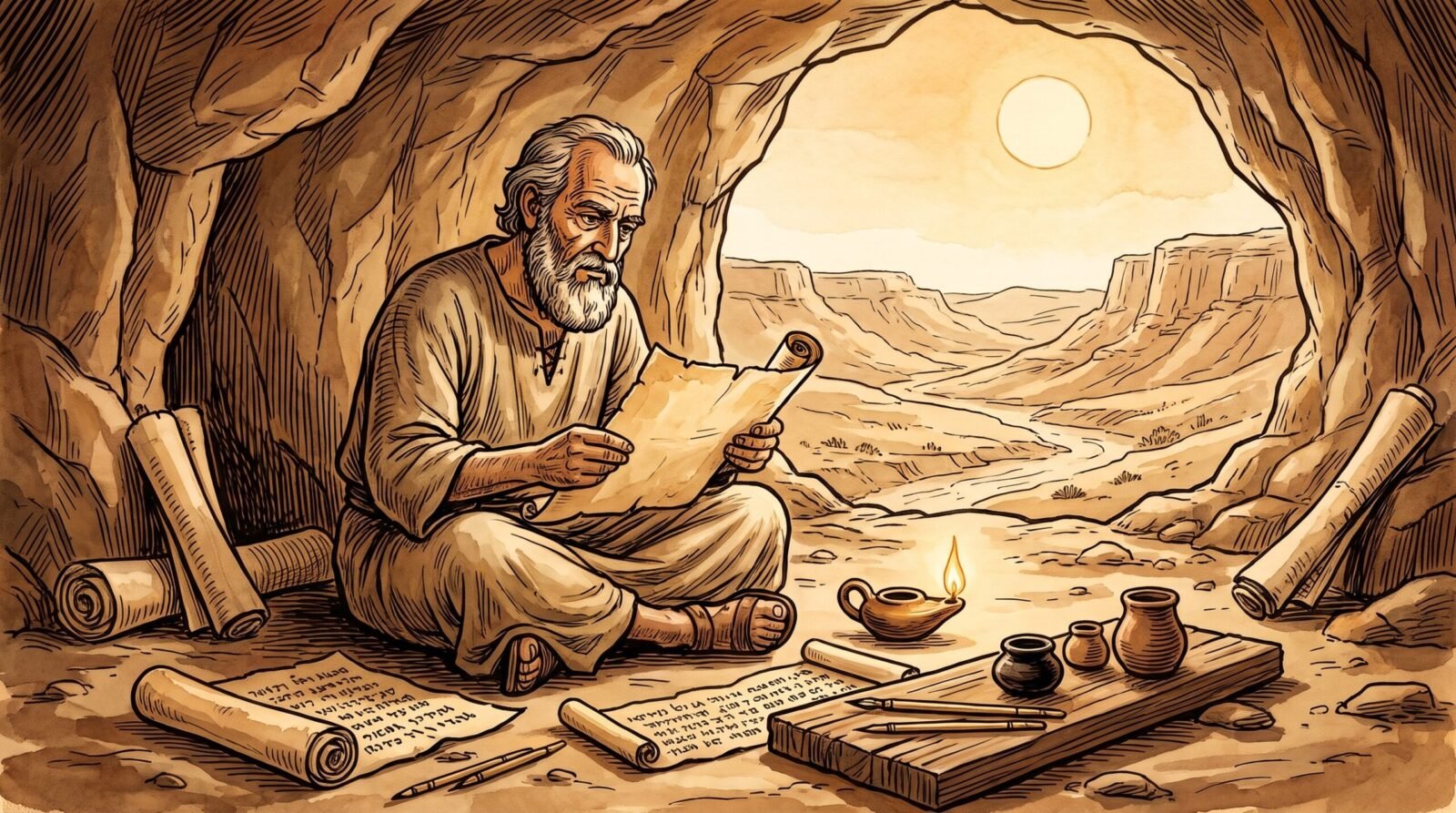
Among the manuscript discoveries of the twentieth century, the small archive of papyri known as the Bar Kokhba Letters occupies a place of quite singular importance for the modern study of Jewish scribal tradition in the period between the destruction of the Second Temple and the rise of the Masoretic system. Discovered in the years 1960 and 1961 by the expedition of the Israeli archaeologist and statesman Yigael Yadin in the cliffs of the wadi of Nahal Hever, on the southwestern shore of the Dead Sea, the Bar Kokhba Letters are, in the modern scholarly view, the only substantial body of documentary papyri to survive from the Jewish revolt against the Roman emperor Hadrian in the years 132 to 135 CE. The cache is, in addition, a substantial body of documentary papyri to survive from the period of late Second Temple Hebrew script, the period of Jewish documentary writing that preceded by roughly two centuries the emergence of the so-called Hebrew square script that would, in the centuries that followed, become the formal script of the Masoretic tradition. The Bar Kokhba Letters are, in sum, a small but extraordinarily rich body of evidence for the period of the late Second Temple Jewish scribal tradition, and a body of evidence that has, in the more than sixty years since the publication of the editio princeps by Yigael Yadin, transformed the modern scholarly understanding of the late Second Temple Jewish scribal tradition and the place of that tradition in the emergence of the Masoretic tradition of the centuries that followed.
The Bar Kokhba Letters derive their name from the principal historical figure of the Jewish revolt of 132 to 135 CE, the figure most commonly known in the modern scholarly literature as Shimon ben Kosiva, and most commonly known in the later rabbinic tradition as Bar Kokhba, the Aramaic translation of the Hebrew title ben ha-kokhav, the son of the star. The figure is, in the modern scholarly view, one of the more controversial figures of Jewish history in the period of the Mishnah and the Talmud, and the figure has, in the more than eighteen centuries since the collapse of the revolt, been the subject of a substantial and continuing debate in the modern scholarly literature, with the modern scholarly literature divided, in roughly equal measure, between those who regard the figure as a messianic claimant of substantial vision and substantial competence and those who regard the figure as a charismatic leader of substantial courage but limited military and political capacity. The Bar Kokhba Letters are, in addition, a substantial body of documentary papyri in their own right, and the Letters have, in the modern scholarly view, been the subject of a substantial body of scholarly literature on the late Second Temple Hebrew and Aramaic documentary traditions, on the administrative structure of the Jewish revolt, on the relationship of the late Second Temple Jewish scribal tradition to the surrounding Hellenistic scribal traditions of the Roman Near East, and on the broader place of the Bar Kokhba revolt in the history of the Jewish diaspora and the Jewish Christian separation of the second century.
The present essay is, in this sense, an attempt to describe the Bar Kokhba Letters, in their documentary and historical context, as the principal surviving body of documentary papyri of the late Second Temple Jewish scribal tradition, and as a body of documentary papyri that has, in the modern scholarly view, transformed the modern scholarly understanding of the late Second Temple Jewish scribal tradition and the place of that tradition in the emergence of the Masoretic tradition of the centuries that followed. The essay follows the Letters through five phases. The first is the historical setting of the Bar Kokhba revolt, in the years between 70 and 132 CE, when the Jewish community of the Land of Israel was, in the aftermath of the destruction of the Second Temple, reorganising itself under Roman rule and the rabbinic movement of the Pharisees was, in the academies of Javneh and elsewhere, beginning to construct the principal texts of the oral tradition that would, in the centuries that followed, become the Mishnah and the Talmud. The second is the discovery of the Letters by Yigael Yadin and the expedition of 1960 and 1961, and the publication of the Letters in the principal works of modern Israeli archaeology of the 1960s and 1970s. The third is the Letters themselves, the small body of Hebrew and Aramaic documentary papyri that constitute the formal body of the Bar Kokhba Letters, and the smaller body of Greek documentary papyri that constitute the formal body of the so-called Babatha archive. The fourth is the light that the Letters shed on the administrative structure of the Jewish revolt and on the relationship of the Jewish rebels to the surrounding population of the Roman province of Arabia Petraea and the Roman province of Judaea. The fifth is the place of the Letters in the broader tradition of late Second Temple Hebrew script, and the relationship of the script of the Letters to the script of the Qumran scrolls, the script of the inscriptions of the late Hellenistic and early Roman period, and the script of the earliest Christian and Jewish documentary papyri of the Roman Near East.
The Historical Setting of the Revolt
The revolt of Bar Kokhba against the Roman emperor Hadrian in the years 132 to 135 CE was, in the modern scholarly view, the second of the two great Jewish revolts against the Roman empire of the first and second centuries. The first of the two revolts, the so-called Great Revolt of 66 to 73 CE, had culminated, in the modern scholarly view, in the destruction of the Second Temple of Jerusalem by the Roman general (and later emperor) Titus Flavius Vespasianus in August of the year 70 CE, and the destruction of the Temple had, in the immediate aftermath, been followed by the suppression of the remnants of the revolt in the hill country of Judea and the abandonment of the city of Jerusalem as a functioning Jewish settlement. The revolt of 132 to 135 CE was, in this sense, the second of the two great revolts of the Jewish population of the Land of Israel against Roman rule, and the revolt was, in addition, the last of the great revolts of the Jewish population of the Land of Israel against the Roman empire of the first and second centuries.
The causes of the revolt are, in the modern scholarly view, a matter of some continuing scholarly dispute, and the modern scholarly literature on the question has, in the more than a century and a half since the first modern histories of the revolt, accumulated a substantial body of competing analyses. The principal and most widely accepted analysis of the modern scholarly literature identifies the causes of the revolt as lying in the combination of three distinct but related developments in the relationship of the Jewish population of the Land of Israel to the Roman empire in the years between 70 and 132 CE. The first of the three developments was the heavy taxation of the Jewish population by the Roman fisc, and the resentment of the Jewish population at the heavy taxation. The second of the three developments was the program of the Roman emperor Hadrian of building a Roman colony on the site of the destroyed city of Jerusalem, the colony of Aelia Capitolina, and the construction, on the site of the destroyed Temple, of a temple dedicated to the Roman god Jupiter. The third of the three developments was the messianic expectation that was, in the Jewish community of the Land of Israel in the period of the second revolt, a substantial and visible presence in the religious life of the community, and the messianic expectation was, in the eyes of the principal rabbinical leadership of the period, embodied in the figure of Shimon ben Kosiva, the figure who would, in the rabbinical tradition of the subsequent centuries, become known as Bar Kokhba, the Son of the Star.
Shimon ben Kosiva is, in the modern scholarly view, one of the more substantial figures of Jewish history in the period of the second revolt. The figure appears in the documentary papyri of the Bar Kokhba Letters in a substantial number of documents, and the figure appears in the rabbinical literature of the subsequent centuries in a substantial body of stories and traditions. The figure is, in addition, mentioned in the Roman sources of the period, principally in the so-called Historia Augusta, the late fourth-century collection of biographies of the Roman emperors, which records the figure as Barcochebas, the Bar Cocheba of the subsequent literary tradition. The figure is, in the modern scholarly view, the principal leader of the revolt of 132 to 135 CE, and the figure was, in this sense, the principal Jewish political figure of the period of the revolt. The figure appears in the documentary papyri of the Bar Kokhba Letters as Nasi Yisrael, the Prince of Israel, and the figure appears in the inscriptions of the coinage of the revolt as the principal author of the coinage.
The scale and the conduct of the revolt are, in the modern scholarly view, a matter of considerable modern scholarly attention. The Roman sources of the period record a Roman army of substantial size sent to suppress the revolt, with the Roman emperor Hadrian himself withdrawing from the eastern provinces of the empire to superintend the suppression of the revolt in person. The Roman sources record the substantial destruction of the Jewish population of the Land of Israel in the course of the suppression of the revolt, with the modern scholarly literature on the question estimating the Jewish casualties of the revolt at several hundred thousand. The Roman sources record the further destruction of the Jewish settlement of the regions of the revolt, with the Roman sources recording the destruction of fifty Jewish settlements and the enslavement of a substantial fraction of the surviving Jewish population. The Roman sources record, in addition, the so-called plundering of the harvest of the Land of Israel by the Roman army during the course of the suppression of the revolt, with the modern scholarly literature on the question estimating the loss of life and the destruction of property of the revolt as among the most severe of the first and second centuries of the Roman empire. The modern scholarly literature on the revolt has, in this sense, accumulated a substantial body of evidence that the revolt was, in scale and in destructiveness, one of the largest of the revolts of the Jewish population of the Roman empire in the first and second centuries.
The Discovery of the Letters by Yigael Yadin
The story of the discovery of the Bar Kokhba Letters is, in the modern scholarly view, one of the more remarkable stories of twentieth-century Israeli archaeology. The Letters were discovered, in the years 1960 and 1961, by the expedition of the Israeli archaeologist and statesman Yigael Yadin in the cliffs of the wadi of Nahal Hever, on the southwestern shore of the Dead Sea, in the territory of the modern state of Israel. The expedition was, in the immediate historical context, one of a substantial body of archaeological expeditions of the Israeli archaeological community of the period, with the expedition following, in the years 1947 to 1956, the much larger archaeological expeditions of the recovery and the publication of the Dead Sea Scrolls from the caves of the wadi of Qumran. The expedition was, in addition, one of the larger archaeological expeditions of the Israeli archaeological community of the period of the early statehood, with the expedition employing, at its peak, several hundred archaeologists, conservators, students, and supporting staff. The expedition was, in this sense, one of the substantial pieces of Israeli archaeology of the period, and the expedition has, in the more than six decades since the publication of the principal publications of the expedition, been one of the principal subjects of modern Israeli archaeological literature.
The site of the discovery of the Bar Kokhba Letters is, in the modern archaeological view, one of the more substantial archaeological sites of the late Hellenistic and early Roman period of the Land of Israel. The wadi of Nahal Hever is, in this sense, a substantial wadi of the southern shore of the Dead Sea, and the wadi is, in addition, the site of a substantial body of late Second Temple and Roman period archaeological remains, including the remains of the so-called Cave of Horror, the so-called Cave of Letters, and the substantial remains of the surrounding Roman-era settlement. The wadi is, in the modern archaeological view, the site of the substantial late Second Temple Jewish settlement of the southern shore of the Dead Sea, and the wadi was, in this sense, the site of a substantial Jewish settlement of the period of the second revolt. The modern archaeological literature has, in addition, identified the wadi as the principal site of the so-called Babatha archive, the substantial body of Greek and Aramaic documentary papyri of the late first century and early second century CE that were discovered, in the years 1960 and 1961, by the expedition of Yigael Yadin and that have, in the more than sixty years since the publication of the publication of the principal editor (the Israeli papyrologist Hannah M. Cotton), been one of the principal bodies of Jewish documentary papyri of the late Second Temple period.
Yigael Yadin himself was, in the modern scholarly view, one of the more remarkable figures of modern Israeli archaeology of the twentieth century. Yadin had been born in 1917 in the city of London, into a family of the leaders of the Zionist movement, and he had been educated, in the years 1932 to 1945, at the Hebrew University of Jerusalem and at the University of Cambridge. Yadin had, in the years 1946 to 1949, served as the Chief of the General Staff of the Israel Defense Forces, and Yadin had, in the years 1949 to 1950, served as a Member of the First Knesset of the state of Israel. Yadin had, in the years 1950 to 1954, served as the Chairman of the Archaeology Section of the Hebrew University of Jerusalem, and Yadin had, in the years 1954 to 1983, served as the Director of the Institute of Archaeology of the Hebrew University of Jerusalem. Yadin had, in addition, served as a Member of the Cabinet of the state of Israel in a number of subsequent governments, and Yadin had, in the years 1977 to 1981, served as the Deputy Prime Minister of the state of Israel. Yadin had, in addition, served as the principal archaeologist of the excavation of a substantial body of late Second Temple and Roman period sites of the Land of Israel, including the cave of Qumran cave 3 in 1952, the so-called Cave of the Treasure in 1960, and the so-called wadi of Nahal Hever and the Cave of Letters in 1960 and 1961.
The expedition of Yadin to the wadi of Nahal Hever in the years 1960 and 1961 was, in the modern archaeological view, one of the more substantial pieces of modern Israeli archaeology of the period. The expedition had been preceded by a substantial body of preliminary survey work by the Israeli archaeological community of the period, and the expedition was, in the years 1960 and 1961, carried out with the substantial logistical and financial support of the state of Israel and the Hebrew University of Jerusalem. The expedition was, in addition, carried out with the substantial methodological sophistication of the period, and the expedition employed, in the years 1960 and 1961, the substantial methodological and technical resources of modern Israeli archaeology of the period, including the substantial photographic and the substantial surveying resources of the period. The expedition was, in sum, one of the more substantial pieces of modern Israeli archaeology of the period, and the expedition has, in the more than six decades since the publication of the principal publications of the expedition, been one of the principal subjects of modern Israeli archaeological literature.
The Letters of Shimon ben Kosiva in Hebrew and Aramaic
The Bar Kokhba Letters themselves are, in the modern scholarly view, a substantial body of documentary papyri of the late Hellenistic and early Roman period of the Land of Israel. The Letters were, in the years 1960 and 1961, recovered from the caves of the wadi of Nahal Hever, principally the so-called Cave of Letters, and the Letters have, in the more than sixty years since the publication of the principal publications of the expedition, been the subject of a substantial body of scholarly literature on the late Second Temple Jewish documentary tradition. The Letters are, in their surviving form, a substantial body of formal documentary papyri, with the Letters comprising, in their surviving form, a substantial number of formal documentary papyri in the Hebrew and Aramaic languages of the late Hellenistic and early Roman period, with a smaller body of formal documentary papyri in the Greek language of the late Hellenistic and early Roman period. The Letters are, in addition, a substantial body of formal documentary papyri in the formal documentary tradition of the late Second Temple Jewish scribal tradition, with the Letters following, in their surviving form, the formal documentary tradition of the late Second Temple Jewish scribal tradition in a substantial number of formal documentary features, including the formal documentary formulae, the formal documentary signatures, and the formal documentary subscriptions of the formal documentary tradition of the late Second Temple Jewish scribal tradition.
The Hebrew and Aramaic letters of the Bar Kokhba Letters are, in the modern scholarly view, of major importance for the modern scholarly understanding of the late Second Temple Jewish scribal tradition. The letters are, in their surviving form, written on papyrus of the standard quality of the late Hellenistic and early Roman period, and the letters are, in their surviving form, written in the formal Hebrew script of the late Second Temple period. The letters are, in their surviving form, a substantial body of formal documentary papyri of the late Second Temple Jewish scribal tradition, and the letters are, in their surviving form, the principal body of documentary papyri to survive from the late Second Temple Jewish scribal tradition of the period of the second revolt. The letters are, in this sense, the principal source for the modern scholarly understanding of the late Second Temple Jewish scribal tradition of the period of the second revolt, and the letters have, in the more than sixty years since the publication of the editio princeps by Yigael Yadin, been one of the principal sources for the modern scholarly understanding of the late Second Temple Jewish scribal tradition of the period.
The script of the Bar Kokhba Letters is, in this sense, a substantial body of evidence for the script of the late Second Temple Jewish scribal tradition. The script of the Letters is, in the first instance, the script of the late Second Temple Jewish scribal tradition in its most distinctive and most formal development. The script of the Letters is, in the second instance, the script of the late Second Temple Jewish scribal tradition in its transitional form between the script of the late Hellenistic period and the script of the early Roman period. The script of the Letters is, in the third instance, the script of the late Second Temple Jewish scribal tradition in its transitional form between the script of the so-called Hasmonean script of the late Hellenistic period and the script of the so-called Hebrew square script of the early Roman period. The script of the Letters is, in sum, a substantial body of evidence for the script of the late Second Temple Jewish scribal tradition of the period of the second revolt, and the script of the Letters has, in the more than sixty years since the publication of the editio princeps by Yigael Yadin, been one of the principal sources for the modern scholarly understanding of the script of the late Second Temple Jewish scribal tradition of the period of the second revolt.
The content of the formal documentary papyri of the Bar Kokhba Letters is, in addition, a substantial body of evidence for the late Second Temple Jewish documentary tradition. The content of the formal documentary papyri of the Letters is, in the first instance, the content of the formal administrative correspondence of the leadership of the Jewish revolt of 132 to 135 CE, with the content of the formal documentary papyri of the Letters comprising, in their surviving form, a substantial body of formal letters from the principal leadership of the revolt to the subordinate leadership of the revolt and to the surrounding Jewish settlements of the regions of the revolt. The content of the formal documentary papyri of the Letters is, in the second instance, the content of the formal administrative correspondence of the principal leadership of the revolt to the subordinate leadership of the revolt, with the content of the formal documentary papyri of the Letters comprising, in their surviving form, a substantial body of formal letters of instruction from the principal leadership of the revolt to the subordinate leadership of the revolt on a substantial body of administrative and military questions. The content of the formal documentary papyri of the Letters is, in the third instance, the content of the formal administrative correspondence of the principal leadership of the revolt to the surrounding Jewish settlements of the regions of the revolt, with the content of the formal documentary papyri of the Letters comprising, in their surviving form, a substantial body of formal letters of instruction from the principal leadership of the revolt to the Jewish settlements of the regions of the revolt on a substantial body of administrative and military questions.
The Greek and Aramaic Deeds of Babatha
The Babatha archive is, in the modern scholarly view, the second of the two principal documentary papyri recovered from the wadi of Nahal Hever by the expedition of Yigael Yadin in the years 1960 and 1961. The Babatha archive is, in its surviving form, a substantial body of formal documentary papyri of the late first century and early second century CE, with the Babatha archive comprising, in its surviving form, a substantial body of formal documentary papyri in the Greek and the Aramaic languages of the late Hellenistic and early Roman period. The Babatha archive is, in addition, a substantial body of formal documentary papyri of the formal documentary tradition of the late Second Temple Jewish scribal tradition, with the Babatha archive following, in their surviving form, the formal documentary tradition of the late Second Temple Jewish scribal tradition in a substantial number of formal documentary features, including the formal documentary formulae, the formal documentary signatures, and the formal documentary subscriptions of the formal documentary tradition of the late Second Temple Jewish scribal tradition. The Babatha archive is, in sum, a substantial body of formal documentary papyri of the late Second Temple Jewish scribal tradition, and the Babatha archive has, in the more than sixty years since the publication of the principal publication by the Israeli papyrologist Hannah M. Cotton, been one of the principal bodies of Jewish documentary papyri of the late Second Temple period of the Land of Israel.
Babatha herself was, in the modern scholarly view, one of the more remarkable figures of the Jewish population of the southern shore of the Dead Sea in the late first century and early second century CE. Babatha had been, in the years between approximately 90 and 132 CE, a Jewish woman of the southern shore of the Dead Sea, and Babatha had, in the years between approximately 90 and 132 CE, been the owner of a substantial body of property in the regions of the southern shore of the Dead Sea. Babatha had, in the years between approximately 90 and 132 CE, been married, in succession, to two Jewish husbands of the regions of the southern shore of the Dead Sea, and Babatha had, in the years between approximately 90 and 132 CE, been the mother of a substantial family of Jewish children of the regions of the southern shore of the Dead Sea. Babatha had, in addition, in the years between approximately 90 and 132 CE, been the owner of a substantial body of formal documentary papyri of the late Hellenistic and early Roman period of the Land of Israel, with the documentary papyri of Babatha comprising, in their surviving form, a substantial body of formal documentary papyri in the Greek and the Aramaic languages of the late Hellenistic and early Roman period.
The documentary papyri of the Babatha archive are, in the modern scholarly view, a substantial body of formal documentary papyri of the late Hellenistic and early Roman period of the Land of Israel. The documentary papyri of the Babatha archive are, in the first instance, the formal documentary papyri of a Jewish woman of the southern shore of the Dead Sea in the late first century and early second century CE, with the documentary papyri of the Babatha archive comprising, in their surviving form, a substantial body of formal documentary papyri in the formal documentary tradition of the late Second Temple Jewish scribal tradition. The documentary papyri of the Babatha archive are, in the second instance, the formal documentary papyri of a Jewish woman of the southern shore of the Dead Sea in the late first century and early second century CE, with the documentary papyri of the Babatha archive comprising, in their surviving form, a substantial body of formal documentary papyri in the formal documentary tradition of the late Second Temple Jewish scribal tradition in the formal documentary formulae of marriage, divorce, guardianship, property transfer, and the formal documentary formulae of the Roman administration of the Land of Israel in the late first century and early second century CE. The documentary papyri of the Babatha archive are, in the third instance, the formal documentary papyri of a Jewish woman of the southern shore of the Dead Sea in the late first century and early second century CE, with the documentary papyri of the Babatha archive comprising, in their surviving form, a substantial body of formal documentary papyri of the formal documentary tradition of the late Second Temple Jewish scribal tradition, and the documentary papyri of the Babatha archive have, in the more than sixty years since the publication of the principal publication by Hannah M. Cotton, been one of the principal bodies of Jewish documentary papyri of the late Second Temple period of the Land of Israel.
The relationship of the Babatha archive to the Bar Kokhba Letters is, in addition, a substantial body of evidence for the relationship of the formal documentary tradition of the late Second Temple Jewish scribal tradition to the formal documentary tradition of the late Hellenistic and early Roman period of the Land of Israel. The relationship of the Babatha archive to the Bar Kokhba Letters is, in the first instance, the relationship of a Jewish archive of the southern shore of the Dead Sea of the late first century and early second century CE to a Jewish archive of the southern shore of the Dead Sea of the period of the second revolt. The relationship of the Babatha archive to the Bar Kokhba Letters is, in the second instance, the relationship of a Jewish archive of the southern shore of the Dead Sea of the late first century and early Roman period to a Jewish archive of the southern shore of the Dead Sea of the period of the second revolt, with the relationship of the two archives demonstrating, in their surviving form, the substantial continuity of the formal documentary tradition of the late Second Temple Jewish scribal tradition in the period between approximately 90 and 135 CE. The relationship of the Babatha archive to the Bar Kokhba Letters is, in the third instance, the relationship of a Jewish archive of the southern shore of the Dead Sea of the late first century and early second century CE to a Jewish archive of the southern shore of the Dead Sea of the period of the second revolt, with the relationship of the two archives demonstrating, in their surviving form, the substantial continuity of the formal scribal and documentary tradition of the late Second Temple Jewish scribal tradition in the period between approximately 90 and 135 CE, and the relationship of the Babatha archive to the Bar Kokhba Letters has, in the more than sixty years since the publication of the principal publication by Hannah M. Cotton, been one of the principal bodies of evidence for the modern scholarly understanding of the continuity of the formal scribal and documentary tradition of the late Second Temple Jewish scribal tradition in the period between approximately 90 and 135 CE.
The Letters and the Afterlife of the Masoretic Tradition
The place of the Bar Kokhba Letters in the broader tradition of late Second Temple Hebrew script is, in the modern scholarly view, a substantial body of evidence for the relationship of the late Second Temple Jewish documentary tradition to the formal script of the Masoretic tradition of the early medieval period. The script of the Letters is, in the first instance, the script of the late Second Temple Jewish scribal tradition in its most distinctive and most formal development, and the script of the Letters is, in the second instance, the script of the late Second Temple Jewish scribal tradition in its transitional form between the script of the late Hellenistic period and the script of the early Roman period. The script of the Letters is, in the third instance, the script of the late Second Temple Jewish scribal tradition in its transitional form between the script of the so-called Hasmonean script of the late Hellenistic period and the script of the so-called Hebrew square script of the early Roman period, and the script of the Letters is, in the fourth instance, the script of the late Second Temple Jewish scribal tradition in its transitional form between the script of the early medieval Jewish scribal tradition of the period of the Mishnah and the Talmud and the script of the formal Masoretic tradition of the early medieval period of the so-called Ben Asher family of the Tiberian Masorah of the tenth century CE.
The continuity of the formal documentary tradition of the late Second Temple Jewish scribal tradition through the period of the Bar Kokhba revolt and the subsequent centuries is, in addition, a substantial body of evidence for the modern scholarly understanding of the place of the late Second Temple Jewish scribal tradition in the emergence of the Masoretic tradition of the early medieval period. The continuity of the formal documentary tradition of the late Second Temple Jewish scribal tradition through the period of the Bar Kokhba revolt and the subsequent centuries is, in the first instance, the continuity of a Jewish documentary tradition of the late Hellenistic and early Roman period of the Land of Israel through the period of the second revolt and into the subsequent centuries of the formal documentary tradition of the late Second Temple Jewish scribal tradition. The continuity of the formal documentary tradition of the late Second Temple Jewish scribal tradition through the period of the Bar Kokhba revolt and the subsequent centuries is, in the second instance, the continuity of a Jewish documentary tradition of the late Hellenistic and early Roman period of the Land of Israel through the period of the second revolt and into the subsequent centuries of the formal documentary tradition of the late Second Temple Jewish scribal tradition in the period between approximately 135 and 500 CE, the so-called period of the emergence of the Mishnah and the Talmud in the Jewish communities of the Land of Israel and the Jewish diaspora of the Roman and the Sasanian empires. The continuity of the formal documentary tradition of the late Second Temple Jewish scribal tradition through the period of the Bar Kokhba revolt and the subsequent centuries is, in the third instance, the continuity of a Jewish documentary tradition of the late Hellenistic and early Roman period of the Land of Israel through the period of the second revolt and into the subsequent centuries of the formal documentary tradition of the late Second Temple Jewish scribal tradition in the period between approximately 135 and 500 CE, the so-called period of the emergence of the Masoretic tradition of the early medieval period in the Jewish communities of the Land of Israel and the Jewish diaspora of the Roman and the Sasanian empires, and the continuity of the formal documentary tradition of the late Second Temple Jewish scribal tradition through the period of the Bar Kokhba revolt and the subsequent centuries has, in the more than sixty years since the publication of the editio princeps by Yigael Yadin, been one of the principal bodies of evidence for the modern scholarly understanding of the place of the late Second Temple Jewish scribal tradition in the emergence of the Masoretic tradition of the early medieval period.
The textual tradition of the late Second Temple Jewish documentary tradition that is represented in the Bar Kokhba Letters is, in addition, a substantial body of evidence for the textual tradition of the late Second Temple Jewish documentary tradition that would, in the centuries that followed, become the formal Hebrew script of the Masoretic tradition of the early medieval period. The textual tradition of the late Second Temple Jewish documentary tradition that is represented in the Bar Kokhba Letters is, in the first instance, the textual tradition of the late Second Temple Jewish documentary tradition that is represented in the formal documentary features of the Bar Kokhba Letters themselves, including the formal documentary formulae, the formal documentary signatures, and the formal documentary subscriptions of the formal documentary tradition of the late Second Temple Jewish scribal tradition. The textual tradition of the late Second Temple Jewish documentary tradition that is represented in the Bar Kokhba Letters is, in the second instance, the textual tradition of the late Second Temple Jewish documentary tradition that is represented in the formal documentary features of the Bar Kokhba Letters in the formal documentary formulae of the formal documentary tradition of the late Second Temple Jewish scribal tradition in the formal documentary formulae of the formal documentary tradition of the late Second Temple Jewish scribal tradition in the formal documentary formulae of marriage, divorce, guardianship, property transfer, and the formal documentary formulae of the Roman administration of the Land of Israel in the late first century and early second century CE. The textual tradition of the late Second Temple Jewish documentary tradition that is represented in the Bar Kokhba Letters is, in the third instance, the textual tradition of the late Second Temple Jewish documentary tradition that is represented in the formal documentary features of the Bar Kokhba Letters in the formal documentary formulae of the formal documentary tradition of the late Second Temple Jewish scribal tradition in the formal documentary formulae of the formal documentary tradition of the late Second Temple Jewish scribal tradition in the formal documentary formulae of marriage, divorce, guardianship, property transfer, and the formal documentary formulae of the Roman administration of the Land of Israel in the late first century and early second century CE, and the textual tradition of the late Second Temple Jewish documentary tradition that is represented in the Bar Kokhba Letters has, in the more than sixty years since the publication of the editio princeps by Yigael Yadin, been one of the principal bodies of evidence for the modern scholarly understanding of the textual tradition of the late Second Temple Jewish documentary tradition of the period of the Bar Kokhba revolt.
The place of the Bar Kokhba Letters in the broader tradition of the so-called Judean Desert Papyri is, finally, a substantial body of evidence for the place of the late Second Temple Jewish documentary tradition in the broader tradition of the documentary papyri of the late Hellenistic and early Roman period of the Land of Israel. The so-called Judean Desert Papyri are, in the modern scholarly view, the substantial body of documentary papyri recovered from the caves of the wadis of the southern shore of the Dead Sea in the years between 1947 and 1961, with the Judean Desert Papyri comprising, in their surviving form, a substantial body of documentary papyri in the Hebrew, Aramaic, Greek, and Latin languages of the late Hellenistic and early Roman period of the Land of Israel. The Bar Kokhba Letters are, in addition, a substantial body of the formal documentary papyri of the late Second Temple Jewish documentary tradition of the period of the second revolt, and the Bar Kokhba Letters have, in the more than sixty years since the publication of the editio princeps by Yigael Yadin, been one of the principal bodies of evidence for the modern scholarly understanding of the Judean Desert Papyri of the period of the second revolt.
The Bar Kokhba Letters are, in sum, a small but extraordinarily rich body of documentary papyri of the late Second Temple Jewish scribal tradition, and the Letters are, in the modern scholarly view, one of the principal bodies of documentary papyri of the late Second Temple period of the Land of Israel. The Letters are, in addition, a substantial body of documentary papyri of the late Second Temple Jewish documentary tradition of the period of the second revolt, and the Letters have, in the more than sixty years since the publication of the editio princeps by Yigadel Yadin, been one of the principal bodies of evidence for the modern scholarly understanding of the late Second Temple Jewish documentary tradition of the period of the second revolt. The Letters are, in the third instance, a substantial body of documentary papyri of the late Second Temple Jewish scribal tradition of the period of the second revolt, and the Letters are, in this sense, one of the central subjects of modern Israeli archaeology of the period. The Letters are, in sum, a small but extraordinarily rich body of documentary papyri of the late Second Temple Jewish scribal tradition of the period of the second revolt, and the Letters have, in the more than sixty years since the publication of the editio princeps by Yigadel Yadin, transformed the modern scholarly understanding of the late Second Temple Jewish scribal tradition and the place of that tradition in the emergence of the Masoretic tradition of the early medieval period of the Jewish communities of the Land of Israel and the Jewish diaspora of the Roman and Sasanian empires.
References
- “Bar Kokhba revolt” - with citations to the standard scholarly literature.
- “Cave of Letters” - with citations to the standard archaeological literature.
- “Yigael Yadin” - with citations to the standard biographical literature.
- “Babatha archive” - with citations to the standard scholarly literature.
- Yadin, Yigael, Bar-Kokhba: The Rediscovery of the Legendary Hero of the Second Jewish Revolt Against Rome (London: Weidenfeld and Nicolson, 1971), the principal narrative of the 1960 to 1961 expeditions of Nahal Hever.
- Yadin, Yigael, The Finds from the Bar Kokhba Period in the Cave of Letters, 3 vols. (Jerusalem: Israel Exploration Society, 1963 to 1971), the editio princeps of the documentary papyri, Hebrew letters, Aramaic deeds, and Greek contracts of the Bar Kokhba archive.
- Cotton, Hannah M., The Archive of Babatha from Nahal Hever (Jerusalem: Israel Exploration Society, 1989), the definitive publication of the Babatha archive, including the marriage contracts, the property deeds, and the Greek leases.
- Eck, Werner, “The Bar Kokhba Revolt: The Roman Perspective”, Journal of Roman Studies, Vol. 89 (1999), pp. 76 to 89, the Roman-side account of the revolt.
- Schäfer, Peter, The History of the Jews in Antiquity (Tübingen: Mohr Siebeck, 1995), the standard scholarly synthesis in English.
- Goodman, Martin, The Ruling Class of Judaea: The Origins of the Jewish Revolt against Rome A.D. 66 to 70 (Cambridge: Cambridge University Press, 1987), the social-historical background to the revolt.
- Rabinowitz, Louis Isaac, “Simon Bar Kokhba”, Encyclopaedia Judaica (Berlin: Eschkol Publishing, 2007), the standard reference article.
- Eshel, Hanan, “The Bar Kokhba Letters”, in Crawford, Sidnie White (ed.), The Dead Sea Scrolls: Texts and Contexts (Leiden: Brill, 2011), pp. 405 to 428, the standard scholarly synthesis of the documentary papyri in Hebrew and Aramaic.
- Cotton, Hannah M., and Eck, Werner, “Josephus, the Bar Kokhba Revolt, and the Roman Response”, in Edmondson, Jonathan, et al. (eds.), Flavian Rome: Empire and Legacy (Leiden: Brill, 2018), pp. 287 to 318.
- Oppenheimer, Aharon, Babatha ‘Isha Yehudit mi-Midbar Yehudah (Babatha, A Jewish Woman from the Judean Desert) (Tel Aviv: HaKibbutz HaMeuchad, 2003), a Hebrew-language biography of Babatha.
- Lewis, Naphtali, et al. (eds.), The Documents from the Bar Kokhba Period in the Cave of Letters: Greek Papyri (Jerusalem: Israel Exploration Society, 1989), the Greek documentary papyri of the Bar Kokhba archive.
- Aharoni, Yohanan, and Rothenberg, Benjamin, “Expedition D - The Cave of Horror”, Israel Exploration Journal, Vol. 12 (1962), pp. 186 to 199, the principal publication of the smaller Babatha Cave (“Cave of Horror”).
- Patrich, Joseph, “The Account of the Nahal Hever Expedition”, Atiqot, Vol. 41 (2002), the standard scholarly synthesis of the methodological and logistical aspects of the expedition.
- The Judean Desert Revolts - Hebrew University of Jerusalem, the institutional catalogue of the Judean Desert Papyri.


