Cyril, Methodius and the Slavonic Bible
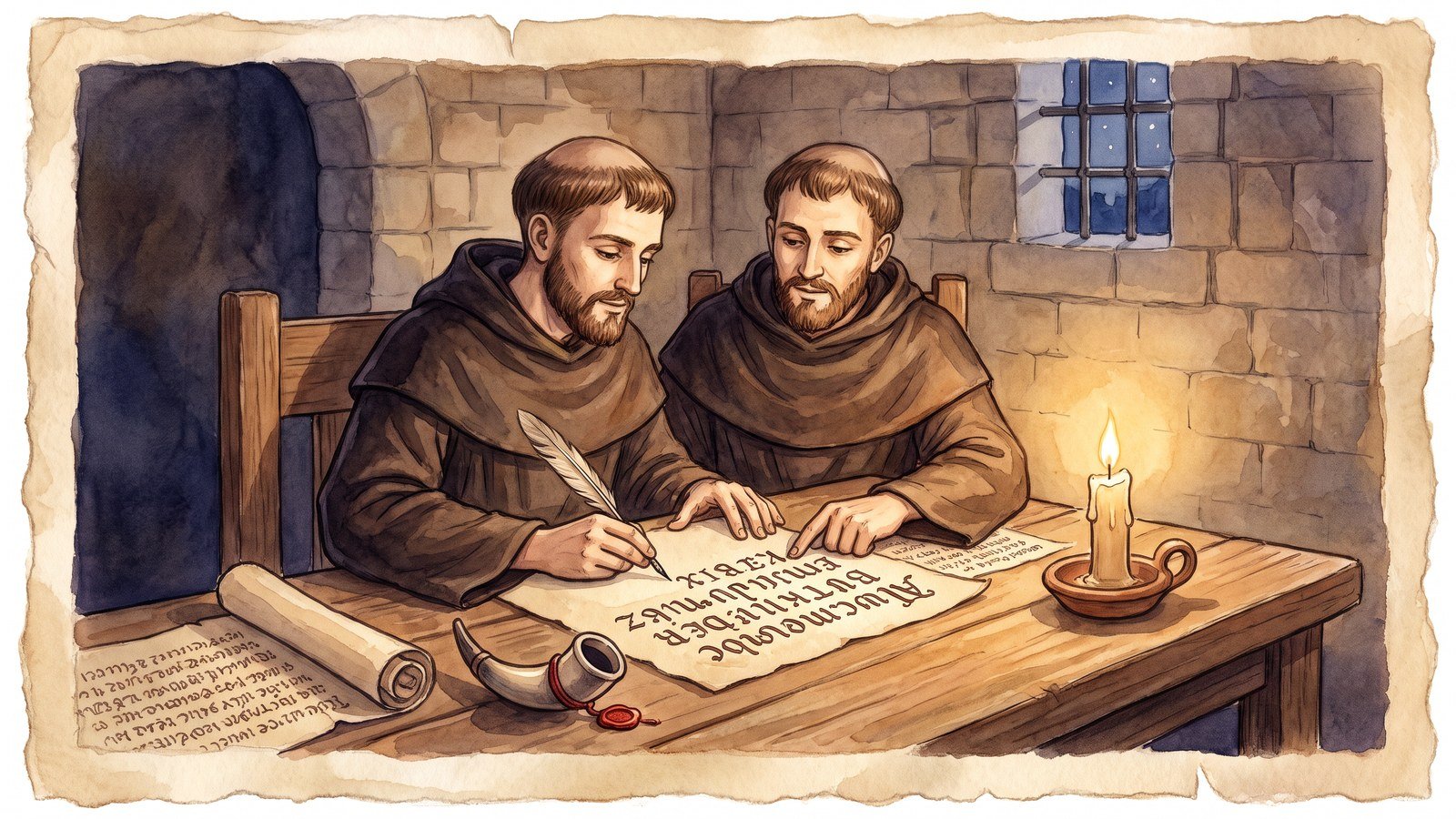
In the summer of 863 two brothers from Thessalonica arrived at the court of a Slavic prince north of the Danube carrying books written in an alphabet that had not existed a year before. Constantine, a scholar of the imperial capital, and his elder brother Methodius, a former provincial governor turned monk, had been sent by the Byzantine emperor to teach the Moravians the Christian faith in their own language. To do so they had first to give that language a script, and then to render into it the Gospels, the Psalter and the services of the church. Their work, carried on after their deaths by a small band of disciples, created the first Slavic literary language, now called Old Church Slavonic, and laid the foundation of a biblical tradition that would be read from the Adriatic to the Pacific.1 This article follows that tradition from the mission of Cyril and Methodius through the earliest Slavonic manuscripts to the completion, more than six centuries later, of the first full Slavonic Bible at Novgorod, the codex known after its patron as the Gennadius Bible.2
At a glance
- c. 815: Birth of Michael, later the monk Methodius, at Thessalonica.
- c. 826–827: Birth of Constantine, later the monk Cyril, at Thessalonica.
- 860–861: Constantine and Methodius travel on an imperial embassy to the Khazars.
- 862: Prince Rastislav of Moravia asks Emperor Michael III for a teacher.
- 863: The brothers reach Moravia with a new alphabet, the Glagolitic.
- 867–868: Journey to Rome; Pope Hadrian II approves the Slavonic books.
- 14 February 869: Constantine, now the monk Cyril, dies in Rome.
- 880: Pope John VIII confirms the Slavonic liturgy in the bull Industriae tuae.
- 6 April 885: Death of Methodius; his disciples are soon expelled from Moravia.
- c. 893: The Preslav school in Bulgaria; the Cyrillic alphabet takes shape.
- 1056–1057: The Ostromir Gospel, the oldest dated East Slavic book, is written.
- 1499: The Gennadius Bible, the first complete Slavonic Bible, is finished at Novgorod.
- 1581: The Ostrog Bible, the first printed complete Slavonic Bible.
Two Brothers from Thessalonica
Family and Education
The principal sources for the brothers’ lives are two Slavonic texts written soon after their deaths, the Life of Constantine and the Life of Methodius, often called together the Pannonian Legends.34 They are works of hagiography, composed to honour saints and to defend their cause, and they must be read with that purpose in mind. Yet they were written by people who had known their subjects, probably by members of the circle of disciples, and modern historians accept most of their outline of events, which can often be checked against papal letters, Latin chronicles and Byzantine sources.5
According to the Lives, the brothers were sons of a man named Leo, who held the rank of drungarios, a middle-ranking military officer, in the city of Thessalonica. Methodius, whose baptismal name may have been Michael, was born around 815; Constantine, the youngest of seven children, around 826 or 827. Thessalonica was the second city of the Byzantine Empire and lay in a region where Slavic settlers had lived since the late sixth century. The Life of Constantine has the emperor say, when he chose the brothers for the Moravian mission, that “all Thessalonians speak pure Slavonic”, and while the remark is an idealisation, it is likely that the brothers grew up hearing and speaking the Slavic dialect of the Thessalonian hinterland.6
Methodius entered imperial service and, according to his Life, governed a Slavic district for some years before withdrawing to a monastery on Mount Olympus in Bithynia. Constantine was sent as a youth to Constantinople, where he studied under the most eminent scholars of the age. The Life names Leo the Mathematician and Photios, later patriarch, among his teachers, and describes his study of grammar, Homer, geometry, dialectic and philosophy.7 He became librarian of the patriarchal library, or perhaps a deacon serving there, and later taught philosophy in the capital, which earned him the title by which he was known for the rest of his life, Constantine the Philosopher.
Early Embassies
Before the Moravian mission Constantine took part in at least one imperial embassy, and possibly two. The Life of Constantine describes a disputation with Muslim scholars at the court of the Abbasid caliph, usually dated around 851, though some historians doubt its historicity in the form given. Better attested is the mission of 860 to 861 to the Khazars, the Turkic people whose khaganate north of the Black Sea and Caspian was an ally of Byzantium and whose ruling class had adopted Judaism.8 Methodius accompanied his brother on this journey. On the way, at Chersonesos in the Crimea, Constantine is said to have studied Hebrew and Samaritan, and to have found a Gospel and Psalter “written in Rus’ letters”, a passage that has generated a large scholarly literature; many scholars now read “Rus’” as a scribal error for “Syrian” (that is, Syriac), but the question is not settled.9 At Chersonesos the brothers also recovered relics believed to be those of Clement of Rome, the first-century bishop, which they later carried to Italy.
These episodes matter for the history of the Slavonic Bible because they show Constantine as a linguist accustomed to working across languages and scripts, and as a defender of Christian doctrine in debate with representatives of other faiths. Both qualities would shape the translation he and his brother undertook.
The Moravian Mission
Rastislav’s Request
In 862 Rastislav, ruler of the principality known to modern historians as Great Moravia, sent envoys to Emperor Michael III in Constantinople.101112 Christianity had already reached Moravia from the Frankish east, through missionaries working under the bishops of Passau and Salzburg, who used Latin in the liturgy. Rastislav’s request, as reported in the Life of Methodius, was for “a teacher who would explain to us the true Christian faith in our own language”.13 Political considerations were clearly present. Rastislav was trying to limit the power of the East Frankish kingdom under Louis the German, whose clergy were an instrument of Frankish influence, and an alliance with Byzantium offered a counterweight. The emperor and Photios, by then patriarch, chose Constantine and Methodius.
The Life of Constantine records a scene that has become central to the memory of the mission. Asked whether the Slavs had letters, Constantine replied that he could not go to a people who had no written language, for that would be like writing on water. The emperor answered that his predecessors had tried and failed to find any such letters. Constantine then prayed, and “God revealed to him the letters”, and he at once began to write the Gospel: “In the beginning was the Word, and the Word was with God, and the Word was God”.14
The Glagolitic Alphabet
The alphabet Constantine devised is the one now called Glagolitic, from the Slavonic verb glagolati, “to speak”.15 It consisted originally of about thirty-eight letters, designed to represent the sounds of Slavic with considerable precision, including sounds that Greek lacked, such as the palatal consonants and the nasal vowels. The shapes of the letters are distinctive, built of loops, circles and triangles, and their origins remain debated. Scholars have proposed models in Greek minuscule, in Hebrew and Samaritan, in Coptic and in Christian symbols such as the cross, the circle and the triangle; most now see the alphabet as a deliberate and largely original creation that drew on several sources while giving the whole a unified design.1617 The first letter, az, has the form of a cross, which may be a conscious choice for an alphabet whose purpose was to carry the Christian scriptures.
The precedent for such an undertaking existed in the Christian East. The Goths had received an alphabet and a Bible from Ulfilas in the fourth century, the Armenians from Mesrop Mashtots in the fifth, and the Copts and Ethiopians had their own scriptural traditions, described in earlier articles on the Coptic Bible and the Garima Gospels. Constantine himself would cite such examples when his work was challenged in Venice. What distinguished the Slavonic case was the speed and system of the creation: a script, a literary register and a body of liturgical texts were produced within a few years by a small team working to a common plan.
The First Translations
The first book the brothers translated was not a continuous text of the four Gospels but a Gospel lectionary, that is, a selection of passages arranged in the order in which they were read in the liturgy through the church year. The opening words written by Constantine, John 1:1, are the beginning of the reading for Easter Sunday in the Byzantine rite, the first reading of the liturgical year. A lectionary of this kind is known in Slavonic as an aprakos. The Life of Constantine states that in Moravia he translated “the whole ecclesiastical office”, including Matins, the Hours, Vespers, Compline and the Liturgy, and the Life of Methodius adds the Psalter and the Apostolos, the lectionary of readings from Acts and the Epistles.1819
The translators worked from Greek texts of the Byzantine type, the form of the text that dominated the Greek church in the ninth century. Their Slavonic follows the Greek closely in word order and syntax, often rendering Greek compounds with newly formed Slavic compounds and Greek grammatical constructions with Slavic equivalents, but it is not mechanically literal. Philologists have long admired its combination of fidelity and idiom, and the language it established, with its rich vocabulary of abstract and theological terms, became the model for Slavic literary writing for centuries.2021
Rome, Venice and the Three Languages
The Dispute at Venice
The mission met resistance from the Frankish clergy, who regarded Moravia as within their jurisdiction and objected to the use of Slavonic in the liturgy. In 867 the brothers left Moravia, apparently intending to have some of their disciples ordained. They passed through Pannonia, where the Slavic prince Kocel received them and gave them pupils, and came to Venice. There, according to the Life of Constantine, they were confronted by Latin clergy who held what the Life calls the “trilingual heresy”, the view that God could be praised only in the three languages written on the inscription on the cross: Hebrew, Greek and Latin.22
Constantine’s reply, as the Life records it, is one of the earliest arguments for vernacular scripture in the medieval world. He asked whether the rain did not fall equally on all, and the sun shine on all, and whether it was not shameful to admit only three languages and to condemn all other peoples to blindness and deafness. He listed the peoples who already worshipped God in their own tongues: the Armenians, Persians, Abkhazians, Georgians, Sogdians, Goths, Avars, Turks, Khazars, Arabs, Egyptians, Syrians and others. He then quoted at length from Paul’s First Letter to the Corinthians, chapter 14, on speaking in tongues and prophesying for the edification of the church, and from Psalm 116, “Praise the Lord, all nations”.23 The list may be partly rhetorical, but the argument it frames was clear and would be repeated in later defences of the Slavonic rite.
Approval in Rome
From Venice the brothers were invited to Rome by Pope Nicholas I, who died before they arrived. They were received at the end of 867 by his successor, Hadrian II, who came out to meet them because they were bringing the relics of Clement.24 The Life of Constantine states that the pope took the Slavonic books, consecrated them and placed them on the altar of the church of Saint Mary called Phatne, the basilica now known as Santa Maria Maggiore, and that the Slavonic liturgy was then sung in several Roman churches, including Saint Peter’s.25 Some of the brothers’ disciples were ordained.
Constantine fell ill in Rome. He took monastic vows and the name Cyril, by which he is generally known, and died on 14 February 869, aged about forty-two. He was buried in the basilica of San Clemente, where the relics he had brought from the Crimea were also laid. The basilica still contains a chapel dedicated to the brothers, and the date of his death became his feast in the Western calendar.
Methodius, Archbishop
Imprisonment and Release
After Cyril’s death Hadrian II sent Methodius back to the Slavs, first to Kocel in Pannonia, and then consecrated him archbishop of Pannonia, reviving the ancient see of Sirmium. The appointment brought him into open conflict with the Bavarian bishops, who considered the region theirs. In 870 he was seized, tried before a Bavarian synod and imprisoned, probably in Swabia, for two and a half years. The papacy did not learn of his fate at once, but in 873 Pope John VIII sent a legate who secured his release and forbade the Bavarian bishops to interfere.26 The same pope, however, instructed Methodius not to celebrate the liturgy in Slavonic, an instruction that reflects the uncertain position of the new rite in Rome.
By then the political situation in Moravia had changed. Rastislav had been overthrown and blinded in 870, and his nephew Svatopluk ruled in his place. Svatopluk inclined towards the Latin clergy, and among them was a German priest, Wiching, who became bishop of Nitra and Methodius’s most persistent opponent. Accused of heterodoxy, Methodius travelled to Rome in 880 and satisfied the pope. In June of that year John VIII issued the bull known from its opening words as Industriae tuae, which praised the Slavonic letters “invented by Constantine the philosopher” and permitted the liturgy to be sung in Slavonic, provided that the Gospel was first read in Latin.2728 The bull is the most important papal document of the mission and survives in the papal register.
The Translation of the Bible
The Life of Methodius gives a brief but much-discussed account of his final years. Freed from other cares, it says, he chose two of his disciples who were swift writers, and in six months, from March to the twenty-sixth of October, translated “all the books” of scripture “except the Maccabees” from Greek into Slavonic. He also translated the Nomocanon, a collection of church law, and a book of the Fathers, the Paterikon.29 The translation is usually dated to 883 or 884.
The extent of this work has long been debated. A complete translation of the Old Testament in six months by three people would be an extraordinary achievement even if the Psalter, Gospels and Apostolos were already done, and some scholars have suggested that what Methodius translated was not the whole Bible but the Old Testament readings used in the liturgy, gathered in a book called the Parimejnik, or prophetologion. Others accept that a fuller translation was made but note that, if so, it did not survive as a whole. The surviving Slavonic Old Testament manuscripts suggest that individual books were translated at different times and places over the following centuries, and that whatever Methodius completed was dispersed after his death.3031 What is certain is that by the late ninth century the Slavic church had, in its own language, everything it needed for public worship.
Death and Dispersal
Methodius died on 6 April 885, having named as his successor one of his disciples, the Moravian Gorazd. Within months the work in Moravia collapsed. Wiching obtained from Pope Stephen V a letter forbidding the Slavonic liturgy, and Svatopluk expelled the disciples who refused to submit. Some were sold as slaves in Venice and later ransomed; others, among them Clement, Naum and Angelarius, crossed the Danube into Bulgaria in 886.3233 Their arrival transferred the centre of Slavonic letters from Central Europe to the Balkans, and with it the future of the Slavonic Bible.
The Bulgarian Schools and the Cyrillic Alphabet
Ohrid and Preslav
Bulgaria had been officially Christian since the baptism of its ruler Boris I around 864.34 Boris had wavered between Rome and Constantinople and finally accepted a church under Byzantine authority, but he was wary of a clergy that was Greek in language and loyalty. The disciples of Methodius offered him a native clergy and a native liturgy. He received them warmly and gave them the means to work. Clement was sent to the region of Kutmichevitsa in the south-west, around Ohrid, where, according to his Greek Life, he taught some 3,500 pupils over seven years and was later consecrated bishop. Naum worked first at Pliska and Preslav and later founded a monastery on the shore of Lake Ohrid, which still bears his name.3536
In the reign of Boris’s son Simeon (893 to 927), the capital at Preslav became the centre of an ambitious literary programme.37 The Preslav school produced translations of Greek theology, homilies, chronicles and commentaries, and original works in Slavonic.38 Among its writers were Constantine of Preslav, author of a didactic Gospel and of an alphabetical prayer, and John the Exarch, who translated John of Damascus and wrote the Hexaemeron, a commentary on the six days of creation. A short treatise On the Letters, attributed to a monk named Chernorizets Hrabar, defended the Slavonic alphabet against those who held that only Greek letters were fitting, and gave the date of its invention as the year 6363 from the creation of the world, a date that corresponds to 855 by one era of reckoning and to 863 by another.39
The New Alphabet
It was probably at Preslav, in the late ninth or early tenth century, that a second Slavonic alphabet came into use. Based on the Greek uncial letters, with additional signs, many drawn from Glagolitic, for sounds that Greek did not have, it is the alphabet now called Cyrillic.40 Despite the name, it was not invented by Cyril, whose alphabet was the Glagolitic; the name seems to have been transferred to it later in honour of the apostle of the Slavs. Its familiarity to readers of Greek gave it an advantage in Bulgaria, where Greek writing was well known, and it gradually displaced Glagolitic in the Orthodox Slavic world. Glagolitic survived longer in Macedonia and above all in Croatia, where Catholic priests continued to use it for the Roman-rite liturgy in Slavonic, with papal permission, into the twentieth century.41
The two alphabets matter for the study of the Slavonic Bible because the earliest manuscripts are written in both, and because a text copied from one script into the other can betray its history through errors and mixed forms. Cyrillic manuscripts that contain Glagolitic words or letters, or that misread numerals whose values differ between the two systems, show that they were copied from Glagolitic exemplars, and this is part of the evidence that Glagolitic was the original script of the translation.42
The Earliest Slavonic Manuscripts
The Canonical Codices
No manuscript from the lifetime of Cyril and Methodius survives. The oldest Slavonic biblical manuscripts date from the late tenth and eleventh centuries, more than a century after the mission, and are conventionally grouped by philologists as the canon of Old Church Slavonic texts. They are few, and most are fragmentary, but they are the basis of all study of the original language and translation.43
The most important Glagolitic witnesses are the Gospel books. The Codex Zographensis, a tetraevangelion (a continuous text of the four Gospels) found at the Zograf monastery on Mount Athos and now in the National Library of Russia in St Petersburg, dates from the late tenth or early eleventh century. The Codex Marianus, another tetraevangelion, named after the monastery of the Mother of God on Athos where it was found and now in the Russian State Library in Moscow, is of similar date. The Codex Assemanius, preserved in the Vatican Library and named after the eighteenth-century scholar Joseph Simonius Assemani who acquired it in Jerusalem, is an aprakos, the lectionary form of the earliest translation, and is probably Macedonian in origin.44 The Psalterium Sinaiticum and the Euchologium Sinaiticum, preserved at the monastery of Saint Catherine on Mount Sinai, attest the early Slavonic Psalter and service books; more leaves of both were found among the monastery’s new finds of 1975, which are the subject of a separate article in this series.
In Cyrillic, the oldest witnesses include Sava’s Book, an eleventh-century aprakos, and the Codex Suprasliensis, a large collection of saints’ lives and homilies for March with biblical quotations. The Ostromir Gospel, written in 1056 and 1057 by the deacon Gregory for Ostromir, governor of Novgorod, is the oldest dated book of the East Slavs and a fine example of the full lectionary. Its colophon gives the dates of beginning and completion and the name of the scribe, and it shows that by the mid-eleventh century the Slavonic Gospels were being copied at a high standard in the newly Christian lands of Rus’.4546
Lectionary and Continuous Text
The relation between the lectionary and the continuous text is one of the central questions of Slavonic biblical scholarship. The shorter aprakos, which contains readings for the weekdays from Easter to Pentecost and for Saturdays and Sundays for the rest of the year, is usually considered the original translation of Constantine. The continuous tetraevangelion and the full aprakos with readings for every day are thought to be secondary, made by filling in the missing passages, probably in Moravia under Methodius or in Bulgaria after 886. The Apostolos and the Psalter went through comparable stages.47
The distinction matters because it shows that, for the Slavic churches, scripture was first and above all a liturgical text, heard in worship rather than read as a continuous book. Most medieval Slavonic biblical manuscripts are service books: lectionaries, psalters arranged for the office, and collections of Old Testament readings. Complete Bibles, gathering every book into one or a few volumes, were rare in Byzantium as well, and in the Slavic world they did not exist at all for more than six hundred years after Methodius.4849
Revisions and the Growth of the Corpus
Old Testament Books
Between the tenth and fifteenth centuries the Slavonic Old Testament grew piecemeal. The Octateuch, comprising Genesis to Ruth, circulated as a unit and was perhaps translated in Bulgaria in the tenth century. The Prophets were translated with the commentary of Hippolytus and Theodoret, and Kings and Chronicles appear in later copies. Some books, such as Esther, seem to have been translated directly from Hebrew, possibly in Kievan Rus’ in the eleventh or twelfth century, while others were rendered from the Greek Septuagint, the Bible of the Byzantine church.50
The translations were also revised. In Bulgaria in the tenth century, in Rus’ in the eleventh and twelfth, and in Bulgaria and Serbia again in the fourteenth century, scholars compared the Slavonic texts with Greek manuscripts current in their own time and corrected them. The most influential of these revisions was associated with the Athonite movement of the fourteenth century and with Patriarch Euthymius of Tarnovo, whose school aimed to bring Slavonic books into agreement with contemporary Greek usage. Its texts spread to Serbia and Russia with émigré scholars after the Ottoman conquest of the Balkans. As a result, any medieval Slavonic biblical book may preserve several layers of translation and revision, and the textual history of each must be traced separately.5152
Church Slavonic
By the twelfth century the language of these books was no longer the Old Church Slavonic of the first translators but a series of local varieties, or recensions, coloured by the speech of the regions where they were copied: Bulgarian, Serbian, Russian and others. Together they are called Church Slavonic.53 It remained a literary and liturgical language, distinct from the spoken languages around it, much as Latin remained distinct from the Romance languages in the West. Its continuity gave Orthodox Slavs a common sacred language, and its prestige ensured that the biblical vocabulary of Cyril and Methodius entered the literary forms of Russian, Bulgarian, Serbian and other modern languages.
The Gennadius Bible
Novgorod and the Heresy of the Judaisers
The first complete Slavonic Bible was produced in the late fifteenth century in Novgorod, in the north of Rus’, under the direction of its archbishop, Gennady (Gennadius) Gonzov, who held the see from 1484 to 1504. The occasion was a religious controversy. In the 1470s and 1480s a group of clergy and laymen in Novgorod and Moscow were accused of rejecting the Trinity, the divinity of Christ, monasticism and the veneration of icons, and of following Jewish teaching. Their opponents called them the Judaisers. Modern historians disagree about how far these accusations were accurate; the movement is known chiefly through the writings of its enemies, and its doctrines may have been exaggerated or misrepresented. But the controversy convinced Gennady that the Orthodox clergy needed a complete and reliable text of scripture with which to answer heretics who, he claimed, cited biblical books that the church did not possess in Slavonic.5455
Gennady’s surviving letters show him searching monasteries for copies of individual books and finding that several were not available in Slavonic at all, or only in fragments. He therefore set out to assemble every book of the Bible in a single collection, using existing Slavonic translations where they existed and commissioning new ones where they did not.
The Work of Compilation
The work was carried out by a team of scholars at the archbishop’s court. The most important of them was a Dominican friar named Benjamin, described in a contemporary note as “a priest and monk of the order of Saint Dominic, a Slav by birth”, probably from Croatia or Dalmatia. Benjamin translated from the Latin Vulgate the books that were missing in Slavonic: Chronicles, the books of Ezra and Nehemiah, the third book of Esdras, Tobit, Judith, Wisdom, the two books of Maccabees, and parts of Jeremiah and Ezekiel. The parts of Esther that exist only in Greek were also supplied. Another member of the circle, the translator Dmitry Gerasimov, who later served on diplomatic missions to Rome, contributed translations of Latin texts, and the collection also took over from the Vulgate the prefaces of Jerome and the division of the text into chapters.5657
The Latin influence is one of the most striking features of the Gennadius Bible. The order of books follows the Vulgate rather than Byzantine practice, and several books exist in the collection in translation from Latin rather than Greek. Some scholars have seen in this the influence of the Western humanist scholarship that Gennady encountered through the Habsburg and papal envoys passing through Novgorod; others emphasise that the archbishop was simply using the most complete Bible available to him. Both explanations may contain truth. Gennady was no friend of the Latin church in matters of doctrine, but he admired the organised response of the Spanish Inquisition to heresy and the completeness of the Latin Bible, and he was willing to use both as models.58
The Manuscript
The work was completed in 1499. The principal manuscript, a large codex written on paper in a semi-uncial Cyrillic hand, is preserved in the Synodal collection of the State Historical Museum in Moscow.59 It contains the books of the Old and New Testaments, with prefaces and auxiliary material, in a single volume. For the first time a Slavic reader could hold the entire Bible in his hands as one book.
The Gennadius Bible was a compilation, not a uniform translation. Its texts derive from different centuries and different sources: some go back to the earliest translations of the Cyrillo-Methodian school, some to later Balkan or Rus’ revisions, and some were made at Novgorod from Latin within a few years of the codex itself. The language is correspondingly uneven. Later scholars criticised it for these inconsistencies, and some of its Latin-based translations were replaced in later editions. Yet it remained the most complete Slavonic biblical text available for nearly a century, and it determined the shape of the Slavonic Bible for all later editions.60
From Novgorod to Ostrog
The First Printed Bible
The next step came with printing. The first complete printed Slavonic Bible was published in 1581 at Ostrog in Volhynia, then within the Polish-Lithuanian Commonwealth, under the patronage of Prince Konstantin Ostrozhsky, a leading Orthodox magnate. The printer was Ivan Fedorov, who had earlier printed the first dated book in Moscow, the Apostolos of 1564, and who had left Muscovy for the Commonwealth.61
The prince obtained a copy of the Gennadius Bible from Moscow and used it as the basis of the edition, but his scholars also compared it with Greek manuscripts and with printed Greek texts, including the Aldine Septuagint of 1518 and the Greek text of the Complutensian Polyglot. Where the Gennadius text depended on the Vulgate, the Ostrog editors often revised it to follow the Greek, and they rearranged the books more closely to Greek practice. The Ostrog Bible was thus a corrected Gennadius Bible, and the line of transmission from Novgorod to Ostrog is direct.62
The Elizabeth Bible
In 1663 a Moscow edition reproduced the Ostrog text with limited changes. A thorough revision against the Greek Septuagint was ordered by Peter the Great in 1712, interrupted, and completed under the Empress Elizabeth in 1751. The result, known as the Elizabeth Bible, became the standard text of the Russian Orthodox Church and remains the Church Slavonic Bible used in its liturgy today.63 Through the Ostrog and Moscow editions, the Elizabeth Bible still contains the Gennadius tradition in its structure and in some of its texts, and behind that the work of the Moravian mission.
Assessing the Legacy
Paradoxes of the Mission
The historian Ihor Ševčenko once identified what he called the paradoxes of the Cyrillo-Methodian mission: a Byzantine undertaking, launched from a church that itself used only Greek, that created a vernacular literature for another people; a mission to Moravia whose lasting results appeared in Bulgaria and Rus’; and a work approved in Rome that became the foundation of Orthodox Slavic culture.64 Each of these is a reminder that the mission’s results were not those that its participants could have foreseen. The brothers aimed to establish a church in one Central European principality. Their disciples, and the rulers who received them, carried the work into new settings and transformed it.
The mission also illustrates the political setting of medieval Bible translation. Rastislav sought a vernacular clergy as a defence against Frankish power; Boris and Simeon sought it as a means of keeping Bulgaria’s church independent of Constantinople; and in each case the translation of scripture served a ruler’s interest as well as a religious purpose. Historians of the region have emphasised that these interests do not diminish the religious motives of the translators but explain why their work found patrons.6566
Commemoration
Cyril and Methodius are venerated as saints in both the Orthodox and Catholic churches. Their joint feast is kept on 11 May in the Orthodox calendar and, in the Catholic calendar, on 14 February, the date of Cyril’s death. In Bulgaria 24 May, the date of their feast in the Julian calendar used there before 1916, is a national holiday celebrating Slavonic letters and culture. In 1980 Pope John Paul II proclaimed them co-patrons of Europe with Benedict of Nursia, and in 1985 he devoted an encyclical, Slavorum Apostoli, to their work, describing them as an example of the inculturation of the Christian message in a particular language and culture.67
The Slavonic Bible and Textual Scholarship
For students of the biblical text, the Slavonic tradition has a double interest. First, the earliest translations were made from Greek manuscripts of the ninth century, and their agreements and disagreements with surviving Greek copies shed light on the Byzantine text of that period, particularly in the lectionaries, whose Greek history is still incompletely known. Second, the Slavonic Old Testament, translated from the Septuagint and occasionally from Hebrew, preserves readings of interest for the history of both. Its value for these purposes is limited by the late date of most manuscripts and by the many layers of revision, but specialists have used it with care in the critical editions of the Greek New Testament and the Septuagint.6869
Most of all, the Slavonic Bible is a document of how scripture moved into new languages. Like the Old Latin translations of North Africa and Italy, it began not as a single complete book but as a set of readings for worship, translated by different hands at different times and revised again and again. Unlike them, it began with a deliberate act of creation, the invention of an alphabet for a language that had never been written. The codex that Gennady’s scholars completed at Novgorod in 1499 was the culmination of a process that had begun in 863 with a single verse: “In the beginning was the Word”.
Notes
- ““Old Church Slavonic””. *
- ““Cyril and Methodius””. *
- Life of Constantine (Vita Constantini), in Marvin Kantor, Medieval Slavic Lives of Saints and Princes (Ann Arbor: University of Michigan, 1983), 23–96. *
- Life of Methodius (Vita Methodii), in Kantor, Medieval Slavic Lives of Saints and Princes, 97–138. *
- Francis Dvornik, Byzantine Missions among the Slavs: SS. Constantine-Cyril and Methodius (New Brunswick: Rutgers University Press, 1970). *
- Life of Constantine (Vita Constantini), in Marvin Kantor, Medieval Slavic Lives of Saints and Princes (Ann Arbor: University of Michigan, 1983), 23–96. *
- ““Photios I of Constantinople””. *
- ““Khazars””. *
- Alexander M. Schenker, The Dawn of Slavic: An Introduction to Slavic Philology (New Haven: Yale University Press, 1995). *
- ““Rastislav of Moravia””. *
- ““Great Moravia””. *
- ““Michael III””. *
- Life of Methodius (Vita Methodii), in Kantor, Medieval Slavic Lives of Saints and Princes, 97–138. *
- Life of Constantine (Vita Constantini), in Marvin Kantor, Medieval Slavic Lives of Saints and Princes (Ann Arbor: University of Michigan, 1983), 23–96. *
- ““Glagolitic script””. *
- Alexander M. Schenker, The Dawn of Slavic: An Introduction to Slavic Philology (New Haven: Yale University Press, 1995). *
- Horace G. Lunt, Old Church Slavonic Grammar, 7th edn (Berlin: Mouton de Gruyter, 2001). *
- Life of Constantine (Vita Constantini), in Marvin Kantor, Medieval Slavic Lives of Saints and Princes (Ann Arbor: University of Michigan, 1983), 23–96. *
- Life of Methodius (Vita Methodii), in Kantor, Medieval Slavic Lives of Saints and Princes, 97–138. *
- Horace G. Lunt, Old Church Slavonic Grammar, 7th edn (Berlin: Mouton de Gruyter, 2001). *
- Henry R. Cooper Jr., Slavic Scriptures: The Formation of the Church Slavonic Version of the Holy Bible (Madison, NJ: Fairleigh Dickinson University Press, 2003). *
- Life of Constantine (Vita Constantini), in Marvin Kantor, Medieval Slavic Lives of Saints and Princes (Ann Arbor: University of Michigan, 1983), 23–96. *
- Life of Constantine (Vita Constantini), in Marvin Kantor, Medieval Slavic Lives of Saints and Princes (Ann Arbor: University of Michigan, 1983), 23–96. *
- ““Pope Adrian II””. *
- Life of Constantine (Vita Constantini), in Marvin Kantor, Medieval Slavic Lives of Saints and Princes (Ann Arbor: University of Michigan, 1983), 23–96. *
- ““Pope John VIII””. *
- Francis Dvornik, Byzantine Missions among the Slavs: SS. Constantine-Cyril and Methodius (New Brunswick: Rutgers University Press, 1970). *
- ““Pope John VIII””. *
- Life of Methodius (Vita Methodii), in Kantor, Medieval Slavic Lives of Saints and Princes, 97–138. *
- Francis J. Thomson, “The Slavonic Translation of the Old Testament”, in Jože Krašovec (ed.), The Interpretation of the Bible (Sheffield: Sheffield Academic Press, 1998), 605–920. *
- Henry R. Cooper Jr., Slavic Scriptures: The Formation of the Church Slavonic Version of the Holy Bible (Madison, NJ: Fairleigh Dickinson University Press, 2003). *
- ““Clement of Ohrid””. *
- ““Saint Naum””. *
- ““Boris I of Bulgaria””. *
- ““Clement of Ohrid””. *
- ““Saint Naum””. *
- ““Simeon I of Bulgaria””. *
- ““Preslav Literary School””. *
- Chernorizets Hrabar, On the Letters, trans. in Thomas Butler, Monumenta Bulgarica: A Bilingual Anthology of Bulgarian Texts from the 9th to the 19th Centuries (Ann Arbor: Michigan Slavic Publications, 1996). *
- ““Cyrillic script””. *
- ““Glagolitic script””. *
- Horace G. Lunt, Old Church Slavonic Grammar, 7th edn (Berlin: Mouton de Gruyter, 2001). *
- Horace G. Lunt, Old Church Slavonic Grammar, 7th edn (Berlin: Mouton de Gruyter, 2001). *
- Alexander M. Schenker, The Dawn of Slavic: An Introduction to Slavic Philology (New Haven: Yale University Press, 1995). *
- Alexander M. Schenker, The Dawn of Slavic: An Introduction to Slavic Philology (New Haven: Yale University Press, 1995). *
- Horace G. Lunt, Old Church Slavonic Grammar, 7th edn (Berlin: Mouton de Gruyter, 2001). *
- Henry R. Cooper Jr., Slavic Scriptures: The Formation of the Church Slavonic Version of the Holy Bible (Madison, NJ: Fairleigh Dickinson University Press, 2003). *
- Henry R. Cooper Jr., Slavic Scriptures: The Formation of the Church Slavonic Version of the Holy Bible (Madison, NJ: Fairleigh Dickinson University Press, 2003). *
- Francis J. Thomson, “The Slavonic Translation of the Old Testament”, in Jože Krašovec (ed.), The Interpretation of the Bible (Sheffield: Sheffield Academic Press, 1998), 605–920. *
- Francis J. Thomson, “The Slavonic Translation of the Old Testament”, in Jože Krašovec (ed.), The Interpretation of the Bible (Sheffield: Sheffield Academic Press, 1998), 605–920. *
- Henry R. Cooper Jr., Slavic Scriptures: The Formation of the Church Slavonic Version of the Holy Bible (Madison, NJ: Fairleigh Dickinson University Press, 2003). *
- Anatolii A. Alekseev, Tekstologiia slavianskoi Biblii (St Petersburg: Dmitrii Bulanin, 1999). *
- ““Church Slavonic””. *
- Henry R. Cooper Jr., Slavic Scriptures: The Formation of the Church Slavonic Version of the Holy Bible (Madison, NJ: Fairleigh Dickinson University Press, 2003). *
- Anatolii A. Alekseev, Tekstologiia slavianskoi Biblii (St Petersburg: Dmitrii Bulanin, 1999). *
- Anatolii A. Alekseev, Tekstologiia slavianskoi Biblii (St Petersburg: Dmitrii Bulanin, 1999). *
- Henry R. Cooper Jr., Slavic Scriptures: The Formation of the Church Slavonic Version of the Holy Bible (Madison, NJ: Fairleigh Dickinson University Press, 2003). *
- Henry R. Cooper Jr., Slavic Scriptures: The Formation of the Church Slavonic Version of the Holy Bible (Madison, NJ: Fairleigh Dickinson University Press, 2003). *
- State Historical Museum, Moscow, which holds the Gennadius Bible in its Synodal collection. *
- Anatolii A. Alekseev, Tekstologiia slavianskoi Biblii (St Petersburg: Dmitrii Bulanin, 1999). *
- ““Ivan Fedorov””. *
- Henry R. Cooper Jr., Slavic Scriptures: The Formation of the Church Slavonic Version of the Holy Bible (Madison, NJ: Fairleigh Dickinson University Press, 2003). *
- ““Elizabeth Bible””. *
- Ihor Ševčenko, “Three Paradoxes of the Cyrillo-Methodian Mission”, Slavic Review 23 (1964), 220–236. *
- Florin Curta, Southeastern Europe in the Middle Ages, 500–1250 (Cambridge: Cambridge University Press, 2006). *
- Francis Dvornik, Byzantine Missions among the Slavs: SS. Constantine-Cyril and Methodius (New Brunswick: Rutgers University Press, 1970). *
- John Paul II, encyclical Slavorum Apostoli (2 June 1985). *
- Henry R. Cooper Jr., Slavic Scriptures: The Formation of the Church Slavonic Version of the Holy Bible (Madison, NJ: Fairleigh Dickinson University Press, 2003). *
- Francis J. Thomson, “The Slavonic Translation of the Old Testament”, in Jože Krašovec (ed.), The Interpretation of the Bible (Sheffield: Sheffield Academic Press, 1998), 605–920. *