Turning Air to Stone – Direct Air Mineralization
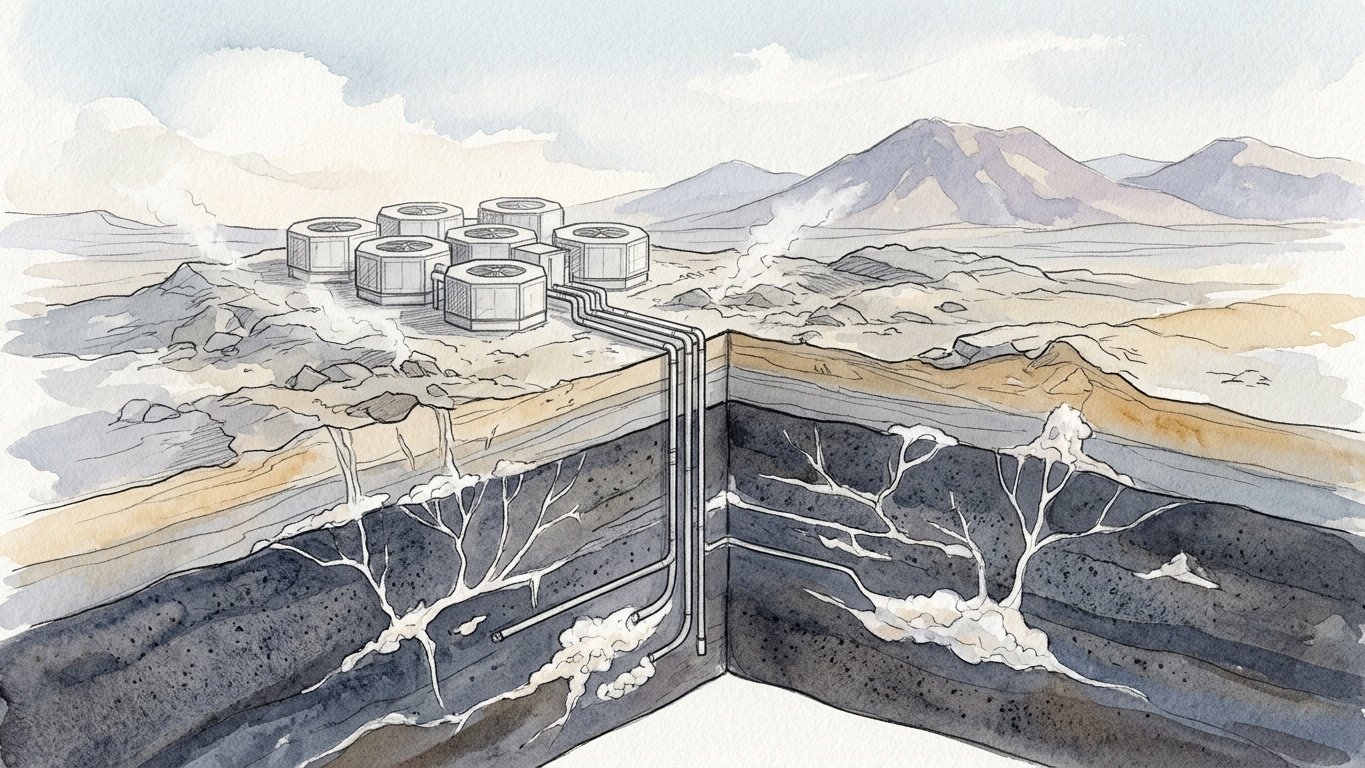
Scattered across the wind-scoured volcanic plateaus of Hellisheidi, Iceland, octagonal collector modules hum with quiet, persistent energy. Inside these weatherproof containers, thousands of cubic meters of ambient air are pulled across chemical filter matrices engineered to seize carbon dioxide molecules present in the atmosphere at a concentration of merely four hundred and twenty parts per million. Once saturated, these filters are desorbed using clean geothermal steam, and the liberated gas is dissolved into pressurized subterranean water streams. Injected deep into fractured porous basalt bedrock thousands of feet beneath the surface, the dissolved carbon undergoes an irreversible geochemical transformation: within twenty-four months, natural chemical reactions convert the greenhouse gas into solid carbonate stone. This closed-loop process—uniting Direct Air Capture (DAC) with in situ geologic mineralization—represents the pinnacle of negative-emissions engineering, offering humanity a permanent, scalable mechanism to reverse historical atmospheric carbon emissions.
1. The Mathematics of Dilution – The Thermodynamic Penalty of 420 PPM
To appreciate the immense engineering challenge posed by Direct Air Capture, one must first confront the brutal physics of atmospheric dilution. For decades, industrial carbon capture focused almost exclusively on point-source capture: scrubbing the exhaust plumes of coal-fired power plants, natural gas generators, cement kilns, and steel foundries. In these industrial flue gas streams, carbon dioxide exists in high concentrations, typically ranging from 4% in combined-cycle gas turbines to 15% in pulverized coal plants, and exceeding 30% in cement precalciner exhausts.
Capturing carbon dioxide from a point-source emitter is fundamentally an exercise in separating a concentrated gas mixture. In stark contrast, Direct Air Capture operates on ambient atmospheric air, where the concentration of carbon dioxide in the early twenty-first century stands at approximately 0.042%, or 420 parts per million. From an entropic and thermodynamic perspective, separating a gas present at 420 ppm is exponentially more challenging than separating the same gas from a 15% flue stream.
The theoretical minimum thermodynamic work required to separate a gas mixture can be derived directly from the fundamental equations of chemical thermodynamics. For an ideal gas mixture, the minimum work of separation per mole of captured carbon dioxide, W_min, is dictated by the Gibbs free energy of mixing.
where R is the universal gas constant, T is the absolute temperature in Kelvin, and y is the mole fraction of carbon dioxide in the input stream. When evaluated for an industrial flue gas stream where y approximately 0.12, the theoretical minimum thermodynamic work is roughly 5.8 kilojoules per mole of CO2, or approximately 130 megajoules (about 36 kilowatt-hours) per metric ton of captured CO2.
However, when the exact same thermodynamic relationship is calculated for ambient atmospheric air, where y approximately 0.00042, the minimum work of separation skyrockets to approximately 20.4 kilojoules per mole, or roughly 460 megajoules (128 kilowatt-hours) per metric ton of CO2. In other words, before accounting for any mechanical friction, fan inefficiencies, chemical overpotentials, heat losses, or desorption inefficiencies, the laws of physics dictate that capturing carbon dioxide directly from the atmosphere requires nearly four times more thermodynamic work per ton than capturing it from an industrial smokestack.
In practice, real-world mechanical and thermodynamic systems operate at efficiencies far below the Carnot or Gibbs limit. When factoring in the pressure drop across massive contactor beds, the thermal energy required to regenerate sorbents, the electrical energy needed to power massive draft fans, and the parasitic loads of gas compression and moisture management, commercial DAC systems typically consume between 1,200 and 2,500 kilowatt-hours of thermal and electrical energy per metric ton of captured CO2. This staggering energetic requirement means that DAC can only be considered a viable climate mitigation tool when powered exclusively by zero-carbon, surplus, or dedicated renewable energy sources, such as geothermal, hydro, nuclear, or off-grid solar and wind.
2. Sorbent Architectures – Solid Amines versus Liquid Hydroxides
In the global race to develop industrially viable Direct Air Capture systems, the chemical engineering community has polarized around two competing sorbent paradigms: low-temperature solid sorbent systems and high-temperature liquid solvent cycles. Each technological pathway presents distinct thermodynamic trade-offs, material constraints, operational footprints, and regeneration mechanics.
The solid sorbent approach, pioneered commercially by Swiss engineering firm Climeworks, utilizes porous structural supports functionalized with basic chemical groups that selectively bind acidic carbon dioxide molecules. The typical solid sorbent consists of a highly porous matrix—such as mesoporous silica beads, alumina, metal-organic frameworks (MOFs), or cellulose nanofibers—chemically grafted or impregnated with polyamines, notably branched polyethyleneimine (PEI) or aminopropyltriethoxysilane (APTES).
When ambient air is drawn across these functionalized porous beds at ambient temperature, the basic primary, secondary, or tertiary amine groups react chemically with the electrophilic carbon atom of carbon dioxide molecules. Under dry conditions, primary and secondary amines react with CO2 via a zwitterionic intermediate to form ammonium carbamate species.
Under humid ambient conditions—which prevail across most global deployment sites—the reaction pathway incorporates water molecules, leading to the preferential formation of ammonium bicarbonate species.
The formation of bicarbonate is stoichiometrically advantageous, as it allows a theoretical sorption ratio of one mole of CO2 per mole of amine group, effectively doubling the chemical capture capacity compared to the carbamate pathway, which requires two amine groups per captured CO2 molecule.
The fundamental advantage of solid amine sorbents lies in their regeneration conditions. Because the chemical bond between the amine group and carbon dioxide is moderately weak (chemisorption with an enthalpy of adsorption typically ranging between 50 and 80 kilojoules per mole of CO2), the sorbent can be regenerated at relatively low temperatures, typically between 85°C and 105°C, using a Temperature-Vacuum Swing Adsorption (TVSA) cycle.
Once the solid filter bed is fully saturated with atmospheric CO2, the contactor housing is sealed from the outside environment. A vacuum pump evacuates the air within the vessel down to roughly 100 to 200 millibars, while low-pressure steam or hot water (frequently sourced from low-grade industrial waste heat or geothermal aquifers) is circulated through internal heating coils. The combination of elevated temperature and reduced partial pressure shifts the chemical equilibrium backwards, causing the amines to liberate pure, gaseous carbon dioxide and co-adsorbed water vapor.
The liquid solvent approach, originally developed by Harvard physicist David Keith and commercialized by Canadian firm Carbon Engineering (subsequently acquired by Occidental Petroleum / 1PointFive), adopts an entirely different chemical philosophy inspired by paper pulp Kraft recovery cycles. Rather than employing delicate solid organic polymers, liquid DAC utilizes aggressive, inorganic alkaline aqueous solutions capable of withstanding harsh industrial operations for years without chemical degradation.
In a liquid solvent DAC plant, ambient air is ingested through massive cross-flow cooling-tower-style air contactors where it washes over corrugated PVC packing surfaces wetted with a concentrated aqueous solution of potassium hydroxide (KOH, typically 1.5 to 2.0 molar). The alkaline solution rapidly chemisorbs carbon dioxide from the air through a rapid liquid-phase acid-base neutralization reaction.
Because potassium hydroxide is an intensely strong base, this reaction exhibits extraordinary kinetic capture rates even at 420 ppm concentrations. However, releasing the captured CO2 from the resulting dissolved potassium carbonate (K2CO3) presents an immense chemical challenge, as potassium carbonate cannot be thermally decomposed without heating to extreme, impractical temperatures exceeding 1,200°C.
To regenerate the potassium hydroxide, the process executes an intricate four-stage inorganic chemical loop. First, the potassium carbonate solution is reacted with calcium hydroxide slurry ((Ca(OH)₂)) in a pellet reactor: causticization occurs, precipitating solid calcium carbonate (CaCO₃, calcite) pellets while regenerating aqueous potassium hydroxide, which is filtered and returned directly to the air contactor.
The solid calcium carbonate pellets are washed, dried, and fed into an industrial fluid-bed or rotary oxy-fired calciner operating at approximately 900°C. At this intense temperature, the calcium carbonate calcines, thermally decomposing into gaseous carbon dioxide and solid calcium oxide (quicklime).
Because the calciner is combusted with pure oxygen rather than ambient air (oxy-combustion), the off-gas consists entirely of pure carbon dioxide and steam, which are separated by simple cooling and condensation. Finally, the hot calcium oxide is discharged into an industrial slaker where it reacts exothermically with water to regenerate calcium hydroxide slurry.
completing the closed chemical cycle. While this liquid hydroxide cycle requires massive high-temperature thermal energy inputs (typically supplied by natural gas combustion with point-source capture or advanced high-temperature electric kilns), it benefits from enormous economies of scale, relying entirely on cheap, globally abundant commodity minerals (limestone and caustic potash) rather than expensive proprietary synthetic amine resins.
3. Contactor Fluid Dynamics and Parasitic Pressure Losses
Regardless of whether a DAC system utilizes solid amine adsorbents or liquid alkaline solvents, the overarching physical bottleneck governing plant capital expenditure and parasitic electrical consumption is contactor fluid dynamics. The mathematical reality of atmospheric dilution dictates the sheer physical volume of air that must be processed.
To capture exactly one metric ton of carbon dioxide at 420 ppm—assuming an optimistic 75% capture efficiency across the contactor bed—an engineering system must process approximately 3.2 million cubic meters of ambient air. To put this astronomical figure into perspective, a commercial facility designed to capture one megaton (1,000,000 metric tons) of carbon dioxide per year must ingest and process roughly 3.2 trillion cubic meters of air annually. This equates to an instantaneous continuous volumetric flow rate of over 100,000 cubic meters of air every single second—a volumetric throughput comparable to the flow of multiple major rivers running continuously.
Moving such vast atmospheric volumes through a physical filter medium inevitably generates mechanical friction, quantified as pressure drop (delta P). The electrical power P_fan consumed by draft fans to propel air through a contactor bed is governed by the volumetric flow rate Q and the pressure drop delta P, divided by the combined fan and motor mechanical efficiency η.
Even a microscopic increase in pressure drop across the contactor medium translates into devastating parasitic energy losses across billions of cubic meters of air. For example, if a contactor bed exhibits a pressure drop of just 150 Pascals (roughly 0.0015 atmospheres), moving 3.2 million cubic meters of air requires approximately 133 kilowatt-hours of electrical energy per ton of captured CO2 just to spin the fans. If poor aerodynamic design or filter clogging causes the pressure drop to rise to 500 Pascals, fan electricity consumption exceeds 440 kilowatt-hours per ton—consuming more electricity than the entire theoretical thermodynamic minimum work of the chemical separation itself.
Consequently, aerodynamic optimization is the foundational science of DAC engineering. In solid sorbent systems, engineers reject traditional packed-pellet beds in favor of structured monolithic contactors reminiscent of automotive ceramic catalytic converters. These monoliths feature thousands of parallel, microscopic honeycomb channels coated with ultra-thin sorbent layers. By aligning the channels precisely with the incoming airflow, air moves through the contactor via laminar flow regimes, dramatically suppressing turbulent vortex shedding and minimizing viscous wall drag.
Furthermore, DAC facilities must be oriented to harness ambient prevailing wind vectors. Passive aerodynamic collector designs, equipped with variable-pitch intake louvers and converging-diverging venturi cowlings, utilize natural atmospheric pressure gradients to drive ambient air through the sorbent matrices without operating electric draft fans during periods of high wind velocity. Real-time computerized fluid dynamics (CFD) modeling allows modern DAC arrays to dynamically adjust internal bypass dampers in response to fluctuating wind angles and thermal atmospheric boundary layers, maximizing CO2 capture per kilowatt-hour of auxiliary electrical input.
4. The In Situ Mineralization Paradigm – The CarbFix Geochemical Revolution
Capturing carbon dioxide from ambient air resolves only the front half of the negative-emissions equation. The second, equally critical imperative is permanent, leak-proof disposal. For decades, conventional Carbon Capture and Storage (CCS) envisioned injecting compressed supercritical carbon dioxide (sCO_2) into depleted oil and gas reservoirs, deep saline aquifers, or unmineable coal seams. In these sedimentary basins, the injected carbon dioxide remains primarily as a buoyant, mobile supercritical fluid or high-pressure gas phase.
Under this conventional paradigm, geological trapping relies sequentially on four distinct mechanisms over geological timescales: structural trapping (relying on an impermeable shale or clay caprock to physically block upward buoyant migration), residual trapping (capillary forces trapping micro-droplets within rock pore spaces), solubility trapping (dissolution into formation brines over decades), and finally mineral trapping (slow precipitation of carbonate minerals over thousands of years). The reliance on structural caprock integrity introduces persistent long-term risks: tectonic seismic activity, fault activation, or undetected legacy wellbores could theoretically provide migration pathways for high-pressure gaseous CO2 to escape back into the atmosphere or contaminate shallow drinking-water aquifers.
In 2007, an audacious scientific consortium comprising Reykjavik Energy, the University of Iceland, the CNRS in Toulouse, and Columbia University’s Lamont-Doherty Earth Observatory conceived an entirely different paradigm known as CarbFix. Rather than injecting buoyant supercritical gas into sedimentary formations and waiting millennia for mineral trapping, CarbFix proposed dissolving the carbon dioxide into pressurized water prior to or during injection, and pumping the acidic aqueous solution directly into reactive volcanic basalt bedrock.
Basalt is an extrusive igneous rock formed by the rapid cooling of magnesium- and iron-rich lava on or near the Earth’s surface. Basalts and associated mafic rocks comprise over 90% of the oceanic crust and extensive continental flood basalts (such as the Columbia River Basalt Group in the American Pacific Northwest, the Deccan Traps in India, and the Paraná-Etendeka province in South America). Crucially, basalts are exceptionally rich in divalent metal cations—specifically calcium (Ca²⁺), magnesium (Mg²⁺), and ferrous iron (Fe²⁺)—locked within silicate minerals such as olivine (((Mg,Fe)_2SiO_4)), plagioclase feldspar (CaAl_2Si_2O_8), and pyroxene (such as diopside, CaMgSi_2O_6).
The chemical sequence of in situ mineralization begins with the dissolution of carbon dioxide into high-pressure water at the surface or within the injection wellhead. Under typical CarbFix operational conditions, water is pressurized to approximately 25 to 30 bars at 20°C, dissolving carbon dioxide gas completely to form a single-phase aqueous solution of carbonic acid.
Because the carbon dioxide is completely dissolved in water, the resulting carbonic fluid is slightly denser than the surrounding ambient formation groundwater. Consequently, the injected fluid is not buoyant: it possesses no upward thermodynamic driving force to rise toward the surface. Even if the geological formation is fractured or lacks an impermeable structural caprock, the carbonated fluid sinks downward through gravity-driven density percolation, eliminating the primary risk of catastrophic gas blowout.
As the slightly acidic carbonic fluid (typically exhibiting a pH between 3.8 and 4.2) percolates through the porous, highly fractured basalt formation at depths between 800 and 2,000 meters, it attacks the primary basaltic silicate minerals. The hydrogen ions (H⁺) in the carbonic acid react with the divalent silicates, dissolving the rock matrix and releasing massive quantities of free calcium, magnesium, and ferrous iron cations into solution, along with silicic acid. For example, the dissolution of forsterite olivine proceeds according to.
Similarly, the dissolution of anorthite plagioclase feldspar consumes hydrogen ions and releases calcium ions.
This mineral dissolution process acts as a powerful chemical buffer. As hydrogen ions are consumed in dissolving the basalt framework, the pH of the subterranean fluid steadily rises from its initial acidic value of ~4.0 up toward a neutral and mildly alkaline regime between pH 8.0 and 9.5. In this elevated pH environment, the carbonic acid-bicarbonate equilibrium shifts decisively toward the divalent carbonate anion (CO_3²⁻).
When the concentration product of the newly liberated divalent metal cations (Ca²⁺, Mg²⁺, Fe²⁺) and the carbonate anions exceeds the solubility product (K_sp) of carbonate minerals, spontaneous thermodynamic precipitation occurs. The dissolved carbon precipitates out of the fluid phase and crystallizes directly onto the basalt fracture surfaces as solid, stable carbonate minerals.
In addition, mixed solid-solution carbonate phases—such as dolomite ((CaMg(CO_3)_2)) and ankerite ((Ca(Fe,Mg)(CO_3)_2))—crystallize across pore throats and vesicular cavities. The carbon dioxide gas that was once drifting through the upper troposphere is now permanently bound into the crystalline lattice of solid rock. Under terrestrial conditions, these carbonate minerals are thermodynamically stable for millions of years: they cannot leak, evaporate, migrate, or combust, dissolving only if subjected to intense subterranean metamorphic temperatures exceeding 600°C.
5. The Reaction Velocity Revelation – Two Years Instead of Millennia
When the CarbFix pilot project commenced in 2012 at the Hellisheidi geothermal plant, standard geochemical textbooks and reactive-transport models predicted that in situ silicate dissolution and subsequent carbonate precipitation would take centuries, if not millennia, to achieve complete mineralization. Basalt dissolution rates measured in pristine laboratory batch reactors suggested sluggish kinetics governed by passivation layers forming on silicate mineral faces.
To rigorously verify the subterranean fate of the injected carbon, the CarbFix scientific team injected approximately 230 metric tons of pure CO2 dissolved in water into the basalt reservoir at a depth of 500 meters, co-injecting precise chemical and isotopic tracers, including noble gases (such as helium and krypton isotopes) and carbon-14 (¹⁴C). The inert noble gas tracers traveled conservative, unreactive flow paths through the reservoir, providing an exact hydrodynamic baseline for fluid transit times between the injection well and downstream monitoring wells.
If carbon dioxide remained dissolved as aqueous carbonic acid or bicarbonate without reacting, the ratio of ¹⁴C to noble gas tracer at the downstream monitoring wells would mirror the injected ratio. Conversely, if carbon dioxide precipitated as solid carbonate stone onto the subterranean basalt walls, the ¹⁴C tracer would disappear from the fluid phase, causing the observed carbon-to-tracer ratio to plunge dramatically.
The monitoring results, published in Science in 2016 by Matter et al., astonished the global geological community. Within a matter of months, the carbon tracer began vanishing from the fluid stream. Thermodynamic geochemical modeling and tracer mass balance calculations confirmed that more than 95% of the injected carbon dioxide had fully precipitated as solid carbonate minerals within less than two years of injection.
When downhole submersible cameras were lowered into the monitoring wells and core extraction drills pulled cylindrical basalt samples from the formation, the physical reality was undeniable. The vesicles, fractures, and pore spaces of the dark volcanic basalt were completely filled with bright white, crystalline veins of calcite and aragonite. Geochemical analysis revealed that the natural reactive surface area of fresh, fractured subterranean basalt, combined with elevated reservoir temperatures (between 20°C and 50°C) and the continuous flushing of carbonic acid, catalyzed mineralization rates orders of magnitude faster than previously believed possible.
6. The Hydrological Trade-Off – Water Scarcity versus Seawater Mineralization
While the CarbFix approach solved the permanence and containment dilemmas of carbon storage with mathematical elegance, it introduced a significant hydrological challenge: water consumption. In the standard fresh-water CarbFix process, complete dissolution of carbon dioxide at 25 bars pressure requires approximately 25 metric tons of water for every single metric ton of injected CO2. For a megaton-scale DAC facility, this equates to an annual water demand of 25 million metric tons (roughly 6.6 billion gallons) of fresh water.
In hydrologically abundant volcanic regions such as Iceland, the Pacific Northwest, or the volcanic highlands of Central America, fresh water is plentiful, frequently reinjected directly from geothermal power generation effluent. However, many of the world’s most promising DAC deployment locations—regions blessed with boundless solar irradiance, cheap land, and vast basaltic formations, such as the deserts of Western Australia, the Horn of Africa, the Atacama Desert, or the Arabian Peninsula—suffer from severe, chronic freshwater scarcity. Diverting billions of gallons of precious potable groundwater or agricultural water to dissolve carbon dioxide is ecologically and politically untenable.
To shatter this geographic constraint, geochemical engineers launched the CarbFix2 project, successfully pioneering carbon mineralization utilizing seawater. The chemical dynamics of seawater injection are significantly more complex than freshwater systems due to the high ionic strength of marine brine, which contains approximately 35 grams of dissolved salts per liter, dominated by sodium (Na⁺), chloride (Cl⁻), magnesium (Mg²⁺), and sulfate (SO_4²⁻).
When carbon dioxide is dissolved into pressurized seawater, the dissolved sulfate ions introduce competition for divalent cations. Furthermore, elevated concentrations of magnesium in seawater can suppress calcite nucleation, favoring the precipitation of aragonite (an orthorhombic polymorph of calcium carbonate) or hydrous magnesium carbonates. In high-temperature subterranean basalt reservoirs (above 100°C), sulfate ions can also react with dissolved calcium to precipitate anhydrite (CaSO_4), which can prematurely seal fracture porosity without sequestering any carbon.
Nevertheless, comprehensive pilot tests demonstrated that by precisely controlling injection temperatures and hydrodynamic flow velocities, seawater carbon mineralization proceeds with extraordinary efficacy. The seawater itself acts as an abundant exogenous source of dissolved magnesium and calcium cations, augmenting the divalent ions leached from the basalt matrix. Crucially, the utilization of seawater unlocks boundless oceanic basalt provinces. Because volcanic basalt forms the entire geological foundation of the global ocean floor, coastal and offshore DAC-mineralization platforms can draw upon limitless seawater and inexhaustible subterranean basalt formations without consuming a single drop of continental fresh water.
7. Commercial Installations – Orca, Mammoth, and the Megaton Frontier
The industrialization of negative emissions moved from academic proof-of-concept to physical engineering reality with the construction of the Climeworks “Orca” and “Mammoth” facilities at the Hellisheidi Geothermal Park in southwest Iceland. Powered entirely by clean electricity and low-grade thermal energy from ON Power’s Hellisheidi geothermal plant, these installations represent the world’s first commercial-scale DAC-to-mineralization ecosystems.
Commissioned in September 2021, Orca was designed to capture 4,000 metric tons of atmospheric CO2 annually. The plant consists of eight stackable collector containers, each housing dozens of modular solid-sorbent filter beds arranged in compact arrays. Giant, aerodynamically optimized electric fans draw hundreds of thousands of cubic meters of Icelandic ambient air across the internal amine-impregnated silica matrices. Once saturated, the collector boxes are hermetically sealed, heated to 100°C via geothermal steam heat exchangers, and evacuated to extract pure carbon dioxide.
The desorbed CO2 gas is metered, piped directly to an adjacent CarbFix injection facility, dissolved into geothermal wastewater at 25 bars, and pumped through an injection well into fractured basalt bedrock at a depth of roughly 1,000 meters. The entire operation is fully automated and digitally monitored, providing the world’s first verified end-to-end negative emissions credits to corporate buyers seeking permanent carbon removal.
Building upon the operational telemetry gathered from Orca, Climeworks broke ground in 2022 on “Mammoth,” a facility nearly ten times larger, designed to capture up to 36,000 metric tons of CO2 annually. Mammoth features 72 collector containers utilizing next-generation structured sorbent monoliths with reduced aerodynamic pressure drop and enhanced amine thermal stability. The facility represents a critical step in the industrial “learning curve,” proving that modular manufacturing of standardized collector units can progressively drive down the capital expenditure per ton of annual capture capacity.
Yet, while Orca (4,000 tons/yr) and Mammoth (36,000 tons/yr) are engineering marvels, they represent mere drops in an oceanic bucket compared to the global climate challenge. Global anthropogenic emissions exceed 36 billion metric tons of CO2 each year. To achieve meaningful climate impact, the DAC industry must scale from thousands of tons to gigatons (billions of tons) annually by mid-century—an expansion requiring an unprecedented million-fold increase in operational capacity within three decades.
8. Ex Situ and Surface Mineralization – Peridotite and Ophiolite Carbonation
While in situ injection into subterranean basalts represents the most mature mineralization pathway, it is not the only geological mechanism capable of turning carbon into stone. An alternative, highly energetic geochemical pathway focuses on ultra-mafic rocks, primarily peridotite and serpentinite.
Peridotite is an igneous rock derived from the Earth’s upper mantle, consisting predominantly of the mineral olivine (((Mg,Fe)_2SiO_4)) and pyroxenes. Whereas volcanic basalt contains roughly 10% to 15% reactive magnesium and calcium oxides by weight, mantle peridotite is composed of over 40% magnesium oxide (MgO). This makes peridotite dramatically more reactive with carbon dioxide than basalt, capable of sequestering more than half a ton of CO2 per ton of rock.
Normally, peridotite is buried deep beneath the continental crust. However, during rare plate-tectonic collisions known as obduction, massive slabs of oceanic lithosphere and upper mantle are thrust upward onto continental margins, forming geological structures known as ophiolites. The most spectacular exposed ophiolite on Earth is the Semail Ophiolite in the Sultanate of Oman and the United Arab Emirates—a contiguous mountainous belt of ultra-mafic peridotite over 350 kilometers long and several kilometers thick.
In the arid mountains of Oman, natural carbonation occurs spontaneously under open atmospheric conditions. Rainwater absorbs atmospheric carbon dioxide, becoming mildly acidic, and percolates through fractures in the exposed peridotite. The water dissolves magnesium from the olivine and discharges into surface streams as hyperalkaline springs (frequently exhibiting a pH exceeding 11.0). As these alkaline waters flow over the surface rocks, they draw CO2 directly from the air, spontaneously precipitating massive white terraces of travertine and magnesite. Geologists calculate that natural weathering in the Oman ophiolite consumes over 100,000 tons of atmospheric CO2 annually without any human intervention.
Enterprising negative-emissions companies, such as 44.01 (named after the molecular weight of carbon dioxide), are actively industrializing this natural phenomenon. By drilling boreholes into ophiolite formations and circulating pressurized carbonated water at elevated temperatures, the carbonation of peridotite can be accelerated by a factor of 100,000. Crucially, the carbonation of olivine is an intensely exothermic (heat-releasing) chemical reaction.
The reaction releases approximately 760 kilojoules of heat per kilogram of reacted CO2. In dense peridotite reservoirs, this self-heating exothermic effect can establish a self-sustaining thermal convection cell: as the reaction proceeds, the liberated heat warms the formation fluids, accelerating chemical dissolution kinetics and fracturing the rock through thermal expansion, continuously exposing fresh unreacted olivine faces without requiring external energy inputs.
In parallel, surface ex situ mineralization systems utilize industrial alkaline wastes—such as iron and steel slag, cement kiln dust, coal fly ash, and mine tailings from nickel, diamond, and platinum mines. These finely pulverized mineral wastes possess immense reactive surface areas and high concentrations of unreacted calcium oxide and magnesium hydroxide. By contacting mine tailings with concentrated CO2 captured via DAC, mining operators can transform toxic tailing impoundments into cemented, non-toxic carbonate rock masses, achieving net-negative carbon footprints for critical clean-energy mineral supply chains.
9. Measurement, Reporting, and Verification – The Gold Standard of Carbon Integrity
In the voluntary and compliance carbon credit markets, traditional carbon offsets—such as forestry preservation projects, avoided deforestation, soil carbon enhancement, and methane flaring—have suffered from persistent credibility crises. Issues surrounding baseline additionality, impermanence (forests burning down in wildfires or dying from insect blights), and fraudulent quantification have undermined public and corporate confidence.
Direct Air Capture paired with in situ geologic mineralization represents the absolute gold standard of Measurement, Reporting, and Verification (MRV). The entire lifecycle of the carbon dioxide molecule is mathematically quantified, metered, and verifiable via empirical physical sensors from the instant it enters the contactor until it crystallizes into rock:
- Input Metering: High-precision mass flow meters and calibrated infrared gas analyzers at the DAC collector exhaust continuously measure the volume and molar purity of the desorbed gaseous CO2.
- Injection Telemetry: Downhole pressure, temperature, and electrical conductivity sensors monitor the aqueous carbonic stream as it is pumped into the injection wellbore, verifying flow rates and single-phase dissolution.
- Isotopic Fingerprinting: Tracers such as carbon-14, carbon-13, and noble gas isotopes are pulsed into the injection stream, providing unambiguous geochemical signatures distinguishing injected carbon from native background formation dissolved inorganic carbon (DIC).
- Subterranean Mass Balance: Continuous sampling of downstream surveillance boreholes tracks the depletion of dissolved inorganic carbon and the disappearance of isotopic tracers, proving that the carbon has precipitated out of solution.
- Seismic and Gravimetric Monitoring: High-resolution 4D surface seismic surveys, vertical seismic profiling (VSP), and ultra-sensitive borehole gravimeters detect microscopic density changes within the reservoir bedrock, physically mapping the accumulation of dense carbonate mineral veins within fracture networks.
Furthermore, the permanence of geologic mineralization is effectively absolute. Unlike an afforestation offset, which stores carbon in labile organic cellulose vulnerable to drought, fire, pests, and political changes over decades, carbonate minerals like calcite and magnesite possess a permanence duration exceeding 10,000 years. Once crystallized in deep igneous rock, the carbon is completely removed from the active fast carbon cycle of the biosphere, atmosphere, and shallow oceans, permanently locked in the lithosphere.
10. The Economic Frontier – Levelized Costs and the Hundred-Dollar Milestone
Despite its extraordinary technical elegance and undisputed permanence, Direct Air Capture paired with geologic mineralization currently faces a formidable economic barrier: levelized cost per metric ton. In early commercial facilities such as Orca, the levelized cost of capturing and permanently mineralizing atmospheric carbon dioxide ranged between $600 and 1,000 per metric ton of CO2.
At these elevated price points, demand is restricted to voluntary corporate sustainability pioneers (such as Microsoft, Stripe, Shopify, and Swiss Re) willing to pay premium prices to catalyze early-stage deep-tech infrastructure. For DAC-to-mineralization to become a globally transformative climate technology, the levelized cost must fall below $100 to 150 per metric ton—a target widely recognized as the economic threshold where public procurement, carbon compliance taxation, and corporate net-zero mandates can finance removals at gigaton scale.
Achieving this dramatic cost reduction requires aggressive progress across four interconnected frontiers:
- Economies of Scale and Standardized Manufacturing: First-of-a-kind plants like Orca were built with bespoke, handcrafted components. As manufacturers transition to gigawatt-scale automated factories producing standardized collector containers by the tens of thousands, capital costs per unit of capture capacity are projected to drop by over 70%, mirroring the historic cost reductions observed in solar photovoltaic modules and lithium-ion batteries.
- Sorbent Longevity and Capacity: Current solid amine sorbents suffer from slow oxidative and thermal degradation, requiring bed replacement every 2 to 3 years. Developing advanced sorbent architectures—such as covalently bonded metal-organic frameworks (MOFs) or thermally robust functionalized polymer membranes with operational lifetimes exceeding 7 to 10 years—will drastically reduce annual operational expenditures.
- Energy Decoupling and Thermodynamic Integration: Coupling DAC facilities directly to low-cost, off-grid renewable resources (such as stranded geothermal fields, remote high-yield solar farms, or curtailment hours on regional wind grids) eliminates expensive transmission interconnection fees and leverages thermal co-generation for zero-cost sorbent desorption.
- Geochemical Optimization: Expanding in situ mineralization into seawater-based injection and exothermic peridotite carbonation eliminates freshwater costs and reduces wellbore drilling footprints through advanced horizontal and multi-lateral directional drilling technologies borrowed from the petroleum sector.
12. Atmospheric Contaminants and Sorbent Longevity Dynamics
While the theoretical chemistry of solid amine and liquid hydroxide sorbents is pristine under controlled laboratory conditions using pure synthetic air mixtures, the reality of outdoor ambient deployment exposes these delicate chemical matrices to a hostile cocktail of atmospheric pollutants. Over billions of cubic meters of continuous air intake, trace contaminants that exist at minuscule parts-per-billion concentrations in ambient air accumulate, poison active sites, and induce rapid chemical degradation.
Chief among these chemical adversaries are sulfur oxides (primarily SO2) and nitrogen oxides (NO and NO2), collectively designated as SOx and NOx. These acid gases originate from regional fossil combustion, maritime shipping emissions, volcanic outgassing, and industrial manufacturing. Because SO2 is a vastly stronger Brønsted-Lowry acid than CO2, it reacts irreversibly with basic amine functional groups. Instead of forming reversible carbamate or bicarbonate bonds that dissociate at 100°C under vacuum, SO2 forms ultra-stable heat-stable amine salts (such as amine sulfites and amine sulfates) whose chemical bonds remain intact even at temperatures exceeding 250°C.
Every molecule of SO2 that binds to an amine permanently neutralizes that site, extinguishing its capacity to capture atmospheric CO2. Over months of continuous high-volume operation, even ambient SO2 concentrations as low as 5 parts per billion can deactivate over 20% of a contactor’s total active amine inventory. Similarly, atmospheric nitrogen dioxide (NO2) reacts with primary and secondary amines through complex nitrosation pathways, forming non-functional nitrosamines and nitramines, which not only degrade performance but introduce stringent volatile organic compound (VOC) handling protocols during sorbent regeneration cycles.
A second pervasive degradation mechanism is autoxidation. Under continuous exposure to atmospheric oxygen (present at 210,000 parts per million—five hundred times the concentration of CO2) and elevated regeneration temperatures, polyamines like branched polyethyleneimine undergo radical-mediated oxidative chain cleavage. The hydrocarbon backbone degrades, cleaving into volatile aldehydes, carboxylic acids, and ammonia gas, resulting in progressive loss of active mass and the physical crumbling of the porous silica or polymer scaffold.
To combat these degradation vectors, state-of-the-art DAC facilities implement multi-stage defensive engineering. Contactor intakes incorporate electrostatic precipitators and high-efficiency particulate air (HEPA) filtration banks to intercept sub-micron aerosols, soot, and mineral dust before they foul sorbent pore networks. Upstream sacrificial scrubber beds impregnated with low-cost sacrificial alkaline bases neutralize SOx and NOx before the air stream enters the primary capture chamber. Furthermore, advanced sorbent formulations incorporate sterically hindered amines, anti-oxidant phenolic radical scavengers, and transition-metal chelation agents that interrupt radical oxidation cascades, extending sorbent operational lifespans beyond 40,000 thermal swing cycles.
13. Subsurface Permeability Evolution and Reactive Transport Dynamics
When millions of tons of carbonated acidic water are pumped into deep subterranean basalt or peridotite reservoirs, the rock matrix does not remain static. It enters a dynamic, coupled chemo-mechanical feedback loop governed by reactive transport physics. The central challenge of long-term in situ mineralization is managing the delicate balance between dissolution-induced permeability enhancement and precipitation-induced pore clogging.
As carbonic fluid dissolves primary silicate minerals—such as olivine and plagioclase—it excavates microscopic void space, widening fracture apertures and increasing the bulk hydraulic permeability of the formation. However, when calcium and magnesium ions subsequently combine with carbonate anions to crystallize calcite, magnesite, and siderite, the newly formed solid minerals occupy a significantly larger molar volume than the precursor silicates they replace. This volumetric expansion, known geochemically as the solid volume increase of carbonation, can exceed 40% to 80% depending on the specific mineral reaction pathway.
If mineral precipitation occurs prematurely in the immediate vicinity of the injection wellbore—where fluid flow is concentrated and pressure drops are steepest—the expanding carbonate crystals will choke off pore throats, seal micro-fractures, and form an impermeable mineral armor around the wellbore face. This phenomena, known as “near-wellbore clogging,” causes injection pressures to spike catastrophically, requiring the operator to expend massive pumping power or abandon the borehole entirely as injectivity collapses.
To prevent localized pore sealing, reservoir engineers deploy advanced numerical reactive transport simulations, utilizing multiphase hydrodynamic codes such as TOUGHREACT, PHREEQC, and PFLOTRAN. These high-fidelity models simulate the coupled dynamics of fluid advection, chemical diffusion, mineral kinetics, and non-isothermal thermodynamics across 3D fracture networks spanning square kilometers. By precisely tailoring injection flow velocities, fluid temperature gradients, and carbonation concentrations, engineers ensure that the mineralization front is displaced away from the injection wellhead into the deep, far-field reservoir.
Remarkably, under optimal thermodynamic conditions, the volumetric expansion of mineral precipitation can trigger a beneficial phenomenon known as “reaction-driven cracking.” As carbonate crystals nucleate and grow within confined microscopic fractures, they exert immense crystallization pressure against the opposing rock walls—pressures that can exceed hundreds of megapascals, vastly outstripping the tensile strength of basalt or peridotite. This crystallization pressure mechanically fractures the surrounding rock, generating complex networks of self-propagating micro-cracks that penetrate deep into unreacted rock matrices. Rather than sealing the reservoir, the crystallization process continuously opens fresh, pristine reactive mineral surfaces, sustaining spontaneous mineralization across decades of continuous megaton-scale operation.
14. Conclusion – Restoring the Geochemical Balance of Earth
The advent of Direct Air Capture and geologic mineralization marks a profound milestone in humanity’s relationship with planet Earth. For the first two and a half centuries following the dawn of the Industrial Revolution, human civilization operated purely as an extractive, emissive force, burning fossilized hydrocarbons and venting hundreds of billions of tons of ancient carbon into the atmosphere, destabilizing the planetary thermal equilibrium.
Direct Air Capture paired with in situ mineralization inverts this historical trajectory. By drawing carbon dioxide directly out of the ambient troposphere and returning it to the igneous mantle and oceanic crust in the form of solid stone, humanity has constructed an artificial, accelerated analogue to Earth’s natural silicate weathering thermostat. In the windswept volcanic plateaus of Iceland and the sun-drenched ophiolite mountains of Oman, the hum of contactor fans and the quiet crystallization of calcite veins signal the birth of a restorative planetary engineering discipline—one capable of slowly, methodically turning the atmospheric tide and returning our living atmosphere to thermodynamic balance.