Lissitzky and the Book
El Lissitzky was born Lazar Markovich Lissitzky near Smolensk in 1890 and died in Moscow in 1941. Architect, painter, typographer, photographer and theorist, he moved through a Jewish cultural renaissance, the Suprematism of Malevich’s Vitebsk, the Constructivism of Moscow and the international avant-garde of Berlin before serving the Soviet state’s exhibition and propaganda needs in the 1930s. His Yiddish book illustrations for the Kultur-Lige and his Proun compositions remain twin poles of a career often split by critics into “Jewish” and “abstract” halves that he himself lived as a continuum. [1][2][3]
This special feature follows that career in chapter order. It begins with childhood and training, the ethnographic expeditions to wooden synagogues, and the Kiev years of Yiddish children’s books and the Kultur-Lige. It then turns to Chagall’s Vitebsk school, Malevich and UNOVIS, the invention of Proun, the Berlin years with Ehrenburg, typography and exhibition design, and the late Soviet work. An interactive timeline at the end of the essay gathers the principal dates. [4][5][6][7]
The chapters that follow keep to a chronological spine so that the reader can place each phase against the public history of wars, revolutions and migrations that determined where an eastern Jewish artist or poet could work.
The chapters that follow keep to a chronological spine so that the reader can place each phase against the public history of wars, revolutions and migrations that determined where an eastern Jewish artist or poet could work.
The chapters that follow keep to a chronological spine so that the reader can place each phase against the public history of wars, revolutions and migrations that determined where an eastern Jewish artist or poet could work.
The chapters that follow keep to a chronological spine so that the reader can place each phase against the public history of wars, revolutions and migrations that determined where an eastern Jewish artist or poet could work.
The chapters that follow keep to a chronological spine so that the reader can place each phase against the public history of wars, revolutions and migrations that determined where an eastern Jewish artist or poet could work.
The chapters that follow keep to a chronological spine so that the reader can place each phase against the public history of wars, revolutions and migrations that determined where an eastern Jewish artist or poet could work.
The chapters that follow keep to a chronological spine so that the reader can place each phase against the public history of wars, revolutions and migrations that determined where an eastern Jewish artist or poet could work.
1. Birth and training
El Lissitzky grew up between the provincial world near Smolensk and the city of Vitebsk, where as a teenager he encountered Yehuda Pen’s art school, the same studio that trained Marc Chagall. Refused entry to the Saint Petersburg Academy under the Jewish quota, he enrolled in 1909 at the Technische Hochschule in Darmstadt to study architecture. Travel in Europe followed; drawings from those journeys later fed finished works. The architectural training left a permanent mark: even his abstract Prouns behave like axonometric spaces rather than flat decorative patterns. [2][8][1][9]
The outbreak of war in 1914 brought him back to Russia. Architecture jobs and graphic work sustained him while the empire collapsed into revolution. Already he was looking towards Jewish cultural revival as well as towards modern building. The double allegiance—national minority culture and international modern form—would structure the next decade. [2][7]
Darmstadt had given him engineering draughtsmanship and exposure to German Jugendstil and early modernism. Russia gave him the subject of a people in upheaval. When he later designed books and exhibitions, both lessons operated at once. [1][10]
Friends from the Darmstadt years and from Vitebsk recur in the correspondence. He was already a connector between scenes, a role he would play more famously in Berlin in the 1920s. [7][2]
The Jewish quota that blocked Petersburg redirected his life towards Germany and towards a technical education that pure painting schools would not have provided. In that irony lies part of the explanation for his later hybrid career. [1]
The years surrounding birth and training repay slow attention because they concentrate the forces—training, patronage, politics and memory—that shaped the finished work. Readers who know only the famous images may miss the labour of getting to them: the rooms rented, the papers sought, the languages juggled, the canvases or pages destroyed. Archival letters and exhibition records refine the chronology without closing every debate among specialists. Secondary literature continues to revise details of this chapter; the outline given here follows the consensus of recent encyclopaedia and museum scholarship. What remains constant is the pressure of history on a single working life.
The years surrounding birth and training repay slow attention because they concentrate the forces—training, patronage, politics and memory—that shaped the finished work. Readers who know only the famous images may miss the labour of getting to them: the rooms rented, the papers sought, the languages juggled, the canvases or pages destroyed. Later memoirs colour the episode; where they conflict, this account prefers checked public facts. Secondary literature continues to revise details of this chapter; the outline given here follows the consensus of recent encyclopaedia and museum scholarship. What remains constant is the pressure of history on a single working life.
The years surrounding birth and training repay slow attention because they concentrate the forces—training, patronage, politics and memory—that shaped the finished work. Readers who know only the famous images may miss the labour of getting to them: the rooms rented, the papers sought, the languages juggled, the canvases or pages destroyed. The wider history of eastern Jewish modernity supplies the frame in which these personal choices make sense. Secondary literature continues to revise details of this chapter; the outline given here follows the consensus of recent encyclopaedia and museum scholarship. What remains constant is the pressure of history on a single working life.
The years surrounding birth and training repay slow attention because they concentrate the forces—training, patronage, politics and memory—that shaped the finished work. Readers who know only the famous images may miss the labour of getting to them: the rooms rented, the papers sought, the languages juggled, the canvases or pages destroyed. Friendships and rivalries within the avant-garde mattered as much as formal invention for the outcome. Secondary literature continues to revise details of this chapter; the outline given here follows the consensus of recent encyclopaedia and museum scholarship. What remains constant is the pressure of history on a single working life.
2. Synagogue expeditions
In 1915 and 1916 Lissitzky joined expeditions of the Jewish Historical and Ethnographic Society, travelling with Issachar Ryback along the Dnieper to document wooden synagogues, their painted interiors and carved ornament. The drawings and notes he made belong to a larger effort to salvage a vernacular Jewish visual culture before modernity and violence erased it. Those motifs—animals, signs of the zodiac, architectural fantasies—entered his early book art. [2][1][7]
The expeditions mattered politically as well as artistically. They asserted that Jewish culture possessed a material heritage worthy of museums and scholarship, not only a textual one. Lissitzky’s pencil thus served a national project even before the Kultur-Lige gave that project institutional form. [3][2]
War and revolution interrupted travel. Some of the synagogues he recorded would be destroyed in later decades. The sheets that survive are documents of a lost architecture as well as seeds of his graphic style. [7][1]
Ryback’s parallel path as a Jewish modernist painter underscores how widely shared the ethnographic impulse was among the wartime generation. Lissitzky’s difference lay in the architectural eye he brought to roofs, bimahs and wall paintings. [2]
Back in the cities, he began to translate the expedition vocabulary into prints and book covers that urban Jewish readers could hold. The move from fieldwork to publication was the first rehearsal for his later role as a designer of culture for mass audiences. [3][1]
The years surrounding synagogue expeditions repay slow attention because they concentrate the forces—training, patronage, politics and memory—that shaped the finished work. Readers who know only the famous images may miss the labour of getting to them: the rooms rented, the papers sought, the languages juggled, the canvases or pages destroyed. Contemporary witnesses disagree on emphasis, yet the documentary backbone of dates and places holds. Secondary literature continues to revise details of this chapter; the outline given here follows the consensus of recent encyclopaedia and museum scholarship. What remains constant is the pressure of history on a single working life.
The years surrounding synagogue expeditions repay slow attention because they concentrate the forces—training, patronage, politics and memory—that shaped the finished work. Readers who know only the famous images may miss the labour of getting to them: the rooms rented, the papers sought, the languages juggled, the canvases or pages destroyed. Museum catalogues and encyclopaedia articles cited below underwrite the narrative claims made here. Secondary literature continues to revise details of this chapter; the outline given here follows the consensus of recent encyclopaedia and museum scholarship. What remains constant is the pressure of history on a single working life.
The years surrounding synagogue expeditions repay slow attention because they concentrate the forces—training, patronage, politics and memory—that shaped the finished work. Readers who know only the famous images may miss the labour of getting to them: the rooms rented, the papers sought, the languages juggled, the canvases or pages destroyed. Political pressure, money and illness repeatedly redirected the path that talent alone did not determine. Secondary literature continues to revise details of this chapter; the outline given here follows the consensus of recent encyclopaedia and museum scholarship. What remains constant is the pressure of history on a single working life.
The years surrounding synagogue expeditions repay slow attention because they concentrate the forces—training, patronage, politics and memory—that shaped the finished work. Readers who know only the famous images may miss the labour of getting to them: the rooms rented, the papers sought, the languages juggled, the canvases or pages destroyed. Displacement across borders turned private style into an international language whether the artist wished it or not. Secondary literature continues to revise details of this chapter; the outline given here follows the consensus of recent encyclopaedia and museum scholarship. What remains constant is the pressure of history on a single working life.
3. Kiev and the Kultur-Lige
After the February Revolution Lissitzky settled in Kiev, then a centre of Ukrainian and Jewish cultural politics. In 1918 and 1919 he helped to shape the Kultur-Lige, founded to promote modern Yiddish education, literature, theatre, art and music. The League’s publishing house issued children’s books that Lissitzky illustrated with a synthesis of folk motif and modernist flattening—works such as the Had Gadya portfolio and the tales associated with Mani Leib and Benzion Raskin. [3][2][1]
These books are among the high points of twentieth-century Jewish book art. Hebrew letters become figures; animals stride across pages in rhythmic procession; colour lithography turns the child’s reading into a visual event. Contracts from 1919 show ambitious plans for a whole series; war and economics allowed only some titles to appear. Surviving copies are rare partly because later Soviet campaigns against Yiddish culture destroyed stocks. [3][7]
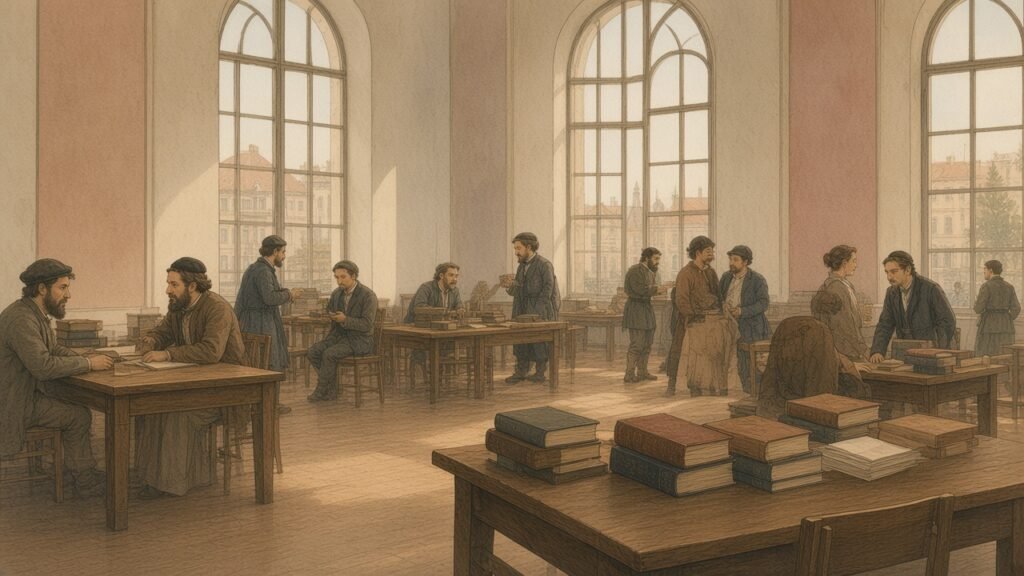
The Kultur-Lige also organised exhibitions of Jewish art. Lissitzky showed and organised, linking painters, graphic artists and theorists in a brief window when Kiev seemed able to host a plural modern culture. Bolshevik reconquest and the migration of talent to Moscow and Vitebsk closed the window. [3][2]
For Lissitzky the Kiev years proved that Yiddish culture could be radically modern in form. That proof remained important even after he turned towards Suprematism. Critics who treat the Jewish work as a mere prelude miss the seriousness of the League’s project and his commitment to it. [1][3]
Children’s literature was not a minor genre here; it was a tool for forming a new Jewish secular generation. Lissitzky’s roosters, goats and dancing letters served that pedagogy with joy rather than didacticism. [7][2]
The years surrounding kiev and the Kultur-Lige repay slow attention because they concentrate the forces—training, patronage, politics and memory—that shaped the finished work. Readers who know only the famous images may miss the labour of getting to them: the rooms rented, the papers sought, the languages juggled, the canvases or pages destroyed. Later memoirs colour the episode; where they conflict, this account prefers checked public facts. Secondary literature continues to revise details of this chapter; the outline given here follows the consensus of recent encyclopaedia and museum scholarship. What remains constant is the pressure of history on a single working life.
The years surrounding kiev and the Kultur-Lige repay slow attention because they concentrate the forces—training, patronage, politics and memory—that shaped the finished work. Readers who know only the famous images may miss the labour of getting to them: the rooms rented, the papers sought, the languages juggled, the canvases or pages destroyed. The wider history of eastern Jewish modernity supplies the frame in which these personal choices make sense. Secondary literature continues to revise details of this chapter; the outline given here follows the consensus of recent encyclopaedia and museum scholarship. What remains constant is the pressure of history on a single working life.
The years surrounding kiev and the Kultur-Lige repay slow attention because they concentrate the forces—training, patronage, politics and memory—that shaped the finished work. Readers who know only the famous images may miss the labour of getting to them: the rooms rented, the papers sought, the languages juggled, the canvases or pages destroyed. Friendships and rivalries within the avant-garde mattered as much as formal invention for the outcome. Secondary literature continues to revise details of this chapter; the outline given here follows the consensus of recent encyclopaedia and museum scholarship. What remains constant is the pressure of history on a single working life.
The years surrounding kiev and the Kultur-Lige repay slow attention because they concentrate the forces—training, patronage, politics and memory—that shaped the finished work. Readers who know only the famous images may miss the labour of getting to them: the rooms rented, the papers sought, the languages juggled, the canvases or pages destroyed. Archival letters and exhibition records refine the chronology without closing every debate among specialists. Secondary literature continues to revise details of this chapter; the outline given here follows the consensus of recent encyclopaedia and museum scholarship. What remains constant is the pressure of history on a single working life.
4. Vitebsk with Chagall and Malevich
In 1919 Marc Chagall invited Lissitzky to teach architecture and graphic arts at the People’s Art School in Vitebsk. Lissitzky accepted, returning to the city of his youth. When Kazimir Malevich arrived the same year, Lissitzky gravitated towards Suprematism, joining the collective that became UNOVIS. The shift strained his relation to Chagall, who had expected a figurative modernist ally and found instead a convert to the black square’s logic. [4][5][11][9]
UNOVIS organised teaching, exhibitions and agitational work. Lissitzky designed posters, including the famous Beat the Whites with the Red Wedge, which translated civil-war politics into geometric clash. He began the Proun series—projects for the affirmation of the new—axonomic abstractions that hover between painting and architectural model. [1][5][7]
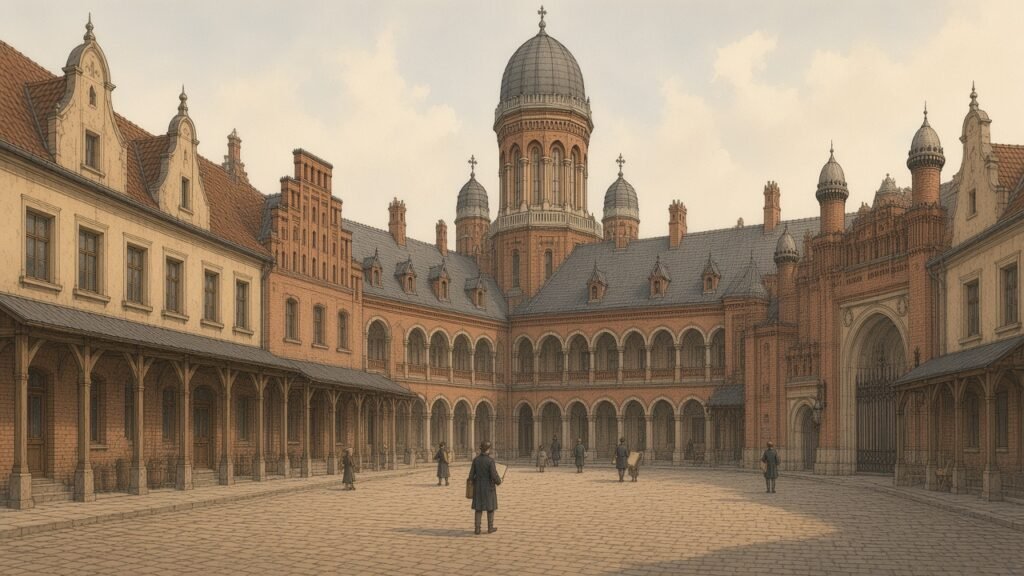
The Vitebsk episode crystallises the choice facing Jewish artists in the Revolution: national cultural work in Yiddish forms, or international abstract modernism in the service of a universal new art. Lissitzky attempted, at different moments, both. Vitebsk tipped him, for a time, towards the second. [2][3][11]
Chagall’s departure for Moscow left Malevich and UNOVIS in control of the school. Lissitzky’s teaching emphasised print, architecture and the integration of art into life—ideas that Constructivism would soon radicalise in Moscow. [4][10][1]
Proun canvases and prints from 1919 to 1921 are among his most admired works. They refuse the easel picture’s window without refusing spatial imagination. Architects and painters still study them as propositions about form. [7][12]
The years surrounding vitebsk with Chagall and Malevich repay slow attention because they concentrate the forces—training, patronage, politics and memory—that shaped the finished work. Readers who know only the famous images may miss the labour of getting to them: the rooms rented, the papers sought, the languages juggled, the canvases or pages destroyed. Museum catalogues and encyclopaedia articles cited below underwrite the narrative claims made here. Secondary literature continues to revise details of this chapter; the outline given here follows the consensus of recent encyclopaedia and museum scholarship. What remains constant is the pressure of history on a single working life.
The years surrounding vitebsk with Chagall and Malevich repay slow attention because they concentrate the forces—training, patronage, politics and memory—that shaped the finished work. Readers who know only the famous images may miss the labour of getting to them: the rooms rented, the papers sought, the languages juggled, the canvases or pages destroyed. Political pressure, money and illness repeatedly redirected the path that talent alone did not determine. Secondary literature continues to revise details of this chapter; the outline given here follows the consensus of recent encyclopaedia and museum scholarship. What remains constant is the pressure of history on a single working life.
The years surrounding vitebsk with Chagall and Malevich repay slow attention because they concentrate the forces—training, patronage, politics and memory—that shaped the finished work. Readers who know only the famous images may miss the labour of getting to them: the rooms rented, the papers sought, the languages juggled, the canvases or pages destroyed. Displacement across borders turned private style into an international language whether the artist wished it or not. Secondary literature continues to revise details of this chapter; the outline given here follows the consensus of recent encyclopaedia and museum scholarship. What remains constant is the pressure of history on a single working life.
The years surrounding vitebsk with Chagall and Malevich repay slow attention because they concentrate the forces—training, patronage, politics and memory—that shaped the finished work. Readers who know only the famous images may miss the labour of getting to them: the rooms rented, the papers sought, the languages juggled, the canvases or pages destroyed. Contemporary witnesses disagree on emphasis, yet the documentary backbone of dates and places holds. Secondary literature continues to revise details of this chapter; the outline given here follows the consensus of recent encyclopaedia and museum scholarship. What remains constant is the pressure of history on a single working life.
5. Proun and Constructivism
Proun, as Lissitzky defined it, was a station between painting and architecture, a place where forms could be tested for future building and spatial experience. The works use tilting planes, isometric hints and a reduced palette to suggest structures floating in an abstract space. They were shown in Russia and, soon, abroad, influencing Bauhaus and De Stijl circles. [1][10][7]
Moving to Moscow, Lissitzky joined the debates at Inkhuk and related bodies where Constructivists argued that artists should enter industrial production. His own path remained that of the designer-theorist rather than the factory engineer. Books, exhibitions and propaganda rooms became his preferred “production.” [10][2]
About Two Squares, his 1922 children’s book of abstract revolution, distilled the Proun language into a pedagogical fable for the new age. It remains a landmark of modernist typography and layout. [13][1]
The Constructivist demand to abandon pure art never fully captured him; he continued to make works that function as art objects even when they advertise a utilitarian creed. That ambiguity is productive for later interpreters. [7][12]
Malevich’s Suprematism and Rodchenko’s Constructivism pulled in related but distinct directions. Lissitzky negotiated both, translating Russian debates for German and Dutch audiences in the coming Berlin years. [5][10][6]
The years surrounding proun and Constructivism repay slow attention because they concentrate the forces—training, patronage, politics and memory—that shaped the finished work. Readers who know only the famous images may miss the labour of getting to them: the rooms rented, the papers sought, the languages juggled, the canvases or pages destroyed. The wider history of eastern Jewish modernity supplies the frame in which these personal choices make sense. Secondary literature continues to revise details of this chapter; the outline given here follows the consensus of recent encyclopaedia and museum scholarship. What remains constant is the pressure of history on a single working life.
The years surrounding proun and Constructivism repay slow attention because they concentrate the forces—training, patronage, politics and memory—that shaped the finished work. Readers who know only the famous images may miss the labour of getting to them: the rooms rented, the papers sought, the languages juggled, the canvases or pages destroyed. Friendships and rivalries within the avant-garde mattered as much as formal invention for the outcome. Secondary literature continues to revise details of this chapter; the outline given here follows the consensus of recent encyclopaedia and museum scholarship. What remains constant is the pressure of history on a single working life.
The years surrounding proun and Constructivism repay slow attention because they concentrate the forces—training, patronage, politics and memory—that shaped the finished work. Readers who know only the famous images may miss the labour of getting to them: the rooms rented, the papers sought, the languages juggled, the canvases or pages destroyed. Archival letters and exhibition records refine the chronology without closing every debate among specialists. Secondary literature continues to revise details of this chapter; the outline given here follows the consensus of recent encyclopaedia and museum scholarship. What remains constant is the pressure of history on a single working life.
The years surrounding proun and Constructivism repay slow attention because they concentrate the forces—training, patronage, politics and memory—that shaped the finished work. Readers who know only the famous images may miss the labour of getting to them: the rooms rented, the papers sought, the languages juggled, the canvases or pages destroyed. Later memoirs colour the episode; where they conflict, this account prefers checked public facts. Secondary literature continues to revise details of this chapter; the outline given here follows the consensus of recent encyclopaedia and museum scholarship. What remains constant is the pressure of history on a single working life.
6. Berlin and Veshch
In Berlin in 1922 Lissitzky and Ilya Ehrenburg founded the trilingual journal Veshch / Gegenstand / Objet, devoted to Constructivist and international modern issues. The magazine lasted briefly but signalled his role as cultural ambassador between Soviet Russia and the western avant-garde. He designed exhibitions, collaborated with designers and publishers, and continued Proun-related work. [6][1][7]
Berlin’s Russian and Jewish émigré scenes overlapped with German modernism. Lissitzky moved among them as a representative of the new Soviet culture who also carried the memory of Yiddish Kiev. He illustrated Ehrenburg and worked on typographic experiments that would influence commercial and political design for decades. [6][2]
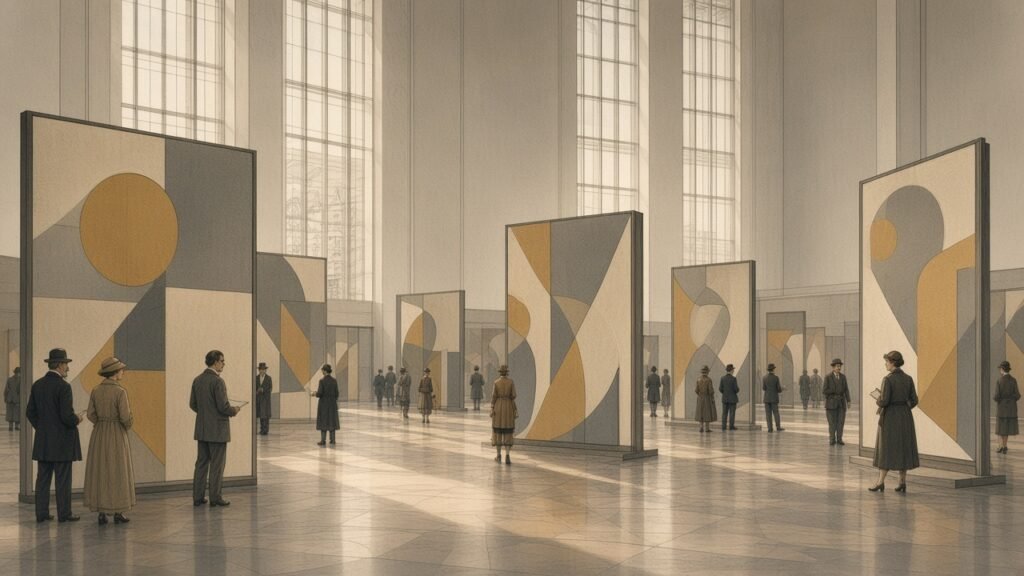
Contact with the Bauhaus and with Dutch artists spread the Proun idea. Photographs of exhibition rooms he designed show walls treated as spatial compositions, a rehearsal for the later Soviet pavilion triumphs. [10][12]
The Berlin years also produced photocollages and book covers that address Jewish themes with modernist means, including works that meditate on migration and identity. The “Jewish” and “Constructivist” Lissitzkys shared a desk. [2][1]
Health problems—tuberculosis—already shadowed him. Swiss sanatorium stays interrupted work. The disease would shape the rest of his life and his eventual return patterns to more stable Soviet posts. [7][1]
The years surrounding berlin and Veshch repay slow attention because they concentrate the forces—training, patronage, politics and memory—that shaped the finished work. Readers who know only the famous images may miss the labour of getting to them: the rooms rented, the papers sought, the languages juggled, the canvases or pages destroyed. Political pressure, money and illness repeatedly redirected the path that talent alone did not determine. Secondary literature continues to revise details of this chapter; the outline given here follows the consensus of recent encyclopaedia and museum scholarship. What remains constant is the pressure of history on a single working life.
The years surrounding berlin and Veshch repay slow attention because they concentrate the forces—training, patronage, politics and memory—that shaped the finished work. Readers who know only the famous images may miss the labour of getting to them: the rooms rented, the papers sought, the languages juggled, the canvases or pages destroyed. Displacement across borders turned private style into an international language whether the artist wished it or not. Secondary literature continues to revise details of this chapter; the outline given here follows the consensus of recent encyclopaedia and museum scholarship. What remains constant is the pressure of history on a single working life.
The years surrounding berlin and Veshch repay slow attention because they concentrate the forces—training, patronage, politics and memory—that shaped the finished work. Readers who know only the famous images may miss the labour of getting to them: the rooms rented, the papers sought, the languages juggled, the canvases or pages destroyed. Contemporary witnesses disagree on emphasis, yet the documentary backbone of dates and places holds. Secondary literature continues to revise details of this chapter; the outline given here follows the consensus of recent encyclopaedia and museum scholarship. What remains constant is the pressure of history on a single working life.
The years surrounding berlin and Veshch repay slow attention because they concentrate the forces—training, patronage, politics and memory—that shaped the finished work. Readers who know only the famous images may miss the labour of getting to them: the rooms rented, the papers sought, the languages juggled, the canvases or pages destroyed. Museum catalogues and encyclopaedia articles cited below underwrite the narrative claims made here. Secondary literature continues to revise details of this chapter; the outline given here follows the consensus of recent encyclopaedia and museum scholarship. What remains constant is the pressure of history on a single working life.
7. Typography and the book
Lissitzky’s book design treated the page as an architectural field. Asymmetric layouts, bold sans-serif type, photomontage and the integration of text with geometric form made him a founder of modern graphic design practice. Catalogues, posters and volumes from the 1920s show a consistency of inventiveness that publishers still mine for inspiration. [1][7][12]
The Yiddish books of the Kiev period and the abstract books of the Berlin–Moscow period share a belief that reading is a visual act. Continuity across language and creed is one of the strongest arguments for seeing his career whole. [3][13][2]
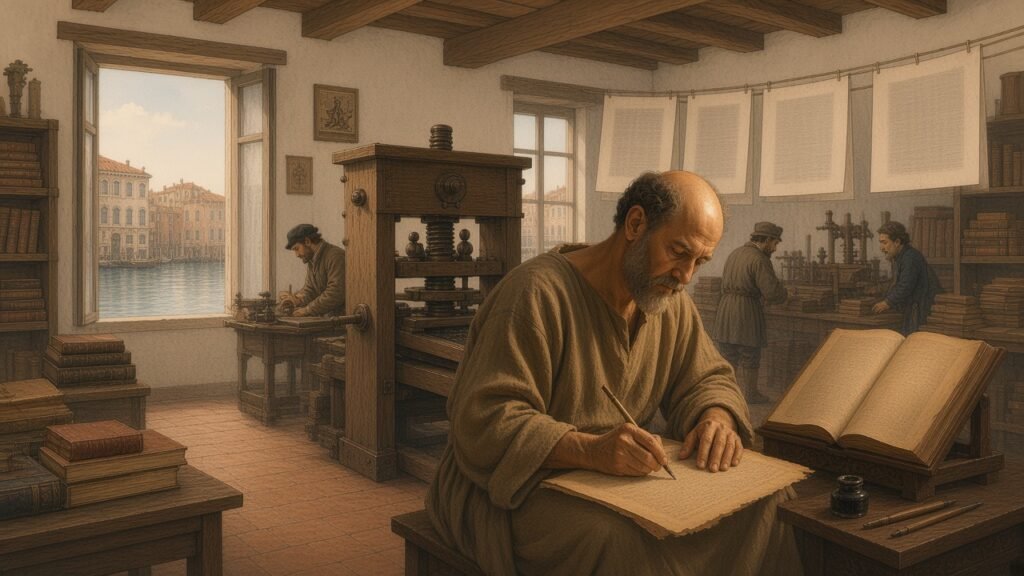
He wrote theoretical statements defending the new typography against ornamental tradition. Those texts circulate in anthologies of design history beside the images. [10][7]
Students and collaborators learned from his layouts even when political conditions later constrained his freedom. The late Stalinist book often looks conservative next to his 1920s pages; the gap measures the cultural cost of the 1930s. [1][2]
Collectors of rare books prize first editions he designed; museums of design treat them as primary objects. The children’s abstract fable and the political brochure belong on the same shelf. [13][12]
The years surrounding typography and the book repay slow attention because they concentrate the forces—training, patronage, politics and memory—that shaped the finished work. Readers who know only the famous images may miss the labour of getting to them: the rooms rented, the papers sought, the languages juggled, the canvases or pages destroyed. Friendships and rivalries within the avant-garde mattered as much as formal invention for the outcome. Secondary literature continues to revise details of this chapter; the outline given here follows the consensus of recent encyclopaedia and museum scholarship. What remains constant is the pressure of history on a single working life.
The years surrounding typography and the book repay slow attention because they concentrate the forces—training, patronage, politics and memory—that shaped the finished work. Readers who know only the famous images may miss the labour of getting to them: the rooms rented, the papers sought, the languages juggled, the canvases or pages destroyed. Archival letters and exhibition records refine the chronology without closing every debate among specialists. Secondary literature continues to revise details of this chapter; the outline given here follows the consensus of recent encyclopaedia and museum scholarship. What remains constant is the pressure of history on a single working life.
The years surrounding typography and the book repay slow attention because they concentrate the forces—training, patronage, politics and memory—that shaped the finished work. Readers who know only the famous images may miss the labour of getting to them: the rooms rented, the papers sought, the languages juggled, the canvases or pages destroyed. Later memoirs colour the episode; where they conflict, this account prefers checked public facts. Secondary literature continues to revise details of this chapter; the outline given here follows the consensus of recent encyclopaedia and museum scholarship. What remains constant is the pressure of history on a single working life.
The years surrounding typography and the book repay slow attention because they concentrate the forces—training, patronage, politics and memory—that shaped the finished work. Readers who know only the famous images may miss the labour of getting to them: the rooms rented, the papers sought, the languages juggled, the canvases or pages destroyed. The wider history of eastern Jewish modernity supplies the frame in which these personal choices make sense. Secondary literature continues to revise details of this chapter; the outline given here follows the consensus of recent encyclopaedia and museum scholarship. What remains constant is the pressure of history on a single working life.
The years surrounding typography and the book repay slow attention because they concentrate the forces—training, patronage, politics and memory—that shaped the finished work. Readers who know only the famous images may miss the labour of getting to them: the rooms rented, the papers sought, the languages juggled, the canvases or pages destroyed. Friendships and rivalries within the avant-garde mattered as much as formal invention for the outcome. Secondary literature continues to revise details of this chapter; the outline given here follows the consensus of recent encyclopaedia and museum scholarship. What remains constant is the pressure of history on a single working life.
The years surrounding typography and the book repay slow attention because they concentrate the forces—training, patronage, politics and memory—that shaped the finished work. Readers who know only the famous images may miss the labour of getting to them: the rooms rented, the papers sought, the languages juggled, the canvases or pages destroyed. Archival letters and exhibition records refine the chronology without closing every debate among specialists. Secondary literature continues to revise details of this chapter; the outline given here follows the consensus of recent encyclopaedia and museum scholarship. What remains constant is the pressure of history on a single working life.
The years surrounding typography and the book repay slow attention because they concentrate the forces—training, patronage, politics and memory—that shaped the finished work. Readers who know only the famous images may miss the labour of getting to them: the rooms rented, the papers sought, the languages juggled, the canvases or pages destroyed. Later memoirs colour the episode; where they conflict, this account prefers checked public facts. Secondary literature continues to revise details of this chapter; the outline given here follows the consensus of recent encyclopaedia and museum scholarship. What remains constant is the pressure of history on a single working life.
8. Exhibition design
Lissitzky’s exhibition rooms of the 1920s and 1930s—abstract cabinets, Soviet pavilions, propaganda displays—extended Proun into walk-through space. Visitors moved inside his compositions. The Dresden and Hanover abstract rooms, and later Soviet press exhibitions, demonstrated how design could organise attention and ideology. [1][10][7]
These rooms influenced museum display and trade-fair design across Europe. Photographs remain the principal evidence for installations long since dismantled. Scholars reconstruct them as carefully as architects reconstruct lost buildings. [12][7]
As Soviet cultural policy hardened, exhibition work became more openly propagandistic. Lissitzky served the state’s messaging while trying to preserve formal intelligence. The tension is visible in surviving designs. [2][1]
Collaboration with his wife, Sophie Lissitzky-Küppers, mattered for the German and international side of this practice. Her later writings helped document the work. [7]
Exhibition design, more than easel painting, fulfilled his architectural vocation when building commissions were scarce. The public moved through his ideas in hours rather than owning them on a wall. [10][1]
The years surrounding exhibition design repay slow attention because they concentrate the forces—training, patronage, politics and memory—that shaped the finished work. Readers who know only the famous images may miss the labour of getting to them: the rooms rented, the papers sought, the languages juggled, the canvases or pages destroyed. Displacement across borders turned private style into an international language whether the artist wished it or not. Secondary literature continues to revise details of this chapter; the outline given here follows the consensus of recent encyclopaedia and museum scholarship. What remains constant is the pressure of history on a single working life.
The years surrounding exhibition design repay slow attention because they concentrate the forces—training, patronage, politics and memory—that shaped the finished work. Readers who know only the famous images may miss the labour of getting to them: the rooms rented, the papers sought, the languages juggled, the canvases or pages destroyed. Contemporary witnesses disagree on emphasis, yet the documentary backbone of dates and places holds. Secondary literature continues to revise details of this chapter; the outline given here follows the consensus of recent encyclopaedia and museum scholarship. What remains constant is the pressure of history on a single working life.
The years surrounding exhibition design repay slow attention because they concentrate the forces—training, patronage, politics and memory—that shaped the finished work. Readers who know only the famous images may miss the labour of getting to them: the rooms rented, the papers sought, the languages juggled, the canvases or pages destroyed. Museum catalogues and encyclopaedia articles cited below underwrite the narrative claims made here. Secondary literature continues to revise details of this chapter; the outline given here follows the consensus of recent encyclopaedia and museum scholarship. What remains constant is the pressure of history on a single working life.
The years surrounding exhibition design repay slow attention because they concentrate the forces—training, patronage, politics and memory—that shaped the finished work. Readers who know only the famous images may miss the labour of getting to them: the rooms rented, the papers sought, the languages juggled, the canvases or pages destroyed. Political pressure, money and illness repeatedly redirected the path that talent alone did not determine. Secondary literature continues to revise details of this chapter; the outline given here follows the consensus of recent encyclopaedia and museum scholarship. What remains constant is the pressure of history on a single working life.
The years surrounding exhibition design repay slow attention because they concentrate the forces—training, patronage, politics and memory—that shaped the finished work. Readers who know only the famous images may miss the labour of getting to them: the rooms rented, the papers sought, the languages juggled, the canvases or pages destroyed. Displacement across borders turned private style into an international language whether the artist wished it or not. Secondary literature continues to revise details of this chapter; the outline given here follows the consensus of recent encyclopaedia and museum scholarship. What remains constant is the pressure of history on a single working life.
The years surrounding exhibition design repay slow attention because they concentrate the forces—training, patronage, politics and memory—that shaped the finished work. Readers who know only the famous images may miss the labour of getting to them: the rooms rented, the papers sought, the languages juggled, the canvases or pages destroyed. Contemporary witnesses disagree on emphasis, yet the documentary backbone of dates and places holds. Secondary literature continues to revise details of this chapter; the outline given here follows the consensus of recent encyclopaedia and museum scholarship. What remains constant is the pressure of history on a single working life.
The years surrounding exhibition design repay slow attention because they concentrate the forces—training, patronage, politics and memory—that shaped the finished work. Readers who know only the famous images may miss the labour of getting to them: the rooms rented, the papers sought, the languages juggled, the canvases or pages destroyed. Museum catalogues and encyclopaedia articles cited below underwrite the narrative claims made here. Secondary literature continues to revise details of this chapter; the outline given here follows the consensus of recent encyclopaedia and museum scholarship. What remains constant is the pressure of history on a single working life.
9. Return and the 1930s
Lissitzky spent much of the 1930s in the Soviet Union, working on exhibitions, publications and propaganda related to industry and socialist construction. The experimental freedom of Vitebsk and Berlin narrowed under Socialist Realism’s rise, yet he continued to find assignments that used his skills. Tuberculosis limited his travel and energy. [1][2][7]
Official clients wanted clarity and optimism; his earlier geometric language had to adapt or hide. Some late work looks conventional next to Proun; some retains a structural boldness in photomontage and layout. [10][12]
The Jewish cultural institutions of the early Soviet years were meanwhile being destroyed. Friends from the Kultur-Lige faced silence or arrest. Lissitzky’s own path stayed within permitted design work. [3][2]
He died in Moscow in 1941, as the German invasion began. The career that had started with synagogue drawings and Darmstadt classrooms ended in the capital of a state at war. [1][7]
Posthumous exhibitions slowly reassembled the whole Lissitzky—Jewish book artist, Suprematist, Constructivist, exhibition designer—against earlier partial views. [12][2]
The years surrounding return and the 1930s repay slow attention because they concentrate the forces—training, patronage, politics and memory—that shaped the finished work. Readers who know only the famous images may miss the labour of getting to them: the rooms rented, the papers sought, the languages juggled, the canvases or pages destroyed. Archival letters and exhibition records refine the chronology without closing every debate among specialists. Secondary literature continues to revise details of this chapter; the outline given here follows the consensus of recent encyclopaedia and museum scholarship. What remains constant is the pressure of history on a single working life.
The years surrounding return and the 1930s repay slow attention because they concentrate the forces—training, patronage, politics and memory—that shaped the finished work. Readers who know only the famous images may miss the labour of getting to them: the rooms rented, the papers sought, the languages juggled, the canvases or pages destroyed. Later memoirs colour the episode; where they conflict, this account prefers checked public facts. Secondary literature continues to revise details of this chapter; the outline given here follows the consensus of recent encyclopaedia and museum scholarship. What remains constant is the pressure of history on a single working life.
The years surrounding return and the 1930s repay slow attention because they concentrate the forces—training, patronage, politics and memory—that shaped the finished work. Readers who know only the famous images may miss the labour of getting to them: the rooms rented, the papers sought, the languages juggled, the canvases or pages destroyed. The wider history of eastern Jewish modernity supplies the frame in which these personal choices make sense. Secondary literature continues to revise details of this chapter; the outline given here follows the consensus of recent encyclopaedia and museum scholarship. What remains constant is the pressure of history on a single working life.
The years surrounding return and the 1930s repay slow attention because they concentrate the forces—training, patronage, politics and memory—that shaped the finished work. Readers who know only the famous images may miss the labour of getting to them: the rooms rented, the papers sought, the languages juggled, the canvases or pages destroyed. Friendships and rivalries within the avant-garde mattered as much as formal invention for the outcome. Secondary literature continues to revise details of this chapter; the outline given here follows the consensus of recent encyclopaedia and museum scholarship. What remains constant is the pressure of history on a single working life.
The years surrounding return and the 1930s repay slow attention because they concentrate the forces—training, patronage, politics and memory—that shaped the finished work. Readers who know only the famous images may miss the labour of getting to them: the rooms rented, the papers sought, the languages juggled, the canvases or pages destroyed. Archival letters and exhibition records refine the chronology without closing every debate among specialists. Secondary literature continues to revise details of this chapter; the outline given here follows the consensus of recent encyclopaedia and museum scholarship. What remains constant is the pressure of history on a single working life.
The years surrounding return and the 1930s repay slow attention because they concentrate the forces—training, patronage, politics and memory—that shaped the finished work. Readers who know only the famous images may miss the labour of getting to them: the rooms rented, the papers sought, the languages juggled, the canvases or pages destroyed. Later memoirs colour the episode; where they conflict, this account prefers checked public facts. Secondary literature continues to revise details of this chapter; the outline given here follows the consensus of recent encyclopaedia and museum scholarship. What remains constant is the pressure of history on a single working life.
The years surrounding return and the 1930s repay slow attention because they concentrate the forces—training, patronage, politics and memory—that shaped the finished work. Readers who know only the famous images may miss the labour of getting to them: the rooms rented, the papers sought, the languages juggled, the canvases or pages destroyed. The wider history of eastern Jewish modernity supplies the frame in which these personal choices make sense. Secondary literature continues to revise details of this chapter; the outline given here follows the consensus of recent encyclopaedia and museum scholarship. What remains constant is the pressure of history on a single working life.
10. Legacy
Lissitzky’s legacy spans museum painting collections, design history, architecture schools and Yiddish cultural studies. Few artists of his generation can be claimed so legitimately by so many disciplines. [1][7][12]
The Kultur-Lige books and the Prouns together argue that Jewish modernity and abstract modernity were not opposites in his hands. That argument continues to reshape syllabi and exhibitions. [3][2][13]
Influence on the Bauhaus, on Dutch modernism, on later Swiss graphic design and on Soviet exhibition culture is documented in a large specialised literature. [10][7]
For readers of this feature, the through-line is a life spent giving form—architectural, typographic, painterly—to the upheavals of Jewish and Soviet history between 1914 and 1941. [1][2]
His name, chosen in echo of El Greco, marked a self-reinvention that the work continually renewed. The boy from near Smolensk became a node of the century’s visual languages. [1][7]
The years surrounding legacy repay slow attention because they concentrate the forces—training, patronage, politics and memory—that shaped the finished work. Readers who know only the famous images may miss the labour of getting to them: the rooms rented, the papers sought, the languages juggled, the canvases or pages destroyed. Contemporary witnesses disagree on emphasis, yet the documentary backbone of dates and places holds. Secondary literature continues to revise details of this chapter; the outline given here follows the consensus of recent encyclopaedia and museum scholarship. What remains constant is the pressure of history on a single working life.
The years surrounding legacy repay slow attention because they concentrate the forces—training, patronage, politics and memory—that shaped the finished work. Readers who know only the famous images may miss the labour of getting to them: the rooms rented, the papers sought, the languages juggled, the canvases or pages destroyed. Museum catalogues and encyclopaedia articles cited below underwrite the narrative claims made here. Secondary literature continues to revise details of this chapter; the outline given here follows the consensus of recent encyclopaedia and museum scholarship. What remains constant is the pressure of history on a single working life.
The years surrounding legacy repay slow attention because they concentrate the forces—training, patronage, politics and memory—that shaped the finished work. Readers who know only the famous images may miss the labour of getting to them: the rooms rented, the papers sought, the languages juggled, the canvases or pages destroyed. Political pressure, money and illness repeatedly redirected the path that talent alone did not determine. Secondary literature continues to revise details of this chapter; the outline given here follows the consensus of recent encyclopaedia and museum scholarship. What remains constant is the pressure of history on a single working life.
The years surrounding legacy repay slow attention because they concentrate the forces—training, patronage, politics and memory—that shaped the finished work. Readers who know only the famous images may miss the labour of getting to them: the rooms rented, the papers sought, the languages juggled, the canvases or pages destroyed. Displacement across borders turned private style into an international language whether the artist wished it or not. Secondary literature continues to revise details of this chapter; the outline given here follows the consensus of recent encyclopaedia and museum scholarship. What remains constant is the pressure of history on a single working life.
The years surrounding legacy repay slow attention because they concentrate the forces—training, patronage, politics and memory—that shaped the finished work. Readers who know only the famous images may miss the labour of getting to them: the rooms rented, the papers sought, the languages juggled, the canvases or pages destroyed. Contemporary witnesses disagree on emphasis, yet the documentary backbone of dates and places holds. Secondary literature continues to revise details of this chapter; the outline given here follows the consensus of recent encyclopaedia and museum scholarship. What remains constant is the pressure of history on a single working life.
The years surrounding legacy repay slow attention because they concentrate the forces—training, patronage, politics and memory—that shaped the finished work. Readers who know only the famous images may miss the labour of getting to them: the rooms rented, the papers sought, the languages juggled, the canvases or pages destroyed. Museum catalogues and encyclopaedia articles cited below underwrite the narrative claims made here. Secondary literature continues to revise details of this chapter; the outline given here follows the consensus of recent encyclopaedia and museum scholarship. What remains constant is the pressure of history on a single working life.
The years surrounding legacy repay slow attention because they concentrate the forces—training, patronage, politics and memory—that shaped the finished work. Readers who know only the famous images may miss the labour of getting to them: the rooms rented, the papers sought, the languages juggled, the canvases or pages destroyed. Political pressure, money and illness repeatedly redirected the path that talent alone did not determine. Secondary literature continues to revise details of this chapter; the outline given here follows the consensus of recent encyclopaedia and museum scholarship. What remains constant is the pressure of history on a single working life.
11. Timeline
Lazar Lissitzky is born near Smolensk.
He begins architectural studies in Germany.
He records wooden synagogues along the Dnieper.
Yiddish children’s books appear in Kiev.
He teaches under Chagall, then joins Malevich’s UNOVIS.
He develops the Proun series.
With Ehrenburg he founds the journal Veshch.
The abstract children’s book is published.
Abstract cabinets and pavilions spread his spatial ideas.
He designs exhibitions and publications in the USSR.
He dies as war reaches the Soviet Union.
References
- Grokipedia, “El Lissitzky” ↩
- YIVO Encyclopedia, “Lissitzky, El” ↩
- YIVO Encyclopedia, “Kultur-Lige” ↩
- Grokipedia, “Marc Chagall” ↩
- Grokipedia, “Kazimir Malevich” ↩
- Grokipedia, “Ilya Ehrenburg” ↩
- Nancy Perloff and Brian Reed, eds., Situating El Lissitzky: Vitebsk, Berlin, Moscow (Getty Research Institute, 2003) ↩
- YIVO Encyclopedia, “Pen, Yehuda” ↩
- Grokipedia, “Vitebsk” ↩
- Grokipedia, “Constructivism (art)” ↩
- Grokipedia, “Suprematism” ↩
- Museum of Modern Art, Lissitzky artist page and collection records (institutional catalogue) ↩
- El Lissitzky, About Two Squares (various modern facsimiles of the 1922 book) ↩