The Technion
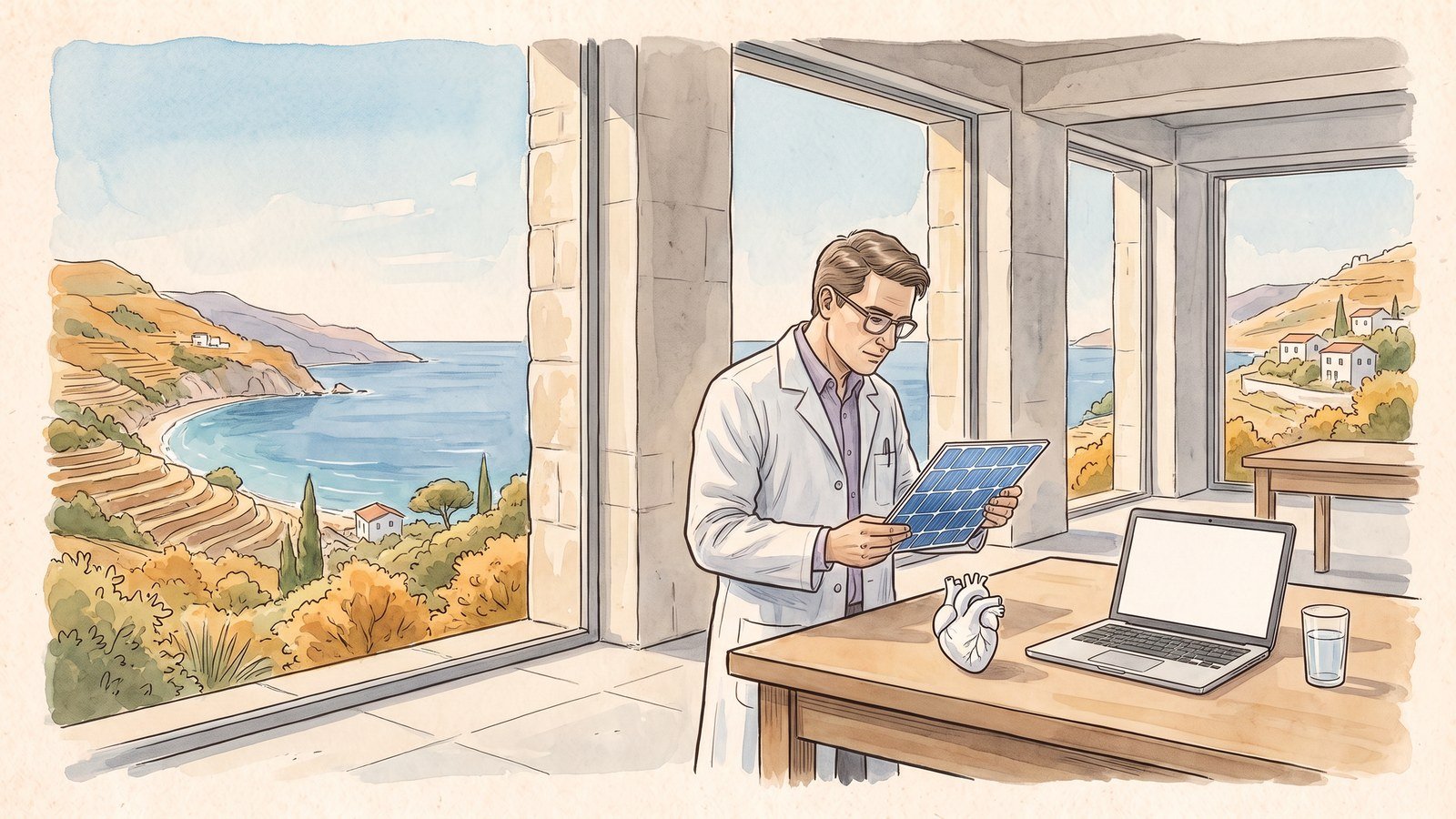
On the pine-covered north-eastern slopes of Mount Carmel, above the port of Haifa, the Technion has spent a century turning students into engineers. It began as a trade school with a single building and a borrowed German curriculum, and it grew into the institution that supplied a large share of the engineers, research groups and start-up founders of a state which did not yet exist when its first cornerstone was laid. Its reputation rests on an unusual combination: teaching technology as something you do with your hands, and researching it in the same corridors, often with the same people.
The familiar story of that origin is wrong in ways worth correcting, because the corrected version explains more. The Technikum was not founded in Constantinople, and it was not a joint venture with the Bezalel workshop in Jerusalem; the cornerstone was laid on Mount Carmel in Haifa in 1912, and Bezalel was a separate arts and crafts school founded in Jerusalem in 1906, the only other institution of higher learning in Ottoman Syria. What the record actually shows is more interesting than the myth, because the Technion’s real character, a workshop school built by a national movement and then reshaped by the demands of a state, is the reason it still works.
What follows looks at that school from the inside: the teaching culture that grew up around workshops and student teams, and the laboratories that fed water, medicine and microelectronics into Israeli life. It also examines the prizes that attached themselves to the place, the campus that redrew the ridge above Haifa, and the question of what an institute built for a state in the making is for now.
A Trade School on the Carmel
The Technion did not begin with a laboratory. It began with an argument, held in a casino in Basel in 1901, that a people without a state would need a population of engineers if it was ever to have one. At the Fifth Zionist Congress, the philosopher Martin Buber, the biochemist Chaim Weizmann and the journalist Berthold Feiwel pressed for a Hebrew cultural programme that included an institute to train engineers for the future state. The idea was economic before it was educational. A minority could not survive as a permanent minority without its own engineers, and an engineering school was a way of building a competence that would outlast any single generation of donors.
The money and the model came from Germany. In 1908 the Ezra Association, a German-Jewish relief organisation headed by Dr Paul Nathan, began raising funds for what would become the Technion. The Faculty of Architecture’s own history records the aim in plain terms: the initiative came from the Jewish-German aid association, the Hilfsverein der deutschen Juden, with the object of setting up a high technical school typical of German-speaking countries of the time. That was not a gesture. A German Fachschule of this kind trained engineers through workshops, laboratories and a heavy diet of practical work, and it produced the kind of graduate who could design a bridge, run a factory or repair a turbine rather than merely theorise about one. The school that would train Israel was, in its bones, a tradesman’s school.
Alexander Baerwald, a Berlin-born architect, was engaged as early as 1909 to design the main building, and he became the first head of the architecture department. The building he produced, in the Hadar HaCarmel neighbourhood of Haifa, combined Western construction with Orientalist elements, pointed arches and domed forms set against a modern frame. The Technion’s cornerstone was laid on Mount Carmel in 1912, and the institute’s own history measures the delay that followed in a single stroke: the doors opened to students in the winter of 1924 or 1925, a dozen years after the stone was set. Between those dates the empire that had authorised the school was destroyed, the country it had been built for was governed from London, and the project had to survive as a building with a purpose but no pupils.
The war of languages was fought during those years of suspension, and its outcome was a decision about identity. In October 1913 the board of trustees chose German as the language of instruction, which provoked an outcry from American and Russian Jewish communities and a bitter controversy in the school that was not yet a school. In February 1914 the board reversed itself and chose Hebrew; the German name Technikum was replaced by the Hebrew name Technion. The episode belongs under the history of language politics, but it also marks the moment a German technical school became a national institution. From then on the institution was not importing a European model for some future generation; it was training the engineers of a specific place, in the language that place would speak.
What survived the delay was the building and the idea, and in 1923 the idea acquired the most famous of its advocates. Albert Einstein visited the campus with his wife Elsa and planted the first of the palm trees that still stand in front of the old building, and he founded the first of the Technion Societies in Germany, serving as its president after his return to Berlin; the institute’s own history records that he hosted the group’s meetings in his home. The following spring Lord Arthur James Balfour came, and the Technion’s history page notes that he said the institute represented a vision for the development of the state of Israel, and a beacon of progress in teaching the practical sciences. In 1929 the first graduating class received its diplomas: seventeen students, ten of them engineers and seven architects, among them the faculty’s first woman graduate in architecture.
The second war nearly finished what the first had delayed. By 1939 the Technion had five hundred students, most of them recent immigrants from Europe, and enrolment fell as they were called up. Classes continued, but only just, helped by professors and by industrial figures such as Solel Boneh who donated money to keep students in the lecture rooms; the Technion’s workshops were put to work repairing and supplying spare parts for British ships. It is worth pausing on that detail, because it is the whole institutional thesis in miniature. The school had been founded to make a state, and the first thing its machinery was asked to do in a crisis was make parts for somebody else’s navy.
After the war, the school had to become what the state needed. In 1949 the Department of Industrial Technology was split into two units, the faculties of electrical and mechanical engineering, giving five academic faculties in all. The old building could no longer hold them, and in the early 1950s a new campus was established at Neve Sha’anan, higher up the same mountain. The old site was later given over to the Israel National Museum of Science, Technology and Space, known as MadaTech, which means that the first home of the Technion is now a museum about science and technology: the trade school’s tools displayed as national heritage.
The move up the ridge was a decision about what kind of institution this would be, and it was made with a view of the state’s needs rather than the school’s traditions. In 1951, with the former chief of staff of the armed forces, Yaakov Dori, as president, the Technion began a campaign to recruit Jewish and pro-Israel scientists from abroad to staff new research laboratories and teaching departments in the natural and exact sciences. That same year the Faculty of Science was constituted, with divisions of mathematics, chemistry, physics and mechanics. In 1952 the government asked the Technion to establish testing centres across a range of fields to support the country’s infrastructure, a framework that became the Technion Research and Development Foundation, and the seed of what is now the institute’s technology-transfer arm. The Department of Aeronautical Engineering was founded in 1953, and more faculties and divisions followed.
The trajectory is easy to read backwards now. A school founded to train a workforce became, within a generation, the supplier of testing capacity, laboratories and research groups for a state whose infrastructure was being built in parallel with its universities. The alternative was a technical school producing competent draughtsmen for a small industrial economy, and choosing otherwise was a deliberate act by people who assumed the two things belonged together.
The School That Taught With Its Hands
It is tempting to imagine a trade school as a place of grease and swarf, and the Technion was never that. Its own architectural faculty records how theoretical the earliest teaching actually was: most of the training went to theoretical courses, with limited time for practical engagement with planning problems, in line with the Central European approach the school had inherited. The German model it copied was rigorous on paper and, in its Haifa version, thin on the bench: a curriculum designed for a mature industrial economy, dropped into a place with almost no industry to practise in.
The correction came from inside the school, and it came from practitioners. In the 1960s a group of faculty, led by the architect Al Mansfeld, opposed the dominance of theory, and the result was the gradual adoption of a teaching model in which practical design experience, the studio method, sits at the heart of architectural studies. A studio is not a lecture hall with better furniture; it is a room in which a student is presented with a problem that has no clean answer, and is expected to produce something, draw it, build it, and be criticized on the evidence. Once the studio had won, the laboratory and the workshop stopped being annexes to the real teaching and became the teaching itself.
The same period saw the faculty transform itself into a research home as well. With the Technion’s conversion into a research university in 1952, the faculty began to serve as a home for researchers; its first graduates to publish research papers within it were the architects Aharon Kashtan and Daniel Havkin, and the first master’s theses submitted in the faculty were written by women, one of them Ruth Enis, who went on to help found its landscape architecture programme. An industrial design track was established in 1994 as the first academic track in Israel to award a master’s degree in that subject. The pattern here is the same one that produced the Nobel prizes: a technical school whose teaching agenda is set by what the professions actually need, and whose research agenda follows the teachers into the working life of the profession.
Throughout, there has been a place for the industrial placement that German-style engineering education treats as part of the qualification itself, the expectation that an engineering graduate will know a working environment before being allowed to call himself an engineer. The Technion’s public pages are unusually reticent about how that is arranged, which is probably a sign that it is treated as a routine part of the course rather than as a selling point. What is not reticent is the scale of what the school claims on the strength of it: according to the institute’s own history, Technion graduates, researchers, professors and students account for more than half of the start-up founders in Israel’s high-tech sector and for at least half of the nation’s engineers. Even allowing for an institution’s natural fondness for its own alumni, that is the measure of a teaching pipeline rather than a research reputation.
Underneath the curriculum is a material culture. The Technion’s teaching and research floors hold fabrication infrastructure that would not be out of place in a small factory, and the best example is the Micro and Nano Fabrication Center in the Zisapel Building, where the institute’s central photovoltaics laboratory sits in two parts: a device fabrication laboratory in the clean room complex and a device characterisation laboratory next to it. The characterisation room holds a solar simulator for measuring the power output of cells as large as six inches by six inches, a quantum efficiency measurement system for spectral response, an intensity modulated photocurrent spectroscopy system for impedance measurements, and a spectrophotometer covering the ultraviolet, visible and near infrared. The facility serves the Technion’s own photovoltaics community, Israeli academia and industry, and the laboratory’s own description notes that many technology companies have used it not only to characterise their devices but to fabricate new ones. That last clause is the whole thesis of the institution in a single line: the machine is paid for by research, used by students, and booked by companies.
The architecture faculty runs a digital fabrication laboratory of its own, which is a clue about how the makers’ culture has spread. Once a faculty acquires laser cutting, milling and additive manufacturing, the cost of making a physical prototype collapses from a procurement problem into a student’s afternoon, and the design studio acquires a technical dimension that no lecture course can supply. The same transformation is visible in the student teams. Formula Technion, the school’s Formula Student team, was formed at the beginning of 2012 by twenty mechanical engineering students; its first competition followed in the summer of 2013; between 2012 and 2020 the team built combustion-powered cars and moved in 2021 to electric and combined autonomous vehicles. The team now numbers about ninety students drawn from mechanical, aeronautical and electrical engineering, computer science, data science, biomedical engineering, physics, architecture and materials engineering. A car designed, machined, wired and driven by students who also carry a full course load is not a demonstration of the school’s teaching. It is the teaching.
This is the feature that most sharply distinguishes the Technion from a research institute with a lecture hall attached. In a pure research institute, teaching is what the laboratory tolerates. Here the laboratories are the teaching, and the industrial partnerships are the curriculum’s final examination. A student who has characterised a solar cell on the sixth floor, printed a part in the fabrication lab, and watched a company send a technician to the same machine has received an education in how knowledge actually becomes a product, and has learned it in the building where it will happen. The national payoff is what makes this system distinctive: the Technion has fed engineers straight into the industrial economy it helped create, and kept doing so because research and teaching never had to be separated.
Laboratories, Membranes, and Printed Tissue
Much of what the Technion is famous for rests on a decision made in the 1950s, when the government asked the school to set up testing centres across the country to support the development of the state’s infrastructure. That request, which became the Technion Research and Development Foundation, is the institutional hinge of the school’s national role. It put a research laboratory inside the country’s building programme, its water system, its defence establishment and its factories at once, and it gave the Technion a reason to care about problems that no single faculty owned. The institute’s own history records the scale of the 1970s, when desalination was named among the cutting-edge technological solutions the school was developing, the Faculty of Biology was established in 1971, and more than eighteen hundred approved research projects were running in 1973 alongside eleven hundred graduate theses.
Desalination is the clearest case, because it is the one where a laboratory question became national infrastructure. Seawater desalination is now dominated by reverse osmosis, in which pressure drives water through a membrane that blocks salts, and the performance of that membrane depends on a structure that is very hard to characterise while it is wet. In 2025 the Technion and the University of Texas at Austin reported just such a study in the journal ACS Nano, which selected it as a cover article. The work was led by Dr Tamar Segal-Peretz of the Wolfson Faculty of Chemical Engineering and Dr Guy Ramon of the Faculty of Civil and Environmental Engineering, with Professor Manish Kumar of the University of Texas at Austin, the doctoral student Chenhao Yao, and Dr Adi Ben-Zvi, who carried out the research during her doctoral studies in the Technion’s nanoscience and nanotechnology programme and is now a postdoctoral researcher at Rice University. What they found was that the structure of a desalination membrane in its wet state differs dramatically from its structure in the dry state in which earlier studies had examined it. That sounds like a footnote. It is not, because design rules drawn from dry membranes have to be redrawn for membranes that work.
The scale of the water enterprise that depends on such work is worth stating plainly, and so is its provenance. According to the Technion’s own account in 2025, Israel’s five desalination plants provide roughly seventy per cent of the country’s domestic water supply, and roughly eighty-five per cent of its wastewater is treated and reused for agriculture. Those figures come from the institute that studies the technology, and they should be read with that in mind, but they are not promotional inventions; they describe a country that has made water engineering a form of national insurance. The Technion’s laboratories have been part of that story for decades, and the relationship runs in both directions. A country short of water generates the demand that keeps membrane science funded, and the science is then handed to the engineers who build the plants.
Solar energy is the second area where the institution’s reputation outruns its documentation, and the same care is needed. The Technion has been associated for decades with solar cell research, and the association is real: the institute’s central photovoltaics laboratory is a shared facility built jointly by the Grand Technion Energy Program and the Russel Berrie Nanotechnology Institute, with device fabrication in the clean room complex and device characterisation alongside it, and it exists to serve the Technion’s own researchers, Israeli academia and industry alike. What is harder to support is the popular chronology of world records, with a date and an efficiency figure attached to each Technion year. The efficiency record has moved repeatedly since the 1980s, through successive device families and, more recently, through perovskite and tandem designs, and the most confident retellings of the Technion’s role tend to be the least specific about the team, the laboratory and the certified measurement. The honest statement is narrower and still substantial: as the laboratory’s published description makes clear, the Technion’s photovoltaics programme is built around fabrication, measurement and the training of people who will use both, with facilities that companies rent and researchers share, and the Technion’s own energy research programme, established in 2007, sits on top of that base.
Medicine is where the institute’s habit of building things meets the most expensive equipment in the world. A faculty of medicine was established in 1969 with David Erlik as its first dean, and the Rappaport Faculty of Medicine that grew out of it eventually carried the Technion’s largest and most delicate research programmes. In 1998 Joseph Itskovitz-Eldor of the faculty joined the international team that identified the potential for stem cells to form tissue, and the Technion’s first stem cell laboratory was established in the same year. In 2006 a drug developed by the faculty’s Professor Emeritus Moussa Youdim and John Finberg with Teva Pharmaceuticals, rasagiline, was approved by the American Food and Drug Administration for the treatment of Parkinson’s disease.
The newest and most contested branch of that work is three-dimensional printing of living material, and here the gap between the popular account and the literature is widest. The most frequently quoted items are a printed heart valve and a miniature printed heart, associated in press coverage of the late 2000s and early 2010s with the Technion and with one of Tel Aviv’s major teaching hospitals. That story is widely repeated and thinly documented. The traceable peer-reviewed record does not show a Technion team that produced a transplantable printed heart, and the best documented printed heart made from a patient’s own cells was reported in 2019 by a laboratory at Tel Aviv University, a different institution with a different programme. What the Technion’s own record does support is more modest and more durable, and in the long run more useful: methods for printing tissue that can be kept alive.
The clearest example is work published in Advanced Materials in 2021, in which a Technion-led team described the printing of engineered tissue flaps with hierarchical vessel networks, designed so that the printed tissue could be perfused directly from the host rather than requiring a period of cultivation in a laboratory before implantation. That is the whole problem in one sentence. A printed organ that cannot be fed oxygen will not survive contact with a body, and the techniques that make printing possible, layer upon layer of cells and scaffold, are exactly the techniques that starve the inner layers. Building the vessel hierarchy into the print, so that perfusion can begin at the moment of implantation, is the difference between a demonstration and a device. The wider programme has moved on to thicker constructs, to vascularised muscle for the repair of lost volume, and to the chemistry of supports and hydrogels, and as of 2026 no printed organ has been implanted in a patient. The honest summary of the Technion’s position is that it is working on the vascular plumbing and the materials of transplantable tissue rather than on the organ itself, and that this is the less photogenic but more consequential half of the problem.
Set the three programmes side by side and a pattern emerges. In water, the institute works on the structure of the membrane at the scale of nanometres and hands the result to engineers building national infrastructure. In photovoltaics, it provides shared fabrication and measurement capacity that companies use and students learn in. In medicine, it supplies the chemistry, the cells and the printing methods that make new kinds of implant conceivable. Each is a laboratory embedded in an application, and each depends on the school’s peculiar institutional geometry, a research group and a classroom occupying the same building, which is why the Technion’s name appears on far more patents, products and standards than its size would suggest.
Chips in Haifa
No single event did more to change the Technion’s standing than the arrival of an American semiconductor company in 1974, and the person who made it happen was one of its own graduates. Dov Frohman entered the Technion in 1959 and graduated in electrical engineering in 1963, then took a master’s degree and a doctorate at the University of California at Berkeley before joining Fairchild Semiconductor. He moved to Intel in 1969 and there invented the erasable programmable read-only memory, the EPROM, which became the company’s most profitable product well into the 1980s. Intel itself was then only a few years old, founded by the same Fairchild alumni who had recruited him.
What Frohman wanted next was not a product but an anchor. He returned to Intel in 1973 with the intention of establishing a research centre in Israel, and in 1974 he helped the company open a small chip design centre in Haifa, the first Intel facility outside the United States. It was a modest operation and not a fabrication plant; its significance lay in what it did to the local supply of engineers. A design centre in Haifa meant that Israeli electrical engineers could work on the most advanced logic design in the world without leaving the country, and that a cohort of them would be trained in a place whose graduates were already flowing into the country’s embryonic electronics firms. Frohman himself taught at Hebrew University while consulting for Intel, and in 1985, after negotiations with the Israeli government over establishing a semiconductor plant, he left to run Intel Israel as its general manager. During the Gulf War of 1991, when Iraq’s missiles were falling on the country, he kept the Israeli operation open.
The economic history of Israeli hardware is often told as a straight line of local founders building global companies, and the Technion’s contribution to that story is usually asserted rather than traced. The traceable version is more interesting. The pattern that emerges from the design centre is one of people who learned the trade inside a foreign corporation’s Israeli branch and then used it to build something of their own. Eyal Waldman, who studied chemical engineering at the Technion before moving into computer science and taking a master’s degree in electrical engineering, joined Intel in 1989 and became vice president of engineering at the Israeli chip company Galileo between 1993 and 1999. In 1999 he co-founded Mellanox Technologies in Yokne’am Illit with colleagues drawn from Intel and Galileo, a company whose founders’ collective experience was precisely the Haifa and Yokne’am design-centre circuit. At least one of Mellanox’s founders was therefore a Technion alumnus; the educational backgrounds of the rest are not consistently documented, and it would be easy to overstate the school’s direct line to the company.
What is documented is the outcome. Mellanox built high performance interconnect silicon, the specialised chips that move data between processors, and the technology became indispensable to the large data centres that the cloud computing industry built in the second decade of the twenty-first century. The company listed on the Nasdaq stock exchange in February 2007, raising a hundred and two million dollars, and on 11 March 2019 NVIDIA, the American graphics processor company, announced a definitive agreement to acquire it for six point nine billion dollars. The deal was presented as uniting two leaders in processing and interconnect for the high performance computing market, and it closed on 27 April 2020 after clearance from European, United States and Chinese antitrust authorities, with Mellanox folded into NVIDIA’s networking division. Waldman, for his part, received the Israel Prize in 2024.
The acquisition belongs in a larger sequence, because one transaction on its own does not make an ecosystem. Galileo, the company where Waldman had been an engineering vice president, was itself acquired by the American chip maker Marvell in October 2000 for two point eight billion dollars. The recurring transaction is instructive: Israeli engineers trained at home and in foreign subsidiaries, assembling companies around specific technical problems in interconnect and signal processing, and then selling them to larger foreign firms at valuations that dwarfed the local market. The Technion’s role was to supply the people, and the long argument about whether a teaching institute should be the principal supplier of a country’s engineers is visible here in a sharper light than it is in any policy paper.
Not all of the school’s electronic work produced a start-up. The Technion’s own history describes the 1980s as the decade in which its role in forming Israel’s high-tech scene became clear, with applied research in computer science, electrical engineering, semiconductors and fibre optics producing some of the nation’s first high-tech exports. Two items from that decade remain embedded in ordinary computing. In 1978 Abraham Lempel and Jacob Ziv, both associated with the school, published the data compression algorithm known as LZ77, the ancestor of the formats that carry images and archives across the internet. In 1987 research at the Technion accelerated in optoelectronics, and in 1989 the Barbara and Norman Seiden Advanced Optoelectronics Center was inaugurated with an explicit purpose beyond research itself: to attract Israeli researchers who had left during the brain drain back to the country, by establishing the Technion’s reputation for world-class laboratories and computational facilities. The satellite programme of 1998, when the TechSat-Gurwin II was launched from Baikonur with the Israel Space Agency, Israel Aircraft Industries and the defence establishment, shows the same fusion of university laboratory, state customer and industrial contractor.
The story of NVIDIA, the acquirer in 2019, belongs to another history: the peculiar industrial logic of graphics processors and the software ecosystem that grew around them, which this journal has treated separately. What is worth keeping in view here is the Technion’s role as the upstream half of that story, the place where a national technical education system produced the engineers who then worked inside the American corporations and the local start-ups that the American corporations later bought. Haifa did not invent the chip. It supplied a substantial part of the people who designed them, and it did so from a ridge, in a school that still calls its original institution a Technikum.
The Prize and the Curriculum
In 2004 the Nobel Prize in Chemistry was awarded jointly to Aaron Ciechanover, Avram Hershko and Irwin Rose “for the discovery of ubiquitin-mediated protein degradation”. The first two were Technion professors, and the third was an American biochemist working at the Fox Chase Cancer Center in Philadelphia. Proteins are constantly produced in a cell and must constantly be broken down. Hershko, Ciechanover and Rose showed that one protein, ubiquitin, has a special mission in this business: when it is time for a protein to be destroyed, a ubiquitin molecule attaches itself to it, and ubiquitin then serves as a key that lets the cell’s proteasome, a protein complex, cut the doomed protein into pieces. The Technion’s own history describes the same work as two papers published early in the 1980s by Rose, Hershko and Ciechanover, reporting that the process of breaking down proteins was more complicated than previously accepted models allowed.
What is notable is not that a school won a prize, but where the prize sat. It was won in a medical faculty of a technical institute, by two men who had spent their careers in a building where the laboratories were also classrooms, and by a line of work that began as curiosity about cell biology and became the foundation of much modern cancer and degenerative disease research. The institute’s own account is careful to keep the two categories separate: three Nobel researchers and one Nobel graduate. Dan Shechtman, who in 2011 received the Chemistry prize “for the discovery of quasicrystals”, was a Technion scientist and professor when he made the discovery in 1982, observing ten-fold electron diffraction patterns in aluminium-manganese alloys during what the institute describes as a routine study at the United States National Bureau of Standards. Arieh Warshel, who received the same prize in 2013 for the development of multiscale models for complex chemical systems, was a Technion graduate.
There is a serious question underneath the celebration, and the Technion is unusually exposed to it. A prize of this kind can turn an institution into a trophy case, and it can tilt the balance of effort towards the small number of fields in which prizes are available. The counter-evidence is institutional rather than rhetorical. The Institute’s teaching effort has not contracted while the prizes accumulated; the student body grew, the faculties multiplied, and the research centre count rose. The 2004 prize arrived in the middle of an expansion in which the medical faculty was being built out, new laboratories were being equipped, and the institute was creating the structures that would carry it through the next two decades.
The most famous Nobel associated with the school is also the most misunderstood, because Albert Einstein had nothing to do with the Technion’s science. The Nobel Prize in Physics for 1921 was awarded to Einstein “for his services to Theoretical Physics, and especially for his discovery of the law of the photoelectric effect”, and he received it a year later, in 1922. What he did for the Technion was raise money and confer legitimacy. In 1923 he visited the campus with his wife Elsa, planted the first of the palm trees that still stand in front of the old building in Hadar HaCarmel, and founded the first of the Technion Societies in Germany, serving as its president on his return to Berlin and hosting its meetings in his home. The societies were the school’s funding network, and Einstein’s role in them was that of a patron and organiser rather than a founder of the school itself. The confusion is worth naming because it recurs: the people who make an institution famous are rarely the ones who built it.
Alongside the Nobel, the Technion runs prizes of its own, and these are not decorations. The Harvey Prize, administered by the institute and named after Leo M. Harvey, is described by the Technion as a Nobel predictor, with the claim that about twenty per cent of its recipients have gone on to receive a Nobel Prize. In 2016 the prize went to Rainer Weiss of the Massachusetts Institute of Technology, Ronald Drever of the California Institute of Technology, posthumously, and Kip Thorne of the same institution, for the discovery of gravitational waves, and to Karl Deisseroth of Stanford University and Peter Hegemann of the Humboldt University in Berlin for the work that produced optogenetics, the control of neurons with light. The Harvey Prize also has a category for excellence in academic education, which tells you something about how the Technion ranks its own priorities. The prize is an instrument, not an honour: it identifies future laureates years before the Nobel committees do, and it gives the institute a standing in the scientific world that money alone cannot buy.
That standing is the second half of the recruitment problem. The Technion has always been a place that had to import scientists, and it has used every available mechanism. In the early 1950s, under Yaakov Dori, the institute began a campaign to recruit Jewish and pro-Israel scientists from abroad to establish the research laboratories and teaching departments that did not exist in a young state. The Advanced Optoelectronics Center, inaugurated in 1989, had an explicit second purpose of attracting Israeli researchers who had left during the brain drain back to the country. The large-scale immigration of scientists from the former Soviet Union in the 1990s expanded both the staff and the student body, and the prizes have made the campus a place where a scientist can see, in one institution, the medicine, the energy work, the quantum centre and the computer science that the state needs done.
What makes the recruitment work is the absence of a hard boundary between teaching and research. The architecture faculty’s own history offers a clean illustration: when the Technion became a research university in 1952 the faculty became a home for researchers as well as a school for architects, its first graduates to publish research papers within it were Aharon Kashtan and Daniel Havkin, and the first master’s theses submitted in the faculty were written by women, one of them Ruth Enis, who helped found its landscape architecture programme. The same loop operates at the top of the institution. Several of the figures who turned the Technion into a research centre of the first rank were its own alumni or its own teachers; the people who recruited them were teaching the next generation while they did it. The prize money and the prestige are the visible output of that loop. The curriculum is the part that is easy to overlook, and it is the part that made the loop possible.
The Campus and the City
Technion City occupies roughly one and a half square kilometres of the pine-covered north-eastern slopes of Mount Carmel, and the campus spreads across more than three hundred buildings. It is one of the largest academic sites in Israel, and from its upper floors the bay of Haifa lies below in a long curve, with the Mediterranean beyond it and the port at the bay’s head. That position has always been part of the institution’s meaning. A school of engineering sits above a working port, looking over the water route by which its own graduates, materials and machines will one day travel, and the view is not decorative. It is the school’s argument with itself, made in stone and pine: this is a place for making things, and the world it serves is visible from the windows.
The original building in Hadar HaCarmel was the statement of that idea in a different key. Alexander Baerwald’s Technikum, designed from 1909, combined Western construction with Orientalist elements, pointed arches and domed forms set within a modern frame, and it was occupied by the school from the mid 1920s into the mid 1980s. It is now the Israel National Museum of Science, Technology and Space, Madatech: the first home of the Technion has become a public account of how technology works, visited by schoolchildren learning in buildings their predecessors taught in. The palm tree Einstein planted in 1923 stands in front of it. For most of a century the school taught in one building on the edge of the port city, and then moved a kilometre and a half uphill to a campus that took shape over several decades: the Faculty of Science in 1951, the Department of Aeronautical Engineering in 1953, the Faculty of Biology in 1971, the new home of the Henry and Marilyn Taub Faculty of Computer Science during the expansion that followed the immigration wave of the 1990s, the Russel Berrie Nanotechnology Institute in 2005, the Lorry I. Lokey Interdisciplinary Center for Life Sciences and Engineering in 2006, and the Hellen Diller Quantum Center in 2018.
The most conspicuous object on that campus is not a laboratory. In 2005 the central promenade of the Neve Sha’anan campus was named for Russell Berrie, and at its heart stands a kinetic sculpture in the shape of an obelisk by the architect Santiago Calatrava, a set of moving steel arms that changes with the light and the wind. It is worth pausing on the fact that a technical university made its central gesture a moving sculpture rather than a machine. The gesture says that the institution sees engineering and art as one disposition of mind, and says something about Haifa, a city of staircases and orchids, that its engineering school wanted a landmark that could be photographed.
The architecture faculty, established in December 1924 as one of the Technion’s first two departments, is in many ways the campus’s first author. Its own history records that the initiative came from the Jewish-German aid association with the aim of creating a high technical school of the German-speaking kind, and that Alexander Baerwald was hired as early as 1909 to design the main building and to lay the pedagogical foundations of the department, which he led until his death in 1930. After the Nazi rise to power in 1933 the faculty absorbed renowned Jewish architects from Germany and other European countries who left or were driven out, and it became the only higher institution training architects in Mandatory Palestine; in the years before the state, a graduating class of twelve was considered large. This is the point at which European modernism was re-rooted locally. The faculty did not merely copy a style. It reproduced a method, the studio system, in which a student trains by making proposals and having them judged.
That method took decades to win the internal argument. The early curriculum followed the Central European pattern, with most of the training devoted to theoretical courses and little time for practical engagement with planning problems. In the 1960s a group of teachers led by the architect Al Mansfeld opposed that balance, and the result was the gradual adoption of the model in which practical design experience sits at the heart of the faculty’s studies. The reform is instructive because it was an argument about the future of a profession in a new country: should the school of architecture train draughtsmen for a building boom, or architects who would shape the cities a new state was inventing? Haifa, with its hillside of unplanned accretions, was the proof of the question, and the studio method was the answer the faculty eventually gave itself. The faculty’s later record follows from that decision, including an industrial design track established in 1994 as the first academic track in Israel to award a master’s degree in that subject.
The campus has also made the city in ways that are easier to measure than to describe. Neve Sha’anan, the neighbourhood immediately below the ridge, grew with it, and the university remains one of the largest employers in the northern part of the country. The medical faculty complicates the neat picture of a campus on the mountain: the Ruth and Bruce Rappaport Faculty of Medicine sits not on the ridge but in Bat Galim, in the city, beside Rambam Hospital, the largest medical centre in northern Israel. The decision to keep the medical faculty in the urban fabric rather than above it reflects how medicine is taught, in a hospital, and it means that the Technion’s footprint on Haifa is not one site but two, one on the mountain and one in the port city below. The connection between them is now physical as well as administrative: in April 2022 a cable car station opened at the main campus, linking the Technion to the university higher up Mount Carmel and to the HaMifratz central bus station and transit hub at the foot of the mountain.
And the city has been changed by what the school does inside it. The Technion’s laboratories sit within reach of the port, the industrial belt of the north and the hospitals of Haifa, and their output travels out along the same roads the students came in on. The forested ridge above the port is a protected green belt, and the campus is the reason much of it looks the way it does. Where Technion City sits today, there was a steep slope of pines and scrub above a working city; the institution has been on that slope since the 1950s, and it has helped make the view from the bay one of the most recognisable urban landscapes in the Mediterranean. Whether that is a benefit or a burden is a question Haifa has been arguing about for half a century, and a useful proxy for a larger one: whether an institution built to serve a national project eventually becomes an institution shaped by that service.
What the Technion Is For
By the institute’s own account, the Technion today has more than fifteen thousand students, seventeen faculties and one academic department, and sixty research centres. Those numbers, taken from the institution’s history pages, are best treated as a snapshot rather than a statistic, because they move every year, but they convey the shape of the thing: a large school with a research apparatus of considerable density. The research centres are where the current ambitions are legible, and they cluster in four areas that map almost exactly onto the country’s needs. Artificial intelligence sits at the top of the list, and in October 2018 the Technion and Intel announced a joint centre for artificial intelligence, a partnership that makes sense in a school whose laboratories are shared with industry and whose graduates are the people who will staff the country’s chip, medical imaging and industrial engineering sectors.
Computing has its own institutional weight, from the new home of the Taub Faculty of Computer Science built during the expansion of the 1990s, through the data compression work of Lempel and Ziv in the 1970s to the contemporary work on machine learning applied to commercial transistor design. Energy is organised around the Grand Technion Energy Program, established in 2007 to drive research into the applications of energy generation, including fuel cells and the splitting of hydrogen, with the photovoltaics laboratory and the nanotechnology institute sitting immediately beside it in the shared clean-room facilities of the Zisapel Building. Medicine runs through the Rappaport Faculty of Medicine, the 1998 stem cell laboratory, the Lokey center for interdisciplinary life sciences and engineering that opened in 2006, and the tissue engineering programme that is now publishing in the leading materials journals. The Hellen Diller Quantum Center, established in 2018, adds a line of enquiry that was barely present in the institution’s earlier decades and that now runs from fundamental physics to signal processing and sensing.
Underneath the centres is the national role, which is older than any of them. The Technion Research and Development Foundation begins as a request from the Israeli government in 1952 that the school establish testing centres to support the development of the country’s infrastructure, and the institute’s own history describes the arrangement as a framework for research and development that has lasted seventy years. That framework, with its technology-transfer arm now known as T3, is the institutional reason the Technion’s laboratories have been wired into the state’s construction programme, its water systems, its defence research and its industrial base. Add the design centre Intel opened in Haifa in 1974, the desalination and membrane science, the optoelectronics centre of 1989, the satellite built with the space agency and the aircraft industry in 1998, and a pattern emerges: an institute repeatedly handed a national problem and answering with laboratories rather than pamphlets. The institute’s claim that its graduates and faculty account for more than half of the founders of Israel’s high-tech sector and at least half of the nation’s engineers belongs in this context. It is a self-serving figure, and it is also a description of how the institution has been used.
The international dimension is the newest and the most awkward. Technion International, offering courses in English for international students, began in 2009. In December 2011 a consortium of the Technion and Cornell University won the competition to establish a new applied science and engineering institution on Roosevelt Island in New York, which opened as Cornell Tech, and the Jacobs Technion-Cornell Institute within it was intended to transform industries through deep technology start-ups and an urban technology hub. In 2015 the Li Ka Shing Foundation and the Technion established the Guangdong Technion Israel Institute of Technology in south-eastern China, offering accredited degrees across engineering, science and biotechnology. A satellite campus in Tel Aviv’s Sarona district dates from 2013. None of this is incidental expansion. A school that was built to train the engineers of a Jewish national movement is now running degree programmes in three countries, and the tension between those facts is the sharpest institutional question the Technion faces.
Because the tension is unavoidable, it is worth naming the forces in it. There is the pull of research money, which rewards laboratories that publish in the leading journals rather than studios that teach several hundred engineers at a time. There is the pull of national service, which uses the institute’s capacity for problems that other universities would not prioritise. There is the pull of the prizes, which favour a small number of spectacular fields over the slow accumulation of technical competence across a wide curriculum. And there is the pull of the international career, which is good for the graduates and ambiguous for the institution that taught them. The Technion’s defence against all four has always been structural rather than rhetorical: it keeps the laboratories next to the lecture rooms, it keeps the professional schools with their workshops, and it keeps a great deal of its authority in the hands of people whose job includes teaching.
Looking forward, the questions are practical ones. The institute’s competitive position now rests on fields in which the cycle between a laboratory result, a patent and a company is measured in years rather than decades: machine learning, quantum information, advanced energy conversion, biologics and medical devices. Each of those disciplines needs instrumentation that is expensive, shared and maintained across research groups, which is an argument for centres and core facilities of the kind the Technion already operates. Each also needs graduates who can hold a design in their heads and put it on a bench, which is an argument for the tradition the school has always had. The water question, meanwhile, has not gone away: a country whose drinking water depends on five desalination plants is a country with a permanent research requirement, and the Technion’s membrane work sits directly inside that need. So does the question of energy, where the institute’s hydrogen and fuel cell programme is directed at a transition that has been promised for two decades and is now being built.
There is also the question that the school’s own history poses most sharply, because it was asked in the first decade of the twentieth century and has never been fully settled. The Technion exists because a group of people decided that a minority preparing for statehood should build the technical capacity of a modern society before that society existed, and should do it in a form that could be taught, funded and duplicated by others. That decision produced a trade school, then a university, then a research institution of international standing, and the sequence is not a story of one thing replacing another but of one thing absorbing the next. The workshops did not disappear when the laboratories arrived. The laboratories did not replace the teaching when the prizes came. The reason the Technion is unusual is that it never had to choose, and the reason it might be in trouble is that the choice is now being forced on it by forces it did not create: a globalised research market that rewards specialisation, a national economy that needs generalists, and a profession in which the machines of making have changed more in twenty years than in the previous two thousand.
Walk up the Carmel ridge at the end of the afternoon and the view explains most of the history. Below is the port, and the bay, and the sea that brought the capital’s plans, the machines, the books and the people who built the state into a city of two hundred thousand inhabitants. Above is the pine belt and the long line of the campus, where the laboratories run until late and where the students who will design the next version of the water system, the next chip and the next surgical implant are being taught at the same time. The palm tree Einstein planted in 1923 is still there, in front of a building that is now a museum, at the foot of a school that has never stopped doing the thing it was built to do. The Technikum survives, in the basement of the language, in the culture of the workshop, in the habit of putting a proposal in front of a critic and a device in front of a test. That habit, rather than any prize or any patent, is the institution’s real product, and it is the thing that a state, or any society serious about making things, would want to keep.
References
- The History of the Technion — Technion, Israel Institute of Technology, institutional history page, undated
- Technion — Wikipedia, encyclopedia article, accessed 23 October 2026
- History of the Faculty of Architecture and Town Planning — Faculty of Architecture and Town Planning, Technion, institutional page, undated
- The Nobel Prize in Chemistry 2004 — NobelPrize.org, Nobel Prize Outreach, 2004
- The Nobel Prize in Chemistry 2011 — NobelPrize.org, Nobel Prize Outreach, 2011
- The Nobel Prize in Physics 1921 — NobelPrize.org, Nobel Prize Outreach, 1921
- Toward Improved Desalination — Technion, institutional blog, 24 August 2025
- The Photovoltaics Laboratory — Grand Technion Energy Program, Technion, laboratory page, undated
- Dov Frohman — Wikipedia, encyclopedia article, accessed 23 October 2026
- Eyal Waldman — Wikipedia, encyclopedia article, accessed 23 October 2026
- Mellanox Technologies — Wikipedia, encyclopedia article, accessed 23 October 2026
- NVIDIA to Acquire Mellanox for $6.9 Billion — NVIDIA Newsroom, 11 March 2019
- The Harvey Prize — Technion, institutional page, 2016
- Formula Technion — Formula Technion, student team website, undated
- The Technion and Intel to inaugurate joint Center for Artificial Intelligence — Technion, institutional blog, October 2018
- 3D Bioprinting of Engineered Tissue Flaps with Hierarchical Vessel Networks (VesselNet) for Direct Host-to-Implant Perfusion — Advanced Materials, 2021, PubMed 34510579