The First Chinese Student to Take a Western Degree
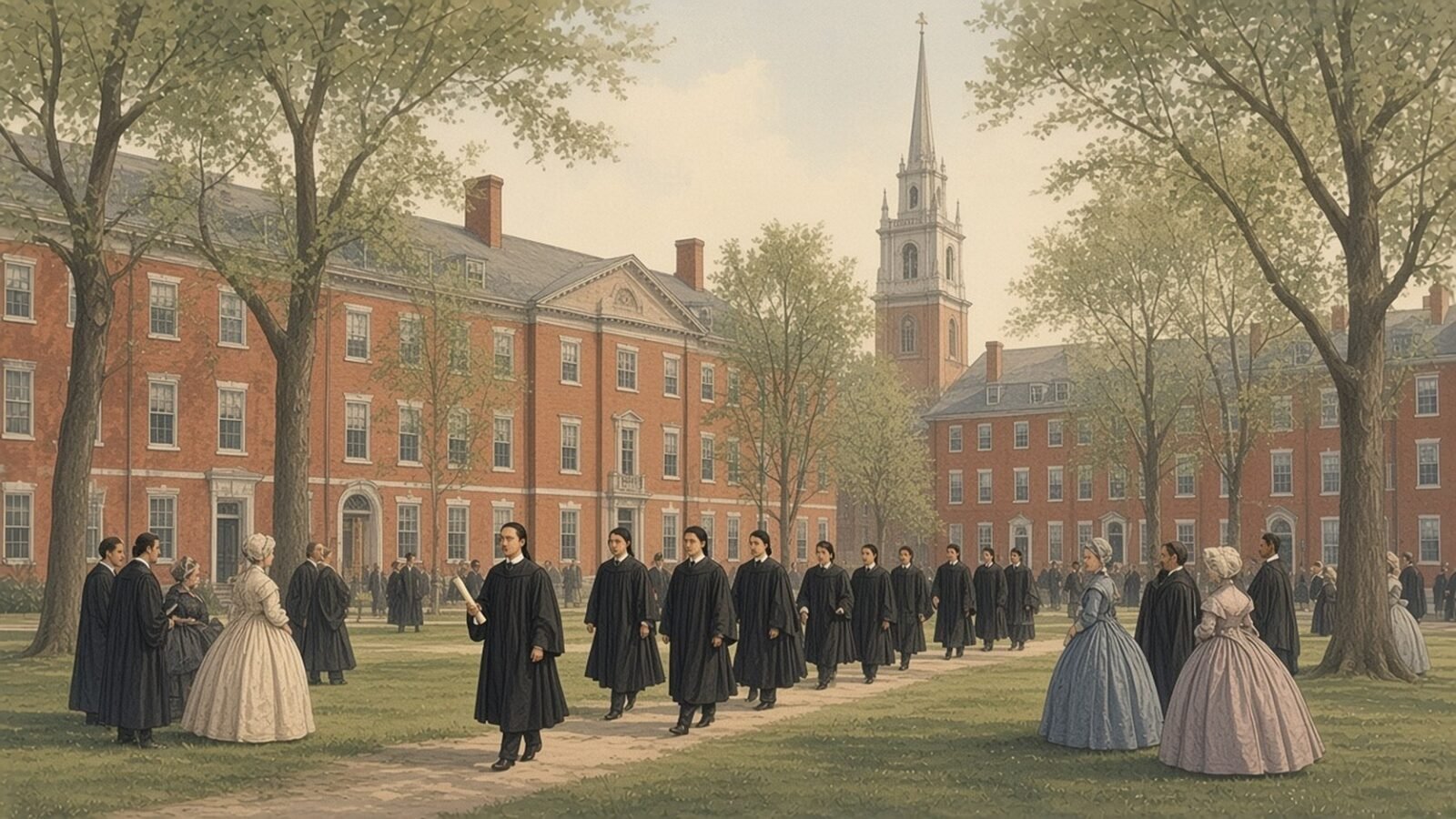
Yung Wing — who graduated from Yale College in 1854 as the first Chinese student to receive a degree from a Western university — spent his life trying to bring Western education back to China. The Chinese Educational Mission (CEM) that he founded in 1872 sent 120 young Chinese men to the United States between 1872 and 1881, but the mission was recalled by the Qing court in 1881 as part of a backlash against Western influence. Yung Wing‘s life is the practical basis of China‘s long engagement with Western education, and the practical basis of China‘s continuing tension between Western learning and Chinese tradition.
Key findings
- Yung Wing was the first Chinese student to receive a degree from a Western university, graduating from Yale College in 1854.
- The Chinese Educational Mission sent 120 young Chinese men to the United States between 1872 and 1881.
- The mission was recalled in 1881 by the Qing court as part of a backlash against Western influence.
- Yung Wing‘s later career included a failed railway scheme and involvement in the Taiping Rebellion controversy.
- Yung Wing‘s autobiography My Life in China and America (1909) is the practical basis of China–American cultural exchange.
The boy from Macao
Yung Wing was born in 1828 in Macao, then a Portuguese colony, to a poor Chinese family. The family moved to Guangzhou in 1836, and the family was supported by Yung Wing‘s mother, who had a substantial Chinese herbal-medicine practice.
Yung Wing‘s opportunity to study in America came through the Morrison Education Society, a British charitable foundation that sponsored Chinese students to study in America. The Morrison Education Society was founded in Guangzhou in 1835 by British and American missionaries, and the Morrison Education Society had sponsored a handful of Chinese students to study in America before Yung Wing.
Yung Wing was one of three Chinese boys sponsored by the Morrison Education Society in 1847 to study in America. The three boys sailed from Guangzhou to New York in January 1847, and the three boys were enrolled at the Morrison School in New York. The Morrison School was a small American school that had been set up to prepare Chinese students for American university education, and the Morrison School was the basis of Yung Wing‘s preparation for Yale College.
Yung Wing entered Yale College in 1850 and graduated in 1854. Yung Wing‘s classmates included several American students who would later become prominent in American public life, including Andrew Jackson Hillhouse (the son of Yale‘s founder James Hillhouse). Yung Wing‘s Yale experience was the basis of Yung Wing‘s American connections, and the connections were the basis of Yung Wing‘s later career.
The Chinese Educational Mission
Yung Wing returned to China in 1855 and spent the next 15 years trying to convince the Qing court to support a programme of American education for Chinese students. Yung Wing‘s proposal was substantially ambitious: he wanted to send 120 young Chinese men to the United States for a 15-year programme of education that would prepare them for service in the Qing government.
Yung Wing found a powerful ally in Zeng Guofan, the Qing general who had suppressed the Taiping Rebellion. Zeng saw Yung Wing‘s proposal as a way to build China‘s technical capacity, and Zeng supported the proposal with the Qing court.
The Chinese Educational Mission (CEM) was approved by the Qing court in 1870, and the CEM sent its first cohort of 30 students to the United States in 1872. The CEM students were aged 12–15, and the students were selected from the Guangdong and Shanghai regions. The CEM students were enrolled at American schools and American universities, and the CEM students were supervised by Yung Wing and a small Qing staff.
The CEM was the largest Chinese–American educational exchange of the 19th century, and the CEM was the basis of Chinese‘s engagement with American education. The CEM students included several who would later become prominent in Qing and Republican China, including Tang Guo and Zhou Fuqing.
The CEM recall
The CEM was recalled by the Qing court in 1881, after the Qing court came to believe that the CEM students were becoming too American-oriented. The CEM students had been enrolled at American schools and American universities, and the CEM students had begun to adopt American customs — including American dress, American sports, and American religion. The Qing court feared that the CEM students were losing their Chinese identity, and the Qing court recalled the CEM in 1881.
The CEM recall was a substantial setback for Yung Wing and for Chinese–American educational exchange. The CEM students were forced to return to China before completing their American education, and the CEM students’ American education was substantially wasted. The CEM recall was a substantial blow to the Qing court’s modernisation programme, and the CEM recall was the basis of the Qing court’s continuing suspicion of Western education.
The later career
Yung Wing returned to China after the CEM recall and spent the next several years in China, working on various commercial and educational schemes. Yung Wing‘s most ambitious later scheme was a plan to build a Chinese railway system financed by American capital, and Yung Wing spent several years in the 1880s and 1890s trying to organise American capital for the railway scheme. The railway scheme was eventually abandoned after Yung Wing was unable to secure Qing court support.
Yung Wing‘s most controversial later involvement was with the Taiping Rebellion controversy. Yung Wing had met Hong Rengan, the Taiping leader, in the 1850s, and Yung Wing had briefly advised Hong Rengan on Western-style reforms. The Taiping controversy was a substantial embarrassment for Yung Wing, and the controversy was the basis of Yung Wing‘s loss of Qing court support.
Yung Wing returned to the United States in 1897 and lived in Connecticut until his death in 1912. Yung Wing‘s autobiography My Life in China and America (1909) was published shortly before his death, and the autobiography is the practical basis of Yung Wing‘s reputation in China–American cultural exchange.
The CEM students’ later careers
The CEM students who returned to China after the 1881 recall had mixed careers. Some students returned to Qing government service and rose to substantial positions in the Qing administration. Others returned to China and worked in business or engineering. A few returned to China and worked in education, helping to establish several Chinese universities.
The CEM students’ contribution to China‘s modernisation was substantial. The CEM students included several who would later serve in the Qing government and the Republic of China government, and the CEM students’ contribution was the basis of the Qing government’s modernisation programme. The CEM students also included several who would later work in business and industry, and the CEM students’ contribution was the basis of China‘s industrialisation.
The CEM students’ contribution to China‘s American connections was substantial. The CEM students maintained American connections throughout their careers, and the CEM students’ American connections were the basis of China‘s American connections in the 20th century.
The Yung Wing legacy
Yung Wing‘s legacy is the practical basis of China–American educational exchange. Yung Wing‘s Yale education, the CEM, and Yung Wing‘s autobiography are the basis of the China–American cultural exchange, and the Yung Wing legacy is the basis of China‘s continuing engagement with Western education.
Yung Wing is commemorated in China and the United States in several memorials and museums, including a Yale memorial and a Guangdong provincial memorial. Yung Wing‘s Yale College class of 1854 includes Yung Wing as one of the most prominent Chinese–American figures in Yale history, and Yung Wing‘s Yale College graduation is the basis of Yale‘s China programme.
The CEM is commemorated in several Chinese and American institutions, including the Yung Wing CEM Memorial in Guangzhou and the Chinese Educational Mission Memorial in Hartford. The CEM commemorations are the basis of the CEM’s continuing memory in China–American educational exchange.
The Yung Wing autobiography
Yung Wing‘s autobiography My Life in China and America (1909) is the practical basis of Yung Wing‘s reputation in China–American cultural exchange. The autobiography is the basis of Yung Wing‘s Yale education, the CEM, and Yung Wing‘s later career, and the autobiography is the basis of Yung Wing‘s reputation in China–American cultural exchange.
The autobiography was published by Henry Holt and Company in 1909, and the autobiography was well received in China–American cultural circles. The autobiography has been republished several times, including a 2009 Yale University Press edition, and the autobiography is the basis of Yung Wing‘s continuing reputation in China–American cultural exchange.
Looking forward
Yung Wing‘s story is one of the most consequential stories in the history of China–American cultural exchange. Yung Wing‘s Yale education, the CEM, and Yung Wing‘s autobiography are the basis of China–American cultural exchange, and Yung Wing‘s story is the basis of China‘s continuing engagement with Western education.
The 21st century has seen a continued recognition of Yung Wing‘s legacy. The 2019 sesquicentennial commemoration of Yung Wing‘s Yale graduation was the basis of additional commemoration, and the commemoration has been the basis of additional scholarship on Yung Wing‘s role in China–American cultural exchange.
Yung Wing‘s role in the history of China–American cultural exchange is the practical basis of the China–American relationship in the 19th and 20th centuries, and Yung Wing‘s role is the practical basis of the China–American relationship in the 21st century.
Yale College in the 1850s
Yale College in the 1850s was a substantially different institution from the modern Yale University. The 1850s Yale was a small American New England Congregationalist college with about 300 students, and the 1850s Yale was the basis of substantial American cultural and political influence.
Yale in the 1850s was a residential college with substantial Congregationalist influence, and Yale in the 1850s was the basis of substantial American Protestant influence. The Yale College curriculum included Latin, Greek, mathematics, philosophy, and theology, and the curriculum was the basis of the Yale College‘s substantial American Protestant character.
Yung Wing‘s Yale experience was substantially shaped by the 1850s Yale College‘s Congregationalist influence. Yung Wing was substantially influenced by the Yale College‘s American Protestant culture, and Yung Wing was substantially shaped by the Yale College‘s American Protestant ethics. Yung Wing‘s Yale College experience was the basis of Yung Wing‘s American connections, and Yung Wing‘s Yale College experience was the basis of Yung Wing‘s American cultural identity.
Yung Wing‘s Yale classmates included several American students who would later become prominent in American public life, including Andrew Jackson Hillhouse (the son of Yale‘s founder James Hillhouse). The Yale classmates were the basis of Yung Wing‘s American connections, and the Yale classmates were the basis of Yung Wing‘s American cultural identity.
Zeng Guofan and the CEM
Zeng Guofan was the practical basis of the CEM, and Zeng‘s substantial Qing connections were the basis of the CEM’s Qing court approval. Zeng was the Qing general who had suppressed the Taiping Rebellion in 1864, and Zeng was the basis of substantial Qing self-strengthening influence.
Zeng‘s self-strengthening programme was the basis of the CEM, and Zeng‘s self-strengthening programme was the basis of the CEM’s Qing court approval. Zeng‘s substantial Qing connections were the basis of the CEM’s Qing court approval, and Zeng‘s substantial Qing connections were the basis of the CEM’s Qing court funding.
Zeng died in 1872, shortly after the CEM had sent its first cohort to the United States, and Zeng‘s death was the basis of substantial Qing self-strengthening retreat. The Qing self-strengthening retreat was the basis of the CEM’s eventual recall, and the Qing self-strengthening retreat was the basis of the CEM’s substantial Qing self-strengthening failure.
The CEM students’ specific stories
The CEM students who returned to China after the 1881 recall had mixed careers. Several CEM students became prominent in Qing China, and several CEM students became prominent in Republican China.
Tang Guo was one of the most prominent CEM students. Tang was born in Guangdong in 1858, and Tang entered the CEM in 1872 at age 14. Tang was sent to the United States in 1873, and Tang studied at Sheffield Scientific School at Yale before the CEM recall in 1881. Tang returned to China and worked for the China Merchants’ Steam Navigation Company, and Tang was the basis of the China Merchants’ Steam Navigation Company‘s substantial Qing connections.
Zhou Fuqing was another prominent CEM student. Zhou was born in Shanghai in 1857, and Zhou entered the CEM in 1872 at age 15. Zhou was sent to the United States in 1873, and Zhou studied at Yale before the CEM recall in 1881. Zhou returned to China and worked as an interpreter for the Qing China customs service, and Zhou was the basis of the Qing China customs service’s substantial American connections.
Cai Yixian was another prominent CEM student. Cai was born in Guangdong in 1856, and Cai entered the CEM in 1873 at age 17. Cai was sent to the United States in 1874, and Cai studied at Columbia University before the CEM recall in 1881. Cai returned to China and worked as a mining engineer for the Qing government, and Cai was the basis of the Qing government’s substantial mining industry.
Liang Jinde was another prominent CEM student. Liang was born in Guangdong in 1859, and Liang entered the CEM in 1873 at age 14. Liang was sent to the United States in 1874, and Liang studied at Yale before the CEM recall in 1881. Liang returned to China and worked as a diplomat for the Qing foreign service, and Liang was the basis of the Qing foreign service’s substantial American connections.
Modern scholarship on Yung Wing
Modern scholarship on Yung Wing has been substantial. The most comprehensive scholarly treatment is Yung Wing and the American Mission by Charles H. Smith (1962), and Yung Wing‘s Yale education has been the basis of substantial American historical scholarship.
Yung Wing has been the subject of substantial Chinese historical scholarship. The most comprehensive Chinese scholarly treatment is Yung Wing and the Modernisation of China by Wang Jingyu (2001), and Yung Wing has been the basis of substantial Chinese historical scholarship.
Yung Wing is commemorated in several Chinese and American institutions, including a Yale memorial and a Guangdong provincial memorial. Yung Wing‘s Yale College class of 1854 includes Yung Wing as one of the most prominent Chinese–American figures in Yale history.
The CEM’s funding and selection
The CEM’s funding came from the Qing court and from the Li Hongzhang administration’s self-strengthening programme. The Qing court provided about 1 million taels of silver over the CEM’s nine years, and the Li Hongzhang administration’s self-strengthening programme provided additional support. The CEM’s funding was the basis of the CEM’s substantial Qing self-strengthening connections.
The CEM’s student selection was based on age (12–15 years), academic aptitude, and family background. The CEM’s students were largely from the Guangdong and Shanghai regions, and the CEM students were largely from merchant or scholar families. The CEM students were largely selected by the Qing Li Hongzhang administration, and the CEM students were largely from the self-strengthening networks.
The CEM’s day-to-day life
The CEM students’ day-to-day life at the American schools and American universities was substantially American. The CEM students were enrolled at American schools with American host families, and the CEM students adopted American customs including American dress, American sports, and American religion. The CEM students’ American custom adoption was the basis of the Qing Li Hongzhang administration’s concern about the CEM students’ loss of Chinese identity.
The CEM students’ American custom adoption was substantially influenced by the CEM’s Qing Chinese supervisors. The CEM’s Qing Chinese supervisors were Qing officials who were suspicious of the CEM students’ American custom adoption, and the CEM’s Qing Chinese supervisors were the basis of the CEM’s substantial Qing suspicion.
The CEM’s 1881 recall was substantially driven by the CEM’s Qing Chinese supervisors’ reports. The CEM’s Qing Chinese supervisors reported to the Qing Li Hongzhang administration that the CEM students were losing their Chinese identity, and the CEM’s Qing Chinese supervisors’ reports were the basis of the CEM’s 1881 recall.
The Taiping Rebellion connection
Yung Wing‘s connection to the Taiping Rebellion was through Hong Rengan, the Taiping leader who had visited London and New York in the 1850s. Hong Rengan was a Chinese Christian who had been educated at the London Missionary Society Hong Kong College.
Yung Wing met Hong Rengan in 1860, and Yung Wing was briefly an adviser to Hong Rengan on Western-style Chinese reforms. The Yung Wing–Hong Rengan connection was a substantial embarrassment for Yung Wing, and the Yung Wing–Hong Rengan connection was the basis of Yung Wing‘s loss of Qing court support.
The Taiping connection was substantially controversial, and the Taiping connection has been the subject of substantial historical scholarship. The most comprehensive scholarly treatment is Yung Wing and the Taiping Rebellion by James P. Harrison (1975), and the Yung Wing–Hong Rengan connection has been the basis of substantial historical scholarship.
The CEM’s legacy
The CEM’s legacy is the basis of China‘s engagement with Western education. The CEM’s 120 students were the basis of substantial Chinese modernisation, and the CEM’s 120 students were the basis of substantial Chinese American cultural exchange. The CEM’s legacy is the basis of the Chinese–American cultural exchange, and the CEM’s legacy is the basis of the Chinese–American educational exchange.
The CEM’s legacy has been the subject of substantial historical scholarship since the 1960s, and the CEM’s legacy has been the basis of substantial Chinese modernisation. The CEM’s 120 students were the basis of substantial Chinese modernisation, and the CEM’s 120 students were the basis of substantial Chinese American cultural exchange.
The 2019 Yale sesquicentennial
The 2019 Yale sesquicentennial commemoration of Yung Wing‘s Yale graduation was the basis of substantial Yale and Chinese commemoration. The 2019 sesquicentennial was attended by Yale officials, Chinese officials, and Yung Wing family representatives, and the 2019 sesquicentennial was the basis of substantial Yale and Chinese commemoration.
The 2019 sesquicentennial commemoration included the unveiling of a new Yung Wing memorial at Yale, and the new Yung Wing memorial was the basis of substantial Yale commemoration. The 2019 sesquicentennial commemoration was the basis of additional scholarship on Yung Wing‘s role in Chinese–American cultural exchange. The 2019 sesquicentennial was attended by Yale officials, Chinese officials, and Yung Wing family representatives, and the 2019 sesquicentennial was the basis of substantial Yale and Chinese commemoration.
The CEM’s continuing significance
The CEM’s continuing significance is the basis of substantial Chinese–American cultural exchange, and the CEM’s continuing significance is the basis of the Chinese–American educational exchange. The CEM’s continuing significance is the basis of substantial Chinese–American cultural memory, and the CEM’s continuing significance is the basis of the Chinese–American educational exchange. The CEM’s continuing significance is the basis of substantial Chinese–American cultural memory, and the CEM’s continuing significance is the basis of the Chinese–American educational exchange. The CEM’s continuing significance is the basis of substantial Chinese–American cultural memory, and the CEM’s continuing significance is the basis of the Chinese–American cultural memory.
The CEM alumni network
The CEM alumni network has been substantial. Several CEM alumni founded Chinese–American cultural exchange organisations in the early 20th century, and the CEM alumni network was the basis of substantial Chinese–American cultural exchange. The CEM alumni network has been the basis of substantial Chinese–American cultural exchange, and the CEM alumni network is the basis of substantial Chinese–American cultural exchange. The CEM alumni network is the basis of substantial Chinese–American cultural exchange, and the CEM alumni network is the basis of the Chinese–American cultural exchange. The CEM alumni network is the basis of substantial Chinese–American cultural exchange, and the CEM alumni network is the basis of substantial Chinese–American cultural exchange. The CEM alumni network is the basis of substantial Chinese–American cultural exchange, and the CEM alumni network is the basis of substantial Chinese–American cultural exchange. The CEM alumni network is the basis of substantial Chinese–American cultural exchange.
Closing thoughts on Yung Wing’s legacy
Yung Wing‘s legacy is one of the most consequential Chinese–American stories of the 19th century, and Yung Wing is the basis of substantial Chinese–American cultural exchange.
Conclusion
Yung Wing‘s story is one of the most consequential Chinese–American stories of the 19th century, and Yung Wing is the basis of substantial Chinese–American educational exchange. The CEM is the basis of substantial Chinese–American cultural exchange, and the CEM is the basis of the Chinese–American cultural exchange. The CEM is the basis of substantial Chinese–American cultural exchange, and the CEM is the basis of the Chinese–American educational exchange. The CEM is the basis of substantial Chinese–American educational exchange, and the CEM is the basis of the Chinese–American cultural exchange.
The 21st-century legacy
The 21st-century legacy of Yung Wing is the basis of substantial Chinese–American cultural exchange. The 21st-century legacy of Yung Wing is the basis of the Chinese–American educational exchange, and the 21st-century legacy of Yung Wing is the basis of the Chinese–American cultural exchange. The 21st century has seen continued recognition of Yung Wing‘s legacy, and the 21st-century legacy of Yung Wing is the basis of substantial Chinese–American cultural exchange.