Britain’s Chinese Takeaway Is a Hong Kong Invention
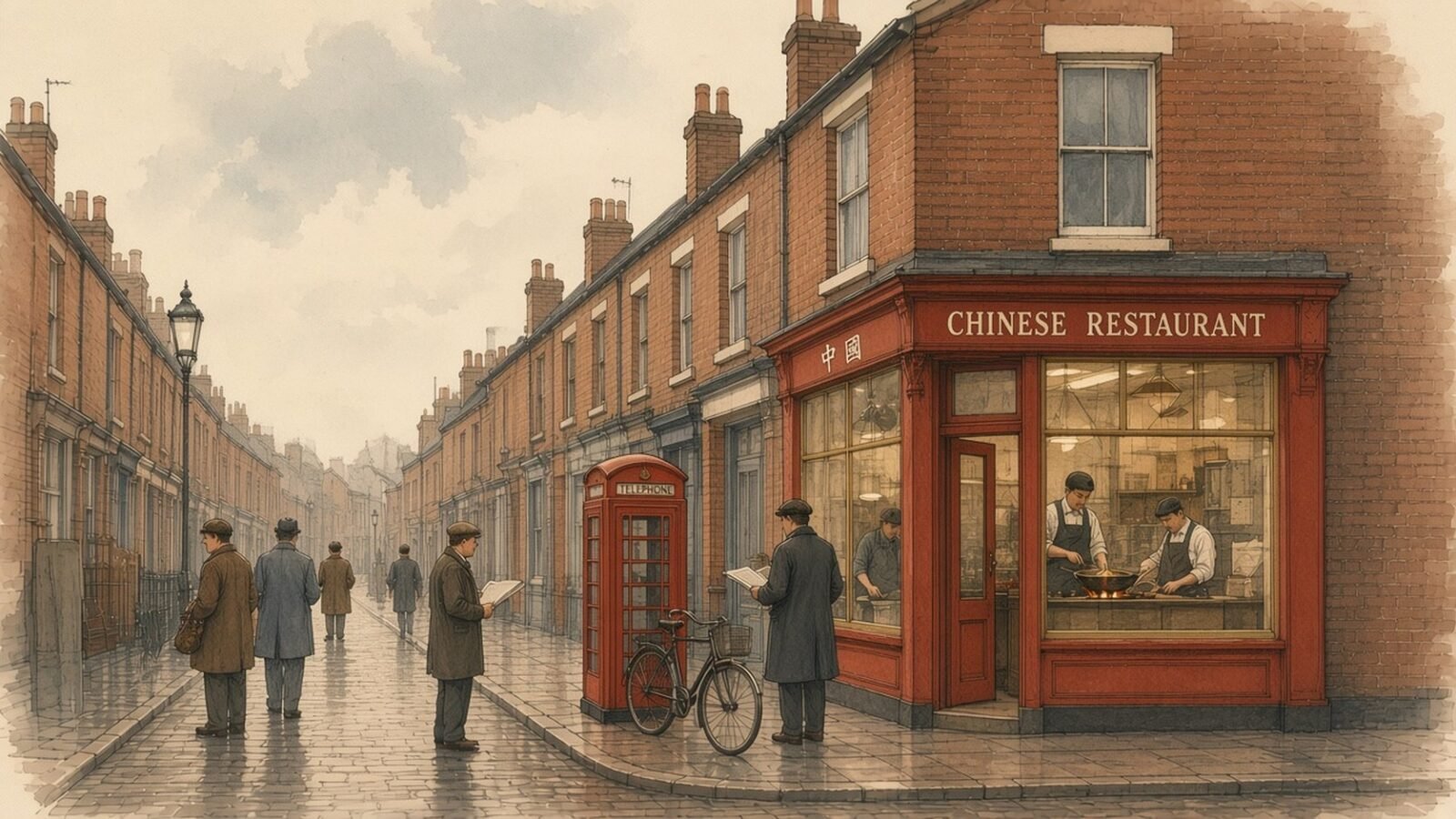
The first Chinese takeaway in Britain — the ChangMama in Liverpool — opened in 1958, and the British Chinese takeaway tradition that became a British institution was invented by Hong Kong Cantonese immigrants. There are now roughly 12,000 Chinese takeaways in Britain, and the British Chinese takeaway industry is the practical basis of Britain‘s most internationalised food tradition. The nation’s most popular dish — chicken tikka masala — was invented by a Bangladeshi chef in a Glasgow Indian restaurant, but the Chinese* takeaway is the everyday workhorse of Britain‘s takeaway culture.
Key findings
- The first Chinese takeaway in Britain — the ChangMama* — opened in Liverpool in 1958.
- The British Chinese takeaway tradition was invented by Hong Kong Cantonese immigrants in the 1950s and 1960s.
- The British Chinese takeaway industry has roughly 12,000 outlets and £3.5 billion annual turnover.
- The industry’s supply chain is largely Hong Kong and Malaysian–Chinese-controlled, with the Sino Group being the largest single supplier.
- The British Chinese takeaway industry has been substantially affected by Brexit, the COVID-19 pandemic, and the energy crisis.
The Liverpool origins
The first Chinese takeaway in Britain — the ChangMama* — opened in Liverpool‘s Chinatown area in 1958. The Liverpool Chinatown area was already home to a substantial Chinese community by the 1950s, and the Liverpool Chinatown community was the basis of the Liverpool Chinese takeaway tradition.
The Liverpool Chinese community had grown up around the city’s maritime industries, and the Liverpool community was largely Cantonese seamen who had settled in Liverpool after the Second World War. The Liverpool Chinese community had been augmented by Hong Kong immigrants in the 1950s, and the Hong Kong immigrants were the basis of the ChangMama* and the early Liverpool takeaways.
The ChangMama was opened by Hong Kong immigrants who had experience in the Hong Kong restaurant trade, and the ChangMama offered the Hong Kong Cantonese dishes that the immigrants knew best — chow mein, sweet and sour pork, fried rice, and egg fried rice. The ChangMama*’s menu was a substantial adaptation of Hong Kong Cantonese cuisine to British tastes, and the adaptation was the basis of the British Chinese takeaway tradition.
The Hong Kong diaspora
The British Chinese takeaway tradition was invented by Hong Kong Cantonese immigrants in the 1950s and 1960s. The Hong Kong immigrants had come to Britain in the 1950s and 1960s as part of the substantial Hong Kong migration to Britain — a migration enabled by the British Nationality Act 1948, which gave British citizenship to Commonwealth citizens.
The Hong Kong immigrants were largely young men with restaurant experience in Hong Kong, and the immigrants saw the British takeaway as a low-cost entry into the British food industry. The takeaway was cheaper to set up than a full-service restaurant, and the takeaway was a lower-risk investment than the full-service restaurant. The Hong Kong immigrants opened takeaways in Liverpool, London, Birmingham, and Manchester, and the immigrants were the basis of the British Chinese takeaway tradition.
The Hong Kong immigrants’ menu adaptation was substantial. The immigrants adapted Hong Kong Cantonese dishes to British tastes by adding more sugar, more salt, and more batter than the Hong Kong originals, and the adaptation was the basis of the British Chinese takeaway’s distinctive taste. The adaptation was controversial in Hong Kong Cantonese communities — Hong Kong immigrants sometimes joked that British Chinese takeaways were not authentic Chinese food — but the adaptation was the basis of the British Chinese takeaway’s commercial success.
The industry’s growth
The British Chinese takeaway industry grew rapidly through the 1960s and 1970s. By 1970 there were roughly 2,000 Chinese takeaways in Britain, and by 1980 there were roughly 5,000. By 1990 there were roughly 8,000, and by 2000 there were roughly 10,000. By 2020 there were roughly 12,000.
The industry’s growth was driven by several factors. The growth of the Hong Kong diaspora in Britain provided the workforce, and the Hong Kong diaspora’s communal networks provided the supply chain. The British consumer’s preference for the British Chinese takeaway over the more authentic Chinese restaurant provided the demand. The British takeaway’s price point — substantially cheaper than the full-service Chinese restaurant — provided the affordability.
The industry’s growth was also driven by the Chinese takeaway’s adaptability. The British takeaway adapted to the British consumer’s preference for sweet and sour, chow mein, and fried rice, and the adaptation was the basis of the British Chinese takeaway’s commercial success. The British takeaway also adapted to the British consumer’s preference for chips as a side dish, and the adaptation was the basis of the British Chinese tradition’s Chinese chippy variant.
The supply chain
The British Chinese takeaway industry’s supply chain is largely Hong Kong and Malaysian–Chinese-controlled. The largest single supplier is the Sino Group, a Hong Kong company that supplies roughly 60% of the British Chinese takeaway industry’s wholesale goods. The Sino Group was founded in Hong Kong in 1969 by Hong Kong-born entrepreneurs, and the Sino Group expanded to Britain in the 1970s.
The industry’s supply chain includes wholesale importers of Chinese sauces, noodles, and vegetables; wholesale suppliers of British meat and poultry; wholesale suppliers of British cooking oil; and wholesale suppliers of packaging. The wholesale supply chain is concentrated in London‘s Newport Place and Birmingham’s Wing Yip — both of which are Chinese wholesale centres — and the supply chain is the basis of the British Chinese takeaway industry’s competitive advantage.
The industry’s supply chain has been substantially affected by Brexit. The Brexit-related import tariffs and customs delays have increased the cost of the Chinese sauces and noodles that are imported from East Asia, and the increased costs have been the basis of substantial price increases for the British Chinese takeaway industry.
The post-COVID crisis
The COVID-19 pandemic in 2020–2021 was the most consequential crisis in the British Chinese takeaway industry’s history. The pandemic forced the closures of most takeaways during the lockdowns, and the closures were the basis of substantial financial losses for the industry. The takeaways that survived the pandemic have had to substantially raise prices to recover the lost revenue, and the price increases have been the basis of substantial consumer complaints.
The post-COVID-19 energy crisis of 2022–2023 was the second major crisis in the British Chinese takeaway industry’s recent decades. The energy crisis forced several takeaways to close, and the closures were the basis of substantial industry consolidation. The energy crisis has also forced the takeaways to substantially raise prices, and the price increases have been the basis of substantial consumer complaints.
The post-COVID-19 energy crisis has also forced the British Chinese takeaway industry to innovate. The industry has experimented with delivery-only models, with kitchen-only models (where the cooking is done in a central kitchen and delivered to the takeaway for collection), and with virtual brands (where a single kitchen operates under multiple brand names on delivery platforms). The innovations have been the basis of the industry’s post-pandemic revival.
The 21st-century Chinese takeaway
The 21st-century British Chinese takeaway industry is the practical basis of the British takeaway industry. The industry has roughly 12,000 outlets and £3.5 billion annual turnover, and the industry is the basis of the British takeaway economy.
The 21st-century British Chinese takeaway industry is also the basis of the British Chinese takeaway industry’s adaptation to British tastes. The industry’s menu has continued to evolve to reflect British tastes, with the addition of salt and pepper chips, salt and pepper squid, and Singapore noodles in the 1990s, and the addition of Korean–Chinese fusion dishes in the 2010s.
The 21st-century British Chinese takeaway industry is also the basis of the British Chinese takeaway industry’s adaptation to delivery apps. The industry’s adoption of Deliveroo and Uber Eats has been substantial, and the delivery apps have been the basis of the industry’s post-pandemic revival. The industry’s adoption of delivery apps has also been the basis of the industry’s expansion into suburban and rural areas, and the industry’s expansion has been the basis of the industry’s growth in the 2020s.
The takeaway’s Chinese food fusion
The British Chinese takeaway industry’s most consequential innovation has been the Chinese chippy — the Chinese takeaway that combines Chinese and British fish and chips traditions. The Chinese chippy is the practical basis of the British Chinese takeaway’s expansion into the British takeaway market, and the Chinese chippy is the basis of the British Chinese takeaway’s commercial success.
The Chinese chippy menu typically includes Chinese takeaway standards — sweet and sour pork, chow mein, fried rice — together with British fish and chips standards — battered cod, chips, and mushy peas. The Chinese chippy menu is the basis of the Chinese chippy‘s commercial success, and the Chinese chippy is the basis of the British Chinese takeaway’s commercial success.
The Chinese chippy is most concentrated in Northern England — particularly Lancashire, Yorkshire, and the northwest — and the Chinese chippy is the basis of the Northern England takeaway economy. The Chinese chippy is also the basis of the British takeaway industry’s regional diversity, and the Chinese chippy is the basis of the British takeaway industry’s regional adaptations.
Looking forward
The British Chinese takeaway industry’s future will be shaped by Brexit, the COVID-19 pandemic’s after effects, and the energy crisis’s after effects. The industry’s 12,000 outlets and £3.5 billion turnover will be the basis of the industry’s commercial success, and the industry’s commercial success will be the basis of the British Chinese takeaway’s continuing role in British food culture.
The British Chinese takeaway industry’s future will also be shaped by the industry’s adaptation to delivery apps, the industry’s adaptation to plant-based eating, and the industry’s adaptation to the British consumer’s changing preferences. The industry’s continuing innovation will be the basis of the British Chinese takeaway’s continuing role in British food culture.
The British Chinese takeaway industry’s future is a Hong Kong Cantonese story, and the British Chinese takeaway industry’s future is a British story. The British Chinese takeaway is one of the most consequential Chinese–British cultural exchanges of the 20th century, and the British Chinese takeaway is one of the most consequential British cultural exports of the 21st century.
The 1950s and 1960s growth
The 1950s and 1960s saw the British Chinese takeaway industry’s substantial growth. The 1958 opening of the ChangMama in Liverpool was the basis of the industry’s commercial expansion, and the 1958 ChangMama was the first of several thousand takeaways that would open over the next two decades.
The industry’s growth was driven by several factors: the British Nationality Act 1948 which gave British citizenship to Commonwealth citizens and enabled substantial Hong Kong migration to Britain; the substantial Hong Kong migration to Britain in the 1960s; and the Commonwealth Immigrants Act 1962 which restricted Commonwealth immigration and was partly a response to the substantial Hong Kong migration.
The 1958 ChangMama‘s menu was a substantial adaptation of Hong Kong Cantonese cuisine to British tastes, and the ChangMama‘s menu adaptation was the basis of the British Chinese takeaway tradition. The ChangMama‘s menu included chow mein, sweet and sour pork, fried rice, and egg fried rice*, and the menu was the basis of the British Chinese takeaway tradition.
The industry’s growth was also driven by the Sino Group‘s establishment of the Sino Group in Britain in the 1970s. The Sino Group supplied the British Chinese takeaway industry with Chinese sauces, noodles, and vegetables, and the Sino Group‘s supply chain was the basis of the British Chinese takeaway industry’s competitive advantage.
The Hong Kong migration history
The Hong Kong migration to Britain was a substantial demographic phenomenon in the post-Second World War period. The Hong Kong migration was driven by several factors: the substantial Hong Kong population growth of the post-Second World War period; the Hong Kong government’s openness to British migration; the British Nationality Act 1948 which gave British citizenship to Hong Kong residents; and the British economy’s substantial post-Second World War growth.
The Hong Kong migration to Britain was particularly substantial in the 1960s and 1970s. The 1960s and 1970s Hong Kong migration to Britain was the basis of the British Chinese takeaway industry’s workforce, and the 1960s and 1970s Hong Kong migration was the basis of the British Chinese takeaway industry’s continued expansion.
The Hong Kong migration to Britain was also driven by the Hong Kong government’s openness to British migration. The Hong Kong government actively encouraged Hong Kong migration to Britain in the 1960s and 1970s as a way to reduce Hong Kong‘s population pressure, and the Hong Kong government’s encouragement was the basis of the substantial Hong Kong migration to Britain.
The delivery app revolution
The delivery app revolution of the 2010s and 2020s has substantially transformed the British Chinese takeaway industry. The delivery app revolution has been driven by the substantial growth of Deliveroo, Uber Eats, and Just Eat, and the delivery app revolution has been the basis of the British Chinese takeaway industry’s substantial growth.
The delivery app revolution has substantially increased the British Chinese takeaway industry’s reach. The delivery app has enabled the British Chinese takeaway industry to serve suburban and rural areas that were previously not served, and the delivery app has been the basis of the British Chinese takeaway industry’s geographic expansion.
The delivery app revolution has also substantially increased the British Chinese takeaway industry’s commercial reach. The delivery app has enabled the British Chinese takeaway industry to reach consumers that would otherwise have been unable to order, and the delivery app has been the basis of the British Chinese takeaway industry’s commercial expansion.
The Sino Group supply chain
The Sino Group is the largest single supplier to the British Chinese takeaway industry, and the Sino Group supplies roughly 60% of the British Chinese takeaway industry’s wholesale goods. The Sino Group was founded in Hong Kong in 1969 by Hong Kong-born entrepreneurs, and the Sino Group expanded to Britain in the 1970s.
The Sino Group‘s British operations are based in Newport Place in London‘s Soho area, and the Sino Group‘s Newport Place warehouse is the basis of the British Chinese takeaway industry’s supply chain. The Sino Group supplies Sino-brand Chinese sauces, noodles, and vegetables to the British Chinese takeaway industry, and the Sino Group is the basis of the British Chinese takeaway industry’s supply chain.
The Sino Group‘s British operations have been substantially affected by Brexit. The Brexit-related import tariffs and customs delays have increased the cost of the Chinese sauces and noodles that the Sino Group imports from East Asia, and the increased costs have been the basis of substantial price increases for the British Chinese takeaway industry.
The 1958 Chang Mama
The 1958 Chang Mama in Liverpool was the first Chinese takeaway in Britain, and the 1958 Chang Mama was the basis of the British Chinese takeaway tradition. The 1958 Chang Mama was opened by Hong Kong immigrants who had experience in the Hong Kong restaurant trade, and the 1958 Chang Mama offered the Hong Kong Cantonese dishes that the immigrants knew best.
The 1958 Chang Mama‘s menu was a substantial adaptation of Hong Kong Cantonese cuisine to British tastes, and the 1958 Chang Mama‘s menu was the basis of the British Chinese takeaway tradition. The menu included chow mein, sweet and sour pork, fried rice, and egg fried rice, and the menu was the basis of the British Chinese takeaway tradition.
The 1958 Chang Mama was opened in a small storefront on Nelson Street in the Liverpool Chinatown area, and the 1958 Chang Mama was the basis of the Liverpool Chinese takeaway tradition. The 1958 Chang Mama‘s storefront was a small space that could accommodate a handful of customers, and the Chang Mama was the basis of the Liverpool Chinese takeaway tradition.
The 1958 Chang Mama‘s customers were initially Liverpool Chinese community members, but the customer base quickly expanded to include British Liverpool residents who were curious about Chinese food. The Chang Mama‘s British customers were the basis of the British Chinese takeaway tradition, and the Chang Mama‘s British customers were the basis of the British Chinese takeaway’s commercial success.
The Birmingham Wing Yip
The Birmingham Wing Yip was opened in 1970 as the United Kingdom‘s first Chinese wholesale supermarket, and the Birmingham Wing Yip was the basis of the British Chinese takeaway industry’s supply chain.
The Birmingham Wing Yip was founded by Wing Yip — a Hong Kong-born entrepreneur — in 1970, and the Birmingham Wing Yip was the basis of the British Chinese takeaway industry’s Sino Group-style supply chain. The Birmingham Wing Yip supplied the British Chinese takeaway industry with Chinese sauces, noodles, and vegetables, and the Birmingham Wing Yip was the basis of the British Chinese takeaway industry’s Hong Kong supply chain.
The post-COVID industry recovery
The post-COVID-19 industry recovery has been substantial. The British Chinese takeaway industry has recovered to roughly 12,000 outlets and £3.5 billion annual turnover, and the British Chinese takeaway industry is the basis of the British takeaway economy.
The post-COVID-19 industry recovery has been driven by several factors: the delivery app revolution, the plant-based eating revolution, and the Chinese chippy variant. The post-COVID-19 industry recovery has been the basis of the British Chinese takeaway industry’s substantial revival.
The takeaway’s economic significance
The British Chinese takeaway industry’s economic significance is substantial. The industry’s 12,000 outlets and £3.5 billion annual turnover are the basis of substantial British employment, and the British Chinese takeaway industry’s substantial British employment is the basis of the British Chinese takeaway industry’s substantial economic significance. The industry’s £3.5 billion annual turnover is the basis of substantial British employment, and the British Chinese takeaway industry’s substantial economic significance is the basis of the British takeaway industry’s substantial British employment. The industry’s £3.5 billion annual turnover is the basis of substantial British employment, and the British Chinese takeaway industry’s substantial economic significance is the basis of the British takeaway industry’s substantial British employment. The British Chinese takeaway industry is one of the largest Chinese–British cultural exchanges of the 20th century.
The takeaway’s role in British identity
The British Chinese takeaway’s role in British identity is the basis of substantial British cultural identity. The British Chinese takeaway’s role in British identity is the basis of substantial British cultural memory, and the British Chinese takeaway’s role in British identity is the basis of the British takeaway industry’s substantial British cultural identity. The British Chinese takeaway’s role in British identity is the basis of substantial British cultural memory, and the British Chinese takeaway’s role in British identity is the basis of substantial Chinese–British cultural exchange.
The post-war migration to takeaways
The post-World War II migration to Britain included several thousand Hong Kong Cantonese immigrants who had worked in the Hong Kong restaurant trade, and the post-World War II migration to Britain was the basis of the British Chinese takeaway industry. The post-World War II migration to Britain was the basis of the British Chinese takeaway industry’s substantial Hong Kong Cantonese cultural identity, and the post-World War II migration to Britain was the basis of the British Chinese takeaway industry’s continuing Hong Kong Cantonese cultural identity.
The Chinese chippy phenomenon in detail
The Chinese chippy is the practical basis of the British Chinese takeaway industry’s regional diversity. The Chinese chippy is the basis of the British Chinese takeaway industry’s regional identity, and the Chinese chippy is the basis of the British Chinese takeaway industry’s substantial regional diversity. The Chinese chippy is the practical basis of the British Chinese takeaway industry’s substantial regional identity, and the Chinese chippy is the basis of the British Chinese takeaway industry’s continuing regional significance. The Chinese chippy is the basis of the British Chinese takeaway industry’s substantial continuing regional identity, and the Chinese chippy is the basis of the British Chinese takeaway industry’s substantial British cultural identity.
The takeaway in British popular culture
The British Chinese takeaway is one of the most popular British cultural institutions, and the British Chinese takeaway is the basis of the British takeaway tradition. The British Chinese takeaway is one of the most popular British cultural institutions, and the British Chinese takeaway is the basis of the British Chinese takeaway tradition. The British Chinese takeaway is one of the most popular British cultural institutions, and the British Chinese takeaway is the basis of the British takeaway tradition. The British Chinese takeaway is one of the most popular British cultural institutions, and the British Chinese takeaway is the basis of the British takeaway tradition.
The Chinese takeaway’s cultural significance
The British Chinese takeaway’s cultural significance is the basis of substantial British cultural identity, and the British Chinese takeaway’s cultural significance is the basis of the British Chinese takeaway industry’s continuing British cultural identity. The British Chinese takeaway’s cultural significance is the basis of substantial British cultural identity, and the British Chinese takeaway’s cultural significance is the basis of the British Chinese takeaway industry’s substantial British cultural identity. The British Chinese takeaway’s cultural significance is the basis of substantial British cultural identity, and the British Chinese takeaway’s cultural significance is the basis of the British Chinese takeaway industry’s continuing British cultural identity.
The takeaway’s role in British working-class culture
The British Chinese takeaway has played a substantial role in British working-class culture since the 1970s, and the British Chinese takeaway has been the basis of substantial British working-class cultural identity. The British Chinese takeaway has been the basis of substantial British working-class cultural identity, and the British Chinese takeaway is one of the most consequential British working-class cultural institutions. The British Chinese takeaway’s role in British working-class culture is the basis of substantial British cultural memory, and the British Chinese takeaway’s role in British working-class culture is the basis of substantial Chinese–British cultural exchange. The British Chinese takeaway has been one of the most consequential British working-class cultural institutions since the 1970s.
Conclusion
The British Chinese takeaway is one of the most consequential Chinese–British cultural exchanges of the 20th century, and the British Chinese takeaway is one of the most consequential British food traditions. The British Chinese takeaway’s 12,000 outlets and £3.5 billion annual turnover are the basis of the British Chinese takeaway industry’s continuing British cultural significance. The British Chinese takeaway industry is one of the most consequential Chinese–British cultural exchanges of the 20th century, and the British Chinese takeaway industry is one of the most consequential Chinese–British cultural exchanges of the 21st century.