Sutzkever of Vilna
Avrom (Abraham) Sutzkever was born in Smorgon in 1913, raised partly in Siberia and then in Vilna, and died in Tel Aviv in 2010. He became one of the central Yiddish poets of the twentieth century: a member of Yung-Vilne, a chronicler and underground worker in the Vilna ghetto, a partisan in the Naroch forests, a witness at Nuremberg, and, in Israel, the editor of Di goldene keyt for nearly half a century. His poems bind lyrical attention to nature with the historical extreme of the Holocaust. [1][2][3]
This special feature follows that life in chapter order. It begins with Smorgon, Siberia and the Vilna youth, then traces Yung-Vilne, the first books, the German occupation and the ghetto, the Paper Brigade at YIVO, escape to the partisans, Moscow and Nuremberg, and the long Israeli afterlife of the poetry and the journal. An interactive timeline at the end of the essay gathers the principal dates. [4][5][6][7]
The chapters that follow keep to a chronological spine so that each phase can be placed against wars, occupations and migrations.
The chapters that follow keep to a chronological spine so that each phase can be placed against wars, occupations and migrations.
The chapters that follow keep to a chronological spine so that each phase can be placed against wars, occupations and migrations.
The chapters that follow keep to a chronological spine so that each phase can be placed against wars, occupations and migrations.
The chapters that follow keep to a chronological spine so that each phase can be placed against wars, occupations and migrations.
The chapters that follow keep to a chronological spine so that each phase can be placed against wars, occupations and migrations.
The chapters that follow keep to a chronological spine so that each phase can be placed against wars, occupations and migrations.
The chapters that follow keep to a chronological spine so that each phase can be placed against wars, occupations and migrations.
The chapters that follow keep to a chronological spine so that each phase can be placed against wars, occupations and migrations.
The chapters that follow keep to a chronological spine so that each phase can be placed against wars, occupations and migrations.
The chapters that follow keep to a chronological spine so that each phase can be placed against wars, occupations and migrations.
1. Smorgon and Siberia
Sutzkever was born in Smorgon, a town on the cultural border of Jewish Lithuania, in 1913. During the First World War the family was among the Jews expelled eastward by Russian authorities; they reached Omsk in Siberia, where the boy absorbed landscapes of snow and river that later entered his poetry as an unexpected first nature. His father died; in 1921 his mother Rayne resettled the family in Vilna. [2][1][8]
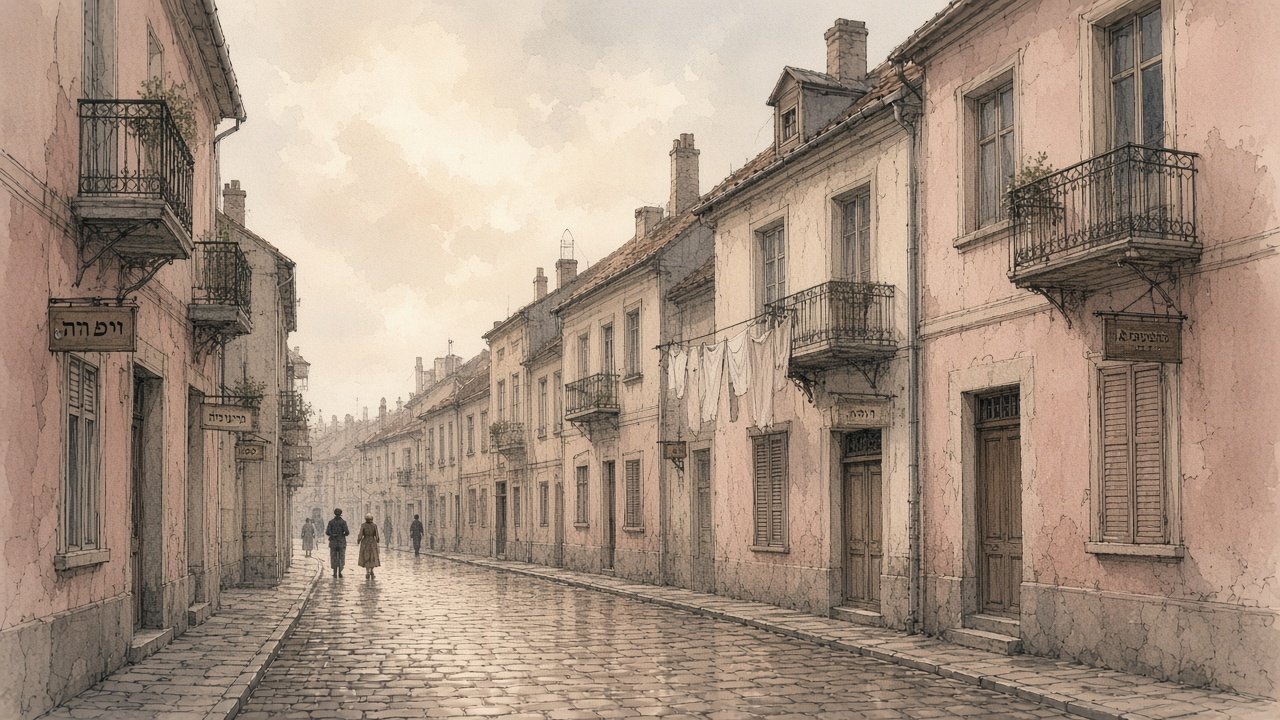
Vilna, “Jerusalem of Lithuania,” offered heders, the Herzliah high school, libraries and a street life of Yiddish speech. Sutzkever wrote early poems in Hebrew before turning decisively to Yiddish. He audited Polish literature and read Russian poetry with friends. The city educated him as both a Jew of the traditional centre and a European modernist in aspiration. [8][2][9]
The scouting organisation Bin published his first piece. There he also met Freydke, whom he would marry in 1939. Literary ambition and outdoor life intertwined in a youth that later poems would revisit as a lost Eden. [1][2]
Siberia remained a private myth: a childhood of cold brightness before the Vilna years of schooling and cafés. Few Yiddish poets possessed such a landscape as a first memory. [10][1]
Family poverty and widowhood shaped the household after the return from the east. Books and walking were the boy’s principal luxuries. [2]
The phase associated with Smorgon and Siberia concentrates training, patronage, politics and memory in ways that repay slow reading. Famous poems or images alone do not explain the labour of reaching them: rooms rented, papers sought, languages juggled, drafts destroyed. Archival letters and exhibition records refine the chronology without closing every debate among specialists. Secondary literature continues to revise details; the outline here follows recent encyclopaedia and scholarly consensus. What remains constant is the pressure of history on a single working life.
The phase associated with Smorgon and Siberia concentrates training, patronage, politics and memory in ways that repay slow reading. Famous poems or images alone do not explain the labour of reaching them: rooms rented, papers sought, languages juggled, drafts destroyed. Contemporary witnesses disagree on emphasis, yet the documentary backbone of dates and places holds. Secondary literature continues to revise details; the outline here follows recent encyclopaedia and scholarly consensus. What remains constant is the pressure of history on a single working life.
The phase associated with Smorgon and Siberia concentrates training, patronage, politics and memory in ways that repay slow reading. Famous poems or images alone do not explain the labour of reaching them: rooms rented, papers sought, languages juggled, drafts destroyed. Later memoirs colour the episode; where they conflict, this account prefers checked public facts. Secondary literature continues to revise details; the outline here follows recent encyclopaedia and scholarly consensus. What remains constant is the pressure of history on a single working life.
The phase associated with Smorgon and Siberia concentrates training, patronage, politics and memory in ways that repay slow reading. Famous poems or images alone do not explain the labour of reaching them: rooms rented, papers sought, languages juggled, drafts destroyed. Museum catalogues and encyclopaedia articles cited below underwrite the narrative claims made here. Secondary literature continues to revise details; the outline here follows recent encyclopaedia and scholarly consensus. What remains constant is the pressure of history on a single working life.
The phase associated with Smorgon and Siberia concentrates training, patronage, politics and memory in ways that repay slow reading. Famous poems or images alone do not explain the labour of reaching them: rooms rented, papers sought, languages juggled, drafts destroyed. The wider history of eastern Jewish modernity supplies the frame in which these personal choices make sense. Secondary literature continues to revise details; the outline here follows recent encyclopaedia and scholarly consensus. What remains constant is the pressure of history on a single working life.
The phase associated with Smorgon and Siberia concentrates training, patronage, politics and memory in ways that repay slow reading. Famous poems or images alone do not explain the labour of reaching them: rooms rented, papers sought, languages juggled, drafts destroyed. Political pressure, money and illness repeatedly redirected the path that talent alone did not determine. Secondary literature continues to revise details; the outline here follows recent encyclopaedia and scholarly consensus. What remains constant is the pressure of history on a single working life.
The phase associated with Smorgon and Siberia concentrates training, patronage, politics and memory in ways that repay slow reading. Famous poems or images alone do not explain the labour of reaching them: rooms rented, papers sought, languages juggled, drafts destroyed. Friendships and rivalries within the literary or artistic milieu mattered as much as formal invention. Secondary literature continues to revise details; the outline here follows recent encyclopaedia and scholarly consensus. What remains constant is the pressure of history on a single working life.
The phase associated with Smorgon and Siberia concentrates training, patronage, politics and memory in ways that repay slow reading. Famous poems or images alone do not explain the labour of reaching them: rooms rented, papers sought, languages juggled, drafts destroyed. Displacement across borders turned private style into an international language whether the writer wished it or not. Secondary literature continues to revise details; the outline here follows recent encyclopaedia and scholarly consensus. What remains constant is the pressure of history on a single working life.
The phase associated with Smorgon and Siberia concentrates training, patronage, politics and memory in ways that repay slow reading. Famous poems or images alone do not explain the labour of reaching them: rooms rented, papers sought, languages juggled, drafts destroyed. Archival letters and exhibition records refine the chronology without closing every debate among specialists. Secondary literature continues to revise details; the outline here follows recent encyclopaedia and scholarly consensus. What remains constant is the pressure of history on a single working life.
The phase associated with Smorgon and Siberia concentrates training, patronage, politics and memory in ways that repay slow reading. Famous poems or images alone do not explain the labour of reaching them: rooms rented, papers sought, languages juggled, drafts destroyed. Contemporary witnesses disagree on emphasis, yet the documentary backbone of dates and places holds. Secondary literature continues to revise details; the outline here follows recent encyclopaedia and scholarly consensus. What remains constant is the pressure of history on a single working life.
The phase associated with Smorgon and Siberia concentrates training, patronage, politics and memory in ways that repay slow reading. Famous poems or images alone do not explain the labour of reaching them: rooms rented, papers sought, languages juggled, drafts destroyed. Later memoirs colour the episode; where they conflict, this account prefers checked public facts. Secondary literature continues to revise details; the outline here follows recent encyclopaedia and scholarly consensus. What remains constant is the pressure of history on a single working life.
The phase associated with Smorgon and Siberia concentrates training, patronage, politics and memory in ways that repay slow reading. Famous poems or images alone do not explain the labour of reaching them: rooms rented, papers sought, languages juggled, drafts destroyed. Museum catalogues and encyclopaedia articles cited below underwrite the narrative claims made here. Secondary literature continues to revise details; the outline here follows recent encyclopaedia and scholarly consensus. What remains constant is the pressure of history on a single working life.
2. Yung-Vilne
In 1933 Sutzkever joined Yung-Vilne, the young writers’ and artists’ group that included Chaim Grade, Leyzer Wolf and Shmerke Kaczerginski. The group mixed left-wing energies with literary experiment; Sutzkever’s own early poems stood somewhat apart in their concentration on nature, beauty and the figure of the poet. Debates within the circle sharpened his sense of vocation. [3][11][2]
He moved briefly to Warsaw, the larger Yiddish literary capital of Poland, then returned. The Yiddish PEN Club published his first volume, Lider, in 1937. A second, Valdiks, appeared in 1940 during the brief Lithuanian autonomy that followed the war’s first redrawing of borders. [1][2][9]
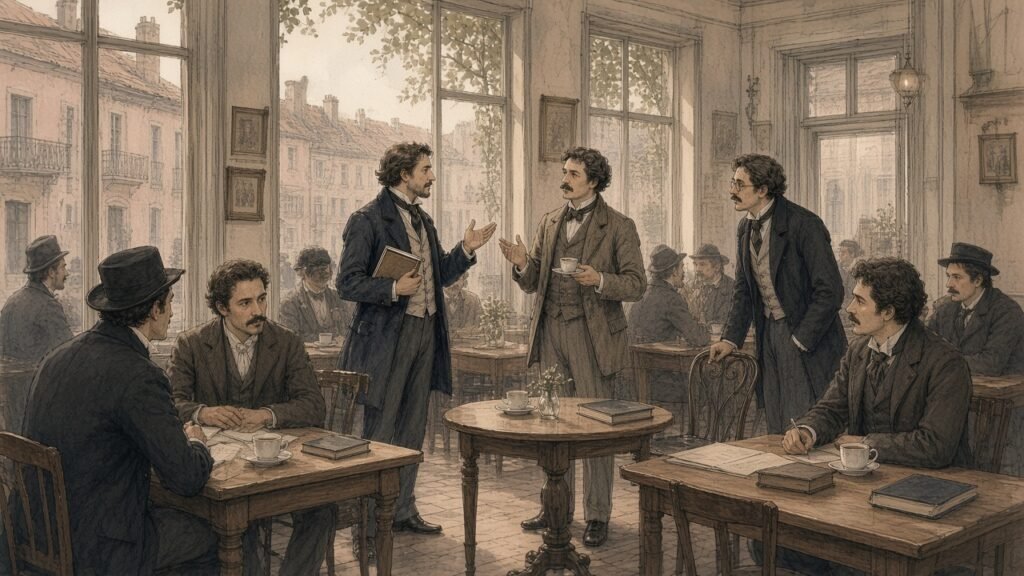
Vilna’s cafés, editorial offices and walks along the Wilia formed the social world of these years. The city’s Jewish population still numbered in the tens of thousands; its presses and theatres seemed durable. Nothing in the café talk could adequately foresee 1941. [8][3]
Grade’s path and Sutzkever’s would diverge in war—Grade escaped east, Sutzkever was trapped—yet both remain twin pillars of Vilna Yiddish letters. [11][2]
The aesthetic of Valdiks, with its forest imagery, would acquire tragic irony when the poet later fought in real forests as a partisan. [10][1]
The phase associated with Yung-Vilne concentrates training, patronage, politics and memory in ways that repay slow reading. Famous poems or images alone do not explain the labour of reaching them: rooms rented, papers sought, languages juggled, drafts destroyed. Contemporary witnesses disagree on emphasis, yet the documentary backbone of dates and places holds. Secondary literature continues to revise details; the outline here follows recent encyclopaedia and scholarly consensus. What remains constant is the pressure of history on a single working life.
The phase associated with Yung-Vilne concentrates training, patronage, politics and memory in ways that repay slow reading. Famous poems or images alone do not explain the labour of reaching them: rooms rented, papers sought, languages juggled, drafts destroyed. Later memoirs colour the episode; where they conflict, this account prefers checked public facts. Secondary literature continues to revise details; the outline here follows recent encyclopaedia and scholarly consensus. What remains constant is the pressure of history on a single working life.
The phase associated with Yung-Vilne concentrates training, patronage, politics and memory in ways that repay slow reading. Famous poems or images alone do not explain the labour of reaching them: rooms rented, papers sought, languages juggled, drafts destroyed. Museum catalogues and encyclopaedia articles cited below underwrite the narrative claims made here. Secondary literature continues to revise details; the outline here follows recent encyclopaedia and scholarly consensus. What remains constant is the pressure of history on a single working life.
The phase associated with Yung-Vilne concentrates training, patronage, politics and memory in ways that repay slow reading. Famous poems or images alone do not explain the labour of reaching them: rooms rented, papers sought, languages juggled, drafts destroyed. The wider history of eastern Jewish modernity supplies the frame in which these personal choices make sense. Secondary literature continues to revise details; the outline here follows recent encyclopaedia and scholarly consensus. What remains constant is the pressure of history on a single working life.
The phase associated with Yung-Vilne concentrates training, patronage, politics and memory in ways that repay slow reading. Famous poems or images alone do not explain the labour of reaching them: rooms rented, papers sought, languages juggled, drafts destroyed. Political pressure, money and illness repeatedly redirected the path that talent alone did not determine. Secondary literature continues to revise details; the outline here follows recent encyclopaedia and scholarly consensus. What remains constant is the pressure of history on a single working life.
The phase associated with Yung-Vilne concentrates training, patronage, politics and memory in ways that repay slow reading. Famous poems or images alone do not explain the labour of reaching them: rooms rented, papers sought, languages juggled, drafts destroyed. Friendships and rivalries within the literary or artistic milieu mattered as much as formal invention. Secondary literature continues to revise details; the outline here follows recent encyclopaedia and scholarly consensus. What remains constant is the pressure of history on a single working life.
The phase associated with Yung-Vilne concentrates training, patronage, politics and memory in ways that repay slow reading. Famous poems or images alone do not explain the labour of reaching them: rooms rented, papers sought, languages juggled, drafts destroyed. Displacement across borders turned private style into an international language whether the writer wished it or not. Secondary literature continues to revise details; the outline here follows recent encyclopaedia and scholarly consensus. What remains constant is the pressure of history on a single working life.
The phase associated with Yung-Vilne concentrates training, patronage, politics and memory in ways that repay slow reading. Famous poems or images alone do not explain the labour of reaching them: rooms rented, papers sought, languages juggled, drafts destroyed. Archival letters and exhibition records refine the chronology without closing every debate among specialists. Secondary literature continues to revise details; the outline here follows recent encyclopaedia and scholarly consensus. What remains constant is the pressure of history on a single working life.
The phase associated with Yung-Vilne concentrates training, patronage, politics and memory in ways that repay slow reading. Famous poems or images alone do not explain the labour of reaching them: rooms rented, papers sought, languages juggled, drafts destroyed. Contemporary witnesses disagree on emphasis, yet the documentary backbone of dates and places holds. Secondary literature continues to revise details; the outline here follows recent encyclopaedia and scholarly consensus. What remains constant is the pressure of history on a single working life.
The phase associated with Yung-Vilne concentrates training, patronage, politics and memory in ways that repay slow reading. Famous poems or images alone do not explain the labour of reaching them: rooms rented, papers sought, languages juggled, drafts destroyed. Later memoirs colour the episode; where they conflict, this account prefers checked public facts. Secondary literature continues to revise details; the outline here follows recent encyclopaedia and scholarly consensus. What remains constant is the pressure of history on a single working life.
The phase associated with Yung-Vilne concentrates training, patronage, politics and memory in ways that repay slow reading. Famous poems or images alone do not explain the labour of reaching them: rooms rented, papers sought, languages juggled, drafts destroyed. Museum catalogues and encyclopaedia articles cited below underwrite the narrative claims made here. Secondary literature continues to revise details; the outline here follows recent encyclopaedia and scholarly consensus. What remains constant is the pressure of history on a single working life.
3. Occupation and ghetto
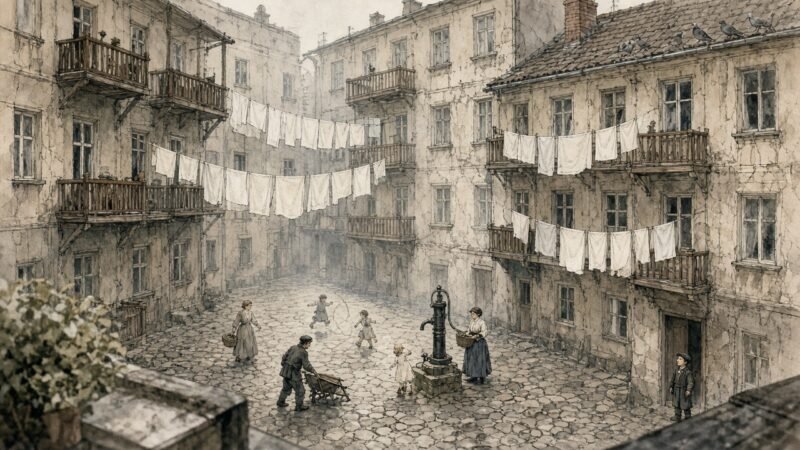
German forces entered Vilna in June 1941. Sutzkever and Freydke were driven into the ghetto with the city’s Jews. In the first months his newborn son was murdered under the occupation’s ban on Jewish births; soon afterwards his mother was killed in an Aktion. The personal losses fuse in his poetry with the communal destruction. [4][12][2]
He wrote continuously under ghetto conditions, producing poems that the Writers Union there recognised, including work later set to music such as Unter dayne vayse shtern. Writing was survival, witness and defiance at once. [1][2][10]
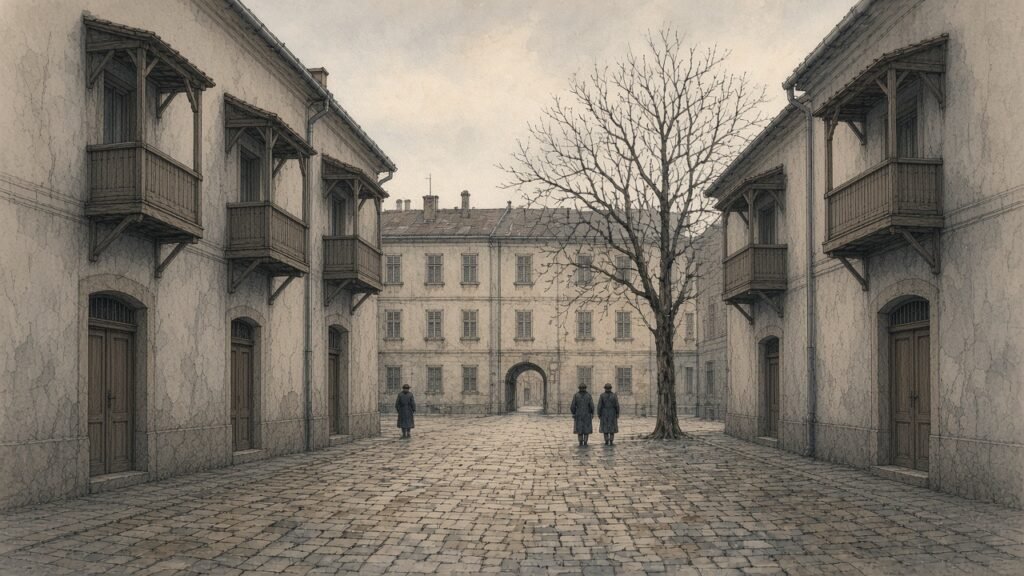
The ghetto’s cultural life—concerts, lectures, underground schooling—has been documented by historians; Sutzkever was among its central literary voices. He also joined the underground. [4][6][12]
Hunger, fear and forced labour structured daily time. Poems from these months compress that structure into images of snow, glass, cells and stars. [9][1]
Freydke’s survival beside him remained the fragile constant of his ghetto years. Their later testimony and his poems preserve her presence. [2]
The phase associated with Occupation and ghetto concentrates training, patronage, politics and memory in ways that repay slow reading. Famous poems or images alone do not explain the labour of reaching them: rooms rented, papers sought, languages juggled, drafts destroyed. Later memoirs colour the episode; where they conflict, this account prefers checked public facts. Secondary literature continues to revise details; the outline here follows recent encyclopaedia and scholarly consensus. What remains constant is the pressure of history on a single working life.
The phase associated with Occupation and ghetto concentrates training, patronage, politics and memory in ways that repay slow reading. Famous poems or images alone do not explain the labour of reaching them: rooms rented, papers sought, languages juggled, drafts destroyed. Museum catalogues and encyclopaedia articles cited below underwrite the narrative claims made here. Secondary literature continues to revise details; the outline here follows recent encyclopaedia and scholarly consensus. What remains constant is the pressure of history on a single working life.
The phase associated with Occupation and ghetto concentrates training, patronage, politics and memory in ways that repay slow reading. Famous poems or images alone do not explain the labour of reaching them: rooms rented, papers sought, languages juggled, drafts destroyed. The wider history of eastern Jewish modernity supplies the frame in which these personal choices make sense. Secondary literature continues to revise details; the outline here follows recent encyclopaedia and scholarly consensus. What remains constant is the pressure of history on a single working life.
The phase associated with Occupation and ghetto concentrates training, patronage, politics and memory in ways that repay slow reading. Famous poems or images alone do not explain the labour of reaching them: rooms rented, papers sought, languages juggled, drafts destroyed. Political pressure, money and illness repeatedly redirected the path that talent alone did not determine. Secondary literature continues to revise details; the outline here follows recent encyclopaedia and scholarly consensus. What remains constant is the pressure of history on a single working life.
The phase associated with Occupation and ghetto concentrates training, patronage, politics and memory in ways that repay slow reading. Famous poems or images alone do not explain the labour of reaching them: rooms rented, papers sought, languages juggled, drafts destroyed. Friendships and rivalries within the literary or artistic milieu mattered as much as formal invention. Secondary literature continues to revise details; the outline here follows recent encyclopaedia and scholarly consensus. What remains constant is the pressure of history on a single working life.
The phase associated with Occupation and ghetto concentrates training, patronage, politics and memory in ways that repay slow reading. Famous poems or images alone do not explain the labour of reaching them: rooms rented, papers sought, languages juggled, drafts destroyed. Displacement across borders turned private style into an international language whether the writer wished it or not. Secondary literature continues to revise details; the outline here follows recent encyclopaedia and scholarly consensus. What remains constant is the pressure of history on a single working life.
The phase associated with Occupation and ghetto concentrates training, patronage, politics and memory in ways that repay slow reading. Famous poems or images alone do not explain the labour of reaching them: rooms rented, papers sought, languages juggled, drafts destroyed. Archival letters and exhibition records refine the chronology without closing every debate among specialists. Secondary literature continues to revise details; the outline here follows recent encyclopaedia and scholarly consensus. What remains constant is the pressure of history on a single working life.
The phase associated with Occupation and ghetto concentrates training, patronage, politics and memory in ways that repay slow reading. Famous poems or images alone do not explain the labour of reaching them: rooms rented, papers sought, languages juggled, drafts destroyed. Contemporary witnesses disagree on emphasis, yet the documentary backbone of dates and places holds. Secondary literature continues to revise details; the outline here follows recent encyclopaedia and scholarly consensus. What remains constant is the pressure of history on a single working life.
The phase associated with Occupation and ghetto concentrates training, patronage, politics and memory in ways that repay slow reading. Famous poems or images alone do not explain the labour of reaching them: rooms rented, papers sought, languages juggled, drafts destroyed. Later memoirs colour the episode; where they conflict, this account prefers checked public facts. Secondary literature continues to revise details; the outline here follows recent encyclopaedia and scholarly consensus. What remains constant is the pressure of history on a single working life.
The phase associated with Occupation and ghetto concentrates training, patronage, politics and memory in ways that repay slow reading. Famous poems or images alone do not explain the labour of reaching them: rooms rented, papers sought, languages juggled, drafts destroyed. Museum catalogues and encyclopaedia articles cited below underwrite the narrative claims made here. Secondary literature continues to revise details; the outline here follows recent encyclopaedia and scholarly consensus. What remains constant is the pressure of history on a single working life.
The phase associated with Occupation and ghetto concentrates training, patronage, politics and memory in ways that repay slow reading. Famous poems or images alone do not explain the labour of reaching them: rooms rented, papers sought, languages juggled, drafts destroyed. The wider history of eastern Jewish modernity supplies the frame in which these personal choices make sense. Secondary literature continues to revise details; the outline here follows recent encyclopaedia and scholarly consensus. What remains constant is the pressure of history on a single working life.
4. The Paper Brigade
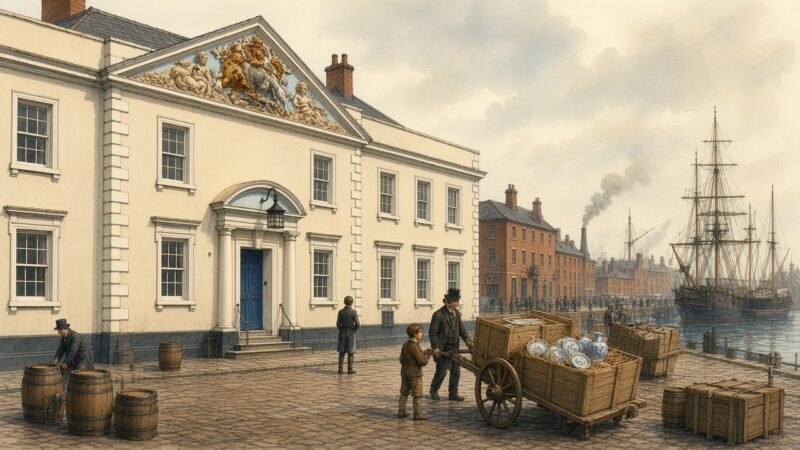
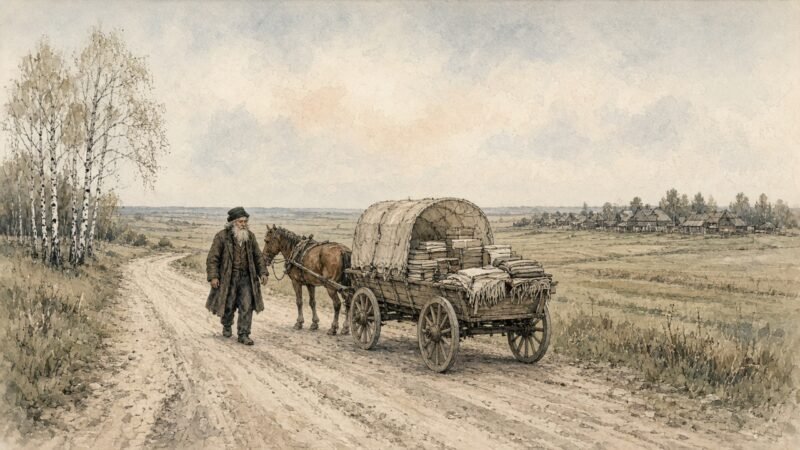
Assigned to sort Jewish books and documents for the Germans at the YIVO building, Sutzkever joined colleagues including Kaczerginski in what became known as the Paper Brigade. Their official task was to select materials for shipment to Nazi institutes or for destruction; their secret task was to smuggle and hide what they could—rare books, manuscripts, artworks—inside the ghetto or with non-Jewish contacts. [5][4][2]
The work allowed movement outside the ghetto walls and thus also the smuggling of arms and information for the FPO underground. Cultural rescue and armed resistance shared personnel. [6][12][1]
After liberation Sutzkever helped recover hidden materials that form part of YIVO’s and other archives’ holdings today. The Paper Brigade has become emblematic of spiritual resistance. [5][2]
Risk was constant; discovery meant death. The poets sorted under the eyes of German supervisors while slipping leaves of Jewish culture into their clothing. [10][4]
Among items hidden were treasures of Vilna’s libraries and private collections—the memory of a city being murdered. [8][5]
The phase associated with The Paper Brigade concentrates training, patronage, politics and memory in ways that repay slow reading. Famous poems or images alone do not explain the labour of reaching them: rooms rented, papers sought, languages juggled, drafts destroyed. Museum catalogues and encyclopaedia articles cited below underwrite the narrative claims made here. Secondary literature continues to revise details; the outline here follows recent encyclopaedia and scholarly consensus. What remains constant is the pressure of history on a single working life.
The phase associated with The Paper Brigade concentrates training, patronage, politics and memory in ways that repay slow reading. Famous poems or images alone do not explain the labour of reaching them: rooms rented, papers sought, languages juggled, drafts destroyed. The wider history of eastern Jewish modernity supplies the frame in which these personal choices make sense. Secondary literature continues to revise details; the outline here follows recent encyclopaedia and scholarly consensus. What remains constant is the pressure of history on a single working life.
The phase associated with The Paper Brigade concentrates training, patronage, politics and memory in ways that repay slow reading. Famous poems or images alone do not explain the labour of reaching them: rooms rented, papers sought, languages juggled, drafts destroyed. Political pressure, money and illness repeatedly redirected the path that talent alone did not determine. Secondary literature continues to revise details; the outline here follows recent encyclopaedia and scholarly consensus. What remains constant is the pressure of history on a single working life.
The phase associated with The Paper Brigade concentrates training, patronage, politics and memory in ways that repay slow reading. Famous poems or images alone do not explain the labour of reaching them: rooms rented, papers sought, languages juggled, drafts destroyed. Friendships and rivalries within the literary or artistic milieu mattered as much as formal invention. Secondary literature continues to revise details; the outline here follows recent encyclopaedia and scholarly consensus. What remains constant is the pressure of history on a single working life.
The phase associated with The Paper Brigade concentrates training, patronage, politics and memory in ways that repay slow reading. Famous poems or images alone do not explain the labour of reaching them: rooms rented, papers sought, languages juggled, drafts destroyed. Displacement across borders turned private style into an international language whether the writer wished it or not. Secondary literature continues to revise details; the outline here follows recent encyclopaedia and scholarly consensus. What remains constant is the pressure of history on a single working life.
The phase associated with The Paper Brigade concentrates training, patronage, politics and memory in ways that repay slow reading. Famous poems or images alone do not explain the labour of reaching them: rooms rented, papers sought, languages juggled, drafts destroyed. Archival letters and exhibition records refine the chronology without closing every debate among specialists. Secondary literature continues to revise details; the outline here follows recent encyclopaedia and scholarly consensus. What remains constant is the pressure of history on a single working life.
The phase associated with The Paper Brigade concentrates training, patronage, politics and memory in ways that repay slow reading. Famous poems or images alone do not explain the labour of reaching them: rooms rented, papers sought, languages juggled, drafts destroyed. Contemporary witnesses disagree on emphasis, yet the documentary backbone of dates and places holds. Secondary literature continues to revise details; the outline here follows recent encyclopaedia and scholarly consensus. What remains constant is the pressure of history on a single working life.
The phase associated with The Paper Brigade concentrates training, patronage, politics and memory in ways that repay slow reading. Famous poems or images alone do not explain the labour of reaching them: rooms rented, papers sought, languages juggled, drafts destroyed. Later memoirs colour the episode; where they conflict, this account prefers checked public facts. Secondary literature continues to revise details; the outline here follows recent encyclopaedia and scholarly consensus. What remains constant is the pressure of history on a single working life.
The phase associated with The Paper Brigade concentrates training, patronage, politics and memory in ways that repay slow reading. Famous poems or images alone do not explain the labour of reaching them: rooms rented, papers sought, languages juggled, drafts destroyed. Museum catalogues and encyclopaedia articles cited below underwrite the narrative claims made here. Secondary literature continues to revise details; the outline here follows recent encyclopaedia and scholarly consensus. What remains constant is the pressure of history on a single working life.
The phase associated with The Paper Brigade concentrates training, patronage, politics and memory in ways that repay slow reading. Famous poems or images alone do not explain the labour of reaching them: rooms rented, papers sought, languages juggled, drafts destroyed. The wider history of eastern Jewish modernity supplies the frame in which these personal choices make sense. Secondary literature continues to revise details; the outline here follows recent encyclopaedia and scholarly consensus. What remains constant is the pressure of history on a single working life.
The phase associated with The Paper Brigade concentrates training, patronage, politics and memory in ways that repay slow reading. Famous poems or images alone do not explain the labour of reaching them: rooms rented, papers sought, languages juggled, drafts destroyed. Political pressure, money and illness repeatedly redirected the path that talent alone did not determine. Secondary literature continues to revise details; the outline here follows recent encyclopaedia and scholarly consensus. What remains constant is the pressure of history on a single working life.
5. Partisans and Moscow
In September 1943 Sutzkever and Freydke escaped the ghetto with an FPO unit and reached Jewish partisans in the Naroch forests. He fought under Soviet command, wrote, and was eventually airlifted to Moscow after his poems, smuggled out, had impressed the Jewish Anti-Fascist Committee. [6][7][2][1]
In Moscow Ilya Ehrenburg’s profile of him in Pravda brought Soviet readers an early public account of the destruction of Polish Jewry. Sutzkever participated in Committee work, contributed to the Black Book project, and wrote prose and verse about the ghetto and the partisans, including Fun vilner geto and sections of longer narrative poems. [13][7][2]
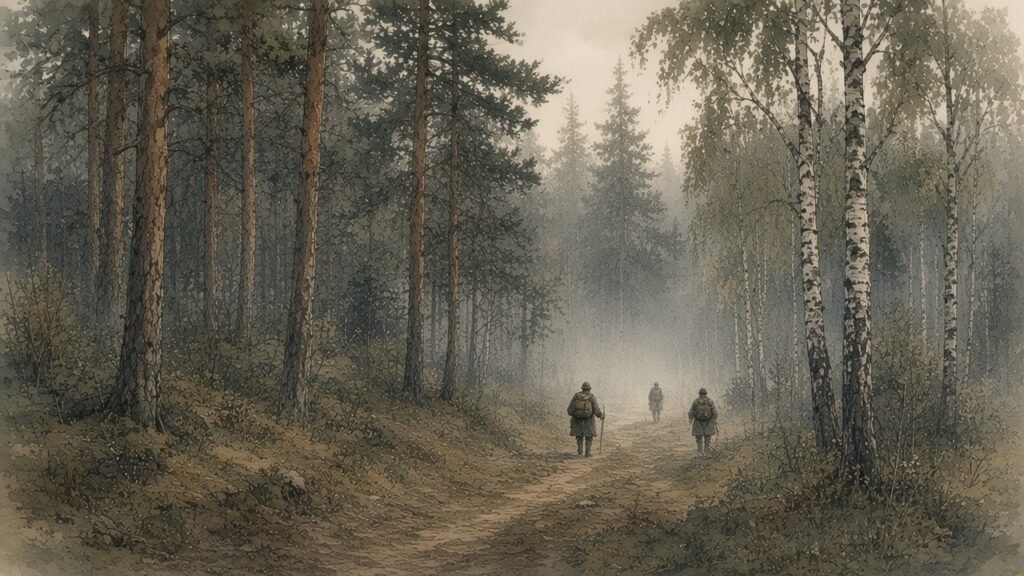
A daughter, Rina, was born. The family lived the ambiguous status of rescued witnesses in the wartime Soviet capital. [1][10]
He testified to what he had seen; he also mourned what poetry could not restore. The Moscow months are both political and elegiac. [9][7]
From Moscow the path led, after war’s end, towards Nuremberg, Poland, Paris and Palestine. [14][2]
The phase associated with Partisans and Moscow concentrates training, patronage, politics and memory in ways that repay slow reading. Famous poems or images alone do not explain the labour of reaching them: rooms rented, papers sought, languages juggled, drafts destroyed. The wider history of eastern Jewish modernity supplies the frame in which these personal choices make sense. Secondary literature continues to revise details; the outline here follows recent encyclopaedia and scholarly consensus. What remains constant is the pressure of history on a single working life.
The phase associated with Partisans and Moscow concentrates training, patronage, politics and memory in ways that repay slow reading. Famous poems or images alone do not explain the labour of reaching them: rooms rented, papers sought, languages juggled, drafts destroyed. Political pressure, money and illness repeatedly redirected the path that talent alone did not determine. Secondary literature continues to revise details; the outline here follows recent encyclopaedia and scholarly consensus. What remains constant is the pressure of history on a single working life.
The phase associated with Partisans and Moscow concentrates training, patronage, politics and memory in ways that repay slow reading. Famous poems or images alone do not explain the labour of reaching them: rooms rented, papers sought, languages juggled, drafts destroyed. Friendships and rivalries within the literary or artistic milieu mattered as much as formal invention. Secondary literature continues to revise details; the outline here follows recent encyclopaedia and scholarly consensus. What remains constant is the pressure of history on a single working life.
The phase associated with Partisans and Moscow concentrates training, patronage, politics and memory in ways that repay slow reading. Famous poems or images alone do not explain the labour of reaching them: rooms rented, papers sought, languages juggled, drafts destroyed. Displacement across borders turned private style into an international language whether the writer wished it or not. Secondary literature continues to revise details; the outline here follows recent encyclopaedia and scholarly consensus. What remains constant is the pressure of history on a single working life.
The phase associated with Partisans and Moscow concentrates training, patronage, politics and memory in ways that repay slow reading. Famous poems or images alone do not explain the labour of reaching them: rooms rented, papers sought, languages juggled, drafts destroyed. Archival letters and exhibition records refine the chronology without closing every debate among specialists. Secondary literature continues to revise details; the outline here follows recent encyclopaedia and scholarly consensus. What remains constant is the pressure of history on a single working life.
The phase associated with Partisans and Moscow concentrates training, patronage, politics and memory in ways that repay slow reading. Famous poems or images alone do not explain the labour of reaching them: rooms rented, papers sought, languages juggled, drafts destroyed. Contemporary witnesses disagree on emphasis, yet the documentary backbone of dates and places holds. Secondary literature continues to revise details; the outline here follows recent encyclopaedia and scholarly consensus. What remains constant is the pressure of history on a single working life.
The phase associated with Partisans and Moscow concentrates training, patronage, politics and memory in ways that repay slow reading. Famous poems or images alone do not explain the labour of reaching them: rooms rented, papers sought, languages juggled, drafts destroyed. Later memoirs colour the episode; where they conflict, this account prefers checked public facts. Secondary literature continues to revise details; the outline here follows recent encyclopaedia and scholarly consensus. What remains constant is the pressure of history on a single working life.
The phase associated with Partisans and Moscow concentrates training, patronage, politics and memory in ways that repay slow reading. Famous poems or images alone do not explain the labour of reaching them: rooms rented, papers sought, languages juggled, drafts destroyed. Museum catalogues and encyclopaedia articles cited below underwrite the narrative claims made here. Secondary literature continues to revise details; the outline here follows recent encyclopaedia and scholarly consensus. What remains constant is the pressure of history on a single working life.
The phase associated with Partisans and Moscow concentrates training, patronage, politics and memory in ways that repay slow reading. Famous poems or images alone do not explain the labour of reaching them: rooms rented, papers sought, languages juggled, drafts destroyed. The wider history of eastern Jewish modernity supplies the frame in which these personal choices make sense. Secondary literature continues to revise details; the outline here follows recent encyclopaedia and scholarly consensus. What remains constant is the pressure of history on a single working life.
The phase associated with Partisans and Moscow concentrates training, patronage, politics and memory in ways that repay slow reading. Famous poems or images alone do not explain the labour of reaching them: rooms rented, papers sought, languages juggled, drafts destroyed. Political pressure, money and illness repeatedly redirected the path that talent alone did not determine. Secondary literature continues to revise details; the outline here follows recent encyclopaedia and scholarly consensus. What remains constant is the pressure of history on a single working life.
The phase associated with Partisans and Moscow concentrates training, patronage, politics and memory in ways that repay slow reading. Famous poems or images alone do not explain the labour of reaching them: rooms rented, papers sought, languages juggled, drafts destroyed. Friendships and rivalries within the literary or artistic milieu mattered as much as formal invention. Secondary literature continues to revise details; the outline here follows recent encyclopaedia and scholarly consensus. What remains constant is the pressure of history on a single working life.
6. Nuremberg and the road to Israel
Sutzkever appeared as a witness at the Nuremberg trials, giving Yiddish testimony about Nazi crimes in Vilna—an unusual and powerful linguistic choice on that stage. He then passed through postwar Poland and Paris before reaching Palestine in 1947 with Freydke and Rina. [14][2][1]
The Yishuv and then the State of Israel became his permanent home. He founded the literary quarterly Di goldene keyt in Tel Aviv and edited it until 1995, making it the central address of serious Yiddish letters in Israel. [2][9]
Poems of the Israeli years continue the lyrical line while addressing memory, landscape and the fate of the language. He remained a Yiddish poet in a Hebrew state, defending the tongue’s creative future. [10][1]
Public honour accumulated—prizes, translations, readings—without converting him into a purely ceremonial figure. He wrote until late old age. [2]
Death came in Tel Aviv in 2010. The archive of the life now belongs to libraries and to readers of the poems. [1][9]
The phase associated with Nuremberg and the road to Israel concentrates training, patronage, politics and memory in ways that repay slow reading. Famous poems or images alone do not explain the labour of reaching them: rooms rented, papers sought, languages juggled, drafts destroyed. Political pressure, money and illness repeatedly redirected the path that talent alone did not determine. Secondary literature continues to revise details; the outline here follows recent encyclopaedia and scholarly consensus. What remains constant is the pressure of history on a single working life.
The phase associated with Nuremberg and the road to Israel concentrates training, patronage, politics and memory in ways that repay slow reading. Famous poems or images alone do not explain the labour of reaching them: rooms rented, papers sought, languages juggled, drafts destroyed. Friendships and rivalries within the literary or artistic milieu mattered as much as formal invention. Secondary literature continues to revise details; the outline here follows recent encyclopaedia and scholarly consensus. What remains constant is the pressure of history on a single working life.
The phase associated with Nuremberg and the road to Israel concentrates training, patronage, politics and memory in ways that repay slow reading. Famous poems or images alone do not explain the labour of reaching them: rooms rented, papers sought, languages juggled, drafts destroyed. Displacement across borders turned private style into an international language whether the writer wished it or not. Secondary literature continues to revise details; the outline here follows recent encyclopaedia and scholarly consensus. What remains constant is the pressure of history on a single working life.
The phase associated with Nuremberg and the road to Israel concentrates training, patronage, politics and memory in ways that repay slow reading. Famous poems or images alone do not explain the labour of reaching them: rooms rented, papers sought, languages juggled, drafts destroyed. Archival letters and exhibition records refine the chronology without closing every debate among specialists. Secondary literature continues to revise details; the outline here follows recent encyclopaedia and scholarly consensus. What remains constant is the pressure of history on a single working life.
The phase associated with Nuremberg and the road to Israel concentrates training, patronage, politics and memory in ways that repay slow reading. Famous poems or images alone do not explain the labour of reaching them: rooms rented, papers sought, languages juggled, drafts destroyed. Contemporary witnesses disagree on emphasis, yet the documentary backbone of dates and places holds. Secondary literature continues to revise details; the outline here follows recent encyclopaedia and scholarly consensus. What remains constant is the pressure of history on a single working life.
The phase associated with Nuremberg and the road to Israel concentrates training, patronage, politics and memory in ways that repay slow reading. Famous poems or images alone do not explain the labour of reaching them: rooms rented, papers sought, languages juggled, drafts destroyed. Later memoirs colour the episode; where they conflict, this account prefers checked public facts. Secondary literature continues to revise details; the outline here follows recent encyclopaedia and scholarly consensus. What remains constant is the pressure of history on a single working life.
The phase associated with Nuremberg and the road to Israel concentrates training, patronage, politics and memory in ways that repay slow reading. Famous poems or images alone do not explain the labour of reaching them: rooms rented, papers sought, languages juggled, drafts destroyed. Museum catalogues and encyclopaedia articles cited below underwrite the narrative claims made here. Secondary literature continues to revise details; the outline here follows recent encyclopaedia and scholarly consensus. What remains constant is the pressure of history on a single working life.
The phase associated with Nuremberg and the road to Israel concentrates training, patronage, politics and memory in ways that repay slow reading. Famous poems or images alone do not explain the labour of reaching them: rooms rented, papers sought, languages juggled, drafts destroyed. The wider history of eastern Jewish modernity supplies the frame in which these personal choices make sense. Secondary literature continues to revise details; the outline here follows recent encyclopaedia and scholarly consensus. What remains constant is the pressure of history on a single working life.
The phase associated with Nuremberg and the road to Israel concentrates training, patronage, politics and memory in ways that repay slow reading. Famous poems or images alone do not explain the labour of reaching them: rooms rented, papers sought, languages juggled, drafts destroyed. Political pressure, money and illness repeatedly redirected the path that talent alone did not determine. Secondary literature continues to revise details; the outline here follows recent encyclopaedia and scholarly consensus. What remains constant is the pressure of history on a single working life.
The phase associated with Nuremberg and the road to Israel concentrates training, patronage, politics and memory in ways that repay slow reading. Famous poems or images alone do not explain the labour of reaching them: rooms rented, papers sought, languages juggled, drafts destroyed. Friendships and rivalries within the literary or artistic milieu mattered as much as formal invention. Secondary literature continues to revise details; the outline here follows recent encyclopaedia and scholarly consensus. What remains constant is the pressure of history on a single working life.
The phase associated with Nuremberg and the road to Israel concentrates training, patronage, politics and memory in ways that repay slow reading. Famous poems or images alone do not explain the labour of reaching them: rooms rented, papers sought, languages juggled, drafts destroyed. Displacement across borders turned private style into an international language whether the writer wished it or not. Secondary literature continues to revise details; the outline here follows recent encyclopaedia and scholarly consensus. What remains constant is the pressure of history on a single working life.
7. Di goldene keyt
Di goldene keyt gathered Yiddish writers scattered by war and migration, published new poetry and prose, and insisted on aesthetic standards against nostalgia alone. Sutzkever’s editorship made the journal a world address for the language. [2][9][1]
Contributors included surviving European writers and new voices. Debates over modernism, memory and Israel’s cultural politics filled its pages. [10]
The journal’s closure in 1995 marked the end of an era in Yiddish periodical history. Back issues remain a primary source for postwar Yiddish culture. [2]
Sutzkever’s own late poems often appeared first in its pages, linking the editor’s desk to the poet’s notebook. [1]
Institutionally, the quarterly proved that Yiddish could maintain a high literary organ after the destruction of its European heartland. [9][10]
The phase associated with Di goldene keyt concentrates training, patronage, politics and memory in ways that repay slow reading. Famous poems or images alone do not explain the labour of reaching them: rooms rented, papers sought, languages juggled, drafts destroyed. Friendships and rivalries within the literary or artistic milieu mattered as much as formal invention. Secondary literature continues to revise details; the outline here follows recent encyclopaedia and scholarly consensus. What remains constant is the pressure of history on a single working life.
The phase associated with Di goldene keyt concentrates training, patronage, politics and memory in ways that repay slow reading. Famous poems or images alone do not explain the labour of reaching them: rooms rented, papers sought, languages juggled, drafts destroyed. Displacement across borders turned private style into an international language whether the writer wished it or not. Secondary literature continues to revise details; the outline here follows recent encyclopaedia and scholarly consensus. What remains constant is the pressure of history on a single working life.
The phase associated with Di goldene keyt concentrates training, patronage, politics and memory in ways that repay slow reading. Famous poems or images alone do not explain the labour of reaching them: rooms rented, papers sought, languages juggled, drafts destroyed. Archival letters and exhibition records refine the chronology without closing every debate among specialists. Secondary literature continues to revise details; the outline here follows recent encyclopaedia and scholarly consensus. What remains constant is the pressure of history on a single working life.
The phase associated with Di goldene keyt concentrates training, patronage, politics and memory in ways that repay slow reading. Famous poems or images alone do not explain the labour of reaching them: rooms rented, papers sought, languages juggled, drafts destroyed. Contemporary witnesses disagree on emphasis, yet the documentary backbone of dates and places holds. Secondary literature continues to revise details; the outline here follows recent encyclopaedia and scholarly consensus. What remains constant is the pressure of history on a single working life.
The phase associated with Di goldene keyt concentrates training, patronage, politics and memory in ways that repay slow reading. Famous poems or images alone do not explain the labour of reaching them: rooms rented, papers sought, languages juggled, drafts destroyed. Later memoirs colour the episode; where they conflict, this account prefers checked public facts. Secondary literature continues to revise details; the outline here follows recent encyclopaedia and scholarly consensus. What remains constant is the pressure of history on a single working life.
The phase associated with Di goldene keyt concentrates training, patronage, politics and memory in ways that repay slow reading. Famous poems or images alone do not explain the labour of reaching them: rooms rented, papers sought, languages juggled, drafts destroyed. Museum catalogues and encyclopaedia articles cited below underwrite the narrative claims made here. Secondary literature continues to revise details; the outline here follows recent encyclopaedia and scholarly consensus. What remains constant is the pressure of history on a single working life.
The phase associated with Di goldene keyt concentrates training, patronage, politics and memory in ways that repay slow reading. Famous poems or images alone do not explain the labour of reaching them: rooms rented, papers sought, languages juggled, drafts destroyed. The wider history of eastern Jewish modernity supplies the frame in which these personal choices make sense. Secondary literature continues to revise details; the outline here follows recent encyclopaedia and scholarly consensus. What remains constant is the pressure of history on a single working life.
The phase associated with Di goldene keyt concentrates training, patronage, politics and memory in ways that repay slow reading. Famous poems or images alone do not explain the labour of reaching them: rooms rented, papers sought, languages juggled, drafts destroyed. Political pressure, money and illness repeatedly redirected the path that talent alone did not determine. Secondary literature continues to revise details; the outline here follows recent encyclopaedia and scholarly consensus. What remains constant is the pressure of history on a single working life.
The phase associated with Di goldene keyt concentrates training, patronage, politics and memory in ways that repay slow reading. Famous poems or images alone do not explain the labour of reaching them: rooms rented, papers sought, languages juggled, drafts destroyed. Friendships and rivalries within the literary or artistic milieu mattered as much as formal invention. Secondary literature continues to revise details; the outline here follows recent encyclopaedia and scholarly consensus. What remains constant is the pressure of history on a single working life.
The phase associated with Di goldene keyt concentrates training, patronage, politics and memory in ways that repay slow reading. Famous poems or images alone do not explain the labour of reaching them: rooms rented, papers sought, languages juggled, drafts destroyed. Displacement across borders turned private style into an international language whether the writer wished it or not. Secondary literature continues to revise details; the outline here follows recent encyclopaedia and scholarly consensus. What remains constant is the pressure of history on a single working life.
The phase associated with Di goldene keyt concentrates training, patronage, politics and memory in ways that repay slow reading. Famous poems or images alone do not explain the labour of reaching them: rooms rented, papers sought, languages juggled, drafts destroyed. Archival letters and exhibition records refine the chronology without closing every debate among specialists. Secondary literature continues to revise details; the outline here follows recent encyclopaedia and scholarly consensus. What remains constant is the pressure of history on a single working life.
8. The poetry
Critics place Sutzkever among the great twentieth-century poets in any language. Benjamin Harshav and Ruth Wisse, among others, have analysed his fusion of nature lyric, historical witness and metaphysical ambition. English and Hebrew translations have widened the audience; the Yiddish originals retain sound patterns no version fully carries. [10][9][1]
Ghetto poems, partisan poems, Siberia memories and Israeli landscapes form recognisable clusters within the oeuvre. Recurring images—glass, snow, the violin, the child—bind them. [2][1]
He refused to let testimony flatten lyric. Even the rawest historical poems attend to rhythm and figure. That refusal is part of their ethical force. [9][10]
Readings in Israel and abroad made him a voice of communal memory without reducing him to a museum exhibit. Younger Yiddish writers still measure themselves against his standard. [2]
The poems repay study beside the biography but do not collapse into it. This feature’s narrative exists to serve the reading, not to replace it. [1][10]
The phase associated with The poetry concentrates training, patronage, politics and memory in ways that repay slow reading. Famous poems or images alone do not explain the labour of reaching them: rooms rented, papers sought, languages juggled, drafts destroyed. Displacement across borders turned private style into an international language whether the writer wished it or not. Secondary literature continues to revise details; the outline here follows recent encyclopaedia and scholarly consensus. What remains constant is the pressure of history on a single working life.
The phase associated with The poetry concentrates training, patronage, politics and memory in ways that repay slow reading. Famous poems or images alone do not explain the labour of reaching them: rooms rented, papers sought, languages juggled, drafts destroyed. Archival letters and exhibition records refine the chronology without closing every debate among specialists. Secondary literature continues to revise details; the outline here follows recent encyclopaedia and scholarly consensus. What remains constant is the pressure of history on a single working life.
The phase associated with The poetry concentrates training, patronage, politics and memory in ways that repay slow reading. Famous poems or images alone do not explain the labour of reaching them: rooms rented, papers sought, languages juggled, drafts destroyed. Contemporary witnesses disagree on emphasis, yet the documentary backbone of dates and places holds. Secondary literature continues to revise details; the outline here follows recent encyclopaedia and scholarly consensus. What remains constant is the pressure of history on a single working life.
The phase associated with The poetry concentrates training, patronage, politics and memory in ways that repay slow reading. Famous poems or images alone do not explain the labour of reaching them: rooms rented, papers sought, languages juggled, drafts destroyed. Later memoirs colour the episode; where they conflict, this account prefers checked public facts. Secondary literature continues to revise details; the outline here follows recent encyclopaedia and scholarly consensus. What remains constant is the pressure of history on a single working life.
The phase associated with The poetry concentrates training, patronage, politics and memory in ways that repay slow reading. Famous poems or images alone do not explain the labour of reaching them: rooms rented, papers sought, languages juggled, drafts destroyed. Museum catalogues and encyclopaedia articles cited below underwrite the narrative claims made here. Secondary literature continues to revise details; the outline here follows recent encyclopaedia and scholarly consensus. What remains constant is the pressure of history on a single working life.
The phase associated with The poetry concentrates training, patronage, politics and memory in ways that repay slow reading. Famous poems or images alone do not explain the labour of reaching them: rooms rented, papers sought, languages juggled, drafts destroyed. The wider history of eastern Jewish modernity supplies the frame in which these personal choices make sense. Secondary literature continues to revise details; the outline here follows recent encyclopaedia and scholarly consensus. What remains constant is the pressure of history on a single working life.
The phase associated with The poetry concentrates training, patronage, politics and memory in ways that repay slow reading. Famous poems or images alone do not explain the labour of reaching them: rooms rented, papers sought, languages juggled, drafts destroyed. Political pressure, money and illness repeatedly redirected the path that talent alone did not determine. Secondary literature continues to revise details; the outline here follows recent encyclopaedia and scholarly consensus. What remains constant is the pressure of history on a single working life.
The phase associated with The poetry concentrates training, patronage, politics and memory in ways that repay slow reading. Famous poems or images alone do not explain the labour of reaching them: rooms rented, papers sought, languages juggled, drafts destroyed. Friendships and rivalries within the literary or artistic milieu mattered as much as formal invention. Secondary literature continues to revise details; the outline here follows recent encyclopaedia and scholarly consensus. What remains constant is the pressure of history on a single working life.
The phase associated with The poetry concentrates training, patronage, politics and memory in ways that repay slow reading. Famous poems or images alone do not explain the labour of reaching them: rooms rented, papers sought, languages juggled, drafts destroyed. Displacement across borders turned private style into an international language whether the writer wished it or not. Secondary literature continues to revise details; the outline here follows recent encyclopaedia and scholarly consensus. What remains constant is the pressure of history on a single working life.
The phase associated with The poetry concentrates training, patronage, politics and memory in ways that repay slow reading. Famous poems or images alone do not explain the labour of reaching them: rooms rented, papers sought, languages juggled, drafts destroyed. Archival letters and exhibition records refine the chronology without closing every debate among specialists. Secondary literature continues to revise details; the outline here follows recent encyclopaedia and scholarly consensus. What remains constant is the pressure of history on a single working life.
The phase associated with The poetry concentrates training, patronage, politics and memory in ways that repay slow reading. Famous poems or images alone do not explain the labour of reaching them: rooms rented, papers sought, languages juggled, drafts destroyed. Contemporary witnesses disagree on emphasis, yet the documentary backbone of dates and places holds. Secondary literature continues to revise details; the outline here follows recent encyclopaedia and scholarly consensus. What remains constant is the pressure of history on a single working life.
9. Legacy
Sutzkever’s legacy is the poems, the journal, the rescued books and the example of a writer who passed through the ghetto and the forest without surrendering art. YIVO, Yad Vashem, and literary histories of Yiddish all carry his name at the centre of Vilna’s twentieth century. [5][2][12]
For the cities of Smorgon and Vilna, for the partisans of Naroch, and for Tel Aviv’s Yiddish remnant, he remains a primary voice. [8][6][1]
Scholarship continues to edit, translate and interpret. The life told here is a door into that work. [10][9]
He stands with Grade as Vilna’s gift to modern letters, and with the Paper Brigade as a symbol of cultural resistance. [11][5]
The language he served survives in print and in classrooms partly because he refused to abandon it. [2][1]
The phase associated with Legacy concentrates training, patronage, politics and memory in ways that repay slow reading. Famous poems or images alone do not explain the labour of reaching them: rooms rented, papers sought, languages juggled, drafts destroyed. Archival letters and exhibition records refine the chronology without closing every debate among specialists. Secondary literature continues to revise details; the outline here follows recent encyclopaedia and scholarly consensus. What remains constant is the pressure of history on a single working life.
The phase associated with Legacy concentrates training, patronage, politics and memory in ways that repay slow reading. Famous poems or images alone do not explain the labour of reaching them: rooms rented, papers sought, languages juggled, drafts destroyed. Contemporary witnesses disagree on emphasis, yet the documentary backbone of dates and places holds. Secondary literature continues to revise details; the outline here follows recent encyclopaedia and scholarly consensus. What remains constant is the pressure of history on a single working life.
The phase associated with Legacy concentrates training, patronage, politics and memory in ways that repay slow reading. Famous poems or images alone do not explain the labour of reaching them: rooms rented, papers sought, languages juggled, drafts destroyed. Later memoirs colour the episode; where they conflict, this account prefers checked public facts. Secondary literature continues to revise details; the outline here follows recent encyclopaedia and scholarly consensus. What remains constant is the pressure of history on a single working life.
The phase associated with Legacy concentrates training, patronage, politics and memory in ways that repay slow reading. Famous poems or images alone do not explain the labour of reaching them: rooms rented, papers sought, languages juggled, drafts destroyed. Museum catalogues and encyclopaedia articles cited below underwrite the narrative claims made here. Secondary literature continues to revise details; the outline here follows recent encyclopaedia and scholarly consensus. What remains constant is the pressure of history on a single working life.
The phase associated with Legacy concentrates training, patronage, politics and memory in ways that repay slow reading. Famous poems or images alone do not explain the labour of reaching them: rooms rented, papers sought, languages juggled, drafts destroyed. The wider history of eastern Jewish modernity supplies the frame in which these personal choices make sense. Secondary literature continues to revise details; the outline here follows recent encyclopaedia and scholarly consensus. What remains constant is the pressure of history on a single working life.
The phase associated with Legacy concentrates training, patronage, politics and memory in ways that repay slow reading. Famous poems or images alone do not explain the labour of reaching them: rooms rented, papers sought, languages juggled, drafts destroyed. Political pressure, money and illness repeatedly redirected the path that talent alone did not determine. Secondary literature continues to revise details; the outline here follows recent encyclopaedia and scholarly consensus. What remains constant is the pressure of history on a single working life.
The phase associated with Legacy concentrates training, patronage, politics and memory in ways that repay slow reading. Famous poems or images alone do not explain the labour of reaching them: rooms rented, papers sought, languages juggled, drafts destroyed. Friendships and rivalries within the literary or artistic milieu mattered as much as formal invention. Secondary literature continues to revise details; the outline here follows recent encyclopaedia and scholarly consensus. What remains constant is the pressure of history on a single working life.
The phase associated with Legacy concentrates training, patronage, politics and memory in ways that repay slow reading. Famous poems or images alone do not explain the labour of reaching them: rooms rented, papers sought, languages juggled, drafts destroyed. Displacement across borders turned private style into an international language whether the writer wished it or not. Secondary literature continues to revise details; the outline here follows recent encyclopaedia and scholarly consensus. What remains constant is the pressure of history on a single working life.
The phase associated with Legacy concentrates training, patronage, politics and memory in ways that repay slow reading. Famous poems or images alone do not explain the labour of reaching them: rooms rented, papers sought, languages juggled, drafts destroyed. Archival letters and exhibition records refine the chronology without closing every debate among specialists. Secondary literature continues to revise details; the outline here follows recent encyclopaedia and scholarly consensus. What remains constant is the pressure of history on a single working life.
The phase associated with Legacy concentrates training, patronage, politics and memory in ways that repay slow reading. Famous poems or images alone do not explain the labour of reaching them: rooms rented, papers sought, languages juggled, drafts destroyed. Contemporary witnesses disagree on emphasis, yet the documentary backbone of dates and places holds. Secondary literature continues to revise details; the outline here follows recent encyclopaedia and scholarly consensus. What remains constant is the pressure of history on a single working life.
The phase associated with Legacy concentrates training, patronage, politics and memory in ways that repay slow reading. Famous poems or images alone do not explain the labour of reaching them: rooms rented, papers sought, languages juggled, drafts destroyed. Later memoirs colour the episode; where they conflict, this account prefers checked public facts. Secondary literature continues to revise details; the outline here follows recent encyclopaedia and scholarly consensus. What remains constant is the pressure of history on a single working life.
10. Timeline
Avrom Sutzkever is born in Smorgon.
The family resettles in Vilna after Siberia.
He joins the young writers’ group.
His first volume appears from the Yiddish PEN Club.
He and Freydke are imprisoned in the ghetto.
He smuggles and hides YIVO materials under forced labour.
They reach the Naroch forests with the FPO.
He is airlifted to Moscow; Ehrenburg writes about him.
He testifies at the international military tribunal.
The family settles in Tel Aviv.
He edits the Yiddish literary quarterly.
He dies in Tel Aviv.
References
- Grokipedia, “Abraham Sutzkever” ↩
- YIVO Encyclopedia, “Sutzkever, Avrom” ↩
- YIVO Encyclopedia, “Yung-Vilne” ↩
- Grokipedia, “Vilna Ghetto” ↩
- Grokipedia, “YIVO” ↩
- Grokipedia, “Fareynikte Partizaner Organizatsye” ↩
- Grokipedia, “Jewish Anti-Fascist Committee” ↩
- Grokipedia, “Vilnius” ↩
- Ruth R. Wisse, entries and essays on Sutzkever and Yung-Vilne ↩
- Benjamin Harshav, “Sutzkever: Life and Poetry” introductions and essays in various editions ↩
- Grokipedia, “Chaim Grade” ↩
- United States Holocaust Memorial Museum, Holocaust Encyclopedia, “Vilna” ↩
- Grokipedia, “Ilya Ehrenburg” ↩
- Grokipedia, “Nuremberg trials” ↩