Emperor Xiaowen and the Transformation of the Northern Wei Xianbei
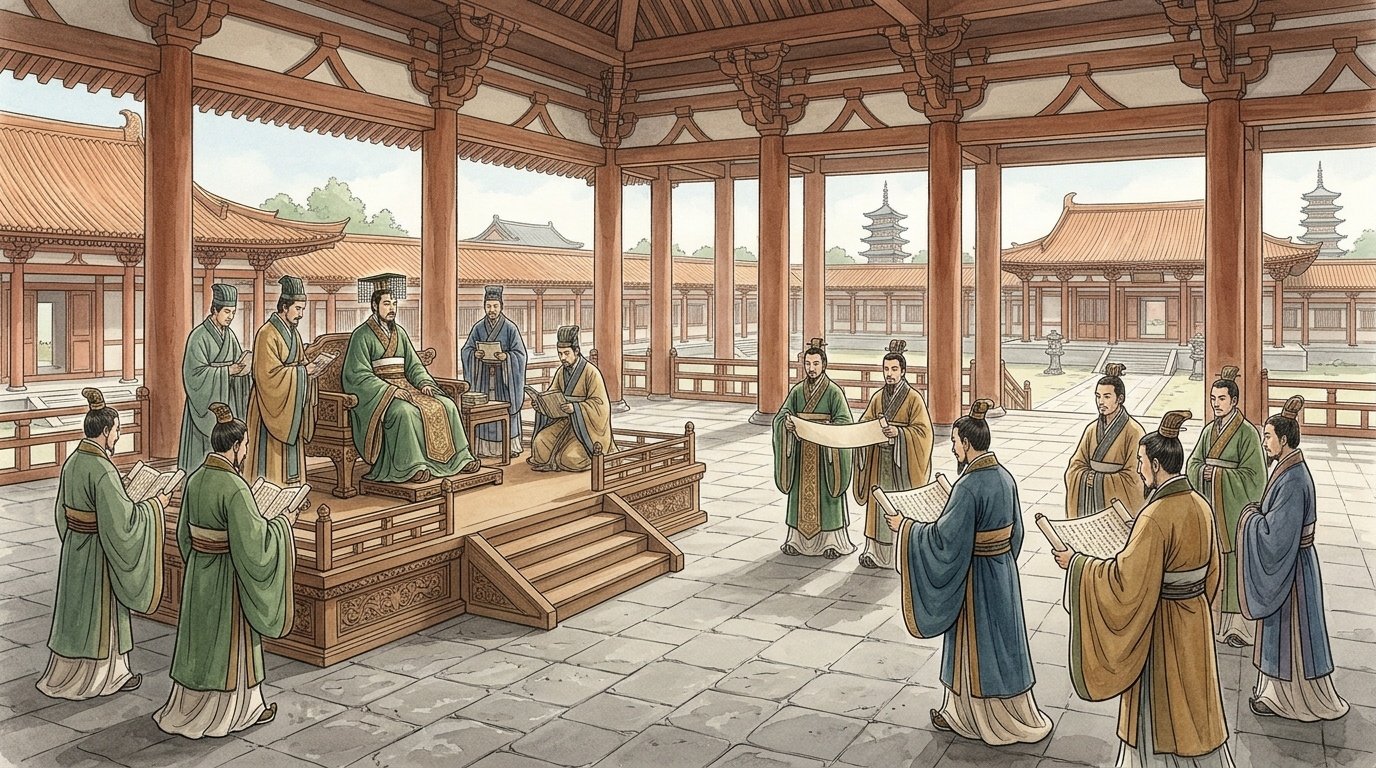
In the late autumn of the seventeenth year of the Taihe era (493 CE), under a relentless, freezing downpour that transformed the roads of Henan into impassable troughs of knee-deep mud, a magnificent imperial host halted outside the ruined, weed-choked ramparts of ancient Luoyang (洛阳). Astride his warhorse at the head of hundreds of thousands of heavily armored Xianbei (鲜卑) cavalrymen stood the twenty-six-year-old monarch of the Northern Wei Dynasty (北魏, 386–534 CE), Emperor Xiaowen (北魏孝文帝, Tuoba Hong 拓跋宏, later Yuan Hong 元宏). For weeks, his nomadic generals and tribal chieftains had believed they were embarking on a grand imperial campaign to conquer the southern Chinese dynasty of Southern Qi (南齐). Drenched to the bone, shivering in their leather saddles, and staring out at the torrential deluge, the exhausted princes and dukes fell to their knees before the young emperor’s steed. Weeping openly, they begged their sovereign to call off the offensive and lead them back to their ancestral northern grassland capital of Pingcheng (平城, modern Datong, Shanxi).
Resting his hand upon his sword hilt, the young emperor gazed down at his kneeling generals with piercing intensity. He delivered an uncompromising ultimatum that would alter the course of East Asian history:
「今者兴动大举,不欲虚退。若不南征,当迁都于此。诸公以为何如?」
— Emperor Xiaowen’s ultimatum to his Xianbei nobility, Wei Shu (魏书), Chapter 7
‘Today we have mobilized this colossal enterprise; I will not suffer us to retreat in vain! If we do not march south to conquer, then we shall immediately relocate the imperial capital to this very ground! What say you, my lords?’
Stunned and desperate to escape the immediate horror of a bloody southern war in the autumn floods, the conservative Xianbei princes bowed their heads to the mud and assented. In that singular stroke of theatrical political coercion, Emperor Xiaowen accomplished the first and most critical step of the most radical cultural, institutional, and social revolution ever attempted by a ruling dynasty in Chinese history: the total, legally mandated transformation of the Xianbei steppe elite into Han Chinese (汉化, Hanhua).
Within a decade of moving the capital to Luoyang, Emperor Xiaowen systematically dismantled the steppe heritage of his own conqueror race. By imperial decree, he outlawed the Xianbei language at court, banned traditional nomadic leather and felt clothing in favor of sweeping Han silk robes, dissolved the ancient multi-syllabic Xianbei clan names into monosyllabic Han surnames—changing his own sacred imperial lineage of Tuoba (拓跋) to Yuan (元)—enforced intermarriage between the Xianbei royal clan and the most prestigious Han aristocratic families, adopted Confucian state rituals, and rebuilt Luoyang as a sprawling classical Chinese metropolis. It was an astonishing historical paradox: a conquering northern horse-riding aristocracy voluntarily decreeing its own cultural extinction in order to claim the sacred, universal Mandate of Heaven.
This comprehensive study examines the ideological origins, institutional mechanics, and tragic internal convulsions of Emperor Xiaowen’s Sinicization program. We will trace the foundational institutional groundwork laid by his adoptive grandmother, Empress Dowager Feng (文明太后冯氏); analyze the strategic deception of the capital relocation from Pingcheng to Luoyang; dissect the specific decrees abolishing steppe language, attire, surnames, and customs; examine the profound institutional innovations of the Equal-Field System (均田制) and Three Leaders System (三长制); investigate the violent conservative backlash that culminated in the execution of his own eldest son, Crown Prince Yuan Xun (元恂); explore the deepening alienation of the Six Frontier Garrisons (六镇) in the northern grasslands; and evaluate the profound historiographical legacy that laid the demographic and administrative foundations for the glorious reunion of China under the Sui and Tang empires.
1. The Xianbei Crucible: From Steppe Nomads to Masters of the North
The Xianbei were a Mongolic- or Para-Mongolic-speaking confederation of pastoral nomads who originated in the Greater Khingan Mountains (大兴安岭) of modern northeastern Inner Mongolia and Heilongjiang. Following the collapse of the Xiongnu empire during the Eastern Han period, various Xianbei branches—including the Murong (慕容), Yuwen (宇文), Duan (段), and Tuoba (拓跋)—migrated southward into the northern steppes and the fringes of the Great Wall. Among these, the Tuoba clan established their center of power in the arid grasslands of northern Shanxi, founding the state of Dai (代国) in the early fourth century.
Following the catastrophic collapse of Fu Jian’s Former Qin at the Battle of Fei River in 383 CE, the sixteen-year-old Tuoba prince Tuoba Gui (拓跋珪, Emperor Daowu of Northern Wei 道武帝, r. 386–409 CE) proclaimed the restoration of his realm, officially renaming it the Great Wei (大魏)—remembered in history as the Northern Wei (北魏). Tuoba Gui was a military visionary who recognized that an empire could be conquered on horseback, but could never be governed from the saddle. In 398 CE, he moved his capital south from the grassland stronghold of Shengle (盛乐) to Pingcheng (平城, modern Datong), adopting Chinese administrative titles, establishing ancestral temples, and forcibly resettling hundreds of thousands of conquered Han, Xianbei, and Di farmers to cultivate grain around the capital.
Over the next four decades, the Northern Wei evolved into an unstoppable military juggernaut. Combining the ferocious shock power of heavily armored Xianbei cavalry with the vast agricultural manpower and engineering techniques of the Han Chinese, Tuoba Gui’s grandson, Emperor Taiwu (拓跋焘, r. 423–452 CE), launched a series of sweeping campaigns across the Central Plains. He crushed the Helian Xia in Shaanxi (431 CE), extinguished the Northern Yan in Liaoning (436 CE), and conquered the Northern Liang in the Hexi Corridor (439 CE). By 439 CE, Emperor Taiwu had accomplished the total political reunification of northern China, bringing to an end the chaotic, bloody century of the Sixteen Kingdoms (十六国).
Yet this unified northern empire was plagued by acute structural duality. Northern Wei was essentially an apartheid empire ruled by a martial Xianbei minority (accounting for less than ten percent of the population) over a vast, disenfranchised Han agrarian majority. The political system rested upon a fragile dual-track administration:
- The Steppe Military Elite: The Eight Great Xianbei Clans (Baxing 八姓: Dugu, Babaling, Bapu, Hegu, Helai, Qiumuling, Buhuliu, and Tuoba) monopolized supreme military commands, controlled aristocratic pasturelands, and viewed Chinese agriculturalists with ethnic contempt.
- The Han Bureaucratic Gentry: Great northern Han clans—such as the Cui of Boling and Qinghe (博陵/清河崔氏), the Lu of Fanyang (范阳卢氏), the Zheng of Xingyang (荥阳郑氏), and the Wang of Taiyuan (太原王氏)—managed civil administration, taxation records, and legal codes, but lived under perpetual terror of arbitrary executions and ethnic pogroms, best exemplified by the horrific purge and massacre of the prominent Han chancellor Cui Hao (崔浩) and his entire extended clan in 450 CE.
2. The Architect in the Shadows: Empress Dowager Feng and the Taihe Institutional Reforms
The true foundational architect of Northern Wei’s modernization was not Emperor Xiaowen himself, but his adoptive grandmother, Empress Dowager Feng (文明太后冯氏, 442–490 CE). An extraordinary woman of Han Chinese descent whose family had originated in the royal house of Northern Yan, Empress Dowager Feng entered the Northern Wei palace as a child following her family’s downfall, eventually rising to become the empress consort of Emperor Wencheng (拓跋濬). Following her husband’s early death in 465 CE, she ruthlessly outmaneuvered and executed predatory Xianbei regents to seize paramount political power.
When Emperor Xiaowen ascended the throne as a five-year-old child in 471 CE, Empress Dowager Feng assumed total regency over the empire, ruling with an iron hand for nearly two decades until her death in 490 CE. A devout Buddhist and deeply learned in the Chinese Confucian classics, she personally supervised the education of the young emperor, steeping him in the Book of Documents, the Analects, and Chinese historical chronicles. Together with brilliant Han advisors such as Li Chong (李冲), Empress Dowager Feng enacted three revolutionary institutional reforms that established the administrative and fiscal engine of late Northern Wei:
- 1. The Official Salary System (班禄制, Banlu Zhi, 484 CE): Prior to 484 CE, Northern Wei officials received no formal salaries; nomadic commanders and civilian governors enriched themselves through arbitrary pillage, extortion, and bribery. Feng established regular, grain-and-silk imperial salaries for all officials, while decreeing that any bureaucrat found guilty of extorting bribes exceeding a single bolt of silk would face public execution. This reform drastically curtailed corruption and professionalized the imperial bureaucracy.
- 2. The Equal-Field System (均田制, Juntian Zhi, 485 CE): In response to the vast swathes of abandoned, uncultivated farmland resulting from two centuries of warfare, the court declared that all land belonged ultimately to the emperor. The state redistributed this land directly to peasant households based upon working capacity: every adult male received 40 mu of open cropland (露田) and 20 mu of mulberry land (桑田); adult females received 20 mu of open land; additional allocations were provided for oxen and slaves. Open land had to be returned to the state upon retirement or death, while mulberry land was hereditary. This groundbreaking agrarian institution tied the peasantry directly to the soil, revived grain yields, eliminated the illegal enclosure of land by powerful local magnates, and created an inexhaustible tax base for the central government.
- 3. The Three Leaders System (三长制, Sanzhang Zhi, 486 CE): Designed by Li Chong to replace the corrupt, decentralized rule of local clan patriarchs (宗主督护制), this system organized the rural populace into a strict hierarchical grid: five households formed a Neighborhood (邻) under a Neighborhood Leader (邻长); five neighborhoods (25 households) formed a Village (里) under a Village Leader (里长); five villages (125 households) formed an Association (党) under an Association Leader (党长). These leaders were directly responsible for taking census records, gathering taxes, and mobilizing labor, successfully wresting hundreds of thousands of hidden tax-evading peasant serfs from the private control of aristocratic clans and placing them directly onto the state rolls.
When Empress Dowager Feng died in the tenth lunar month of 490 CE, Emperor Xiaowen grieved for her with profound Confucian filial piety, fasting for five days and refusing to wear silk robes. Armed with the formidable administrative, agrarian, and fiscal machine she had constructed, the twenty-three-year-old emperor was now fully prepared to launch the second, far more radical phase of his civilizational transformation.
3. The Strategic Coup: Moving the Imperial Capital to Luoyang
To Emperor Xiaowen, the greatest physical obstacle to his civilizational vision was the geographical location of the imperial capital itself: Pingcheng (Datong). Nestled against the northern steppe borderlands, Pingcheng had been ideal for early nomadic raiders, but as the capital of a great agrarian empire, it was an unmitigated disaster. The climate was bitterly cold, the surrounding land was arid and rocky, incapable of growing sufficient grain to feed the ballooning population of over a million officials, monks, and soldiers. Every winter, the capital faced the threat of famine, requiring the perilous transportation of grain over hundreds of miles of mountain passes from Henan. More critically, Pingcheng was culturally and psychologically toxic to reform. It was the entrenched citadel of the conservative Xianbei tribal nobility, who lived in segregated military compounds, spoke only the Xianbei tongue, and resisted any dilution of their steppe privileges.
Emperor Xiaowen set his heart upon Luoyang (洛阳)—the sacred ancestral capital of the Eastern Zhou, Eastern Han, and Western Jin dynasties. Located in the fertile heart of the Central Plains along the Luo and Yi rivers, Luoyang was the geographical, historical, and spiritual epicenter of classical Chinese civilization. To rule from Luoyang was to possess the unquestioned Mandate of Heaven; it was to cease being a northern barbarian occupation force and become the legitimate Son of Heaven of the entire Chinese world.
However, Xiaowen knew that if he openly proposed moving the capital to Luoyang, the conservative Xianbei aristocracy would erupt into armed rebellion. He therefore devised a brilliant masterpiece of political deception. In 493 CE, he announced a massive, universal imperial campaign to invade and conquer the Southern Qi dynasty. Over thirty thousand Xianbei cavalry and hundreds of thousands of infantry were mobilized. The court and the tribal chieftains opposed the war, but Xiaowen invoked absolute imperial martial authority, decreeing death to anyone who questioned the expedition.
The emperor deliberately scheduled the march during the late autumn rainy season. As the colossal host reached the ruins of Luoyang, torrential rains flooded the riverbanks, drowning pack animals and soaking the soldiers. When Xiaowen mounted his horse and ordered the army to continue marching southward into the teeth of the monsoon, the Xianbei princes broke down, kneeling in the mud and begging to halt. It was at this precise moment that Xiaowen offered his calculated compromise: if they would not march south to conquer, they must establish their permanent home here at Luoyang. Caught between the horror of a suicidal southern campaign and the relocation of the capital, the nobility reluctantly chose Luoyang.
Over the next five years, Emperor Xiaowen mobilized hundreds of thousands of artisans, stone carvers, and laborers to resurrect Luoyang from its ashes. Designed by the master architect Li Chong, the new capital was an architectural wonder built on a monumental grid. It was enclosed by triple-tiered outer walls stretching over twenty kilometers in circumference, centered upon the magnificent Taiji Hall (太极殿), and bisected by the broad imperial avenue of Tongtuo Street (铜驼街). Over one thousand Buddhist monasteries, including the colossal Yongning Temple (永宁寺) with its soaring nine-story wooden pagoda, and the sublime rock-carved Buddhist grottos of Longmen (龙门石窟), transformed Luoyang into the most glittering cosmopolitan and religious metropolis in fifth-century Asia.
4. The Sinicization Edicts: Eradicating the Steppe Identity by Law
With the court firmly installed in Luoyang, Emperor Xiaowen unleashed a breathtaking torrent of radical imperial edicts designed to legally and culturally extinguish Xianbei identity within a single generation. This was not a gradual process of natural cultural assimilation; it was an aggressive, state-mandated social engineering project enforced through severe criminal penalties.
The core elements of Emperor Xiaowen’s Sinicization program were codified across four major areas:
| Reform Domain | Traditional Xianbei Custom / Steppe Practice | Mandated Han Chinese Practice | Enforcement Mechanism & Legal Penalty |
|---|---|---|---|
| Surnames (改汉姓) | Multi-syllabic tribal names (Tuoba, Dugu, Babaling, Qiumuling) | Single-character classical Han surnames (Tuoba → Yuan 元, Dugu → Liu 刘, Babaling → Fu 富) | Permanent alteration of imperial genealogy; removal from official aristocratic registers upon refusal |
| Court Language (断北语) | Xianbei steppe language (Para-Mongolic/Turkic dialect) | The ‘Orthodox Speech of the Central Plains’ (正音, classical Luoyang dialect) | Officials under 30 speaking Xianbei at court were instantly stripped of rank and dismissed from office |
| Ceremonial Dress (禁胡服) | Tight-sleeved tunic robes, trousers, felt boots, braided queues (辫发) | Sweeping silk gowns with broad sleeves, Confucian high caps, and cloth sashes (汉服衣冠) | Strictly enforced at all court functions and administrative bureaus; confiscation of garments |
| Aristocratic Intermarriage (通婚姻) | Endogamous steppe marriage alliances within Xianbei clans | Mandatory cross-ethnic marriages with the top four Han aristocratic families (Cui, Lu, Zheng, Wang) | Emperor personally arranged matches for his brothers; daughters of Han elites inducted into palace as imperial consorts |
In 495 CE, Emperor Xiaowen issued his famous edict banning the Xianbei language at court, declaring in the Book of Wei:
「今欲断诸北语,一从正音。其年三十以上,习性已久,容不可卒草;三十以下,见在朝廷之人,语音不听仍旧。若有故为,当加降黜!」
— Emperor Xiaowen’s Language Edict, Wei Shu, Chapter 19
‘Now it is my desire to cut off all Northern speech, making all strictly conform to the Orthodox Speech. As for those above thirty years of age, whose habits are long ingrained, we may tolerate their inability to transform instantly; but for those under thirty years of age who serve at court, their speech shall not be permitted to remain of old. If any intentionally violate this, they shall suffer demotion and dismissal!’
Next came the revolutionary edict on surnames in 496 CE. Emperor Xiaowen argued that the ancestors of the Tuoba lineage were descended from the Yellow Emperor (黄帝), who ruled by the virtue of Earth (土). In the philosophical system of the Five Elements, Earth is represented by the color yellow and occupies the center, whereas Heaven (天) is symbolized by the First or the Head (元). Therefore, Xiaowen decreed that the imperial house of Tuoba should abandon their steppe name and take the prestigious Han surname Yuan (元), meaning ‘The Origin’ or ‘The Supreme’. One hundred and eighteen major Xianbei noble clans were systematically assigned corresponding Han surnames based upon phonetics, meaning, or ancestral fiefdoms.
Furthermore, Xiaowen instituted the revolutionary policy of cross-ethnic aristocratic intermarriage. The emperor personally married five daughters from the premier northern Han aristocratic lineages—the Cui, Lu, Zheng, and Wang families—elevating them to imperial consorts. He commanded his six imperial brothers to take Han aristocratic maidens as their primary wives, while arranging marriages between his imperial sisters and the sons of prominent Han statesmen. Through these matrimonial bonds, Xiaowen sought to irrevocably fuse the bloodlines of the Xianbei conquerors and the Han cultural elite, forging an indissoluble, hybrid ruling class.
5. The Blood Sacrifice: The Tragedy of Crown Prince Yuan Xun
Emperor Xiaowen’s relentless drive to erase steppe traditions provoked immense trauma, bitterness, and resistance within the Xianbei elite. The older generation of nomadic warriors felt alienated, emasculated, and humiliated by being forced to discard their ancestral weapons, braid-cut hair, and native language in order to stumble around the hot, humid palaces of Luoyang dressed in awkward, flowing Han silk gowns. The epicenter of this conservative tribal resistance coalesced around the emperor’s own eldest son and designated heir: Crown Prince Yuan Xun (元恂, 483–497 CE).
Yuan Xun was a physically massive, heavyset youth of thirteen who despised everything about Luoyang and Chinese high culture. He found the sweltering climate of the Central Plains intolerable, suffocated inside Chinese robes, and longed passionately for the cool breezes, roasted mutton, and open horseback riding of the northern steppes at Pingcheng. Encouraged by conservative Xianbei advisors and palace eunuchs who hated the emperor’s reforms, the crown prince openly defied his father’s decrees. He refused to speak Chinese, secretly wore Xianbei leather tunics in his private quarters, and plotted to escape back to Pingcheng.
In the eighth lunar month of 496 CE, while Emperor Xiaowen was away from Luoyang inspecting the defense works at Mount Song, Yuan Xun set his conspiracy into motion. Orchestrating a palace coup, the crown prince and his confederates broke into the imperial stables, seized hundreds of royal warhorses, and prepared to lead a mass exodus of conservative Xianbei nobles northward back to Pingcheng. When the Han minister Gao Lu discovered the plot and attempted to block the palace gates, Yuan Xun personally stabbed him with a sword.
The plot was betrayed and suppressed before the conspirators could clear the city gates. When Emperor Xiaowen returned to Luoyang and uncovered the full magnitude of his son’s betrayal, his grief and fury were boundless. To Xiaowen, Yuan Xun was not merely an insubordinate son; he was an existential threat to the survival of the reformed empire. If the crown prince succeeded to the throne, every reform Xiaowen had fought to enact would be dismantled, plunging the empire back into ethnic apartheid and division.
Xiaowen convened an extraordinary court tribunal. Sitting upon the dragon throne, the emperor ordered his rebellious son dragged before the dais. Weeping openly, Xiaowen took a wooden staff and personally administered over a hundred lashes to the prince’s back, alongside his brother Yuan Xi. Xiaowen then issued an imperial edict stripping Yuan Xun of his title as Crown Prince, reducing him to commoner status, and exiling him under heavy guard to a remote prison fortress in Heyang (河阳). A year later, in 497 CE, when reports arrived that conservative nobles in the north were still plotting to rescue Yuan Xun and proclaim him rival emperor, Xiaowen made the agonizing, ultimate sacrifice of a Confucian monarch: he dispatched an imperial commissioner carrying a vessel of poisoned wine, ordering his own fourteen-year-old son to commit suicide.
「大义灭亲,古之常道。恂狂慝悖理,逆谋滔天,非特子道之亏,实乃宗社之雠!若存其命,魏祚何安!」
— Emperor Xiaowen’s decree sentencing Yuan Xun, Wei Shu, Chapter 22
‘To eliminate one’s own kin for the Great Righteousness is the enduring principle of antiquity! Xun was mad, evil, and rebellious against reason; his treasonous plots reached to the heavens. This was not merely a defect in filial duty, but an existential threat to the Altars of Soil and Grain! If his life were spared, how could the Wei Dynasty ever find peace!’
By executing his own eldest son, Emperor Xiaowen demonstrated to the entire empire that his commitment to Sinicization was absolute, ruthless, and non-negotiable. Not even imperial flesh and blood would be permitted to derail the historical destiny of the state.
6. The Six Frontier Garrisons: The Ticking Demographic Time-Bomb
While Emperor Xiaowen successfully crushed aristocratic defiance in Luoyang, his reforms inadvertently planted the seeds of a catastrophic geopolitical time-bomb along the northern borders. In the early decades of the Northern Wei, the most prestigious, respected, and lavishly rewarded posting in the entire empire was service in the Six Frontier Garrisons (六镇, Liu Zhen): Woye, Huaishuo, Wuchuan, Fuming, Rousong, and Huaihuang. Located in a formidable defensive arc across the northern rim of modern Inner Mongolia, these fortified military garrisons defended the empire against the savage raids of the Rouran Khaganate (柔然, the proto-Mongol steppe empire).
During the Pingcheng era, garrison commanders and soldiers were drawn from the most aristocratic, elite Xianbei lineages. They enjoyed tax exemptions, abundant pasturelands, direct imperial subsidies, and swift promotions into the highest ministerial offices of the central government. To be a warrior of the Six Garrisons was the supreme badge of honor in Northern Wei society.
However, when Emperor Xiaowen relocated the imperial capital hundreds of miles south to Luoyang, the strategic center of gravity shifted completely. Luoyang became the glittering hub of political power, aristocratic marriages, literary prestige, and immense commercial wealth. The imperial court quickly forgot the warriors shivering on the freezing northern frontiers. Within a single generation, the status of the Six Garrisons experienced a catastrophic, humiliating collapse:
- Loss of Social and Political Prestige: Service in the northern garrisons ceased to be a pathway to court power. Instead, the northern garrisons were increasingly used as penal colonies where convicted criminals, mutinous slaves, and disgraced political prisoners from Luoyang were exiled to perform forced military labor.
- Economic Starvation and Corruption: Grain subsidies and military supplies sent from the south were embezzled by corrupt, decadent garrison commanders who lived luxuriously while common soldiers starved in their barracks.
- Cultural Alienation and Disenfranchisement: While the Xianbei nobles in Luoyang adopted Han speech, compiled Chinese genealogies, and composed classical poetry, the warriors of the Six Garrisons remained uneducated, illiterate, and fiercely attached to their traditional steppe culture. Under the new bureaucratic laws codified in Luoyang, these non-literate warriors were permanently barred from holding civil administrative posts or entering high ministerial office.
A deep, festering hatred developed between the impoverished, battle-hardened frontier warriors of the Six Garrisons and the effete, silk-wearing, sinicized Xianbei aristocrats who caroused in the luxury mansions of Luoyang. Less than a quarter-century after Emperor Xiaowen’s death, this catastrophic social fissure would detonate in the apocalyptic Six Garrisons Rebellion (六镇之乱, 523–528 CE), tearing the Northern Wei Empire into bloody fragments.
7. The Early Demise of an Emperor: The Tragic Southern Expeditions
Obsessed with proving his legitimacy as the sole Son of Heaven, Emperor Xiaowen was not content merely with cultural reform; he sought military glory through the conquest of southern China. Between 494 and 499 CE, Xiaowen personally led three massive military expeditions against the Southern Qi dynasty along the Huai River basin, besieging fortresses such as Wancheng and Yiyang.
However, like northern emperors before him, Xiaowen found the climate, geography, and naval power of the south an insurmountable obstacle. The northern cavalry floundered in the flooded rice paddies and swamps of the Huai valley; dysentery and malaria ravaged his troops; and the southern defenders fought with desperate tenacity from behind stone walls and river gunwales. Furthermore, while the emperor was campaigning on the southern front, scandalous reports reached his headquarters that his empress, Feng Run (冯润, Empress You 幽皇后), was engaging in flagrant, incestuous adultery inside the Luoyang palace with the palace attendant Gao Busa, while terrorizing the imperial princesses.
Exhausted by years of non-stop military campaigning, heartbroken by the betrayal of his empress, and suffering from severe pulmonary illness and chronic fever, Emperor Xiaowen’s health collapsed during his final southern campaign in the spring of 499 CE. Stricken with terminal illness in his military pavilion at Guyang (谷阳), the thirty-two-year-old emperor drafted his final imperial testament. In his final hours, he ordered that Empress Feng be forced to commit suicide to prevent her from seizing power as a catastrophic dowager regent, but commanded that she be buried with full imperial honors as an empress. On the third day of the fourth lunar month of 493 CE (May 499 CE), Emperor Xiaowen breathed his last in the rear of an imperial carriage at the age of thirty-two, his life cut tragically short at the absolute pinnacle of his civilizational ambition.
8. The Great Implosion: The Six Garrisons Rebellion and the Massacre of Heyin
The tragedy of Emperor Xiaowen’s reforms unfolded with horrific, predictable inevitability in the decades following his death. His successor, Emperor Xuanwu (宣武帝, Yuan Ke 元恪), continued to patronize Buddhism and Chinese scholarship, but lacked his father’s iron administrative discipline. When Xuanwu died in 515 CE, the throne passed to the six-year-old Emperor Xiaoming (孝明帝), while paramount power fell into the hands of the young emperor’s mother, the corrupt and hedonistic Empress Dowager Hu (灵太后胡氏).
In 523 CE, the simmering fury of the northern frontier finally exploded. Starving warriors in the Huaihuang Garrison murdered their garrison commander, detonating the Six Garrisons Rebellion (六镇之乱). The revolt spread like wildfire across the northern grasslands. Chieftains such as Poliuhan Baling led hundreds of thousands of rebel cavalry in a savage, scorched-earth war against the imperial government. Although the court eventually suppressed the initial uprisings with the aid of the Rouran Khaganate, the northern military machine was shattered, and hundreds of thousands of displaced, impoverished frontier soldiers were forcibly resettled into Hebei, where they promptly revolted anew.
The crisis culminated in 528 CE when a ruthless frontier warlord of Xiongnu-Xianbei descent, Erzhu Rong (尔朱荣), marched his battle-hardened cavalry from Shanxi upon the decadent capital of Luoyang. Claiming to avenge the young Emperor Xiaoming (who had just been poisoned by his own mother, Empress Dowager Hu), Erzhu Rong captured Luoyang, seized Empress Dowager Hu and the infant puppet emperor, and drowned them both alive in the freezing currents of the Yellow River.
Two days later, on the fourteenth day of the fourth lunar month of 528 CE, Erzhu Rong gathered the entire civil and military aristocracy of Northern Wei—over two thousand imperial princes, chancellors, ministers, and prestigious Han and Xianbei nobles—at a scenic site known as Heyin (河阴) on the south bank of the Yellow River. Accusing the gathered court of effeminate corruption, treason, and ruining the state with their useless Chinese rituals, Erzhu Rong gave a signal to his cavalrymen. Over two thousand of China’s most illustrious aristocrats were hacked to pieces, impaled on lances, and trampled into the mud in the horrific Massacre of Heyin (河阴之变). In a single afternoon, the entire upper crust of Emperor Xiaowen’s sinicized Luoyang court was obliterated.
Following the Massacre of Heyin, the Northern Wei Dynasty disintegrated completely. In 534–535 CE, two rival warlords who had emerged directly from the ashes of the Six Garrisons carved the empire in half:
- Eastern Wei (东魏, later Northern Qi 北齐): Commanded by Gao Huan (高欢), a Han Chinese general who had grown up in the northern garrisons and completely adopted Xianbei speech and customs. Centered at Ye (邺城), Gao Huan embraced conservative Xianbei martial culture, actively appeasing the anti-Sinicization sentiments of his frontier troops.
- Western Wei (西魏, later Northern Zhou 北周): Commanded by Yuwen Tai (宇文泰), a Xianbei chieftain of the Wuchuan Garrison who established his capital at Chang’an. Facing severe demographic and agricultural inferiority against Gao Huan’s eastern empire, Yuwen Tai executed an extraordinary institutional synthesis that forged the destiny of medieval China.
9. The Phoenix from the Ashes: Yuwen Tai and the Guanlong Aristocratic Group
Historians have long noted the supreme historical irony of Emperor Xiaowen’s legacy. While Xiaowen’s own capital of Luoyang burned and his direct imperial lineage was butchered, the profound institutional mechanisms he had created—the Equal-Field System, the Three Leaders System, and the ideal of cultural fusion—survived and flourished in the western empire of Yuwen Tai (宇文泰, 507–556 CE).
Yuwen Tai recognized that Emperor Xiaowen’s fatal error had been his absolute, unsparing destruction of Xianbei martial pride, which had alienated the warrior caste without fully winning the hearts of the conservative Han peasantry. In Western Wei and Northern Zhou, Yuwen Tai devised a brilliant, pragmatic counter-synthesis. Instead of simply adopting late-Han and Six Dynasties aristocratic culture, Yuwen Tai reached back to the ancient, martial rituals of the Western Zhou Dynasty (西周) as codified in the Rites of Zhou (周礼). He created a revolutionary hybrid institution known as the Eight Pillar States (八柱国, Ba Zhuguo) and Twelve Generals (十二大将军), binding the top Xianbei military chieftains and prominent Han aristocratic families into an indissoluble, brotherhood-of-arms.
Furthermore, Yuwen Tai established the Fubing Militia System (府兵制). Relying upon the Equal-Field System to provide land to soldier-farmers, Yuwen Tai created self-sustaining, hereditary elite divisional garrisons. Xianbei warriors and Han peasants trained side by side under a shared military code. To forge psychological cohesion, Yuwen Tai bestowed ancient Xianbei surnames upon his Han generals (such as granting the Xianbei clan name ‘Daliu’ to the Han father of Yang Jian), while granting Han noble titles to his Xianbei lords.
This extraordinary hybrid elite—immortalized by the twentieth-century master historian Chen Yinke (陈寅恪) as the Guanlong Aristocratic Group (关陇集团, Guanlong Jituan)—became the ultimate political and military engine of imperial reunification. Emerging from the garrison town of Wuchuan, this tight-knit network of intermarried Han-Xianbei families produced:
- The Imperial House of Northern Zhou (Yuwen clan)
- The Imperial House of Sui (Yang Jian 隋文帝杨坚, son of Pillar State General Yang Zhong)
- The Imperial House of Tang (Li Yuan 唐高祖李渊, grandson of Pillar State General Li Hu)
- Empress Dugu (独孤皇后): The ‘Queen Mother of Two Dynasties’, whose father was Pillar State General Dugu Xin (独孤信); her eldest daughter married Emperor Xuan of Northern Zhou, her seventh daughter became Empress Dugu of Sui, and her fourth daughter gave birth to Tang Gaozu Li Yuan!
Without Emperor Xiaowen’s initial, radical demolition of ethnic barriers, the creation of the Guanlong Aristocratic Group would have been conceptually and sociologically impossible. It was this Guanlong martial-bureaucratic synthesis that conquered Northern Qi in 577 CE, extinguished the Southern Dynasty of Chen in 589 CE, and ushered in the glorious, cosmopolitan golden age of the Sui and Tang empires.
10. Historiographical Debate: Masterstroke of Civilization or Ethnic Suicide?
For more than a millennium, the legacy of Emperor Xiaowen’s Sinicization program has been one of the most fiercely debated subjects in Chinese political and philosophical literature.
Traditional orthodox Confucian historians, such as Wei Shou in the Book of Wei (魏书) and Sima Guang in the Zizhi Tongjian, celebrated Emperor Xiaowen as a peerless sage-monarch. In their eyes, Xiaowen represented the supreme triumph of Chinese moral and cultural virtue (德化): a barbarian king who voluntarily discarded the base, uncivilized habits of the steppe in order to submit humbly to the eternal rites, music, and moral philosophy of the Duke of Zhou and Confucius. In this narrative, Xiaowen earned the true Mandate of Heaven by recognizing that Chinese civilization was not an ethnic condition, but an ethical and ritual standard.
Conversely, the seventeenth-century nationalist philosopher Wang Fuzhi (王夫之, 1619–1692 CE) offered a scathing, blistering critique of Emperor Xiaowen in his seminal historical critique Readings in the Comprehensive Mirror (读通鉴论, Du Tongjian Lun). Writing in the traumatic aftermath of the Manchu Qing conquest of Ming China, Wang Fuzhi argued that Xiaowen’s reforms were an act of unmitigated folly that destroyed the very foundations of his dynasty:
「孝文引群胡以揖让拜跪于洛邑,袭汉仪以自文,而胡之性未改也,汉之德未及也。徒失其长技,耗其锐气,六镇之变一发,而元魏遂裂!……丧其所守,何贵于化!」
— Wang Fuzhi (王夫之), Readings in the Comprehensive Mirror (读通鉴论), Vol. 16
‘Xiaowen led a host of barbarians to bow, yield, and kneel in the city of Luoyang, donning Han ceremonial robes to adorn himself; yet the fundamental nature of the barbarian remained unaltered, while the moral virtue of the Han was never attained! He merely stripped away their superior martial skills and sapped their sharp martial vigor. The moment the Six Garrisons Rebellion erupted, the Yuan Wei empire fractured into ruin!… To lose that which preserved you—what value is there in such transformation!’
Wang Fuzhi argued that by abandoning their martial toughness, horsemanship, and tribal solidarity in exchange for the effete, ritualized etiquette of the Southern Dynasties, the Xianbei elite lost their sole comparative advantage. They adopted the vices of late Han aristocratic society—corruption, snobbery, literary vanity, and physical cowardice—without acquiring genuine administrative competence, thereby directly causing the catastrophe of Heyin and the downfall of Northern Wei.
Modern twentieth- and twenty-first-century scholarship, led by Chen Yinke, Tang Changru, and contemporary Western historians like Mark Edward Lewis and Albert Dien, transcends this simplistic moral dichotomy. Modern historians view Xiaowen’s reforms as an inevitable, systemic response to the existential challenge of governing an immense agrarian civilization. A nomadic tribal elite ruling millions of Han peasants could not indefinitely maintain minority apartheid rule based purely on terror. Either the steppe conquerors had to integrate institutional systems of taxation, census registration, and classical legitimacy, or they would face perpetual rebellions and rapid extinction.
While Xiaowen’s direct lineage perished and his capital burned, his radical transformation permanently altered the genetic and cultural definition of ‘Chineseness’. By declaring the Xianbei to be Han, Xiaowen dismantled the ethnic exclusivity of Hua-Xia identity. He proved that the Chinese civilization was not an immutable racial lineage, but a boundless, absorptive cultural vortex capable of digesting its conquerors, transforming steppe nomads into the very emperors and generals who would build the greatest global empire Asia had ever seen: the glorious Tang.
11. Chronology of Emperor Xiaowen’s Life and Reforms
| Year (CE) | Historical Milestone | Key Historical Figures | Significance & Long-Term Impact |
|---|---|---|---|
| 467 | Birth of Tuoba Hong (Emperor Xiaowen) in Pingcheng | Emperor Xianwen (Father), Empress Dowager Feng | Born into the Xianbei royal house of Northern Wei at Pingcheng (Datong) |
| 471 | Abdication of Xianwen; Ascension of Xiaowen (age 5) | Emperor Xiaowen, Empress Dowager Feng | Empress Dowager Feng assumes absolute regency; begins classical Confucian education of the boy emperor |
| 484 | Enactment of Official Salary System (班禄制) | Empress Dowager Feng, Li Chong | Officials granted regular grain/silk stipends; death penalty for extortion over 1 bolt of silk; curtails corruption |
| 485 | Promulgation of Equal-Field System (均田制) | Empress Dowager Feng, Li Chong | State distributes arable and mulberry land directly to peasant households; lays agrarian core for Sui/Tang |
| 486 | Promulgation of Three Leaders System (三长制) | Li Chong, Empress Dowager Feng | 5/25/125 household administrative grid; eliminates corrupt local clan patriarchs; registers hidden tax serfs |
| 490 | Death of Empress Dowager Feng | Empress Dowager Feng, Emperor Xiaowen | Emperor Xiaowen assumes direct personal rule; mourns grandmother with exemplary Confucian filial rites |
| 493 (Autumn) | The Feigned Southern Campaign; Capital Relocation | Emperor Xiaowen, Xianbei Nobility | Xiaowen halts army outside Luoyang in pouring rain; coerces tribal chieftains into moving capital to Luoyang |
| 494–495 | Reconstruction of Luoyang; Banning of Xianbei Speech | Emperor Xiaowen, Li Chong | Mandates ‘Orthodox Speech’ at court; officials under 30 dismissed if speaking Xianbei |
| 496 (Spring) | Edict Changing Steppe Surnames to Han Surnames | Emperor Xiaowen | Imperial clan Tuoba becomes Yuan (元); 118 Xianbei noble clans assigned single-character Han surnames |
| 496 (Autumn) | Conspiracy of Crown Prince Yuan Xun; Execution (497) | Crown Prince Yuan Xun, Emperor Xiaowen | Xun attempts flight to Pingcheng; Xiaowen flogs his son, strips him of title, and forces him to commit suicide |
| 499 (5th Mo.) | Death of Emperor Xiaowen at Age 32 | Emperor Xiaowen, Empress Feng Run | Xiaowen dies on southern military campaign at Guyang; buried in Changling Mausoleum near Luoyang |
| 523–528 | Six Garrisons Rebellion (六镇之乱) | Poliuhan Baling, Erzhu Rong | Frontier warriors revolt against sinicized court; Northern Wei military system shatters |
| 528 | Massacre of Heyin (河阴之变) | Erzhu Rong, Empress Dowager Hu | Erzhu Rong massacres 2,000 court aristocrats at Yellow River; Luoyang court destroyed |
| 534–556 | Partition of Northern Wei; Rise of Guanlong Group | Yuwen Tai, Gao Huan | Fractures into Western/Eastern Wei; Yuwen Tai creates Fubing militia & Eight Pillar States, birthing Sui/Tang |
12. Scholarly Bibliography and Historical Sources
To substantiate the political, institutional, and cultural analyses detailed in this investigation, the following primary sources and academic monographs are recommended for further study:
- Wei Shou (魏收, comp. 554 CE), Book of Wei (魏书, Wei Shu): The official history of Northern Wei. Critical chapters include the Basic Annals of Emperor Gaozu (Xiaowen, Vols. 7A & 7B), Empress Wencheng Feng (Vol. 13), Li Chong (Vol. 53), Crown Prince Xun (Vol. 22), Treatise on Geography (Vol. 106), and Treatise on Food and Money (Vol. 110) documenting the Equal-Field edicts.
- Sima Guang (司马光, comp. 1084 CE), Comprehensive Mirror in Aid of Governance (资治通鉴, Zizhi Tongjian): Volumes 135 through 142 provide the master chronological narrative of Empress Dowager Feng’s regency, the relocation to Luoyang, the execution of Yuan Xun, and the death of Emperor Xiaowen.
- Yang Xuanzhi (杨衒之, comp. 547 CE), A Record of the Buddhist Monasteries of Luoyang (洛阳伽蓝记, Luoyang Qielan Ji): Invaluable contemporary eyewitness account describing the architectural grandeur, Buddhist temples, cosmopolitan markets, and aristocratic villas of Emperor Xiaowen’s rebuilt capital of Luoyang prior to its destruction.
- Wang Fuzhi (王夫之, 1687), Readings in the Comprehensive Mirror (读通鉴论, Du Tongjian Lun): Volume 16 provides the famous seventeenth-century critique of Xiaowen’s Sinicization policies, analyzing the loss of Xianbei martial vigor and the alienation of the frontier garrisons.
- Chen Yinke (陈寅恪, 1944), Draft Brief Treatise on the Origins of the Sui-Tang System (隋唐制度渊源略论稿) & Outline of the Political History of the Tang Dynasty (唐代政治史述论稿): Foundational twentieth-century historical masterpieces analyzing the institutional lineages connecting the Northern Wei Equal-Field System and Three Leaders System directly to the institutional core of the Tang Empire, and introducing the concept of the Guanlong Aristocratic Group.
- Tang Changru (唐长孺, 1955), Essays on the History of the Wei, Jin, and Southern and Northern Dynasties (魏晋南北朝史论丛), Sanlian Shudian: Pioneering socio-economic analysis of the Equal-Field System, the decline of the Six Garrisons, and the demographic interactions between Xianbei and Han lineages.
- Dien, Albert E., ed. (1990), State and Society in Early Medieval China, Stanford University Press: Seminal collection of scholarly articles examining the social structure, bureaucratic appointments, and elite genealogies of the Northern Wei and Southern Dynasties.
- Lewis, Mark Edward (2009), China Between Empires: The Northern and Southern Dynasties, Belknap Press of Harvard University Press: Comprehensive, brilliant historical narrative examining urban planning in Luoyang, ethnic identity shifts, and the military evolution of the northern frontier.
- Holmgren, Jennifer (1982), Annals of Tai: Early T’o-pa History According to the First Chapter of the Wei-shu, Australian National University: Essential Western monograph investigating the early tribal structures, matrimonial alliances, and political evolution of the Tuoba Xianbei before their entry into the Central Plains.
- Pearce, Scott (2001), ‘Form and Substance: The Cultural Transformations of Two Northern Dynasties’, in Culture and Power in the Reconstitution of the Chinese Realm, 200–600, Harvard University Asia Center: Masterful examination of the ideological and ritual tensions inherent in Emperor Xiaowen’s Sinicization decrees and the subsequent reaction under Northern Qi and Northern Zhou.