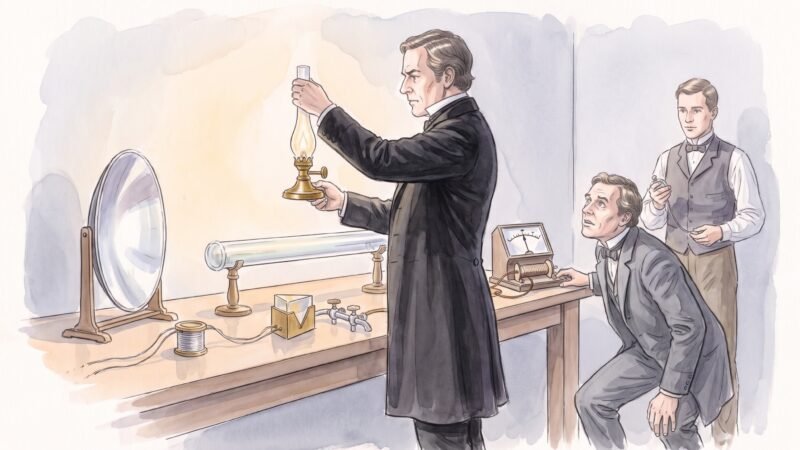
The Discovery of Penicillin by Alexander Fleming
The first antibiotic to be discovered and put into routine medical use was the product of an accident in a London bacteriology laboratory in 1928, of a slow and expensive development programme in Oxford between 1939 and 1941, and of an American industrial microbiological effort that mobilised tens of thousands of deep-tank fermentation vessels between 1942 and 1945. The substance it produced, called penicillin, is the most consequential drug of the modern pharmacopoeia, and the history of how penicillin came into the world is also the history of how the long pre-antibiotic era of medicine came to an end. This is an account of the chance observation that identified the substance, the careful chemistry that turned a brown powder into a clinical drug, the American wartime production effort that put the drug on the battlefields of Normandy and the Pacific, and the pharmaceutical and medical consequences that followed the drug into our own time.
A Moldy Petri Dish in 1928
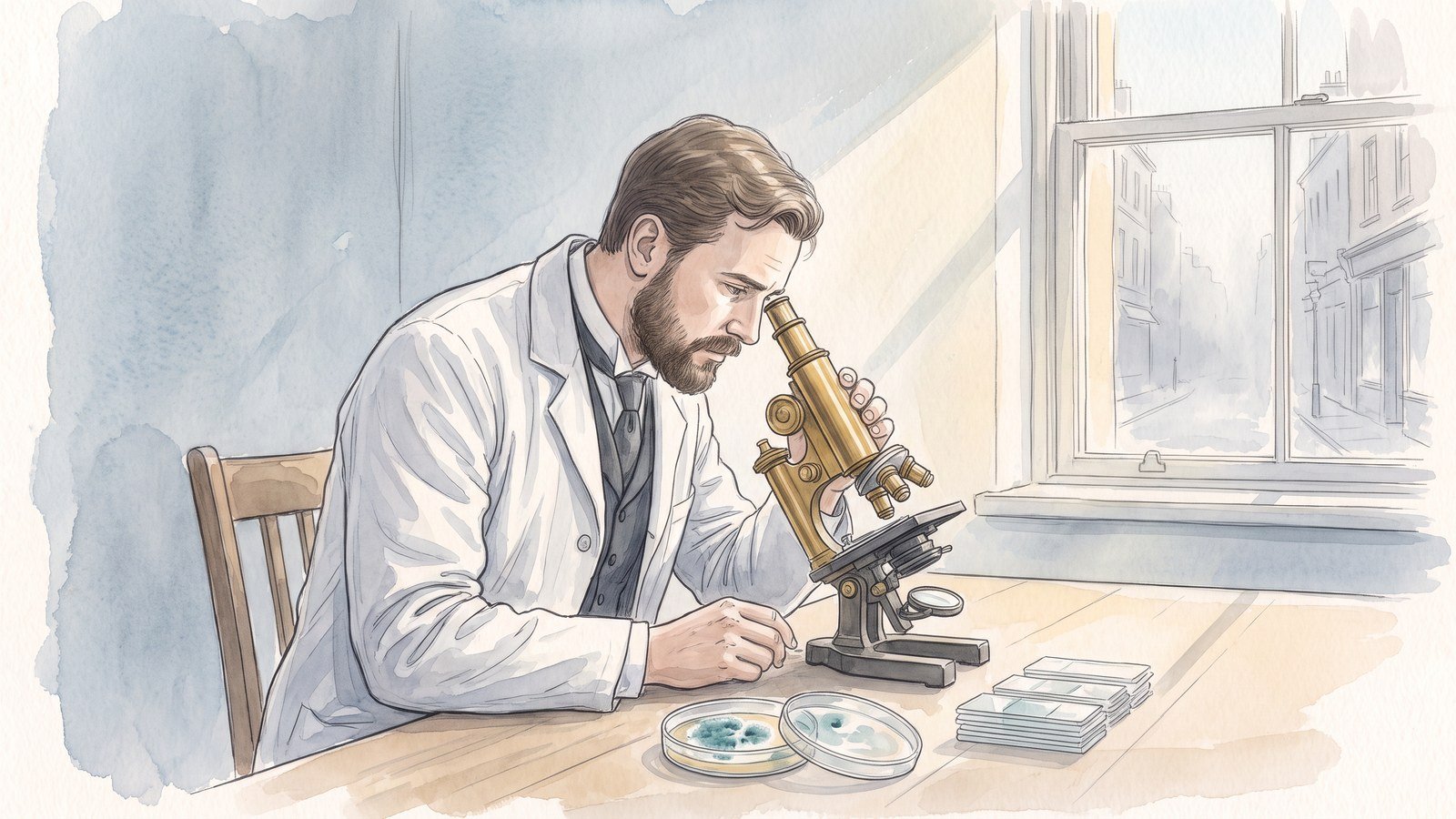
One of the most consequential accidents in the history of medicine happened on a Tuesday morning in late September 1928, in the inoculation room of the second-floor bacteriological laboratory of St Mary’s Hospital Medical School in the Paddington district of London. The accident was noticed by a young research microbiologist named Alexander Fleming, who had been working before going on a two-week family holiday and had stacked the dirty agar plates that he had meant to wash on the corner of his bench. The plates were a routine Staphylococcus aureus culture, the standard laboratory strain that Fleming’s colleague Daniel Merlin had been maintaining for the department. Fleming’s holidays ran from 1 to 16 September, and the September weather of that summer was particularly cold, with morning fogs that delayed the warm-up of the unheated laboratory. When Fleming came back to clear his bench on 22 or 28 September (depending on which reconstruction of his calendar one accepts), he noticed that one of the plates had been colonised by a contaminant mould, and that the Staphylococcus colonies immediately around the mould had been killed.
The mould that had landed on the plate by chance was a strain of Penicillium, almost certainly Penicillium notatum, and from the spatial pattern of the dead Staphylococcus colonies Fleming was able to deduce what had happened. The fungal colony had excreted something into the agar that diffused outward, and that something was a bactericidal compound. He named the compound “penicillin” in a short note published in the British Journal of Experimental Pathology in June 1929. The note is a model of the brief, understated, and immediately verifiable experimental communication. It describes the phenomenon, identifies the mould, shows the inhibition zone, and notes that the broth in which the mould had been cultured could be diluted by a factor of one in a thousand and would still inhibit the growth of staphylococci. Fleming also noted that the broth was not toxic to laboratory mice. He ended the paper with the observation that penicillin might be “an effective antiseptic for application to infected wounds.”
What Fleming had not done was the harder work. He had identified the substance, but he had not purified it, had not worked out a chemistry for it, and had not developed any kind of production process. The contrast between Fleming’s discovery and the penicillin as it became known to the world is the contrast between a single observation and a global therapeutic industry. Between 1929 and 1940, Fleming and his collaborators tried and failed to make penicillin in the form that they could use clinically. The compound was unstable, the work-up gave variable yields, and the available fermentations produced too little material to test in any serious way. By 1934, Fleming had largely given up active work on the substance, and the field had moved to sulfa drugs, a class of synthetic antimicrobials that had been developed in Germany and that could be tested and dispensed much more easily. The sulfa drugs were dominant in 1935, the year they were introduced to clinical practice, and for the next five years the penicillins stayed in the small world of academic microbiology.
The Oxford Team
The next chapter of penicillin is set in Oxford between 1939 and 1941, and it is the Oxford team of Howard Florey, Ernst Boris Chain, and Norman Heatley that turned Fleming’s accidental observation into something that could be produced at industrial scale. Howard Florey had been appointed professor of pathology at the Sir William Dunn School of Pathology of Oxford University in 1935, after holding the chair of pathology at the University of Sheffield and a brief appointment at the University of Adelaide. The Oxford pathology school under Florey was a substantial operation, with about fifty staff, supported by the Medical Research Council and the Rockefeller Foundation, working on a programme of antimicrobial research organised around the sulfa drugs and the new enzyme chemistry that Chain had been working on in Cambridge. The grant from the Medical Research Council was specifically intended for the development of antimicrobial chemotherapy, and the staff were charged with the long-term work of producing new and useful antimicrobial drugs from natural sources.
Ernst Boris Chain had joined Florey’s team in 1936. Chain was a Russian-born Jewish biochemist who had been educated in Berlin under the great chemist and Nobel laureate Richard Willstätter, had done a PhD on the chemistry of phosphorylases at Cambridge, and had come to Oxford as a research fellow in the chemistry of natural products. Chain had an interest in the antibiosis literature that Fleming had largely ignored, and he had read Fleming’s 1929 paper, and the 1928 bacteriologist W. R. Wilson’s paper on the microbicidal properties of mould cultures, and he had become convinced that the antibacterial substances of mould cultures were a chemically tractable class of compounds. Chain was a controversial figure, often irritated those who worked with him, and was a strong advocate of the public sector in the development of antibiotics.
Norman Heatley was the third member of the team. A Cambridge-trained biochemist, Heatley had been recruited to Florey’s team in 1936 to do the practical benchwork of fermentation, extraction, and assay. Heatley’s method was the first thing that made the project work. He had been trained at the School of Agriculture at Cambridge in the development of methods for measuring biological activity, and he brought a systematic approach to the assaying of penicillin activity that no one in the field had previously used. The bioassay that Heatley developed measured the diameter of the inhibition zone of a sample of mould extract on a standard bacterial test plate, and by using a calibrated reference strain of Staphylococcus, Heatley was able to give every extract a reproducible potency score. The bioassay was the technical foundation of the entire subsequent chemistry. Without it, the team would not have known which of their many extracts to pursue.
The practical breakthrough was the development of a working extraction process. The biggest problem with penicillin chemistry in 1939-1940 was that the compound did not behave like a typical small molecule. It was water-soluble, but not very soluble in organic solvents, and it was unstable under both acid and alkaline conditions. The Oxford team developed a multi-step process involving culture in shallow trays, acid precipitation, organic solvent extraction, and partial freeze-drying that could turn a litre of mould broth into a small brown residue containing the active ingredient. The Oxford penicillin of late 1940 was a brown powder, contaminated with impurities, but it had reproducible activity against Staphylococcus in laboratory tests and against Streptococcus infections in mice. In May 1940, the team tested the crude penicillin on a small number of laboratory mice infected with virulent Streptococcus pyogenes. All eight of the penicillin-treated mice survived. All eight of the untreated controls died. The experiment was repeated with the same result and was published in The Lancet in August 1940.
The decisive test came in February 1941. The Oxford team had, by then, produced enough penicillin to treat one human patient. The patient was a forty-three-year-old police constable named Albert Alexander, who had been admitted to the Radcliffe Infirmary in Oxford with a severe mixed infection of the face that was unresponsive to sulfa treatment. The penicillin treatment began on 12 February 1941 with an intravenous injection of 200 milligrams of the brown powder. Within twenty-four hours, Alexander’s fever had broken and his facial swelling had begun to subside. Within three days, he was eating breakfast and the infection was visibly retreating. After five days, the supply of penicillin ran out, and Alexander relapsed and died a month later. The lesson was clear: penicillin worked dramatically on severe bacterial infections in humans when there was enough of it, and the limiting factor of the therapy was not the penicillin itself but the inability of the chemists to make enough of it in the form needed.
The American Industrial Effort
The American production effort was the decisive step that turned penicillin from a drug that could be saved for one police constable into a drug that could be given to thousands of wounded soldiers on D-Day. The invitation came in the summer of 1941, after Florey had visited the United States and asked the National Research Council and the Northern Regional Research Laboratory in Peoria, Illinois, whether they could help develop large-scale fermentation. The American response was rapid. Florey and Heatley arrived in Peoria in July 1941 with a tube of Fleming’s strain of Penicillium notatum and a copy of the Oxford fermentation protocol. The American labs, particularly the Peoria laboratory and the laboratories of Merck, Pfizer, Squibb, and Lederle, began to scale up production. The result, by the end of 1942, was a fermentation process running on thousands of gallons of medium in deep-tank fermentation vessels, similar to those already in use for citric acid and other industrial fermentations, that could produce penicillin in titers that Fleming could not have imagined in 1929.
The first operational penicillin production line had come from a deep-tank fermentation method developed by Margaret Hutchinson, a microbial chemist at the Peoria laboratory, and the discovery that the addition of corn-steep liquor to the medium (a by-product of the corn starch industry) yielded dramatic improvements in penicillin yield. The Peoria laboratory also screened many alternative strains of Penicillium for higher-yielding variants, and eventually isolated a strain, sometimes called the Q-176 or NRRL 832 strain, that produced substantially more penicillin than the original Fleming strain. By early 1944, American manufacturers were producing penicillin at the rate of several kilograms per day, and the drug was being shipped to the European theatre of operations.
The Allied military application of penicillin was dramatic. At the Normandy invasion of June 1944, sulfa drugs and penicillin together transformed the prognosis of battlefield wounds. The American experience of World War I, in which the death rate from infected wounds among the wounded who reached medical care had been about 14 per cent, was reduced to less than 2 per cent by 1945. The death rate from bacterial pneumonia, which had killed about 70 per cent of those wounded soldiers who contracted pneumonia in 1918, fell to less than 6 per cent in 1945. The American mortality from bacterial meningitis fell by a factor of three in the same period. The total amount of penicillin used by the Allied forces in 1944-1945 has been estimated at several hundred kilograms, and the Allied production in the early months of 1944 had to be rationed to the most severe cases. By V-E Day in May 1945, Allied production was substantial, and the priority rationing for military use was about to be lifted.
The scientific history of the development was complicated by the question of credit. Fleming, Florey, and Chain shared the Nobel Prize for Physiology or Medicine in 1945 for “the discovery of penicillin and its curative effect in various infectious diseases.” The committee’s justification was that Fleming had made the original observation, while Florey and Chain had developed the chemistry and the therapeutic application. The Committee did not name Heatley, who had done much of the laboratory work, but heatley’s role was central. The popular legend that has accumulated around the discovery has it that Fleming alone noticed the mould on the dish and that the rest was a matter of clinical development. The reality is more textured. Fleming had indeed noticed the mould, but he had lacked the patience, the chemistry background, or the surrounding institutional support to develop the discovery. The fact that penicillin ended up in the world was the product of a long series of choices, accidents, collaborations, and institutional decisions, of which Fleming’s was only the first.
From Wartime Ration to Mass-Prescription Drug
The brief blossoming of the antibiotics era came after 1945. By the end of 1945, the major American manufacturers had brought the price of penicillin from a wartime five dollars a dose to a peacetime ten cents a dose, and the cost was continuing to fall. The drug was available in unlimited quantity by 1947, and the FDA’s 1948 approval of penicillin for general prescription use transformed the therapeutic landscape. The previously untreatable infections of bacterial pneumonia, of streptococcal infection in childbirth, of streptococcal endocarditis, of syphilis in its tertiary stages, of gonorrhoea, of staphylococcal wound infection, of bone infection, of meningitis, all of these became routinely treatable for the first time in human history. The death rates of bacterial infections in the major Western hospitals fell by an order of magnitude between 1945 and 1960, and the demographic history of the developed world shifted as a result. By 1980, in the developed world, the great infectious-disease killers of pre-penicillin medicine had been reduced to clinical curiosities.
The transformation of the medical infrastructure of the developing world took longer. The high cost of Western penicillin during the 1940s had stimulated the creation of independent pharmaceutical industries in several newly independent countries, and the Soviet Union and the People’s Republic of China had built their own penicillin industries by the late 1940s. The Indian pharmaceutical industry developed a substantial penicillin capacity from the late 1950s onward, and the formulation of penicillin for tropical climates and the marketing of low-cost penicillin in Africa, South America, and South Asia had become a major public-health challenge by the 1960s. By the 1970s, the WHO and the major international NGOs were treating bacterial pneumonia in low-resource settings as the most practical of the great infectious-disease control problems, and the use of penicillin in that programme has been credited with saving several million lives per year.
The second-generation penicillins, beginning with methicillin in 1959, extended the action of the drug to the resistant staphylococci that had begun to appear in the late 1940s. The semi-synthetic penicillins that followed, ampicillin (1961), amoxicillin (1972), carbenicillin (1977), piperacillin (1980), and others, expanded the spectrum of the drug to a wider set of bacterial pathogens. The discovery of the cephalosporins (1945-1970s) and the carbapenems (1976) extended the same chemical logic to new structural classes. The clinical use of penicillin today is but one small part of the larger beta-lactam family of antibiotics, but the original compound remains a major drug of the physician’s everyday formulary. The humbling irony of the antibiotic era is that the great triumph has been eroded by the development of bacterial resistance. Methicillin-resistant Staphylococcus aureus (MRSA), first reported in 1961, has become a global endemic pathogen that causes serious outbreaks in hospitals and in communities. The carbapenem-resistant Enterobacteriaceae are the latest in the succession of resistant organisms, and the rate of discovery of new antibiotics has slowed dramatically since the late 1980s.
The resistance problem has provoked a long, technically sophisticated, and so far only partially successful campaign of counter-measures. The major pharmaceutical companies reduced their antibiotic research programmes substantially during the 1990s and 2000s, and the small set of new antibiotic classes produced since 2000 has not kept pace with the rate of resistance development. The WHO, the US National Institutes of Health, the European Innovative Medicines Initiative, and a substantial public-private partnership known as CARB-X (launched in 2016, and funded by the US government and the Wellcome Trust) are the major financial forces behind the search for new antibiotic classes. The discovery of teixobactin by Ling and colleagues in 2015, the first new antibiotic to be discovered in decades using a novel isolation strategy, has been a beacon. The difficulty of the field is not in identifying new potential antibiotics but in getting them through the long, expensive process of clinical development.
Penicillin as an Object of Memory
Fleming’s place in the public memory of penicillin has been massive and partly fictional. The 1943 British wartime cinema film Penicillin, the popular biography of Fleming written by his wife in 1950, the Alexander Fleming School and the Fleming Museum of Antibiotics in Boula, Greece, the 2001 BBC dramatisation Alex, and the various popular biographies of the four Nobel laureates have all produced a more or less legendary story of the discovery that emphasises Fleming’s accidental role and that makes a hero of the careful, occasionally absent-minded Scottish microbiologist. The historical record is, as so often, more complicated. Fleming was a competent clinical microbiologist with a good eye, who worked alone in a small laboratory and who published prolifically over a fifty-year career on a wide range of bacterial and immunological topics. His specialty was the host response to bacterial infection, and he developed a substantial body of work on the use of lysozyme (an antibacterial enzyme of tears and saliva) in the early 1920s. Fleming was not a chemist and was not a careful record-keeper, and his subsequent attempts to develop penicillin as a drug were frustrated by his lack of laboratory support and by his inability to sustain a serious collaborative project.
The Oxford team also accumulated its own mythology. Florey was a cultivated Australian-born pathologist with a sharp manner and a long memory, who ran the Oxford pathology department for thirty years and turned it into the leading site of antimicrobial chemotherapy in Britain. Chain was a brilliant, difficult, and politically engaged biochemist who spent two decades at Imperial College London after his Oxford tenure, and who retained a strong sense of grievance against Florey about the recognition of his specific contribution. Heatley was the quiet workhorse of the team who did most of the original laboratory work and who, in 1990, was belatedly made an honorary fellow of the Royal Society in recognition of his role. The story is best read in the biographies of these three by Gwyn Macfarlane, Robert Bud, and Eric Lax, in the memorial essays of the British Society for Antimicrobial Chemotherapy, and in the declassified records of the wartime British and American research establishments.
The intellectual history of penicillin is set in the larger context of the antibiotic era that followed. The discovery of the streptomycin-producing Streptomyces griseus by Albert Schatz, working under Selman Waksman at Rutgers University in October 1943, and its development as the first effective treatment for tuberculosis, was the second great antibiotic discovery. The subsequent discovery of the tetracyclines, the macrolides, the aminoglycosides, the glycopeptides, the oxazolidinones, the lipopeptides, and the cyclic lipopeptides extended the antibiotic era into a broad set of infections that penicillin could not have touched. The clinical pharmacology of the antibiotics is now a major subspecialty of medicine, the chemistry of the antibiotic-producing microorganisms is a substantial field of microbial metabolism, and the public-health crisis of antibiotic resistance is one of the principal concerns of the World Health Organization.
The molecular biology of the penicillin and its relatives is well known. The beta-lactam ring of penicillin and the related cephalosporins, carbapenems, and monobactams is a structural mimic of the D-Ala-D-Ala dipeptide terminus of the bacterial cell wall peptidoglycan. The beta-lactam antibiotics bind covalently to the active site of the bacterial transpeptidase enzymes that cross-link the peptidoglycan, blocking the cell wall synthesis and killing the growing bacterium. The understanding of this mechanism is largely the work of the 1970s and 1980s. The principal substrates and principal inhibitors are now characterised, and the bacterial transpeptidase enzymes (penicillin-binding proteins) are a major focus of antibacterial drug design. The discovery of the beta-lactamase enzymes that many bacteria produce to hydrolyse the beta-lactam ring has been a sustained source of new chemistry, and the beta-lactamase inhibitors clavulanic acid, sulbactam, and tazobactam, developed in the 1970s and 1980s, have become routine co-drugs that protect a partner beta-lactam antibiotic from hydrolysis.
The Discovery as Heritage
The discovery of penicillin is one of the few scientific discoveries of the twentieth century that has produced a substantial popular memory in the broader culture. The discovery has been used in textbooks as an example of the value of chance in scientific work, in civic programmes as a model of the international scientific cooperation that produced the antibiotic, in economics textbooks as an example of how a single laboratory discovery can produce a multi-billion-dollar therapeutic industry, in medical ethics courses as a model of the ethical issues of wartime clinical trial. The popular accounts of the discovery have largely reinforced the serendipity story, but the scholarship of the last thirty years has emphasised the structural conditions that made the discovery possible: the substantial investment in academic bacteriology and chemistry by the Rockefeller Foundation and the British Medical Research Council in the 1920s and 1930s, the development of bioassay methods that could measure microgram quantities of biologically active compounds, the wartime collaboration of American industrial microbiology and British academic chemotherapy. The cultural memory of the discovery has also produced a small museum economy in Britain and the United States. The Alexander Fleming Laboratory Museum at St Mary’s Hospital in Paddington was reopened to the public in 2001 after a major conservation programme, and includes the original bench on which Fleming worked, the original incubator, a working replica of the September 1928 Petri dish mould culture in its little glass dish, and several of Fleming’s laboratory notebooks. The museum draws about forty thousand visitors a year and has become a minor pilgrimage site for microbiology students in the United Kingdom and the wider Commonwealth.
The historiography of the discovery has been comprehensive. The standard biographical sources are André Maurois’s biography of Fleming (1959), Gwyn Macfarlane’s Alexander Fleming: The Man and the Myth (1984), Eric Lax’s The Mold in Dr. Florey’s Coat (2004), and Robert Bud’s Penicillin: Triumph and Tragedy (2007). The American industrial story is told in detail in the surviving papers of the Peoria laboratory at the US National Archives, the published memoirs of the Peoria and Merck chemists, and the various historical studies of the wartime drug effort published by the National Academy of Sciences. The subsequent antibiotic era is the subject of comprehensive treatments in the textbook literature, the standard histories of bacterial chemotherapy, and the various edited volumes on antibiotic resistance. The molecular story has been treated in detail in the various textbooks of bacteriology, antibiotics, and microbial biochemistry.
What Fleming found on a damp September morning in 1928, and what Chain, Florey, Heatley, and a generation of American industrial microbiologists developed into the world’s first antibiotic, has changed the way human beings die. The mortality statistics are striking. Pre-penicillin infections of bacterial meningitis, bacterial pneumonia, bacterial endocarditis, and puerperal sepsis killed the majority of those who caught them. Post-penicillin mortality rates for these infections are in the single digits. The life-expectancy statistics of the developed world during the second half of the twentieth century owe as much to the antibiotic era as they do to the food-supply and sanitation revolutions of the nineteenth century, and the global diffusion of penicillin and its relatives during the 1940s and 1950s has substantially closed the great pre-existing life-expectancy gap between rich and poor nations. The morbidity of severe bacterial infections in the world’s rich countries in 2026 is a small fraction of what it was in 1928, and the morbidity in the world’s poor countries is steadily falling as the global availability of low-cost antibiotics continues to expand. The penicillin era is one of the few episodes in the entire long history of medicine in which a single discovery has changed the prognosis of illness for so many people so comprehensively.
The Beta Lactam Ring and the Cell Wall
Penicillin belongs to a structural class of molecules now called the beta lactams, a name derived from the four-membered ring that includes the nitrogen atom in the second position. The beta lactam ring is chemically unusual because it is unstable: the strain in the four-membered ring is enough to make it reactive with nucleophiles, including the serine hydroxyl group at the active site of the bacterial transpeptidase enzymes, and the ring opens readily when it enters such an active site. The warhead of the beta lactam antibiotic, in other words, is a chemically fused ring that becomes a covalent attachment to the bacterial enzyme as the ring opens. The chemistry was understood only in the 1950s and 1960s, after Dorothy Hodgkin and her team at Oxford had solved the X-ray crystal structure of penicillin in 1945.
The transpeptidase enzymes that are the target of the beta lactams are called penicillin binding proteins (PBPs) for the obvious reason that they are the proteins that bind penicillin covalently. The PBPs of a typical bacterial cell fall into several classes, with differing molecular weights, substrate specificities, and patterns of inhibition by different beta lactams. The high molecular weight PBPs are the transpeptidases that do most of the peptidoglycan cross linking, and inhibition of these enzymes produces the lethal effects on cell wall biosynthesis that the beta lactams are famous for. The low molecular weight PBPs are smaller enzymes of more specialized function, and inhibition of them produces less dramatic effects. The variation in PBP complement between bacterial species accounts for much of the clinical spectrum difference between different beta lactams: ampicillin and amoxicillin are effective against a wider range of Gram negative organisms than benzylpenicillin because they have different rates of penetration of the Gram negative outer membrane and different affinities for different PBPs.
The cell wall biosynthetic pathway is a target of great clinical importance because the human host has no comparable peptidoglycan biochemistry in any of its cells. The beta lactams are therefore exceptionally safe drugs, with a clinical ratio of toxic to therapeutic dose in the high hundreds, and the side effects that the drugs do produce are mostly hypersensitivity reactions mediated by the immune system rather than by the cell wall. The discovery of the beta lactam structure and the recognition of its transpeptidase target has therefore been one of the principal foundations of the safe and effective antibiotic era of the twentieth century. The same structural pharmacophore, the four-membered beta lactam ring, has been reproduced in a number of semi-synthetic derivatives (the methicillins, the ampicillins, the carbenicillins, the piperacillins) and in the closely related cephalosporins, carbapenems, and monobactams. Each generation of structural analogues has been developed to address the resistance problems of the previous generation.
The development of the beta lactamase inhibitors – clavulanic acid, sulbactam, tazobactam – has produced a separate line of chemistry that has rescued many beta lactams from the resistance that would otherwise have rendered them useless. The beta lactamase inhibitors themselves contain a beta lactam ring, but they are not effective antibiotics on their own: their function is to bind to the bacterial beta lactamase enzymes and to inhibit them covalently. A beta lactam antibiotic administered with a beta lactamase inhibitor is therefore protected from hydrolysis by any beta lactamase that the bacterium produces, and the antibiotic can reach its PBPs intact. The combination products amoxicillin-clavulanate (Augmentin), ampicillin-sulbactam (Unasyn), piperacillin-tazobactam (Zosyn) are among the most widely used antibiotics in modern hospital and outpatient medicine, and the development of clavulanic acid in particular was one of the principal pharmaceutical achievements of the 1970s.
References
- The Discovery of Penicillin - A Preliminary Note - Alexander Fleming, British Journal of Experimental Pathology, vol. 10 no. 3 (1929).
- Penicillin as a Chemotherapeutic Agent - E. B. Chain, H. W. Florey, A. D. Gardner, et al., The Lancet, vol. 238 no. 6153 (1940), pp. 226-231.
- Alexander Fleming: The Man and the Myth - Gwyn Macfarlane, Harvard University Press, 1984 (publisher’s page).
- The Mold in Dr. Florey’s Coat: The Story of the Antibiotic That Revolutionized Medicine - Eric Lax, Henry Holt, 2004 (publisher’s page via WorldCat).
- Penicillin: Triumph and Tragedy - Robert Bud, Oxford University Press, 2007 (publisher’s page).
- Antimicrobial Chemotherapy - David Greenwood, Roger Finch, Peter Davey, Mark Wilcox, Oxford University Press, 5th edition, 2007 (publisher’s page).
- Howard Florey: The Making of a Great Scientist - Lennard Bickel, Oxford University Press, 1972 (publisher’s page).
- The Antibiotic Era: Reform, Resistance, and the Pursuit of a Rational Therapeutics - Scott H. Podolsky, University of Chicago Press, 2015 (publisher’s page).
- The Antibiotic Paradox: How the Misuse of Antibiotics Destroys Their Curative Power - Stuart B. Levy, Perseus Books, 2nd edition, 2002 (publisher’s page).
- Discovery and Development of Penicillin - A. J. Geddes, in Journal of Antimicrobial Chemotherapy, volume and number vary, reprinted in PubMed Central archive (entry consulted via PubMed).
- The Rise of Antibiotic-Resistant Infections - Veronica Miller and Eli S. Perencevich (eds.), Infectious Disease Clinics of North America, vol. 33 no. 4 (December 2019) (publisher’s table of contents).
- Nobel Lecture, December 10, 1945: The History of Penicillin - Howard W. Florey, Nobel Lectures, Physiology or Medicine 1942-1962, Elsevier, 1964 (Nobel Foundation archive, consulted 2026).