The Architecture of Harmony
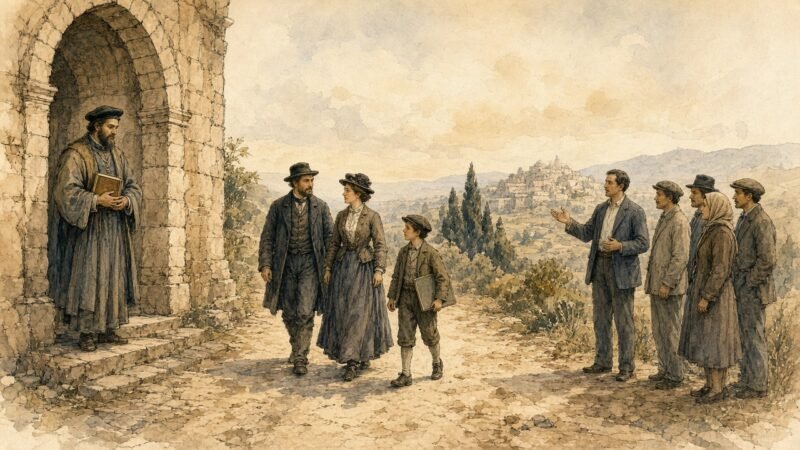
During an era defined by fractured kingdoms, relentless violence, and the disintegration of moral authority, a solitary scholar walked the winding dusty roads of central China. He was not a prince, a conqueror, or a mystic claiming divine revelation. He was a thinker, an educator, and a former minor bureaucrat who believed with unyielding conviction that human society could be redeemed. His name was Kong Qiu, known to posterity as Master Kong, or Confucius.
Confucius lived during a period of profound crisis, yet his vision went on to define the civilizational DNA of East Asia for more than two millennia. At a time when power was measured by the sharpness of bronze blades and the size of armies, he proposed a radical alternative: that true order is built on moral character, social responsibility, ritual propriety, and deep empathy. He looked at a chaotic world and insisted that the foundation of a peaceful empire rests not in terrifying laws or crushing force, but in the cultivation of the individual heart.
To understand Confucius is to understand a fundamental turning point in human thought. His teachings bridged ancient traditions and a new humanistic philosophy. They transformed education from a privilege of birth into a discipline of moral character, and provided a framework for living that continues to influence modern social dynamics, governance, and personal ethics.
The World of Master Kong: Broken Rituals and Rising Chaos
To grasp the power of Confucian thought, one must step into the turbulent world into which Confucius was born in 551 BCE. China was nominally ruled by the Eastern Zhou Dynasty, but royal authority had collapsed into a mere fiction. The land was fragmented into competing feudal states perpetually locked in struggle for power, resources, and dominance. This was the Spring and Autumn period, an era marked by shifting alliances, betrayal, and social decay.
Ancient traditions that had long bound society together were unraveling. Ruler assassinated ruler, children turned against parents, and noble families usurped royal privileges without hesitation. Rituals that once carried deep sacred meaning had devolved into hollow performances meant only to display unearned wealth and authority.
Confucius was born in the state of Lu, a region steeped in the cultural traditions of the early Zhou kings. His family was once nobility, but by the time of his birth, their fortunes had fallen. His father died when Confucius was just three years old, leaving his mother to raise him in relative poverty.
Despite these modest beginnings, Confucius dedicated himself to learning from an early age. He immersed himself in the study of history, poetry, music, and ancient rituals. He did not view this knowledge as static academic lore, but as a living reservoir of wisdom capable of healing a broken world. He looked back to the early Zhou dynasty, particularly figures like the Duke of Zhou, as a golden age of political integrity and social harmony. His lifework became a noble mission to recover that lost balance and restore it to a chaotic world.
The Journey of the Traveling Scholar
Confucius began his career in minor administrative posts, managing granaries and livestock in his native state of Lu. His intellectual brilliance, deep ethical clarity, and mastery of traditional rites soon earned him recognition. Eventually, he rose to higher official posts, including minister of justice.
In his political duties, Confucius sought to put his philosophical theories into practice. He believed that if a ruler governed with moral integrity, the people would naturally follow without needing harsh punishments. However, the political reality of the state of Lu was hostile to his uncompromising ideals. The rulers of Lu were often distracted by court luxuries and influenced by powerful clans who resisted ethical reform.
Realizing that his advice was being ignored and his principles compromised, Confucius made an agonizing decision. He resigned his post and left his homeland. Thus began a fourteen year exile across the various warring states of China.
Accompanied by a devoted group of disciples, Confucius traveled from state to state, seeking a ruler willing to implement his vision of moral governance. The journey was filled with hardship, physical danger, poverty, and political hostility. Rulers listened politely, but ultimately rejected his teachings in favor of pragmatic military strength and coercive control.
Yet, these years of exile were far from a failure. They transformed Confucius from a local official into a universal teacher. Free from the constraints of court politics, he spent his days instructing his students, refining his concepts, and shaping a philosophy that transcended local borders.
In his final years, Confucius returned to the state of Lu. Abandoning hopes of holding office, he devoted his remaining time to teaching and editing ancient texts, including the Classic of Poetry, the Book of Documents, and the Spring and Autumn Annals. When he died in 479 BCE at the age of seventy two, he considered himself a failure, having never found a ruler who would build a society based on his moral teachings. He could not have known that his disciples would write down his words and build an intellectual legacy that would outshine every kingdom of his era.
The Core Foundations of Confucian Thought
At the heart of Confucianism lies an optimistic confidence in human nature and human potential. Unlike perspectives that view human beings as inherently flawed or inherently wicked, Confucius believed that people are malleable, capable of learning, and intrinsically oriented toward virtue if given proper guidance and moral examples.
His philosophical framework relies on several interconnected concepts that work together to create individual virtue and social harmony.
1. Ren: Compassion and Humaneness
If Confucianism has a soul, it is the concept of Ren (often translated as humaneness, benevolence, or compassion). Ren is the inner moral quality that makes a person human in the highest sense. It is a genuine, empathetic care for others, rooted in the awareness that human beings exist in relational networks.
When asked by a student to define Ren, Master Kong offered a remarkably direct answer: “To love others.”
Ren is not an abstract emotional state; it is an active practice. It requires stepping outside self interest to consider the dignity and needs of others. Confucius expressed this through what is often called the Silver Rule:
“Do not impose on others what you yourself do not desire.”
For Confucius, Ren is the ultimate moral objective. It cannot be acquired overnight, nor can it be bought or inherited. It is a lifelong practice of refining one’s intentions, actions, and awareness.
2. Li: Ritual, Propriety, and Social Form
If Ren represents the inner heart of virtue, Li is its external form. Translations of Li include ritual, propriety, etiquette, and social custom. Today, the word ritual often suggests cold, meaningless repetition. For Confucius, however, Li was full of vital energy.
Li encompasses everything from grand state ceremonies and sacrificial offerings to everyday manners, expressions of deference, and interpersonal courtesy. Confucius recognized that human emotions and social interactions require structured expressions to remain meaningful and balanced.
Without Li, benevolence remains a vague intention. Ritual provides the practical framework through which compassion is expressed. A simple greeting, a respectful posture, or a shared meal are not superficial gestures; when performed with genuine sincerity, they train the mind, calm wild impulses, and reinforce mutual respect between people.
Crucially, Confucius emphasized that ritual without inner sincerity is useless:
“Ritual performed without reverence, mourning expressed without grief—how can I bear to view such things?”
3. Xiao: Filial Piety and the Sacred Family
Confucius viewed the family as the basic building block of human society and the primary classroom for moral education. Within the home, an individual learns the essential skills required for social life: empathy, restraint, respect, and responsibility.
Xiao, or filial piety, is the devotion, respect, and care that children owe to their parents and ancestors. It is not merely providing food and shelter to aging parents; it requires treating them with deep reverence and gratitude.
For Confucius, family dynamics model broader civic relations:
- Respect for parents teaches respect for civic authority.
- Harmony among siblings teaches cooperation among citizens.
- Compassion from parents teaches benevolent leadership from rulers.
A person who learns to treat family members with love and respect will naturally carry those virtues into the broader world. Social order, therefore, does not begin with legislation or military power; it begins within the household.
4. The Five Key Relationships
Confucius organized human interactions into five fundamental relationships, each governed by mutual responsibilities and ethical duties:
- Ruler to Subject: Governed by benevolence and justice from above, and loyalty and obedience from below.
- Father to Son: Guided by paternal kindness and protection, met with filial piety and respect.
- Husband to Wife: Built on care, consideration, harmony, and mutual respect.
- Elder Brother to Younger Brother: Expressed through patient guidance from the elder, and deference and cooperation from the younger.
- Friend to Friend: Rooted in equal trust, honesty, loyalty, and reciprocity.
Notice that four of these five relationships are explicitly hierarchical, reflecting the traditional worldview of ancient China. However, Confucian hierarchy is never a one way street of absolute domination. Every authority figure is constrained by moral duties. A ruler who acts like a tyrant forfeits moral authority; a parent who acts without care violates the principle of family life. Authority must always be justified by moral responsibility and genuine care.
5. Junzi: The Cultivated Person
To embody these virtues, Confucius introduced the ideal of the Junzi, translated as the exemplary person, noble person, or cultivated scholar.
Prior to Confucius, the term Junzi referred strictly to aristocratic birth; it was a political status reserved for nobility. Confucius radically redefined the concept. He argued that true nobility is not a matter of bloodlines, but of character. Anyone, regardless of humble origins, could become a Junzi through moral effort, self reflection, and disciplined study.
The Junzi stands in contrast to the Xiaoren (the small or petty person):
- The Junzi seeks harmony; the Xiaoren demands conformity.
- The Junzi understands what is right; the Xiaoren understands what is profitable.
- The Junzi looks inward when facing failure; the Xiaoren blames others.
The Junzi serves as a moral beacon for society. By radiating quiet dignity, integrity, and self restraint, the Junzi inspires others toward virtue without needing coercion.
The Analects: Words That Shaped Empires
Confucius did not write a comprehensive philosophical treatise detailing his ideas in systematic prose. Instead, his teachings survived through the Analects (Lunyu), a collection of sayings, conversations, brief anecdotes, and aphorisms compiled by his devoted disciples after his death.
Reading the Analects feels like listening in on intimate discussions between a master and his students. Confucius does not deliver grand pronouncements from an elevated pulpit; he customizes his advice to the temperament and weaknesses of individual listeners.
To an overly impulsive student, he preaches caution; to a hesitant student, he encourages decisive action. This tailored approach highlights a central aspect of Confucian pedagogy: wisdom is not a set of rigid doctrines, but an active, context sensitive practice.
Here are a few defining passages that illustrate the spirit of the Analects:
- On Learning:“To study and not think is a waste of effort; to think and not study is dangerous.”
- On Self Reflection:“When you see a worthy person, endeavor to emulate them. When you see an unworthy person, examine yourself within.”
- On Moral Integrity:“Wealth and honors are what people desire; but if they cannot be obtained in the right way, they should not be held.”
- On Governance:“If you govern the people by laws and keep them in order by punishments, they will try to avoid punishments but have no sense of shame. If you govern them by virtue and keep them in order by ritual, they will gain a sense of shame and reform themselves.”
Governance Through Moral Gravity: De and Political Philosophy
Confucius lived in an era when political power was exercised through brute force, military intimidation, and severe punishments. Rulers relied on fear to control populations and conquer neighbors. Confucius offered an entirely different paradigm of political legitimacy, centered on the concept of De (moral power or virtue).
De is the magnetic moral authority that emanates from a person of authentic character. Confucius argued that a ruler who possesses De does not need to issue endless regulations or rely on physical force. Citizens willingly follow such a leader because they respect his moral character.
Confucius used a striking celestial metaphor to describe this effect:
“He who exercises government by means of his virtue may be compared to the North Star, which keeps its place while all the other stars turn toward it.”
This concept challenged the autocratic norms of his time. Confucius asserted that rulers exist to serve the well being of the people, not the other way around. If a kingdom suffers from corruption, poverty, and lawlessness, the fault lies primarily with the moral failure of its leaders.
This idea laid the groundwork for the concept of the Mandate of Heaven (Tianming). While the concept originated earlier in Zhou history, Confucian thinkers deepened its moral dimensions. Heaven grants the right to rule to those who govern with justice and benevolence. If a ruler becomes corrupt, oppressive, and neglectful, Heaven withdraws the mandate, justifying political resistance and dynastic change.
From Marginalized Teacher to State Ideology
During his lifetime, Confucius was often viewed as an impractical idealist. After his death, his followers continued to preserve, teach, and expand his philosophy, competing with other major schools of thought during the Warring States period, such as Legalism and Daoism.
Legalism, which emphasized total state power, harsh laws, and absolute obedience, temporarily triumphed when the Qin Dynasty unified China in 221 BCE. The Qin emperor viewed Confucian scholars as dangerous subversives because they criticized contemporary tyranny by appealing to ancient ethical standards. The Qin regime ordered the burning of Confucian books and the execution of scholars, dealing a devastating blow to the tradition.
However, the Qin Dynasty collapsed quickly, undone by its own brutality. The succeeding Han Dynasty (202 BCE – 220 CE) recognized that a durable empire could not be built on fear alone. Under Emperor Wu of Han, Confucianism was officially adopted as the state philosophy.
This decision reshaped Chinese civilization. Confucian texts became the basis for the imperial civil service examination system, a revolutionary institution that selected government officials based on merit and literary scholarship rather than aristocratic birth.
For nearly two thousand years, through successive dynasties, mastering Confucian texts was the primary path to political power and prestige in China. This system created an administrative elite steeped in ethical philosophy, literary arts, and historical scholarship, ensuring remarkable cultural continuity over centuries.
Neo-Confucianism: Evolution Across Generations
Confucianism was never a static dogma frozen in time; it evolved, adapted, and engaged with rival traditions over centuries.
During the Tang and Song Dynasties, Confucianism faced intellectual challenges from Buddhism and Daoism, which offered rich metaphysical theories about reality, nature, and the human soul—areas that early Confucianism had largely left unaddressed.
In response, Confucian scholars launched a major intellectual movement known to the West as Neo-Confucianism (and in China as Lixue, the School of Principle).
Leading figures like Zhu Xi (1130–1200 CE) synthesized traditional Confucian ethics with sophisticated metaphysical frameworks. Zhu Xi argued that all things in the universe are composed of two elements:
- Li (Principle): The underlying rational pattern or moral order that structures reality and human nature.
- Qi (Material Force): The physical substance that forms the material world and individual temperament.
According to Neo-Confucian thought, human nature is inherently good because it embodies universal Principle (Li). However, our moral awareness can be clouded by impure Material Force (Qi). Therefore, self cultivation involves studying the world, refining one’s mind, and eliminating selfish desires to allow our innate moral nature to shine clearly.
Zhu Xi also reorganized the Confucian canon, highlighting four core texts known as the Four Books:
- The Analects
- The Mencius
- The Great Learning
- The Doctrine of the Mean
These four texts became the standard curriculum for the civil service examinations from 1313 until their abolition in 1905, deeply embedding Neo-Confucian values into East Asian culture.
Global Spread: The East Asian Cultural Sphere
The influence of Confucius extended far beyond the borders of China. As neighboring nations engaged with Chinese civilization, Confucianism was adopted across East Asia, becoming a foundational framework for social organization, governance, and ethics in Korea, Japan, and Vietnam.
Korea: The Joseon Dynasty
Korea embraced Confucianism deeply, particularly during the Joseon Dynasty (1392–1910). Neo-Confucianism became the official state ideology, reshaping Korean society, ancestral rituals, and social hierarchies. Eminent Korean scholars like Yi Hwang (Toegye) and Yi I (Yulgok) made original contributions to Neo-Confucian philosophy, debating subtle aspects of moral psychology and metaphysics.
Japan: Tokugawa Era and the Bushido Code
In Japan, Confucianism took root early, but gained unprecedented influence during the Tokugawa (Edo) period (1603–1867). The Tokugawa Shogunate used Neo-Confucianism to maintain social stability and reinforce loyalty to authority.
Confucian concepts blended with indigenous traditions and samurai culture, contributing to the development of Bushido (the way of the warrior). Virtues like loyalty, duty, self discipline, and filial piety became central to Japanese ethics, persisting well into the modern industrial era.
Vietnam: Administration and Education
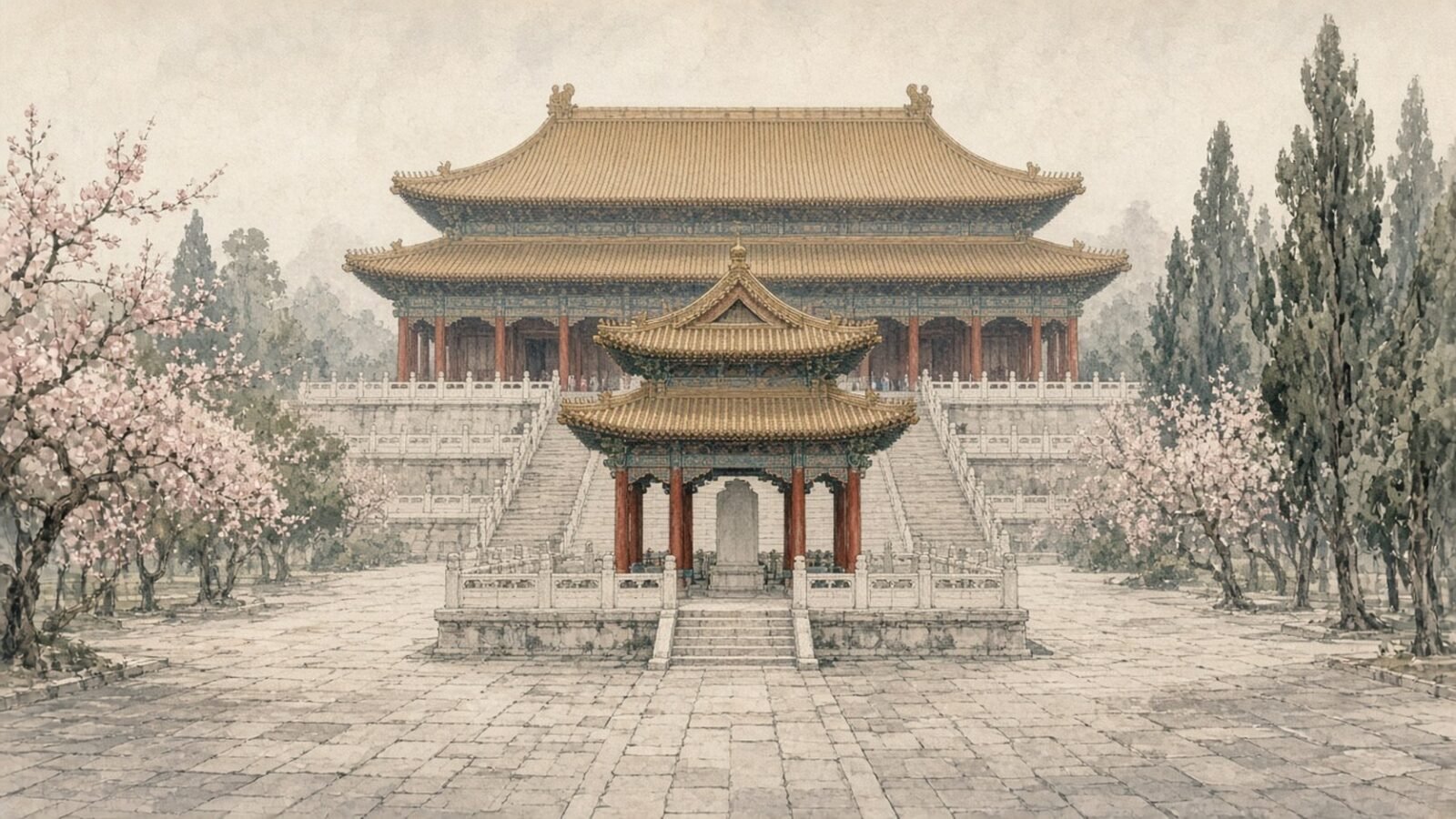
Vietnam integrated Confucian principles into its royal governance and social structures after centuries of cultural exchange. The imperial examination system was established in Hanoi, where the Temple of Literature stands today as a historic monument to Master Kong and generations of scholar bureaucrats.
Confucius Encounters the Modern World
The arrival of Western industrial power, imperialism, and rapid modernization in the nineteenth and twentieth centuries forced East Asia into profound crisis. As traditional institutions collapsed, intellectuals began reexamining their cultural heritage, and Confucius often became a target of fierce criticism.
During China’s May Fourth Movement in 1919, radical young intellectuals blamed Confucianism for China’s political weakness, technological backwardness, and social rigidities. Slogans like “Down with the Family Shop of Confucius” echoed through university campuses. Critics argued that Confucian emphasis on hierarchy, filial piety, and traditional authority suppressed individuality, stifled innovation, and subordinated women.
When the Communist Party came to power in 1949 under Mao Zedong, anti Confucian sentiment reached its peak. During the Cultural Revolution (1966–1976), Confucian temples were damaged, ancient texts burned, and Master Kong was denounced as a reactionary symbol of feudal oppression.
Yet, traditional philosophies rarely disappear entirely. In the late twentieth century, as East Asian economies—including Taiwan, South Korea, Singapore, Hong Kong, and later mainland China—experienced unprecedented economic growth, scholars re-evaluated the impact of Confucian heritage.
Far from being an obstacle to progress, core Confucian values were recognized as powerful drivers of modernization:
- A deep social commitment to education and academic accomplishment.
- A strong work ethic grounded in personal discipline and responsibility.
- A focus on social cohesion, family stability, and collective well being.
In recent decades, mainland China has experienced a major Confucian revival. The state has embraced Master Kong as a national icon of cultural pride, ethical harmony, and wisdom, establishing Confucius Institutes worldwide and highlighting traditional values to build a harmonious society.
Why Confucius Matters Today
More than two thousand five hundred years after his death, why does Master Kong continue to speak to us? In an age dominated by rapid technological change, hyper individualism, and political polarization, Confucian thought offers timeless insights for contemporary life.
1. The Primacy of Relational Ethics
Modern Western philosophy often starts with the isolated individual, focusing on personal rights and autonomy. Confucius starts from a different premise: human beings are intrinsically relational creatures. We are defined by our connections—as children, parents, friends, colleagues, and citizens.
Confucianism reminds us that individual flourishing cannot be separated from the health of our communities. Meaning in life is generated through fulfilling our responsibilities to others with care and sincerity.
2. Education as Moral Character Development
In modern society, education is often reduced to technical training, credential acquisition, and preparation for the job market. Confucius offers a broader vision: education is fundamentally about moral self cultivation.
Learning should not merely expand what we know; it should elevate who we are. Technical skill without ethical grounding produces powerful but dangerous individuals. True wisdom integrates intellectual curiosity with moral responsibility.
3. Moral Leadership and Civic Responsibility
In an era when public trust in institutions and political leaders is frequently tested, Confucius’s insights on governance remain relevant. He cautions against relying solely on legalism, regulations, and coercive mechanisms to maintain social health.
Real authority requires character, empathy, and integrity. Leaders who demand ethical behavior from others must first model that behavior themselves.
The Teacher for All Generations
Confucius never claimed to be a god, a prophet, or a holy figure. When asked about spirits, gods, and the afterlife, he politely set those questions aside, choosing instead to focus on human life in the present world:
“Till you have learned to serve men, how can you serve spirits? … Till you know about the living, how can you know about the dead?”
This persistent focus on everyday human existence is perhaps his greatest gift. He demystified virtue, bringing it down from the heavens and planting it squarely in the ordinary routines of daily life: in how we speak to our parents, how we greet a stranger, how we handle power, and how we reflect on our mistakes.
Confucius viewed life not as a race for wealth or dominance, but as an ongoing journey of moral self cultivation. He described his own intellectual and emotional development with humble clarity:
“At fifteen, I set my heart on learning.
At thirty, I stood firm.
At forty, I had no doubts.
At fifty, I knew the decrees of Heaven.
At sixty, my ear was an obedient instrument for the reception of truth.
At seventy, I could follow what my heart desired, without transgressing what was right.”
This quote captures the essence of the Confucian ideal. Virtue is not a set of rigid constraints enforced from the outside; it is a gradual process of self refinement until doing good becomes as natural as breathing.
In our searching, fast paced world, Master Kong remains a steady guide—a quiet voice calling us back to basic human truths: that relationships matter, character counts, respect is essential, and the noble quest for a harmonious world begins within the human heart.