Wang Anshi’s New Policies and the Great Song Political Schism
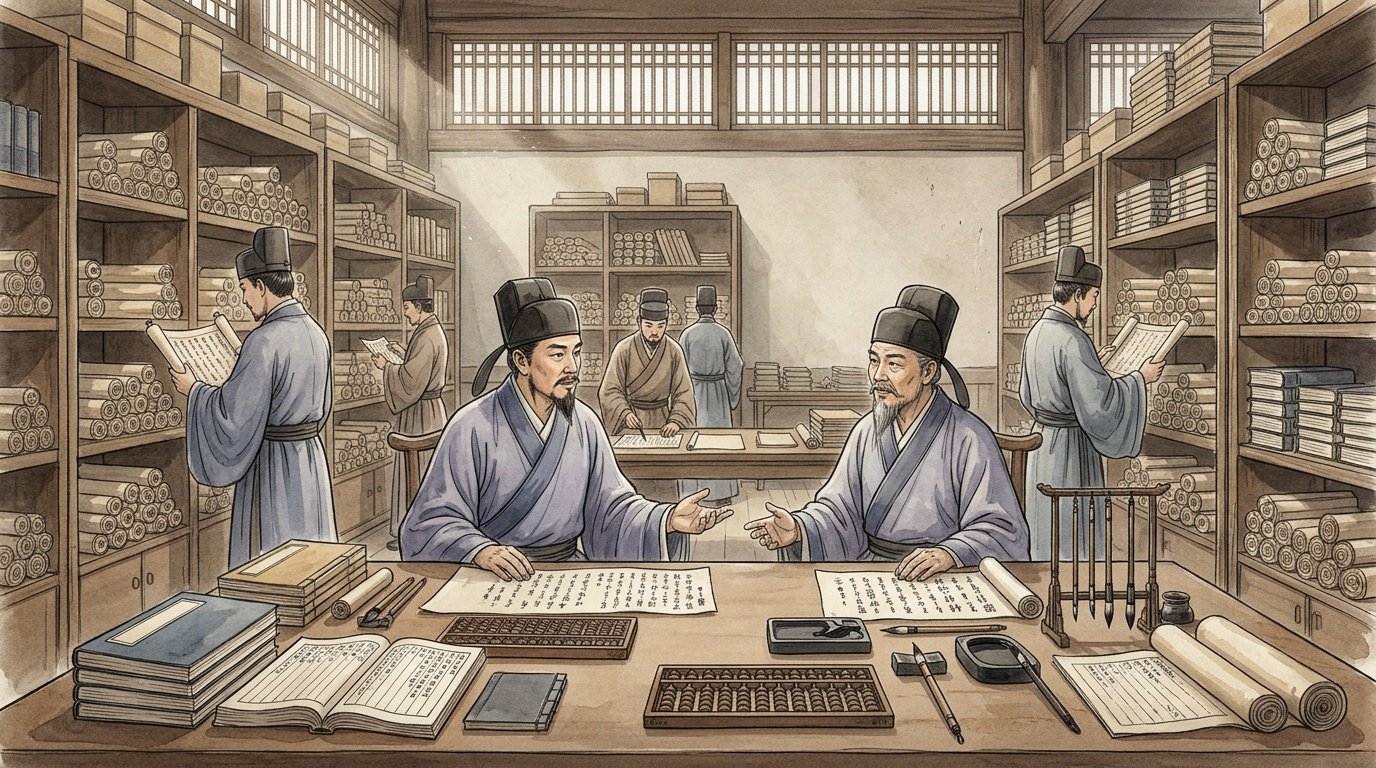
In the second lunar month of the second year of the Xining era (1069 CE), a young, fiercely ambitious monarch and an uncompromising intellectual radical sat face to face inside the inner sanctum of the imperial palace in Kaifeng (开封). The emperor was twenty-year-old Song Shenzong (宋神宗, Zhao Xu, r. 1067–1085 CE), burning with a humiliating generational grief: the supreme civilized empire of the Central Plains was forced to pay humiliating annual subsidies of silver and silk to the Khitan Liao Empire in the north and the Tangut Western Xia in the west, while its own state coffers were chronically empty and its million-man mercenary army was unable to win a decisive frontier campaign. Sitting across from him was the forty-eight-year-old scholar-statesman Wang Anshi (王安石, 1021–1086 CE, courtesy name Jiefu 介甫), recently appointed Vice Grand Councilor (参知政事, Canzhi Zhengshi). When Shenzong asked what should be done to rescue the dynasty from internal decay and external humiliation, Wang Anshi offered a response that shook the foundations of Confucian political thought to their core:
「善理财者,不加赋而国用足。」
— Wang Anshi (王安石), dialogue with Emperor Shenzong, recorded in Xu Zizhi Tongjian Changbian (续资治通鉴长编)
‘He who excels at managing the wealth of the realm can ensure the state’s coffers are abundantly filled without increasing the tax burdens upon the common people.’
Standing in vehement, unyielding opposition to this visionary claim was the greatest historian of imperial China, Sima Guang (司马光, 1019–1086 CE, courtesy name Junshi 君实). Elegant, aristocratic, and steeped in classical moral philosophy, Sima Guang retorted with a zero-sum economic doctrine that would define conservative thought for centuries:
「天地所生财货百物,止有此数,不在民间,则在公家。安石以为能益国用而民不伤,此乃桑弘羊欺汉武帝之言,安得信之!」
— Sima Guang (司马光), rebuttal in imperial court audience, 1069 CE
‘The wealth, commodities, and hundred goods produced by Heaven and Earth have an absolute, finite limit. If they are not in the hands of the people, they are in the hands of the state! Wang Anshi claims he can multiply state revenue without harming the people—this is nothing more than the deceitful rhetoric with which Sang Hongyang deceived Emperor Wu of Han! How could Your Majesty possibly believe such folly?’
This explosive confrontation marked the opening salvos of the New Policies (新法, Xin Fa, also known as the Xining Reforms 熙宁变法)—the most radical, comprehensive, and intellectually sophisticated program of state-led socioeconomic engineering in pre-modern world history. For nearly two decades, Wang Anshi mobilized the absolute authority of the Song imperial state to transform government from a passive tax-collector into an active commercial enterprise, agricultural financier, market stabilizer, and public works coordinator. The state offered micro-loans to impoverished peasant farmers, cornered wholesale commodity markets to eliminate private mercantile cartels, monetized forced corvée labor, created national mutual-security militias, and dismantled eight centuries of literary-focused civil service examinations.
Yet this audacious attempt to create a prosperous state and a mighty army (富国强兵, Fuguo Qiangbing) fractured the Northern Song political elite into irreconcilable ideological factions. The struggle pitted Wang Anshi and his cadre of reformist technocrats against an astonishing constellation of the greatest intellectual luminaries of the Song golden age: not only Sima Guang, but the literary giant Su Shi (苏轼), the prose master Ouyang Xiu (欧阳修), the elder statesman Han Qi (韩琦), and the pioneer of Neo-Confucian metaphysics Cheng Hao (程颢). What began as a high-minded debate over political economy degenerated over the next half-century into vicious, vindictive factional purges (党争, Dangzheng). By weaponizing state power to persecute philosophical rivals, both factions hollowed out the institutional fabric of the Song state, creating the toxic administrative paralysis that left Kaifeng completely defenseless when the Jurchen cavalry swept south across the Yellow River in the catastrophic Jingkang Incident of 1127 CE.
This monograph provides an exhaustive political, economic, institutional, and historiographical investigation of Wang Anshi’s New Policies and his epic duel with Sima Guang. We will analyze the structural crisis of the mid-Northern Song characterized by the ‘Three Redundancies’ (三冗); reconstruct the revolutionary philosophical architecture of the New Policies; conduct a rigorous operational dissection of key reform measures—including the Green Sprouts Law (青苗法), Equitable Transportation (均输法), Market Exchange (市易法), Service Exemption (免役法), and the Baojia militia system (保甲法); trace Sima Guang’s fifteen-year exile in Luoyang and his monumental creation of the Comprehensive Mirror in Aid of Governance (资治通鉴); document the climatic political crisis triggered by Zheng Xia’s Refugee Chart (流民图); examine the vindictive anti-reform rollback of the Yuanyou era (元祐更化); and evaluate the lasting legacy of Wang Anshi across a millennium of Chinese historiography—from Confucian condemnation as a ‘dynasty-destroying villain’ to twentieth-century veneration as an early socialist pioneer.
1. The Structural Crisis of Mid-Song: The Curse of the ‘Three Redundancies’ (三冗)
To understand why a conservative agrarian civilization embraced such radical economic experimentation, one must confront the profound structural paradox of the mid-eleventh-century Northern Song. Externally, the dynasty presided over the most sophisticated, commercialized, and populous economy on earth. The introduction of early-ripening Champa rice from Southeast Asia had sparked an agricultural revolution; the Grand Canal transported millions of bushels of grain northward each year; commercial paper currency (Jiaozi 交子) was circulating in Sichuan; and Kaifeng had swelled into a sleepless, neon-lit metropolis of over one million inhabitants. Yet beneath this veneer of radiant affluence, the Song imperial treasury was plunging toward systemic bankruptcy.
This structural paralysis was diagnosed by contemporary scholar-officials as the crisis of the ‘Three Redundancies’ (三冗, San Rong):
- 1. Redundant Officials (冗官, Rong Guan): To eliminate the threat of military warlordism that had destroyed the Tang, the Song founders had deliberately constructed an enormous, hyper-centralized civil bureaucracy governed by institutional checks and balances. Civil officials were showered with generous stipends, housing subsidies, and hereditary privilege (荫补, Yinbu)—which allowed high-ranking mandarins to automatically confer official rank upon their sons, grandsons, and in-laws without passing examinations. Between 1000 and 1060 CE, the number of registered imperial officials doubled from roughly 10,000 to more than 24,000, creating thousands of sinecures where multiple bureaucrats shared a single nominal title with zero administrative responsibilities, draining imperial reserves purely in luxury stipends.
- 2. Redundant Soldiers (冗兵, Rong Bing): Following the principle of ‘gathering elite troops in the capital and enlisting vagrants in times of famine’ (募兵制), the Song state treated the imperial army as a massive, permanent domestic welfare program. Whenever floods, droughts, or locust plagues struck the countryside, imperial recruiters enrolled hundreds of thousands of starving, displaced young men into the military ranks to prevent them from joining bandit rebellions. By the reign of Emperor Renzong (r. 1022–1063 CE), the Song standing army had ballooned to an astounding 1.25 million soldiers. Yet because these men were poorly trained, ill-equipped, and permanently garrisoned away from the borders under civilian oversight, their military effectiveness was abysmal. Over eighty percent of the entire annual tax revenue of the Song empire was consumed merely by feeding, clothing, and paying salaries to this colossal, combat-ineffective mercenary standing army.
- 3. Redundant Expenses (冗费, Rong Fei): Alongside official stipends and military maintenance, the Song court was bleeding capital through religious rituals, lavish imperial grants to imperial clan members, and the annual diplomatic indemnities paid to predatory northern nomad powers. Under the Treaty of Chanyuan (1005 CE) with the Khitan Liao and the Qingli Accord (1044 CE) with the Western Xia, the Song treasury exported hundreds of thousands of ounces of pure silver and hundreds of thousands of bolts of silk every single year to purchase precarious peace.
By the time Emperor Yingzong took the throne in 1063 CE, the imperial budget had slipped into permanent, structural deficit. In 1065 CE, the State Finance Commission (三司, Sansi) reported an annual revenue of approximately 35 million strings of cash against expenditures of over 38 million strings—a staggering peacetime shortfall of 3 million strings. When the brilliant, iron-willed twenty-year-old Emperor Shenzong ascended the throne in 1067 CE, he realized that unless the financial machinery of the dynasty was fundamentally overhauled, the Song would collapse under the weight of its own administrative overhead or fall prey to a renewed northern invasion.
2. The Radical Visionary: Wang Anshi and the Ten Thousand Word Memorial
Born into a scholar-official family in Linchuan (modern Fuzhou, Jiangxi), Wang Anshi was an intellectual maverick who defied every stereotype of the courtly mandarin. Disheveled, unkempt, and indifferent to personal hygiene—contemporary accounts noted that he frequently wore grease-stained robes and went months without washing his face—Wang Anshi possessed an incandescent intellect, an encyclopedic mastery of classical texts, and an unshakeable, messianic self-confidence. Passing the highest level of the imperial examinations (jinshi) in 1042 CE at the tender age of twenty-one, Wang Anshi deliberately declined prestigious metropolitan appointments in Kaifeng, choosing instead to spend nearly two decades serving in grassroots local administration across southern China: as magistrate of Yinxian (modern Ningbo, Zhejiang), controller in Changzhou, and judicial commissioner in Jiangnan.
It was in the muddy ditches, rice paddies, and bustling canal markets of the Yangtze delta that Wang Anshi formed his radical political economy. Unlike metropolitan scholars who viewed society through the idealized moral lens of the Confucian Analects, Wang Anshi observed the brutal economic realities of agrarian life firsthand. He witnessed how poor peasant families, lacking capital during the lean spring planting season, were forced to take loans from wealthy landed gentry and usurious merchants at extortionate interest rates of 50 to 100 percent. When autumn harvest arrived, peasants were forced to dump their grain on the market all at once, depressing crop prices and leaving them unable to repay their debts. The result was a catastrophic cycle of rural dispossession: freeholding peasants lost their land, became dispossessed tenants or vagrants, and the state lost its taxable agrarian base, while wealthy landlords accumulated vast tax-exempt estates through illicit influence.
In 1058 CE, Wang Anshi submitted his legendary Ten Thousand Word Memorial (上仁宗皇帝言事书, Shang Renzong Huangdi Yanshi Shu) to Emperor Renzong. In this sweeping manifesto, Wang Anshi argued that the dynastic crisis was not caused by moral degeneration, but by the complete breakdown of institutional systems (法度, fadu). Drawing inspiration not from the conservative Spring and Autumn Annals, but from the highly interventionist, administrative blueprint of the Rites of Zhou (周礼, Zhou Li), Wang Anshi asserted that the ancient sage kings had never been passive moral exemplars. Rather, the sage kings had actively managed production, organized labor, redistributed resources, and mobilized the entire population for national defense.
Wang Anshi summarized his radical administrative ethos in three revolutionary slogans that terrified conservative court ministers:
「天变不足畏,祖宗不足法,人言不足恤。」
— Attributed to Wang Anshi and his reformist circle, recorded in Song Shi (宋史)
‘Anomalies of Heaven are not to be feared;
The ancestral precedents of the dynasty are not binding laws;
The gossip and clamor of human opinion are not to be heeded!’
In Wang Anshi’s view, human institutions had to adapt dynamically to historical conditions. The sacred precedents of Song Taizu and Taizong were not eternal dogmas; if they generated deficits and military impotence, they had to be smashed. When Emperor Shenzong summoned Wang Anshi to Kaifeng in 1068 CE, the young emperor found in the Linchuan philosopher the intellectual weapon he had spent his youth searching for.
3. The Philosophical Great Schism: State Activism vs. Moral Agrarianism
The epic clash between Wang Anshi and Sima Guang was not a sordid struggle for personal power; it was a profound philosophical debate regarding the moral nature of political power, the limits of state authority, and the fundamental mechanics of macroeconomic wealth. Sima Guang was the intellectual champion of traditional Confucian agrarian conservatism, grounded in the aristocratic sensibilities of northern gentry lineages. Sima Guang believed that the universe operated under a fixed moral order: the sole duty of government was to cultivate moral virtue, practice frugality, minimize taxation, and leave the agrarian populace in tranquil stability (无为而治, wuwei er zhi).
In Sima Guang’s economic worldview, wealth was finite and physical: it consisted of actual bushels of wheat and bolts of silk produced by peasant labor. Government could not magically ‘create’ new wealth; whenever the state increased its revenues, it was unavoidably confiscating resources from the private sphere. Therefore, for the state to engage in commerce, loan capital at interest, or manipulate grain prices was a monstrous abdication of royal dignity—a vulgar descent into merchant greed (与民争利, yu min zheng li, ‘competing with the common people for profit’) that would corrupt the moral fabric of civilization.
Wang Anshi demolished this zero-sum logic with an astonishingly modern concept of economic dynamism. Wealth, Wang Anshi countered, was not a fixed, stagnant stock of physical grain; wealth was the product of circulation, capital liquidity, and productive capacity. When poor farmers were crushed by private usury, land fell fallow and productive potential was permanently destroyed. If the state intervened by providing cheap credit, financing irrigation canals, and stabilizing agricultural prices, it stimulated aggregate national production (发人之生财). By growing the overall economic pie, the state could extract abundant fiscal revenue from the newly created surplus without increasing the tax rate on individual households. The state was not ‘competing with the people for profit’; it was protecting the small producer from the predatory monopolists, merchant cartels, and great landlords (兼并之家, jianbing zhi jia) who sucked the lifeblood from both the dynasty and the peasantry.
This irreconcilable divergence of worldview was immortalized in 1070 CE when Wang Anshi penned his famous literary masterwork, Reply to Vice Censor Sima Guang (答司马谏议书, Da Sima Jianyi Shu). Responding line by line to Sima Guang’s accusations that the New Policies were ‘invading official duties, stirring up trouble, competing for profit, and rejecting criticism,’ Wang Anshi declared:
「受命于人主,议法度而修之于朝廷,以授之于有司,不为侵官;举先王之政,以兴利除弊,不为生事;为天下理财,不为征利;辟邪说,难壬人,不为拒谏……」
— Wang Anshi (王安石), Da Sima Jianyi Shu (答司马谏议书), 1070 CE
‘Having received the mandate of our Sovereign Lord to deliberate upon the laws and institutions, to revise them in court, and to hand them down to the relevant executive bureaus—this is not “invading official duties.”
To elevate the statecraft of the ancient Sage Kings in order to promote public benefit and eliminate systemic decay—this is not “stirring up trouble.”
To manage the wealth of all under Heaven for the public good—this is not “competing for vulgar profit.”
To refute pernicious doctrines and rebut deceitful men—this is not “rejecting sincere remonstrance”!’
Unable to tolerate Wang Anshi’s absolute ascendancy, Sima Guang withdrew from the central court in 1071 CE, taking up an honorary sinecure in the western capital of Luoyang (洛阳). There, for the next fifteen years, Sima Guang secluded himself in his modest Garden of Solitary Delight (独乐园), dedicating his life to writing the 294 volumes of the Zizhi Tongjian, while nursing a burning, cold determination to dismantle every single line of Wang Anshi’s reforms should fortune ever return him to supreme power.
4. The Financial Engine: Dissecting the Major Economic Reforms
Backed by Emperor Shenzong’s unreserved patronage, Wang Anshi bypassed the conservative Grand Council and State Finance Commission by establishing a brand-new super-ministry in 1069 CE: the Commission for Regulating Imperial Finance (制置三司条例司, Zhizhi Sansi Tiaoli Si). Staffed by brilliant, energetic young technocrats such as Lu Huiting, Zeng Bu, and Zhang Zun, this commission drafted and implemented an unprecedented barrage of radical economic edicts between 1069 and 1074 CE.
A. The Green Sprouts Law (青苗法, Qingmiao Fa, 1069 CE)
The absolute centerpiece of Wang Anshi’s economic program was state-sponsored agricultural credit. Under the Green Sprouts Law, local county authorities used reserves from the public granaries (常平仓, Changping Cang) to disburse low-interest cash and grain loans directly to peasant households twice a year: first in the early spring during planting (when peasant stores were exhausted and seedlings were ‘green sprouts’), and second in the summer during weeding. Peasant borrowers were organized into mutual-guarantee groups of five to ten households (甲, Jia). When the autumn harvest arrived, peasants repaid their loans in grain or cash at an official annual interest rate of twenty percent.
To modern eyes, an interest rate of 20% seems steep, but in eleventh-century China, where private rural moneylenders charged between 50% and 100% per planting cycle, state credit at 20% was revolutionary. The policy achieved two goals simultaneously: it broke the predatory monopoly of the rural gentry-usurers, keeping peasant farmers on their land, while generating massive, reliable cash surpluses for the imperial treasury. At its height, the Green Sprouts Law disbursed over three million strings of cash annually, yielding hundreds of thousands of strings in net revenue for the central state.
B. The Equitable Transportation Law (均输法, Junshu Fa, 1069 CE)
Prior to the reforms, the tribute tax system of the Song was extraordinarily wasteful. Each southern circuit was legally required to deliver specified local agricultural commodities—such as grain, silk, wax, or timber—directly to the imperial warehouses in Kaifeng, regardless of local harvests or transportation bottlenecks. If a local crop failed, officials had to purchase goods at exorbitant prices from private merchants, while Kaifeng warehouses often overflowed with useless commodities that rotted on the docks. Under the Equitable Transportation Law, the Director of River Transport in the six southeastern circuits was empowered to practice market arbitrage. The state purchased surplus commodities wherever they were cheapest, sold them in markets where prices were high, and used the cash proceeds to procure whatever goods the Kaifeng imperial court actually needed at current market prices. By turning the state into an active, flexible commercial logistics operator, the system slashed transportation waste, reduced procurement costs by millions of strings, and eliminated the predatory profits of speculative merchant cartels.
C. The Market Exchange Law (市易法, Shiyi Fa, 1072 CE)
Extending the commercial intervention of the state into urban retail and wholesale markets, the Market Exchange Law established state trading bureaus (市易务) in major commercial hubs like Kaifeng, Hangzhou, and Chengdu. When private wholesale merchants dumped goods on the market during periods of oversupply, the State Trading Bureau stepped in to purchase the unsold goods at a fair floor price, preventing market collapse. When shortages occurred, the state released the commodities onto the market at stabilized prices to curb price-gouging. Furthermore, the bureau extended collateralized loans to small shopkeepers and peddlers at an annual interest rate of 10% to 20%, breaking the grip of the elite merchant guilds (hang 行). In effect, Wang Anshi transformed the imperial state into a central bank, commodity clearinghouse, and commercial stabilizer.
D. The Service Exemption Law (免役法 / 募役法, Mianyi Fa, 1071 CE)
For centuries, the traditional Chinese state had relied upon Chaiyi (差役)—forced, unpaid labor obligations conscripted directly from agrarian households to perform hazardous public tasks: serving as village bailiffs, tax collectors, granary watchmen, river dyke workers, and courier station managers. Because a single spell of bad luck—such as a tax shipment stolen by bandits or grain spoiled by rain—could bankrupt a middle-class peasant family, wealthier households bribed corrupt clerks to evade duty, while smallholders were dragged into financial ruin. Wang Anshi abolished forced corvée labor entirely, replacing it with a graduated cash tax known as the Exemption Fee (免役钱, Mianyi Qian), assessed according to property wealth. Even previously tax-exempt groups—such as Buddhist monasteries, government officials, and elite scholarly households—were compelled to pay a reduced ‘Auxiliary Service Fee’ (助役钱, Zhuyi Qian). With these immense cash reserves, the state hired professional, salaried workers to perform public administration and infrastructure projects. This reform liberated millions of peasants to focus exclusively on agricultural production and monetized the imperial economy to an unprecedented degree.
E. The Square Fields and Equitable Tax Law (方田均税法, Fangtian Junshui Fa, 1072 CE)
To eliminate systemic tax evasion by the landed aristocracy, Wang Anshi launched a nationwide cadastral land survey. Government surveyors measured arable land into squares of one thousand paces (roughly 41 modern hectares or 240 mu), recorded the precise soil fertility, classified the land into five progressive fertility grades, and registered ownership in the official ‘Fish Scale Registers’ (鱼鳞图册). Wealthy landlords who had secretly swallowed common lands or concealed their acreage were forced to pay taxes according to their actual holdings. Over 5.4 million qing (approx. 33 million hectares) of previously unrecorded or under-reported taxable land were successfully restored to the imperial tax rolls, dramatically broadening the fiscal foundation of the dynasty.
5. The Iron Fist of Defense: The Baojia System and Military Restructuring
Wang Anshi recognized that accumulating vast financial reserves in Kaifeng was futile if the state remained militarily impotent before the Khitan and Tangut empires. Yet rather than expanding the bloated mercenary standing army (禁军, Jinjun), Wang Anshi executed a radical program of military demobilization coupled with the creation of a universal national militia: the Baojia System (保甲法, 1070 CE).
The Baojia system organized every rural community in the empire into a strict decimal pyramid of mutual surveillance and collective security:
- 10 households formed a Bao (保), headed by a Bao Chief;
- 50 households formed a Big Bao (大保), headed by a Big Bao Chief;
- 500 households formed a Head Bao (都保), headed by an Imperial Commander.
Every household with two or more adult males was legally required to supply one able-bodied man to serve as a militia soldier (保丁, Baoding). During the agricultural off-season in winter, these militia units were subjected to rigorous martial training in archery, spear combat, formation maneuvering, and night patrolling led by professional military officers. In times of peace, the Baojia served as local police, maintaining village security, catching bandits, and extinguishing fires. In times of war, they formed an inexhaustible, highly motivated reserve army defending their own native soil. Simultaneously, Wang Anshi slashed the bloated ranks of the imperial standing army, cashiering tens of thousands of elderly, unfit mercenary soldiers. Within five years, the Song military budget was slashed by more than forty percent, while the empire mobilized over seven million registered Baojia militia troops nationwide.
To solve the chronic lack of warhorses—the supreme tactical weakness of the Song against northern nomadic cavalry—Wang Anshi introduced the Bao Horse Policy (保马法, Baoma Fa, 1072 CE). Under this law, the state provided healthy breeding mares or monetary subsidies to peasant households in the northern border circuits of Hebei, Hedong, and Shaanxi. The peasants were permitted to use the horses for farming tasks, but were obligated to care for them according to strict veterinary standards and surrender them to the imperial army in prime condition during military mobilizations. While the policy saved the state millions in pasture maintenance costs, it placed a terrifying burden on peasant households, who faced severe financial ruin if an imperial horse died of sickness or accident.
6. The Revolution of the Mind: Civil Service Examinations and the Three Classics
Wang Anshi understood that his revolutionary socioeconomic structures could not endure if the imperial bureaucracy continued to be staffed by traditional scholars whose minds were formed solely by the memorization of literary trivia. Since the Tang Dynasty, the imperial examination (科举, Keju) had prioritized the composition of ornamental rhymed prose (赋, Fu) and metered poetry (诗, Shi)—skills that produced brilliant lyricists but utterly incompetent administrators who knew nothing of taxation, hydrology, or military logistics.
In 1071 CE, Wang Anshi launched an administrative revolution that fundamentally reshaped Chinese education:
- Abolition of Poetry in the Keju: Wang Anshi permanently abolished the composition of poetry and rhymed prose from the imperial examinations. Candidates were no longer tested on rhyme schemes, but on their ability to analyze real-world political problems through Policy Essays (策, Ce) and Classical Interpretations (论, Lun) dealing with taxation, military strategy, judicial administration, and hydraulic engineering.
- The Promulgation of the ‘New Meaning of the Three Classics’ (三经新义, Sanjing Xinyi): To establish an unassailable philosophical orthodoxy for his reforms, Wang Anshi personally oversaw the compilation of comprehensive imperial commentaries on the Classic of Odes (诗经), the Classic of Documents (尚书), and the Rites of Zhou (周礼). The Rites of Zhou, which had long been treated with suspicion by orthodox scholars, was elevated to the supreme manual of statecraft. Wang Anshi’s interpretations were made the mandatory textbook for all imperial academies and the sole acceptable ideological standard for grading civil service examinations nationwide.
- The Imperial University Three-Hall System (太学三舍法): To bypass the unpredictability of the triennial examinations, Wang Anshi reformed the National University (太学) in Kaifeng into a structured meritocracy divided into three ascending tiers: the Outer Hall (外舍), Inner Hall (内舍), and Superior Hall (上舍). Students were subjected to continuous monthly examinations and moral assessments; those who achieved top grades in the Superior Hall were appointed directly to government posts without having to sit for the metropolitan Keju examinations.
This curricular overhaul enraged traditional scholars. Great men of letters like Su Shi (苏轼, Su Dongpo) argued passionately that moral judgment and cultural sensitivity could not be measured by technical policy questions. In a devastating memorial submitted to Shenzong in 1071 CE, Su Shi warned that by reducing the classics to rigid, ideological policy manuals, Wang Anshi was creating an army of cynical, opportunist bureaucrats who would parrot reformist slogans purely for personal career advancement, while obliterating the independent moral conscience of the literati.
7. Operational Realities: Corruption, Bureaucratic Coercion, and Implementation Failure
Why did an economic program possessing such extraordinary conceptual brilliance trigger widespread popular misery and elite resistance? The tragedy of the New Policies lay in the profound gulf between Wang Anshi’s visionary theory and the brutal operational realities of eleventh-century Chinese grassroots administration.
In the idealized blueprints drafted in Kaifeng, the Green Sprouts loans were entirely voluntary. In practice, however, local magistrates and clerks were evaluated by the central court based on the sheer volume of loans they disbursed and the total interest revenue they remitted to the capital. To meet these aggressive revenue quotas, local officials transformed voluntary credit into mandatory extortion. Magistrates forced affluent households to sign loan agreements against their will, compelling them to borrow funds they did not need, and then held them collectively liable when impoverished peasants in their mutual-guarantee groups inevitably defaulted.
Furthermore, grassroots bureaucratic corruption was rampant. When distributing the Green Sprouts loans, corrupt clerks deducted administrative handling fees, ‘wine money,’ and outright bribes, often paying peasants in debased copper coin or damaged grain. When the autumn harvest arrived, officials demanded repayment in premium grain or silver, manipulating scales and measuring bushels to extract 40% to 50% effective interest rates. Peasant households that suffered localized crop failures due to floods or pests were ruthlessly pursued by bailiffs; to satisfy government debts, families were forced to sell their draft oxen, mortgage their ancestral land, and sell their daughters into domestic servitude.
Similarly, the Market Exchange bureaus in urban centers rapidly devolved into oppressive state monopolies. Technocrats appointed to run the bureaus, such as Lü Jiayao and Wei Jizong, were judged by their net financial surplus. To maximize profits, state agents forcibly requisitioned commodities from merchant caravans at suppressed prices, barred independent shops from selling common goods like fruit, charcoal, and salt, and prosecuted private merchants who attempted to compete with state warehouses. Instead of protecting small peddlers from big monopolists, the state itself had become the supreme, predatory monopolist.
8. The Heavenly Rebuke: Zheng Xia’s Refugee Chart and the Crisis of 1074 CE
By the spring of 1074 CE, the Northern Song was gripped by a catastrophic natural disaster. Northern China had suffered nine consecutive months of bone-dry drought; dust storms choked the streets of Kaifeng, wells dried up, and winter wheat withered in the cracked earth across Hebei and Shaanxi. In traditional Confucian political cosmology, severe natural disasters were viewed as ‘Heavenly Warnings’ (天人感应, Tianren Ganying)—direct cosmic reprimands signaling that imperial governance was fundamentally perverse and that the sovereign had lost the moral favor of Heaven.
Inside the Forbidden City, conservative critics besieged Emperor Shenzong, crying that Heaven was weeping over Wang Anshi’s oppressive laws. Shenzong was deeply shaken. Yet the turning point came from an obscure, low-ranking official named Zheng Xia (郑侠, 1041–1119 CE), the keeper of the Ansu Gate in Kaifeng. A former student of Wang Anshi, Zheng Xia watched thousands of starving refugees from Hebei flooding through the city gates every day: skeletal men clad in rags, women clutching dying infants, and families who had dismantled their homes to sell the timber to pay Green Sprout debts.
Risking decapitation for unauthorized memorialization, Zheng Xia painted a harrowing, graphic visual handscroll titled The Chart of Displaced Refugees (流民图, Liumin Tu). The painting depicted horrifying scenes of suffering: peasants bound in wooden cangues being beaten by tax collectors, starving families eating wild weeds and tree bark, and parents weeping as they sold their children into slavery to repay state loans. Zheng Xia attached an explosive petition to the painting, demanding that it be delivered directly to the Emperor:
「愿纳臣之首于幽市,以谢天下!若按臣图行之,十日不雨,乞斩臣首以谢天下!」
— Zheng Xia (郑侠), memorial to Emperor Shenzong, 1074 CE
‘I beg Your Majesty to look upon this painting! Abolish the harmful New Policies, dismiss the tyrannical officials, and if torrential rain does not fall within ten days, I submit my own neck to be severed in the public market to atone to all under Heaven!’
When Emperor Shenzong unrolled the scroll in his private bedchamber, he was overcome with horror and wept openly through the night. The following morning, the Empress Dowager Cao (widow of Renzong) and Empress Dowager Gao confronted Shenzong with tears, weeping: ‘Wang Anshi is tearing the empire to pieces! How can you stake the dynasty on this one man?’ Shattered by guilt and fear of cosmic retribution, Shenzong ordered the immediate suspension of eighteen major reform decrees, including the Green Sprouts Law and the Market Exchange Law, opened the imperial granaries to distribute free relief porridge, and dismissed Wang Anshi from the Grand Council in the fourth lunar month of 1074 CE. By an extraordinary meteorological coincidence, heavy rain poured across northern China within days of the decree, cementing the popular conviction that the New Policies had offended Heaven itself.
9. Sima Guang’s Solitary Fortress: The Fifteen-Year Creation of the Zizhi Tongjian
While Wang Anshi was reshaping the Song state in Kaifeng, Sima Guang was fighting a long, patient war of ideas from his self-imposed political exile in the western capital of Luoyang. Between 1071 and 1084 CE, Sima Guang withdrew completely from political life. Rejecting all invitations to inspect regional administration, he lived in an unadorned compound with a submerged, subterranean study dug into the earth to escape the summer heat—which he named his ‘Cellar Study’ (藏书洞).
Here, supported by three brilliant archival researchers—Liu Bin, Liu Shu, and Fan Zuyu—Sima Guang devoted fifteen years of monastic labor to compiling the greatest chronological narrative history of China ever written: the Zizhi Tongjian (资治通鉴, Comprehensive Mirror in Aid of Governance). Spanning 294 fascicles and encompassing over three million Chinese characters, the chronicle covered sixteen dynasties and 1,362 years of history (from the Partition of Jin in 403 BCE to the founding of the Song in 960 CE).
The Zizhi Tongjian was not an exercise in detached academic antiquarianism; it was a devastating, monumental polemic aimed directly at Wang Anshi’s philosophy of statecraft. Through meticulous chronological narrative, Sima Guang demonstrated that dynastic rise and fall did not depend upon fiscal cleverness or military mobilization. Every time an emperor—such as Emperor Wu of Han or Emperor Yang of Sui—had mobilized state power to extract wealth, monopolize commerce, and wage aggressive foreign wars, the dynasty had invariably plunged into peasant rebellion and catastrophic collapse. Conversely, lasting peace and dynastic survival had only been achieved by sovereigns who practiced moral restraint, maintained ancestral precedents, respected the privileges of the landed gentry, and kept the hands of the state out of the pockets of the common people. When Sima Guang presented the completed masterpiece to Emperor Shenzong in 1084 CE, the emperor was so moved that he personally composed the imperial preface, naming the work ‘The Mirror that Aids Governance’ (资治通鉴).
10. The Yuanyou Reaction: The Great Rollback and Factional Destruction (1085–1093 CE)
The political balance of power was shattered forever in the third lunar month of 1085 CE, when Emperor Shenzong died suddenly at the age of thirty-seven, broken by the catastrophic defeat of his armies against the Western Xia at the battle of Yongle City. Shenzong was succeeded by his nine-year-old son, Emperor Zhezong (宋哲宗). Real imperial power fell into the hands of the Grand Empress Dowager Gao (高太后), an unyielding, reactionary conservative who had despised Wang Anshi for two decades. The Empress Dowager immediately recalled the sixty-six-year-old Sima Guang from Luoyang, appointing him Grand Councilor (宰相) and granting him absolute executive authority to govern the realm.
What followed between 1085 and 1093 CE is known in Chinese history as the Yuanyou Reaction (元祐更化, Yuanyou Genghua). Sima Guang, physically frail and consumed by terminal illness, was driven by a frantic, obsessive desire to purge the state of every trace of reform before he died. Rejecting the moderate advice of Su Shi—who urged him to retain effective measures like the Service Exemption Law—Sima Guang launched a total, indiscriminate demolition of the New Policies under the sweeping slogan ‘Discard All Evils’ (悉罢新法). In an astonishing frenzy lasting barely eighteen months:
- The Service Exemption Law was abolished with only five days’ notice, forcibly resurrecting the universally detested corvée labor system and throwing rural administration into utter chaos.
- The Green Sprouts Law, Market Exchange bureaus, and square fields land surveys were terminated overnight.
- The Baojia militia was demobilized, and the northern military breeding horse quotas were canceled.
- All reformist officials—including Zhang Dun, Cai Bian, and Lü Huiqing—were purged from office and banished to remote southern exile.
- In foreign policy, Sima Guang took the extraordinary, humiliating step of unilaterally ceding strategic border forts and territory in Shaanxi back to the Tangut Western Xia, arguing that holding them offended moral benevolence.
Sima Guang died in the ninth lunar month of 1086 CE, having served as Grand Councilor for only sixteen months, his body exhausted by frantic overwork. In Jiangnan, living in retirement at his Bell Mountain estate (钟山) in Jinling, Wang Anshi heard of the total demolition of his life’s work and the resurrection of forced corvée labor. The fallen reformer wept aloud, spat blood, and passed away in the fourth lunar month of 1086 CE at the age of sixty-four. The two ideological giants of the eleventh century departed the historical stage within five months of each other.
11. The Curse of Dangzheng: The Yuanyou Stele and the Road to Jingkang
The tragedy of the New Policies did not end with the deaths of Wang Anshi and Sima Guang; it mutated into an incurable systemic cancer of factional warfare (党争, Dangzheng) that paralyzed the Song state for the next four decades. When the Grand Empress Dowager Gao died in 1093 CE, the young Emperor Zhezong took personal control of the government. Deeply resentful of the conservative regency that had treated him like a child, Zhezong swung the pendulum violently back to the left, resurrecting the New Policies under the banner of ‘Inheriting the Ancestral Will’ (绍述, Shaoshu) and exiling the conservative ministers of the Yuanyou era to the tropical wastes of Lingnan and Hainan Island (including Su Shi).
When Emperor Huizong (宋徽宗) ascended the throne in 1100 CE, the factional struggle devolved into naked, tyrannical despotism under the infamous Chancellor Cai Jing (蔡京, 1047–1126 CE). Claiming to be the true intellectual heir of Wang Anshi, Cai Jing weaponized the rhetoric of the New Policies to establish a corrupt personal dictatorship. Under the guise of state economic intervention, Cai Jing established predatory monopolies, debased the copper currency, printed trillions of unbacked paper bills, and levied ruinous taxes to finance Emperor Huizong’s megalomaniacal artistic pursuits and the construction of the imperial pleasure park Genyue (艮岳).
In 1102 CE, Cai Jing took the ultimate step of institutionalizing ideological persecution. He ordered the names of 309 conservative scholars and officials—including Sima Guang, Su Shi, Huang Tingjian, and Cheng Hao—to be carved onto massive marble tablets known as the Yuanyou Treason Stele (元祐党籍碑, Yuanyou Dangji Bei). Copies of the stele were erected in front of every county government office across the entire Chinese empire. The descendants of the blacklisted Yuanyou scholars were legally barred from entering Kaifeng, banned from sitting for imperial examinations, and forbidden from marrying into the imperial clan. The intellectual vitality of the Song literati was extinguished; independent remonstrance was criminalized; and the imperial administration was packed with corrupt opportunists who praised the Emperor while robbing the state.
When the nomadic Jurchen horsemen of the Jin Dynasty swept down from Manchuria in 1126 CE, they encountered a Song state whose coffers had been emptied by Cai Jing’s kleptocracy, whose professional armies were hollow shells, and whose administrative elite had spent fifty years purging one another instead of preparing for war. In the freezing winter of 1127 CE, Kaifeng was sacked, Emperor Huizong and Emperor Qinzong were dragged northward in wooden cages, and the Northern Song perished in the catastrophic Jingkang Incident (靖康之变). In the bitter historical memory of the Southern Song survivors, the disaster was laid squarely at the feet of one man: Wang Anshi.
12. A Millennium of Judgment: From Traitorous Demagogue to Socialist Pioneer
For more than eight centuries following the fall of Northern Song, Wang Anshi was condemned by orthodox Confucian historiography as one of the supreme villains of Chinese imperial history. Southern Song chroniclers, seeking a scapegoat for the loss of the Central Plains, constructed a direct causal chain connecting Wang Anshi’s reforms to the rise of Cai Jing and the Jurchen sack of Kaifeng. In the official History of Song (宋史), compiled under the Mongol Yuan dynasty, Wang Anshi was placed in the biographies of treacherous ministers, his policies branded as vulgar, legalist greed disguised as classical scholarship.
This historical verdict was radically overturned at the dawn of the twentieth century. In 1908, amidst the collapsing Qing Dynasty and the urgent drive to modernize China, the brilliant intellectual reformer Liang Qichao (梁启超) published his groundbreaking biography, Biography of Wang Jinggong (王荆公传). Liang Qichao resurrected Wang Anshi as a prophetic genius—a man born eight centuries ahead of his time who had anticipated modern Western political economy:
「若乃中国四千年一大事,则首推王荆公之政变矣……公之政相,全以国家社会主义为归宿!」
— Liang Qichao (梁启超), Biography of Wang Jinggong (王荆公传), 1908
‘If we consider the single greatest event in four thousand years of Chinese history, it must be the political transformation wrought by Duke Wang of Jing! His statecraft was grounded entirely in state socialism!’
To Liang Qichao, the Green Sprouts Law was the world’s earliest agricultural credit cooperative; the Market Exchange bureaus were state anti-monopoly trading commissions; and the Service Exemption Law was modern progressive income taxation. Later in the twentieth century, both Marxist historians in the People’s Republic of China and Western scholars such as Peter Bol, Richard von Glahn, and Paul Smith re-evaluated the New Policies as the climax of medieval Chinese state-building—a heroic, tragic attempt to liberate imperial statecraft from agrarian paralysis and create an integrated, fiscally sustainable, and socially responsive commercial empire.
13. Chronology of the New Policies and the Song Factional Schism (1058–1106 CE)
| Year (CE) | Historical Event | Key Historical Figures | Political & Economic Significance |
|---|---|---|---|
| 1058 | The Ten Thousand Word Memorial | Wang Anshi, Emperor Renzong | Wang Anshi presents radical reform manifesto diagnosing systemic institutional breakdown |
| 1067 | Ascension of Emperor Shenzong | Emperor Shenzong (Zhao Xu) | Twenty-year-old monarch takes throne determined to achieve ‘Prosperous State and Mighty Army’ |
| 1069 (Feb) | Appointment of Wang Anshi; Commission Established | Emperor Shenzong, Wang Anshi | Wang Anshi made Vice Grand Councilor; Finance Regulation Commission created to draft laws |
| 1069 (Autumn) | Promulgation of Green Sprouts & Equitable Transport Laws | Wang Anshi, Lu Huiting | State agricultural micro-credit at 20% and commercial logistics arbitrage officially launched |
| 1070 | Promulgation of the Baojia System | Wang Anshi | Universal decimal mutual-security militia created; imperial military budget slashed |
| 1070 | The Da Sima Jianyi Shu Letter | Wang Anshi, Sima Guang | Philosophical rupture finalized; Wang defends state activism; Sima Guang prepares retreat |
| 1071 | Sima Guang Retires to Luoyang; Keju Reforms | Sima Guang, Su Shi, Wang Anshi | Poetry abolished from Keju; Sima Guang begins 15-year compilation of Zizhi Tongjian |
| 1072 | Market Exchange & Square Fields Laws Enacted | Wang Anshi, Zeng Bu | State trading bureaus open; nationwide land survey registers 33 million hectares of hidden fields |
| 1074 (Spring) | Zheng Xia’s Refugee Chart; First Resignation | Emperor Shenzong, Zheng Xia, Wang Anshi | Drought triggers cosmic crisis; Shenzong weeps over painting; Wang Anshi temporarily dismissed |
| 1075–1076 | Wang Anshi Recalled and Second Resignation | Wang Anshi, Emperor Shenzong | Factional infighting among reformers; Wang Anshi permanently retires to Bell Mountain, Jinling |
| 1084 | Completion of the Zizhi Tongjian | Sima Guang, Emperor Shenzong | Sima Guang completes 294-volume masterpiece; Shenzong pens imperial preface |
| 1085 (Mar) | Death of Shenzong; Regency of Empress Dowager Gao | Emperor Shenzong, Empress Gao, Sima Guang | Nine-year-old Zhezong ascends; Empress Dowager Gao recalls Sima Guang to supreme power |
| 1085–1086 | The Yuanyou Reaction (元祐更化) | Sima Guang, Su Shi | Sima Guang wipes out New Policies in 18 months; forced corvée labor restored; reformers purged |
| 1086 (Apr/Sep) | Deaths of Wang Anshi and Sima Guang | Wang Anshi, Sima Guang | Wang Anshi dies at 64 in Jinling; Sima Guang dies at 66 in Kaifeng; giants depart the stage |
| 1093–1100 | Zhezong Resurrects New Policies (Shaoshu Era) | Emperor Zhezong, Zhang Dun | Emperor assumes personal rule; strikes back against conservatives; Su Shi exiled to Hainan |
| 1102 | Erection of the Yuanyou Treason Stele | Emperor Huizong, Cai Jing | Cai Jing blacklists 309 conservative scholars on stone steles; total ideological tyranny |
| 1127 | The Jingkang Incident; Fall of Northern Song | Emperor Huizong, Emperor Qinzong | Jurchens sack Kaifeng; Song court dragged into northern captivity; end of Northern Song |
14. Scholarly Bibliography and Primary Historical Sources
To substantiate the political records, economic figures, and historiographical analyses presented in this study, the following primary sources and academic monographs are recommended for further study:
- Li Tao (李焘, 1115–1184 CE), Long Draft of the Comprehensive Mirror in Aid of Governance (续资治通鉴长编, Xu Zizhi Tongjian Changbian): The indispensable primary chronological chronicle of the Northern Song Dynasty. Volumes 200 through 370 preserve the verbatim imperial dialogues between Shenzong, Wang Anshi, and Sima Guang, policy drafts, and memorial debates.
- Sima Guang (司马光, 1019–1086 CE), Comprehensive Mirror in Aid of Governance (资治通鉴, Zizhi Tongjian): Sima Guang’s 294-volume masterpiece of chronological political history, reflecting his conservative moral statecraft philosophy.
- Wang Anshi (王安石, 1021–1086 CE), Collected Works of Duke Wang of Linchuan (临川先生文集, Linchuan Xiansheng Wenji): Essential primary writings, containing the full text of the Ten Thousand Word Memorial (万言书), Da Sima Jianyi Shu (答司马谏议书), and classical treatises.
- Tuo Tuo (脱脱) et al. (comp. 1345 CE), History of Song (宋史, Song Shi): Crucial chapters include the Annals of Shenzong (Vols. 14–16), the Treatise on Food and Money (食货志, Vols. 173–186), the Treatise on Military Affairs (兵志), the Biography of Wang Anshi (Vol. 327), and the Biography of Sima Guang (Vol. 336).
- Liang Qichao (梁启超, 1908), Biography of Wang Jinggong (王荆公传, Wang Jinggong Zhuan): The seminal twentieth-century work of modern Chinese historiography that resurrected Wang Anshi from Confucian villain to pioneering socialist statesman.
- Bol, Peter K. (1992), “This Culture of Ours”: Intellectual Transitions in T’ang and Sung China, Stanford University Press: Masterful intellectual history analyzing the philosophical divergence between Wang Anshi’s systemic statecraft and the moral-cultural vision of Su Shi and the Neo-Confucians.
- Smith, Paul Jakov (1991), Taxing Heaven’s Storehouse: Horses, Bureaucrats, and the Destruction of the Sichuan Tea Monopoly, 1074–1224, Harvard University Asia Center: Authoritative study of the fiscal and bureaucratic machinery of the New Policies in the southwestern borderlands.
- von Glahn, Richard (2016), The Economic History of China: From Antiquity to the Nineteenth Century, Cambridge University Press: Essential modern macroeconomic analysis of Song monetization, commercial revolution, and Wang Anshi’s fiscal innovations.
- Chaffee, John W. (1995), The Thorny Gates of Learning in Sung China: A Social History of Examinations, State University of New York Press: Detailed examination of Wang Anshi’s reforms of the imperial civil service examinations and the Imperial University.
- Tackett, Nicolas (2017), The Origins of the Chinese Nation: Song China and the Northern Frontier, Cambridge University Press: Illuminating investigation of Northern Song geopolitical anxieties, border defense, and elite identity in the face of nomadic northern threats.