Lockdown University and the Long History of the Public Lecture
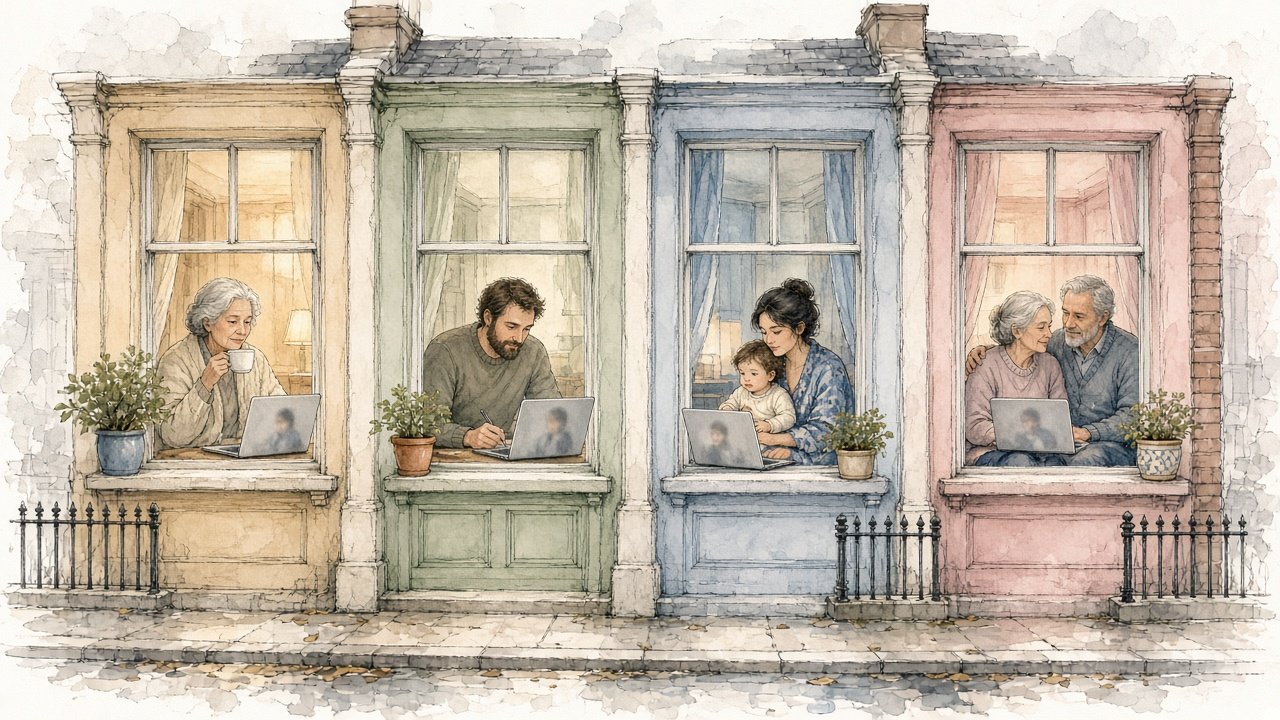
In the spring of 2020 a small group of family members and friends began meeting online to listen to a lecture. Within months the group had become a regular programme of webinars, and within a few years it had grown into an organisation with an archive of more than 2,900 recorded lectures, over 400 speakers and a membership that its own website puts at more than 20,000 people. The organisation is called Lockdown University, usually shortened to LU. It charges no fees, awards no degrees and has no campus. It is nonetheless one of the more striking examples of a very old institution adapted to a new medium. That institution is the public lecture.
This article describes what Lockdown University is, how it began and how it works. It then places it in the long history of lectures given to general audiences outside the formal university: the lecture theatres of the Royal Institution, the Mechanics’ Institutes of the early nineteenth century, the university extension movement, the Workers’ Educational Association, the educational broadcasting of the BBC, the Open University and the massive open online courses of the 2010s. The circumstances in which LU was founded are a starting point and nothing more. The more interesting question is why a format that is several centuries old proved so easy to carry onto a video screen, and what that says about the people who attend lectures for no reason other than wanting to learn.
The name and what it refers to
The phrase “lockdown university” is descriptive, and it has been used loosely by many people, for example for informal online courses, for collections of home-learning resources and for jokes about how people filled their time while confined at home. None of these uses produced a lasting institution. This article concerns the organisation that registered the name, operates the website lockdownuniversity.org and describes itself as “an online community and webinar series”. The name is a registered trade mark. A Canadian registration, for example, records “LOCKDOWN UNIVERSITY” as filed in December 2023 and registered in February 2026 in the name of a holding company based in the British Virgin Islands. On its own pages the organisation uses the name together with the registered trade mark symbol.
Founding
According to the organisation’s About page, Lockdown University was “founded in 2020 by Wendy Fisher, supported by the Kirsh Foundation”. In a short personal statement on the same page, Fisher explains that what “began with a small group of family and friends quickly evolved into a global community of lifelong students”. She adds a phrase that has become something of a motto for the project: “I like to say that 1 + 1 = 11.”
Wendy Fisher is a clinical psychologist and philanthropist who was raised in South Africa. She is a daughter of the businessman Nathan Kirsh, who was born in Potchefstroom in 1932 and built a large wholesale and investment business across southern Africa, the United States and elsewhere. The Kirsh family’s charitable work is carried out through the Kirsh Foundation, whose advisory board Fisher chairs. Her other cultural commitments are substantial. She founded the A4 Arts Foundation, a non-profit arts centre in Cape Town, and she serves as president of the board of trustees of the Solomon R. Guggenheim Foundation, the body responsible for the Guggenheim museums. Yeshiva University in New York has awarded her an honorary doctorate.
The precise first date of LU’s meetings is not given on its website, and the earliest lectures in the public archive are not dated earlier than the autumn of 2020. Accounts from people involved in its early months, however, place the beginning in the first period of national restrictions in 2020. National restrictions began in South Africa at the end of March 2020, and the founding circle was rooted there, although its lecturers soon included many based in London. The early sessions were held on Zoom and had the informal, conversational character of a gathering among acquaintances. A profile of Judge Dennis Davis in the Cape Jewish Chronicle recalls “the intimacy of early Zoom sessions”, which, it says, “has given way to a more impersonal, if far-reaching, exchange” as the audience grew to number “in the thousands worldwide”.
The core faculty
Lockdown University grew around a small number of lecturers who appeared week after week. The website lists them as “core faculty”, and the lecture counts recorded beside their names give a sense of the scale of the undertaking.
- Trudy Gold, historian and former chief executive of the London Jewish Cultural Centre, is credited with about 400 lectures.
- Patrick Bade, art historian and specialist in music and painting, is credited with more than 340.
- Professor David Peimer, a theatre director and scholar of literature and drama, is credited with more than 300.
- Rabbi Jeremy Rosen, a writer on Jewish history, religion and philosophy, is credited with more than 270.
- William Tyler, a historian of English art, literature and society, is credited with more than 250.
- Rabbi Jonathan Shippel, who presents a weekly reading of the biblical portion, the “Parsha of the Week”, is credited with more than 220.
- Judge Dennis Davis, a South African judge and former professor of law, is credited with nearly 140.
- Helen Fry, a historian of British intelligence and the Second World War, is credited with more than 100.
These figures are large by any measure. A university lecturer who teaches two courses of twenty lectures a year would need a decade to deliver as many lectures as several of these speakers have given to LU since 2020. Many of them were experienced teachers of adults long before LU existed. Trudy Gold, for example, spent decades directing adult education programmes in Jewish history in London. In an interview with the Jewish Chronicle she was described as now working “with the philanthropist Wendy Fisher offering online lectures at Lockdown University”.
The career of Dennis Davis shows how the format encouraged lecturers to widen their range. He began by speaking on law and politics. According to the Cape Jewish Chronicle, he was inspired by concerts he had attended in the United States, in particular one at Carnegie Hall at which the conductor Leonard Slatkin presented Beethoven’s Ninth Symphony after an explanatory first half. He then turned to music and produced a long sequence of lectures on the symphonies of Gustav Mahler, on jazz and on the classical repertoire. He also prepared a series called “Justice in Film”, on courtroom dramas such as Otto Preminger’s Anatomy of a Murder.
Guest speakers
Around the core faculty stands a much larger group of guest speakers. The library lists more than 400 names. They include academic historians, museum curators, judges, journalists, writers, musicians, physicians, rabbis, diplomats and public figures. Among those who have given one or more lectures are the artist William Kentridge, the novelist Howard Jacobson, the Assyriologist Irving Finkel of the British Museum, the historian Katja Hoyer, the art historian Keith Christiansen, the conductor Benjamin Zander, and the jazz broadcaster and historian Alyn Shipton. Some guests appear once. Others, such as the medical speakers who present an “Ask the Doctor” series, return regularly.
The breadth of this list is part of the programme’s design. A member who attends for a series on Renaissance painting may stay for a lecture on Romantic poetry, a talk by a working scientist or an interview with an author. The connections between topics are made by the audience rather than by a curriculum.
Programme and subjects
LU organises its archive under twelve topics: Arts and Culture; Current Events; Design and Architecture; Finance; Food; Geopolitics; History; Jewish History and Culture; Literature; Psychology; Religion and Philosophy; and Science and Technology. The two largest categories, Arts and Culture and Jewish History and Culture, each contain more than 800 lectures.
A great deal of the teaching is arranged in series rather than single talks. At the time of writing the calendar included an introductory course on Jewish history, moving from the Maccabees to Jewish life under Rome. Other recent lectures dealt with art and literature in eighteenth-century England, Wordsworth and English Romanticism, witches in literature, visionary impulses in modern art, the place of God in modern philosophy, and the relationship between words and music. Some series run for many weeks. Trudy Gold’s lectures on the history of the Jewish people and on the Holocaust, Patrick Bade’s on opera and painting, and David Peimer’s on drama and literature have each built up long cumulative sequences that resemble a course of study more than a set of separate events.
How it works
The working model is simple. Lectures are given live as webinars, usually in the late afternoon and evening, United Kingdom time, at a rhythm of several lectures a week. Times are often 5 p.m. and 7 p.m. in London, which also suits audiences in South Africa, Israel and continental Europe, and is early enough in the day for North America. Registration details are published on the website and sent to subscribers by email. Members watch from home, and questions are put to the speaker in writing through the webinar software and read out by a moderator at the end.
After the event, each lecture is added to the online library with a summary, a biography of the speaker, the slides used and, for many lectures, a full written transcript. The library can be filtered by speaker and topic and contains, by the site’s own count, “over 2900 lectures”. Attendance at the live sessions is large. In a transcript from 2021, a member of the production team can be heard telling the speakers just before the start that “we have over 1,300 online”.
The project is free to the public. The website says LU is “dedicated to creating free and dynamic educational content, building an engaged and diverse community, and fostering connection”. The costs of production and of the technical team are covered through the Kirsh Foundation’s support rather than charges to the audience. A published code of conduct asks members to “respectfully engage” with content, speakers and staff. Fisher’s own statement makes a related point: “While we may not always agree, we all come to the table with curiosity and respect.”
Beyond lectures, the organisation has staged online events of a more festive kind. In 2021 it presented a gala that brought together music and performance from South Africa, Israel and elsewhere, including a choir from Soweto. The speakers discussing it beforehand in the recorded transcript of a later lecture remarked on how global the evening had been.
Audience
The audience of Lockdown University is international, but it has a definite centre of gravity. Its founding circle came from South Africa, many of its core lecturers are based in London, and a substantial portion of its programme concerns Jewish history, culture and religion. Its members are spread across South Africa, the United Kingdom, Israel, the United States, Canada and Australia, among other countries. The conversational opening of many recordings, in which speakers greet listeners in different time zones and comment on the weather in different cities, captures the scattered nature of the community.
The audience also tends to be older. This is not a feature of the programme’s design but of the general pattern of liberal adult education, which has always drawn heavily on people with time to spare: the retired, those whose children have grown up, and those whose working lives allow evenings free. Transcripts include remarks from speakers and hosts about grandchildren and vaccinations, which suggest something of the age profile of the community in its early years.
Growth and present state
LU has outlasted the circumstances that gave it its name. The library numbering suggests that more than 3,500 items have been created in total, and the calendar continues to list new lectures several times a week. The founder’s statement now speaks of a “global community of lifelong students”. The registered trade mark, the professional website with its archive, transcripts and slides, and the steady expansion of the guest list all point to an organisation that intends to continue.
A good deal about the organisation is not published. Its website does not give a detailed account of its governance, staffing or budget, nor does it give a precise date of its first session. The membership figure of more than 20,000 is the organisation’s own, and the figures for lectures and speakers are taken from its library. Within those limits, it is clear that LU is one of the largest free, privately funded programmes of online public lectures to have emerged since 2020.
The ease with which it grew raises a historical question. Why did a group of friends listening to a talk turn so quickly into an institution with thousands of members? Part of the answer lies in technology, but a larger part lies in a tradition that is more than two centuries old in its modern form and much older in its roots.
Gresham College and the free public lecture
The idea of a lecture open to anyone, without fees or examinations, is older than the modern university system. In London its classic expression is Gresham College, founded under the will of the merchant Sir Thomas Gresham, who died in 1579. From 1597 the college appointed professors in divinity, astronomy, geometry, music, law, medicine and rhetoric, who were required to give lectures free of charge to the public. Some of the early Gresham professors were among the leading natural philosophers of their age, and the meetings that led to the founding of the Royal Society took place at the college in the seventeenth century. Gresham College still gives free public lectures, and like Lockdown University it now streams them and keeps them in an online archive. Read in that light, LU is a new member of a very old family.
The Royal Institution and the lecture as spectacle
The modern public lecture, as a regular event in a large city for an audience of paying or subscribing members of the public, took shape at the Royal Institution in London. It was founded in 1799 by a group of scientists and landowners, among them Sir Joseph Banks and Benjamin Thompson, Count Rumford. Its original purpose was practical: to spread knowledge of useful inventions and improvements and to teach the application of science to everyday life.
The institution found its public through lectures. From 1801 the young chemist Humphry Davy gave lectures at its premises in Albemarle Street that drew such crowds that the traffic of carriages became a problem, and the street is often said to have become the first one-way street in London. Davy’s successor in fame, Michael Faraday, established two series that still continue. In 1826 he began the Friday Evening Discourses, at which a speaker presented a subject of current scientific interest to members and their guests. In 1825 he initiated the Christmas Lectures for young people, and he himself gave them nineteen times. His lectures The Chemical History of a Candle, delivered in 1848 and again in 1860, were published and became a classic of popular science.
Several features of the Royal Institution model anticipate Lockdown University. Lectures were given in the evening, to an audience of people who came voluntarily. The speakers were experts addressing non-specialists, and they were expected to be clear and engaging. The audience was socially limited, being mostly the prosperous and leisured, and it included many women at a time when the universities were closed to them. And the lectures were part of a wider sociability: attending them was a way of belonging to a community of informed people.
The Royal Institution Christmas Lectures also show how the public lecture moved from one medium to another. They were first broadcast on BBC television in 1936 and have been televised regularly since the 1960s. A lecture designed for a theatre in Mayfair turned out to work for an audience of millions sitting at home. The same discovery would be made again in 2020.
The Mechanics’ Institutes
If the Royal Institution served the well-to-do, the Mechanics’ Institutes of the 1820s were intended for working men. Their origins lie in Glasgow, where around 1800 the physician George Birkbeck gave free lectures on science to artisans at the Andersonian Institution. In 1821 the Edinburgh School of Arts was founded to teach science to mechanics. It is the ancestor of Heriot-Watt University. In 1823 the London Mechanics’ Institute was founded with Birkbeck as its president, and the movement spread rapidly. By the middle of the nineteenth century there were several hundred such institutes across Britain, and others were founded in the colonies and in the United States.
The institutes offered lectures, classes, libraries and reading rooms. Their founders hoped that workers who understood the scientific principles of their trades would become more skilled and more prosperous, and that the spread of knowledge would raise the general level of society. In practice the institutes often drew clerks, shopkeepers and the lower middle class more than manual workers, and many turned towards general cultural lectures and recreation. Some became public libraries, technical colleges or the seeds of universities. The London institute became Birkbeck, University of London, which still specialises in teaching adults in the evening.
The Mechanics’ Institutes are important for the history of Lockdown University for two reasons. They showed that there was a large public outside the professions who wanted lectures and would make an effort to attend them after a day’s work. They also showed that such ventures depend on the support of benefactors. Birkbeck’s institute was financed by subscriptions and by donations from sympathetic patrons, just as LU depends on a philanthropic foundation.
Lyceums and Chautauqua
In the United States, the same impulse produced the Lyceum movement, founded by Josiah Holbrook in Millbury, Massachusetts, in 1826. Local lyceums organised lectures, debates and readings, and by the middle of the century they had become a national circuit on which speakers such as Ralph Waldo Emerson travelled from town to town. Later in the century, the Chautauqua movement began in 1874 as a summer school for Sunday-school teachers at Lake Chautauqua in New York State, founded by Lewis Miller and John Heyl Vincent. It grew into a summer assembly of lectures, concerts and classes, a correspondence course of reading, and later a network of travelling tent shows that brought lecturers and performers to small towns across America.
Chautauqua anticipated a feature that is central to Lockdown University: the mixing of lectures on serious subjects with music and entertainment, in a setting where audiences felt that they belonged to a community and not simply to a crowd. It also anticipated LU’s combination of live events with home study. The Chautauqua Literary and Scientific Circle, founded in 1878, gave readers a four-year course of home reading and enrolled many thousands of members, a large share of them women who had no access to college.
University extension
The universities themselves began to reach outward in the second half of the nineteenth century. The movement known as university extension began in 1867, when James Stuart, a young fellow of Trinity College, Cambridge, gave courses of lectures on astronomy to audiences of women in northern English towns, at the invitation of the North of England Council for Promoting the Higher Education of Women. He also lectured to working men in Crewe and Rochdale. In 1873 the University of Cambridge formally took up the work, creating a body to organise lecture courses in towns that requested them. The London Society for the Extension of University Teaching followed in 1876, and Oxford began its own programme in 1878. The history of Cambridge’s work is outlined by its Institute of Continuing Education, which descends from it.
The extension lecture had a distinctive form. A lecturer gave a course of perhaps twelve weekly lectures, each followed by a class for discussion. The audience received a printed syllabus and could write weekly papers for correction, and those who wished could sit an examination at the end. Summer meetings in Oxford and Cambridge brought extension students together for several weeks of lectures in college surroundings. Like the Royal Institution’s lectures, extension courses drew heavily on middle-class women, and they contributed directly to the opening of the universities to women. Some extension centres became university colleges in their own right. The origins of the universities of Nottingham, Reading, Exeter and Sheffield, among others, are connected to the movement.
There is a clear structural parallel between extension courses and the series of lectures that make up much of Lockdown University’s programme. A lecturer takes an audience through a subject week by week. Slides and notes are made available in place of the printed syllabus. Questions at the end take the place of the discussion class. The main difference is that LU has no examinations and seeks no qualifications, which makes it closer to the liberal tradition of adult education than to the formal extension of university teaching.
The Workers’ Educational Association
In 1903 Albert Mansbridge, a clerk who had attended extension lectures, founded an organisation to promote the higher education of working men, which soon took the name Workers’ Educational Association. The WEA was critical of the extension lecture. It argued that a lecture to a large audience, without continuing contact between tutor and student, was a weak form of education. In partnership with the University of Oxford, it developed the university tutorial class, a small group that met weekly with a tutor for three years. The first classes began in 1908 in Rochdale and Longton, taught by the economic historian R. H. Tawney.
This argument between the large lecture and the small class remains instructive. Lockdown University, with audiences of hundreds or thousands, is plainly a descendant of the large lecture rather than the tutorial. Its organisers, however, have tried to keep something of the sense of a small group through the regular presence of the same core faculty, the conversational tone of introductions, and the opportunity to put questions. The tension that Mansbridge and Tawney saw between reach and intimacy is the same tension that Judge Davis described when he contrasted the early Zoom sessions with the larger audiences of later years.
The WEA and the extramural departments of the universities became, in the twentieth century, the backbone of what was known in Britain as liberal adult education. They offered courses in history, literature, music, art, philosophy and the sciences to adults who studied for interest rather than for qualifications. This is the tradition to which Lockdown University’s programme most closely corresponds.
The University of the Third Age
One further strand of that tradition deserves mention because it bears directly on LU’s audience. The University of the Third Age, or U3A, began in Toulouse in 1973, where Pierre Vellas organised a programme of university courses for retired people. In Britain the idea was taken up in the early 1980s by Peter Laslett, Eric Midwinter and Michael Young, who developed a different model. In the British U3A there are no paid teachers. Members organise interest groups and teach one another, on the principle that those who learn may also teach.
LU is not a U3A. Its lecturers are specialists, and the audience mainly listens. But it shares with the U3A the recognition that later life offers time and appetite for study, and that the conventional institutions of higher education are not designed for people who simply want to keep learning. Fisher’s phrase about “lifelong students who learn as much from our brilliant lecturers as we learn from each other” could serve almost as a description of the U3A ideal.
The BBC and the lecture at home
The public lecture became a domestic event with the coming of radio. The BBC was founded in 1922, and under its first director-general, John Reith, it understood its mission as to inform, educate and entertain. Talks on history, science, literature and current affairs were part of the schedule from the start. In 1929 the BBC began to publish The Listener, a weekly magazine that printed the texts of broadcast talks so that they could be read and kept. It is a direct ancestor of the transcripts that accompany many lectures in Lockdown University’s library.
Broadcasting changed the scale of the public lecture. A speaker at the Royal Institution addressed a few hundred people; a speaker on the wireless might reach millions. Broadcasters also learned that radio talks needed a different style from the lecture hall: a more conversational voice, shorter sentences, and an awareness that the listener was alone in a room rather than part of a crowd. In 1948 the BBC established the Reith Lectures, an annual series given by a leading figure in some field. The first series was given by the philosopher Bertrand Russell. Television brought further possibilities. Kenneth Clark’s series Civilisation, first broadcast in 1969, presented the history of European art and thought in thirteen programmes to a very large audience, and it established the format of the authored documentary series that still shapes popular history on television.
The BBC’s work shows that the lecture can survive transfer into a new medium, provided the medium allows a single expert voice to address the audience directly and at length. It also shows that such programmes depend on an institution willing to subsidise them for their educational value rather than their commercial return. The licence fee did for the BBC’s talks what the Kirsh Foundation does for Lockdown University.
The analogy has limits. Broadcasting is one-way, scheduled and controlled by editors; Lockdown University is interactive, with questions from the audience, and its lecturers have considerable freedom over their material. Its audience is not anonymous: members register, receive emails, recognise one another’s names in the questions and sometimes meet at events. In this respect it combines the reach of broadcasting with something of the sociability of the subscribing institutions of the nineteenth century.
The Open University
The most ambitious attempt to combine broadcasting with university teaching was the Open University. In 1963 Harold Wilson, then leader of the Labour Party, spoke of a “University of the Air”. After his government came to power, Jennie Lee, the minister for the arts, guided the project through to the granting of a royal charter in 1969. The first students began their courses in 1971, about 25,000 of them, and the university admitted adults without formal entry requirements.
The Open University combined correspondence materials, television and radio programmes broadcast by the BBC, local tutorials and summer schools. Its late-night broadcasts, with lecturers in the fashions of the 1970s standing before blackboards, became a familiar image in British culture. The programmes moved off broadcast television in the early 2000s as the university turned to recorded media and then the internet. The Open University also created the online learning platform FutureLearn in 2012.
The Open University differs from Lockdown University in almost every institutional respect: it is a degree-awarding public university with examinations, fees and a curriculum. What links them is the conviction that higher learning should be open to adults wherever they live and whatever their previous education, and that technology can bring the teacher into the home. The Open University proved that adults would study seriously at a distance. Lockdown University suggests that they will also attend, in very large numbers, lectures that lead to no qualification at all.
Massive open online courses
In the years after 2008 the idea of free online education acquired a new name. The term “massive open online course”, or MOOC, was coined in 2008 by Dave Cormier to describe an open online course on connectivism run by George Siemens and Stephen Downes at the University of Manitoba. In 2011 a free online course in artificial intelligence offered by Sebastian Thrun and Peter Norvig of Stanford University attracted about 160,000 registrations. In 2012 the companies Udacity and Coursera and the non-profit edX were launched, and the New York Times described 2012 as “the year of the MOOC”.
Expectations were extraordinary. Commentators predicted that free online courses from elite universities would transform higher education, open it to the whole world and drive many conventional institutions out of business. The reality proved more modest. Completion rates were low, often in single figures. The people who registered were disproportionately those who already held degrees. Providers turned increasingly to paid certificates, professional courses and degree programmes delivered online.
The experience of the MOOCs is instructive for understanding Lockdown University because LU differs from them in exactly the places where they had difficulty. MOOCs were built around self-paced study of recorded material, with automated assessment; LU is built around live lectures at fixed times, with an audience that gathers together. MOOCs measured themselves by completion and certification; LU asks only that people come. MOOCs were offered by universities and companies to an anonymous global public; LU grew out of a circle of friends and still cultivates the feeling of a community. In these respects it is closer to the Royal Institution or a Chautauqua assembly than to the online course platforms.
The MOOC providers discovered that the audience most likely to persist was the one that LU now serves: educated adults studying for pleasure. Many of the most successful MOOCs were in history, literature, music and philosophy, subjects that offered little in the way of career advancement but much in the way of interest. LU took that audience and offered it, in place of a course with quizzes, the older experience of sitting at a lecture.
Technology
The technical conditions for Lockdown University were in place before 2020. Video conferencing software had existed for years, broadband connections were common in the countries where most of LU’s audience lived, and many people already owned laptops and tablets with cameras. What changed in 2020 was that very large numbers of people, including many older people who had seldom used such tools, learned to use them in a few weeks. Zoom, founded in 2011, reported that its daily meeting participants rose from about ten million in December 2019 to about three hundred million in April 2020. Webinar formats that allowed one speaker to address hundreds or thousands of listeners became familiar to millions.
This shift lowered the cost of the public lecture to almost nothing. A Royal Institution lecture required a building, a theatre, staff and an audience who could travel to Mayfair. An extension course required a lecturer who travelled to a northern town each week. A Lockdown University lecture requires a speaker with a computer, a camera and a good connection, and a technical team to manage registration, moderation, recording and the archive. The lecturer can be in London, Cape Town, Jerusalem or New York, and the audience can be anywhere. As a result a programme can offer several lectures a week across a dozen subjects, drawing on hundreds of speakers, at a cost far below that of any physical institution of comparable reach.
The technology also changed the relationship between live event and record. Earlier lectures survived, if at all, as printed texts. Faraday’s Chemical History of a Candle reached later readers because a reporter took down the lectures, and BBC talks survived in The Listener. LU records every lecture and adds the video, slides and often a full transcript to its archive within days. The archive itself has become one of the organisation’s principal resources: a library of thousands of hours of teaching, searchable by speaker and subject.
Philanthropy and the free lecture
Free education has always required someone to pay. Gresham College was paid for by the income of Sir Thomas Gresham’s estate. The Royal Institution was supported by the subscriptions of wealthy members. The Mechanics’ Institutes depended on donations from patrons and subscriptions from members, and the Lyceums on local subscriptions. The extension movement was supported by the universities and later by local and national government, and the WEA by grants. The BBC’s educational programmes were supported by the licence fee, and the Open University by the state. The MOOC providers relied on universities, venture capital and philanthropic grants, and later on fees for certificates.
Lockdown University belongs to the philanthropic branch of this history. Its model, in which a family foundation supports a free programme of lectures open to anyone, has deep roots in the nineteenth century, when wealthy benefactors founded libraries, institutes, museums and lecture series. It is also part of a long tradition of Jewish communal support for education. The Kirsh Foundation’s work and Fisher’s role in the cultural world make LU an expression of a particular philanthropic vision. That vision holds that learning should be free, that it should be shared across a community, and that it creates connections between people as well as knowledge.
The philanthropic model has strengths and limits. It allows the organisation to offer its programme without fees and without the pressure to attract a mass audience or produce qualifications. It also means that the organisation’s future depends on the continued commitment of its patrons, as was true of many earlier institutions. Some Mechanics’ Institutes faded when their patrons lost interest, while others became permanent public institutions.
Community and conversation
A recurring theme in the history of public lectures is that people attend not only to learn but to belong. The audiences of the Royal Institution formed part of fashionable London society. The Mechanics’ Institutes offered their members reading rooms, libraries and a social life. Chautauqua was an assembly in the original sense, a gathering of people who spent summers together. Extension summer meetings brought students into the life of the colleges for a few weeks, and WEA classes often became close-knit groups.
Lockdown University reproduces this sociability online. Its founder speaks of a “family” and a “community”. Lecturers greet regular members by name, refer to earlier lectures and to the reactions of the audience, and discuss their own lives and homes in the minutes before the lecture begins. The transcripts preserve conversations about grandchildren, weather and travel that would have been unremarkable in any lecture hall before the speaker took the stage. These small exchanges matter. They are part of what turned a series of webinars into an institution that members feel they belong to.
At the same time, the community’s size introduces the familiar difficulties of every large gathering. The intimacy that Davis remembered from the early Zoom sessions cannot survive audiences in the thousands. Questions must be selected, moderated and limited. The organisation has published a code of conduct to govern the behaviour of members in its webinars, recognising, as earlier institutions did, that a community of learners also needs rules.
Lecturers and their audiences
The history of public lectures is also a history of lecturers. Davy and Faraday at the Royal Institution, Emerson on the Lyceum circuit and James Stuart in the extension movement were each identified with the institutions they served, and audiences came to hear them as much as their subjects. In the twentieth century, broadcasters such as Kenneth Clark, Jacob Bronowski and David Attenborough became household figures through the power of a single voice explaining a subject at length.
Lockdown University has produced its own version of this phenomenon. Its core faculty are known to its members as personalities, and their long sequences of lectures have given them a following. A member may attend a lecture by Trudy Gold or Patrick Bade regardless of the subject, because they know and trust the lecturer. This is the oldest dynamic in the history of the public lecture, and it is perhaps the main reason why the format survives every change of medium. People like to hear a knowledgeable person talk about something they love.
The lecturers, for their part, have found in LU an audience of a size that few teachers of adults would have met before. A specialist in eighteenth-century English art, for example, might once have spoken to a local society of a few dozen people. At LU he may address a thousand listeners in several countries and then see the lecture enter a permanent archive. That is a considerable change in the economics of expertise, and it helps explain the willingness of so many guest speakers to take part.
Assessment
Lockdown University is not unique. Many institutions moved their lectures online after 2020, among them Gresham College, the Royal Institution, museums, universities, synagogues, churches, local history societies and branches of the U3A. Many of them continue to stream and record their events. What distinguishes LU is that it was created for the online medium rather than moved into it. It has achieved a scale, output and continuity that few comparable private ventures have matched, and it has built a durable community around a core of regular lecturers.
Its history also shows how much of what seemed new in 2020 was old. A free lecture by an expert to an audience of interested adults, delivered in the evening, organised in series, supported by a benefactor and surrounded by a community, would have been familiar to the founders of the Royal Institution, the Mechanics’ Institutes and the extension movement. The novelty lay in the medium, and it was less radical than the MOOC providers had imagined. The lecture moved from the theatre to the wireless, from the wireless to the television, and from the television to the laptop, and at each step it kept its essential character.
The MOOCs had assumed that the future of open education lay in replacing the lecture with self-paced study, automated assessment and certificates. Lockdown University points the other way. Its success suggests that many adult learners do not want a course to complete or a qualification to earn. They want what audiences at the Royal Institution wanted in 1801: to sit, at a fixed hour, with others who share their curiosity, and hear someone who knows a subject well explain it clearly. The fact that they now do so from living rooms on several continents has changed the scale of the experience, but not its nature.
A note on sources
This account draws on the website of Lockdown University, including its About page, its faculty list and its lecture library, together with the profile of Judge Dennis Davis in the Cape Jewish Chronicle and the Jewish Chronicle’s interview with Trudy Gold. Figures for lectures, speakers and membership are those published by the organisation in November 2026. The organisation does not publish a detailed history of its founding, and the precise date of its first session and the composition of its earliest audience are therefore stated here only in general terms.