Religious Freedom in China
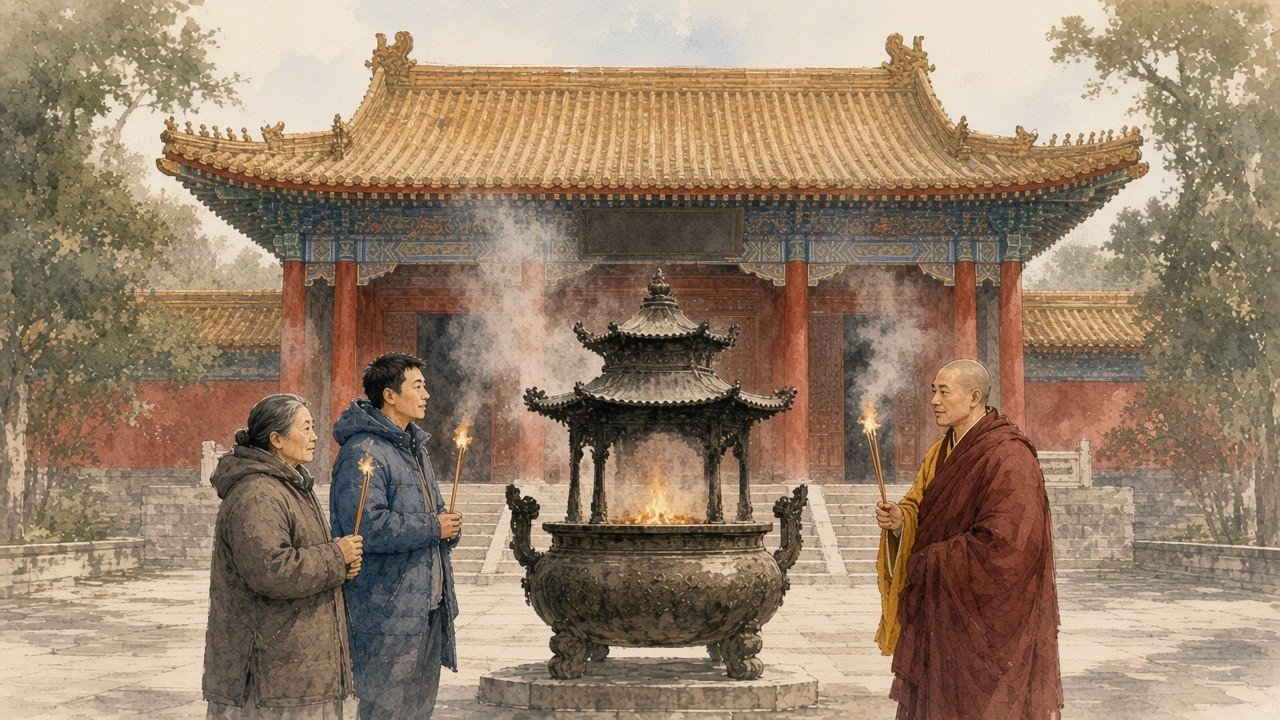
China is home to some of the oldest continuous religious traditions in the world and, at the same time, to the largest population in history to have been governed by a party that is formally atheist. The Communist Party of China requires its own members to hold no religious belief, while the constitution of the People’s Republic guarantees citizens the freedom of religious belief. Between those two commitments lies a large and changing body of law, administration and practice that determines where people may worship, who may teach, what may be printed, and how religious bodies relate to the state.[1][2]
Estimates of the number of believers vary widely, because so much depends on definitions. A survey analysis published by the Pew Research Center in 2023 found that only about one in ten Chinese adults formally identifies with a religion, yet far larger shares burn incense for their ancestors, consult fortune tellers, or believe in the existence of gods and spirits. Official figures cite close to two hundred million religious believers, more than three hundred and eighty thousand clergy and roughly one hundred and forty thousand registered places of worship.[3]
This feature describes the state of religious freedom in China as it stands in the mid-2020s. It sets out the legal framework and the institutions through which the state manages religion, the history that shaped them, and the situation of each major tradition in turn. It records the account given by the Chinese government, which presents its policy as protecting normal religious activity while guarding against foreign control and extremism, alongside the accounts of scholars, religious communities and international organisations who describe significant and, in some regions, severe restrictions. Where the evidence is disputed, the dispute itself is reported.
1. Religion in Chinese history
Religion in China has rarely been organised along the lines familiar from Europe or the Middle East, where membership of a single church or community was exclusive and clearly defined. For most of Chinese history the population drew on several traditions at once. A household might honour its ancestors at a domestic altar according to Confucian ritual, invite Buddhist monks to chant at a funeral, consult a Daoist priest about an auspicious date, and make offerings to a local god whose temple stood at the edge of the village. Scholars often describe this as a diffused religious culture, in which religion was woven into family, guild and village life rather than gathered into separate institutions.[2]
The imperial state took a close interest in religion from early times. The emperor was the chief officiant of the state cult, offering sacrifices to Heaven at the Altar of Heaven in the capital, and the legitimacy of a dynasty was expressed in ritual terms as possession of the Mandate of Heaven. Successive dynasties maintained official registers of monks and nuns, issued ordination certificates, limited the number of monasteries, and from time to time confiscated monastic property. The great suppression of Buddhism in 845, under the Tang emperor Wuzong, closed thousands of monasteries and returned hundreds of thousands of monks and nuns to lay life. The category of heterodox teachings, applied to sects that the state regarded as subversive, was a feature of imperial law for many centuries.
Buddhism arrived from Central Asia in the first centuries of the common era and became, over the following millennium, thoroughly Chinese in its schools, scriptures and art. Daoism took organised form in the second century, with its own priesthood, liturgy and canon. Islam arrived through Arab and Persian merchants on the maritime routes and through Central Asian traders and soldiers on the overland routes, and Muslim communities were established in the port cities and the north-west by the Tang and Song periods. Jewish communities lived at Kaifeng for several centuries. Nestorian Christianity reached Chang’an in the seventh century, and Franciscan missionaries were present in the Yuan capital in the thirteenth.
Christianity in its modern form came with the Jesuit mission of the late sixteenth century. Matteo Ricci, who reached Beijing in 1601, adopted the dress and learning of a Confucian scholar and argued that the veneration of ancestors was a civil rather than a religious rite. The Chinese Rites Controversy, in which later papal decisions rejected that position, led the Kangxi emperor to restrict missionary work in the early eighteenth century.[10] Protestant missions arrived in the nineteenth century, and their expansion became tied, in Chinese memory, to the unequal treaties that followed the Opium Wars, which granted missionaries the right to preach and to own property in the interior.
The nineteenth century gave religion a political charge that it still carries in official thinking. The Taiping Rebellion, led by Hong Xiuquan, who believed himself to be the younger brother of Jesus, cost tens of millions of lives between 1850 and 1864.[11] Conflicts between missions and local communities, such as the Tianjin Massacre of 1870, and finally the Boxer Rebellion of 1899 to 1901, in which Chinese Christians and foreign missionaries were killed in large numbers and foreign armies then occupied Beijing, left a lasting association between Christianity and foreign power.[42][12]
The Republican period after 1912 brought a new vocabulary. Modernising intellectuals distinguished between religion, which was to be tolerated in a reformed form, and superstition, which was to be eliminated. Temple property was seized for schools across many provinces, and campaigns against popular cults were pursued by the Nationalist government in the late 1920s. At the same time Buddhist reformers such as the monk Taixu sought to modernise monastic education, and Chinese Protestants began to found independent churches under Chinese leadership. These distinctions between legitimate religion and superstition, and between Chinese and foreign leadership, were inherited and sharpened by the People’s Republic.
2. From 1949 to the reform era
When the People’s Republic was founded in 1949 the new government took the view, derived from Marxist theory, that religion would wither as society developed, but that it could not be abolished by decree and that religious believers should be won over to the new order. Foreign missionaries were expelled by the early 1950s. The Protestant churches were organised into the Three-Self Patriotic Movement, whose name referred to self-government, self-support and self-propagation, and Catholics were later gathered into a patriotic association that broke administratively with the Holy See. National associations were also set up for Buddhists, Daoists and Muslims.[8][5][6][7]
The relative tolerance of the early 1950s gave way to tighter control during the political campaigns of the late 1950s, and then to an attempt at elimination during the Cultural Revolution, which began in 1966. For roughly a decade almost all public religious life ceased. Temples, churches and mosques were closed, damaged or converted to other uses; scriptures and images were destroyed; clergy were sent to labour camps or forced to return to secular life. Some religious practice continued in private homes, and later research has shown that certain communities, particularly rural Protestants, grew during this period in spite of the pressure.[13]
The reform era that followed Mao Zedong’s death brought a deliberate change of course. In 1982 the Party issued a policy document, widely known as Document 19, which described religion as a long-term historical phenomenon that would persist for a considerable period under socialism. It called for the restoration of places of worship, the return of property where possible, and the training of a new generation of patriotic clergy, while insisting that religion must not interfere in politics, education or the administration of justice. The same year a revised constitution was adopted, with Article 36 guaranteeing freedom of religious belief.[1]
The 1980s and 1990s saw a large revival. Monasteries and temples were rebuilt, often with funding from overseas Chinese and local governments interested in tourism. Mosques reopened and new ones were built across the north-west. Protestant numbers grew rapidly, both in registered churches and in unregistered meetings in homes. Popular religious festivals reappeared in the countryside, sometimes tolerated as cultural heritage. The state also faced new movements, including the qigong boom of the 1980s, from which Falun Gong would emerge.
From the 1990s the government developed a more systematic legal framework. In 1994 the State Council issued rules on the registration of places of worship and on religious activities by foreigners. In 2004 it adopted the first comprehensive Regulations on Religious Affairs, which were substantially revised in 2017 and came into effect in February 2018. In the same year the State Administration for Religious Affairs, which had been a government body, was absorbed into the United Front Work Department of the Party, a change that placed day-to-day religious administration directly under Party organs.[4]
3. The constitution and the law
Article 36 of the constitution of 1982 states that citizens of the People’s Republic of China enjoy freedom of religious belief, and that no state organ, public organisation or individual may compel citizens to believe in, or not to believe in, any religion, nor discriminate against citizens who do or do not believe. The state protects normal religious activities. No one may use religion to engage in activities that disrupt public order, impair the health of citizens or interfere with the educational system of the state. Religious bodies and religious affairs are not subject to any foreign domination.[1]
Each of these clauses has a practical meaning. The guarantee applies to belief, and the protection applies to activities described as normal, a term that the constitution does not define and that is given content by regulation and administrative practice. The ban on interference with education underlies the rule that religious instruction may not take place in state schools and the wider restrictions on the religious education of minors. The clause on foreign domination underlies the requirement that religious organisations be led by Chinese citizens and the long dispute with the Holy See over the appointment of bishops.
The Chinese government describes this framework as similar in principle to arrangements found in many states, which also regulate the registration of religious organisations, the use of land for places of worship, and the conduct of public assemblies. A white paper issued by the State Council Information Office in 2018 described China’s policy as one of protecting freedom of religious belief, managing religious affairs according to law, upholding the principle of independence and self-management, and guiding religions to adapt to socialist society. It presented the separation of religion from state power, education and justice as a modern secular principle.[1]
Critics, including legal scholars inside and outside China, point out that the protection of belief without a clearly defined protection of practice leaves wide discretion to officials. They also note that China has signed but not ratified the International Covenant on Civil and Political Rights, whose Article 18 protects the freedom to manifest religion in worship, observance, practice and teaching, so that the international standard most often cited by critics is not binding on China as treaty law. Chinese officials, for their part, argue that each country’s arrangements reflect its history and that the imposition of a single model would itself be a form of external interference.[37]
Beyond the constitution, the main sources of law are the Regulations on Religious Affairs, a large number of provincial regulations, rules on religious personnel and places of worship issued by the religious affairs authorities, and provisions in other laws on education, charity, internet content, counter-terrorism and the activities of foreign organisations. The criminal law contains an article, Article 300, that punishes the organisation or use of cult organisations to undermine the implementation of law, and this provision has been applied to groups that the state designates as xie jiao, a term often translated as evil cults or heterodox teachings.[1][33]
4. The five recognised religions
The state recognises five religions: Buddhism, Daoism, Islam, Catholicism and Protestantism. Catholicism and Protestantism are treated as separate religions, a classification that reflects their separate histories in China and their separate organisational structures. Each of the five has a national patriotic religious association that acts as the official representative of the faith, works with the religious affairs authorities, and supervises training, publication and the appointment of clergy. The associations are the Buddhist Association of China, the Chinese Taoist Association, the Islamic Association of China, the Chinese Patriotic Catholic Association together with the Bishops’ Conference of the Catholic Church in China, and, for Protestants, the Three-Self Patriotic Movement together with the China Christian Council.[5][6][7][8]
Registration with these bodies, and the registration of places of worship with the local religious affairs bureau, is the condition for legal practice. A registered temple, mosque or church may hold services, accept donations, own property, conduct religious education for adults within its premises and, in some cases, publish materials for internal use. Clergy are trained in officially recognised seminaries and colleges and must be accredited. In return, registered bodies are expected to support the leadership of the Party, to promote patriotic education, and to follow the policies of the state.
Religions outside the five have no general national status. Orthodox Christianity is recognised in a few localities, particularly among the Russian minority in Inner Mongolia and Xinjiang. Popular religion, which by many measures has the largest number of participants, falls into a different administrative category in most places, where temples are managed as folk belief sites, cultural heritage or tourist attractions. Groups such as the Church of Jesus Christ of Latter-day Saints and the Baha’i community practise among foreign residents or in small private settings under special arrangements. Movements designated as cults, which include Falun Gong and several Christian-derived groups, are banned.[2]
Supporters of the system argue that the patriotic associations give each religion a stable institutional voice, protect the property and income of registered communities, and allow millions of people to worship openly. Many clergy in the associations are respected figures in their own communities, and the associations have overseen the rebuilding of thousands of places of worship since 1979. Critics argue that the associations function chiefly as instruments of Party control, that the requirement to register excludes believers whose conscience forbids them to accept state oversight of doctrine or leadership, and that the boundary between the registered and unregistered sectors is policed with increasing rigour.[37]
5. The 2018 Regulations on Religious Affairs
The revised Regulations on Religious Affairs, which came into effect on 1 February 2018, are the most important single legal text on religion in China. They expanded the earlier version of 2004 from forty-eight to seventy-seven articles. The stated purposes include protecting freedom of religious belief, maintaining harmony among religions and between religious and non-religious citizens, and curbing extremism and illegal religious activities. The regulations emphasise national security, the resistance of foreign infiltration and the prevention of the use of religion for terrorism.[1]
Among their provisions, the regulations confirm that only registered religious bodies may organise religious activities and that such activities must take place in registered venues. They forbid religious activity in schools other than religious institutions, and require that religious schools be approved by the authorities. They set rules on the internet, requiring permission for online religious information services, and on the sale of religious goods and publications. They forbid unauthorised travel abroad for religious training or pilgrimage and restrict the acceptance of donations from foreign sources. They introduce or increase fines for those who provide premises for unauthorised religious activities.
The regulations also addressed property and commerce. They restricted the commercialisation of religion, for example by forbidding companies to invest in or contract to run temples, and forbade the building of large outdoor religious statues outside temple grounds. Officials presented these provisions as a response to the problem of temples run as businesses, which had become a cause of public complaint, and to the inflation of fees charged to tourists and worshippers. Many Buddhist and Daoist leaders welcomed these particular measures.
The regulations were followed by further rules. Administrative Measures for Religious Clergy took effect in 2021 and created a national database of accredited clergy, requiring them to support the leadership of the Party and the socialist system. Measures on the management of internet religious information services also took effect in 2022, requiring licences for online preaching and forbidding foreign organisations and individuals from operating such services in China. Measures for the administration of religious activity venues followed in 2023, setting out detailed requirements for the governance of temples, churches and mosques, including the display of political materials and the formation of management committees.[1][4]
Observers differ in how they interpret these developments. Officials and some Chinese scholars describe them as part of a broader effort to bring all areas of social life under the rule of law, replacing informal arrangements with clear and uniform rules. Researchers such as those at the Center on Religion and Chinese Society at Purdue University and analysts at human rights organisations describe the same changes as a narrowing of the grey zone that had previously allowed unregistered communities and informal practice to survive, and they document the closure of meeting places and fines for believers that followed implementation.[39][37]
6. Sinicisation
Since 2015 the central slogan of religious policy has been the sinicisation of religion. The phrase was given prominence by the Party’s general secretary, Xi Jinping, at a central conference on united front work in May 2015, and again at the National Conference on Religious Work in April 2016. It calls on all religions in China to adapt to Chinese culture and to socialist society, and to interpret their doctrines in ways that conform to the values promoted by the Party. The policy was confirmed in subsequent Party congress reports and five-year plans for each of the five religions were drawn up by the patriotic associations from 2018 onwards.[9][4]
In official explanation, sinicisation continues a long historical process in which religions that arrived from abroad, especially Buddhism, became Chinese in language, art and thought. Officials cite the Chinese style of Buddhist temples, the use of the Chinese language in Islamic scholarship of the Ming and Qing periods, and the work of Matteo Ricci as examples of fruitful adaptation. In this account, the aim is to free religions from foreign influence and to encourage them to contribute to social harmony and national development.[9][10]
In practice the policy has taken a number of visible forms. National flags have been raised over places of worship, and political slogans and portraits displayed inside them. Clergy have been asked to include patriotic themes and the core socialist values in sermons. The associations have announced projects to produce new translations and commentaries of scriptures that reflect Chinese culture and socialist values. Architectural features regarded as foreign, such as Arabic-style domes and minarets on mosques, have been removed or altered in several provinces and replaced with designs in Chinese style. Large crosses have been removed from the roofs of churches, particularly in Zhejiang province between 2014 and 2016.
Scholars disagree about how far sinicisation represents a new departure. Some see continuity with the policies of the early People’s Republic, which also emphasised patriotism and independence from foreign control. Others argue that the emphasis on conformity of doctrine, as distinct from organisation, is new and that it brings the Party further into the interior life of religious communities than at any time since the end of the Cultural Revolution. Many believers in the registered sector accommodate the requirements without difficulty; others, particularly among Muslims and Protestants, have described them as an intrusion on matters of faith.[37][39]
7. Chinese Buddhism
Buddhism is the largest of the institutional religions in China. Estimates of the number of people who identify as Buddhist range from about twenty to well over two hundred million, depending on whether the measure is formal identity, ritual participation or belief, and the Pew Research Center’s analysis of Chinese survey data found that a substantial minority of adults had taken part in Buddhist practices such as burning incense in temples in the preceding year.[3] Official statistics count some thirty-three thousand Buddhist temples and more than two hundred thousand monks and nuns, the majority of them in the Tibetan and Theravada traditions as well as the Han Chinese schools.
The revival of Han Chinese Buddhism since 1979 has been substantial. Famous monasteries such as the Shaolin Monastery in Henan, the White Horse Temple at Luoyang and the great pilgrimage centres of Mount Wutai, Mount Emei, Mount Putuo and Mount Jiuhua have been restored and attract large numbers of pilgrims and tourists. Buddhist academies train monks and nuns, lay associations publish books and organise charity, and Buddhist practices such as meditation and vegetarian diet have become fashionable among parts of the urban middle class.[14][5]
The relationship between Han Buddhism and the state has generally been regarded as the least contentious among the five religions. The Buddhist Association of China has supported the sinicisation policy, which in the Buddhist case is presented as a continuation of a tradition already deeply Chinese. Government campaigns against the commercialisation of temples, including entrance fees, sales of expensive incense and the listing of temple enterprises on the stock market, have received support from many senior monks. The prominence of the Shaolin Monastery as a commercial brand under its abbot Shi Yongxin, who in 2025 was removed from his position and investigated on charges of embezzlement and violations of monastic discipline, illustrates the problems the authorities have identified.[14]
Restrictions nonetheless apply. Ordinations, the admission of novices and the building of new temples require approval. Online sales of religious services and the broadcasting of rituals require licences under the internet rules. Minors are generally discouraged or forbidden from becoming novices outside Tibetan areas, and Buddhist instruction for children outside the family has been curtailed in several provinces. Unregistered lay Buddhist groups and charismatic teachers operating outside the official framework have from time to time been investigated.
8. Daoism
Daoism is the religion most closely tied to Chinese culture and the one that officials most often cite as an indigenous tradition. Its priesthood is divided between two main lineages: the Quanzhen order, a monastic tradition centred historically on the White Cloud Temple in Beijing, and the Zhengyi order, whose married priests perform rituals for communities and families and whose historical centre is Mount Longhu in Jiangxi. The Chinese Taoist Association, founded in 1957, has its headquarters in the White Cloud Temple.[15][6]
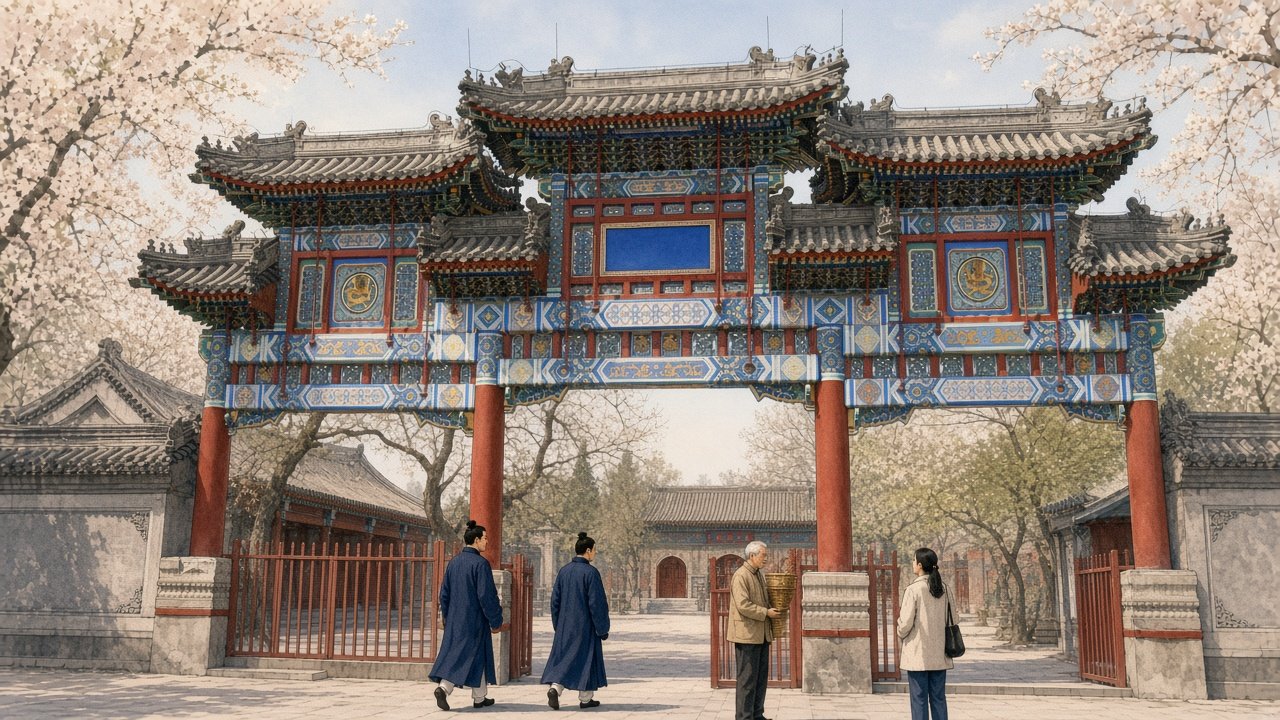
Daoist temples suffered heavily in the twentieth century, through Republican campaigns against superstition as well as during the Cultural Revolution. Since 1979 many have been restored, and mountain sites such as Wudang in Hubei and Qingcheng in Sichuan have become well-known destinations. Ritual specialists in the Zhengyi tradition have resumed the performance of community festivals and funeral rites, though in many villages they operate in an uncertain legal position, since the state registers priests and temples while a large share of Daoist ritual takes place in homes and local temples of popular religion.
The state’s attitude towards Daoism has been broadly supportive in the sinicisation era, since Daoism is presented as a native religion embodying traditional values. At the same time, the authorities have taken action against practices they classify as superstition, such as some forms of divination and spirit possession, and against what they describe as feudal superstition in rural areas. Large statues of Daoist deities erected outside temple grounds have been demolished under the 2018 rules on outdoor religious statues, including a gilded statue of the god Guan Yu in Hubei that had been built at a cost of some tens of millions of yuan and was removed in stages from 2021.
9. Islam and the Hui
Islam is the faith of about twenty million people in China, most of them belonging to ten officially recognised ethnic minorities. The two largest are the Hui, a Chinese-speaking people descended from Muslim merchants, soldiers and settlers who married into the local population over many centuries, and the Uyghurs, a Turkic-speaking people of Xinjiang. Other Muslim nationalities include the Kazakhs, Kyrgyz, Dongxiang, Salar and Uzbeks. The Islamic Association of China, founded in 1953, is the official body and supervises the training of imams and the arrangement of the annual pilgrimage to Mecca.[7][16]
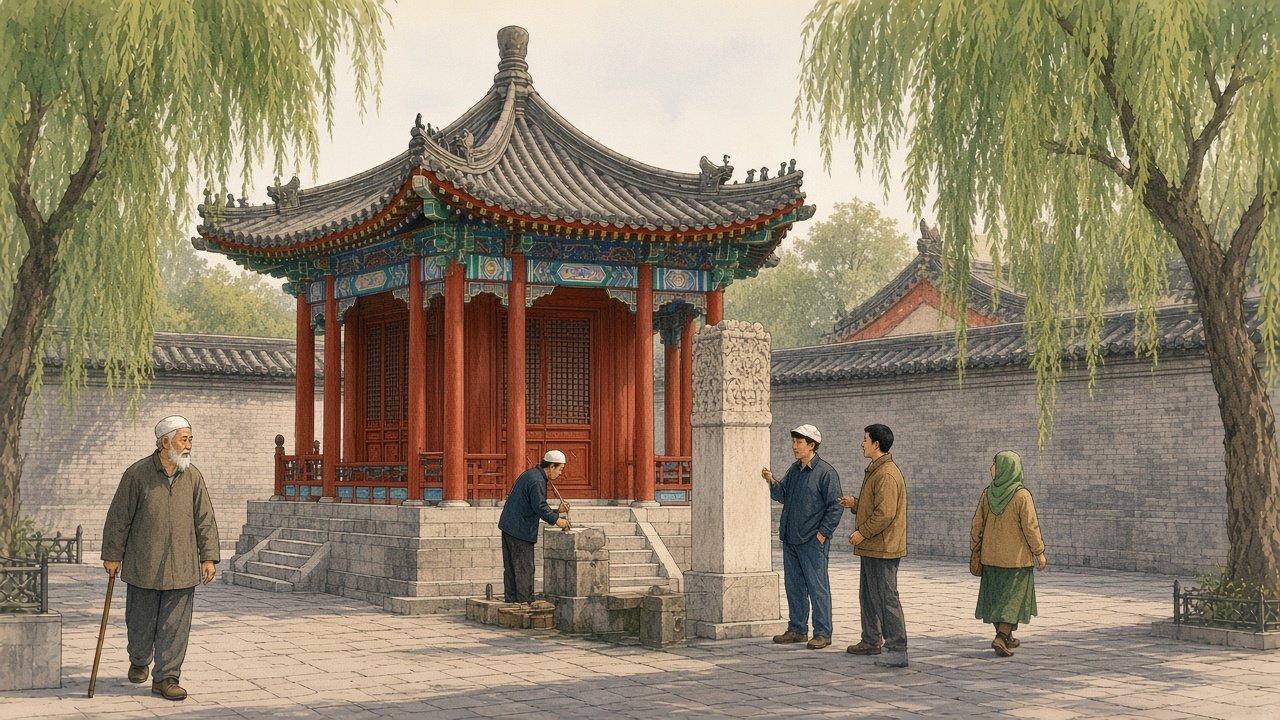
The Hui live throughout China, with concentrations in Ningxia, Gansu, Qinghai, Yunnan and Henan, as well as in Beijing, where the Niujie Mosque, whose buildings date largely from the Ming and Qing periods and follow the plan of a Chinese temple, is one of the oldest in the capital.[17] For much of the reform era Hui communities enjoyed considerable latitude. Mosques were rebuilt and new ones constructed, often with funding from local merchants; Arabic schools and female imams in women’s mosques, a distinctive feature of Hui Islam in central China, flourished; and Hui traders took part in commerce with the Middle East.
Since about 2018 policy towards the Hui has tightened. In Ningxia, Gansu, Henan and Yunnan, domes and minarets in Arabic or Central Asian style were removed from many mosques and replaced with Chinese-style roofs, among them the large mosque at Weizhou in Ningxia and the Najiaying Mosque in Yunnan, where attempts to alter the building in 2023 led to clashes between residents and police. Arabic signage has been removed from shops and restaurants in several cities, and the halal certification of non-food products has been discouraged. Restrictions have been introduced on the religious education of children and on the attendance of minors at mosques in several provinces.[16][37]
Officials describe these measures as part of the sinicisation of Islam, intended to counter what they describe as Arabisation and the influence of foreign religious movements that had arrived with the growth of contacts with the Middle East. Some Hui scholars and clerics have publicly supported the effort to restore older Chinese forms of mosque architecture, pointing out that the domes being removed were themselves recent additions from the 1980s and 1990s. Others, including residents and community leaders interviewed by foreign scholars and journalists, regard the changes as an attack on their identity and fear that the policies applied in Xinjiang are being extended to Muslims elsewhere.
10. Xinjiang
The Xinjiang Uyghur Autonomous Region has been the scene of the most intensive state intervention in religious life in contemporary China, and the subject of the most serious international concern. Xinjiang experienced episodes of unrest and violence in the 1990s and 2000s, including riots in Urumqi in July 2009 in which about two hundred people were killed, and a series of attacks in 2013 and 2014, among them knife attacks at Kunming railway station and a bombing at an Urumqi market, which the government attributed to separatist and extremist groups.[18]
From 2014 the government launched a campaign against what it described as terrorism and religious extremism. Regional regulations adopted in 2017 prohibited a range of behaviours classified as signs of extremism, including wearing veils covering the face, growing abnormal beards, refusing to watch state television and refusing to send children to state schools. From 2017 a large network of facilities was established which the government described as vocational education and training centres, offering instruction in the Chinese language, law and vocational skills to people influenced by extremism. The government stated in 2019 that all trainees had graduated.[18]
Researchers, journalists and former detainees have given a different account. Estimates based on leaked documents, satellite imagery, government procurement records and testimony suggest that between several hundred thousand and over one million people, mainly Uyghurs and Kazakhs, were detained at the peak of the campaign. Detainees and their relatives have described political indoctrination, the prohibition of prayer, and harsh conditions. Studies of satellite imagery by researchers have recorded the demolition or alteration of a large number of mosques and shrines across the region, while the government states that it has renovated mosques and that Xinjiang has more mosques per head of the Muslim population than many Muslim-majority countries.[18][38]
In August 2022 the Office of the United Nations High Commissioner for Human Rights published an assessment that concluded that serious human rights violations had been committed in Xinjiang, and that arbitrary and discriminatory detention of members of Uyghur and other predominantly Muslim groups may constitute international crimes, in particular crimes against humanity. The government of China rejected the assessment as based on disinformation. Several governments and parliaments have described the policies as genocide; others, including many governments of Muslim-majority countries, have issued statements supporting China’s position that the measures concern counter-terrorism and development.[18]
In the years since, visitors to Xinjiang have reported that the most visible security measures, such as dense checkpoints, have been scaled back, and the Id Kah Mosque in Kashgar remains open to worshippers and visitors. Researchers note at the same time that the number of worshippers is far lower than before, that many religious practices remain restricted, that young people and state employees are discouraged from attending mosques, and that large numbers of people have received long prison sentences in the courts. The situation in Xinjiang remains the most contested single question in any account of religious freedom in China.[19][38]
11. Tibetan Buddhism
Tibetan Buddhism is practised by Tibetans in the Tibet Autonomous Region and in the Tibetan areas of Qinghai, Sichuan, Gansu and Yunnan, as well as by Mongols and, increasingly, by Han Chinese followers. Its monasteries are among the largest religious institutions in China, and Lhasa’s Jokhang temple, the most sacred site of Tibetan Buddhism, is visited by pilgrims who prostrate themselves along the circuit around it. In Beijing, the Yonghe Temple, a former imperial residence converted into a lamasery in the eighteenth century, is a working monastery of the Gelug school.[24][40]
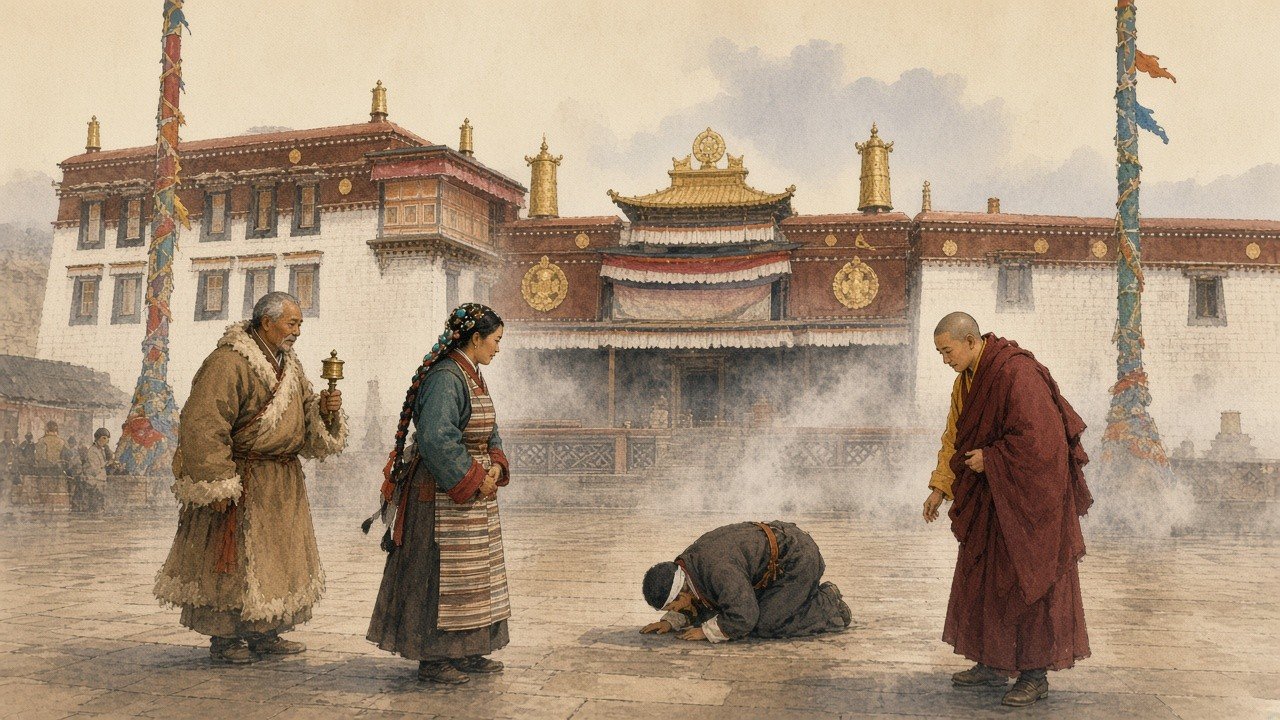
The central question for Tibetan Buddhism is authority. The 14th Dalai Lama, who left Tibet in 1959 and has lived since then in Dharamsala in India, is regarded by most Tibetan Buddhists as their highest spiritual leader. The Chinese government regards him as a separatist and forbids the display of his image in most places. Monks and nuns in many monasteries have been required to take part in patriotic education campaigns that include denunciation of the Dalai Lama, and the number of monks in each monastery is limited by quotas.[20]
The recognition of reincarnated lamas is regulated by measures issued in 2007, which require state approval for every recognised reincarnation. In 1995 the Dalai Lama recognised a six-year-old boy, Gedhun Choekyi Nyima, as the 11th Panchen Lama, the second-ranking figure in the Gelug school. The boy and his family were taken into state custody shortly afterwards, and the government arranged a selection by lot from a golden urn, a procedure introduced by the Qing dynasty in 1793, which produced a different candidate, Gyaincain Norbu. The government has stated that Gedhun Choekyi Nyima is living a normal life and does not wish to be disturbed, but he has not been seen in public since 1995.[21][22]
The question of the Dalai Lama’s succession has been the subject of public statements by both sides. In July 2025, shortly before his ninetieth birthday, the Dalai Lama announced that the institution would continue after his death and that the authority to recognise his reincarnation would rest solely with the Gaden Phodrang Trust, the office he established. The Chinese government responded that the reincarnation must be approved by the central government and follow the golden urn procedure and religious rituals within China. A dispute over two rival successors, already present in the case of the Panchen Lama, therefore appears likely.[20][21]
The government points to the restoration of monasteries, the funding of the Potala Palace and other sites, the publication of Tibetan scriptures, and economic development as evidence of its support for Tibetan culture. Critics, including Tibetan exile organisations and human rights groups, point to the demolition of large parts of the Buddhist encampments at Larung Gar and Yarchen Gar in Sichuan from 2016 onwards and the expulsion of thousands of monks and nuns, to the closure of private Tibetan-language schools attached to monasteries, and to the more than one hundred and fifty self-immolations by Tibetans since 2009, most of them by monks and former monks.[23][41]
12. Protestant churches, registered and unregistered
Protestant Christianity has been the fastest-growing religion in China since 1979. Official figures count about thirty-eight million Protestants in the registered churches; estimates including unregistered congregations range from about forty to well over sixty million, and some higher estimates have been widely questioned. The Pew Research Center’s analysis suggests that the share of Chinese adults identifying as Christian has been broadly stable at around two per cent in recent surveys, a result that some scholars attribute to growth having slowed and others to reluctance to declare a religious identity to survey interviewers.[3][2]
The registered churches belong to the Three-Self Patriotic Movement and the China Christian Council, which together are often referred to as the lianghui, or two councils. These churches are post-denominational: the historic denominations of the missionary era were merged into a single body in 1958, although distinct traditions of worship survive in practice. Registered churches range from large city congregations with several services each Sunday to rural meeting points. The China Christian Council has printed and distributed more than one hundred million Bibles through the Amity Printing Company in Nanjing, a joint venture with the United Bible Societies that is one of the largest Bible printers in the world.[8]
Since about 2014, registered churches have also experienced increased regulation. In Zhejiang province, which has one of the largest Protestant populations in China, a campaign between 2014 and 2016 removed crosses from the roofs of more than a thousand churches, and some church buildings were demolished on the ground that they violated planning rules. From 2018 several provinces required registered churches to install surveillance cameras, to forbid entry to minors, and to display the national flag. Pastors have been asked to include the core socialist values in sermons, and the Three-Self Movement has promoted the construction of a Chinese theology adapted to socialism.[8][39]
Bible sales have been affected by the rules on religious publications. Since 2018 online retailers have generally not sold Bibles, which are now distributed through church bookshops. The official plan for the sinicisation of Protestantism includes a programme to produce new commentaries on the Bible, covering both the Hebrew Scriptures and the Greek Scriptures, interpreted in harmony with Chinese culture and socialist values. Church leaders who support the plan describe it as continuing the work of Chinese theologians since the 1920s who sought to free Chinese Christianity from foreign control; critics regard it as state interference in doctrine.[8]
13. The house churches
Alongside the registered churches stand many congregations that have not registered, known in English as house churches because many began in private homes. Some refuse registration on theological grounds, holding that the church must be subject only to Christ and not to a state body; others have simply never sought registration or have been unable to obtain it. Their size ranges from small family gatherings to city congregations of several hundred members renting commercial premises. For much of the period from the 1980s to the 2010s local officials tolerated many such congregations so long as they kept a low profile, a situation sometimes described as a grey market.[25]
The space for unregistered churches has narrowed markedly since 2018. Several prominent urban congregations were closed. Beijing’s Zion Church, which had about fifteen hundred members, was closed in September 2018 after refusing to install surveillance cameras. Shouwang Church in Beijing had faced pressure since 2011, when it attempted to hold services outdoors. In December 2018 the authorities in Chengdu raided the Early Rain Covenant Church and detained more than one hundred members; its pastor, Wang Yi, was sentenced in December 2019 to nine years in prison for inciting subversion of state power and illegal business operations.[26][27]
Since then reports by Chinese Christians and by organisations that monitor religious freedom have recorded frequent raids on house church meetings, fines on members and landlords, and the detention of pastors in several provinces, among them Zion Church’s pastor Jin Mingri, who was detained with a number of his colleagues in October 2025. The authorities generally present such cases as the enforcement of laws on unauthorised assemblies, fraud or illegal business, rather than as measures against faith as such. The government has also designated several groups derived from Christianity, including the Church of Almighty God, also called Eastern Lightning, as cults, and it cites violent incidents attributed to that group in support of the designation.[25][38]
The relationship between the two sectors is complex. Many Christians move between them, and some registered churches tolerate informal fellowship groups that meet outside their buildings. Scholars such as Fenggang Yang have described religion in China as falling into red, black and grey markets, corresponding to the legal, banned and tolerated sectors, and have argued that tight regulation tends to push religious activity into the grey market rather than to reduce it.[39]
14. The Catholic Church and the 2018 agreement
China has about ten to twelve million Catholics. For most of the period since 1949, the Catholic community was divided between a registered church under the Chinese Patriotic Catholic Association, which from 1958 consecrated bishops without the approval of the Pope, and an underground church loyal to the Holy See, whose bishops and priests were frequently detained. In practice the division was never absolute: from the 1980s most bishops consecrated in the registered church sought and received papal recognition privately, and many Catholics attended churches of both kinds.[28]
In September 2018 the Holy See and the People’s Republic of China signed a Provisional Agreement on the appointment of bishops. Its text has not been published. The Holy See’s press office described it as concerning the nomination of bishops and as a pastoral rather than a political agreement, and announced that Pope Francis had lifted the excommunication of seven bishops ordained without papal mandate. Under the agreement, candidates are understood to be selected through a process in China and approved by the Pope, who retains the final say. The agreement was renewed in 2020, in 2022, and in October 2024 for a further four years.[29][28]
Supporters of the agreement, including Pope Francis and the Vatican’s Secretary of State, Cardinal Pietro Parolin, argued that it ended the risk of a schism over the episcopate, allowed every Catholic bishop in China to be in communion with Rome for the first time in decades, and opened the possibility of a gradual normalisation. A number of bishops have been consecrated under its terms. Pope Leo XIV, elected in May 2025, approved further appointments under the agreement in the months after his election.[28]
Critics, of whom the most prominent is Cardinal Joseph Zen, the former bishop of Hong Kong, argued that the agreement abandoned the underground church and gave the Party a decisive role in the choice of bishops. Underground clergy have reported pressure to register and to sign statements accepting the principle of independence. In 2022 and 2023 the Chinese side installed bishops in sees, among them Shanghai, without prior consultation with the Holy See, which later accepted the appointments. Diplomatic relations have not been established, and the Holy See continues to recognise the Republic of China on Taiwan.[30][28]
15. Popular religion and ancestral rites
Popular or folk religion is the broadest religious practice in China and the least captured by the category of the five religions. It includes the veneration of ancestors in homes and lineage halls, the worship of local and regional gods in village temples, festivals for deities such as the sea goddess Mazu and the god of wealth, the use of divination, geomancy and spirit mediums, and the burning of paper offerings at the Qingming festival and funerals. The Pew analysis found that large majorities of Chinese adults engage in at least one such practice, and that many people who say they have no religion nonetheless take part.[31][3]
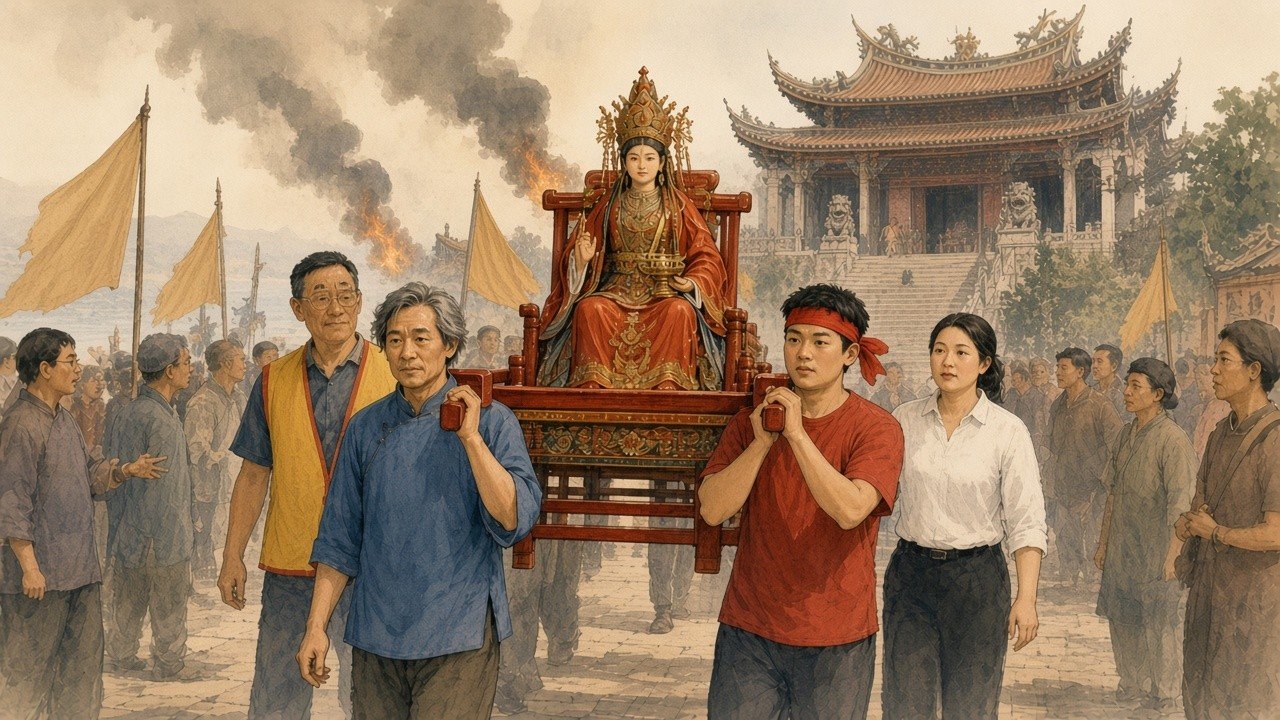
The state has long treated these practices with ambivalence. In the Republican and early Communist periods many were condemned as superstition, and temples were destroyed in large numbers. Since the 1990s attitudes have softened. Some provinces, beginning with Zhejiang and Fujian, have created procedures for registering folk belief sites, and the cult of Mazu, popular along the coast and in Taiwan, was inscribed on UNESCO’s list of the intangible cultural heritage of humanity in 2009 at China’s nomination. The Mazu temple at Meizhou in Fujian receives large numbers of pilgrims from Taiwan, and official bodies have encouraged these exchanges.[32]
The cultural heritage framework allows popular rites to be preserved and promoted as part of the nation’s traditional culture, consistent with the sinicisation policy’s emphasis on Chinese tradition. At the same time, local governments periodically conduct campaigns against what they describe as feudal superstition, such as costly funerals, the burning of paper effigies and the activities of spirit mediums, and in some provinces campaigns to promote cremation and to remove grave mounds have caused protests. Popular religion thus enjoys a broad but conditional tolerance, framed more often in terms of culture than of religious freedom.[31]
16. Falun Gong and the designated cults
Falun Gong, also known as Falun Dafa, was founded by Li Hongzhi in 1992 as one of many qigong movements combining slow exercises, meditation and moral teaching. It drew on Buddhist and Daoist ideas and stressed the virtues of truthfulness, compassion and forbearance. It spread rapidly during the 1990s, with estimates of the number of practitioners by the end of the decade ranging from a few million to the tens of millions, and was at first registered with the state’s qigong research association.[33]
Relations with the authorities deteriorated in the late 1990s. In April 1999 some ten thousand practitioners gathered quietly outside the Zhongnanhai leadership compound in Beijing to petition for the release of followers detained in Tianjin and for official recognition. In July 1999 the government banned the movement, and in October it was designated a cult under the new legislation on cult organisations. A special office, widely known as the 610 Office from the date of its establishment, was created to direct the campaign against it; it was formally abolished in 2018 and its functions absorbed into other Party and state bodies.[33][34]
The government describes Falun Gong as a dangerous cult that harmed its followers, citing cases in which practitioners refused medical treatment and the self-immolation of several people in Tiananmen Square in January 2001, which state media attributed to Falun Gong practitioners. Falun Gong representatives dispute the government’s account of that incident. Human rights organisations, the United Nations special rapporteur on torture and other bodies have documented the detention of large numbers of practitioners in labour camps and prisons, deaths in custody, and coercive efforts to make practitioners renounce their beliefs. An independent tribunal in London chaired by Sir Geoffrey Nice concluded in 2019 that forced organ harvesting from prisoners of conscience, including Falun Gong practitioners, had taken place; the Chinese government rejects the allegation and states that the organ transplant system has relied solely on voluntary civilian donors since 2015.[34][38]
Falun Gong is now practised openly in Taiwan and in many countries abroad, and in Hong Kong, where its public activity has become more limited since 2020, where its followers operate media organisations and a performing arts company. In mainland China, reports compiled by the movement and by monitoring organisations indicate continuing arrests and prison sentences. Other groups designated as cults include the Church of Almighty God, the Shouters, and several other Christian-derived movements, and the designation is used by the state to justify criminal prosecution of their members under Article 300 of the criminal law.[34]
17. Hong Kong and Macau
Hong Kong has a separate legal system under the principle of one country, two systems. Article 32 of the Basic Law guarantees freedom of conscience and freedom of religious belief and the freedom to preach and to conduct and participate in religious activities in public, and Article 141 provides that the government shall not interfere in the internal affairs of religious organisations, which may maintain relations with their counterparts elsewhere. Religious bodies run a large share of Hong Kong’s schools, hospitals and social services, and the Catholic and Anglican dioceses, Protestant churches, Buddhist and Daoist temples and other communities operate without registration requirements of the mainland kind.[35][36]
Religious life in Hong Kong is diverse. Surveys and the Hong Kong government’s own statistics describe a population in which Buddhism, Daoism and popular religion are the largest traditions, followed by Protestants, Catholics, Muslims, Hindus and Sikhs. Temples such as the Wong Tai Sin Temple and the Man Mo Temple are busy throughout the year, and Christian churches have long been prominent in education and welfare. Falun Gong practitioners were able to hold public exercises and distribute literature in Hong Kong after 1999, unlike on the mainland.[35]
The adoption of the National Security Law in June 2020 and the Safeguarding National Security Ordinance in March 2024 changed the wider environment. Religious services as such have continued without restriction, but some clergy and congregations have become more cautious about political content in sermons, and some have moved abroad. Cardinal Joseph Zen was arrested in 2022 in connection with a fund that had supported protesters, and was convicted of a minor offence relating to the fund’s registration and fined. The current Catholic bishop, Cardinal Stephen Chow, has visited the mainland and encouraged exchanges. The government and many church leaders state that religious freedom in Hong Kong is fully protected; some observers report self-censorship and growing caution.[30][38]
Macau, the other special administrative region, has a similar guarantee of religious freedom in its Basic Law. Its Catholic heritage, visible in the facade of St Paul’s and the colonial churches of the old city, sits alongside temples of Mazu, from whom the territory takes its name, and of other popular deities. Religious communities in Macau have attracted less international attention, and their position has been generally stable.[32]
18. Children, education and Party members
A distinctive feature of China’s religious policy is the treatment of the young and of members of the Communist Party. The constitution forbids religion to interfere in the state’s educational system, and the Regulations on Religious Affairs prohibit religious activity in ordinary schools. In many provinces local rules or administrative practice forbid minors to attend religious services, to take part in summer camps or to receive religious instruction outside the family, and teachers and students have been asked to declare that they have no religious belief. The application of these rules varies by region and religion, and is strictest in Xinjiang and Tibet.[1][37]
Officials justify these rules as protecting children from being influenced in matters of belief before they can choose for themselves, and as maintaining the separation of education and religion. Many religious parents and clergy regard them as an infringement of the right of parents to bring up their children in their own faith, a right recognised in the international instruments that critics cite. The Law on the Protection of Minors and the Family Education Promotion Law adopted in recent years emphasise patriotic and socialist education and the responsibility of parents in supporting it.
Members of the Communist Party, numbering about one hundred million, must be atheists. Party regulations forbid members to hold religious beliefs or take part in religious activities, and disciplinary rules provide for the expulsion of those who refuse to give them up. Retired officials and members belonging to ethnic minorities with strong religious traditions have been reminded of these rules in campaigns since 2016. Because Party membership is important for careers in the state sector, the rule has a wider social effect on public expressions of faith, particularly among state employees, academics and military personnel.[4]
19. Official perspectives and their critics
The Chinese government’s account of its religious policy rests on several claims. It states that religious freedom in China is guaranteed by law and practised by hundreds of millions of people, that places of worship are open and well maintained, and that the number of clergy and religious institutions has grown many times since 1979. It argues that the separation of religion from politics, education and justice is a common feature of modern states, that the registration of religious organisations is required in many countries, and that measures in Xinjiang and elsewhere have succeeded in preventing terrorist attacks. It regards foreign criticism as interference in its internal affairs and as being motivated by political hostility.[1]
Many Chinese religious leaders within the registered system echo parts of this account. Senior monks, imams, bishops and pastors have stated that the policy of independence protects their communities from foreign manipulation and that sinicisation continues the historical adaptation of religion in China. Some scholars in China describe the present arrangements as a balance between the freedom of religion and the needs of a large, diverse and developing society, and argue that the experience of the nineteenth and twentieth centuries justifies the state’s caution.
International organisations and governments present a contrasting picture. The United States Commission on International Religious Freedom has recommended since 1999 that China be designated a country of particular concern, a designation the United States government has applied each year. Human Rights Watch, Amnesty International and Freedom House have described the period since 2012 as one of intensifying restriction, and Freedom House’s 2017 report on religion in China characterised the situation of several groups, including Uyghur Muslims, Tibetan Buddhists and Falun Gong practitioners, as one of high or very high persecution. The European Parliament and several national parliaments have adopted resolutions critical of Chinese policy.[37][38]
A third body of opinion comes from academic research. Sociologists and anthropologists who have conducted fieldwork in China often stress the variation in policy and practice from region to region and from one religion to another. They note that religious life in many Han Chinese communities is vigorous, that local officials frequently negotiate with temples and churches, and that the most severe measures are concentrated on particular groups and regions. They also note that the general trend since 2015 has been towards closer regulation, reduced tolerance of unregistered activity, and the extension of digital surveillance to religious venues.[39][2]
20. Comparative perspectives
The Chinese model of religious governance invites comparison with other states. Several countries maintain systems of registration or recognition for religious bodies: France, for example, applies the principle of laïcité, which excludes religion from state schools and public institutions, and Germany grants public-law status to recognised religious communities and collects church tax on their behalf. Singapore, a majority ethnic Chinese state, regulates religion through its Maintenance of Religious Harmony Act. Vietnam, whose political system is close to China’s, uses a registration system for religious organisations and patriotic associations modelled on the Chinese one.
Historians have drawn comparisons with China’s own past. The imperial state certified monks and nuns, controlled temple building and suppressed heterodox sects, and some scholars see the present system as continuing a long tradition in which the state regards itself as the guardian of orthodoxy and the arbiter of legitimate religion. Others stress the differences: the imperial state was not atheist, and it participated in religious rituals itself, whereas the Party aims at an eventual disappearance of religion while managing it in the meantime.[2]
The comparison most often made by critics is with the international human rights standard, under which states may limit the manifestation of religion only where restrictions are prescribed by law and are necessary to protect public safety, order, health, morals or the rights of others. By this measure they consider that many Chinese regulations, especially on unregistered worship, children and doctrine, go beyond what is permitted. Chinese officials reply that their regulations are prescribed by law and serve exactly those purposes. The question of whether a particular measure is necessary and proportionate is the point at which the two accounts most clearly part company.[37]
21. Religious life in practice
For many believers the experience of religion in China is shaped less by national policy than by the place in which they live. In a prosperous city in the east, a Buddhist may visit a well-kept temple on the first and fifteenth days of the lunar month, attend a lecture on scripture, and join an online study group run by a licensed platform. A Protestant may attend a registered church whose Sunday services fill several halls, or a small unregistered fellowship that meets discreetly in a flat. In the countryside of Fujian or Zhejiang, villagers may organise a festival for a local god with operas, processions and banquets, financed by local businesses and attended by officials.
In other places the experience is very different. In Xinjiang, Muslims face strict limits on prayer, fasting during Ramadan and religious instruction, especially if they are students or state employees. In Tibetan areas, monks and nuns are subject to quotas and political education, and images of the Dalai Lama are forbidden. Members of designated cults face prosecution wherever they are. Unregistered churches and underground Catholic communities experience periodic raids, fines and detentions, and their clergy may be placed under surveillance.
The digital environment has added a new dimension. Religious services and teachings are increasingly delivered online, but the internet rules of 2022 require licences for religious content and forbid its dissemination by unlicensed individuals. Religious applications have been removed from domestic app stores, and religious terms are filtered on some platforms. Facial recognition systems and cameras installed in religious venues allow the authorities to monitor attendance. At the same time, the internet has made scripture, commentary and recorded sermons more widely available than at any earlier time.[37]
22. Prospects
The direction of religious policy over the coming years will depend on choices made at the centre of the Party and on the response of religious communities. The current five-year plans for sinicisation run to the end of the 2020s, and the leadership has given no sign of departing from them. The question of the Dalai Lama’s succession, the future of the agreement with the Holy See, the treatment of Muslims outside Xinjiang, and the position of the house churches are the issues most likely to define the next stage.
Demographic and social change will also matter. Survey data suggest that the share of Chinese people who formally identify with a religion has been stable or declining in recent years, while the practice of popular rites and spiritual activities remains widespread. Urbanisation, the decline of village communities, and the ageing of the population are changing the settings in which religion is practised. The state’s emphasis on traditional culture may favour popular religion, Buddhism and Daoism, while the emphasis on independence from foreign influence continues to bear most heavily on Christianity and Islam.[3]
Religious freedom in China is therefore best described not by a single verdict but by a set of distinctions: between belief and practice, between registered and unregistered communities, between the Han Chinese heartland and the frontier regions, between traditions regarded as native and those regarded as foreign, and between the account given by the state and the accounts given by its critics. The same legal framework that permits hundreds of millions of people to worship in public also allows the state to decide which forms of worship are normal, and the meaning of that word has been the subject of the debate described in this feature.
23. Timeline
The Tang emperor Wuzong closes thousands of monasteries and returns hundreds of thousands of monks and nuns to lay life.
The Jesuit missionary settles in the capital and presents Christianity in the language of Confucian learning.
A movement led by Hong Xiuquan, who claims to be the younger brother of Jesus, wages a civil war that costs tens of millions of lives.
Chinese Christians and foreign missionaries are killed in large numbers in the north; foreign armies occupy Beijing.
The Protestant patriotic body is formally constituted after the expulsion of foreign missionaries.
The Chinese Patriotic Catholic Association and the Chinese Taoist Association are founded.
Public religious life almost entirely ceases; places of worship are closed or destroyed.
The Party sets out its reform-era religious policy and the new constitution guarantees freedom of religious belief.
The Dalai Lama recognises Gedhun Choekyi Nyima, who is taken into custody; the state selects Gyaincain Norbu.
After a gathering at Zhongnanhai in April, the movement is banned in July and designated a cult in October.
The State Council adopts a comprehensive set of rules on religious bodies, venues and personnel.
Measures require state approval for the recognition of reincarnated lamas in Tibetan Buddhism.
About two hundred people are killed in ethnic violence in the capital of Xinjiang.
More than a thousand crosses are removed from church roofs; some churches are demolished.
Xi Jinping calls for religions in China to adhere to the direction of sinicisation.
Demolitions begin at the Buddhist encampment in Sichuan, and thousands of monks and nuns are expelled.
Regional rules on de-extremification are adopted and a network of detention and training facilities expands.
The revised Regulations on Religious Affairs take effect, religious administration passes to the United Front Work Department, and the Holy See signs a provisional agreement on bishops.
The Chengdu church is raided and its pastor, Wang Yi, is sentenced to nine years in prison.
A new security law changes the wider environment for civil society, including religious bodies.
Rules on clergy, online religious information and places of worship are issued.
The UN human rights office concludes that serious human rights violations have been committed; China rejects the assessment.
The Holy See and China extend the agreement on the appointment of bishops for four years.
The Dalai Lama announces that the Gaden Phodrang Trust alone will recognise his reincarnation; Beijing insists on state approval.
References
- Grokipedia, “Freedom of religion in China” ↩
- Grokipedia, “Religion in China” ↩
- Pew Research Center, “Measuring Religion in China” (2023) ↩
- Grokipedia, “United Front Work Department” ↩
- Grokipedia, “Buddhist Association of China” ↩
- Grokipedia, “Chinese Taoist Association” ↩
- Grokipedia, “Islamic Association of China” ↩
- Grokipedia, “Three-Self Patriotic Movement” ↩
- Grokipedia, “Sinicization” ↩
- Grokipedia, “Matteo Ricci” ↩
- Grokipedia, “Taiping Rebellion” ↩
- Grokipedia, “Boxer Rebellion” ↩
- Grokipedia, “Cultural Revolution” ↩
- Grokipedia, “Shaolin Monastery” ↩
- Grokipedia, “White Cloud Temple” ↩
- Grokipedia, “Hui people” ↩
- Grokipedia, “Niujie Mosque” ↩
- Grokipedia, “Xinjiang internment camps” ↩
- Grokipedia, “Id Kah Mosque” ↩
- Grokipedia, “14th Dalai Lama” ↩
- Grokipedia, “Panchen Lama” ↩
- Grokipedia, “Gedhun Choekyi Nyima” ↩
- Grokipedia, “Larung Gar” ↩
- Grokipedia, “Jokhang” ↩
- Grokipedia, “House church (China)” ↩
- Grokipedia, “Early Rain Covenant Church” ↩
- Grokipedia, “Wang Yi (pastor)” ↩
- Grokipedia, “China - Holy See relations” ↩
- Holy See Press Office, communiqué on the Provisional Agreement between the Holy See and the People’s Republic of China (22 September 2018) ↩
- Grokipedia, “Joseph Zen” ↩
- Grokipedia, “Chinese folk religion” ↩
- Grokipedia, “Mazu” ↩
- Grokipedia, “Falun Gong” ↩
- Grokipedia, “Persecution of Falun Gong” ↩
- Grokipedia, “Religion in Hong Kong” ↩
- Basic Law of the Hong Kong Special Administrative Region, Chapter III, Fundamental Rights and Duties of the Residents ↩
- Freedom House, Sarah Cook, The Battle for China’s Spirit (2017) ↩
- Human Rights Watch, World Report 2024, China ↩
- Center on Religion and Chinese Society, Purdue University ↩
- Grokipedia, “Yonghe Temple” ↩
- Grokipedia, “Sinicization of Tibet” ↩
- Grokipedia, “Tianjin Massacre” ↩